Infosys SDB Block-1 
A case study about their ‘green 
initiatives’
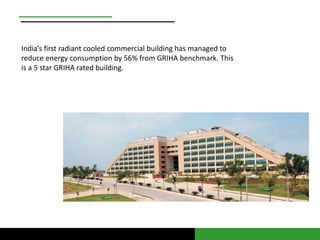
India’s first radiant cooled commercial building has managed to 
reduce energy consumption by 56% from GRIHA benchmark. This 
is a 5 star GRIHA rated building.
Radiant Cooling Technology 
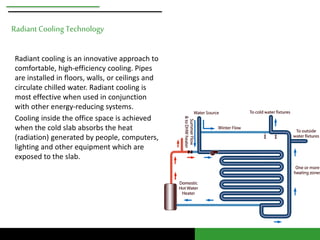
Radiant cooling is an innovative approach to 
comfortable, high-efficiency cooling. Pipes 
are installed in floors, walls, or ceilings and 
circulate chilled water. Radiant cooling is 
most effective when used in conjunction 
with other energy-reducing systems. 
Cooling inside the office space is achieved 
when the cold slab absorbs the heat 
(radiation) generated by people, computers, 
lighting and other equipment which are 
exposed to the slab.
Green Architecture 
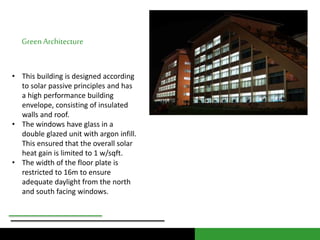
• This building is designed according 
to solar passive principles and has 
a high performance building 
envelope, consisting of insulated 
walls and roof. 
• The windows have glass in a 
double glazed unit with argon infill. 
This ensured that the overall solar 
heat gain is limited to 1 w/sqft. 
• The width of the floor plate is 
restricted to 16m to ensure 
adequate daylight from the north 
and south facing windows.
Natural Daylight Design 
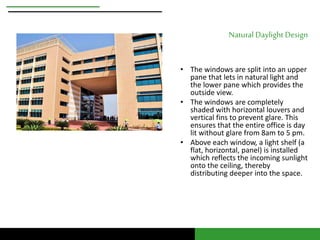
• The windows are split into an upper 
pane that lets in natural light and 
the lower pane which provides the 
outside view. 
• The windows are completely 
shaded with horizontal louvers and 
vertical fins to prevent glare. This 
ensures that the entire office is day 
lit without glare from 8am to 5 pm. 
• Above each window, a light shelf (a 
flat, horizontal, panel) is installed 
which reflects the incoming sunlight 
onto the ceiling, thereby 
distributing deeper into the space.
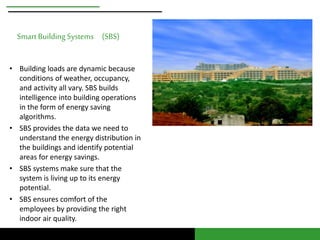
Smart Building Systems (SBS) 
• Building loads are dynamic because 
conditions of weather, occupancy, 
and activity all vary. SBS builds 
intelligence into building operations 
in the form of energy saving 
algorithms. 
• SBS provides the data we need to 
understand the energy distribution in 
the buildings and identify potential 
areas for energy savings. 
• SBS systems make sure that the 
system is living up to its energy 
potential. 
• SBS ensures comfort of the 
employees by providing the right 
indoor air quality.
Thank you

Infosys Hyderabad

  • 1.
    Infosys SDB Block-1 A case study about their ‘green initiatives’
  • 2.
    India’s first radiantcooled commercial building has managed to reduce energy consumption by 56% from GRIHA benchmark. This is a 5 star GRIHA rated building.
  • 3.
    Radiant Cooling Technology Radiant cooling is an innovative approach to comfortable, high-efficiency cooling. Pipes are installed in floors, walls, or ceilings and circulate chilled water. Radiant cooling is most effective when used in conjunction with other energy-reducing systems. Cooling inside the office space is achieved when the cold slab absorbs the heat (radiation) generated by people, computers, lighting and other equipment which are exposed to the slab.
  • 4.
    Green Architecture •This building is designed according to solar passive principles and has a high performance building envelope, consisting of insulated walls and roof. • The windows have glass in a double glazed unit with argon infill. This ensured that the overall solar heat gain is limited to 1 w/sqft. • The width of the floor plate is restricted to 16m to ensure adequate daylight from the north and south facing windows.
  • 5.
    Natural Daylight Design • The windows are split into an upper pane that lets in natural light and the lower pane which provides the outside view. • The windows are completely shaded with horizontal louvers and vertical fins to prevent glare. This ensures that the entire office is day lit without glare from 8am to 5 pm. • Above each window, a light shelf (a flat, horizontal, panel) is installed which reflects the incoming sunlight onto the ceiling, thereby distributing deeper into the space.
  • 6.
    Smart Building Systems(SBS) • Building loads are dynamic because conditions of weather, occupancy, and activity all vary. SBS builds intelligence into building operations in the form of energy saving algorithms. • SBS provides the data we need to understand the energy distribution in the buildings and identify potential areas for energy savings. • SBS systems make sure that the system is living up to its energy potential. • SBS ensures comfort of the employees by providing the right indoor air quality.
  • 7.