5 
1 
6 
8 
7 
10 
9 
11 
2 
4 
3 
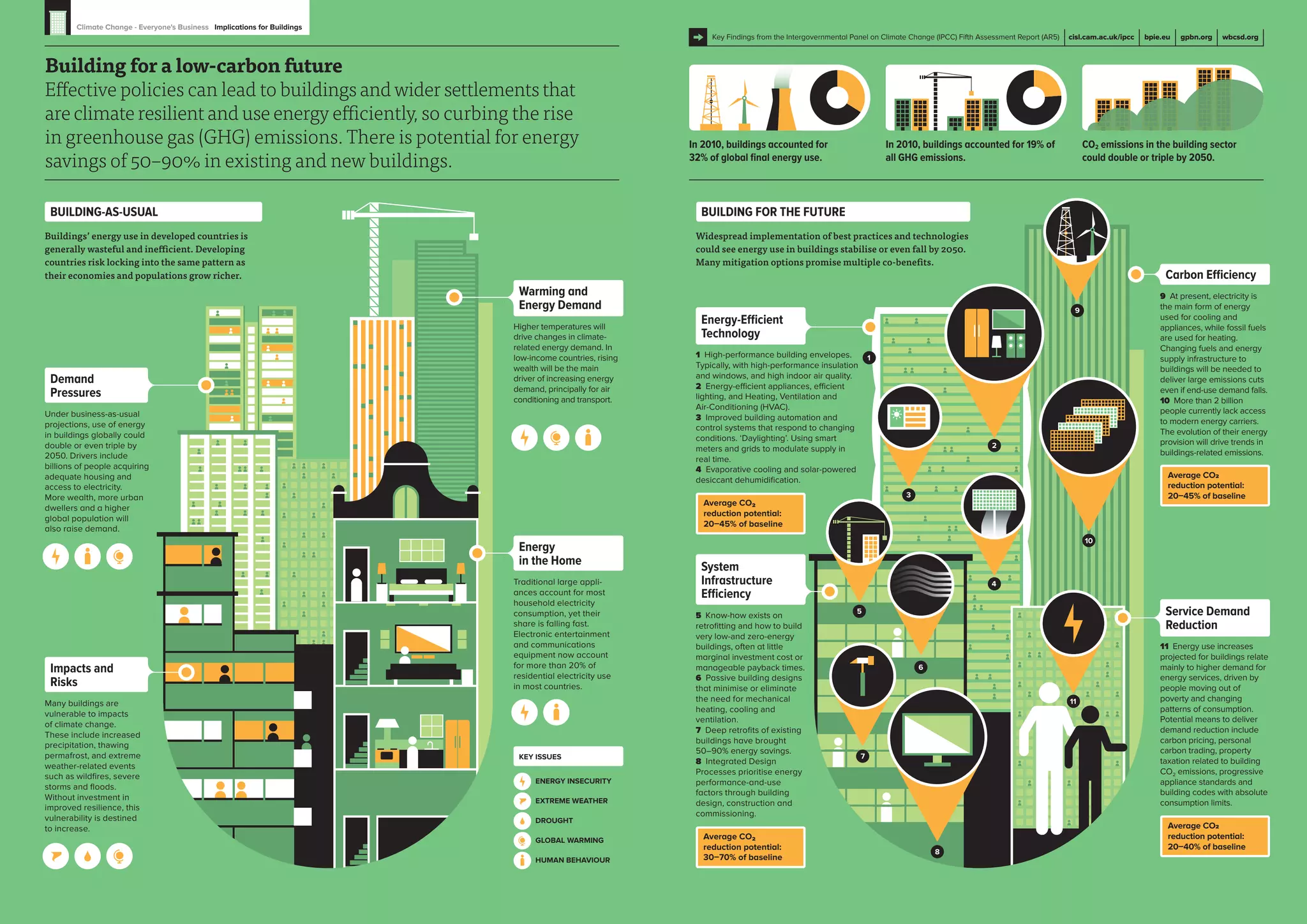
Building for a low-carbon future 
Eective policies can lead to buildings and wider settlements that 
are climate resilient and use energy eciently, so curbing the rise 
in greenhouse gas (GHG) emissions. There is potential for energy 
savings of 50–90% in existing and new buildings. 
KEY ISSUES 
ENERGY INSECURITY 
EXTREME WEATHER 
DROUGHT 
GLOBAL WARMING 
HUMAN BEHAVIOUR 
In 2010, buildings ccounted for 
32% of globl finl energy use. 
In 2010, buildings ccounted for 19% of 
all GHG emissions. 
CO2 emissions in the building sector 
could double or triple by 2050. 
BUILDING-AS-USUAL 
Buildings’ energy use in developed countries is 
generally wasteful and ine
cient. Developing 
countries risk locking into the same pattern as 
their economies and populations grow richer. 
BUILDING FOR THE FUTURE 
Widespread implementation of best practices and technologies 
could see energy use in buildings stabilise or even fall by 2050. 
Many mitigation options promise multiple co-benets. 
Demnd 
Pressures 
Under business-as-usual 
projections, use of energy 
in buildings globally could 
double or even triple by 
2050. Drivers include 
billions of people acquiring 
adequate housing and 
access to electricity. 
More welth, more urbn 
dwellers nd  higher 
globl popultion will 
lso rise demnd. 
Warming nd 
Energy Demnd 
Higher temperatures will 
drive changes in climate-related 
energy demand. In 
low-income countries, rising 
wealth will be the main 
driver of increasing energy 
demand, principally for air 
conditioning and transport. 
Impacts and 
Risks 
Many buildings are 
vulnerable to impacts 
of climate change. 
These include increased 
precipitation, thawing 
permafrost, and extreme 
weather-related events 
such as wildfires, severe 
storms and floods. 
Without investment in 
improved resilience, this 
vulnerability is destined 
to increase. 
Crbon E‘ciency 
9 At present, electricity is 
the main form of energy 
used for cooling and 
appliances, while fossil fuels 
are used for heating. 
Changing fuels and energy 
supply infrastructure to 
buildings will be needed to 
deliver large emissions cuts 
even if end-use demand falls. 
10 More than 2 billion 
people currently lack access 
to modern energy carriers. 
The evolution of their energy 
provision will drive trends in 
buildings-related emissions. 
Averge CO 
reduction potentil: 
20‰45% of bseline 
Service Demnd 
Reduction 
11 Energy use increases 
projected for buildings relate 
mainly to higher demand for 
energy services, driven by 
people moving out of 
poverty and changing 
patterns of consumption. 
Potential means to deliver 
demand reduction include 
carbon pricing, personal 
carbon trading, property 
taxation related to building 
CO2 emissions, progressive 
appliance standards and 
building codes with absolute 
consumption limits. 
Averge CO 
reduction potentil: 
20‰40% of bseline 
Energy-E‘cient 
Technology 
1 High-performance building envelopes. 
Typically, with high-performance insulation 
and windows, and high indoor air quality. 
2 Energy-e‰cient appliances, e‰cient 
lighting, and Heating, Ventilation and 
Air-Conditioning (HVAC). 
3 Improved building automation and 
control systems that respond to changing 
conditions. ‘Daylighting’. Using smart 
meters and grids to modulate supply in 
real time. 
4 Evaporative cooling and solar-powered 
desiccant dehumidification. 
Averge CO2 
reduction potentil: 
20‰45% of bseline 
Climte Chnge - Everyone's Business Implictions for Buildings 
Key Findings from the Intergovernmentl Pnel on Climte Chnge (IPCC) Fifth Assessment Report (AR5) cisl.cam.ac.uk/ipcc bpie.eu gpbn.org wbcsd.org 
Energy 
in the Home 
Trditionl lrge ppli- 
nces ccount for most 
household electricity 
consumption, yet their 
shre is flling fst. 
Electronic entertinment 
nd communictions 
equipment now ccount 
for more thn 20% of 
residentil electricity use 
in most countries. 
System 
Infrstructure 
E‘ciency 
5 Know-how exists on 
retrofitting and how to build 
very low-and zero-energy 
buildings, often t little 
mrginl investment cost or 
mngeble payback times. 
6 Pssive building designs 
tht minimise or eliminte 
the need for mechanical 
heating, cooling and 
ventilation. 
7 Deep retrofits of existing 
buildings hve brought 
50–90% energy svings. 
8 Integrted Design 
Processes prioritise energy 
performnce-nd-use 
fctors through building 
design, construction nd 
commissioning. 
Averge CO2 
reduction potentil: 
30‰70% of bseline

Infographic: Buildings and Climate Change

  • 1.
    5 1 6 8 7 10 9 11 2 4 3 Building for a low-carbon future Eective policies can lead to buildings and wider settlements that are climate resilient and use energy eciently, so curbing the rise in greenhouse gas (GHG) emissions. There is potential for energy savings of 50–90% in existing and new buildings. KEY ISSUES ENERGY INSECURITY EXTREME WEATHER DROUGHT GLOBAL WARMING HUMAN BEHAVIOUR In 2010, buildings ccounted for 32% of globl finl energy use. In 2010, buildings ccounted for 19% of all GHG emissions. CO2 emissions in the building sector could double or triple by 2050. BUILDING-AS-USUAL Buildings’ energy use in developed countries is generally wasteful and ine cient. Developing countries risk locking into the same pattern as their economies and populations grow richer. BUILDING FOR THE FUTURE Widespread implementation of best practices and technologies could see energy use in buildings stabilise or even fall by 2050. Many mitigation options promise multiple co-benets. Demnd Pressures Under business-as-usual projections, use of energy in buildings globally could double or even triple by 2050. Drivers include billions of people acquiring adequate housing and access to electricity. More welth, more urbn dwellers nd  higher globl popultion will lso rise demnd. Warming nd Energy Demnd Higher temperatures will drive changes in climate-related energy demand. In low-income countries, rising wealth will be the main driver of increasing energy demand, principally for air conditioning and transport. Impacts and Risks Many buildings are vulnerable to impacts of climate change. These include increased precipitation, thawing permafrost, and extreme weather-related events such as wildfires, severe storms and floods. Without investment in improved resilience, this vulnerability is destined to increase. Crbon E‘ciency 9 At present, electricity is the main form of energy used for cooling and appliances, while fossil fuels are used for heating. Changing fuels and energy supply infrastructure to buildings will be needed to deliver large emissions cuts even if end-use demand falls. 10 More than 2 billion people currently lack access to modern energy carriers. The evolution of their energy provision will drive trends in buildings-related emissions. Averge CO reduction potentil: 20‰45% of bseline Service Demnd Reduction 11 Energy use increases projected for buildings relate mainly to higher demand for energy services, driven by people moving out of poverty and changing patterns of consumption. Potential means to deliver demand reduction include carbon pricing, personal carbon trading, property taxation related to building CO2 emissions, progressive appliance standards and building codes with absolute consumption limits. Averge CO reduction potentil: 20‰40% of bseline Energy-E‘cient Technology 1 High-performance building envelopes. Typically, with high-performance insulation and windows, and high indoor air quality. 2 Energy-e‰cient appliances, e‰cient lighting, and Heating, Ventilation and Air-Conditioning (HVAC). 3 Improved building automation and control systems that respond to changing conditions. ‘Daylighting’. Using smart meters and grids to modulate supply in real time. 4 Evaporative cooling and solar-powered desiccant dehumidification. Averge CO2 reduction potentil: 20‰45% of bseline Climte Chnge - Everyone's Business Implictions for Buildings Key Findings from the Intergovernmentl Pnel on Climte Chnge (IPCC) Fifth Assessment Report (AR5) cisl.cam.ac.uk/ipcc bpie.eu gpbn.org wbcsd.org Energy in the Home Trditionl lrge ppli- nces ccount for most household electricity consumption, yet their shre is flling fst. Electronic entertinment nd communictions equipment now ccount for more thn 20% of residentil electricity use in most countries. System Infrstructure E‘ciency 5 Know-how exists on retrofitting and how to build very low-and zero-energy buildings, often t little mrginl investment cost or mngeble payback times. 6 Pssive building designs tht minimise or eliminte the need for mechanical heating, cooling and ventilation. 7 Deep retrofits of existing buildings hve brought 50–90% energy svings. 8 Integrted Design Processes prioritise energy performnce-nd-use fctors through building design, construction nd commissioning. Averge CO2 reduction potentil: 30‰70% of bseline