— OPTAS CONSED 
QUI OPTATESSIT 
HARUM QUAS? 
Verrum accus rem qui 
alitat ratio te volorum 
eum endit dolorae si 
sequis magnim quame 
conse pra pernate 
maxim est, qui sitiber 
endissi igna. 
Agriculture – managing risk and enhancing resilience 
Climate change poses signicant risks for the agricultural sector 
and for global food security. Resilience to the impacts of a warming 
world will be enhanced by keeping the inevitable rise in average 
global temperature below certain key thresholds. 
Flls in lbour productivity, 
prticulrly for mnul lbour 
in humid climtes 
30C 
P8 Climate: Everyone's Business IMPLICATIONS FOR AGRICULTURE P9 
Shifts in production areas 
of food and non-food crops 
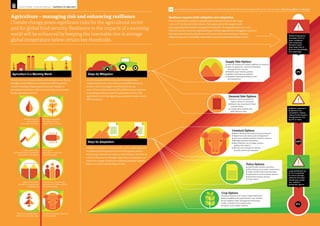
Resilience requires both mitigation and adaptation 
We are currently on a path to a global mean temperature rise in the range 
1.5 to 4.5°C by the end of the century. The higher end of this range would 
push agriculture far beyond manageable thresholds. The agricultural sector’s own 
interests are best served by implementing ambitious approaches to mitigation to ensure 
that key temperature thresholds are not crossed, while also working to enhance 
adaptive capacity to inevitable temperature rises and associated climate events. 
Supply Side Options 
 Improve feeding and dietary additives for livestock 
 Improve agronomy, nutrient and fertiliser 
management for cereals 
 Establish agro-forestry systems 
 Replace fossil fuels by biofuels 
 Integrate bioenergy production and 
food production 
Demnd Side Options 
 Reduce overconsumption in 
regions where it is prevalent 
 Reduce loss and waste of food 
in supply chains 
 Change diets towards less 
GHG-intensive food 
Livestock Options 
 Mtch stocking rtes with psture production 
 Adjust herd nd wter point mngement 
 Use more suitble livestock breeds or species 
 Mnge livestock diet qulity 
 More e€ective use of silage, pasture 
spelling and rotation 
 Monitor nd mnge the spred 
of pests, weeds and diseses 
Policy Options 
 Index-bsed wether insurnce 
 Risk shring nd trnsfer mechnisms 
 Public-privte finnce prtnerships 
 Pyments for environmentl services 
 Improved resource pricing 
 Trde reform 
Crop Options 
 Improve tolernce of crops to high temperture 
 Breed dditionl drought-tolernt crop vrieties 
 Use adaptive wter mngement techniques 
 Alter cultivtion nd sowing times 
 Improve crop rotation systems 
Climte Chnge - Everyone's Business Implictions for Agriculture 
Key Findings from the Intergovernmentl Pnel on Climte Chnge (IPCC) Fifth Assessment Report (AR5) For more informtion cisl.cm.c.uk/ipcc and bsr.org 
ob temperture 
increses of 4°C or 
more, combined 
with rising food 
demnd, woud 
pose rge risks to 
food securit gob 
nd region. 
Adptive cpcit is 
projected to be 
exceeded in regions 
cosest to the equtor 
if tempertures rise 
Reduced security b 3°C or more. 
and quality of 
freshwater resources 
Reduced crop yields 
for staples such as 
wheat, maize and rice 
Higher prices and 
enhanced market volatility for 
griculturl commodities 
Dmge to 
griculturl production 
cused by pests 
Destruction nd/or 
disruption to griculturl 
infrstructure 
Threts to livestock, especially 
from heat stress 
00C 
Steps for Adpttion 
Adaptation is highly context-specic, and no single approach 
for reducing risk is appropriate across all regions, sectors, 
and settings. Farmers can adapt to some changes, but there is 
a limit to what can be managed. Agricultural companies can 
draw from a range of options to maximise adaptive capacity 
based on a solid understanding of risks. 
Agriculture in a Warming World 
Recent extreme climatic events, such as heat waves, €oods, 
droughts, and wildres, are combining with long-term 
trends including rising temperatures and changes in 
precipitation patterns, with broad and deep implications 
for the agricultural sector. 
Steps for Mitigtion 
Greenhouse gas (GHG) emissions from agriculture 
comprised about 10–12% of man-made GHG emissions 
in 2010. This is the largest contribution from any 
sector of non-carbon dioxide (CO2) GHGs such as methane, 
accounting for 56% of non-CO2 emissions in 2005. The 
agricultural sector has signicant potential to make cuts in 
GHG emissions. 
1.50C 
Local warming of up 
to 2°C is expected 
to reduce average 
yields for the major 
cereals (e.g. wheat, 
rice, maize) in 
temperate regions.

Infographic: Agriculture and Climate Change

  • 1.
    — OPTAS CONSED QUI OPTATESSIT HARUM QUAS? Verrum accus rem qui alitat ratio te volorum eum endit dolorae si sequis magnim quame conse pra pernate maxim est, qui sitiber endissi igna. Agriculture – managing risk and enhancing resilience Climate change poses signicant risks for the agricultural sector and for global food security. Resilience to the impacts of a warming world will be enhanced by keeping the inevitable rise in average global temperature below certain key thresholds. Flls in lbour productivity, prticulrly for mnul lbour in humid climtes 30C P8 Climate: Everyone's Business IMPLICATIONS FOR AGRICULTURE P9 Shifts in production areas of food and non-food crops Resilience requires both mitigation and adaptation We are currently on a path to a global mean temperature rise in the range 1.5 to 4.5°C by the end of the century. The higher end of this range would push agriculture far beyond manageable thresholds. The agricultural sector’s own interests are best served by implementing ambitious approaches to mitigation to ensure that key temperature thresholds are not crossed, while also working to enhance adaptive capacity to inevitable temperature rises and associated climate events. Supply Side Options Improve feeding and dietary additives for livestock Improve agronomy, nutrient and fertiliser management for cereals Establish agro-forestry systems Replace fossil fuels by biofuels Integrate bioenergy production and food production Demnd Side Options Reduce overconsumption in regions where it is prevalent Reduce loss and waste of food in supply chains Change diets towards less GHG-intensive food Livestock Options Mtch stocking rtes with psture production Adjust herd nd wter point mngement Use more suitble livestock breeds or species Mnge livestock diet qulity More e€ective use of silage, pasture spelling and rotation Monitor nd mnge the spred of pests, weeds and diseses Policy Options Index-bsed wether insurnce Risk shring nd trnsfer mechnisms Public-privte finnce prtnerships Pyments for environmentl services Improved resource pricing Trde reform Crop Options Improve tolernce of crops to high temperture Breed dditionl drought-tolernt crop vrieties Use adaptive wter mngement techniques Alter cultivtion nd sowing times Improve crop rotation systems Climte Chnge - Everyone's Business Implictions for Agriculture Key Findings from the Intergovernmentl Pnel on Climte Chnge (IPCC) Fifth Assessment Report (AR5) For more informtion cisl.cm.c.uk/ipcc and bsr.org ob temperture increses of 4°C or more, combined with rising food demnd, woud pose rge risks to food securit gob nd region. Adptive cpcit is projected to be exceeded in regions cosest to the equtor if tempertures rise Reduced security b 3°C or more. and quality of freshwater resources Reduced crop yields for staples such as wheat, maize and rice Higher prices and enhanced market volatility for griculturl commodities Dmge to griculturl production cused by pests Destruction nd/or disruption to griculturl infrstructure Threts to livestock, especially from heat stress 00C Steps for Adpttion Adaptation is highly context-specic, and no single approach for reducing risk is appropriate across all regions, sectors, and settings. Farmers can adapt to some changes, but there is a limit to what can be managed. Agricultural companies can draw from a range of options to maximise adaptive capacity based on a solid understanding of risks. Agriculture in a Warming World Recent extreme climatic events, such as heat waves, €oods, droughts, and wildres, are combining with long-term trends including rising temperatures and changes in precipitation patterns, with broad and deep implications for the agricultural sector. Steps for Mitigtion Greenhouse gas (GHG) emissions from agriculture comprised about 10–12% of man-made GHG emissions in 2010. This is the largest contribution from any sector of non-carbon dioxide (CO2) GHGs such as methane, accounting for 56% of non-CO2 emissions in 2005. The agricultural sector has signicant potential to make cuts in GHG emissions. 1.50C Local warming of up to 2°C is expected to reduce average yields for the major cereals (e.g. wheat, rice, maize) in temperate regions.