Passive 
building, 
Carbon, 
& 
Climate 
Sean 
Penrith 
Execu:ve 
Director 
The 
Climate 
Trust 
8th 
Annual 
North 
American 
Passive 
House 
Conference 
October 
17, 
2013 
PiHsburgh, 
Pennsylvania
The 
Climate 
Trust 
• 
Established 
in 
1997 
• 
Manage 
over 
$20M 
of 
carbon 
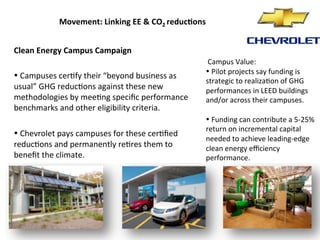
funding 
• 
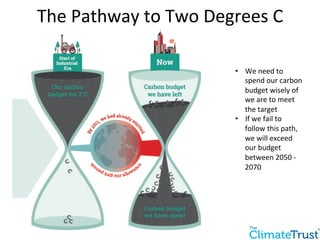
Operate 
in 
10 
diverse 
project 
sectors 
• 
Projects 
in 
nine 
states 
and 
two 
countries 
• 
Compliance 
program 
examples 
– 
OR, 
WA, 
MT, 
MA, 
CA 
• 
Voluntary 
program 
examples 
– 
NW 
Natural 
Smart 
Energy 
– 
Colorado 
Carbon 
Fund 
Mission: 
To 
provide 
exper:se, 
financing, 
and 
inspira:on 
to 
accelerate 
innova:ve 
climate 
solu:ons 
that 
endure
• Carbon 
Management 
– Expand 
What 
we 
do….. 
investment 
in 
project 
types 
an:cipated 
in 
policies 
– Pilot 
new 
methodologies 
– Effec:vely 
aggregate 
projects 
– Remove 
upfront 
financing 
and 
other 
barriers 
– Develop 
compliance 
porWolios 
for 
u:li:es 
• Climate 
Services 
– Design, 
finance 
and 
implement 
climate 
ac:on 
plans 
– Assist 
with 
project 
developer 
finance 
– Act 
as 
a 
Buyer’s 
Agent 
for 
CSR 
firms 
• Policies 
& 
Standards 
– Share 
tangible 
lessons 
learned 
and 
experience 
to 
help 
improve 
policies, 
rulemaking, 
& 
standards 
Carbon 
Management 
Policies 
& 
Standards 
Climate 
Services
Human 
induced 
global 
warming 
has 
emerged 
as 
the 
defining 
challenge 
of 
the 
21st 
century.
For 
the 
first 
?me 
in 
3 
million 
years 
Mauna 
Loa 
monitoring 
sta:on 
, 
HI 
May 
9, 
2013: 
Concentra:on 
of 
carbon 
dioxide 
in 
earth’s 
atmosphere 
crossed 
the 
400 
parts 
per 
million 
threshold
Climate 
Change 
• Currently 
net 
energy 
uptake 
by 
earth 
causes 
heat 
energy 
storage 
and 
rising 
global 
temperatures 
• 90% 
of 
this 
excess 
heat 
is 
stored 
in 
oceans 
• 30% 
of 
CO2 
absorbed 
by 
oceans
Implica?ons 
of 
stress 
nexus 
o Economic 
& 
demographic 
power 
shibing 
to 
emerging 
markets 
o Energy 
& 
fuel 
– 
increased 
demand 
& 
supply 
uncertainty 
o Water 
demand 
es:mated 
to 
exceed 
supply 
by 
40% 
in 
2030 
o Popula:on 
will 
be 
8.4 
billion 
by 
2032 
impac:ng 
resources 
o Urban 
areas 
will 
house 
more 
people 
than 
rural 
areas 
by 
2030 
impac:ng 
infrastructure 
& 
resources; 
o Food 
prices 
to 
increase 
70% 
-­‐ 
90% 
by 
2030, 
affected 
by 
popula:on 
growth, 
water 
scarcity, 
& 
deforesta:on
AR5 
• 830 
expert 
authors 
• 85 
countries 
• Meteorology 
• Physics 
• Ecology 
• Engineering 
• Social 
sciences 
• Economics 
• Oceanography 
• Sta:s:cs
Conclusion: 
To 
achieve 
a 
66% 
chance 
of 
limi:ng 
warming 
to 
2°C, 
emissions 
need 
to 
be 
capped 
at 
1,000 
gigatons 
(measured 
from 
start 
of 
industrial 
age)
We 
had 
emiFed 
half 
of 
this 
already 
by 
2011
Extent 
of 
ice 
and 
snow 
decreasing, 
and 
a 
nearly 
ice-­‐free 
Arc:c 
in 
summer 
by 
2050;
Weather 
is 
changing
Current 
rate 
of 
emissions 
are 
projected 
to 
cause 
rise 
2.6 
– 
4.8 
°C 
globally 
& 
sea 
level 
rise 
of 
0.45-­‐0.82m 
as 
oceans 
warm
Despite 
slowdown 
due 
to 
natural 
factors, 
human 
ac:vity 
is 
influencing 
emissions 
and 
related 
rise 
in 
global 
temperatures;
Timeline 
of 
Atmospheric 
Concentra?ons
Each 
of 
the 
last 
3 
decades 
has 
been 
successively 
hoHer 
than 
any 
other 
preceding 
decade 
since 
1850
AR5: 
95% 
certain 
we 
have 
been 
the 
dominant 
cause 
for 
warming 
since 
1950s
Increase 
in 
CO2 
due 
to 
burning 
fossil 
fuels 
and 
land-­‐use 
changes
Electricity 
Consump:on
Energy 
Consump:on
Es:mates 
of 
buildings’ 
emissions 
as 
a 
percentage 
of 
total 
“What 
percentage 
of 
CO2 
emissions 
do 
you 
think 
buildings 
give 
rise 
to 
– 
directly 
and 
indirectly?“
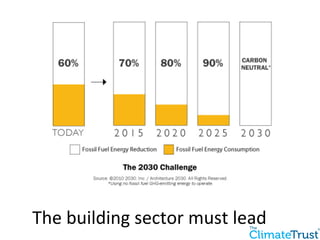
The 
building 
sector 
must 
lead
Mee:ng 
the 
Challenge
2030 
Challenge 
Impacts
Aggressively 
implemen?ng 
building 
codes 
that 
meet 
the 
2030 
Challenge 
targets 
will 
drama?cally 
reduce 
CO2 
emissions 
and 
transform 
the 
Building 
Sector 
into 
a 
central 
market 
sector 
for 
the 
solu?on 
to 
climate 
change.
Reducing 
energy 
demand 
through 
building 
efficiency 
is 
significantly 
cheaper 
than 
producing 
the 
same 
amount 
of 
energy 
by 
coal 
or 
nuclear 
power.
Passive 
building 
pathway 
2030 
Challenge 
targets: 
sustainable 
design, 
on-­‐site 
RE 
and/or 
purchasing 
RE 
or 
RECs* 
Passive 
building 
achieves 
IPCC 
carbon 
reduc:on 
target 
of 
80% 
below 
‘90 
levels
“Let 
me 
put 
that 
into 
perspec:ve: 
900 
billion 
square 
feet 
is 
an 
area 
equal 
to 
60 
% 
of 
the 
en:re 
building 
stock 
of 
the 
world. 
That 
is 
how 
much 
we 
will 
build 
by 
2030. 
We 
will 
essen:ally 
rebuild 
the 
world 
in 
the 
next 
two 
decades. 
That 
is 
a 
huge 
opportunity 
if 
we 
do 
it 
right.” 
– 
Ed 
Mazria, 
Architecture 
2030
The 
scale 
of 
the 
building 
energy 
challenge
Building 
energy 
forecasts
Energy 
efficiency 
contributed 
63 
exajoules 
(EJ) 
(1400 
Mtoe) 
of 
avoided 
energy 
use 
in 
2010 
>> 
Larger 
than 
the 
supply 
of 
oil 
(43 
EJ), 
electricity 
or 
natural 
gas 
(22 
EJ 
each)
Two 
thirds 
of 
the 
economic 
poten:al 
to 
improve 
energy 
efficiency 
remains 
untapped 
in 
the 
period 
to 
2035
Movement: 
Linking 
EE 
& 
CO2 
reduc?ons 
Clean 
Energy 
Campus 
Campaign 
• 
Campuses 
cer:fy 
their 
“beyond 
business 
as 
usual” 
GHG 
reduc:ons 
against 
these 
new 
methodologies 
by 
mee:ng 
specific 
performance 
benchmarks 
and 
other 
eligibility 
criteria. 
• 
Chevrolet 
pays 
campuses 
for 
these 
cer:fied 
reduc:ons 
and 
permanently 
re:res 
them 
to 
benefit 
the 
climate. 
Campus 
Value: 
• 
Pilot 
projects 
say 
funding 
is 
strategic 
to 
realiza:on 
of 
GHG 
performances 
in 
LEED 
buildings 
and/or 
across 
their 
campuses. 
• 
Funding 
can 
contribute 
a 
5-­‐25% 
return 
on 
incremental 
capital 
needed 
to 
achieve 
leading-­‐edge 
clean 
energy 
efficiency 
performance.
Carbon 
Crossroads
The 
Pathway 
to 
Two 
Degrees 
C 
• We 
need 
to 
spend 
our 
carbon 
budget 
wisely 
of 
we 
are 
to 
meet 
the 
target 
• If 
we 
fail 
to 
follow 
this 
path, 
we 
will 
exceed 
our 
budget 
between 
2050 
-­‐ 
2070
Poli:cal 
will.
We 
must 
make 
it!
Thank 
you. 
Sean 
Penrith 
spenrith@climatetrust.org 
The 
Climate 
Trust 
Portland, 
Oregon

Passive Building, Carbon and Climate

  • 1.
    Passive building, Carbon, & Climate Sean Penrith Execu:ve Director The Climate Trust 8th Annual North American Passive House Conference October 17, 2013 PiHsburgh, Pennsylvania
  • 2.
    The Climate Trust • Established in 1997 • Manage over $20M of carbon funding • Operate in 10 diverse project sectors • Projects in nine states and two countries • Compliance program examples – OR, WA, MT, MA, CA • Voluntary program examples – NW Natural Smart Energy – Colorado Carbon Fund Mission: To provide exper:se, financing, and inspira:on to accelerate innova:ve climate solu:ons that endure
  • 3.
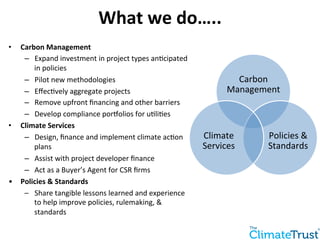
    • Carbon Management – Expand What we do….. investment in project types an:cipated in policies – Pilot new methodologies – Effec:vely aggregate projects – Remove upfront financing and other barriers – Develop compliance porWolios for u:li:es • Climate Services – Design, finance and implement climate ac:on plans – Assist with project developer finance – Act as a Buyer’s Agent for CSR firms • Policies & Standards – Share tangible lessons learned and experience to help improve policies, rulemaking, & standards Carbon Management Policies & Standards Climate Services
  • 4.
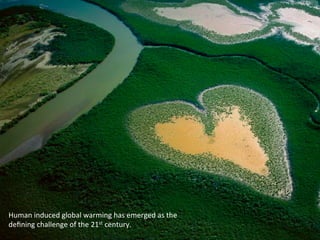
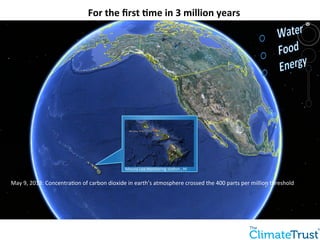
    Human induced global warming has emerged as the defining challenge of the 21st century.
  • 5.
    For the first ?me in 3 million years Mauna Loa monitoring sta:on , HI May 9, 2013: Concentra:on of carbon dioxide in earth’s atmosphere crossed the 400 parts per million threshold
  • 6.
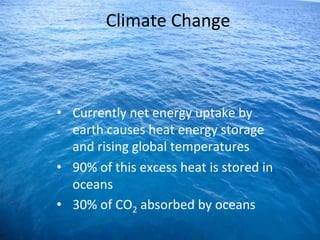
    Climate Change •Currently net energy uptake by earth causes heat energy storage and rising global temperatures • 90% of this excess heat is stored in oceans • 30% of CO2 absorbed by oceans
  • 7.
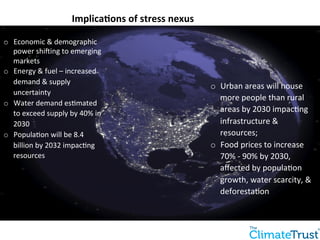
    Implica?ons of stress nexus o Economic & demographic power shibing to emerging markets o Energy & fuel – increased demand & supply uncertainty o Water demand es:mated to exceed supply by 40% in 2030 o Popula:on will be 8.4 billion by 2032 impac:ng resources o Urban areas will house more people than rural areas by 2030 impac:ng infrastructure & resources; o Food prices to increase 70% -­‐ 90% by 2030, affected by popula:on growth, water scarcity, & deforesta:on
  • 8.
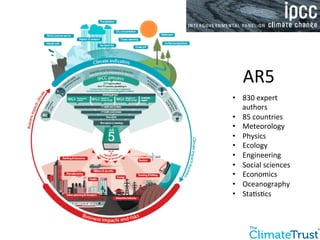
    AR5 • 830 expert authors • 85 countries • Meteorology • Physics • Ecology • Engineering • Social sciences • Economics • Oceanography • Sta:s:cs
  • 9.
    Conclusion: To achieve a 66% chance of limi:ng warming to 2°C, emissions need to be capped at 1,000 gigatons (measured from start of industrial age)
  • 10.
    We had emiFed half of this already by 2011
  • 11.
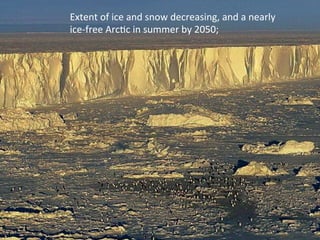
    Extent of ice and snow decreasing, and a nearly ice-­‐free Arc:c in summer by 2050;
  • 12.
  • 13.
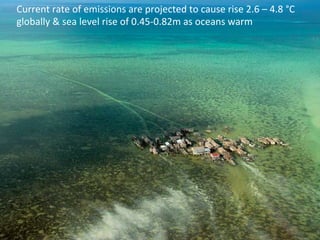
    Current rate of emissions are projected to cause rise 2.6 – 4.8 °C globally & sea level rise of 0.45-­‐0.82m as oceans warm
  • 14.
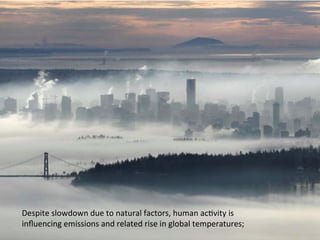
    Despite slowdown due to natural factors, human ac:vity is influencing emissions and related rise in global temperatures;
  • 15.
  • 16.
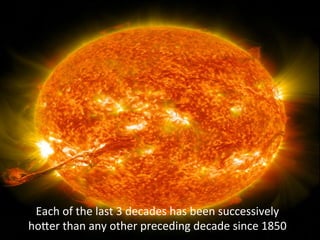
    Each of the last 3 decades has been successively hoHer than any other preceding decade since 1850
  • 17.
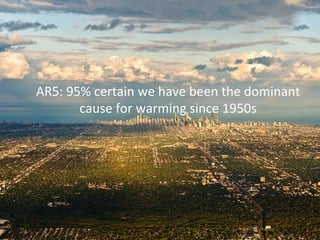
    AR5: 95% certain we have been the dominant cause for warming since 1950s
  • 18.
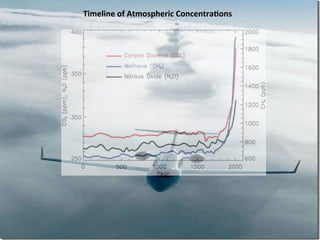
    Increase in CO2 due to burning fossil fuels and land-­‐use changes
  • 19.
  • 20.
  • 21.
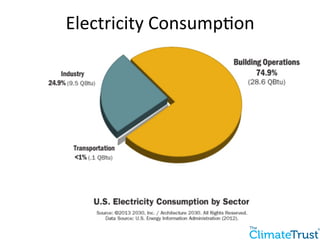
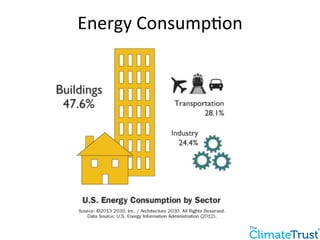
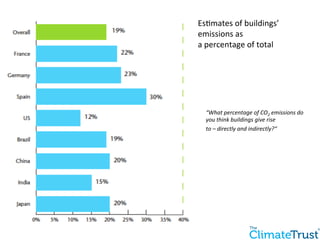
    Es:mates of buildings’ emissions as a percentage of total “What percentage of CO2 emissions do you think buildings give rise to – directly and indirectly?“
  • 25.
  • 27.
  • 28.
  • 29.
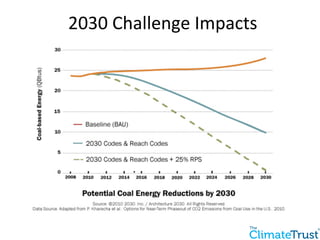
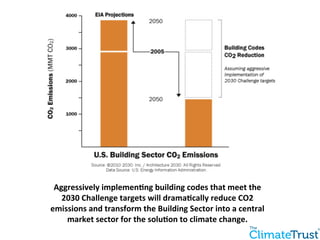
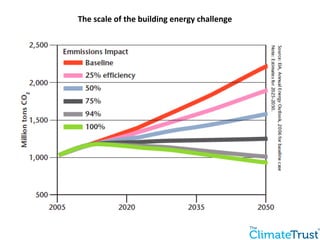
    Aggressively implemen?ng building codes that meet the 2030 Challenge targets will drama?cally reduce CO2 emissions and transform the Building Sector into a central market sector for the solu?on to climate change.
  • 30.
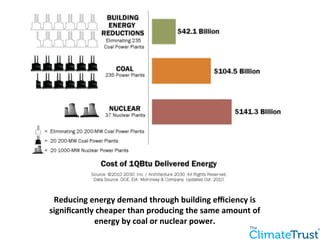
    Reducing energy demand through building efficiency is significantly cheaper than producing the same amount of energy by coal or nuclear power.
  • 31.
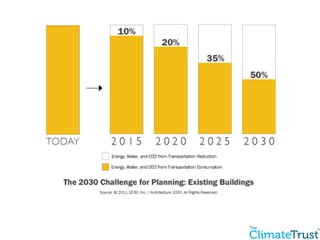
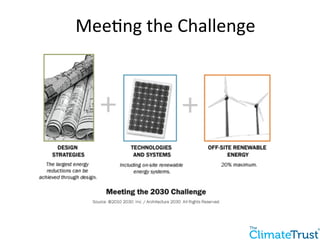
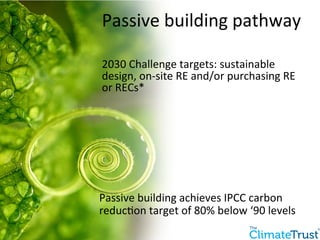
    Passive building pathway 2030 Challenge targets: sustainable design, on-­‐site RE and/or purchasing RE or RECs* Passive building achieves IPCC carbon reduc:on target of 80% below ‘90 levels
  • 32.
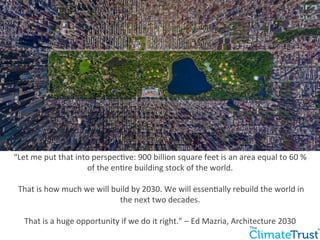
    “Let me put that into perspec:ve: 900 billion square feet is an area equal to 60 % of the en:re building stock of the world. That is how much we will build by 2030. We will essen:ally rebuild the world in the next two decades. That is a huge opportunity if we do it right.” – Ed Mazria, Architecture 2030
  • 33.
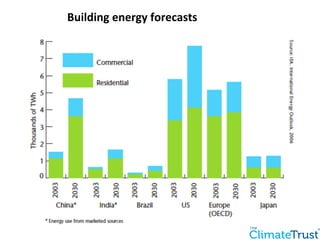
    The scale of the building energy challenge
  • 34.
  • 35.
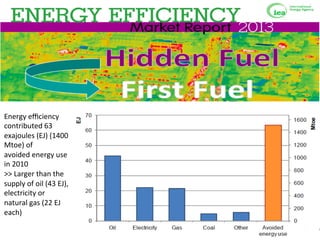
    Energy efficiency contributed 63 exajoules (EJ) (1400 Mtoe) of avoided energy use in 2010 >> Larger than the supply of oil (43 EJ), electricity or natural gas (22 EJ each)
  • 36.
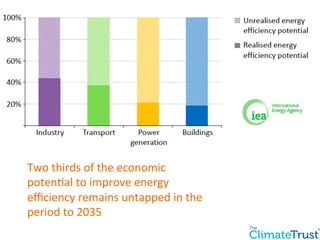
    Two thirds of the economic poten:al to improve energy efficiency remains untapped in the period to 2035
  • 37.
    Movement: Linking EE & CO2 reduc?ons Clean Energy Campus Campaign • Campuses cer:fy their “beyond business as usual” GHG reduc:ons against these new methodologies by mee:ng specific performance benchmarks and other eligibility criteria. • Chevrolet pays campuses for these cer:fied reduc:ons and permanently re:res them to benefit the climate. Campus Value: • Pilot projects say funding is strategic to realiza:on of GHG performances in LEED buildings and/or across their campuses. • Funding can contribute a 5-­‐25% return on incremental capital needed to achieve leading-­‐edge clean energy efficiency performance.
  • 38.
  • 39.
    The Pathway to Two Degrees C • We need to spend our carbon budget wisely of we are to meet the target • If we fail to follow this path, we will exceed our budget between 2050 -­‐ 2070
  • 40.
  • 41.
  • 42.
    Thank you. Sean Penrith spenrith@climatetrust.org The Climate Trust Portland, Oregon