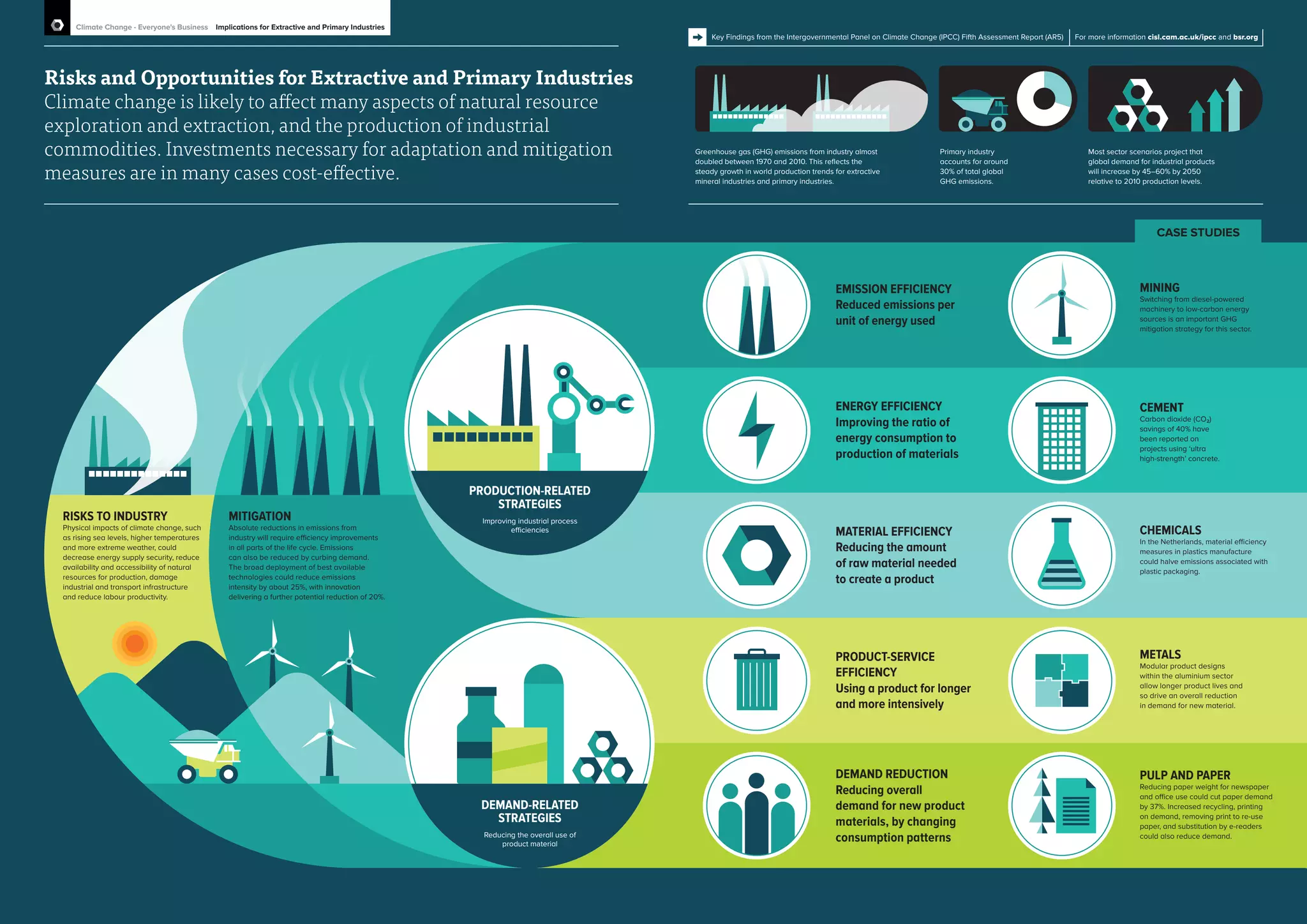
Climte Chnge - Everyone's Business Implictions for Extractive and Primary IndustriesKey Findings from the Intergovernment
l P
nel on Clim
te Ch
nge (IPCC) Fifth Assessment Report (AR5) For more inform
tion cisl.cm.c.uk/ipcc and bsr.orgRisks and Opportunities for Extractive and Primary IndustriesClimate change is likely to aect many aspects of natural resource exploration and extraction, and the production of industrial commodities. Investments necessary for adaptation and mitigation measures are in many cases cost-eective. Greenhouse g
s (GHG) emissions from industry 
lmost doubled between 1970 
nd 2010. This reflects the ste
dy growth in world production trends for extr
ctive miner
l industries 
nd prim
ry industries. Prim
ry industry 
ccounts for 
round 30% of tot
l glob
l GHG emissions. Most sector scen
rios project th
t glob
l dem
nd for industri
l products will incre
se by 45–60% by 2050 rel
tive to 2010 production levels. MININGSwitching from diesel-powered m
chinery to low-c
rbon energy sources is 
n import
nt GHG mitig
tion str
tegy for this sector. CEMENTC
rbon dioxide (CO2) s
vings of 40% h
ve been reported on projects using ‘ultr
 high-strength’ concrete. CHEMICALSIn the Netherlands, material e—ciency measures in plastics manufacture could halve emissions associated with plastic packaging. METALSModul
r product designs within the 
luminium sector 
llow longer product lives 
nd so drive 
n over
ll reduction in dem
nd for new m
teri
l. PULP AND PAPERReducing p
per weight for newsp
per 
nd o—ce use could cut p
per dem
nd by 37%. Incre
sed recycling, printing on dem
nd, removing print to re-use p
per, 
nd substitution by e-re
ders could 
lso reduce dem
nd. DEMAND REDUCTION Reducing overll demnd for new product mterils, by chnging consumption ptternsPRODUCT-SERVICE EFFICIENCYUsing  product for longer nd more intensivelyMATERIAL EFFICIENCY Reducing the mount of rw mteril needed to crete  productENERGY EFFICIENCY Improving the rtio of energy consumption to production of mterilsEMISSION EFFICIENCY Reduced emissions per unit of energy usedDEMAND-RELATED STRATEGIESReducing the over
ll use of product materi
lRISKS TO INDUSTRYPhysic
l imp
cts of clim
te ch
nge, such 
s rising se
 levels, higher temper
tures 
nd more extreme we
ther, could decre
se energy supply security, reduce 
v
il
bility 
nd 
ccessibility of n
tur
l resources for production, d
m
ge industrial 
nd tr
nsport infr
structure 
nd reduce l
bour productivity. MITIGATIONAbsolute reductions in emissions from industry will require e—ciency improvements in 
ll p
rts of the life cycle. Emissions c
n 
lso be reduced by curbing dem
nd. The broad deployment of best 
v
ilable technologies could reduce emissions intensity by 
bout 25%, with innov
tion delivering 
 further potenti
l reduction of 20%. PRODUCTION-RELATED STRATEGIESImproving industri
l process e—cienciesCASE STUDIES

Infographic: Industry, Extractives and Primary Industry

  • 1.
    Climte Chnge -Everyone's Business Implictions for Extractive and Primary IndustriesKey Findings from the Intergovernment l P nel on Clim te Ch nge (IPCC) Fifth Assessment Report (AR5) For more inform tion cisl.cm.c.uk/ipcc and bsr.orgRisks and Opportunities for Extractive and Primary IndustriesClimate change is likely to aect many aspects of natural resource exploration and extraction, and the production of industrial commodities. Investments necessary for adaptation and mitigation measures are in many cases cost-eective. Greenhouse g s (GHG) emissions from industry lmost doubled between 1970 nd 2010. This reflects the ste dy growth in world production trends for extr ctive miner l industries nd prim ry industries. Prim ry industry ccounts for round 30% of tot l glob l GHG emissions. Most sector scen rios project th t glob l dem nd for industri l products will incre se by 45–60% by 2050 rel tive to 2010 production levels. MININGSwitching from diesel-powered m chinery to low-c rbon energy sources is n import nt GHG mitig tion str tegy for this sector. CEMENTC rbon dioxide (CO2) s vings of 40% h ve been reported on projects using ‘ultr high-strength’ concrete. CHEMICALSIn the Netherlands, material e—ciency measures in plastics manufacture could halve emissions associated with plastic packaging. METALSModul r product designs within the luminium sector llow longer product lives nd so drive n over ll reduction in dem nd for new m teri l. PULP AND PAPERReducing p per weight for newsp per nd o—ce use could cut p per dem nd by 37%. Incre sed recycling, printing on dem nd, removing print to re-use p per, nd substitution by e-re ders could lso reduce dem nd. DEMAND REDUCTION Reducing overll demnd for new product mterils, by chnging consumption ptternsPRODUCT-SERVICE EFFICIENCYUsing product for longer nd more intensivelyMATERIAL EFFICIENCY Reducing the mount of rw mteril needed to crete productENERGY EFFICIENCY Improving the rtio of energy consumption to production of mterilsEMISSION EFFICIENCY Reduced emissions per unit of energy usedDEMAND-RELATED STRATEGIESReducing the over ll use of product materi lRISKS TO INDUSTRYPhysic l imp cts of clim te ch nge, such s rising se levels, higher temper tures nd more extreme we ther, could decre se energy supply security, reduce v il bility nd ccessibility of n tur l resources for production, d m ge industrial nd tr nsport infr structure nd reduce l bour productivity. MITIGATIONAbsolute reductions in emissions from industry will require e—ciency improvements in ll p rts of the life cycle. Emissions c n lso be reduced by curbing dem nd. The broad deployment of best v ilable technologies could reduce emissions intensity by bout 25%, with innov tion delivering further potenti l reduction of 20%. PRODUCTION-RELATED STRATEGIESImproving industri l process e—cienciesCASE STUDIES