Inflammation
Archana.K
Concepts
Introduction
Definition
Etiology
Clinical signs of inflammation
Different types of inflammation
Mechanism of inflammation
Introduction
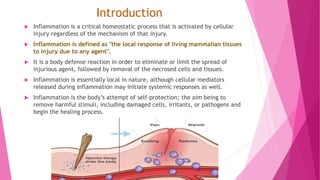
 Inflammation is a critical homeostatic process that is activated by cellular
injury regardless of the mechanism of that injury.
 Inflammation is defined as "the local response of living mammalian tissues
to injury due to any agent".
 It is a body defense reaction in order to eliminate or limit the spread of
injurious agent, followed by removal of the necrosed cells and tissues.
 Inflammation is essentially local in nature, although cellular mediators
released during inflammation may initiate systemic responses as well.
 Inflammation is the body’s attempt of self-protection; the aim being to
remove harmful stimuli, including damaged cells, irritants, or pathogens and
begin the healing process.
 Inflammation does not mean infection, even when an infection causes
inflammation.
 Infection is caused by a bacterium, virus or fungus, while inflammation is the
body’s response to it.
 Any injury, including an invasion by micro-organisms, causes inflammation in
the affected area.
 Inflammation, a complex reaction, results from many different conditions.
The damaged tissue releases substances that cause inflammation and that
direct the immune system to do the following:
• Attack and kill any invaders.
• Dispose off dead and damaged tissue.
• Begin the process of repair.
Etiology
 Agents causing inflammation
1. Physical agents: heat, cold, radiation and mechanical trauma.
2. Chemical agents : Organic and inorganic poisons. eg: arsenic, lead
3. Infective agents: Bacteria, virus and their toxins.
4. Immunological agents: Cell mediated antigen and antibody reaction.
Clinical signs of inflammation
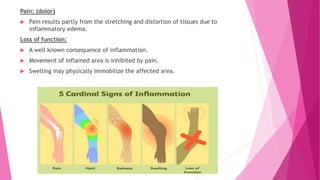
 The four principal effects of inflammation are:
1. Redness (rubor)
2. Swelling (tumor)
3. Heat (calor)
4. Pain (dolor)
5. Loss of function
 They were first described by the Roman Aulus Cornelius Celsus nearly 2,000
years ago.
Redness: (rubor)
 Inflamed tissue appears red due to dilation of blood vessels in the damaged
area.
Swelling : (tumor)
 Swelling results from edema, accumulation of fluid in extravascular space.
Heat: (calor)
 Increase in temperature is detected on the skin due to increased blood flow
resulting in vascular dilation and delivery of warm blood to the part.
Pain: (dolor)
 Pain results partly from the stretching and distortion of tissues due to
inflammatory edema.
Loss of function:
 A well known consequence of inflammation.
 Movement of inflamed area is inhibited by pain.
 Swelling may physically immobilize the affected area.
Types of inflammation
 Depending on the dense capacity of the host and duration of the inflammation
it is classified in to two types.
1. Acute inflammation
2. Chronic inflammation
Acute inflammation:
 Acute inflammation is of short duration and represents early body reaction
followed by the healing.
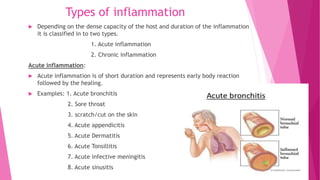
 Examples: 1. Acute bronchitis
2. Sore throat
3. scratch/cut on the skin
4. Acute appendicitis
5. Acute Dermatitis
6. Acute Tonsillitis
7. Acute infective meningitis
8. Acute sinusitis
Chronic Inflammation:
 Chronic inflammation is for longer duration.
 It occurs either prolonged presence of acute inflammation due to causative
agents or stimulus that induces chronic inflammation from beginning.
 Features of chronic inflammation is presence of chronic inflammatory cells
such as lymphocytes, plasma cells and macrophages.
 Macrophages are derived from monocytes, walls of blood vessels and in loose
connective tissue.
 They interact with lymphocytes to facilitate antibody production.
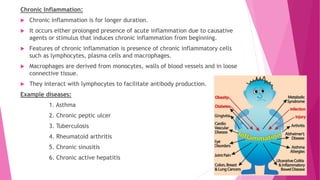
Example diseases:
1. Asthma
2. Chronic peptic ulcer
3. Tuberculosis
4. Rheumatoid arthritis
5. Chronic sinusitis
6. Chronic active hepatitis

Inflammation lecture 4

  • 1.
  • 2.
    Concepts Introduction Definition Etiology Clinical signs ofinflammation Different types of inflammation Mechanism of inflammation
  • 3.
    Introduction  Inflammation isa critical homeostatic process that is activated by cellular injury regardless of the mechanism of that injury.  Inflammation is defined as "the local response of living mammalian tissues to injury due to any agent".  It is a body defense reaction in order to eliminate or limit the spread of injurious agent, followed by removal of the necrosed cells and tissues.  Inflammation is essentially local in nature, although cellular mediators released during inflammation may initiate systemic responses as well.  Inflammation is the body’s attempt of self-protection; the aim being to remove harmful stimuli, including damaged cells, irritants, or pathogens and begin the healing process.
  • 4.
     Inflammation doesnot mean infection, even when an infection causes inflammation.  Infection is caused by a bacterium, virus or fungus, while inflammation is the body’s response to it.  Any injury, including an invasion by micro-organisms, causes inflammation in the affected area.  Inflammation, a complex reaction, results from many different conditions. The damaged tissue releases substances that cause inflammation and that direct the immune system to do the following: • Attack and kill any invaders. • Dispose off dead and damaged tissue. • Begin the process of repair.
  • 5.
    Etiology  Agents causinginflammation 1. Physical agents: heat, cold, radiation and mechanical trauma. 2. Chemical agents : Organic and inorganic poisons. eg: arsenic, lead 3. Infective agents: Bacteria, virus and their toxins. 4. Immunological agents: Cell mediated antigen and antibody reaction.
  • 6.
    Clinical signs ofinflammation  The four principal effects of inflammation are: 1. Redness (rubor) 2. Swelling (tumor) 3. Heat (calor) 4. Pain (dolor) 5. Loss of function  They were first described by the Roman Aulus Cornelius Celsus nearly 2,000 years ago. Redness: (rubor)  Inflamed tissue appears red due to dilation of blood vessels in the damaged area. Swelling : (tumor)  Swelling results from edema, accumulation of fluid in extravascular space. Heat: (calor)  Increase in temperature is detected on the skin due to increased blood flow resulting in vascular dilation and delivery of warm blood to the part.
  • 7.
    Pain: (dolor)  Painresults partly from the stretching and distortion of tissues due to inflammatory edema. Loss of function:  A well known consequence of inflammation.  Movement of inflamed area is inhibited by pain.  Swelling may physically immobilize the affected area.
  • 8.
    Types of inflammation Depending on the dense capacity of the host and duration of the inflammation it is classified in to two types. 1. Acute inflammation 2. Chronic inflammation Acute inflammation:  Acute inflammation is of short duration and represents early body reaction followed by the healing.  Examples: 1. Acute bronchitis 2. Sore throat 3. scratch/cut on the skin 4. Acute appendicitis 5. Acute Dermatitis 6. Acute Tonsillitis 7. Acute infective meningitis 8. Acute sinusitis
  • 9.
    Chronic Inflammation:  Chronicinflammation is for longer duration.  It occurs either prolonged presence of acute inflammation due to causative agents or stimulus that induces chronic inflammation from beginning.  Features of chronic inflammation is presence of chronic inflammatory cells such as lymphocytes, plasma cells and macrophages.  Macrophages are derived from monocytes, walls of blood vessels and in loose connective tissue.  They interact with lymphocytes to facilitate antibody production. Example diseases: 1. Asthma 2. Chronic peptic ulcer 3. Tuberculosis 4. Rheumatoid arthritis 5. Chronic sinusitis 6. Chronic active hepatitis