IRREVERSIBLE
CELL INJURY
INTRODUCTION
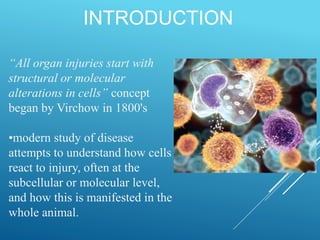
“All organ injuries start with
structural or molecular
alterations in cells” concept
began by Virchow in 1800's
•modern study of disease
attempts to understand how cells
react to injury, often at the
subcellular or molecular level,
and how this is manifested in the
whole animal.
CLASSES OF CELL INJURY
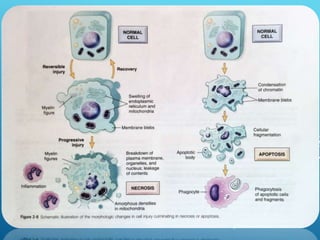
Irreversible --> cell
death. Types:
Necrosis: pathological
 (dissolution of dead
cells by its own
digestive enzymes)
Apoptosis:
 PROGRAMMED cell
death
Reversible
 If stressor removed, and
 If cell damage mild: cells
survive
PROBABLE CAUSES
 The first is the inability to reverse mitochondrial
dysfunction (lack of oxidative phosphorylation and ATP
generation) even after resolution of the original injury.
 The second is the development of profound disturbances
in membrane function.
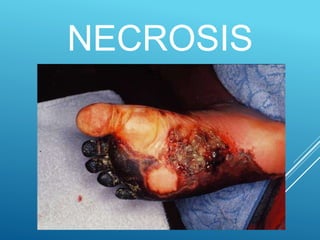
NECROSIS
NECROSIS
 DEFINITION:
 Death of a group of contiguous
cells within a living tissue or organ
 Affect both nucleus and cytoplasm
 Unregulated cell death with
inflammation
MORPHOLOGICAL CHANGES
DURING NECROSIS
 Cytoplasmic
 Nuclear
 Cytoplasmic changes :
 Cytoplasmic eosinophilia due to loss of normal
basophilia& increased binding of eosin to denaturated
proteins
 (Granular or homogenous glassy)
 Nuclear changes:
 Pyknosis: shrinkage-increased staining with
haematoxylin
 Karyorrhexis: fragmentation
 Karyolysis: total disappearance
TYPES: NECROSIS
Coagulative
Liquefactive
Caseation
Fat Necrosis
Fibrinoid Necrosis
COAGULATIVE NECROSIS
In: infarcts of kidney, heart, spleen
Gross: pale , yellow, opaque, firm
Mic.: All cellular details are lost but general
architecture of the tissue is preserved
Surrounding tissue----acute inflammation
Ex: Infarction - heart
Infarction - kidney
LIQUEFACTIVE NECROSIS
In: centers of pyogenic abscess
amoebiasis
infarcts of C.N.S.
Necrotic tissue---completely liquified---turbid
fluid----absorbed----space
Ex: Brain - infarction
Amoebiasis ---liver
CASEATION NECROSIS
 In: Tuberculosis
 Necrotic tissue is partially liquefied---cheesy material (caseation)
 Mic: Both cellular details & general architecture of dead tissue are
lost---structureless eosinophilic material
FAT NECROSIS
Traumatic: in female breast
Enzymatic: in acute hemorrhagic
pancreatitis
Gross: opaque & white
fat cells appear cloudy, surrounded by
chronic inflammatory cells, histiocytes,
foreign body giant cells
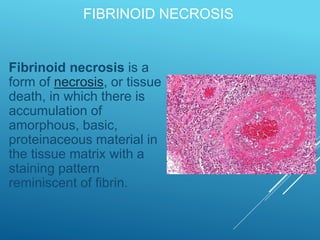
FIBRINOID NECROSIS
Fibrinoid necrosis is a
form of necrosis, or tissue
death, in which there is
accumulation of
amorphous, basic,
proteinaceous material in
the tissue matrix with a
staining pattern
reminiscent of fibrin.
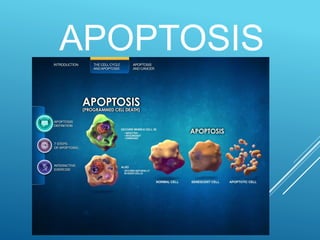
APOPTOSIS
APOPTOSIS
(programmed cell death)
 Definition: death of individual cells
surrounded by viable cells
 when a cell dies through activation of an
internally suicide program
 It is an active process—energy
dependent
 Does not elicit inflammatory response
 May be physiologic or pathologic
APOPTOSIS CAUSES
PHYSIOLOGIC
 During embryogenesis e.g. removal of
interdigital webs during embryonic
development of toes and fingers
 Hormone-dependent e.g.
endometrial cellloss in menstruation
PATHOLOGIC
 Irradiated tissues
 Cell death induced by cytotoxic T-
lymphocytes
 Viral infections e.g. viral hepatitis
 Cell death in tumours
DIFFERENCES BETWEEN
NECROSIS AND APOPTOSIS
 Necrosis
 Death of groups of cells
 A passive process—not energy-dependent
 Elicits inflammatory response
 Always pathologic
 Apoptosis
 Death of individual cells
 Active process—energy-dependent
 Does not elicit inflammatory response
 May be pathologic or physiologic
Thank
You

Irreversible cell i njury

  • 1.
  • 2.
    INTRODUCTION “All organ injuriesstart with structural or molecular alterations in cells” concept began by Virchow in 1800's •modern study of disease attempts to understand how cells react to injury, often at the subcellular or molecular level, and how this is manifested in the whole animal.
  • 3.
    CLASSES OF CELLINJURY Irreversible --> cell death. Types: Necrosis: pathological  (dissolution of dead cells by its own digestive enzymes) Apoptosis:  PROGRAMMED cell death Reversible  If stressor removed, and  If cell damage mild: cells survive
  • 4.
    PROBABLE CAUSES  Thefirst is the inability to reverse mitochondrial dysfunction (lack of oxidative phosphorylation and ATP generation) even after resolution of the original injury.  The second is the development of profound disturbances in membrane function.
  • 5.
  • 6.
    NECROSIS  DEFINITION:  Deathof a group of contiguous cells within a living tissue or organ  Affect both nucleus and cytoplasm  Unregulated cell death with inflammation
  • 7.
    MORPHOLOGICAL CHANGES DURING NECROSIS Cytoplasmic  Nuclear  Cytoplasmic changes :  Cytoplasmic eosinophilia due to loss of normal basophilia& increased binding of eosin to denaturated proteins  (Granular or homogenous glassy)  Nuclear changes:  Pyknosis: shrinkage-increased staining with haematoxylin  Karyorrhexis: fragmentation  Karyolysis: total disappearance
  • 8.
  • 9.
    COAGULATIVE NECROSIS In: infarctsof kidney, heart, spleen Gross: pale , yellow, opaque, firm Mic.: All cellular details are lost but general architecture of the tissue is preserved Surrounding tissue----acute inflammation Ex: Infarction - heart Infarction - kidney
  • 10.
    LIQUEFACTIVE NECROSIS In: centersof pyogenic abscess amoebiasis infarcts of C.N.S. Necrotic tissue---completely liquified---turbid fluid----absorbed----space Ex: Brain - infarction Amoebiasis ---liver
  • 11.
    CASEATION NECROSIS  In:Tuberculosis  Necrotic tissue is partially liquefied---cheesy material (caseation)  Mic: Both cellular details & general architecture of dead tissue are lost---structureless eosinophilic material
  • 12.
    FAT NECROSIS Traumatic: infemale breast Enzymatic: in acute hemorrhagic pancreatitis Gross: opaque & white fat cells appear cloudy, surrounded by chronic inflammatory cells, histiocytes, foreign body giant cells
  • 13.
    FIBRINOID NECROSIS Fibrinoid necrosisis a form of necrosis, or tissue death, in which there is accumulation of amorphous, basic, proteinaceous material in the tissue matrix with a staining pattern reminiscent of fibrin.
  • 14.
  • 15.
    APOPTOSIS (programmed cell death) Definition: death of individual cells surrounded by viable cells  when a cell dies through activation of an internally suicide program  It is an active process—energy dependent  Does not elicit inflammatory response  May be physiologic or pathologic
  • 16.
    APOPTOSIS CAUSES PHYSIOLOGIC  Duringembryogenesis e.g. removal of interdigital webs during embryonic development of toes and fingers  Hormone-dependent e.g. endometrial cellloss in menstruation PATHOLOGIC  Irradiated tissues  Cell death induced by cytotoxic T- lymphocytes  Viral infections e.g. viral hepatitis  Cell death in tumours
  • 17.
    DIFFERENCES BETWEEN NECROSIS ANDAPOPTOSIS  Necrosis  Death of groups of cells  A passive process—not energy-dependent  Elicits inflammatory response  Always pathologic  Apoptosis  Death of individual cells  Active process—energy-dependent  Does not elicit inflammatory response  May be pathologic or physiologic
  • 20.