འབྲུག་རྒྱལ་འཛིན་གཙུག་ལག་སློབ་སྡེ།
རང་འབྱུང་འཐློན་བསྡེད་མཐློ་རིམ་སློབ་ྲྭ།
སྤུ་ན་ཁ་རློང་ཁག།
ལློད་སྦུད་ས།
དློག་ཏྲར་་་འཇིགས་འབྡེལ་རློ་རྡེ།
རང་འབྱུང་འཐློན་བསྡེད་མཐློ་རིམ་སློབ་ྲྭ། སྤུ་ན་ཁ་རློང་ཁག།
ལློད་སྦུད་ས།
Inflammation
Complex biological response of vascular tissues to
harmful stimuli, such as Pathogen, damaged cells
or irritants.
Role:
• As a protective attempt by the organism to remove
injurious stimuli
• Initiate healing process of the tissues.
• Isolating damaged tissues/irritants.
• Mobilizing effector cells and molecules to the site
Definition
Etiology
Inflammation may be caused by:
• Mechanical injury due to trauma Eg. Blow, Sprain,
Kick
• Thermal or Physical damage due to exposure in
excessive cold or heat
• Chemical injury with corrosive acids and alkalis Eg.
H2SO4, CaOH, NaOH.
• Pathogenic organisms like bacteria, viruses and
fungi.
Inflammation due to micro-organisms are more serious
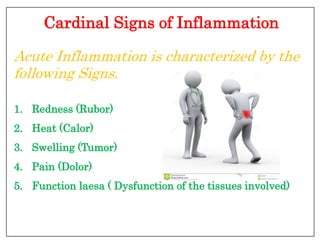
Cardinal Signs of Inflammation
Acute Inflammation is characterized by the
following Signs.
1. Redness (Rubor)
2. Heat (Calor)
3. Swelling (Tumor)
4. Pain (Dolor)
5. Function laesa ( Dysfunction of the tissues involved)
• Redness and heat are due to increased blood
flow to the inflamed area
• Swelling is due to accumulation of fluid
• Pain is due to release of chemicals that
stimulate nerve endings
• loss of function is due to a combination of
factors.
Classification of Inflammation
Inflammation can be broadly classified as Acute &
Chronic
1. Acute Inflammation:
• Short term process resulting in cardinal
signs
• Due to infiltration of the tissues by plasma
and leucocytes.
• Persists as long as injurious stimuli is
present and can cease one it is removed,
Chronic Inflammation:
• Is not characterized by cardinal signs of
inflammation.
• Characterized by Infiltration of mononuclear
cells (monocytes, macrophages, and plasma
cells)
• Tissue destruction and attempts to heal by
angiogenesis and fibrosis.
Role of inflammation:
• The irritants causes damage to some of the cells and
these dead cells release a chemical called histamine
• Histamine causes dilatation of the capillaries in the
inflamed area.
• This slows down the blood flow via the capillaries and
thereby promote exudation of plasma and blood cells
like white blood cells (WBC) into the region.
• The plasma dilutes the toxin and WBC eats
(Phagocytose) the microbes.
Patho-physiology of Inflammation
Inflammation has two main phases: Cellular &
Exudative
1.Cellular.
• WBCs moved from capillaries to inflamed area.
• Acts as phagocytes picking up bacteria, cellular debris,
walling off an infection & preventing spread.
• Neutrophils are characteristics of acute inflammation
while lymphocytes are predominant in chronic
2.Exudative.
• Movement of fluid containing proteins such as
fibrin and antibodies (Igns)
• Dilatation of Blood vessels causing redness and
heat
• Capillary permeability is increased causing
exudation of plasma into the tissues causing edema
and swelling
• Swelling compresses the nerve endings of the
tissues and leads to pain.
Treatment of Inflammation
1.Acute Inflammation:
• Remove the cause if possible
• Cold Compression (15 degree Celsius) with ice or cold
water irrigation.
• Warm Application 40-45 degree; Warm water bath,
heated sand etc. (Promotes circulation)
• Septic Inflammatory. Foot lesions with antiseptic bath 30
mins at a time for 2-3 times a day.
• Massage: 5 – 10 mins to allow absorption of exudates to
reduce pain
• Pressure bandaging and followed by cotton padding to
allow fluid absorption and support circulation.
Treatment of Chronic Inflammation:
• Application of moist heat
• Massage as discussed in previous slide.
• Counter irritation: To convert to acute inflammation
with a help of Rubefacient
• Such as Liniment ammoniated camphor
A Rubefacient is a substance for topical application that produces
redness of the skin e.g. by causing dilation of the capillaries and an
increase in blood circulation.
• NSAID: Help reduce fever and pain of
inflammation
Organ Term To Denote Inflammation
Liver Hepatitis
Ovary Oophoritis
Kidney Nephritis
Uterus Metritis
Small Intestine Enteritis
Testis Orchitis
Colon Colitis
Eye Opthalmitis
Cecum Typhlitis
Spinal Cord Myelitis
Skin Dermatitis
Bone Osteomyelitis
Lung Pneumonia, Pneumonitis
Brain Encephalitis
Thanks For Your Attention

Inflammation

  • 1.
  • 2.
    Complex biological responseof vascular tissues to harmful stimuli, such as Pathogen, damaged cells or irritants. Role: • As a protective attempt by the organism to remove injurious stimuli • Initiate healing process of the tissues. • Isolating damaged tissues/irritants. • Mobilizing effector cells and molecules to the site Definition
  • 3.
    Etiology Inflammation may becaused by: • Mechanical injury due to trauma Eg. Blow, Sprain, Kick • Thermal or Physical damage due to exposure in excessive cold or heat • Chemical injury with corrosive acids and alkalis Eg. H2SO4, CaOH, NaOH. • Pathogenic organisms like bacteria, viruses and fungi. Inflammation due to micro-organisms are more serious
  • 4.
    Cardinal Signs ofInflammation Acute Inflammation is characterized by the following Signs. 1. Redness (Rubor) 2. Heat (Calor) 3. Swelling (Tumor) 4. Pain (Dolor) 5. Function laesa ( Dysfunction of the tissues involved)
  • 5.
    • Redness andheat are due to increased blood flow to the inflamed area • Swelling is due to accumulation of fluid • Pain is due to release of chemicals that stimulate nerve endings • loss of function is due to a combination of factors.
  • 6.
    Classification of Inflammation Inflammationcan be broadly classified as Acute & Chronic 1. Acute Inflammation: • Short term process resulting in cardinal signs • Due to infiltration of the tissues by plasma and leucocytes. • Persists as long as injurious stimuli is present and can cease one it is removed,
  • 7.
    Chronic Inflammation: • Isnot characterized by cardinal signs of inflammation. • Characterized by Infiltration of mononuclear cells (monocytes, macrophages, and plasma cells) • Tissue destruction and attempts to heal by angiogenesis and fibrosis.
  • 8.
    Role of inflammation: •The irritants causes damage to some of the cells and these dead cells release a chemical called histamine • Histamine causes dilatation of the capillaries in the inflamed area. • This slows down the blood flow via the capillaries and thereby promote exudation of plasma and blood cells like white blood cells (WBC) into the region. • The plasma dilutes the toxin and WBC eats (Phagocytose) the microbes.
  • 9.
    Patho-physiology of Inflammation Inflammationhas two main phases: Cellular & Exudative 1.Cellular. • WBCs moved from capillaries to inflamed area. • Acts as phagocytes picking up bacteria, cellular debris, walling off an infection & preventing spread. • Neutrophils are characteristics of acute inflammation while lymphocytes are predominant in chronic
  • 10.
    2.Exudative. • Movement offluid containing proteins such as fibrin and antibodies (Igns) • Dilatation of Blood vessels causing redness and heat • Capillary permeability is increased causing exudation of plasma into the tissues causing edema and swelling • Swelling compresses the nerve endings of the tissues and leads to pain.
  • 11.
    Treatment of Inflammation 1.AcuteInflammation: • Remove the cause if possible • Cold Compression (15 degree Celsius) with ice or cold water irrigation. • Warm Application 40-45 degree; Warm water bath, heated sand etc. (Promotes circulation) • Septic Inflammatory. Foot lesions with antiseptic bath 30 mins at a time for 2-3 times a day. • Massage: 5 – 10 mins to allow absorption of exudates to reduce pain • Pressure bandaging and followed by cotton padding to allow fluid absorption and support circulation.
  • 12.
    Treatment of ChronicInflammation: • Application of moist heat • Massage as discussed in previous slide. • Counter irritation: To convert to acute inflammation with a help of Rubefacient • Such as Liniment ammoniated camphor A Rubefacient is a substance for topical application that produces redness of the skin e.g. by causing dilation of the capillaries and an increase in blood circulation. • NSAID: Help reduce fever and pain of inflammation
  • 13.
    Organ Term ToDenote Inflammation Liver Hepatitis Ovary Oophoritis Kidney Nephritis Uterus Metritis Small Intestine Enteritis Testis Orchitis Colon Colitis Eye Opthalmitis Cecum Typhlitis Spinal Cord Myelitis Skin Dermatitis Bone Osteomyelitis Lung Pneumonia, Pneumonitis Brain Encephalitis
  • 14.
    Thanks For YourAttention