Cell INJURY
MR. SOHAN A. PATEL, Dept of Pharmacology
ASSISTANT PROFESSOR,
SMT.S.M.SHAH PHARMACY COLLEGE,
GUJARAT,
sohanpharma@gmail.com
INTRODUCTION
• “All organ injuries start with structural or
molecular alterations in cells” concept began by
Virchow in 1800's .
• Structures of living systems are not constant
They are destructured and restored continuously.
• All living organisms absorb and extract proteins,
lipids (fats), carbohydrates, and their components
as well as water, ions, and pigments.
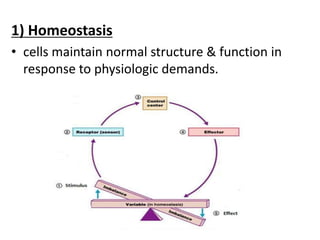
1) Homeostasis
• cells maintain normal structure & function in
response to physiologic demands.
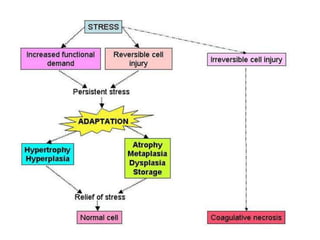
• as cells stresses they undergo functional or
structural adaptations to maintain viability /
homeostasis.
• respond to some stimuli by increasing or
decreasing specific organelle content.
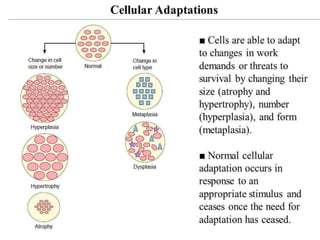
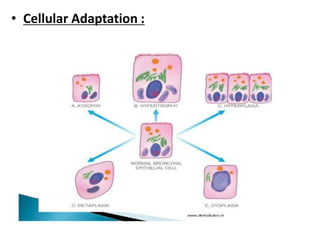
• adaptive processes: atrophy, hypertrophy,
hyperplasia and metaplasia.
• Cellular Adaptation :
Cell Injury
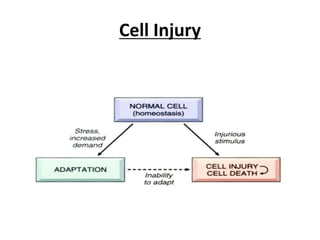
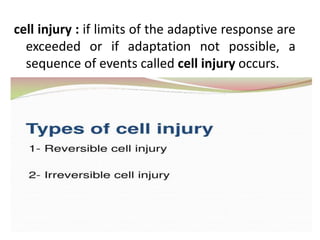
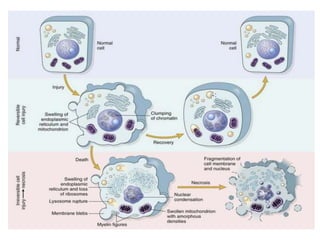
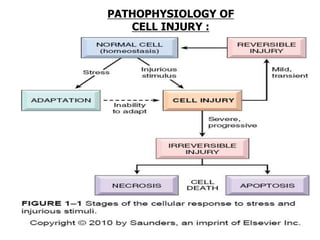
cell injury : if limits of the adaptive response are
exceeded or if adaptation not possible, a
sequence of events called cell injury occurs.
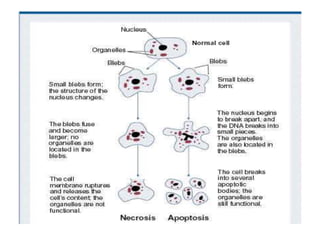
Two main morphologic patterns:
a. necrosis
b. apoptosis.
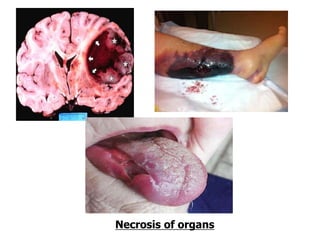
Necrosis of organs
PATHOPHYSIOLOGY OF
CELL INJURY :
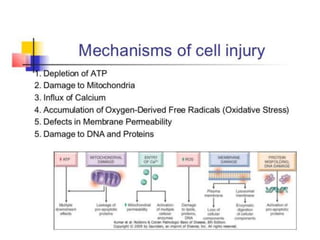
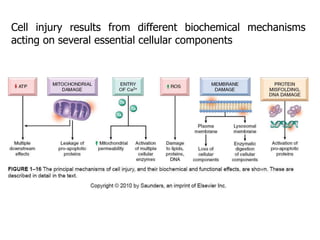
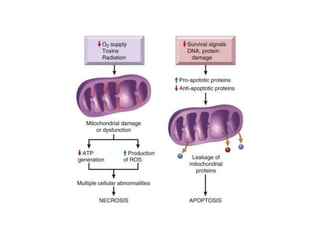
Cell injury results from different biochemical mechanisms
acting on several essential cellular components
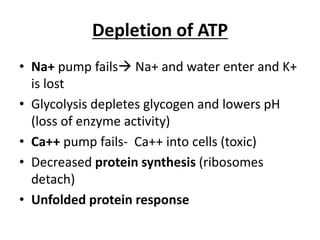
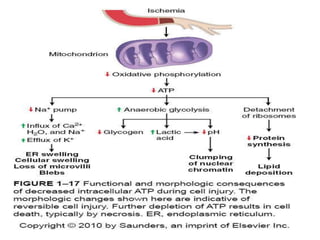
Depletion of ATP
• Na+ pump fails Na+ and water enter and K+
is lost
• Glycolysis depletes glycogen and lowers pH
(loss of enzyme activity)
• Ca++ pump fails- Ca++ into cells (toxic)
• Decreased protein synthesis (ribosomes
detach)
• Unfolded protein response
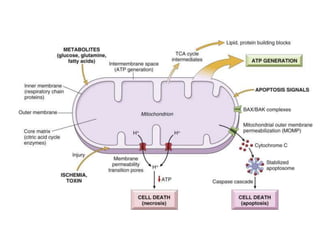
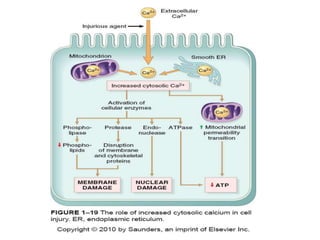
Loss of Ca++ Homeostasis
• Extracellular Ca++ is 15X higher than cytosolic
Ca++
• Loss of ATP increases intracellular Ca++
• Increased Ca++ activates phospholipases,
proteases, endonucleases, and ATPases
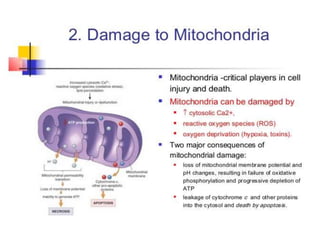
• Increased Ca++ also increases mitochondrial
permeability triggering apoptosis
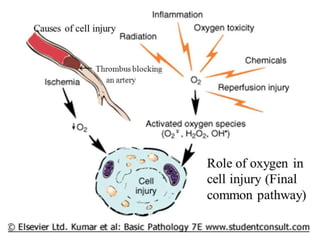
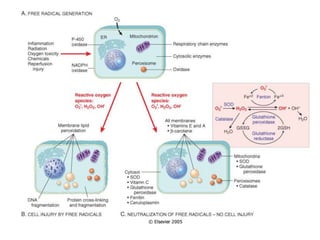
Free Radical Formation
• Single unpaired electron; highly reactive
• Normal metabolism produces superoxide anion,
hydrogen peroxide and hydroxyl ion; superoxide
is produced in neutrophils
• Reactive oxygen species (ROS) are a type of free
radical
• Excess of ROS within cell leads to oxidative
stress
Pathologic Effects of ROS
• Lipid peroxidation leading to membrane
damage
• Protein damage
• DNA damage
Major Antioxidants
• Antioxidants block the formation of ROS or
inactivate them
• Antioxidant Enzymes: superoxide dismutase,
catalase, glutathione peroxidase
• Vitamins: A, E, ascorbic acid, glutathione
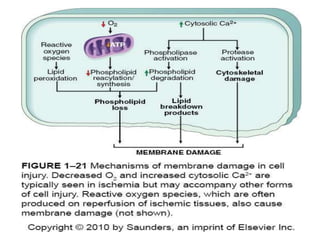
Membrane Permeability Defects
• Plasma membrane
• Mitochondrial membrane
• Lysosomal membrane- release of RNases,
DNases and proteases
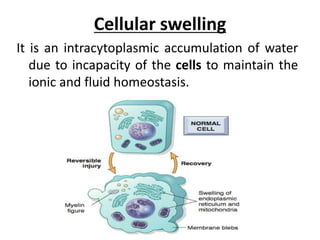
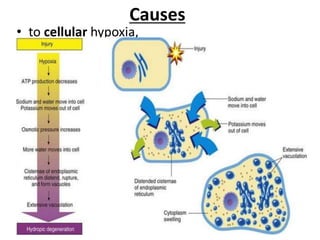
Cellular swelling
It is an intracytoplasmic accumulation of water
due to incapacity of the cells to maintain the
ionic and fluid homeostasis.
Causes
• to cellular hypoxia,
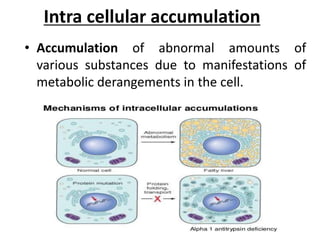
Intra cellular accumulation
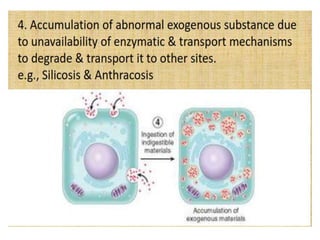
• Accumulation of abnormal amounts of
various substances due to manifestations of
metabolic derangements in the cell.
CATEGORIES:
1. Normal cellular constituents e.g., water,
lipids etc.
2. Abnormal substances
a) Exogenous e.g., mineral or products of
infectious agents
b) Endogenous e.g., products of abnormal
synthesis or metabolism
SITES:
a) Cytoplasm (phagolysosomes)
b) Nucleus
SOURCE:
Produced by the affected cell .
Produced elsewhere in the body, but stored in
the cell
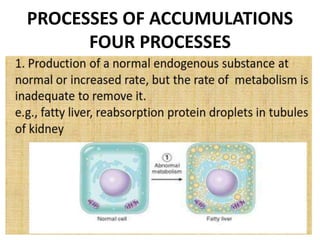
PROCESSES OF ACCUMULATIONS
FOUR PROCESSES
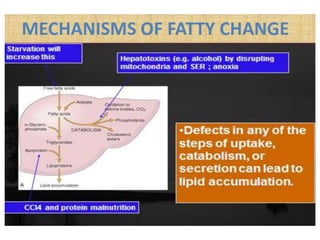
1. Production of a normal endogenous substance
at normal or increased rate, but the rate of
metabolism is inadequate to remove it. e.g., fatty
liver, reabsorption protein droplets in tubules of
kidney
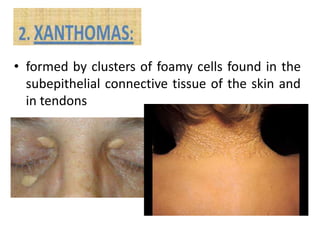
• formed by clusters of foamy cells found in the
subepithelial connective tissue of the skin and
in tendons
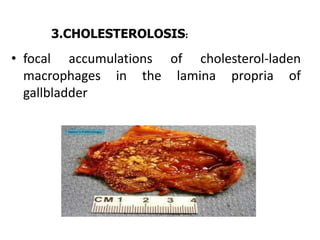
• focal accumulations of cholesterol-laden
macrophages in the lamina propria of
gallbladder
3.CHOLESTEROLOSIS:
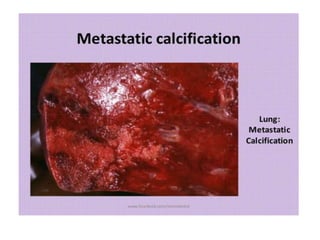
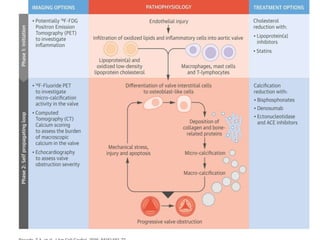
Calcification
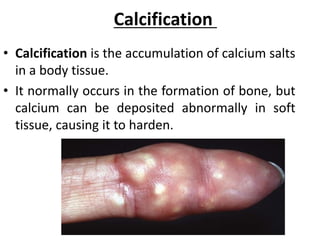
• Calcification is the accumulation of calcium salts
in a body tissue.
• It normally occurs in the formation of bone, but
calcium can be deposited abnormally in soft
tissue, causing it to harden.
cell injury
cell injury
cell injury
cell injury

cell injury

  • 1.
    Cell INJURY MR. SOHANA. PATEL, Dept of Pharmacology ASSISTANT PROFESSOR, SMT.S.M.SHAH PHARMACY COLLEGE, GUJARAT, sohanpharma@gmail.com
  • 3.
    INTRODUCTION • “All organinjuries start with structural or molecular alterations in cells” concept began by Virchow in 1800's . • Structures of living systems are not constant They are destructured and restored continuously. • All living organisms absorb and extract proteins, lipids (fats), carbohydrates, and their components as well as water, ions, and pigments.
  • 4.
    1) Homeostasis • cellsmaintain normal structure & function in response to physiologic demands.
  • 9.
    • as cellsstresses they undergo functional or structural adaptations to maintain viability / homeostasis. • respond to some stimuli by increasing or decreasing specific organelle content. • adaptive processes: atrophy, hypertrophy, hyperplasia and metaplasia.
  • 10.
  • 12.
  • 13.
    cell injury :if limits of the adaptive response are exceeded or if adaptation not possible, a sequence of events called cell injury occurs.
  • 15.
    Two main morphologicpatterns: a. necrosis b. apoptosis.
  • 17.
  • 20.
  • 22.
    Cell injury resultsfrom different biochemical mechanisms acting on several essential cellular components
  • 23.
    Depletion of ATP •Na+ pump fails Na+ and water enter and K+ is lost • Glycolysis depletes glycogen and lowers pH (loss of enzyme activity) • Ca++ pump fails- Ca++ into cells (toxic) • Decreased protein synthesis (ribosomes detach) • Unfolded protein response
  • 28.
    Loss of Ca++Homeostasis • Extracellular Ca++ is 15X higher than cytosolic Ca++ • Loss of ATP increases intracellular Ca++ • Increased Ca++ activates phospholipases, proteases, endonucleases, and ATPases • Increased Ca++ also increases mitochondrial permeability triggering apoptosis
  • 30.
    Free Radical Formation •Single unpaired electron; highly reactive • Normal metabolism produces superoxide anion, hydrogen peroxide and hydroxyl ion; superoxide is produced in neutrophils • Reactive oxygen species (ROS) are a type of free radical • Excess of ROS within cell leads to oxidative stress
  • 31.
    Pathologic Effects ofROS • Lipid peroxidation leading to membrane damage • Protein damage • DNA damage
  • 33.
    Major Antioxidants • Antioxidantsblock the formation of ROS or inactivate them • Antioxidant Enzymes: superoxide dismutase, catalase, glutathione peroxidase • Vitamins: A, E, ascorbic acid, glutathione
  • 34.
    Membrane Permeability Defects •Plasma membrane • Mitochondrial membrane • Lysosomal membrane- release of RNases, DNases and proteases
  • 36.
    Cellular swelling It isan intracytoplasmic accumulation of water due to incapacity of the cells to maintain the ionic and fluid homeostasis.
  • 37.
  • 38.
    Intra cellular accumulation •Accumulation of abnormal amounts of various substances due to manifestations of metabolic derangements in the cell.
  • 39.
    CATEGORIES: 1. Normal cellularconstituents e.g., water, lipids etc. 2. Abnormal substances a) Exogenous e.g., mineral or products of infectious agents b) Endogenous e.g., products of abnormal synthesis or metabolism
  • 40.
  • 41.
    SOURCE: Produced by theaffected cell . Produced elsewhere in the body, but stored in the cell
  • 42.
    PROCESSES OF ACCUMULATIONS FOURPROCESSES 1. Production of a normal endogenous substance at normal or increased rate, but the rate of metabolism is inadequate to remove it. e.g., fatty liver, reabsorption protein droplets in tubules of kidney
  • 49.
    • formed byclusters of foamy cells found in the subepithelial connective tissue of the skin and in tendons
  • 50.
    • focal accumulationsof cholesterol-laden macrophages in the lamina propria of gallbladder 3.CHOLESTEROLOSIS:
  • 54.
    Calcification • Calcification isthe accumulation of calcium salts in a body tissue. • It normally occurs in the formation of bone, but calcium can be deposited abnormally in soft tissue, causing it to harden.