Case Presentation
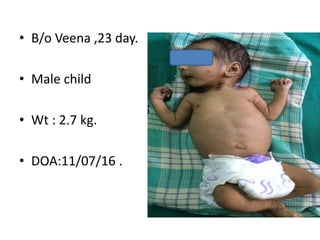
• B/o Veena ,23 day.
• Male child
• Wt : 2.7 kg.
• DOA:11/07/16 .
• H/o Fever- Day 8 of life .
• No h/o of convulsions, poor feeding ,lethargy,
abdominal distension, hurried respiration.
• Was admitted for same complaint and
treated with IV medications in pvt hospital
Bhadravathi for 4 days.
• Due to persistent fever baby was referred to
shivamoga.
• Admitted in private hospital Shivmoga for 12 days.
• Baby was treated with IV medications and fluids and
O2 inhalation, referred to our hospital for further
management.
• No h/o convulsions,white patches in oral cavity,hurried
breathing ,bluish discoloration of extremities during
hospital stay.
• Abscess over Left foot has been documented in referral
letter
Birth history:
• Primi gravida
• Regular ANC taken .
• Antenatal period uneventful.Antenatal USG
normal study.
• S/T/M/AGA delivered via naturalis ,in hospital
cried immediately. B wt-2.75kg.Breast fed
within one hour of birth.
• Baby was noted to be icteric on D3 given
phototherapy for 2days and discharged on D6
of life.
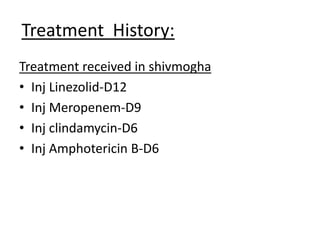
Treatment History:
Treatment received in shivmogha
• Inj Linezolid-D12
• Inj Meropenem-D9
• Inj clindamycin-D6
• Inj Amphotericin B-D6
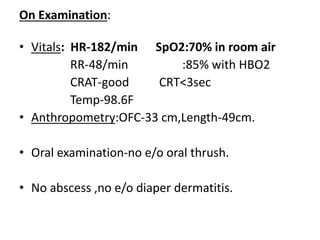
On Examination:
• Vitals: HR-182/min SpO2:70% in room air
RR-48/min :85% with HBO2
CRAT-good CRT<3sec
Temp-98.6F
• Anthropometry:OFC-33 cm,Length-49cm.
• Oral examination-no e/o oral thrush.
• No abscess ,no e/o diaper dermatitis.
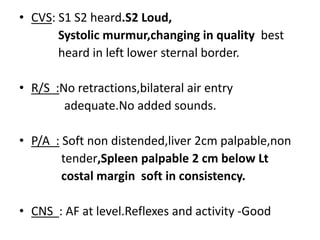
• CVS: S1 S2 heard.S2 Loud,
Systolic murmur,changing in quality best
heard in left lower sternal border.
• R/S :No retractions,bilateral air entry
adequate.No added sounds.
• P/A : Soft non distended,liver 2cm palpable,non
tender,Spleen palpable 2 cm below Lt
costal margin soft in consistency.
• CNS : AF at level.Reflexes and activity -Good
• B/O Veena day 23 male child, born through
NVD with h/o Fever from D8 of life with
examination findings of decreased Spo2,
tachycardia and changing murmur and loud S2
with splenomegaly provisional diagnosis-
Late onset sepsis with? infective
endocarditis with PAH not in CCF
Investigations
Referring Hospitals investigations
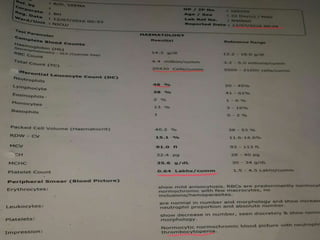
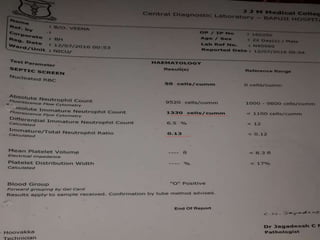
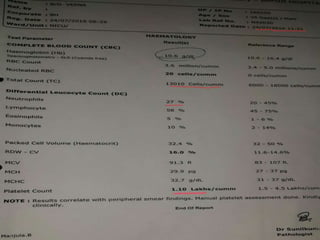
• Hb-14.4gm%,TLC-19,500/mm3,PMN-
65%,Platelet-28000/mm3.
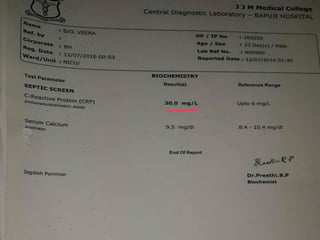
• CRP-37mg/l.
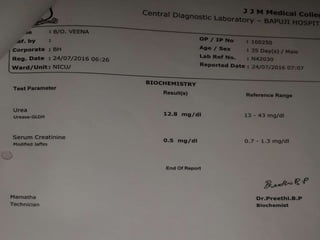
• RFT and Electrolytes-normal
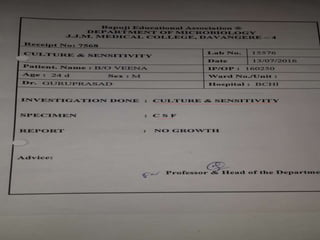
• Blood C/S-No growth.
• Urine examination-Scanty oval budding yeast
cell with pseudohypae.
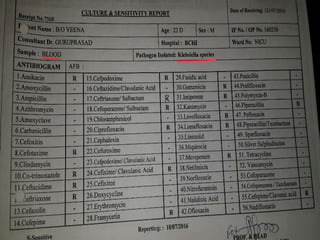
• Urine C/S- Candida species grown.
Sensitive to Amphotericin B
Clotrimazole,Flucanozole and Nystatin
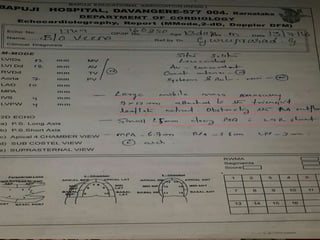
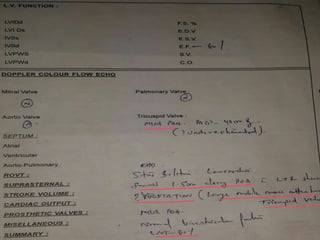
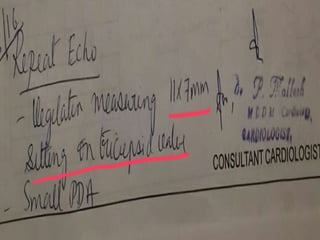
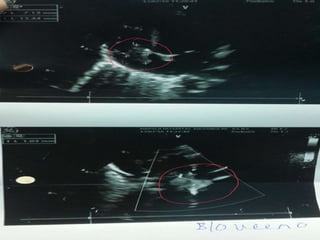
• 2D Echocardiography:
Infective endocarditis.
Large vegetation on tricuspid valve.8*7 mm
Severe TR
PAH(+)
Good biventricular function
LATE ONSET SEPSIS –POLYMICROBIAL
WITH INFECTIVE ENDOCARDITIS,
TRICUSPID VALVE VEGITATION-
?FUNGAL ? KLEBSIELLA WITH SMALL
PDA ,NOT IN CCF.
Diagnosis:
Course in hospital:
• Baby was started with IV Inj vancomycin ,Inj
cefotaxim and Inj flucanozole and continued
for 3 weeks.
• Change in murmur quality was noted multiple
times.
• Baby was weaned of from oxygen on D5 of
admission and shifted to mother side and
discharged at request after 3 weeks of
antibiotics.
Infective Endocarditis In Newborn
• Neonatal BE previously uncommon,about 60
cases reported before mid 80s.
• Prolonged survival of critically ill babies,complex
CCHD,increase use of intravascular
catheters,availabilty of echocardiography-
responsible for increased recognition.
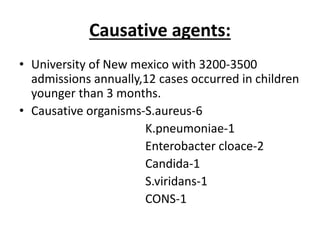
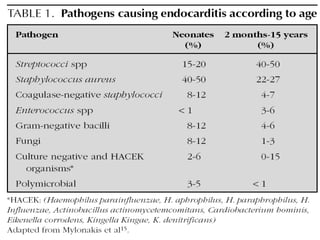
Causative agents:
• University of New mexico with 3200-3500
admissions annually,12 cases occurred in children
younger than 3 months.
• Causative organisms-S.aureus-6
K.pneumoniae-1
Enterobacter cloace-2
Candida-1
S.viridans-1
CONS-1
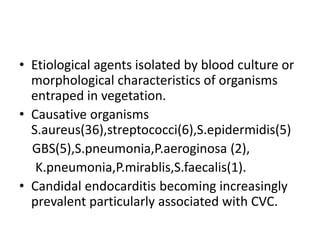
• Etiological agents isolated by blood culture or
morphological characteristics of organisms
entraped in vegetation.
• Causative organisms
S.aureus(36),streptococci(6),S.epidermidis(5)
GBS(5),S.pneumonia,P.aeroginosa (2),
K.pneumonia,P.mirablis,S.faecalis(1).
• Candidal endocarditis becoming increasingly
prevalent particularly associated with CVC.
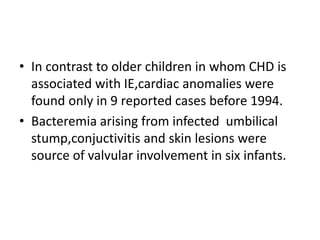
• In contrast to older children in whom CHD is
associated with IE,cardiac anomalies were
found only in 9 reported cases before 1994.
• Bacteremia arising from infected umbilical
stump,conjuctivitis and skin lesions were
source of valvular involvement in six infants.
Pathogenesis:
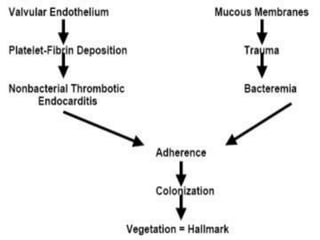
• Neonatal endocarditis frequently occurs on the
right side of the heart and is associated with
disruption of endocardium or valvular
endothelial tissue produced by catheter-induced
trauma,DIC,non specific stress hypoxia and
hypotension.
• Neonates often experience transient episodes of
bacteremia from trauma to the skin and mucous
membranes, vigorous endotracheal suctioning,
parenteral hyper alimentation, or placement of
umbilical or peripheral venous catheters.
• The combination of endothelial damage and
bacteremia is a critical one for the induction of IE
• Mitral valve alone or in combination of other
valve is involved in half of patients
• tricuspid valve in about 12,pulmonary valve 7,
Aortic valve in 7,infected mural thromi in 12
and unspecifeid site 3.
• D/D-NBTE,blood cysts,develoment valvular
defects and hemangioma.
Clinical findings:
• The clinical manifestations of IE in a neonate
are variable and nonspecific and may be
indistinguishable from septicemia or
congestive heart failure from other causes.
• Should be suspected in any neonate with
indwelling catheter,evidence of sepsis and
new or changing heart murmur
• Septic embolic phenomena are common,
resulting in foci of infection outside the heart
(eg, osteomyelitis, meningitis, or pneumonia).
• Although arthritis and arthralgia are common
findings in older children with IE, arthritis is
described infrequently in neonates.
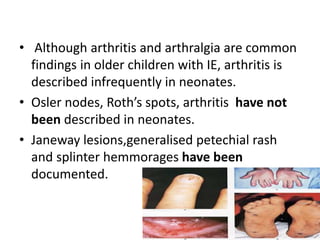
• Osler nodes, Roth’s spots, arthritis have not
been described in neonates.
• Janeway lesions,generalised petechial rash
and splinter hemmorages have been
documented.
Investigations
• 2D Echocardiography:rapid ,non invasive
method for diagnosing IE.
- Cannot differentiate btw infected and sterile
vegetation
-Specific ,false positive readings are
uncommon.
-transesophageal echo and color doppler
imaging improves diagnostic accuracy.
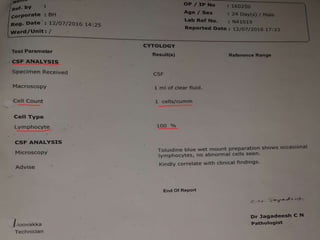
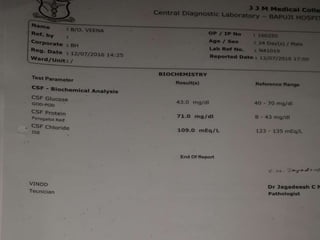
• Blood ,CSF and urine culture should be sent for
bacterial and fungal culture.
• 2 periphreal venous blood sample 1-5ml for
culture to be collected before starting antibiotics.
• TLC ,DC and PLT count are usually indicative of
sepsis than cardiac valve infection.
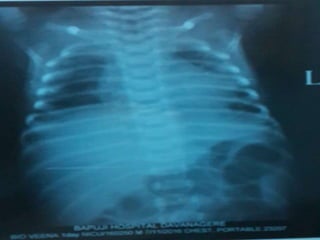
• Chest x ray –to detect CCF or pulmonary
infection.
• Neuroimaging –in infants with neurologic signs ,in
L sided IE
• Baseline determination of inflammatory markers-
CRP and ESR .
• Microhematuria has been reported.
Treatment
• Intravascular catheter must be removed and sent
for c/s.
• Penillinase resistant pencillin +Aminoglycoside
started after sending cultures.
• Vancomycin substituted where MRSA is problem.
• Ampicillin is added or substituted if enterococci is
suspected.
• Fungal endocardits difficult to treat,DOC –
Amphotericin B+5-FU
• 4-8 weeks of parental treatment is adequate.
• CRP and ESR,serial echo,blood c/s.
• Surgical intervention-large or mobile vegetations
obstructing outflow tract or high risk of embolism
Prognosis
• First survivor 1983,subsequently 2/3 cases
have been cured.
• Death is usually due to overwhelming sepsis
and CCF.
References
• Avery`s diseases of the Newborn,9e
• Nelson Textbook of pediatrics:First South Asia
Edition,Robert M.Kleigmann
• Infective Endocarditis in Childhood: 2015 Update
A Scientific Statement From the American Heart
Association
• Remington and Klein's Infectious Diseases of the
Fetus and Newborn Infant, 7th Edition.
Thank
you

Infective endocarditis-Neonate

  • 1.
  • 2.
    • B/o Veena,23 day. • Male child • Wt : 2.7 kg. • DOA:11/07/16 .
  • 3.
    • H/o Fever-Day 8 of life . • No h/o of convulsions, poor feeding ,lethargy, abdominal distension, hurried respiration. • Was admitted for same complaint and treated with IV medications in pvt hospital Bhadravathi for 4 days.
  • 4.
    • Due topersistent fever baby was referred to shivamoga. • Admitted in private hospital Shivmoga for 12 days. • Baby was treated with IV medications and fluids and O2 inhalation, referred to our hospital for further management. • No h/o convulsions,white patches in oral cavity,hurried breathing ,bluish discoloration of extremities during hospital stay. • Abscess over Left foot has been documented in referral letter
  • 5.
    Birth history: • Primigravida • Regular ANC taken . • Antenatal period uneventful.Antenatal USG normal study. • S/T/M/AGA delivered via naturalis ,in hospital cried immediately. B wt-2.75kg.Breast fed within one hour of birth. • Baby was noted to be icteric on D3 given phototherapy for 2days and discharged on D6 of life.
  • 6.
    Treatment History: Treatment receivedin shivmogha • Inj Linezolid-D12 • Inj Meropenem-D9 • Inj clindamycin-D6 • Inj Amphotericin B-D6
  • 7.
    On Examination: • Vitals:HR-182/min SpO2:70% in room air RR-48/min :85% with HBO2 CRAT-good CRT<3sec Temp-98.6F • Anthropometry:OFC-33 cm,Length-49cm. • Oral examination-no e/o oral thrush. • No abscess ,no e/o diaper dermatitis.
  • 8.
    • CVS: S1S2 heard.S2 Loud, Systolic murmur,changing in quality best heard in left lower sternal border. • R/S :No retractions,bilateral air entry adequate.No added sounds. • P/A : Soft non distended,liver 2cm palpable,non tender,Spleen palpable 2 cm below Lt costal margin soft in consistency. • CNS : AF at level.Reflexes and activity -Good
  • 9.
    • B/O Veenaday 23 male child, born through NVD with h/o Fever from D8 of life with examination findings of decreased Spo2, tachycardia and changing murmur and loud S2 with splenomegaly provisional diagnosis-
  • 10.
    Late onset sepsiswith? infective endocarditis with PAH not in CCF
  • 11.
    Investigations Referring Hospitals investigations •Hb-14.4gm%,TLC-19,500/mm3,PMN- 65%,Platelet-28000/mm3. • CRP-37mg/l. • RFT and Electrolytes-normal • Blood C/S-No growth. • Urine examination-Scanty oval budding yeast cell with pseudohypae. • Urine C/S- Candida species grown. Sensitive to Amphotericin B Clotrimazole,Flucanozole and Nystatin
  • 12.
    • 2D Echocardiography: Infectiveendocarditis. Large vegetation on tricuspid valve.8*7 mm Severe TR PAH(+) Good biventricular function
  • 25.
    LATE ONSET SEPSIS–POLYMICROBIAL WITH INFECTIVE ENDOCARDITIS, TRICUSPID VALVE VEGITATION- ?FUNGAL ? KLEBSIELLA WITH SMALL PDA ,NOT IN CCF. Diagnosis:
  • 26.
    Course in hospital: •Baby was started with IV Inj vancomycin ,Inj cefotaxim and Inj flucanozole and continued for 3 weeks. • Change in murmur quality was noted multiple times. • Baby was weaned of from oxygen on D5 of admission and shifted to mother side and discharged at request after 3 weeks of antibiotics.
  • 30.
    Infective Endocarditis InNewborn • Neonatal BE previously uncommon,about 60 cases reported before mid 80s. • Prolonged survival of critically ill babies,complex CCHD,increase use of intravascular catheters,availabilty of echocardiography- responsible for increased recognition.
  • 31.
    Causative agents: • Universityof New mexico with 3200-3500 admissions annually,12 cases occurred in children younger than 3 months. • Causative organisms-S.aureus-6 K.pneumoniae-1 Enterobacter cloace-2 Candida-1 S.viridans-1 CONS-1
  • 32.
    • Etiological agentsisolated by blood culture or morphological characteristics of organisms entraped in vegetation. • Causative organisms S.aureus(36),streptococci(6),S.epidermidis(5) GBS(5),S.pneumonia,P.aeroginosa (2), K.pneumonia,P.mirablis,S.faecalis(1). • Candidal endocarditis becoming increasingly prevalent particularly associated with CVC.
  • 34.
    • In contrastto older children in whom CHD is associated with IE,cardiac anomalies were found only in 9 reported cases before 1994. • Bacteremia arising from infected umbilical stump,conjuctivitis and skin lesions were source of valvular involvement in six infants.
  • 35.
    Pathogenesis: • Neonatal endocarditisfrequently occurs on the right side of the heart and is associated with disruption of endocardium or valvular endothelial tissue produced by catheter-induced trauma,DIC,non specific stress hypoxia and hypotension. • Neonates often experience transient episodes of bacteremia from trauma to the skin and mucous membranes, vigorous endotracheal suctioning, parenteral hyper alimentation, or placement of umbilical or peripheral venous catheters. • The combination of endothelial damage and bacteremia is a critical one for the induction of IE
  • 37.
    • Mitral valvealone or in combination of other valve is involved in half of patients • tricuspid valve in about 12,pulmonary valve 7, Aortic valve in 7,infected mural thromi in 12 and unspecifeid site 3. • D/D-NBTE,blood cysts,develoment valvular defects and hemangioma.
  • 38.
    Clinical findings: • Theclinical manifestations of IE in a neonate are variable and nonspecific and may be indistinguishable from septicemia or congestive heart failure from other causes. • Should be suspected in any neonate with indwelling catheter,evidence of sepsis and new or changing heart murmur • Septic embolic phenomena are common, resulting in foci of infection outside the heart (eg, osteomyelitis, meningitis, or pneumonia).
  • 39.
    • Although arthritisand arthralgia are common findings in older children with IE, arthritis is described infrequently in neonates. • Osler nodes, Roth’s spots, arthritis have not been described in neonates. • Janeway lesions,generalised petechial rash and splinter hemmorages have been documented.
  • 40.
    Investigations • 2D Echocardiography:rapid,non invasive method for diagnosing IE. - Cannot differentiate btw infected and sterile vegetation -Specific ,false positive readings are uncommon. -transesophageal echo and color doppler imaging improves diagnostic accuracy.
  • 41.
    • Blood ,CSFand urine culture should be sent for bacterial and fungal culture. • 2 periphreal venous blood sample 1-5ml for culture to be collected before starting antibiotics. • TLC ,DC and PLT count are usually indicative of sepsis than cardiac valve infection. • Chest x ray –to detect CCF or pulmonary infection. • Neuroimaging –in infants with neurologic signs ,in L sided IE • Baseline determination of inflammatory markers- CRP and ESR . • Microhematuria has been reported.
  • 42.
    Treatment • Intravascular cathetermust be removed and sent for c/s. • Penillinase resistant pencillin +Aminoglycoside started after sending cultures. • Vancomycin substituted where MRSA is problem. • Ampicillin is added or substituted if enterococci is suspected. • Fungal endocardits difficult to treat,DOC – Amphotericin B+5-FU • 4-8 weeks of parental treatment is adequate. • CRP and ESR,serial echo,blood c/s. • Surgical intervention-large or mobile vegetations obstructing outflow tract or high risk of embolism
  • 43.
    Prognosis • First survivor1983,subsequently 2/3 cases have been cured. • Death is usually due to overwhelming sepsis and CCF.
  • 44.
    References • Avery`s diseasesof the Newborn,9e • Nelson Textbook of pediatrics:First South Asia Edition,Robert M.Kleigmann • Infective Endocarditis in Childhood: 2015 Update A Scientific Statement From the American Heart Association • Remington and Klein's Infectious Diseases of the Fetus and Newborn Infant, 7th Edition.
  • 45.