Intrauterine Growth RestrictionIntrauterine Growth Restriction
(IUGR)(IUGR)
Dr. M.C. BansalDr. M.C. Bansal
Definition
• Foetuses of birth weight less than 10th percentile
of those born at same gestational age
or
two standard deviations below the population
mean are considered growth restricted.
« small for gestational age »(SGA) fetuses, all of
which may not necessarily growth restricted as many of
these may be just constitutionally small and not at
risk of any adverse outcome.)
• « Therefore the term IUGR should
more strictly refer to foetuses
that are small for gestational age
and display other signs of chronic
hypoxia or failure to thrive. »
Incidence
• Approximately 3-5% of all
pregnancies.
Normal Fœtal Growth
• Fœtal growth depends on two components:
– Genetic Potential
– Substrate supply
The genetic potential is derived from both parents
and is mediated through growth factors such as
insulin-like growth factor.
Adequate substrate supply is essential to achieve
genetic potential. This is derived from placenta
which is dependent upon the uterine and
placental vascularity
A comparision between normal and
IUGR babies.
Normal and IUGR placenta
Normal Fetal Growth
• Normal fetal growth is characterized
by
cellular hyperplasia followed by
hyperplasia and hypertrophy and
lastly by
hypertrophy alone.
Weight gain
• Foetal growth accelerates from about
5g per day at 14 -15 wks of gestation to
• 10g per day at 20 wks
• Peaks at 30 -35g per day at 32-34wks
• After which growth rate decreases.
Foetal Growth indices
• Symphysiofundal height increases by
about 1cm per wk between 14 and
32 wks.
• Abdominal girth increases by 1 inch
per wk after 30 wks. It is about 30
inches at 30wks in an average built
woman.
Classification of Inrauterine Growth
Restriction
1. Type 1 or symmetrical or intrinsic
IUGR
2. Type 2 or assymetric IUGR
3. Intermediate IUGR
Classification of IUGR
• Type 1 or symmetrical IUGR- (20-30%)
Occurs as a result of growth inhibition early in
pregnancy i.e. the hyperplastic stage. Any
pathological insult at this phase leads to reduced
no. of cells in fetus and overall decreased growth
potential.
Causes include-
 Intrauterine infections (TORCH )
Chromosomal disorders
Congenital malformations
All parameters(head and abdo circumference,
length and weight) are below 10th
percentile
for gestational age, hence normal ponderal
index (birth weight/ht3).
Type 2 or asymmetric IUGR (70-80%)
Occurs as a result of restriction of nutrient
supply in utero i.e. uteroplacental
insufficiency.
It is usually associated with maternal
diseases like:-
– Chronic hypertension
– Renal disease
– Vasculopathies
• The onset of growth restriction occurs usually
after 28 wks of gestation i.e. in the stage of
hypertrophy. The fetus has near normal total
no. of cells but cell size is reduced.
• There is brain sparing effect so that the head
growth remains normal but the abdominal girth
slows down.
• The Ponderal index is low.
• This asymmetry results from redistribution of
fetal cardiac output with increased flow to brain
and heart at the expense of reduced splanchnic
circulation.
• Liver size is reduced because of
diminished glycogen stores.
• In case of severe placental
insufficiency the head growth may also
be affected.
This type of growth restriction leads to
decreased amniotic fluid, chronic
hypoxia and may result in fetal death.
Intermediate IUGR (5-10% of all growth
restricted fetuses)
• It is a combination of type 1 and type 2.
• Fetal growth restriction occurs during
intermediate phase of growth affecting
both hyperplasia and hypertrophy,
resulting in decrease in cell no. as well as
size.
• Causes include
Chronic HT
Lupus nephritis
Maternal vascular diseases that are severe and
• IUGR may also be classified simply
as
 Early onset (onset before 32 weeks)
 Late onset (onset after 32 weeks)
Aetiology
• IUGR is a manifestation of fetal, maternal and
placental disorders that affect fetal growth.
A.Fetal Causes
1. Chromosomal Disorders-
usually result in early onset IUGR.
 Trisomies 13, 18, 21 contribute to 5% of IUGR cases
 Autosomal deletions
 Ring chromosomes
 Sex chromosome disorders are frequently lethal,
fetuses that survive may have growth restriction
(Turner Syndrome)
Fetal causes contd..
2. Congenital Infections:
• The growth potential of fetus may be severely
impaired by intrauterine infections.
• The timing of infection is crucial as the resultant
effects depends on the phase of organogenesis.
• Viruses- rubella, CMV, varicella and HIV
 rubella is the most embryotoxic virus, it cause capillary
endothelial damage during organogenesis and impairs fetal
growth.
 CMV causes cytolysis and localized necrosis in fetus.
• Protozoa- like malaria, toxoplasma, trypanosoma
have also been associated with growth restriction.
Fetal causes contd..
3. Structural Anomalies-
All major structural defects involving
CNS,CVS,GIT, Genitourinary and musculoskeletal
system are associated with increased risk of fetal
growth restriction.
If growth restriction is associated with
polyhydramnios, the incidence of structural
anomaly is substantially increased.
Fetal causes contd..
4. Genetic Causes-
Maternal genes have greater influence on
fetal growth.
Inborn errors of metabolism like agenesis
of pancreas, congenital lipodystrophy,
galactosemia, phenylketonuria also result in
growth restriction of fetus.
B. Placental causes
• Placenta is the sole channel for nutrition and
oxygen supply to the fetus.
Single umblical artery
abnormal placental implantation
velamentous umblical cord insertion
bilobed placenta
placental haemangiomas have all been associated
with fetal growth restriction
C. Maternal Causes
1. Maternal Characteristics:
those contributing to IUGR are-
 Extremes of maternal age
 Grandmultiparity
 History of IUGR in previous pregnancy
 Low maternal weight gain in pregnancy
2. Maternal diseases:
Uteroplacental insufficiency resulting from
medical complications like
 Hypertension
 Renal disease
 Autoimmune disease
 Hyperthyroidism
 Long term insulin dependent diabetes
Maternal causes contd..
• Smoking- active or passive, especially during
third trimester is important cause of IUGR.
Nicotine has vasoconstrctive effect on the
maternal circulation and leads to formaton of
toxic metabolites in fetus.
• Alchohol and Drugs- Alchohol crosses the
placenta freely. It acts as a cellular poison
reducing fetal growth potential.
• Cocaine and opiates are potent vasoconstrictors.
• Warfarin, anticonvulsants and antineoplastic
agents are also implicated in growth restriction
• Thrombophilias- antiphospholipid antibody
syndrome and other thrombophilias leading to
placental thrombosis and impaired trophoblastic
function.
• Nutritional Deficiency- poor intake
-inflammatory bowel disease
Complications of IUGR
Perinatal mortality and morbidity of IUGR infants
is 3-20 times greater than normal infants.
• Antepartum period- increased incidence of-
-still births
-oligohydramnios
IUGR is found in 52% of unexplained stillbirths.
• During labour- higher incidence of-
-meconium aspiration
-fetal distress
-intrapartum fetal death
Complications of IUGR contd..
• Neonatal period- increased incidence of-
-Hypoxic ischemic encephalopathy
-Persistent fetal circulation insufficiency
They have difficulty in temperature regulation because
of absent brown fat and small body mass relative to
surface area.
Lack of glycogen stores may predispose to
hypoglycemia
Chronic intrauterine hypoxia may lead to
polycythemia, necrotizing enterocolitis, other
metabolic abnormalities.
Complications cont..
• Childhood- increases mortality from-
-infectious diseases
-congenital anomalies
Incidence of cerebral palsy are 4-6 times higher.
Subtle impairment of cognitive performance and
educational underachievement.
• Long term complications- increased risk of
coronary heart disease, hypertension, type II
diabetes mellitus, dyslipidaemia and stroke.
Diagnosis of IUGR
Identifying mothers at risk:
Poor maternal nutrition
Poor BMI at conception
Pre-eclampsia
Renal disorders
Diseases causes vascular insufficiency
Infections (TORCH)
Poor maternal wt. gain during pregnancy
• Determination of gestational age is of utmost
importance-
– Can be calculated from the date of LMP- not
reliable
– Ultrasound dating before 21 wks of pregnancy
provides more accurate estimate.
Diagnosis of IUGR
1. Clinically- Serial measurement of fundal
height and abdominal girth.
 Symphysio-fundal height normally increases by
1cm per wk b/w 14 and 32 wks.
 A lag in fundal ht. of 4wks is suggestive of
moderate IUGR.
 A lag of >6 wks is suggestive of severe IUGR.
2. Sonographic evaluation-
 most useful tool for diagnosis of IUGR
 To differentiate between symmetrical and
asymmetrical IUGR
 To monitor the fetal condition.
Fetal biometry:
i. BPD(Biparietal Diameter)- determines gestational
age and type of IUGR.
When growth rate of BPD is below 5th
percentile,
82% of births are below 10th
percentile(i.e. IUGR).
ii. Head circumference- better than BPD in
predicting IUGR.
iii. Transeverse cerebellar diameter(TCD)- can be
used as a method to assess gestational age.
iv. Abdominal circumference(AC)- AC and fetal wt
are most accurate ultrasound parameters for
diagnosis of IUGR.
AC has highest sensitivity and greatest negative
predictive value for sonographic diagnosis of
IUGR
An increase in fetal AC of less than 10 mm in 14 days
has sensitivity of 85% and specificity of 74% for
identification of IUGR.
iv. Measurement ratios- there are some age
independent ratios to detect IUGR.
HC/AC: decreases linearly from 16 to 20 wks of
gestation.
HC/AC >2 SD above mean is predictive of IUGR.
FL/AC: normal value ranges from 22 + 2% in the
second half of pregnancy. Ratio above 23.5% is
considered abnormal.
 Placental Morphology: Acceleration of
placental maturation may occur with IUGR
and PIH.
(Placenta is graded from grade 0 to grade III)
 Amniotic fluid volume: type 2 IUGR is usually
associated with oligohydramnios.
Amniotic fluid index(AFI) between 8 and 25 is
normal.
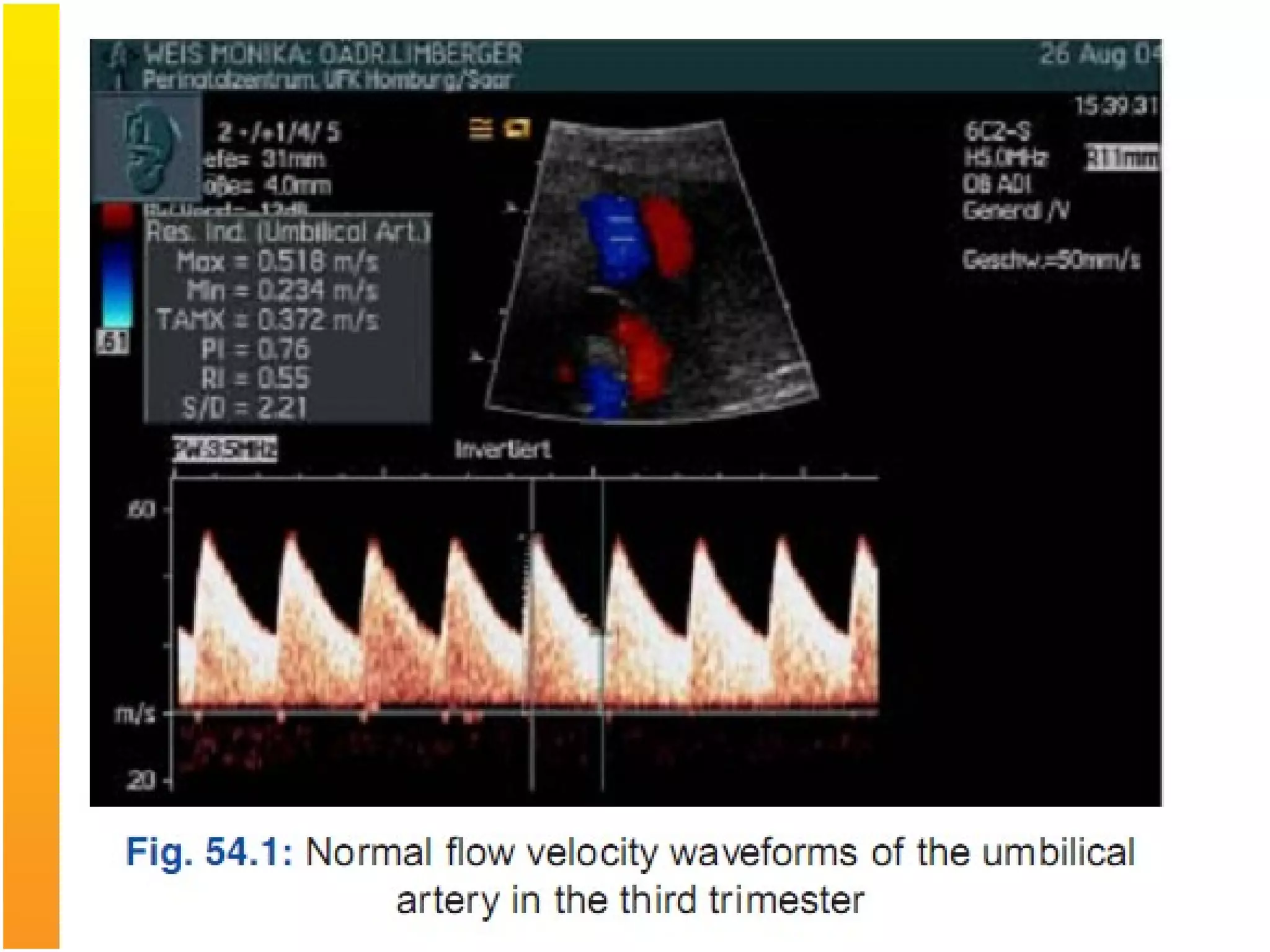
3. Doppler Ultrasonography: doppler flow studies are
important adjuncts to fetal biometry in identifying
the IUGR fetuses at risk of adverse outcome.
Most widely used arterial indices are :
Pulsatility index (PI): Systolic end diastolic peak
velocity / time averaged maximum velocity
Resistance Index(RI): Systolic end diastolic peak
velocity/ systolic peak velocity
Systolic to diastolic ratio(S/D): Systolic peak velocity /
diastolic peak velocity
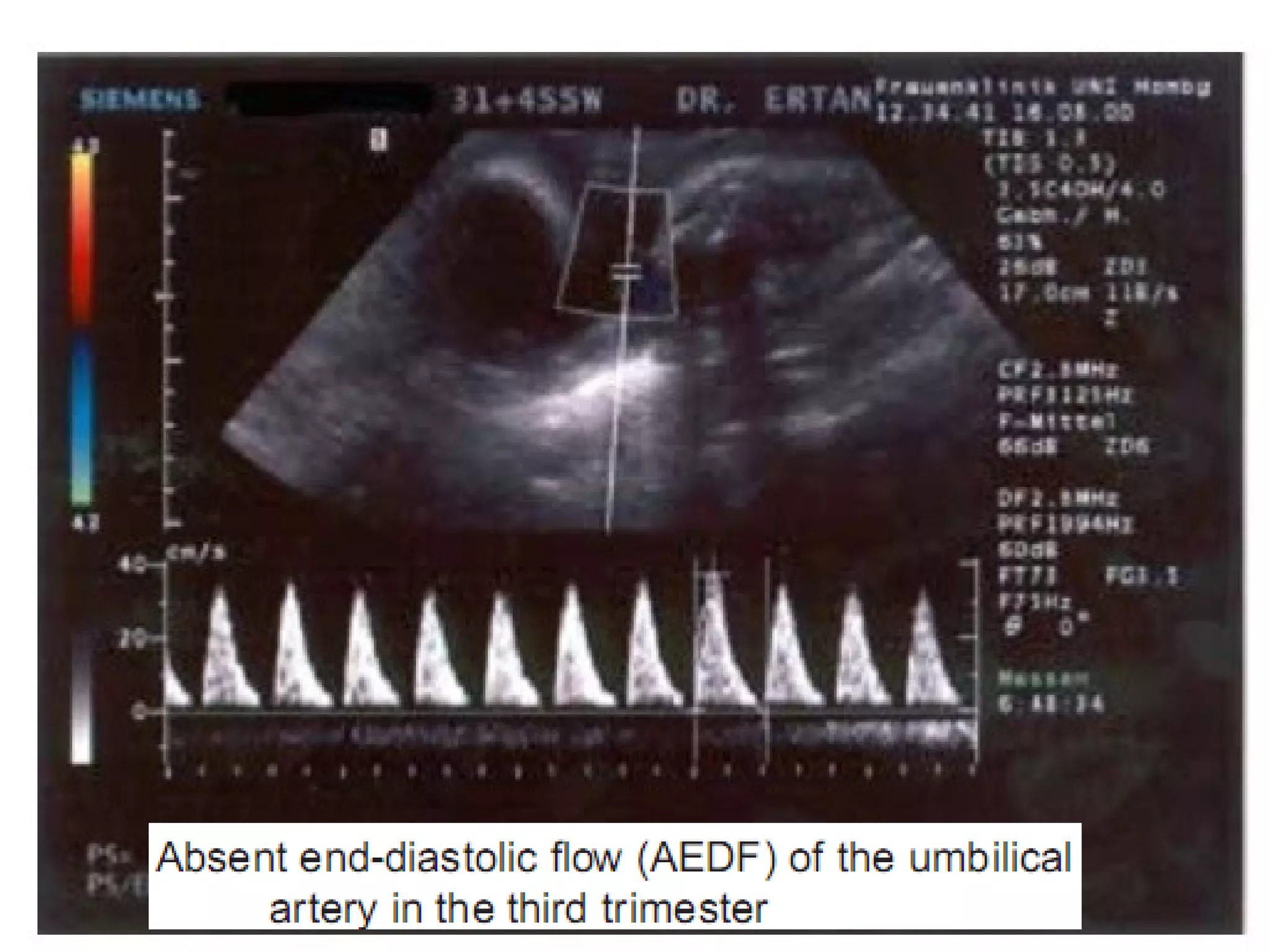
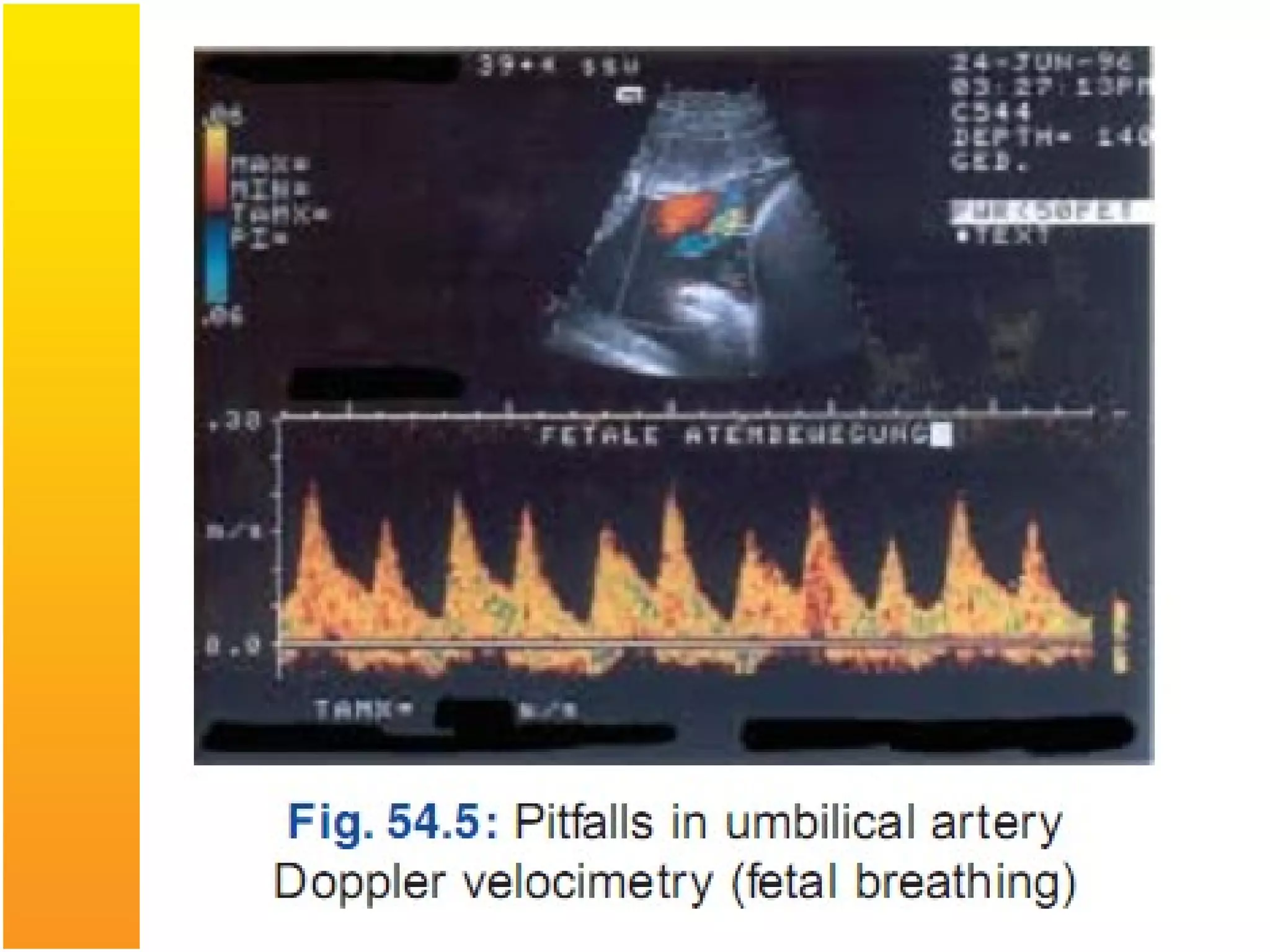
Umblical Artery doppler- In IUGR there is
increased umblical artery resistance (increased
S/D ratio), absent end diastolic flow and finally
reversed end diastolic flow.
Perinatal mortality rate increases significantly in
fetuses with absent end diastolic flow (9-41%)
and reversed end diastolic flow (33-73%) in
umblical artery.
Middle cerebral artery doppler- in a normal fetus
has relatively little flow during diastole.
Increased resistance to blood flow in placenta
results in redistribution of cardiac output to
favour cardiac and cerebral circulations leading
to increased flow in the diastolic phase with
decreased S/D ratio.
Normal Flow velocity waveforms of middle Cerebral Artery
Doppler
Cerebral artery doppler
 Cerebral/Placental ratio: ratio between MCA PI
and umblical artery PI is more sensiive predictor
than either MCA and umblical artery velocimetry
alone to detect redistribution of blood flow.
Cut off values below 1.0 to 1.1 are considered to be
diagnostic of brain spairing effect.
• MCA peak systolic velocimetry: is good indicator
of fetal anaemia and is less useful in IUGR.
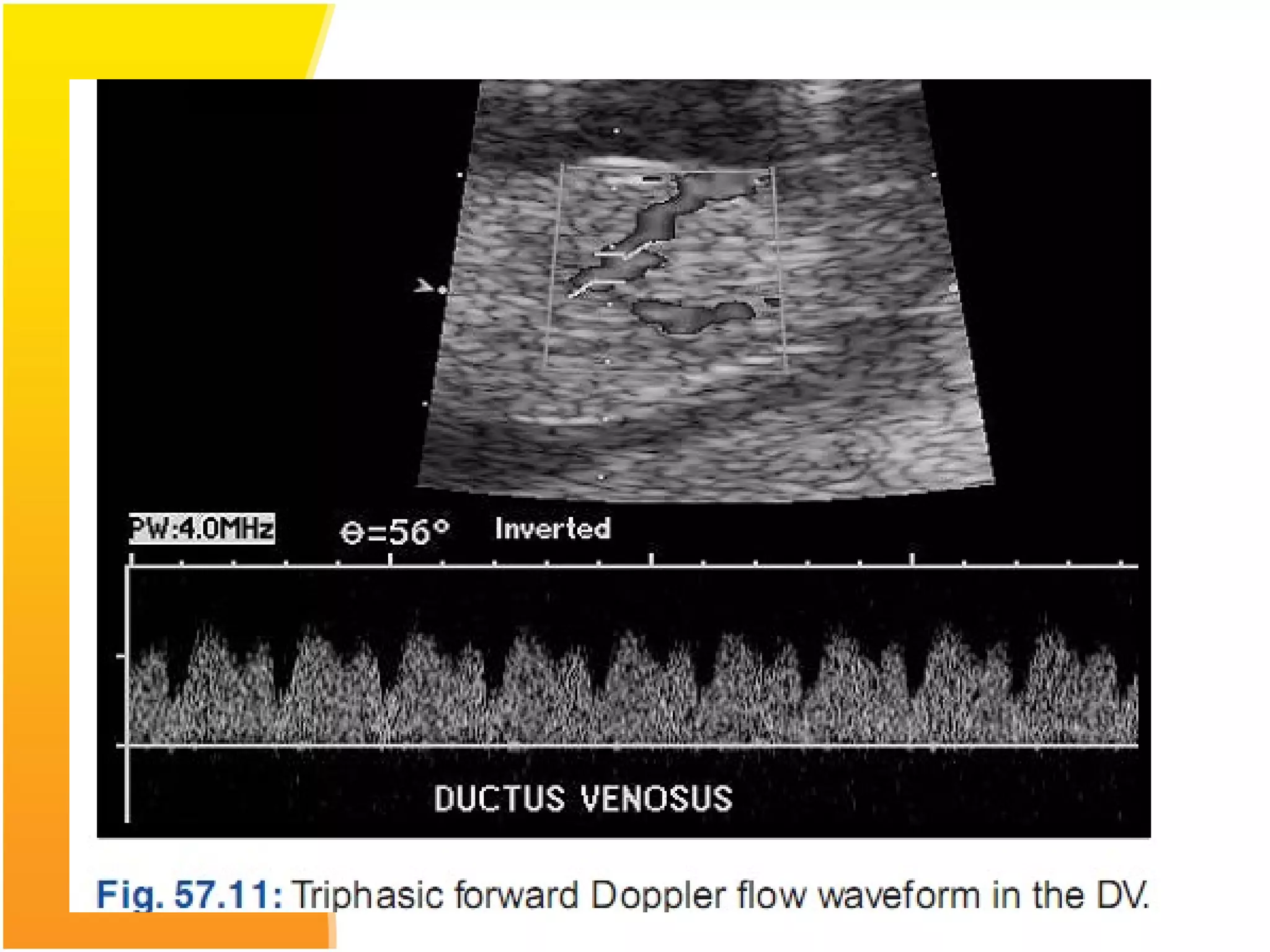
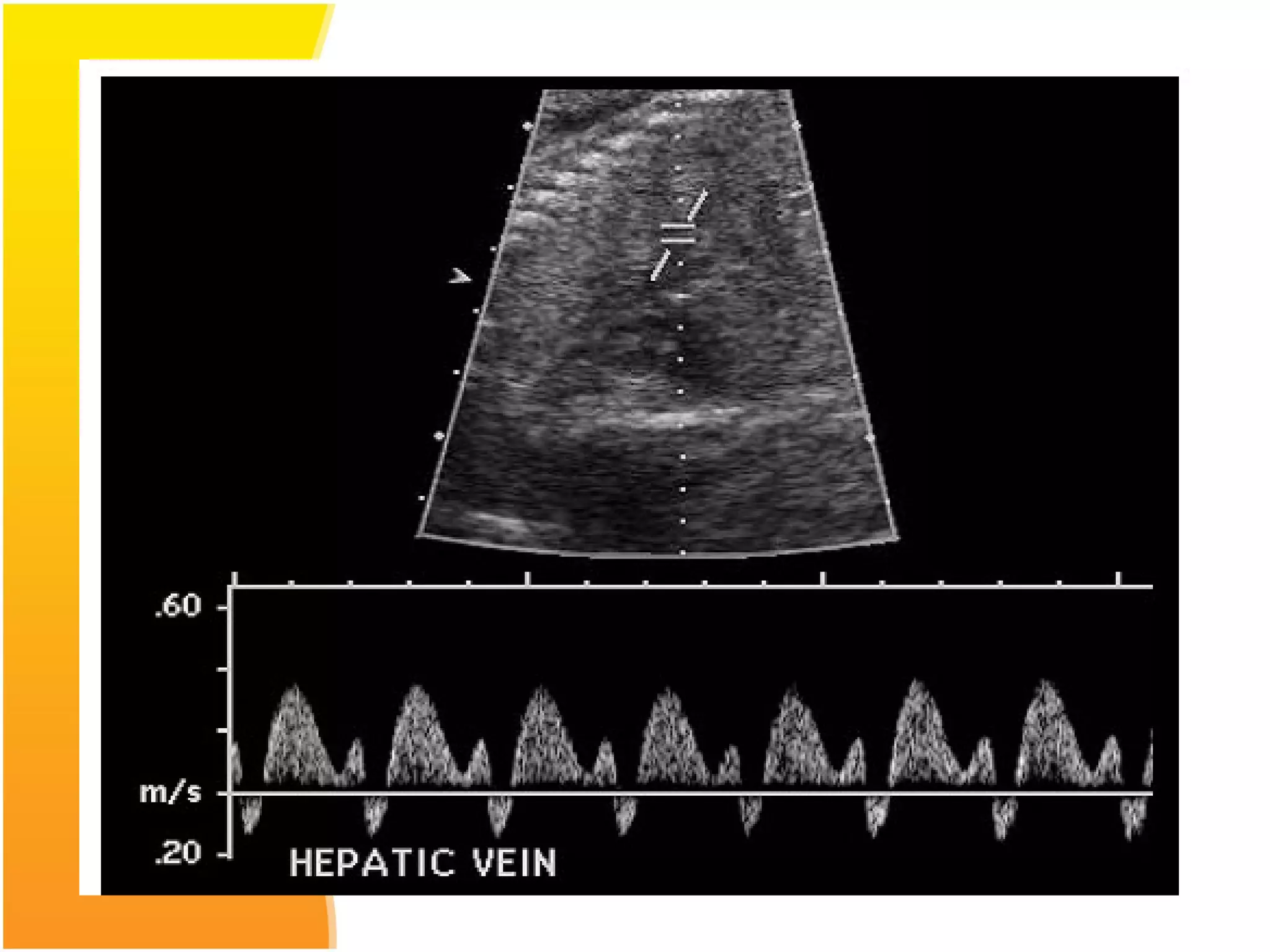
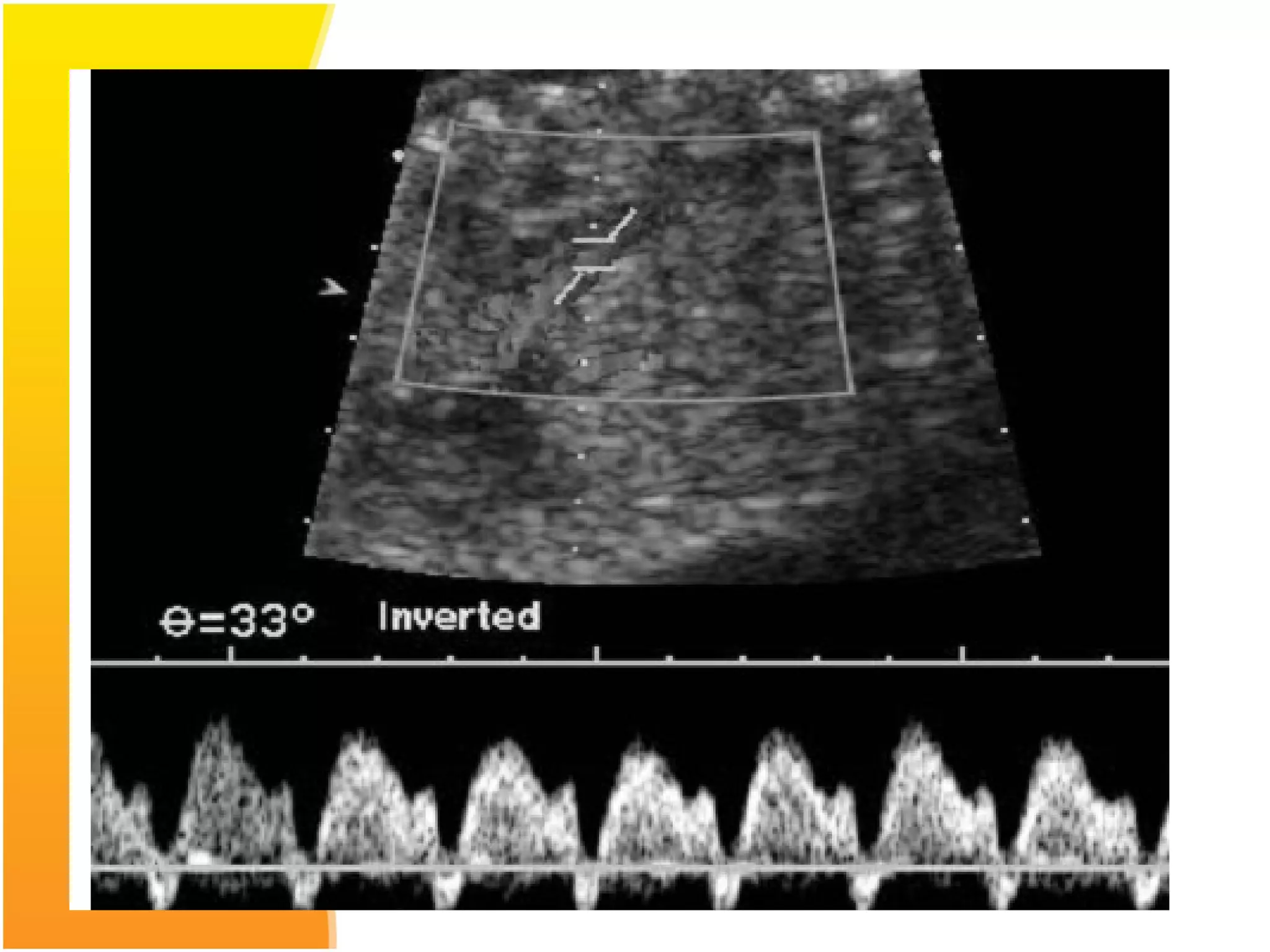
 Ductus venosus doppler: Perinatal mortality in
growth restricted fetuses has been found to be
significantly worse when abnormalities in fetal
venous circulation are detected.
In the normal fetus, flow in the ductus venosus is
forwards , moving towards the heart during entire
cardiac cycle.
When circulatory compensation of the fetus fails, the
ductus venosus waveform shows absent or reverse
blood flow during atrial conraction. Perinatal mortality
being 63-100%.
Therefore it is recommended that fetus should be
delivered before the development of absent of reversed
blood flow of DV.
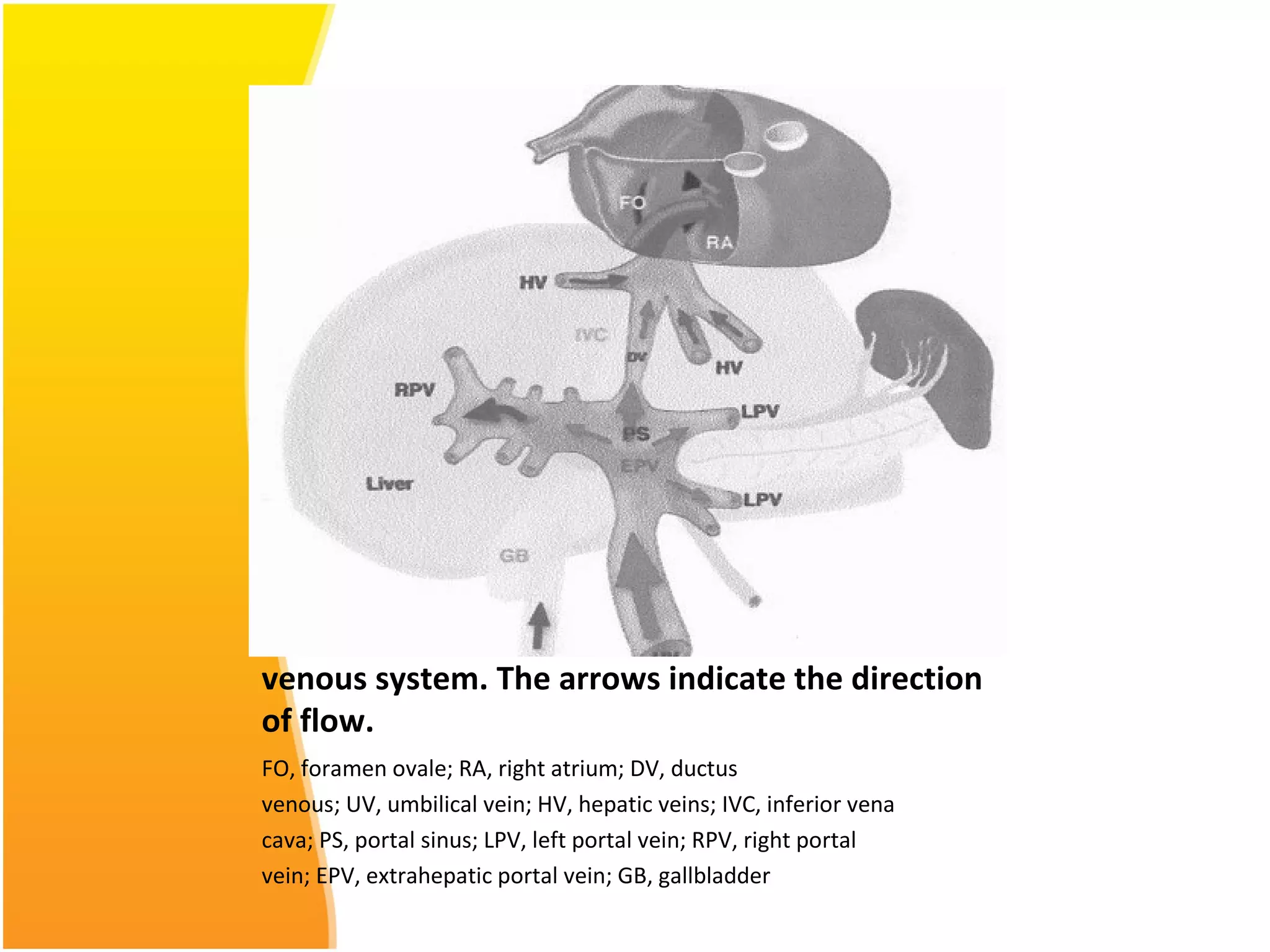
: Representation of fetal umbilical and hepatic
venous system. The arrows indicate the direction
of flow.
FO, foramen ovale; RA, right atrium; DV, ductus
venous; UV, umbilical vein; HV, hepatic veins; IVC, inferior vena
cava; PS, portal sinus; LPV, left portal vein; RPV, right portal
vein; EPV, extrahepatic portal vein; GB, gallbladder
MANAGEMENT
 Principles:
1. Identify the cause of growth restriction.
2. Treat the cause if found.
3. General management
MANAGEMENT
 First step is to identify the aetiology of IUGR:-
Maternal history pertaining to the risk factors of
IUGR.
Clinical examination- maternal habitus, height,
weight, BP etc.
Laboratory investigations- Hb, blood sugar, renal
function tests, serology for TORCH
Specific investigations for thrombophilias in pts with
history suggestive of early onset growth restriction.
Fetal evaluation: thorough ultrasound for growth
restriction, amniotic fluid, congenital anomalies and
doppler evaluation
Management cont..
 Treatment of underlying cause: such as
hypertension, cessation of smoking, protein
energy supplementation in poorly nourished and
underweight women.
 General Management:
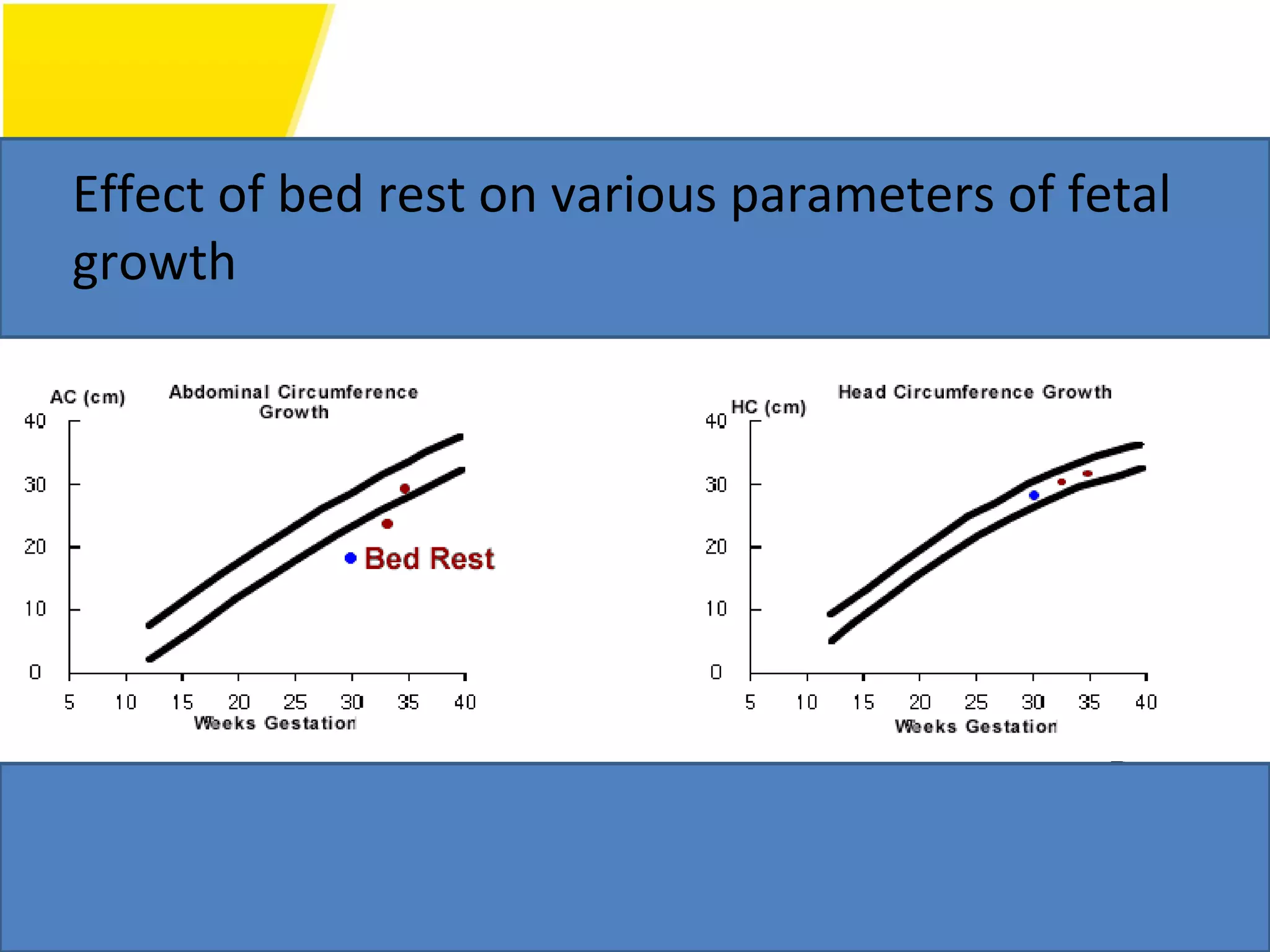
 Bed rest in left lateral position to increase
uteroplacental blood flow
 Maternal nutritional supplementation with high
caloric and protein diets, antioxidents,
haematinics and omega 3 fatty acids, arginine .
 Maternal oxygen therapy: Adminitration of 55%
oxygen at a rate of 8L/min round the clock has
shown decreased perinatal mortality rate.
Effect of bed rest on various parameters of fetal
growth
Management cont..
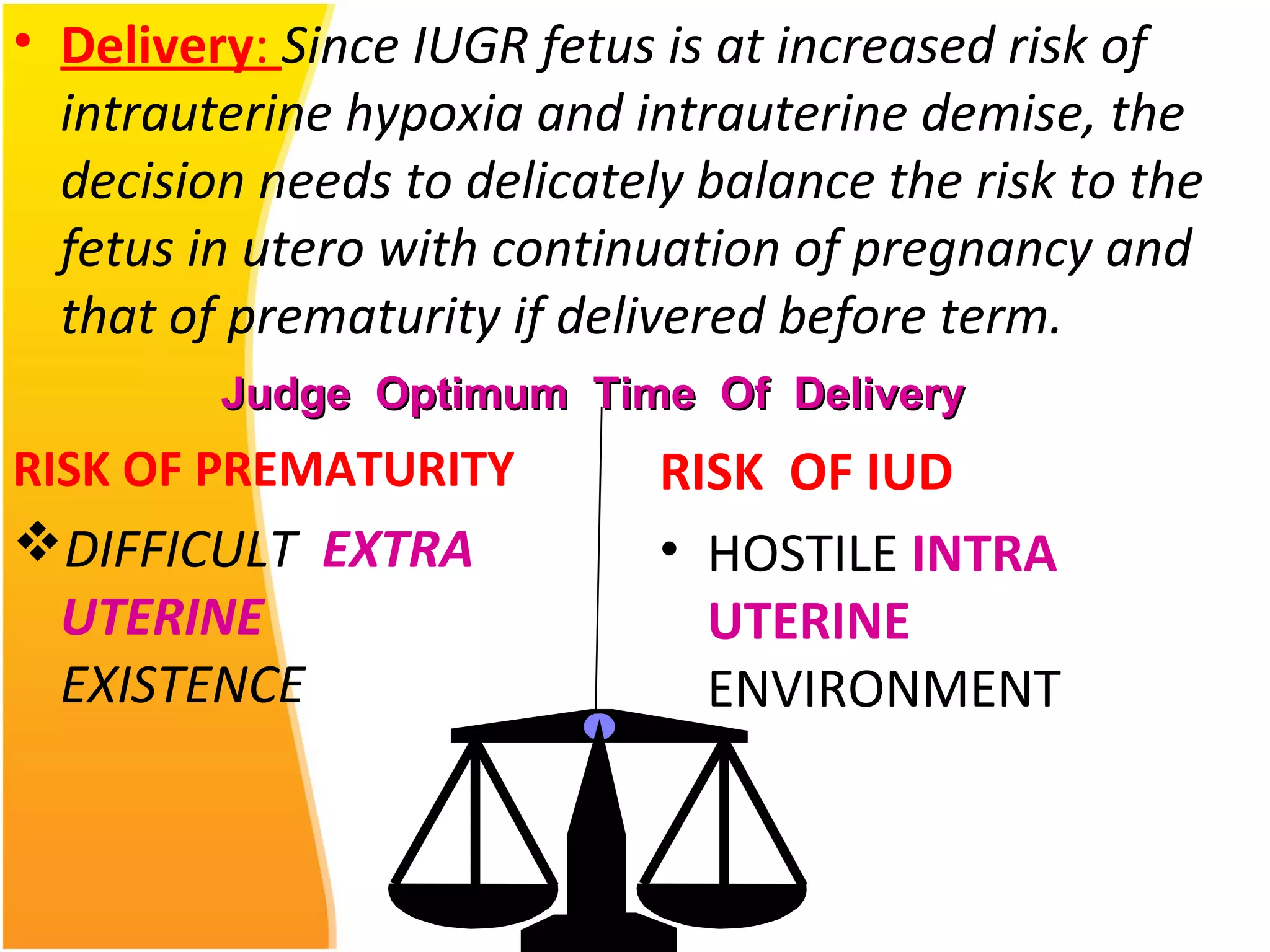
Pharmacological therapy:
Aspirin in low doses(1-2 mg/kg body wt.),
betamimetics etc have been tried but all have
failed to show any significant difference in
incidence of IUGR.
Thus there is no form of therapy currently available
which can reverse IUGR, the only intervention
possible in most cases is delivery.
• Delivery: Since IUGR fetus is at increased risk of
intrauterine hypoxia and intrauterine demise, the
decision needs to delicately balance the risk to the
fetus in utero with continuation of pregnancy and
that of prematurity if delivered before term.
RISK OF PREMATURITY
DIFFICULT EXTRA
UTERINE
EXISTENCE
RISK OF IUD
• HOSTILE INTRA
UTERINE
ENVIRONMENT
Judge Optimum Time Of DeliveryJudge Optimum Time Of Delivery
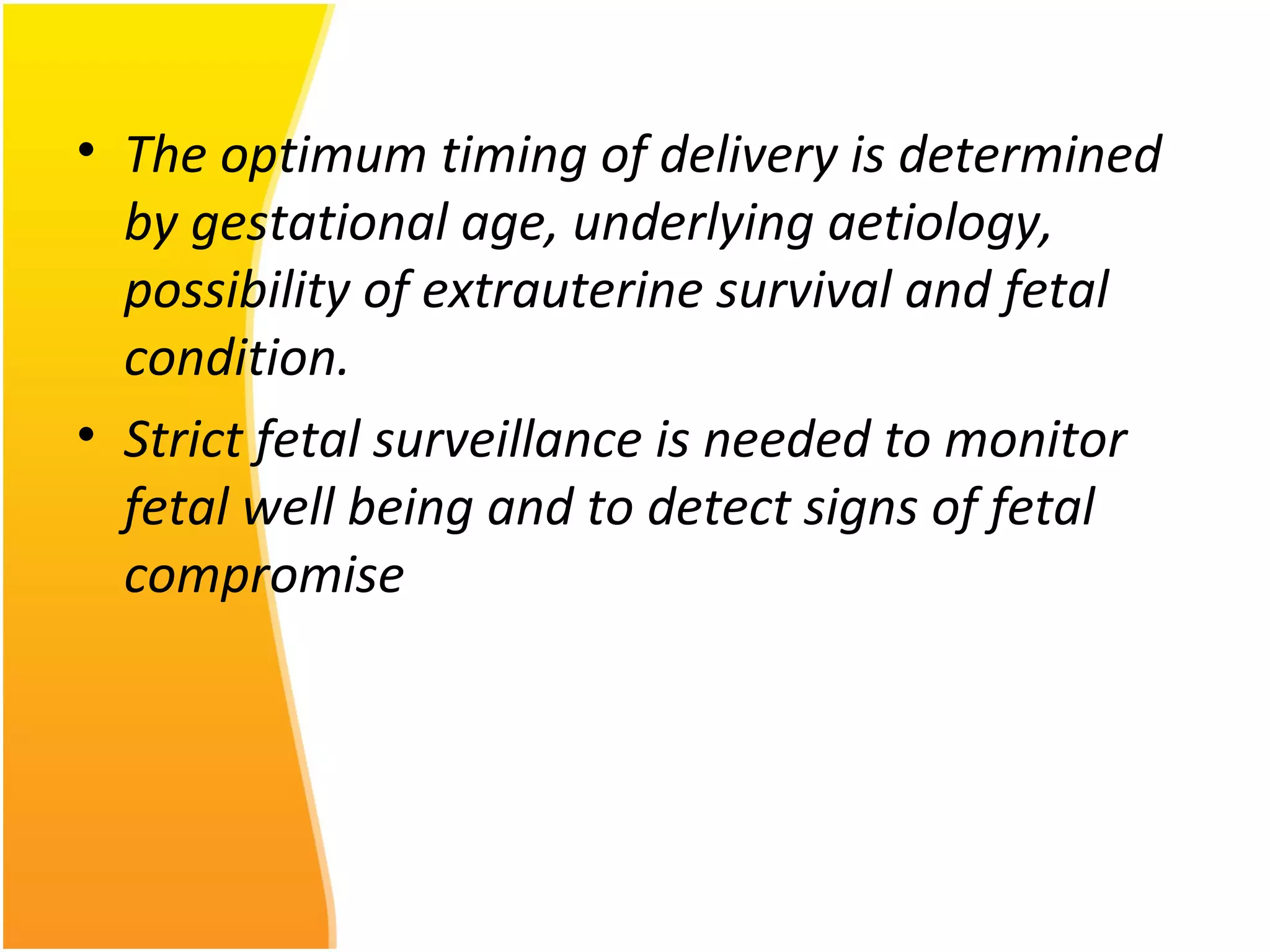
• The optimum timing of delivery is determined
by gestational age, underlying aetiology,
possibility of extrauterine survival and fetal
condition.
• Strict fetal surveillance is needed to monitor
fetal well being and to detect signs of fetal
compromise
Fetal Surveillance
1. Daily fetal movement score
2. Non stress test(NST)
3. Biophysical profile(BPP)
4. Amniotic fluid index(AFI)
5. Growth parameters
6. Doppler studies
Sonography is usually repeated every 2 wks.
Management cont..
• Role of steroids:
Antenatal glucocorticoid administration reduces
the incidence of respiratory distress syndrome,
intraventricular hemorrhage and death in IUGR
fetusus weighing less than 1500gm.
Mode of Delivery
 Fetuses with significant IUGR should be preferably
delivered in well equiped centres which can provide
intrapartum continuous fetal heart monitoring , fetal
blood sampling and expert neonatal care.
 Vaginal delivery: can be allowed as long as
there is no obstetric indication for caesarian
section and fetal heart rate is normal.
• Fetuses with major anomaly incompatible with
life should also be delivered vaginally.
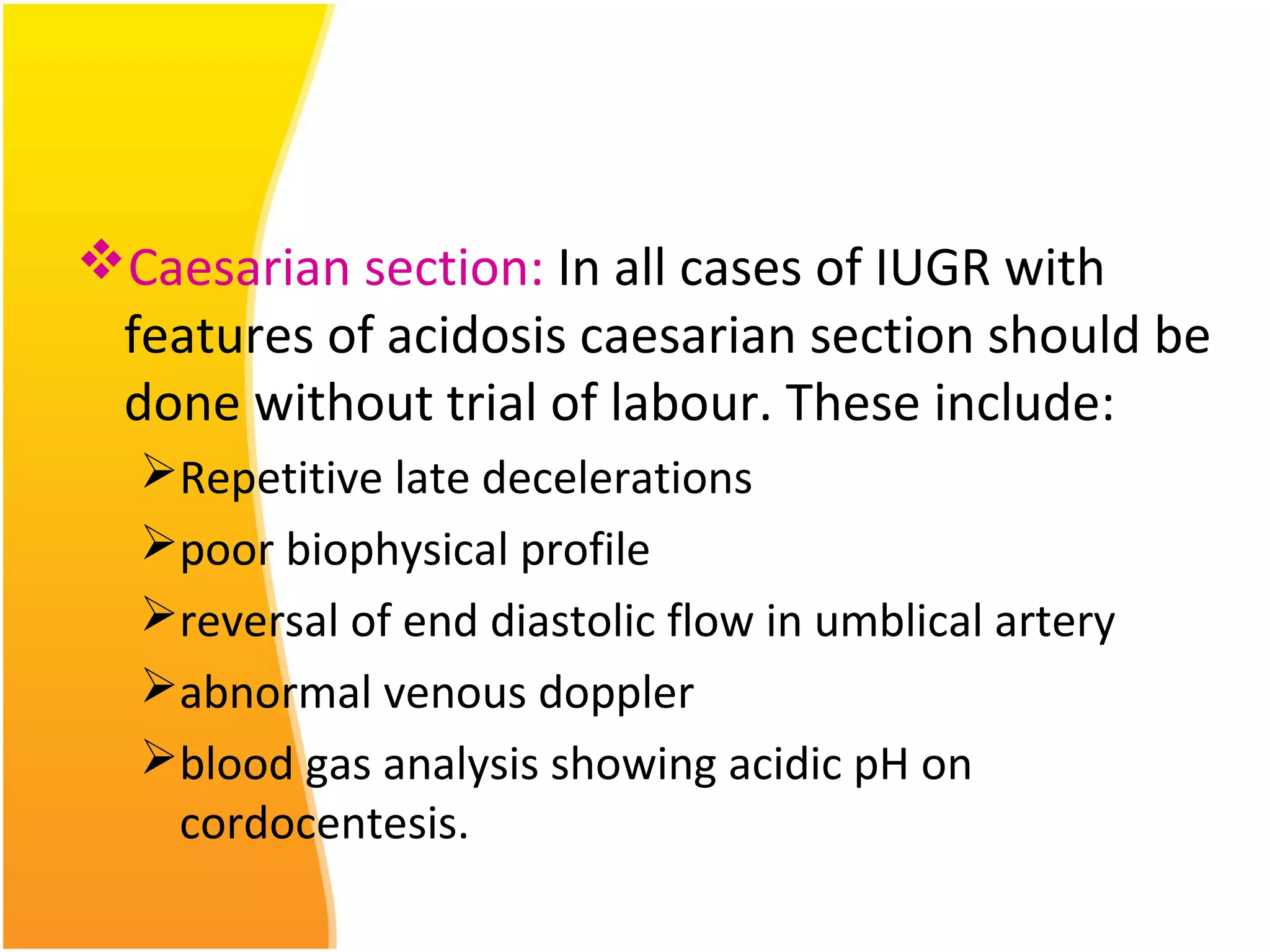
Caesarian section: In all cases of IUGR with
features of acidosis caesarian section should be
done without trial of labour. These include:
Repetitive late decelerations
poor biophysical profile
reversal of end diastolic flow in umblical artery
abnormal venous doppler
blood gas analysis showing acidic pH on
cordocentesis.
Conclusion
One of the primary aims of antenatal care is to
identify fetuses which show a significant growth
lag, since they are at a high risk of hypoxic
complications in the perinatal period.
Management options are limited to close fetal
monitoring and termination of pregnancy
balancing the risk of prematurity and that of
intrauterine demise.
Intrauterine growth restriction

Intrauterine growth restriction

  • 1.
    Intrauterine Growth RestrictionIntrauterineGrowth Restriction (IUGR)(IUGR) Dr. M.C. BansalDr. M.C. Bansal
  • 2.
    Definition • Foetuses ofbirth weight less than 10th percentile of those born at same gestational age or two standard deviations below the population mean are considered growth restricted. « small for gestational age »(SGA) fetuses, all of which may not necessarily growth restricted as many of these may be just constitutionally small and not at risk of any adverse outcome.)
  • 3.
    • « Thereforethe term IUGR should more strictly refer to foetuses that are small for gestational age and display other signs of chronic hypoxia or failure to thrive. »
  • 4.
  • 5.
    Normal Fœtal Growth •Fœtal growth depends on two components: – Genetic Potential – Substrate supply The genetic potential is derived from both parents and is mediated through growth factors such as insulin-like growth factor. Adequate substrate supply is essential to achieve genetic potential. This is derived from placenta which is dependent upon the uterine and placental vascularity
  • 6.
    A comparision betweennormal and IUGR babies.
  • 7.
  • 8.
    Normal Fetal Growth •Normal fetal growth is characterized by cellular hyperplasia followed by hyperplasia and hypertrophy and lastly by hypertrophy alone.
  • 9.
    Weight gain • Foetalgrowth accelerates from about 5g per day at 14 -15 wks of gestation to • 10g per day at 20 wks • Peaks at 30 -35g per day at 32-34wks • After which growth rate decreases. Foetal Growth indices
  • 10.
    • Symphysiofundal heightincreases by about 1cm per wk between 14 and 32 wks. • Abdominal girth increases by 1 inch per wk after 30 wks. It is about 30 inches at 30wks in an average built woman.
  • 11.
    Classification of InrauterineGrowth Restriction 1. Type 1 or symmetrical or intrinsic IUGR 2. Type 2 or assymetric IUGR 3. Intermediate IUGR
  • 12.
    Classification of IUGR •Type 1 or symmetrical IUGR- (20-30%) Occurs as a result of growth inhibition early in pregnancy i.e. the hyperplastic stage. Any pathological insult at this phase leads to reduced no. of cells in fetus and overall decreased growth potential. Causes include-  Intrauterine infections (TORCH ) Chromosomal disorders Congenital malformations
  • 13.
    All parameters(head andabdo circumference, length and weight) are below 10th percentile for gestational age, hence normal ponderal index (birth weight/ht3).
  • 14.
    Type 2 orasymmetric IUGR (70-80%) Occurs as a result of restriction of nutrient supply in utero i.e. uteroplacental insufficiency. It is usually associated with maternal diseases like:- – Chronic hypertension – Renal disease – Vasculopathies
  • 15.
    • The onsetof growth restriction occurs usually after 28 wks of gestation i.e. in the stage of hypertrophy. The fetus has near normal total no. of cells but cell size is reduced. • There is brain sparing effect so that the head growth remains normal but the abdominal girth slows down. • The Ponderal index is low. • This asymmetry results from redistribution of fetal cardiac output with increased flow to brain and heart at the expense of reduced splanchnic circulation.
  • 16.
    • Liver sizeis reduced because of diminished glycogen stores. • In case of severe placental insufficiency the head growth may also be affected. This type of growth restriction leads to decreased amniotic fluid, chronic hypoxia and may result in fetal death.
  • 17.
    Intermediate IUGR (5-10%of all growth restricted fetuses) • It is a combination of type 1 and type 2. • Fetal growth restriction occurs during intermediate phase of growth affecting both hyperplasia and hypertrophy, resulting in decrease in cell no. as well as size. • Causes include Chronic HT Lupus nephritis Maternal vascular diseases that are severe and
  • 18.
    • IUGR mayalso be classified simply as  Early onset (onset before 32 weeks)  Late onset (onset after 32 weeks)
  • 19.
    Aetiology • IUGR isa manifestation of fetal, maternal and placental disorders that affect fetal growth. A.Fetal Causes 1. Chromosomal Disorders- usually result in early onset IUGR.  Trisomies 13, 18, 21 contribute to 5% of IUGR cases  Autosomal deletions  Ring chromosomes  Sex chromosome disorders are frequently lethal, fetuses that survive may have growth restriction (Turner Syndrome)
  • 20.
    Fetal causes contd.. 2.Congenital Infections: • The growth potential of fetus may be severely impaired by intrauterine infections. • The timing of infection is crucial as the resultant effects depends on the phase of organogenesis. • Viruses- rubella, CMV, varicella and HIV  rubella is the most embryotoxic virus, it cause capillary endothelial damage during organogenesis and impairs fetal growth.  CMV causes cytolysis and localized necrosis in fetus. • Protozoa- like malaria, toxoplasma, trypanosoma have also been associated with growth restriction.
  • 21.
    Fetal causes contd.. 3.Structural Anomalies- All major structural defects involving CNS,CVS,GIT, Genitourinary and musculoskeletal system are associated with increased risk of fetal growth restriction. If growth restriction is associated with polyhydramnios, the incidence of structural anomaly is substantially increased.
  • 22.
    Fetal causes contd.. 4.Genetic Causes- Maternal genes have greater influence on fetal growth. Inborn errors of metabolism like agenesis of pancreas, congenital lipodystrophy, galactosemia, phenylketonuria also result in growth restriction of fetus.
  • 23.
    B. Placental causes •Placenta is the sole channel for nutrition and oxygen supply to the fetus. Single umblical artery abnormal placental implantation velamentous umblical cord insertion bilobed placenta placental haemangiomas have all been associated with fetal growth restriction
  • 24.
    C. Maternal Causes 1.Maternal Characteristics: those contributing to IUGR are-  Extremes of maternal age  Grandmultiparity  History of IUGR in previous pregnancy  Low maternal weight gain in pregnancy
  • 25.
    2. Maternal diseases: Uteroplacentalinsufficiency resulting from medical complications like  Hypertension  Renal disease  Autoimmune disease  Hyperthyroidism  Long term insulin dependent diabetes
  • 26.
    Maternal causes contd.. •Smoking- active or passive, especially during third trimester is important cause of IUGR. Nicotine has vasoconstrctive effect on the maternal circulation and leads to formaton of toxic metabolites in fetus. • Alchohol and Drugs- Alchohol crosses the placenta freely. It acts as a cellular poison reducing fetal growth potential. • Cocaine and opiates are potent vasoconstrictors. • Warfarin, anticonvulsants and antineoplastic agents are also implicated in growth restriction
  • 27.
    • Thrombophilias- antiphospholipidantibody syndrome and other thrombophilias leading to placental thrombosis and impaired trophoblastic function. • Nutritional Deficiency- poor intake -inflammatory bowel disease
  • 28.
    Complications of IUGR Perinatalmortality and morbidity of IUGR infants is 3-20 times greater than normal infants. • Antepartum period- increased incidence of- -still births -oligohydramnios IUGR is found in 52% of unexplained stillbirths. • During labour- higher incidence of- -meconium aspiration -fetal distress -intrapartum fetal death
  • 29.
    Complications of IUGRcontd.. • Neonatal period- increased incidence of- -Hypoxic ischemic encephalopathy -Persistent fetal circulation insufficiency They have difficulty in temperature regulation because of absent brown fat and small body mass relative to surface area. Lack of glycogen stores may predispose to hypoglycemia Chronic intrauterine hypoxia may lead to polycythemia, necrotizing enterocolitis, other metabolic abnormalities.
  • 30.
    Complications cont.. • Childhood-increases mortality from- -infectious diseases -congenital anomalies Incidence of cerebral palsy are 4-6 times higher. Subtle impairment of cognitive performance and educational underachievement. • Long term complications- increased risk of coronary heart disease, hypertension, type II diabetes mellitus, dyslipidaemia and stroke.
  • 31.
    Diagnosis of IUGR Identifyingmothers at risk: Poor maternal nutrition Poor BMI at conception Pre-eclampsia Renal disorders Diseases causes vascular insufficiency Infections (TORCH) Poor maternal wt. gain during pregnancy
  • 32.
    • Determination ofgestational age is of utmost importance- – Can be calculated from the date of LMP- not reliable – Ultrasound dating before 21 wks of pregnancy provides more accurate estimate.
  • 33.
    Diagnosis of IUGR 1.Clinically- Serial measurement of fundal height and abdominal girth.  Symphysio-fundal height normally increases by 1cm per wk b/w 14 and 32 wks.  A lag in fundal ht. of 4wks is suggestive of moderate IUGR.  A lag of >6 wks is suggestive of severe IUGR.
  • 34.
    2. Sonographic evaluation- most useful tool for diagnosis of IUGR  To differentiate between symmetrical and asymmetrical IUGR  To monitor the fetal condition. Fetal biometry: i. BPD(Biparietal Diameter)- determines gestational age and type of IUGR. When growth rate of BPD is below 5th percentile, 82% of births are below 10th percentile(i.e. IUGR).
  • 35.
    ii. Head circumference-better than BPD in predicting IUGR. iii. Transeverse cerebellar diameter(TCD)- can be used as a method to assess gestational age. iv. Abdominal circumference(AC)- AC and fetal wt are most accurate ultrasound parameters for diagnosis of IUGR. AC has highest sensitivity and greatest negative predictive value for sonographic diagnosis of IUGR
  • 36.
    An increase infetal AC of less than 10 mm in 14 days has sensitivity of 85% and specificity of 74% for identification of IUGR. iv. Measurement ratios- there are some age independent ratios to detect IUGR. HC/AC: decreases linearly from 16 to 20 wks of gestation. HC/AC >2 SD above mean is predictive of IUGR. FL/AC: normal value ranges from 22 + 2% in the second half of pregnancy. Ratio above 23.5% is considered abnormal.
  • 37.
     Placental Morphology:Acceleration of placental maturation may occur with IUGR and PIH. (Placenta is graded from grade 0 to grade III)  Amniotic fluid volume: type 2 IUGR is usually associated with oligohydramnios. Amniotic fluid index(AFI) between 8 and 25 is normal.
  • 38.
    3. Doppler Ultrasonography:doppler flow studies are important adjuncts to fetal biometry in identifying the IUGR fetuses at risk of adverse outcome. Most widely used arterial indices are : Pulsatility index (PI): Systolic end diastolic peak velocity / time averaged maximum velocity Resistance Index(RI): Systolic end diastolic peak velocity/ systolic peak velocity Systolic to diastolic ratio(S/D): Systolic peak velocity / diastolic peak velocity
  • 39.
    Umblical Artery doppler-In IUGR there is increased umblical artery resistance (increased S/D ratio), absent end diastolic flow and finally reversed end diastolic flow. Perinatal mortality rate increases significantly in fetuses with absent end diastolic flow (9-41%) and reversed end diastolic flow (33-73%) in umblical artery.
  • 44.
    Middle cerebral arterydoppler- in a normal fetus has relatively little flow during diastole. Increased resistance to blood flow in placenta results in redistribution of cardiac output to favour cardiac and cerebral circulations leading to increased flow in the diastolic phase with decreased S/D ratio.
  • 46.
    Normal Flow velocitywaveforms of middle Cerebral Artery Doppler
  • 47.
  • 48.
     Cerebral/Placental ratio:ratio between MCA PI and umblical artery PI is more sensiive predictor than either MCA and umblical artery velocimetry alone to detect redistribution of blood flow. Cut off values below 1.0 to 1.1 are considered to be diagnostic of brain spairing effect. • MCA peak systolic velocimetry: is good indicator of fetal anaemia and is less useful in IUGR.
  • 49.
     Ductus venosusdoppler: Perinatal mortality in growth restricted fetuses has been found to be significantly worse when abnormalities in fetal venous circulation are detected. In the normal fetus, flow in the ductus venosus is forwards , moving towards the heart during entire cardiac cycle. When circulatory compensation of the fetus fails, the ductus venosus waveform shows absent or reverse blood flow during atrial conraction. Perinatal mortality being 63-100%. Therefore it is recommended that fetus should be delivered before the development of absent of reversed blood flow of DV.
  • 50.
    : Representation offetal umbilical and hepatic venous system. The arrows indicate the direction of flow. FO, foramen ovale; RA, right atrium; DV, ductus venous; UV, umbilical vein; HV, hepatic veins; IVC, inferior vena cava; PS, portal sinus; LPV, left portal vein; RPV, right portal vein; EPV, extrahepatic portal vein; GB, gallbladder
  • 55.
    MANAGEMENT  Principles: 1. Identifythe cause of growth restriction. 2. Treat the cause if found. 3. General management
  • 56.
    MANAGEMENT  First stepis to identify the aetiology of IUGR:- Maternal history pertaining to the risk factors of IUGR. Clinical examination- maternal habitus, height, weight, BP etc. Laboratory investigations- Hb, blood sugar, renal function tests, serology for TORCH Specific investigations for thrombophilias in pts with history suggestive of early onset growth restriction. Fetal evaluation: thorough ultrasound for growth restriction, amniotic fluid, congenital anomalies and doppler evaluation
  • 57.
    Management cont..  Treatmentof underlying cause: such as hypertension, cessation of smoking, protein energy supplementation in poorly nourished and underweight women.
  • 58.
     General Management: Bed rest in left lateral position to increase uteroplacental blood flow  Maternal nutritional supplementation with high caloric and protein diets, antioxidents, haematinics and omega 3 fatty acids, arginine .  Maternal oxygen therapy: Adminitration of 55% oxygen at a rate of 8L/min round the clock has shown decreased perinatal mortality rate.
  • 59.
    Effect of bedrest on various parameters of fetal growth
  • 60.
    Management cont.. Pharmacological therapy: Aspirinin low doses(1-2 mg/kg body wt.), betamimetics etc have been tried but all have failed to show any significant difference in incidence of IUGR. Thus there is no form of therapy currently available which can reverse IUGR, the only intervention possible in most cases is delivery.
  • 61.
    • Delivery: SinceIUGR fetus is at increased risk of intrauterine hypoxia and intrauterine demise, the decision needs to delicately balance the risk to the fetus in utero with continuation of pregnancy and that of prematurity if delivered before term. RISK OF PREMATURITY DIFFICULT EXTRA UTERINE EXISTENCE RISK OF IUD • HOSTILE INTRA UTERINE ENVIRONMENT Judge Optimum Time Of DeliveryJudge Optimum Time Of Delivery
  • 62.
    • The optimumtiming of delivery is determined by gestational age, underlying aetiology, possibility of extrauterine survival and fetal condition. • Strict fetal surveillance is needed to monitor fetal well being and to detect signs of fetal compromise
  • 63.
    Fetal Surveillance 1. Dailyfetal movement score 2. Non stress test(NST) 3. Biophysical profile(BPP) 4. Amniotic fluid index(AFI) 5. Growth parameters 6. Doppler studies Sonography is usually repeated every 2 wks.
  • 64.
    Management cont.. • Roleof steroids: Antenatal glucocorticoid administration reduces the incidence of respiratory distress syndrome, intraventricular hemorrhage and death in IUGR fetusus weighing less than 1500gm.
  • 65.
    Mode of Delivery Fetuses with significant IUGR should be preferably delivered in well equiped centres which can provide intrapartum continuous fetal heart monitoring , fetal blood sampling and expert neonatal care.  Vaginal delivery: can be allowed as long as there is no obstetric indication for caesarian section and fetal heart rate is normal. • Fetuses with major anomaly incompatible with life should also be delivered vaginally.
  • 66.
    Caesarian section: Inall cases of IUGR with features of acidosis caesarian section should be done without trial of labour. These include: Repetitive late decelerations poor biophysical profile reversal of end diastolic flow in umblical artery abnormal venous doppler blood gas analysis showing acidic pH on cordocentesis.
  • 67.
    Conclusion One of theprimary aims of antenatal care is to identify fetuses which show a significant growth lag, since they are at a high risk of hypoxic complications in the perinatal period. Management options are limited to close fetal monitoring and termination of pregnancy balancing the risk of prematurity and that of intrauterine demise.