Developmentally 
Supportive Care and 
Respiratory Support in 
the NICU
Developmental Care 
 Recognizes the physical, psychological and emotional 
vulnerabilities of infants and their families. 
 Focused on minimizing potential short and long-term 
complications associated with the hospital experience. 
(Coughlin, Gibbins, & Hoath, 2009)
Developmental Care 
(continue) 
 The concept combines developing infant, his family and 
the environment where he exist. The goal is to provide 
care environment, which supports and encourages the 
developmental organization of the premature and/or 
critically ill infant. 
 For example: 
Cluster care in the NICU can improve infant’s outcomes. 
By protecting his sleep we encourage natural heeling and 
promote development of his brain.
Developmental Care 
(examples continue) 
Supporting the infant during painful procedures by containing him or 
giving a soother can improve outcomes and his perception of pain 
Changing positions will stimulate different parts of the body and brain 
and will help with muscular and neural development 
Teaching and involving parents in their child’s care will help them to 
develop confidence, and support the partnership between the care 
provider and the family 
Being receptive and sensitive to infant’s cues will help the care 
provider to get “to know” him and apply individualized care 
(Gardner, Carter, Enzman-Hines, & Hernandez, 2011)
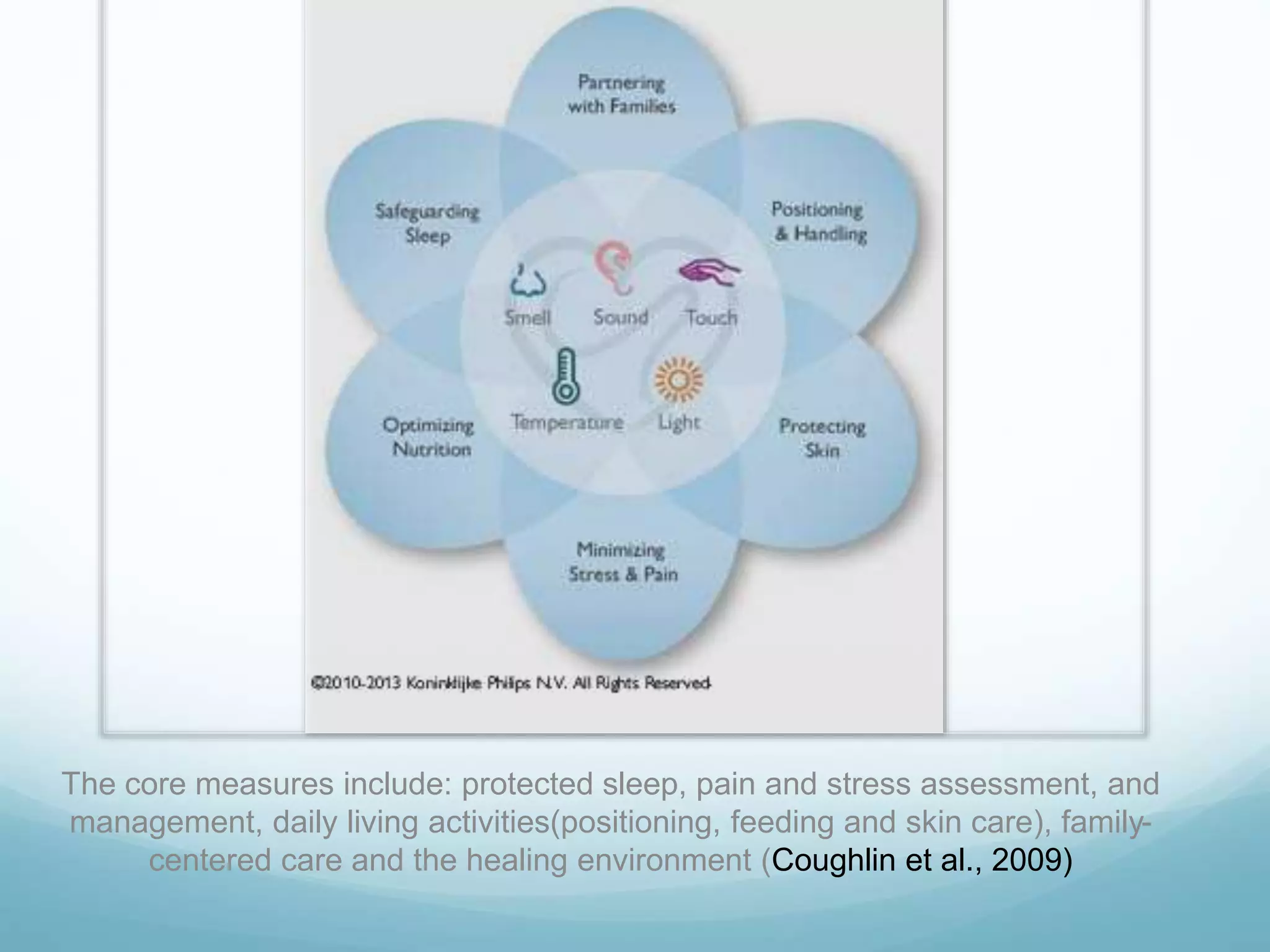
The core measures include: protected sleep, pain and stress assessment, and 
management, daily living activities(positioning, feeding and skin care), family-centered 
care and the healing environment (Coughlin et al., 2009)
Respiratory support and 
developmental care 
Although initiating respiratory care is essential and 
life saving, it conceals many risks factors and challenges. 
Ventilated infant and his family become far more vulnerable 
and require special treatment that include holistic and 
sensitive care. 
Parent involvement in these cases is important, as 
they are the ideal planers and providers of developmentally 
appropriate care. 
Anticipation and careful planning is crucial to avoid 
unnecessary handling and procedures.
Respiratory support and 
developmental care 
(continue) 
 Respiratory support can interfere with the ability of the infant 
to communicate his needs 
 Take control over the environment from the infant and 
increase his vulnerability 
 Jeopardize infant’s development of self and trust by 
noncontingent stimulation 
 May lead to overstimulation and disruption of essential 
heeling processes 
 Can prevent the family from initiating contact and delay 
bonding
Effect of DSC on Infant 
Receiving Respiratory 
Support 
Developmental support important to every infant in the 
NICU, however infants receiving respiratory support are the 
most vulnerable and will benefit the most. 
 Consistency of care providers will allow the caregiver to get 
familiar with behavior functioning of an infant. 
 Procedures like suctioning should be done only on PRN 
basis, while providing physical support 
 Quiet environment and dim lights will enhance rest and 
sleep.
Effect of DSC on Infant 
Receiving Respiratory Support 
 Uninterrupted sleep have been associated with increased 
weight gain and improved state organization 
 Containing the infant’s limbs will reduce random 
movement and help to conserve energy for growing 
Research showed that infants that were treated 
according to developmentally supportive care were 
extubated earlier and required less oxygen therapy (Becker, 
Grunwald, Moorman, & Stuhr, 1991)
Description of Learning 
With increasing technology and the variety of 
medical treatment options, the infant became a patient 
that we treat. DSC remind us that the newborn has its 
own personality, his own path and can communicate his 
needs. Based on observation of behavior cues we can 
“tailor” the treatment to a specific baby and his family. 
The DSC model “humanized” the medical care that 
we were giving, and I can’t agree more with it. I believe it 
allows parents and caregivers to have a better emotional 
attachment, to see a baby rather than a patient. 
Promoting DSC can play a big role in shaping the future 
on neonatal care.
Reference 
Becker, P., Grunwald, P., Moorman, J., & Stuhr, S. (1991). Outcomes of Developmentally Supportive Nursing Care for 
Very Low Birth Weight Infants. Nursing Research. Retrieved from 
http://journals.lww.com/nursingresearchonline/Abstract/1991/05000/Outcomes_of_Developmentally_Supportive_Nursing.6.aspx 
Coughlin, M., Gibbins, S., & Hoath, S. (2009). Core measures for developmentally supportive care in neonatal intensive 
care units: theory, precedence and practice. Journal of Advanced Nursing, 65(10), 2239–48. doi:10.1111/j.1365-2648.2009.05052.x 
Gardner, S. L., Carter, B. S., Enzman-Hines, M., & Hernandez, J. A. (2011). Merenstein & Gardner’s Handbook of 
Neonatal Intensive Care (7th ed.). St. Louis: Mosby. 
Lawhon, G. (1997). Providing developmentally supportive care in the newborn intensive care unit: an evolving challenge. 
The Journal of Perinatal & Neonatal Nursing, 10(4), 48–61.

Developmentally Supportive Care

  • 1.
    Developmentally Supportive Careand Respiratory Support in the NICU
  • 2.
    Developmental Care Recognizes the physical, psychological and emotional vulnerabilities of infants and their families.  Focused on minimizing potential short and long-term complications associated with the hospital experience. (Coughlin, Gibbins, & Hoath, 2009)
  • 3.
    Developmental Care (continue)  The concept combines developing infant, his family and the environment where he exist. The goal is to provide care environment, which supports and encourages the developmental organization of the premature and/or critically ill infant.  For example: Cluster care in the NICU can improve infant’s outcomes. By protecting his sleep we encourage natural heeling and promote development of his brain.
  • 4.
    Developmental Care (examplescontinue) Supporting the infant during painful procedures by containing him or giving a soother can improve outcomes and his perception of pain Changing positions will stimulate different parts of the body and brain and will help with muscular and neural development Teaching and involving parents in their child’s care will help them to develop confidence, and support the partnership between the care provider and the family Being receptive and sensitive to infant’s cues will help the care provider to get “to know” him and apply individualized care (Gardner, Carter, Enzman-Hines, & Hernandez, 2011)
  • 5.
    The core measuresinclude: protected sleep, pain and stress assessment, and management, daily living activities(positioning, feeding and skin care), family-centered care and the healing environment (Coughlin et al., 2009)
  • 6.
    Respiratory support and developmental care Although initiating respiratory care is essential and life saving, it conceals many risks factors and challenges. Ventilated infant and his family become far more vulnerable and require special treatment that include holistic and sensitive care. Parent involvement in these cases is important, as they are the ideal planers and providers of developmentally appropriate care. Anticipation and careful planning is crucial to avoid unnecessary handling and procedures.
  • 7.
    Respiratory support and developmental care (continue)  Respiratory support can interfere with the ability of the infant to communicate his needs  Take control over the environment from the infant and increase his vulnerability  Jeopardize infant’s development of self and trust by noncontingent stimulation  May lead to overstimulation and disruption of essential heeling processes  Can prevent the family from initiating contact and delay bonding
  • 8.
    Effect of DSCon Infant Receiving Respiratory Support Developmental support important to every infant in the NICU, however infants receiving respiratory support are the most vulnerable and will benefit the most.  Consistency of care providers will allow the caregiver to get familiar with behavior functioning of an infant.  Procedures like suctioning should be done only on PRN basis, while providing physical support  Quiet environment and dim lights will enhance rest and sleep.
  • 9.
    Effect of DSCon Infant Receiving Respiratory Support  Uninterrupted sleep have been associated with increased weight gain and improved state organization  Containing the infant’s limbs will reduce random movement and help to conserve energy for growing Research showed that infants that were treated according to developmentally supportive care were extubated earlier and required less oxygen therapy (Becker, Grunwald, Moorman, & Stuhr, 1991)
  • 10.
    Description of Learning With increasing technology and the variety of medical treatment options, the infant became a patient that we treat. DSC remind us that the newborn has its own personality, his own path and can communicate his needs. Based on observation of behavior cues we can “tailor” the treatment to a specific baby and his family. The DSC model “humanized” the medical care that we were giving, and I can’t agree more with it. I believe it allows parents and caregivers to have a better emotional attachment, to see a baby rather than a patient. Promoting DSC can play a big role in shaping the future on neonatal care.
  • 11.
    Reference Becker, P.,Grunwald, P., Moorman, J., & Stuhr, S. (1991). Outcomes of Developmentally Supportive Nursing Care for Very Low Birth Weight Infants. Nursing Research. Retrieved from http://journals.lww.com/nursingresearchonline/Abstract/1991/05000/Outcomes_of_Developmentally_Supportive_Nursing.6.aspx Coughlin, M., Gibbins, S., & Hoath, S. (2009). Core measures for developmentally supportive care in neonatal intensive care units: theory, precedence and practice. Journal of Advanced Nursing, 65(10), 2239–48. doi:10.1111/j.1365-2648.2009.05052.x Gardner, S. L., Carter, B. S., Enzman-Hines, M., & Hernandez, J. A. (2011). Merenstein & Gardner’s Handbook of Neonatal Intensive Care (7th ed.). St. Louis: Mosby. Lawhon, G. (1997). Providing developmentally supportive care in the newborn intensive care unit: an evolving challenge. The Journal of Perinatal & Neonatal Nursing, 10(4), 48–61.

Editor's Notes

  • #3 Based on the belief that infant is a person an can communicate its needs, the developmental care theory encourage us to examine infant responses and adjust our caregiving activities.
  • #5 Infants benefit from DSC included: better neurobehavioral- autonomic and motor system regulation, self-regulation and reduced need for interventions. Overall infants treated based on DSC system needed fewer days on TPN, improved weight gain and fewer days in the NICU (Gardner et al., 2011)
  • #7 Expert nursing care requires understanding of infant’s needs, knowing infant behavior and anticipating outcomes. To provide continuous support and decrease stressors the nurse must advocate for the family and be able to provide individualized developmental care.
  • #8 Sleep disruption was associated with hypoxemia (Gardner et al., 2011)