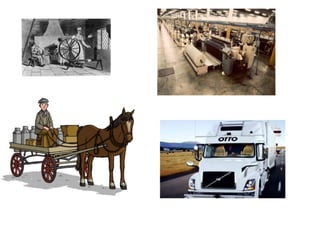
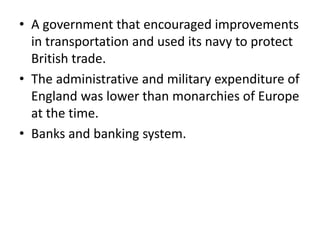
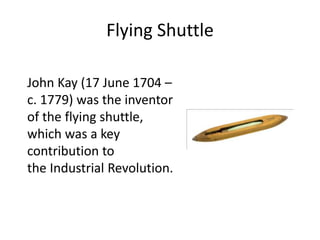
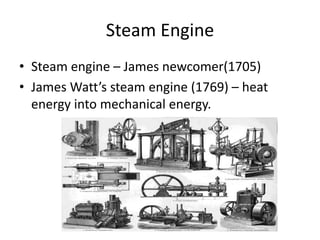
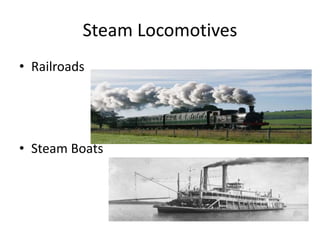
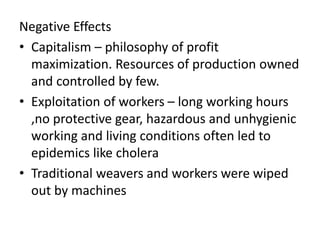
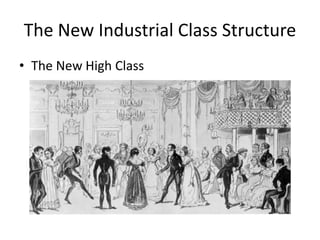
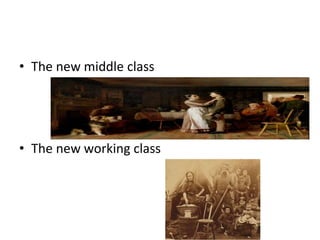
The Industrial Revolution occurred between 1750-1850 and brought radical changes through new manufacturing processes. This transition included moving from hand production to machines, new chemical and iron production methods, and the increasing use of steam power. Key developments were James Watt's improved steam engine in 1769, which converted heat into mechanical energy, and railroads and steam boats. The availability of coal and iron in England, as well as favorable government policies, encouraged industrialization to begin in England through inventions like the spinning jenny and flying shuttle that increased textile production. While the factory system boosted large-scale production, negative impacts included the exploitation of workers through long hours, hazardous conditions, and a new social class structure.