TRAINING PROGRAM
By: RAHUL AHUJA
What is Manual Handling?
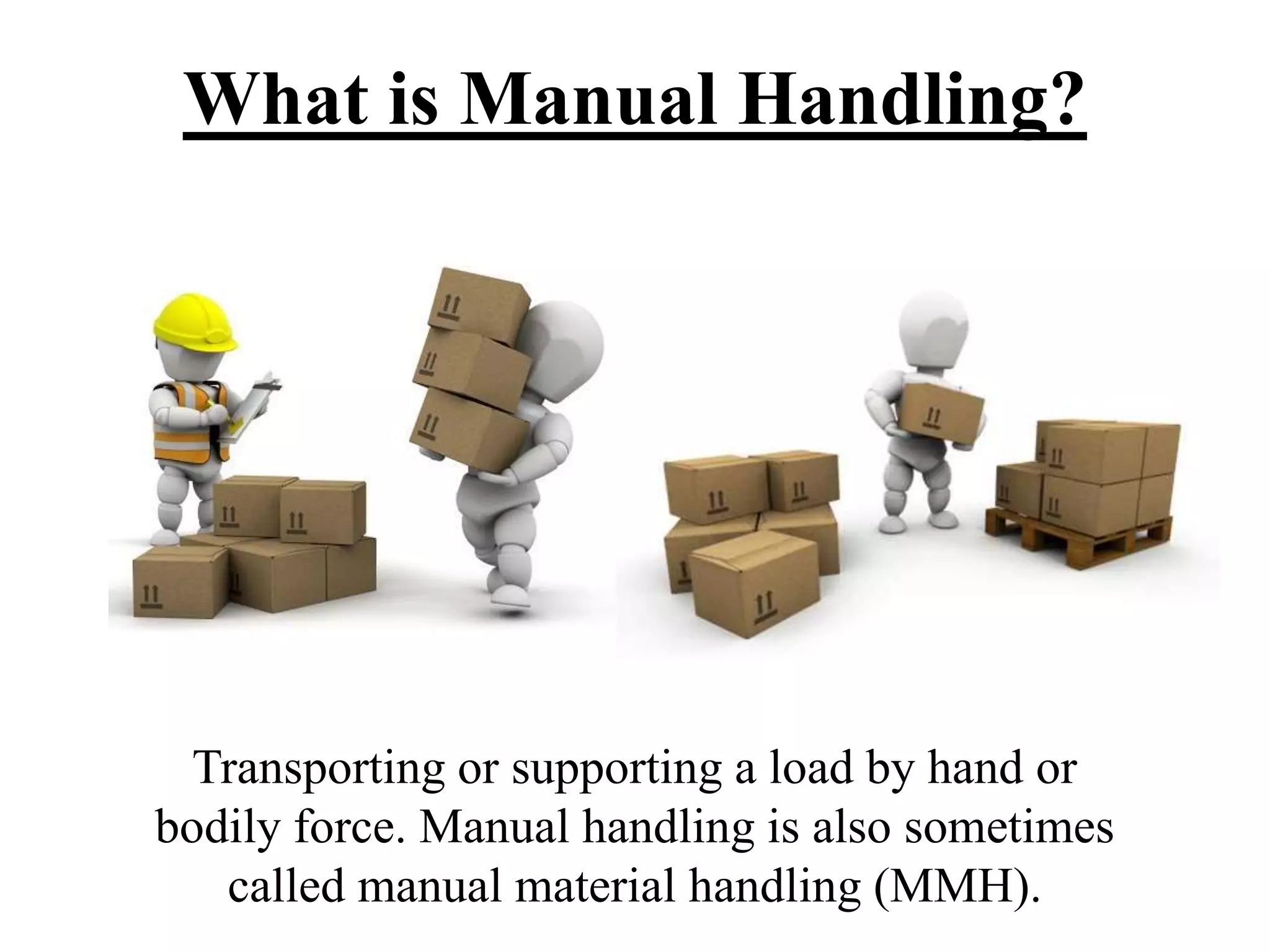
Transporting or supporting a load by hand or
bodily force. Manual handling is also sometimes
called manual material handling (MMH).
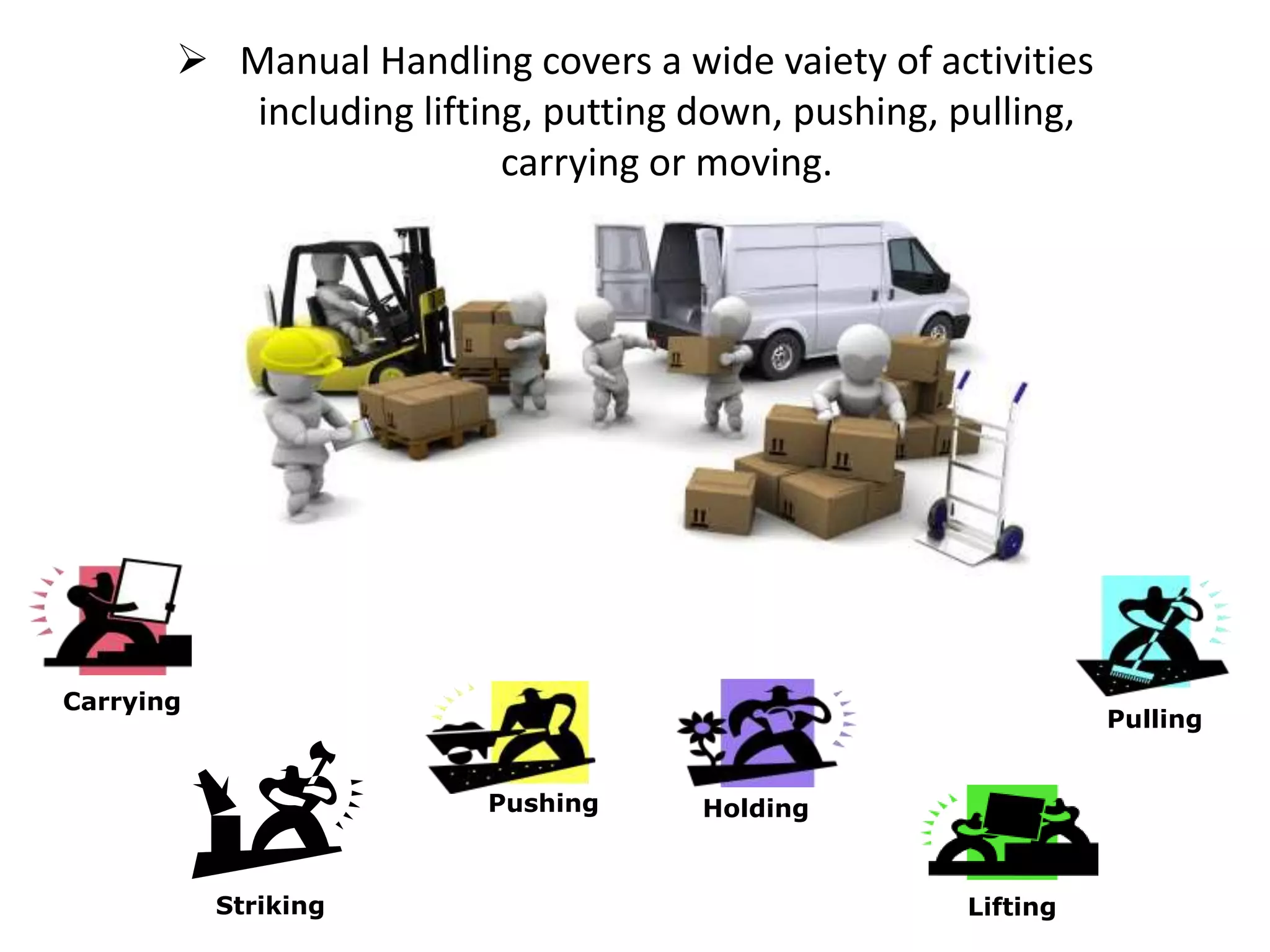
 Manual Handling covers a wide vaiety of activities
including lifting, putting down, pushing, pulling,
carrying or moving.
Carrying
Lifting
Pushing
Pulling
Holding
Striking
Hazards in Manual Handling
 Manual handling occurs in almost all working environments
(factories,warehouses, building sites, farms, hospitals, offices etc).
 Poor manual handling practice is one of the most common causes of injury in
the workplace and the injuries can be disabling and costly.
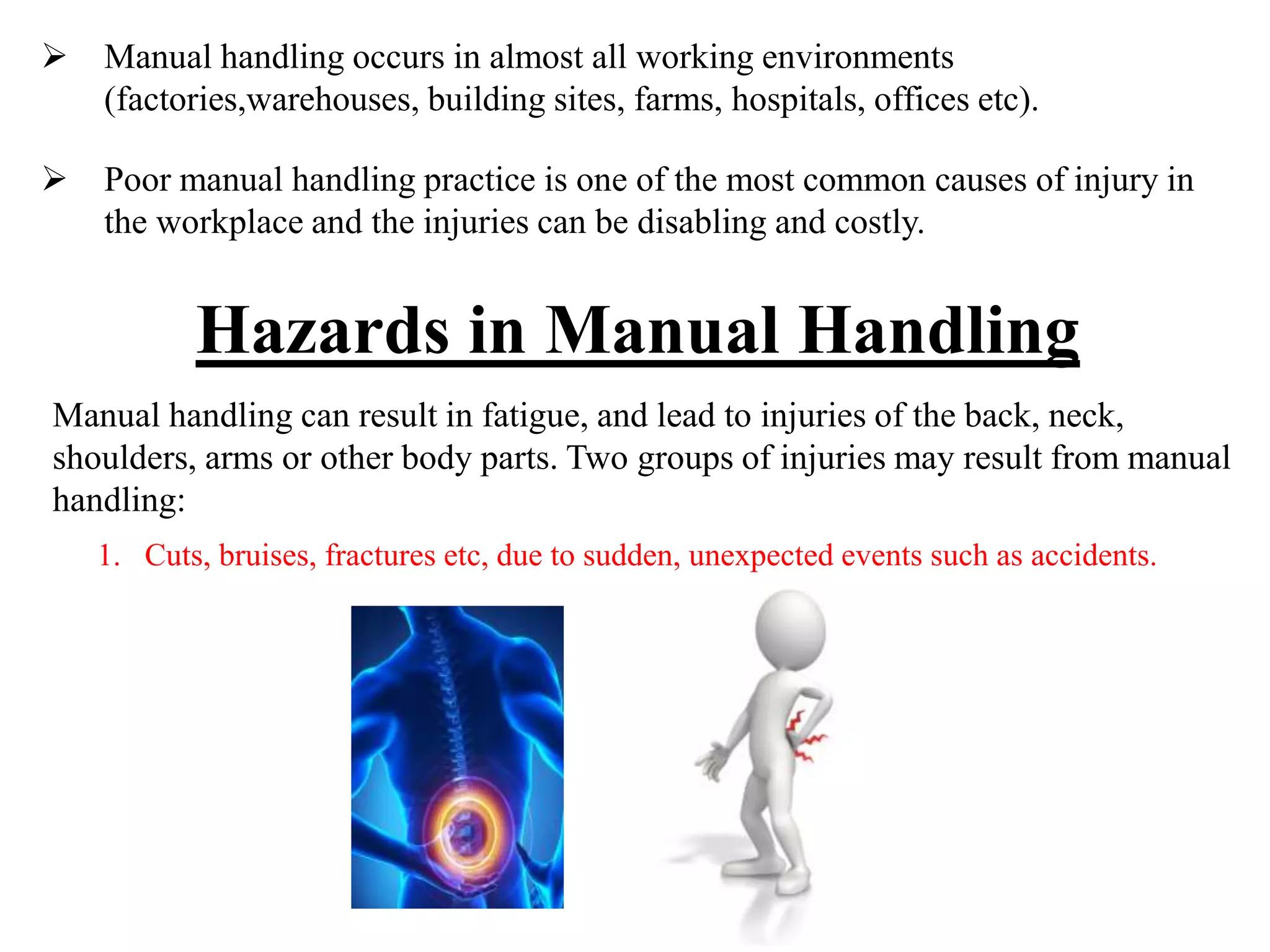
Manual handling can result in fatigue, and lead to injuries of the back, neck,
shoulders, arms or other body parts. Two groups of injuries may result from manual
handling:
1. Cuts, bruises, fractures etc, due to sudden, unexpected events such as accidents.
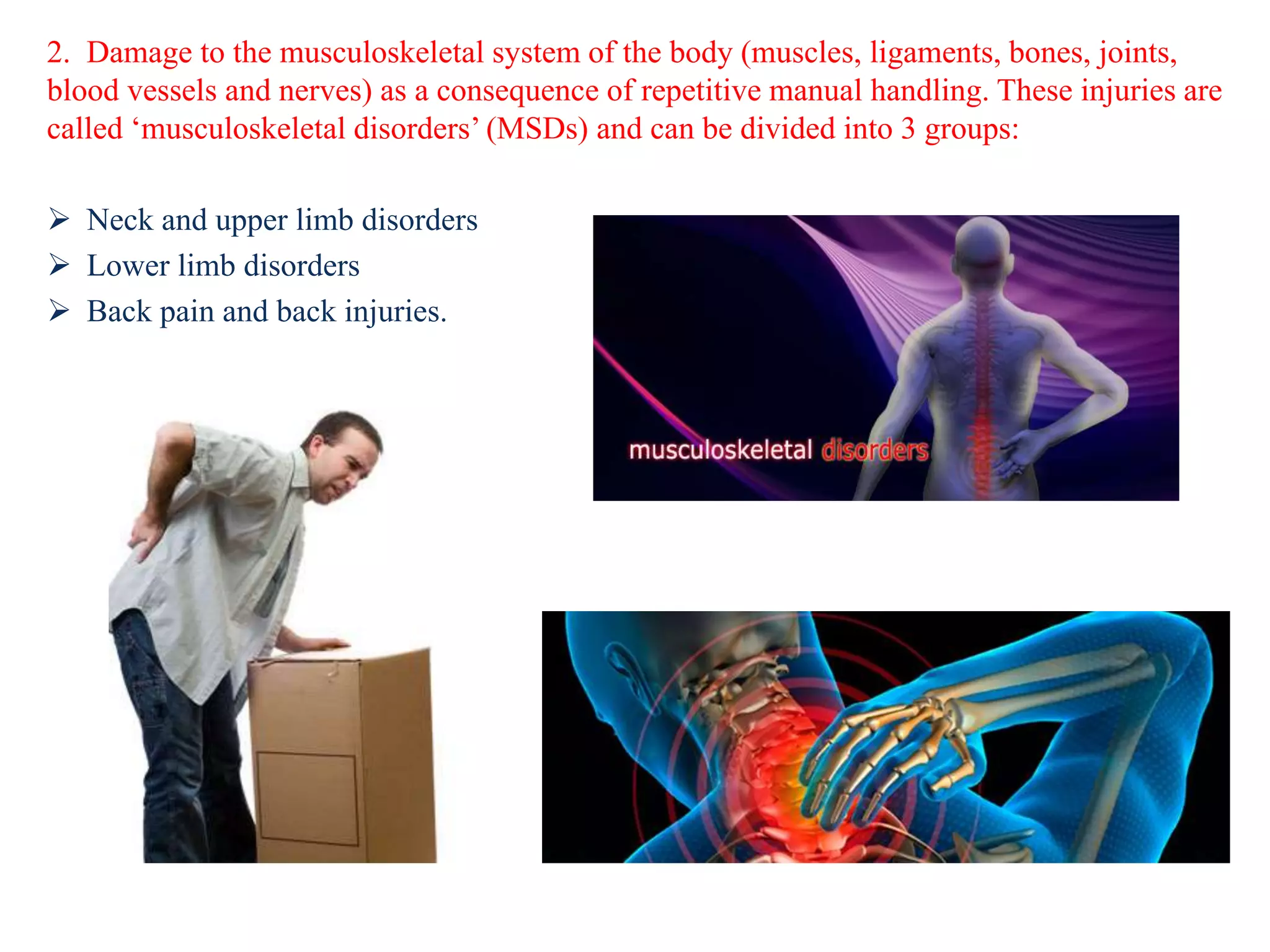
2. Damage to the musculoskeletal system of the body (muscles, ligaments, bones, joints,
blood vessels and nerves) as a consequence of repetitive manual handling. These injuries are
called ‘musculoskeletal disorders’ (MSDs) and can be divided into 3 groups:
 Neck and upper limb disorders
 Lower limb disorders
 Back pain and back injuries.
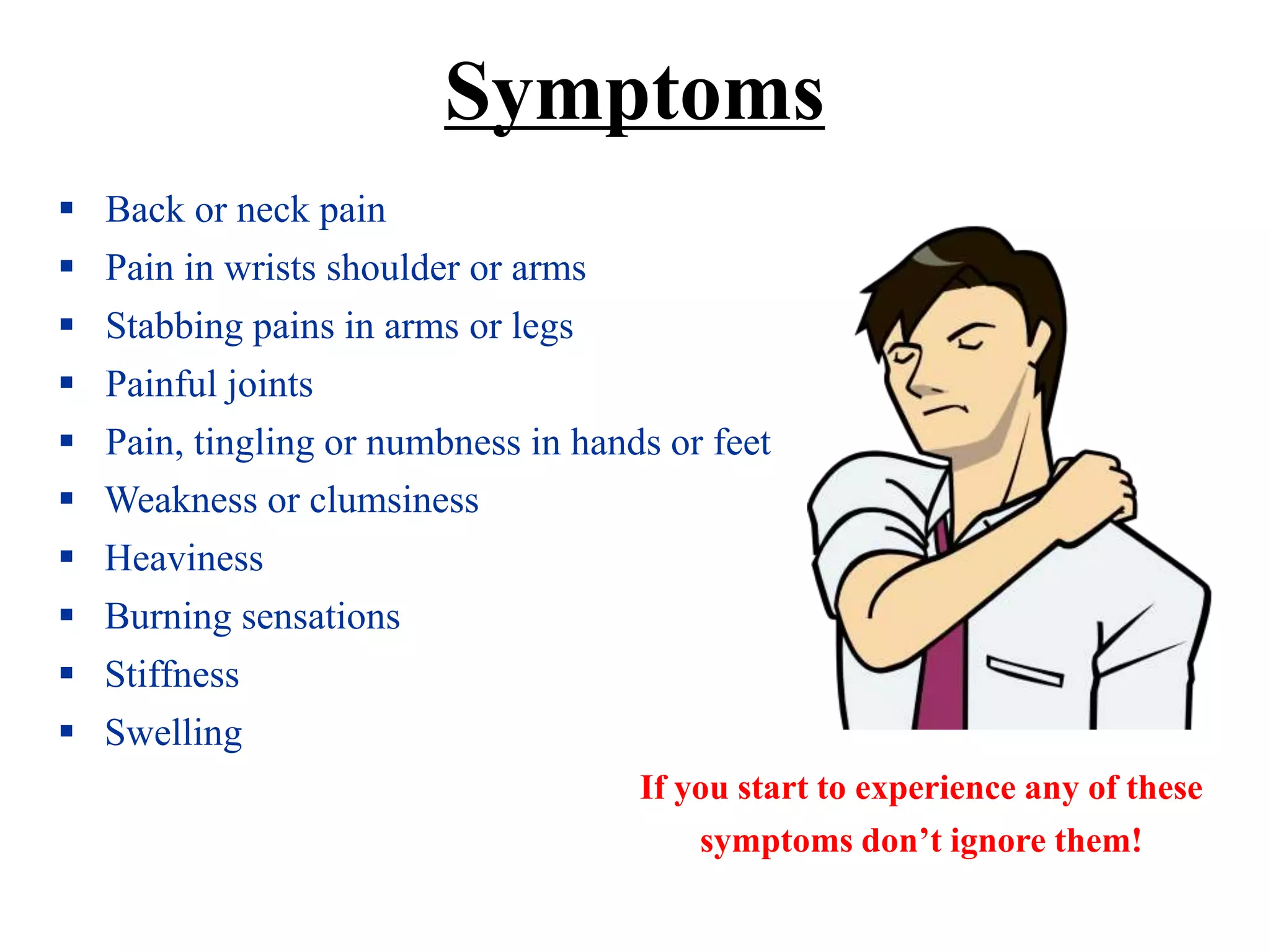
 Back or neck pain
 Pain in wrists shoulder or arms
 Stabbing pains in arms or legs
 Painful joints
 Pain, tingling or numbness in hands or feet
 Weakness or clumsiness
 Heaviness
 Burning sensations
 Stiffness
 Swelling
If you start to experience any of these
symptoms don’t ignore them!
Symptoms
What makes Manual Handling
hazardous?
1
THE LOAD
3
THE
ENVIRONMENT
2
THE TASK
4
THE
INDIVIDUAL
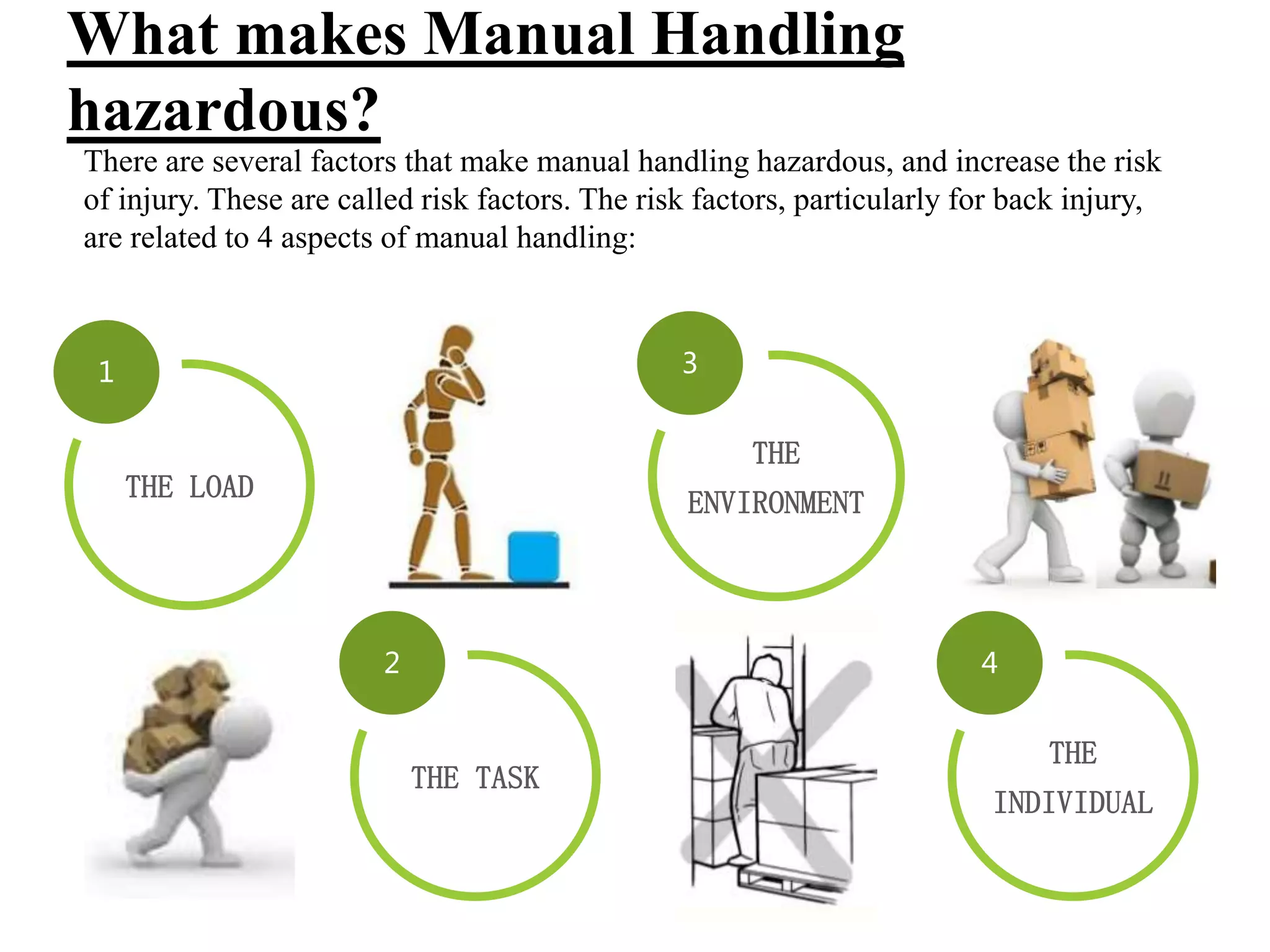
There are several factors that make manual handling hazardous, and increase the risk
of injury. These are called risk factors. The risk factors, particularly for back injury,
are related to 4 aspects of manual handling:
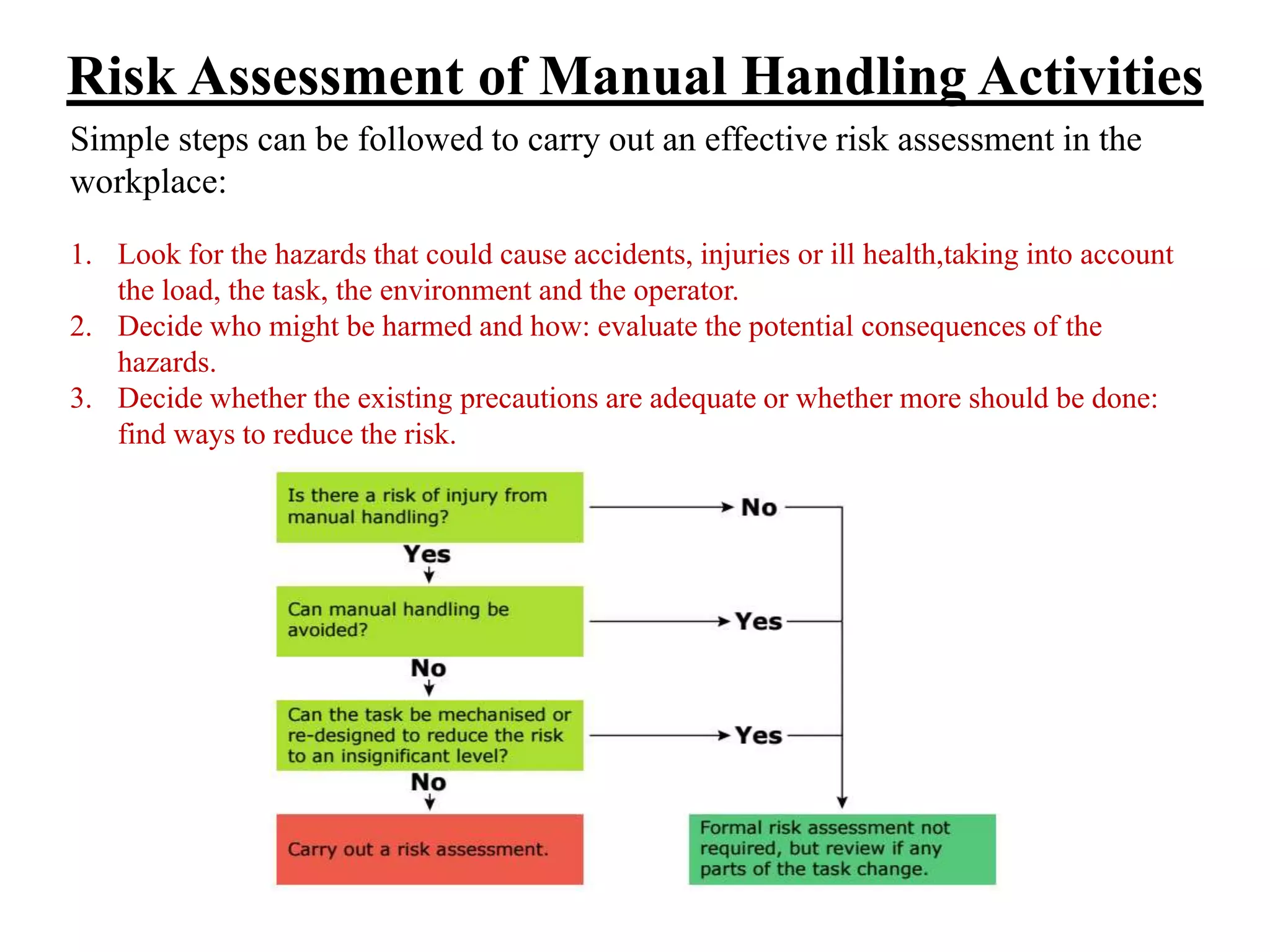
Risk Assessment of Manual Handling Activities
Simple steps can be followed to carry out an effective risk assessment in the
workplace:
1. Look for the hazards that could cause accidents, injuries or ill health,taking into account
the load, the task, the environment and the operator.
2. Decide who might be harmed and how: evaluate the potential consequences of the
hazards.
3. Decide whether the existing precautions are adequate or whether more should be done:
find ways to reduce the risk.
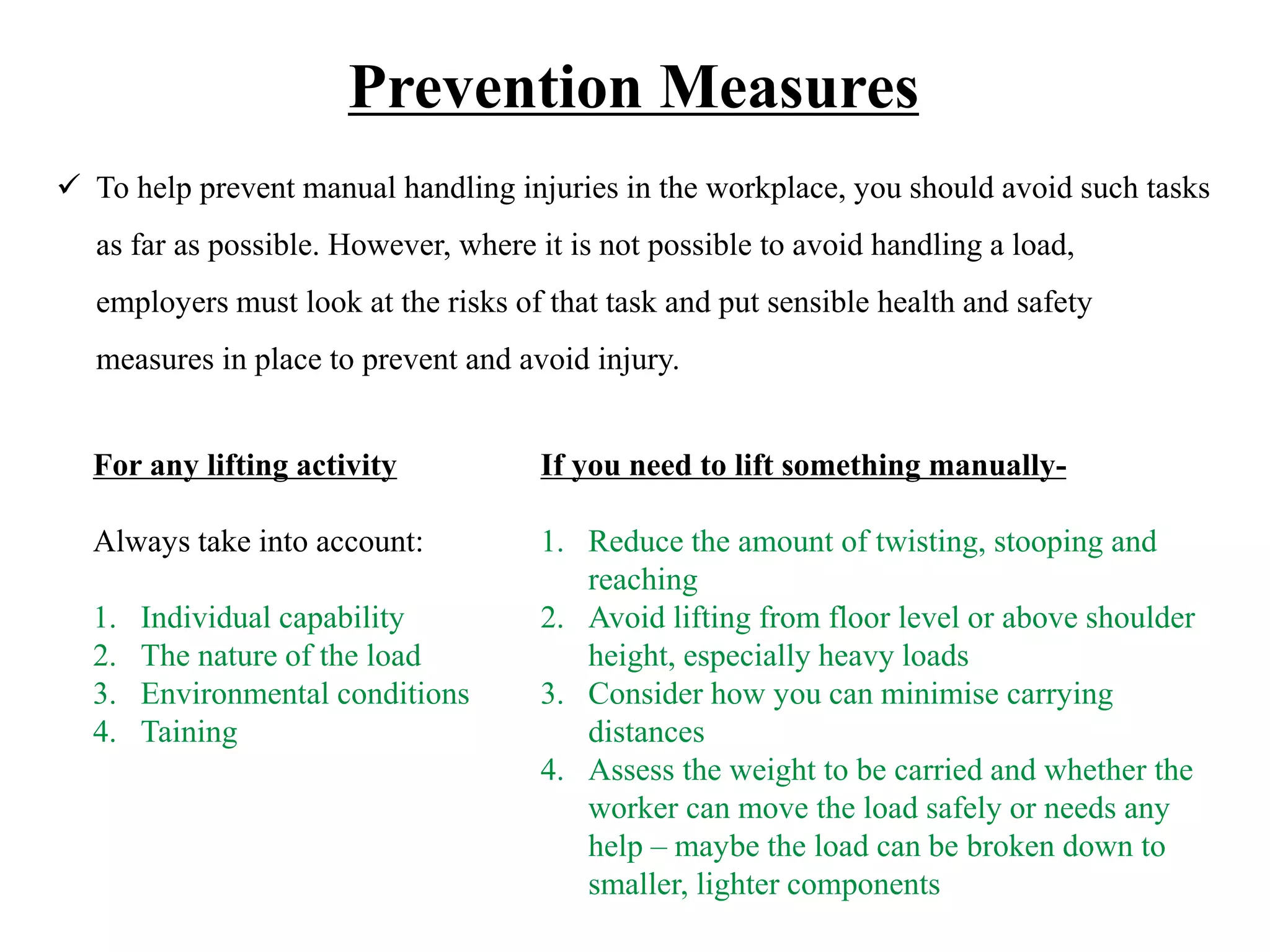
Prevention Measures
 To help prevent manual handling injuries in the workplace, you should avoid such tasks
as far as possible. However, where it is not possible to avoid handling a load,
employers must look at the risks of that task and put sensible health and safety
measures in place to prevent and avoid injury.
For any lifting activity
Always take into account:
1. Individual capability
2. The nature of the load
3. Environmental conditions
4. Taining
If you need to lift something manually-
1. Reduce the amount of twisting, stooping and
reaching
2. Avoid lifting from floor level or above shoulder
height, especially heavy loads
3. Consider how you can minimise carrying
distances
4. Assess the weight to be carried and whether the
worker can move the load safely or needs any
help – maybe the load can be broken down to
smaller, lighter components
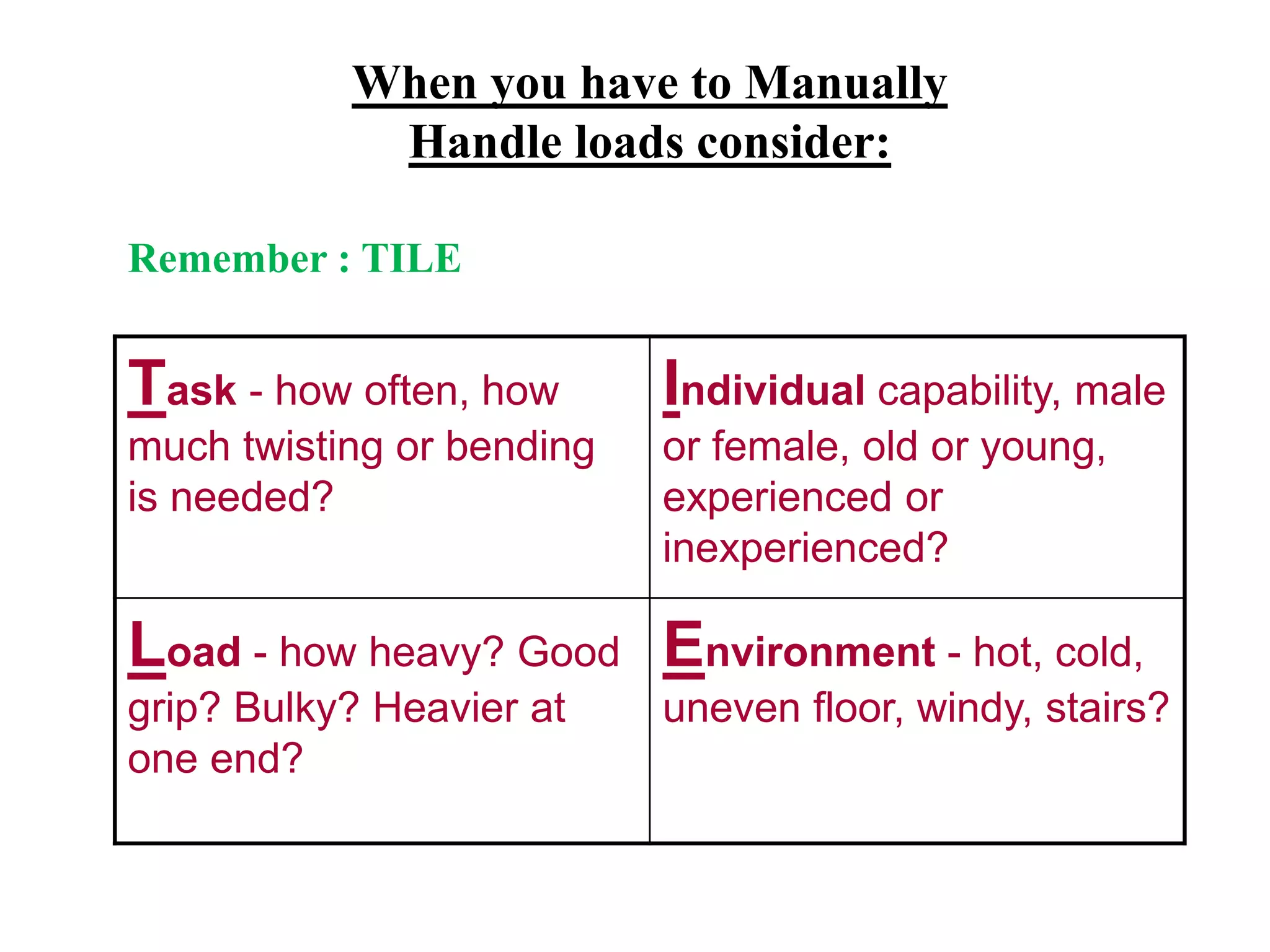
When you have to Manually
Handle loads consider:
Task - how often, how
much twisting or bending
is needed?
Individual capability, male
or female, old or young,
experienced or
inexperienced?
Load - how heavy? Good
grip? Bulky? Heavier at
one end?
Environment - hot, cold,
uneven floor, windy, stairs?
Remember : TILE
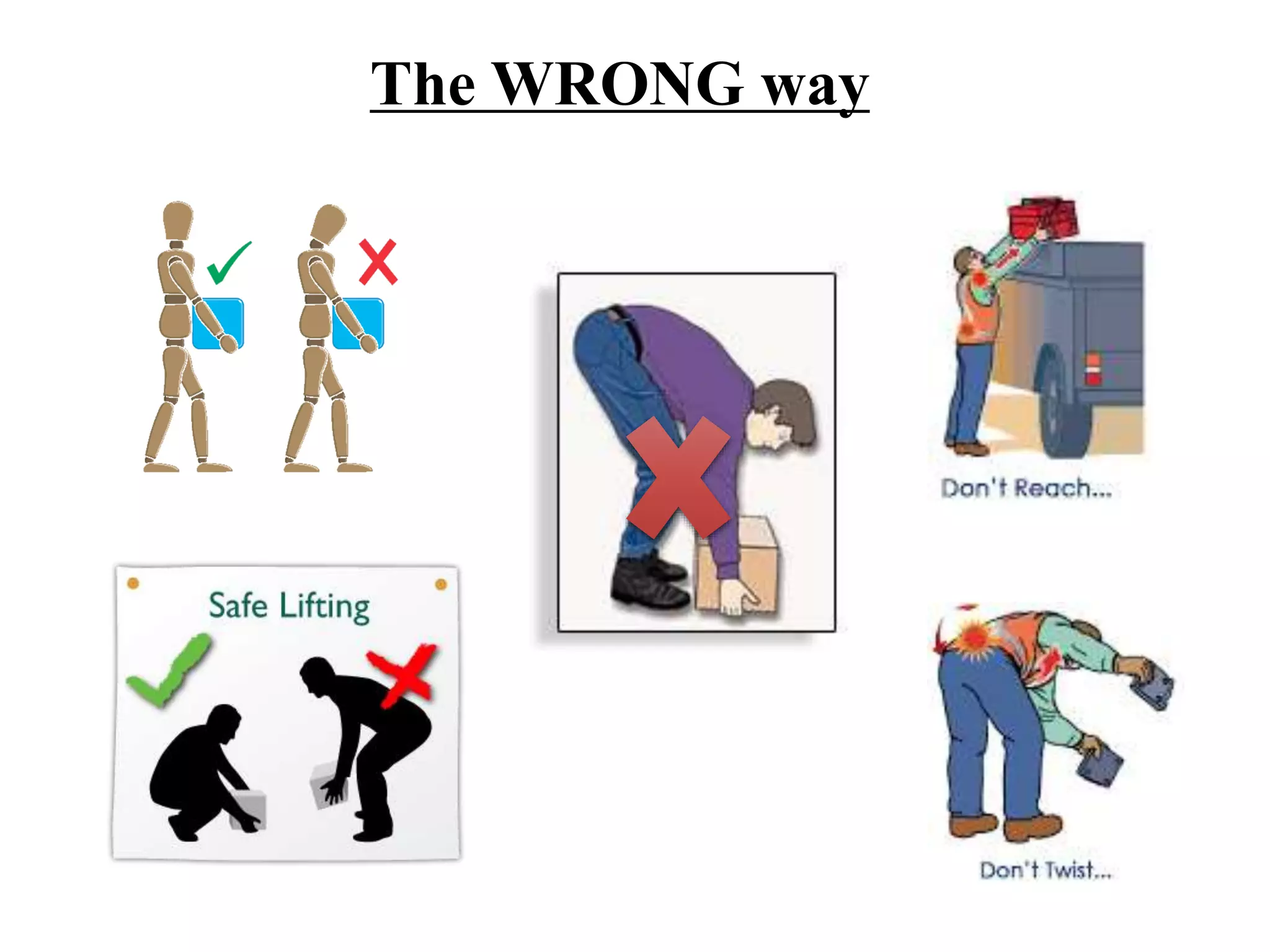
The WRONG way
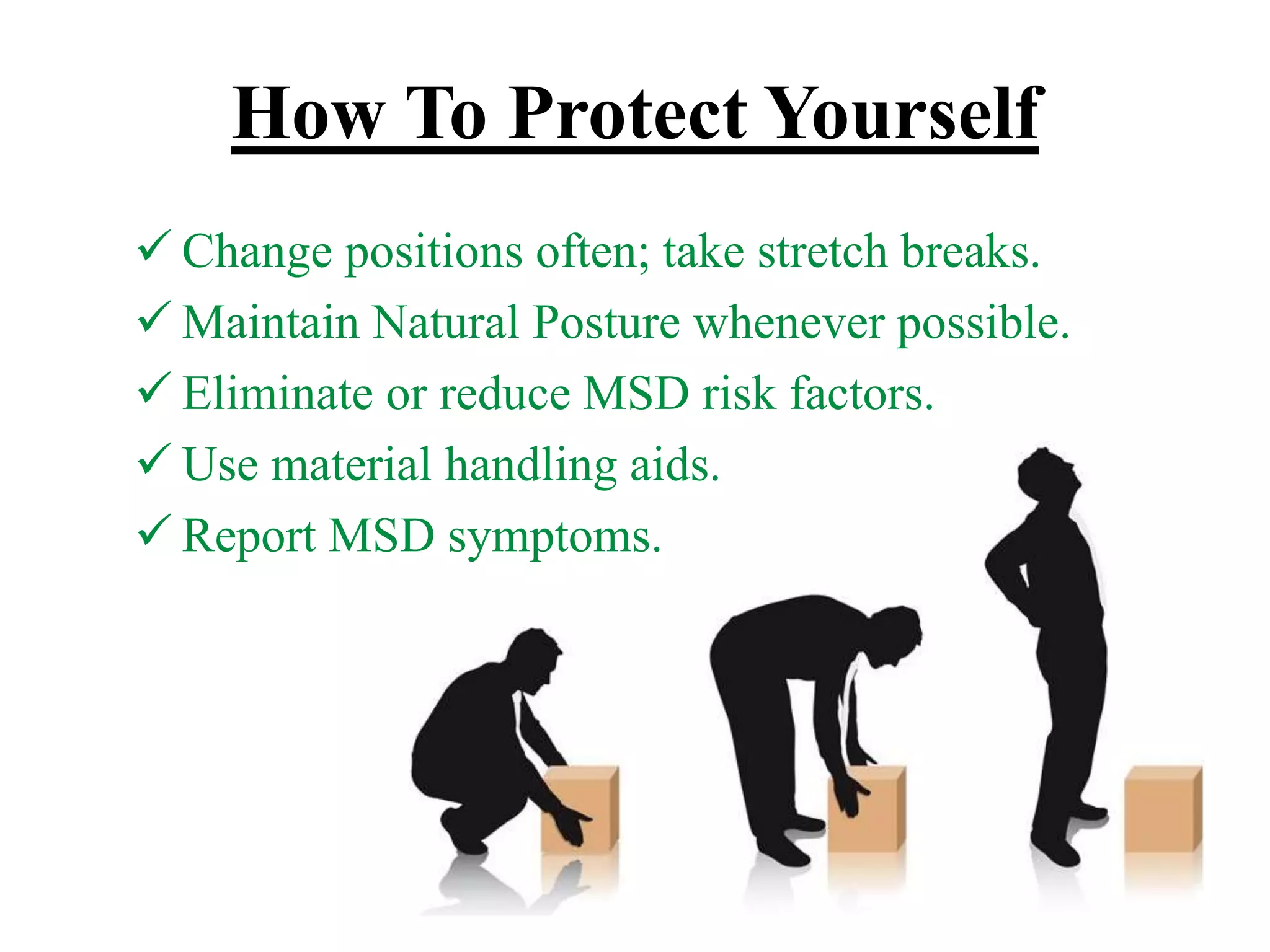
How To Protect Yourself
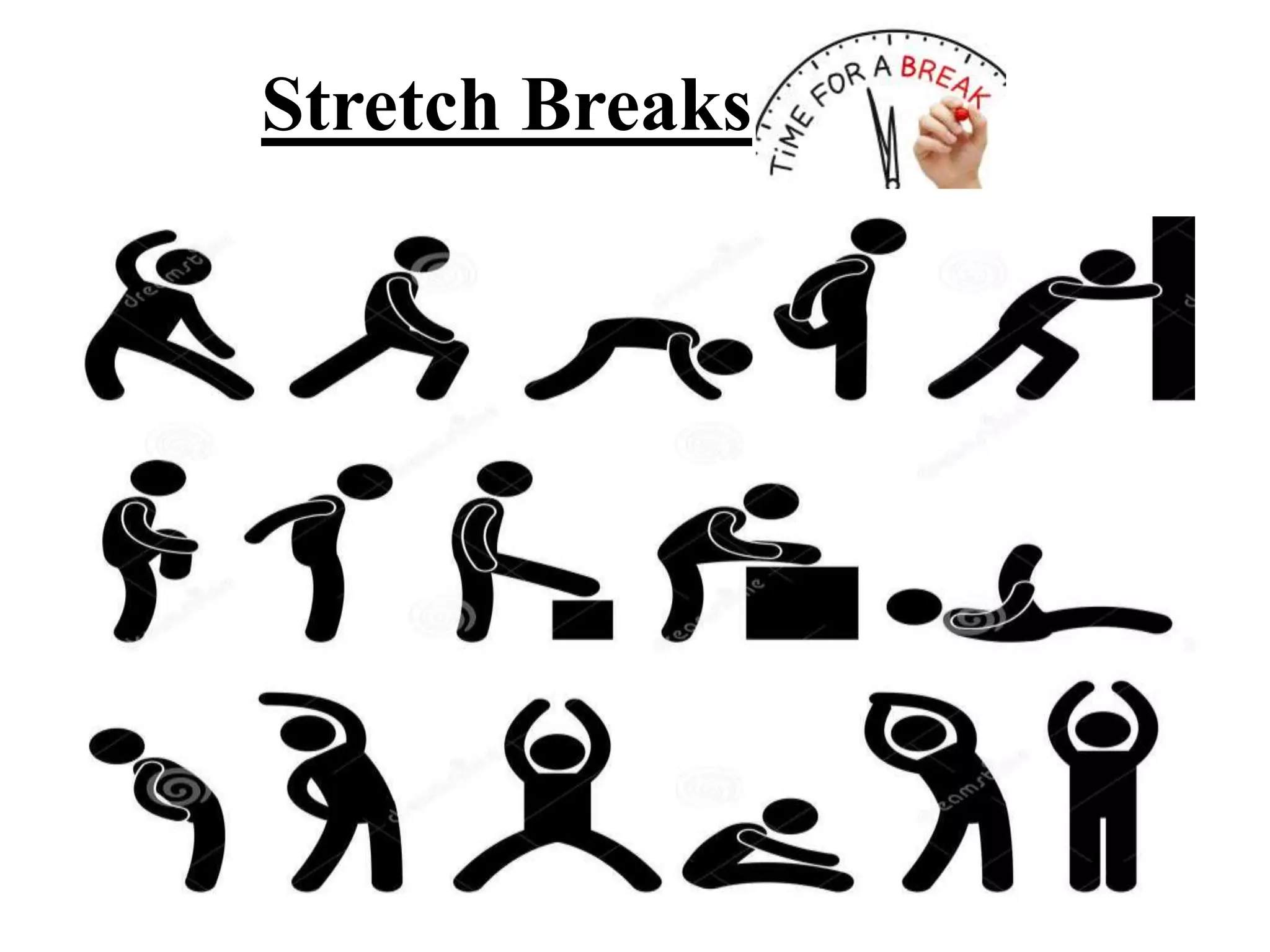
 Change positions often; take stretch breaks.
 Maintain Natural Posture whenever possible.
 Eliminate or reduce MSD risk factors.
 Use material handling aids.
 Report MSD symptoms.
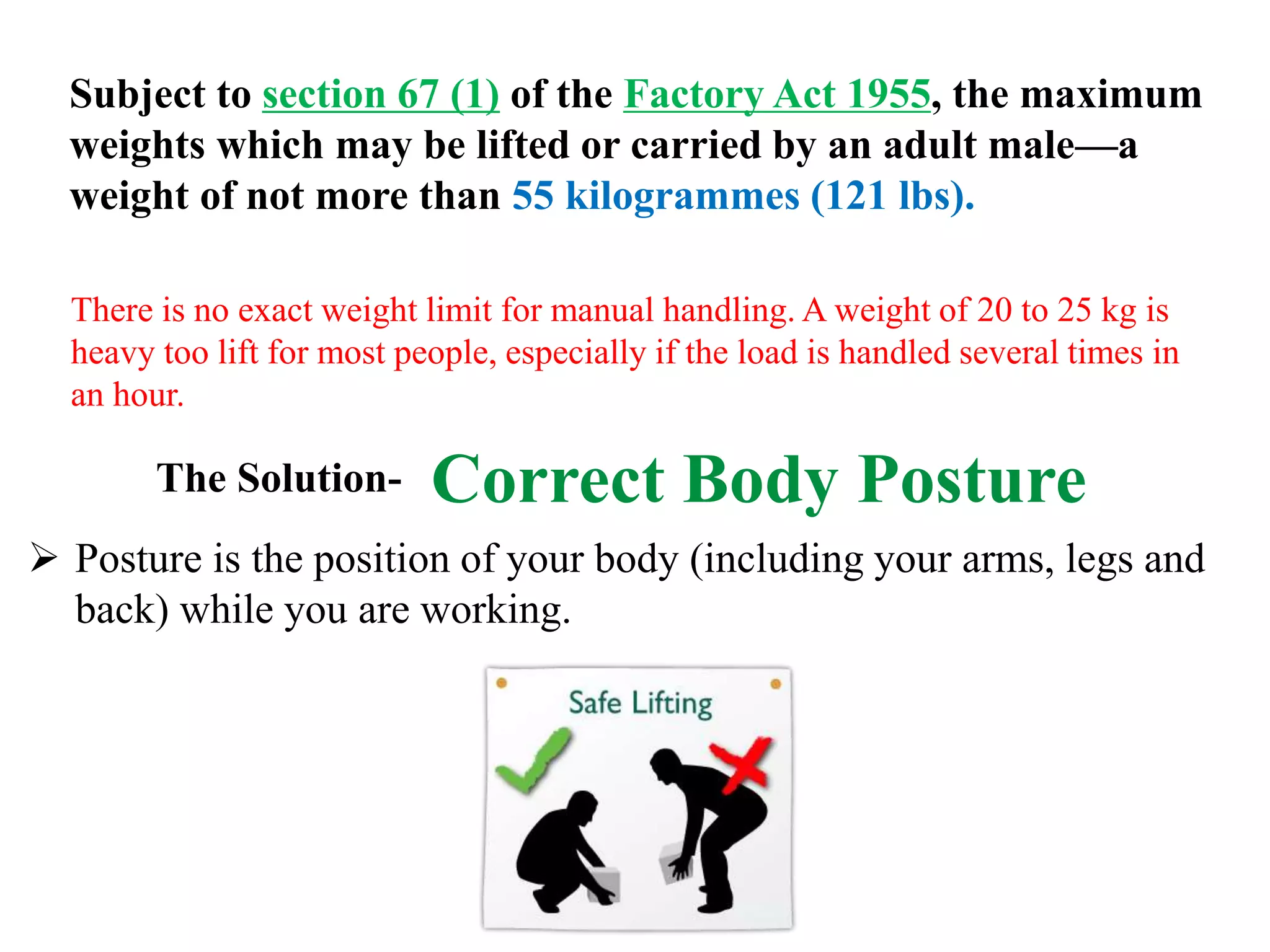
Subject to section 67 (1) of the Factory Act 1955, the maximum
weights which may be lifted or carried by an adult male—a
weight of not more than 55 kilogrammes (121 lbs).
There is no exact weight limit for manual handling. A weight of 20 to 25 kg is
heavy too lift for most people, especially if the load is handled several times in
an hour.
Correct Body PostureThe Solution-
 Posture is the position of your body (including your arms, legs and
back) while you are working.
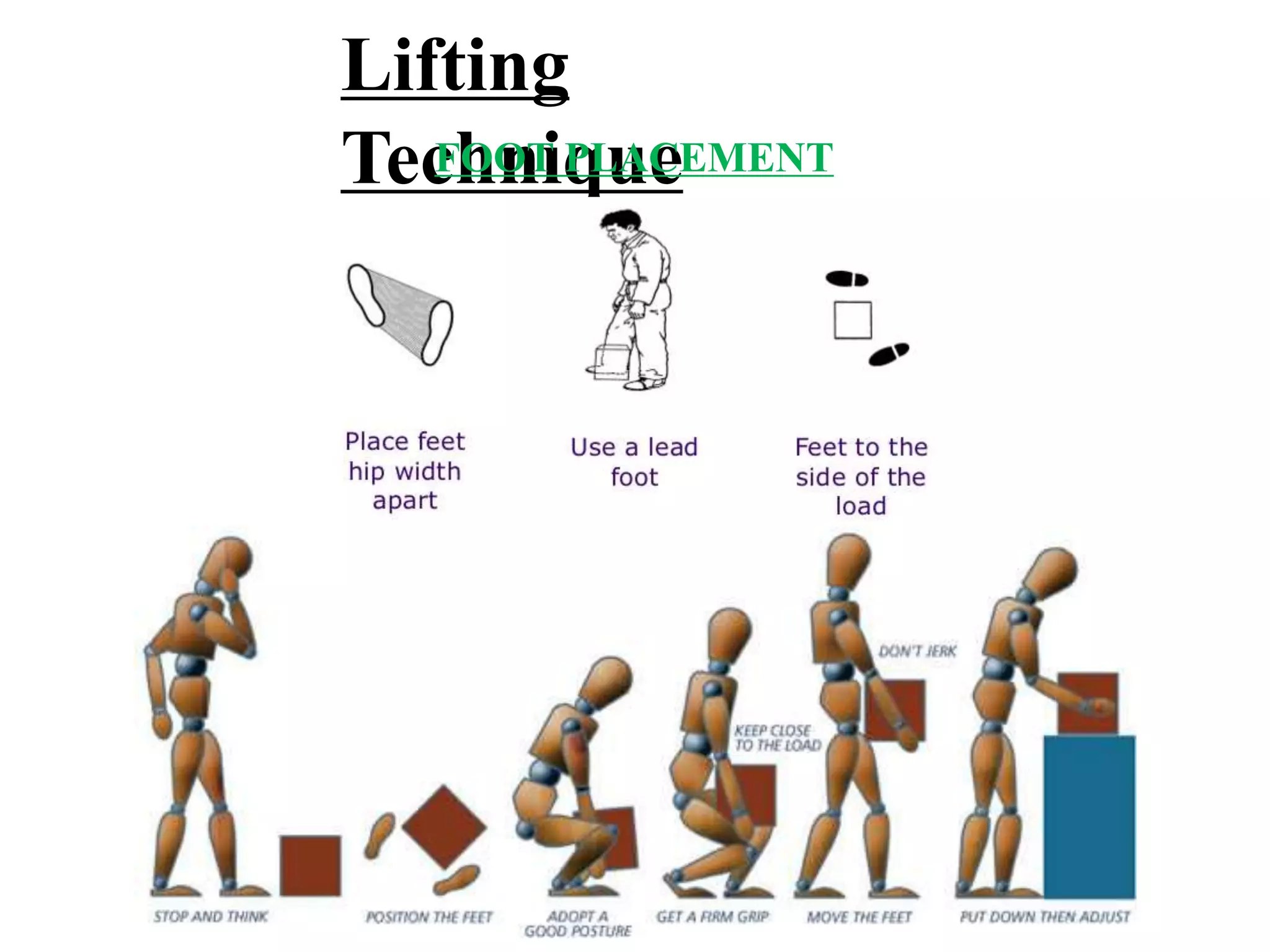
Lifting
TechniqueFOOT PLACEMENT
Stretch Breaks
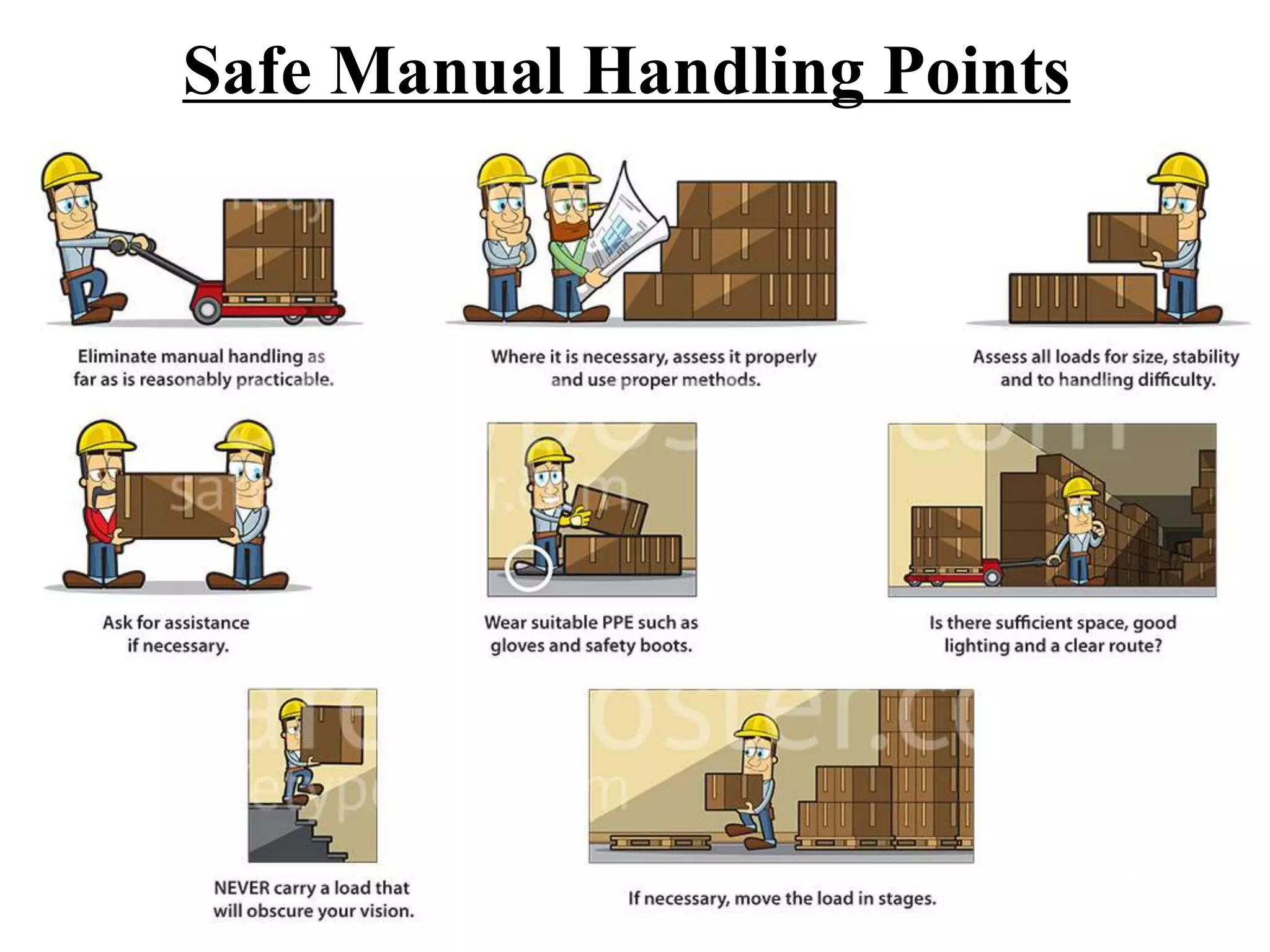
Safe Manual Handling Points
Manual Handling Training in Work Places

Manual Handling Training in Work Places

  • 1.
  • 2.
    What is ManualHandling? Transporting or supporting a load by hand or bodily force. Manual handling is also sometimes called manual material handling (MMH).
  • 3.
     Manual Handlingcovers a wide vaiety of activities including lifting, putting down, pushing, pulling, carrying or moving. Carrying Lifting Pushing Pulling Holding Striking
  • 4.
    Hazards in ManualHandling  Manual handling occurs in almost all working environments (factories,warehouses, building sites, farms, hospitals, offices etc).  Poor manual handling practice is one of the most common causes of injury in the workplace and the injuries can be disabling and costly. Manual handling can result in fatigue, and lead to injuries of the back, neck, shoulders, arms or other body parts. Two groups of injuries may result from manual handling: 1. Cuts, bruises, fractures etc, due to sudden, unexpected events such as accidents.
  • 5.
    2. Damage tothe musculoskeletal system of the body (muscles, ligaments, bones, joints, blood vessels and nerves) as a consequence of repetitive manual handling. These injuries are called ‘musculoskeletal disorders’ (MSDs) and can be divided into 3 groups:  Neck and upper limb disorders  Lower limb disorders  Back pain and back injuries.
  • 6.
     Back orneck pain  Pain in wrists shoulder or arms  Stabbing pains in arms or legs  Painful joints  Pain, tingling or numbness in hands or feet  Weakness or clumsiness  Heaviness  Burning sensations  Stiffness  Swelling If you start to experience any of these symptoms don’t ignore them! Symptoms
  • 7.
    What makes ManualHandling hazardous? 1 THE LOAD 3 THE ENVIRONMENT 2 THE TASK 4 THE INDIVIDUAL There are several factors that make manual handling hazardous, and increase the risk of injury. These are called risk factors. The risk factors, particularly for back injury, are related to 4 aspects of manual handling:
  • 8.
    Risk Assessment ofManual Handling Activities Simple steps can be followed to carry out an effective risk assessment in the workplace: 1. Look for the hazards that could cause accidents, injuries or ill health,taking into account the load, the task, the environment and the operator. 2. Decide who might be harmed and how: evaluate the potential consequences of the hazards. 3. Decide whether the existing precautions are adequate or whether more should be done: find ways to reduce the risk.
  • 9.
    Prevention Measures  Tohelp prevent manual handling injuries in the workplace, you should avoid such tasks as far as possible. However, where it is not possible to avoid handling a load, employers must look at the risks of that task and put sensible health and safety measures in place to prevent and avoid injury. For any lifting activity Always take into account: 1. Individual capability 2. The nature of the load 3. Environmental conditions 4. Taining If you need to lift something manually- 1. Reduce the amount of twisting, stooping and reaching 2. Avoid lifting from floor level or above shoulder height, especially heavy loads 3. Consider how you can minimise carrying distances 4. Assess the weight to be carried and whether the worker can move the load safely or needs any help – maybe the load can be broken down to smaller, lighter components
  • 10.
    When you haveto Manually Handle loads consider: Task - how often, how much twisting or bending is needed? Individual capability, male or female, old or young, experienced or inexperienced? Load - how heavy? Good grip? Bulky? Heavier at one end? Environment - hot, cold, uneven floor, windy, stairs? Remember : TILE
  • 11.
  • 12.
    How To ProtectYourself  Change positions often; take stretch breaks.  Maintain Natural Posture whenever possible.  Eliminate or reduce MSD risk factors.  Use material handling aids.  Report MSD symptoms.
  • 13.
    Subject to section67 (1) of the Factory Act 1955, the maximum weights which may be lifted or carried by an adult male—a weight of not more than 55 kilogrammes (121 lbs). There is no exact weight limit for manual handling. A weight of 20 to 25 kg is heavy too lift for most people, especially if the load is handled several times in an hour. Correct Body PostureThe Solution-  Posture is the position of your body (including your arms, legs and back) while you are working.
  • 14.
  • 15.
  • 16.