PMCH 600
INDUSTRIAL HYGIENE
October 22, 2007
R. Leonard Vance, Ph.D., CIH
WHAT IS
INDUSTRIAL HYGIENE
IDENTIFICATION,
EVALUATION, &
CONTROL OF
TOXIC SUBSTANCES &
HARMFUL PHYSICAL AGENTS
IN THE WORKPLACE &
IN THE ENVIRONMENT
• TOXIC SUBSTANCES
– CHEMICALS
– MICROBIOLOGICAL AGENTS
• HARMFUL PHYSICAL AGENTS
– NOISE
– RADIATION
– ERGONOMICS/REPETITIVE MOTION
– HOT & COLD ENVIRONMENTS
Occupational Health Team
• Occupational Physicians - Dr. Compton
• Industrial or ”occupational” Hygienists
• Occupational Health Nurse
• Microbiologist
• Engineers
• Safety Personnel
• Ergonomists
• Chemists & Lab Personnel
• radiation, toxicology, epidemiology
Industrial Hygiene Subject Matter
• What, How much, What is to be done???
• Identification of Hazards
– experience
– study
– defined by client
• Evaluation of Hazards
– Monitoring: sample collection & analysis
• Control of Hazards
– engineering, admin., work practices, PPE
Typical IH Problems
• Survey flooded building for mold
• Health Hazard Survey in factory
• Indoor Air Quality (IAQ) evaluation
• Monitor asbestos/Pb removal at VCU
• Lead Inspection - adult/child protection
• Noise survey, printing plant
• OSHA/EPA Compliance consultation
Chemical Exposures
• Dusts
– Asbestos, silica
• Volatile organic compounds
– Benzene, ethylene oxide
• Metals
– Pb, Hg
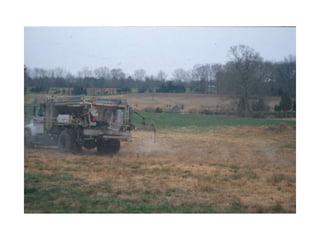
• Pesticides/herbicides
Exposure Limits
• OSHA PEL’s (permissible exposure limits)
• OSHA STEL’s (short term, 15 minutes)
• OSHA ceilings (instantaneous limits)
• OSHA BEI’s (biological exposure indices)
• ACGIH TLV’s (threshold limit values)
The Legal Framework
OSHA Standards
• PEL Permissible Exposure Limit
• STEL Short Term Exposure Limit
• Monitoring
• Methods of Control
• Respirators
• Hazard Communication
• Medical Surveillance
• Recordkeeping
OSHA BENZENE STANDARD
• Permissible Exposure Limits
– 1 ppm; 8 hour TWA
– 5 ppm 15 min. STEL
• Monitoring
• Methods of Control
• Respirators
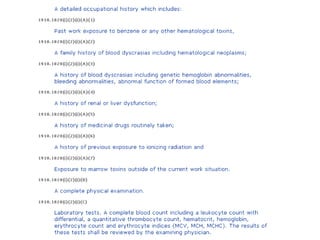
• Medical Surveillance
– Next slide
• Hazard Communication
• Employee Notification
• Recordkeeping
osha.gov/pls/oshaweb/owadisp.show_document?p_table=STANDARDS&p
OSHA Benzene Standard on Web
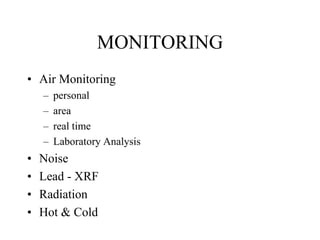
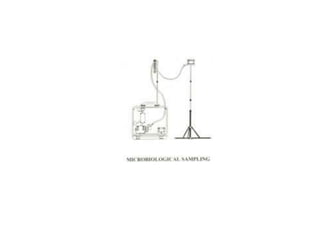
MONITORING
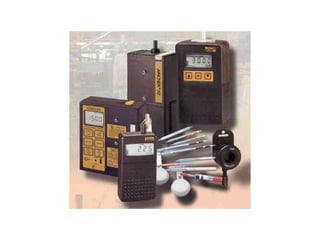
• Air Monitoring
– personal
– area
– real time
– Laboratory Analysis
• Noise
• Lead - XRF
• Radiation
• Hot & Cold
Methods of Control
• Engineering Controls
• Administrative Controls
• Work Practices
• Personal Protective Equipment
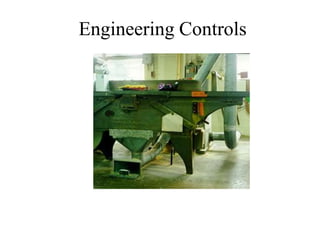
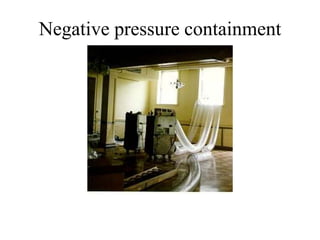
Engineering Controls
Negative pressure containment
Administrative Controls
• Employee Rotation
• Ergonomic Hazards
• Noise
• Lead
• Carcinogen Issue - Prohibition
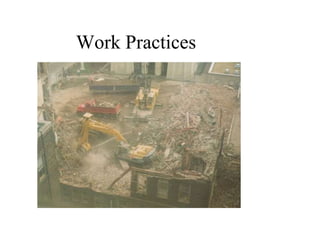
Work Practices
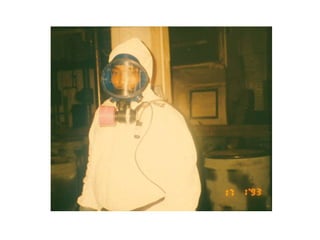
Personal Protective Equipment
• Respirators
• Protective Clothing
• Protective eyeglasses, shoes, etc.
• Hardhats
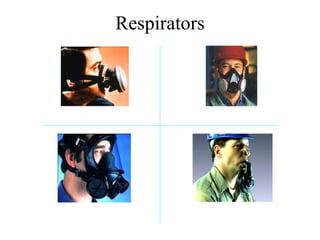
Respirators
Quarter Mask Half Mask
Full Facepiece Mouthpiece/Nose Clamp
(no fit test required)
RESPIRATORS
• Use & Limitations
• Selection
• Protection Factors
• IDLH Atmospheres
• Fit testing, Fit factors
• Written Respirator Program
Hazard Communication
• Placarding & Labeling
• Material Safety Data Sheets
• Training & Education
• Chemical List
Medical Surveillance
• Done by MD, nurse, audiologist
• need to know
– what exposed to
– levels of exposure - IH role
• various medical tests
– pulmonary function tests
– blood lead levels, etc.
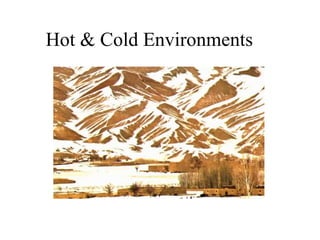
Hot & Cold Environments
ETHICS
IH WORKS FOR, REPORTS TO, &
IS PAID BY EMPLOYER.
DUTY: PROTECT WORKERS
CONFLICTS INEVITABLE
• Who will determine whether to sample
• who will sample
• where will samples be collected
• who will analyze
• who will determine what is to be done
• methods of control
Issues
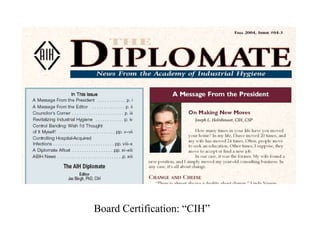
Board Certification: “CIH”
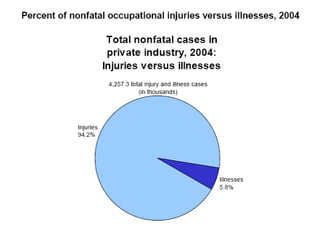
Some Statistics
• Accidents [unintentional injuries], annual, US
– 20,000,000 disabling injuries
– 100,000 deaths
– 500,000 hospitalizations
– 4,000,000 ER visits
Why Learn about IH
• Prevent injury and illness!
• Why learn about public health?
• Protect Safety & Health of Workers/Public
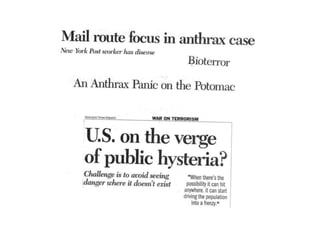
• Deal with public concerns/hysteria
• Avoid Liability
• Promote Harmony; Reduce Acrimony
– workers
– management
– community
– government
References
• www.aiha.org
• www.acgih.org
• www.abih.org
• www.osha.gov
• www.cdc.gov.niosh
• The Occupational Environment - Its Evaluation,
Control, and Management; DiNardi, S. R. , Ed.; AIHA,
2003; “White Book”
IndHygieneLecture_10_07.ppt

IndHygieneLecture_10_07.ppt

  • 1.
    PMCH 600 INDUSTRIAL HYGIENE October22, 2007 R. Leonard Vance, Ph.D., CIH
  • 2.
    WHAT IS INDUSTRIAL HYGIENE IDENTIFICATION, EVALUATION,& CONTROL OF TOXIC SUBSTANCES & HARMFUL PHYSICAL AGENTS IN THE WORKPLACE & IN THE ENVIRONMENT
  • 4.
    • TOXIC SUBSTANCES –CHEMICALS – MICROBIOLOGICAL AGENTS • HARMFUL PHYSICAL AGENTS – NOISE – RADIATION – ERGONOMICS/REPETITIVE MOTION – HOT & COLD ENVIRONMENTS
  • 6.
    Occupational Health Team •Occupational Physicians - Dr. Compton • Industrial or ”occupational” Hygienists • Occupational Health Nurse • Microbiologist • Engineers • Safety Personnel • Ergonomists • Chemists & Lab Personnel • radiation, toxicology, epidemiology
  • 7.
    Industrial Hygiene SubjectMatter • What, How much, What is to be done??? • Identification of Hazards – experience – study – defined by client • Evaluation of Hazards – Monitoring: sample collection & analysis • Control of Hazards – engineering, admin., work practices, PPE
  • 8.
    Typical IH Problems •Survey flooded building for mold • Health Hazard Survey in factory • Indoor Air Quality (IAQ) evaluation • Monitor asbestos/Pb removal at VCU • Lead Inspection - adult/child protection • Noise survey, printing plant • OSHA/EPA Compliance consultation
  • 10.
    Chemical Exposures • Dusts –Asbestos, silica • Volatile organic compounds – Benzene, ethylene oxide • Metals – Pb, Hg • Pesticides/herbicides
  • 12.
    Exposure Limits • OSHAPEL’s (permissible exposure limits) • OSHA STEL’s (short term, 15 minutes) • OSHA ceilings (instantaneous limits) • OSHA BEI’s (biological exposure indices) • ACGIH TLV’s (threshold limit values)
  • 13.
    The Legal Framework OSHAStandards • PEL Permissible Exposure Limit • STEL Short Term Exposure Limit • Monitoring • Methods of Control • Respirators • Hazard Communication • Medical Surveillance • Recordkeeping
  • 15.
    OSHA BENZENE STANDARD •Permissible Exposure Limits – 1 ppm; 8 hour TWA – 5 ppm 15 min. STEL • Monitoring • Methods of Control • Respirators • Medical Surveillance – Next slide • Hazard Communication • Employee Notification • Recordkeeping
  • 17.
  • 18.
    MONITORING • Air Monitoring –personal – area – real time – Laboratory Analysis • Noise • Lead - XRF • Radiation • Hot & Cold
  • 23.
    Methods of Control •Engineering Controls • Administrative Controls • Work Practices • Personal Protective Equipment
  • 24.
  • 25.
  • 26.
    Administrative Controls • EmployeeRotation • Ergonomic Hazards • Noise • Lead • Carcinogen Issue - Prohibition
  • 27.
  • 28.
    Personal Protective Equipment •Respirators • Protective Clothing • Protective eyeglasses, shoes, etc. • Hardhats
  • 29.
    Respirators Quarter Mask HalfMask Full Facepiece Mouthpiece/Nose Clamp (no fit test required)
  • 30.
    RESPIRATORS • Use &Limitations • Selection • Protection Factors • IDLH Atmospheres • Fit testing, Fit factors • Written Respirator Program
  • 31.
    Hazard Communication • Placarding& Labeling • Material Safety Data Sheets • Training & Education • Chemical List
  • 32.
    Medical Surveillance • Doneby MD, nurse, audiologist • need to know – what exposed to – levels of exposure - IH role • various medical tests – pulmonary function tests – blood lead levels, etc.
  • 34.
    Hot & ColdEnvironments
  • 35.
    ETHICS IH WORKS FOR,REPORTS TO, & IS PAID BY EMPLOYER. DUTY: PROTECT WORKERS CONFLICTS INEVITABLE
  • 36.
    • Who willdetermine whether to sample • who will sample • where will samples be collected • who will analyze • who will determine what is to be done • methods of control Issues
  • 37.
  • 39.
    Some Statistics • Accidents[unintentional injuries], annual, US – 20,000,000 disabling injuries – 100,000 deaths – 500,000 hospitalizations – 4,000,000 ER visits
  • 40.
    Why Learn aboutIH • Prevent injury and illness! • Why learn about public health? • Protect Safety & Health of Workers/Public • Deal with public concerns/hysteria • Avoid Liability • Promote Harmony; Reduce Acrimony – workers – management – community – government
  • 41.
    References • www.aiha.org • www.acgih.org •www.abih.org • www.osha.gov • www.cdc.gov.niosh • The Occupational Environment - Its Evaluation, Control, and Management; DiNardi, S. R. , Ed.; AIHA, 2003; “White Book”