"Indigenous Green Building Concepts“ July 2010 http://www.cccea.in/index.htmDr. N. Sai Bhaskar Reddy, CEO, GEO http://www.e-geo.org
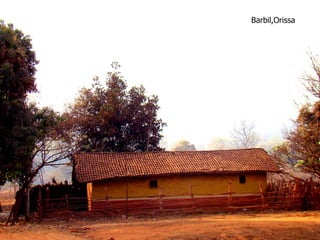
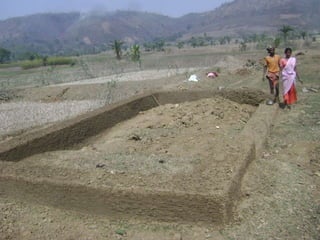
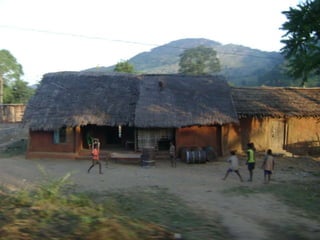
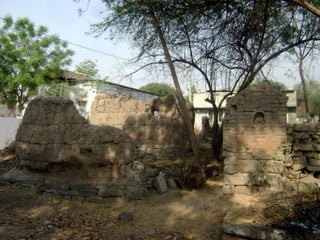
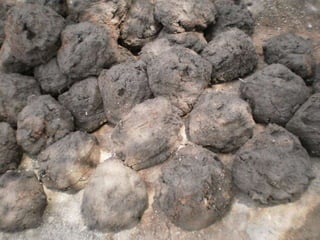
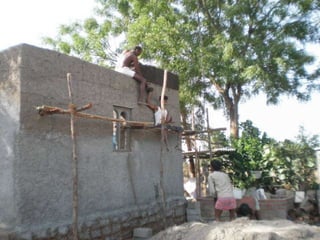
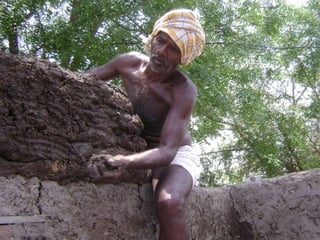
Barbil,Orissa
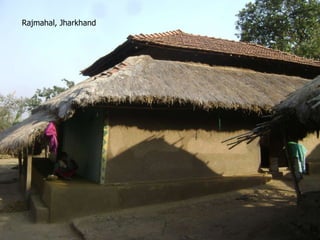
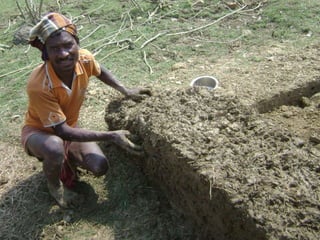
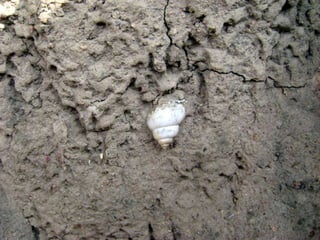
Rajmahal, Jharkhand
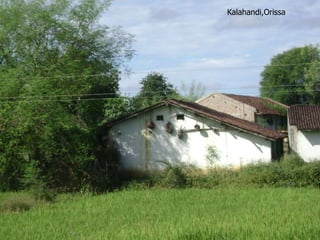
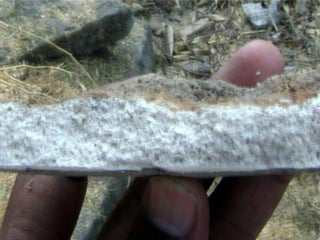
Kalahandi,Orissa
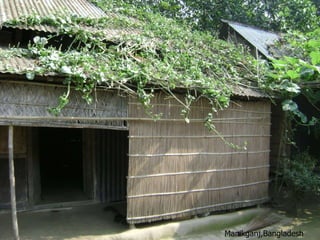
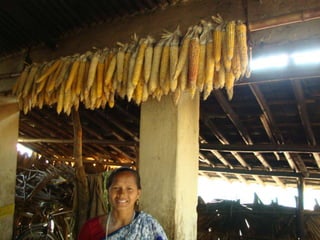
Manikganj,Bangladesh
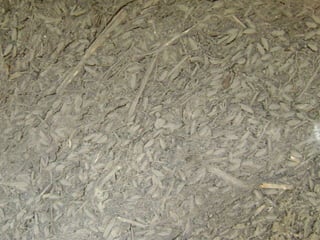
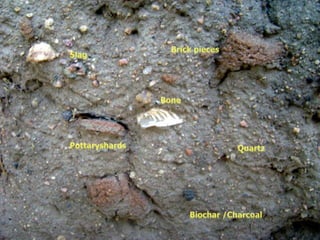
Brick piecesSlagBonePottaryshardsQuartzBiochar /Charcoal
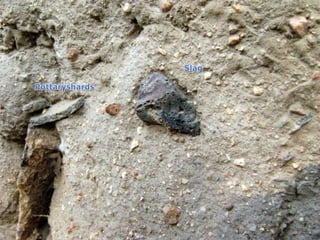
SlagPottaryshards
IntroductionSince the Industrial Revolution the world has witnessedincalculable technological achievements population growth corresponding increases in resource use“Side effects” of all the activities and achievements include: pollution, landfills, toxic waste, global warming, resource and ozone depletion, and deforestationAll these efforts are straining the limits of the Earth’s “carrying capacity”— its ability to provide the resources required to sustain life while retaining the capacity to regenerate and remain viable.
SUSTAINABLE DEVELOPMENTDevelopment that meets the needs of the present without compromising the ability of future generations to meet their own needs					(The Brundtland Commission,1987)
Indian vernacular architectureIs the informal, functional architecture of structures, often in rural areas, of India, built of local materials and designed to meet the needs of the local people. The builders of these structures are unschooled in formal architectural design and their work reflects the rich diversity of India's climate, locally available building materials, and the intricate variations in local social customs and craftsmanship. It has been estimated that worldwide close to 90% of all building is vernacular, meaning that it is for daily use for ordinary, local people and built by local craftsmen.http://en.wikipedia.org/wiki/Indian_vernacular_architecture
Sustainability and the Construction Industry 'Sustainability' is becoming a central concern for us all out of wider recognition that rising populations and economic development are threatening the degradation of the earth's resources.The construction, maintenance and use of buildings impacts substantially on our environment and is currently contributing significantly to irreversible changes in the world's climate, atmosphere and ecosystem.Buildings are by far the greatest producers of harmful gases such as CO2 and this 'eco-footprint' can only increase with the large population growth predicted to occur by 2050 and the industrialization of the developing world.
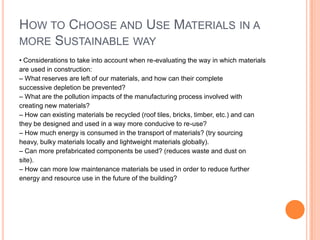
How the Construction Industry can move towards Sustainable Development– Energy: reducing energy consumption, being more energy efficient and using renewable energy and 'alternative technology'.– Materials: Choosing, using, re-using and recycling materials during design, manufacture, construction and maintenance to reduce resource requirements.– Waste: Producing less waste and recycling more.– Pollution: Producing less toxicity, water, noise and spatial pollution.
Aspects of building material adoptionNaturalSocialEconomicalPoliticalCulturalHistoricalEnvironmental
Environmental Amenitiesreducing, reusing and recycling materials
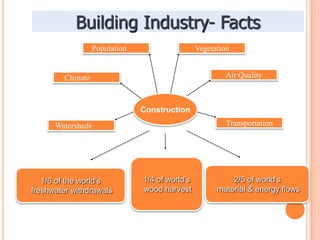
   Population 	VegetationAir Quality    Climate 	ConstructionTransportation  Watersheds	1/4 of world’s wood harvest2/5 of world’s material & energy flows1/6 of the world’s freshwater withdrawalsBuilding Industry- Facts
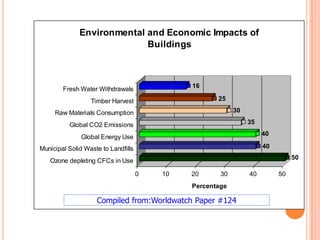
Compiled from:Worldwatch Paper #124
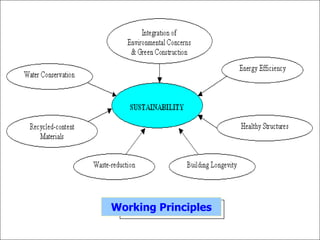
Working Principles
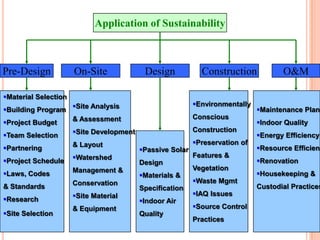
Application of SustainabilityPre-DesignOn-SiteDesignConstructionO&MMaterial Selection
Building Program
Project Budget
Team Selection
Partnering

Indigenous green building concepts cccea july 2010

  • 1.
    "Indigenous Green BuildingConcepts“ July 2010 http://www.cccea.in/index.htmDr. N. Sai Bhaskar Reddy, CEO, GEO http://www.e-geo.org
  • 2.
  • 3.
  • 8.
  • 10.
  • 11.
  • 12.
  • 20.
    IntroductionSince the IndustrialRevolution the world has witnessedincalculable technological achievements population growth corresponding increases in resource use“Side effects” of all the activities and achievements include: pollution, landfills, toxic waste, global warming, resource and ozone depletion, and deforestationAll these efforts are straining the limits of the Earth’s “carrying capacity”— its ability to provide the resources required to sustain life while retaining the capacity to regenerate and remain viable.
  • 21.
    SUSTAINABLE DEVELOPMENTDevelopment thatmeets the needs of the present without compromising the ability of future generations to meet their own needs (The Brundtland Commission,1987)
  • 22.
    Indian vernacular architectureIsthe informal, functional architecture of structures, often in rural areas, of India, built of local materials and designed to meet the needs of the local people. The builders of these structures are unschooled in formal architectural design and their work reflects the rich diversity of India's climate, locally available building materials, and the intricate variations in local social customs and craftsmanship. It has been estimated that worldwide close to 90% of all building is vernacular, meaning that it is for daily use for ordinary, local people and built by local craftsmen.http://en.wikipedia.org/wiki/Indian_vernacular_architecture
  • 23.
    Sustainability and theConstruction Industry 'Sustainability' is becoming a central concern for us all out of wider recognition that rising populations and economic development are threatening the degradation of the earth's resources.The construction, maintenance and use of buildings impacts substantially on our environment and is currently contributing significantly to irreversible changes in the world's climate, atmosphere and ecosystem.Buildings are by far the greatest producers of harmful gases such as CO2 and this 'eco-footprint' can only increase with the large population growth predicted to occur by 2050 and the industrialization of the developing world.
  • 24.
    How the ConstructionIndustry can move towards Sustainable Development– Energy: reducing energy consumption, being more energy efficient and using renewable energy and 'alternative technology'.– Materials: Choosing, using, re-using and recycling materials during design, manufacture, construction and maintenance to reduce resource requirements.– Waste: Producing less waste and recycling more.– Pollution: Producing less toxicity, water, noise and spatial pollution.
  • 25.
    Aspects of buildingmaterial adoptionNaturalSocialEconomicalPoliticalCulturalHistoricalEnvironmental
  • 26.
  • 27.
    Population VegetationAir Quality Climate ConstructionTransportation Watersheds 1/4 of world’s wood harvest2/5 of world’s material & energy flows1/6 of the world’s freshwater withdrawalsBuilding Industry- Facts
  • 28.
  • 29.
  • 30.
  • 31.
  • 32.
  • 33.
  • 34.