IN THE EARLIEST CITIES
HISTORY
CHAPTER 4
CLASS VI
FROM :SHRADHA SINGH
( KVS)
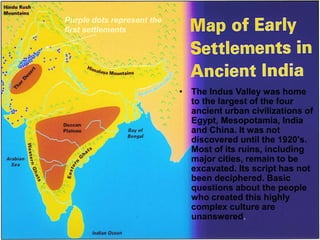
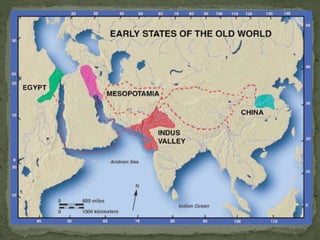
• The Indus Valley was home
to the largest of the four
ancient urban civilizations of
Egypt, Mesopotamia, India
and China. It was not
discovered until the 1920's.
Most of its ruins, including
major cities, remain to be
excavated. Its script has not
been deciphered. Basic
questions about the people
who created this highly
complex culture are
unanswered.
Purple dots represent the
first settlements
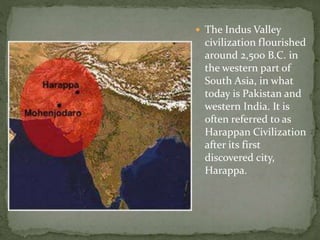
 The Indus Valley
civilization flourished
around 2,500 B.C. in
the western part of
South Asia, in what
today is Pakistan and
western India. It is
often referred to as
Harappan Civilization
after its first
discovered city,
Harappa.
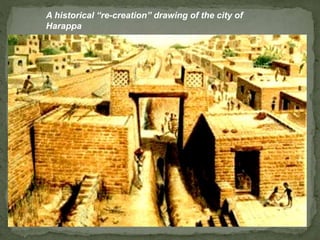
A historical “re-creation” drawing of the city of
Harappa
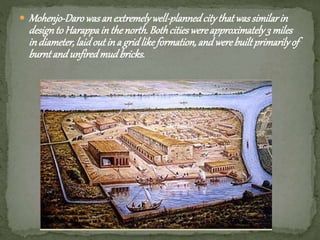
 Mohenjo-Darowasanextremelywell-plannedcitythatwassimilarin
designtoHarappainthenorth.Bothcitieswereapproximately3 miles
indiameter,laidoutina gridlikeformation,andwerebuiltprimarilyof
burntandunfiredmudbricks.
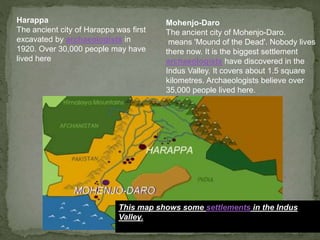
This map shows some settlements in the Indus
Valley.
Harappa
The ancient city of Harappa was first
excavated by archaeologists in
1920. Over 30,000 people may have
lived here
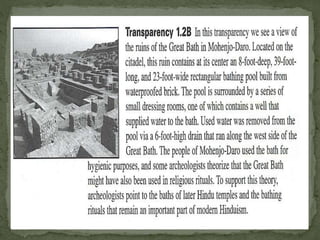
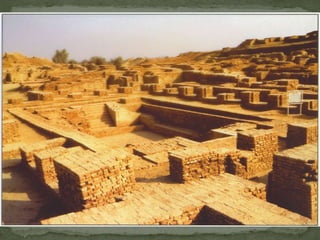
Mohenjo-Daro
The ancient city of Mohenjo-Daro.
means 'Mound of the Dead'. Nobody lives
there now. It is the biggest settlement
archaeologists have discovered in the
Indus Valley. It covers about 1.5 square
kilometres. Archaeologists believe over
35,000 people lived here.
 The story of Indus valley civilization is a story of a
people tied to their geography and environment. The
geography of India is one of great extremes,
including deserts, mountains, forests, and jungles.
All of these environments experience unpredictable
periods of flood, or NO RAIN AT ALL (drought) and
monsoons. These difficult conditions were also a
great asset to the development of its early
civilizations. The Himalayas provided a great deal of
protection from invasions from the north, and other
mountain ranges provided similar protection in the
west and east. The water ways of the Indus River
provided an excellent resource for trade.
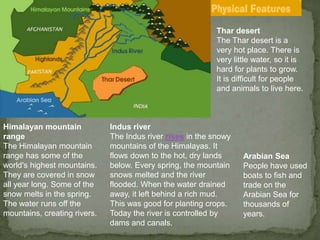
Thar desert
The Thar desert is a
very hot place. There is
very little water, so it is
hard for plants to grow.
It is difficult for people
and animals to live here.
Arabian Sea
People have used
boats to fish and
trade on the
Arabian Sea for
thousands of
years.
Himalayan mountain
range
The Himalayan mountain
range has some of the
world's highest mountains.
They are covered in snow
all year long. Some of the
snow melts in the spring.
The water runs off the
mountains, creating rivers.
Indus river
The Indus river rises in the snowy
mountains of the Himalayas. It
flows down to the hot, dry lands
below. Every spring, the mountain
snows melted and the river
flooded. When the water drained
away, it left behind a rich mud.
This was good for planting crops.
Today the river is controlled by
dams and canals.
In the earliest cities

In the earliest cities

  • 1.
    IN THE EARLIESTCITIES HISTORY CHAPTER 4 CLASS VI FROM :SHRADHA SINGH ( KVS)
  • 2.
    • The IndusValley was home to the largest of the four ancient urban civilizations of Egypt, Mesopotamia, India and China. It was not discovered until the 1920's. Most of its ruins, including major cities, remain to be excavated. Its script has not been deciphered. Basic questions about the people who created this highly complex culture are unanswered. Purple dots represent the first settlements
  • 4.
     The IndusValley civilization flourished around 2,500 B.C. in the western part of South Asia, in what today is Pakistan and western India. It is often referred to as Harappan Civilization after its first discovered city, Harappa.
  • 5.
    A historical “re-creation”drawing of the city of Harappa
  • 6.
  • 7.
    This map showssome settlements in the Indus Valley. Harappa The ancient city of Harappa was first excavated by archaeologists in 1920. Over 30,000 people may have lived here Mohenjo-Daro The ancient city of Mohenjo-Daro. means 'Mound of the Dead'. Nobody lives there now. It is the biggest settlement archaeologists have discovered in the Indus Valley. It covers about 1.5 square kilometres. Archaeologists believe over 35,000 people lived here.
  • 8.
     The storyof Indus valley civilization is a story of a people tied to their geography and environment. The geography of India is one of great extremes, including deserts, mountains, forests, and jungles. All of these environments experience unpredictable periods of flood, or NO RAIN AT ALL (drought) and monsoons. These difficult conditions were also a great asset to the development of its early civilizations. The Himalayas provided a great deal of protection from invasions from the north, and other mountain ranges provided similar protection in the west and east. The water ways of the Indus River provided an excellent resource for trade.
  • 9.
    Thar desert The Thardesert is a very hot place. There is very little water, so it is hard for plants to grow. It is difficult for people and animals to live here. Arabian Sea People have used boats to fish and trade on the Arabian Sea for thousands of years. Himalayan mountain range The Himalayan mountain range has some of the world's highest mountains. They are covered in snow all year long. Some of the snow melts in the spring. The water runs off the mountains, creating rivers. Indus river The Indus river rises in the snowy mountains of the Himalayas. It flows down to the hot, dry lands below. Every spring, the mountain snows melted and the river flooded. When the water drained away, it left behind a rich mud. This was good for planting crops. Today the river is controlled by dams and canals.