Grassroots Democracy:
Understanding
Governance
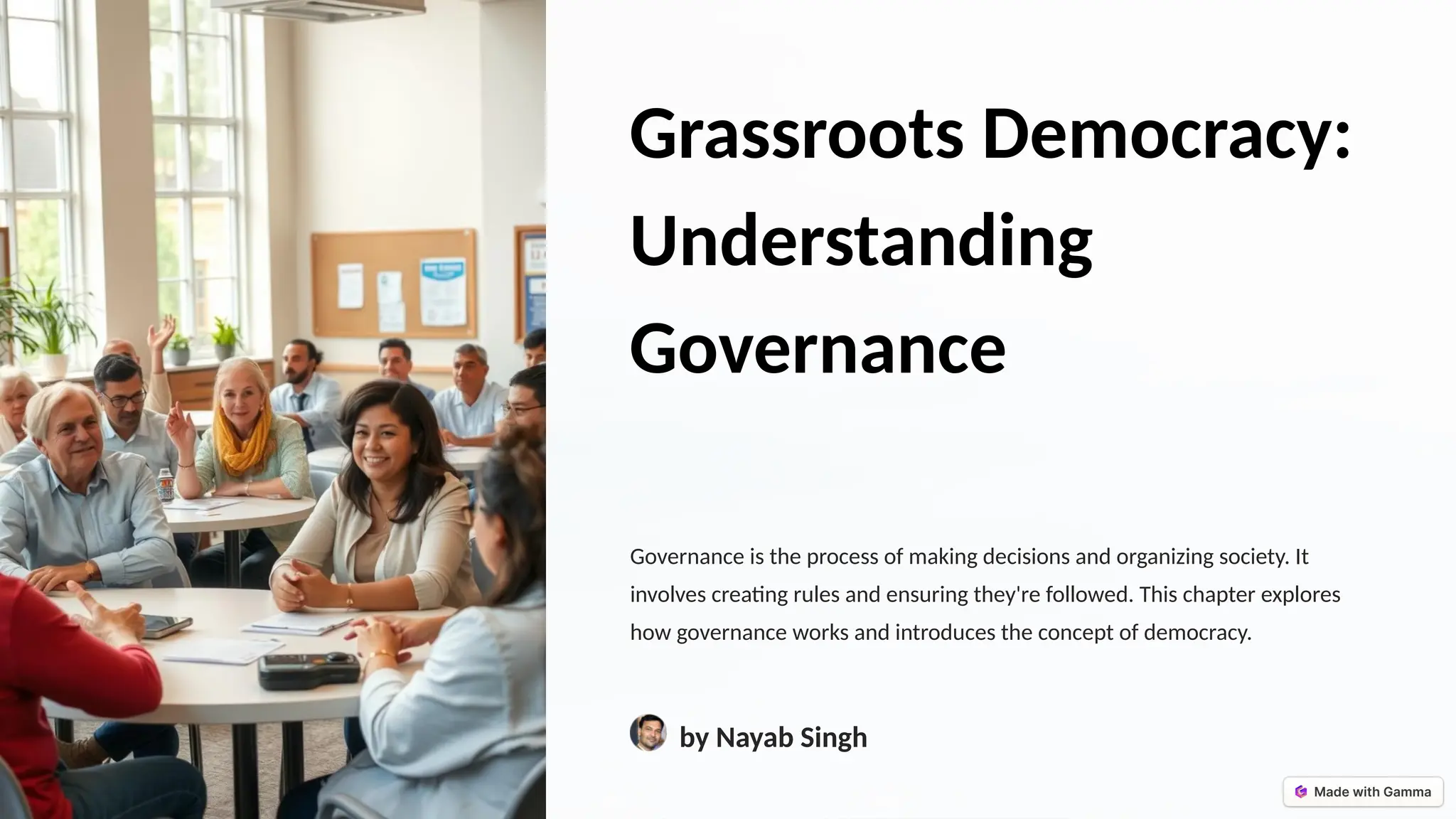
Governance is the process of making decisions and organizing society. It
involves creating rules and ensuring they're followed. This chapter explores
how governance works and introduces the concept of democracy.
by Nayab Singh
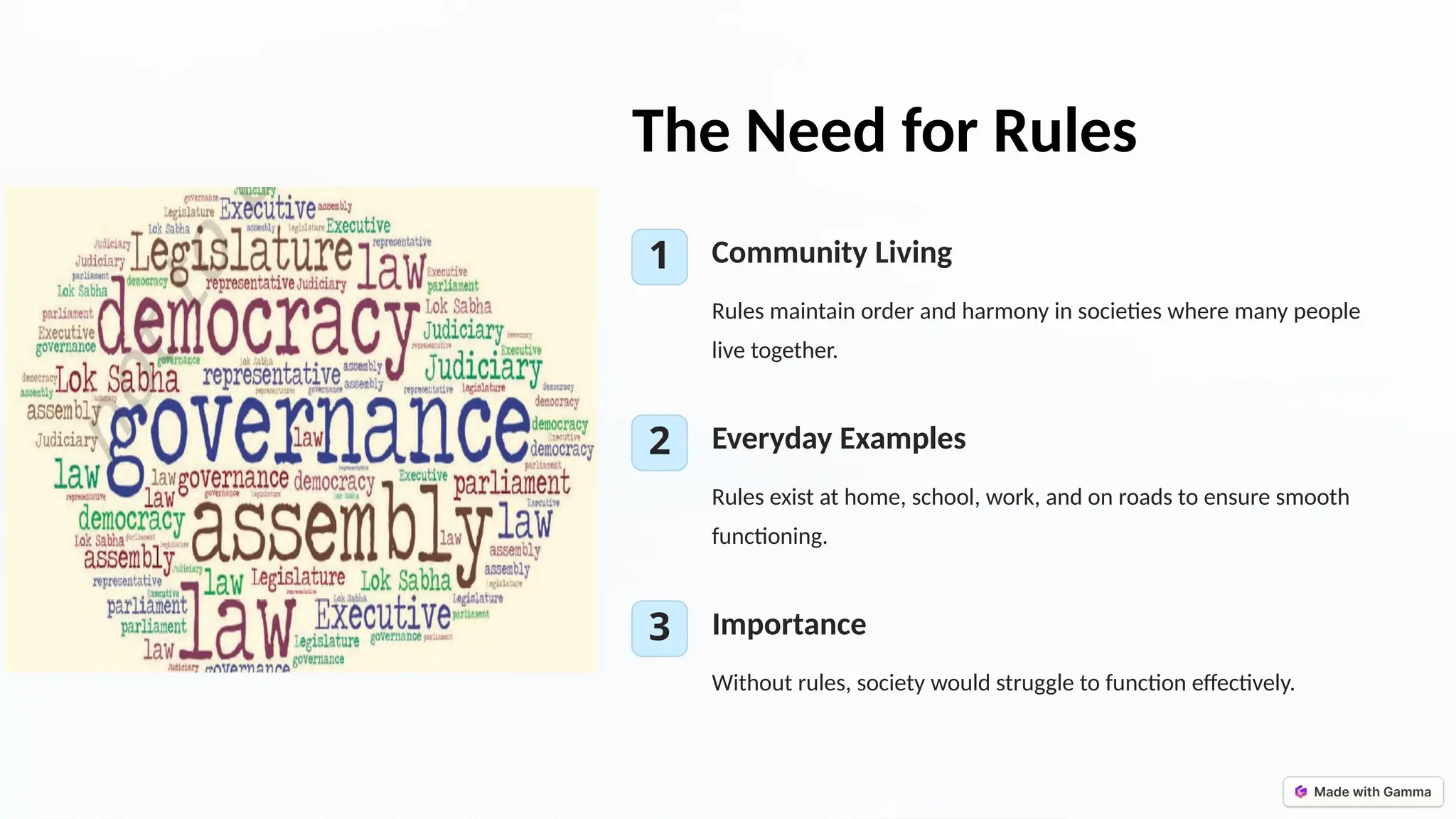
The Need for Rules
1 Community Living
Rules maintain order and harmony in societies where many people
live together.
2 Everyday Examples
Rules exist at home, school, work, and on roads to ensure smooth
functioning.
3 Importance
Without rules, society would struggle to function effectively.
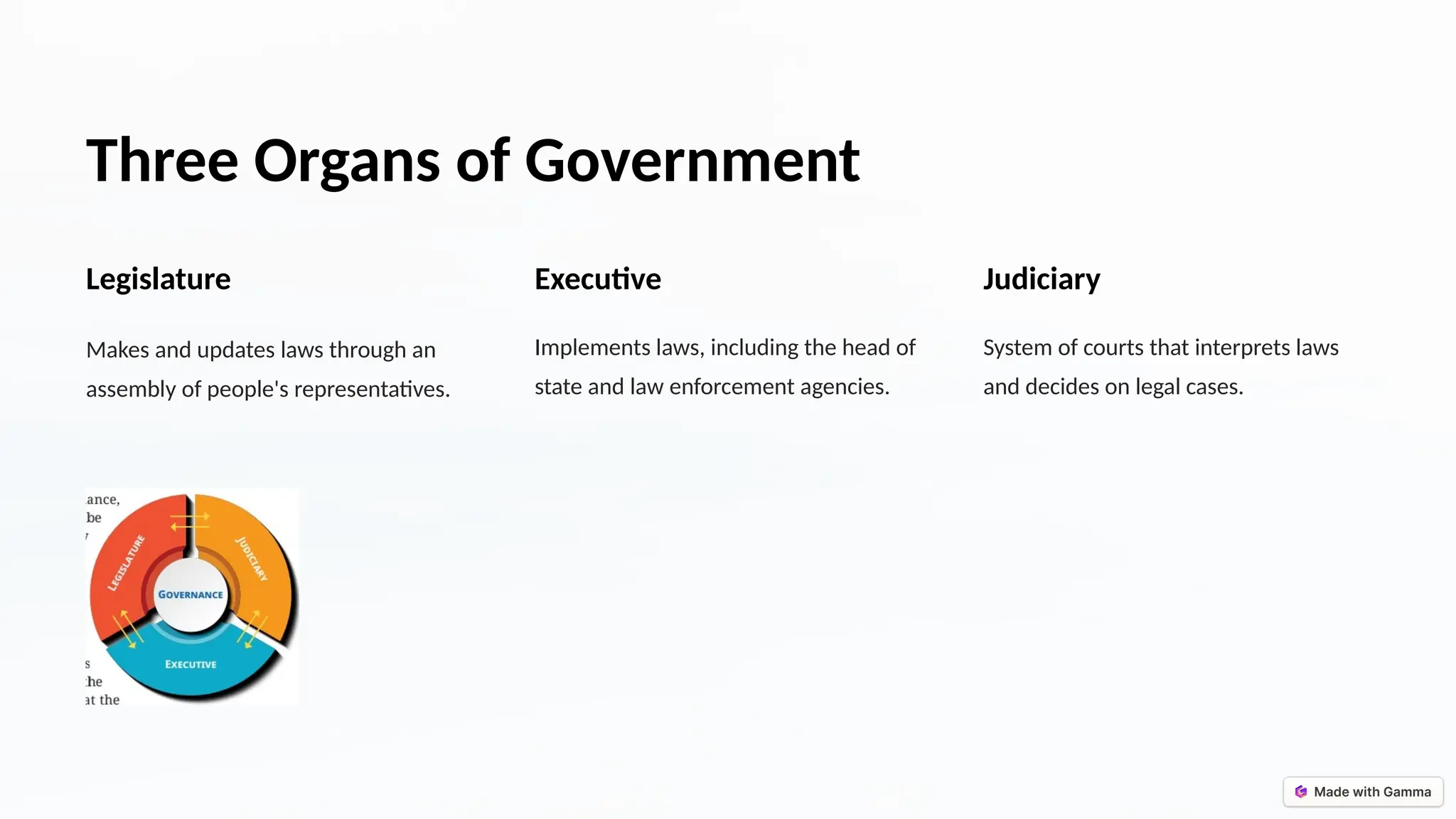
Three Organs of Government
Legislature
Makes and updates laws through an
assembly of people's representatives.
Executive
Implements laws, including the head of
state and law enforcement agencies.
Judiciary
System of courts that interprets laws
and decides on legal cases.
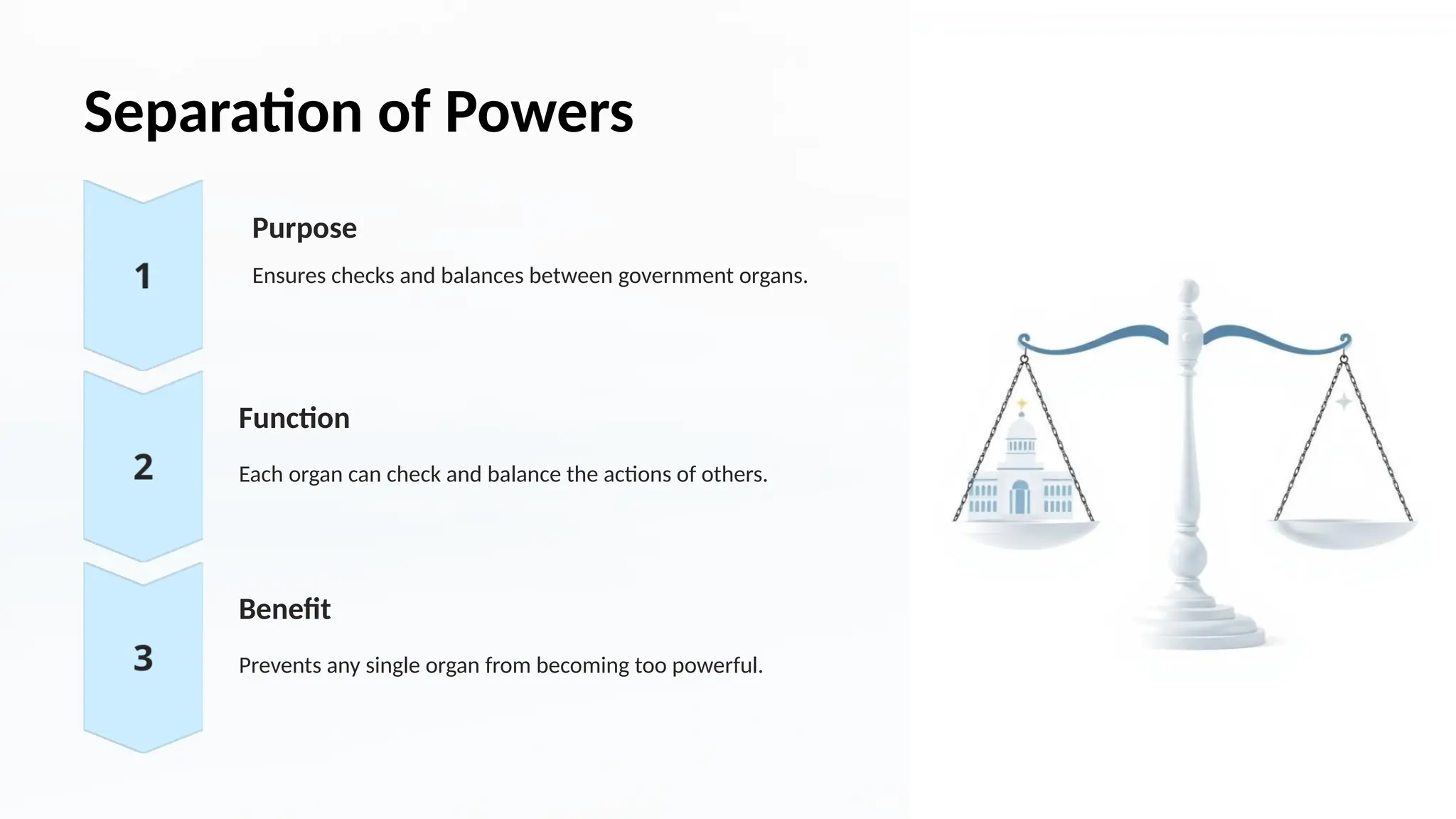
Separation of Powers
Purpose
Ensures checks and balances between government organs.
Function
Each organ can check and balance the actions of others.
Benefit
Prevents any single organ from becoming too powerful.
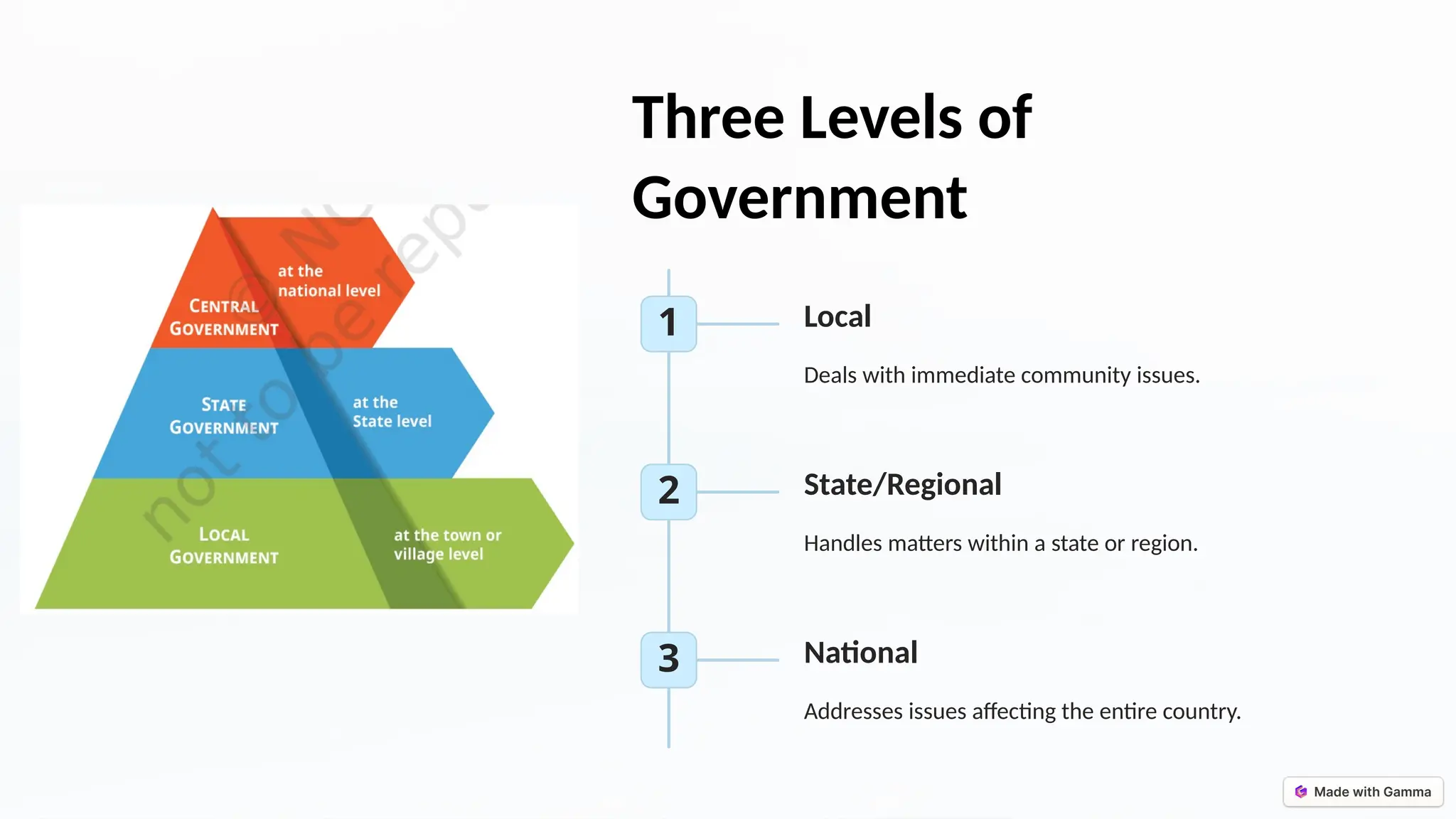
Three Levels of
Government
1 Local
Deals with immediate community issues.
2 State/Regional
Handles matters within a state or region.
3 National
Addresses issues affecting the entire country.
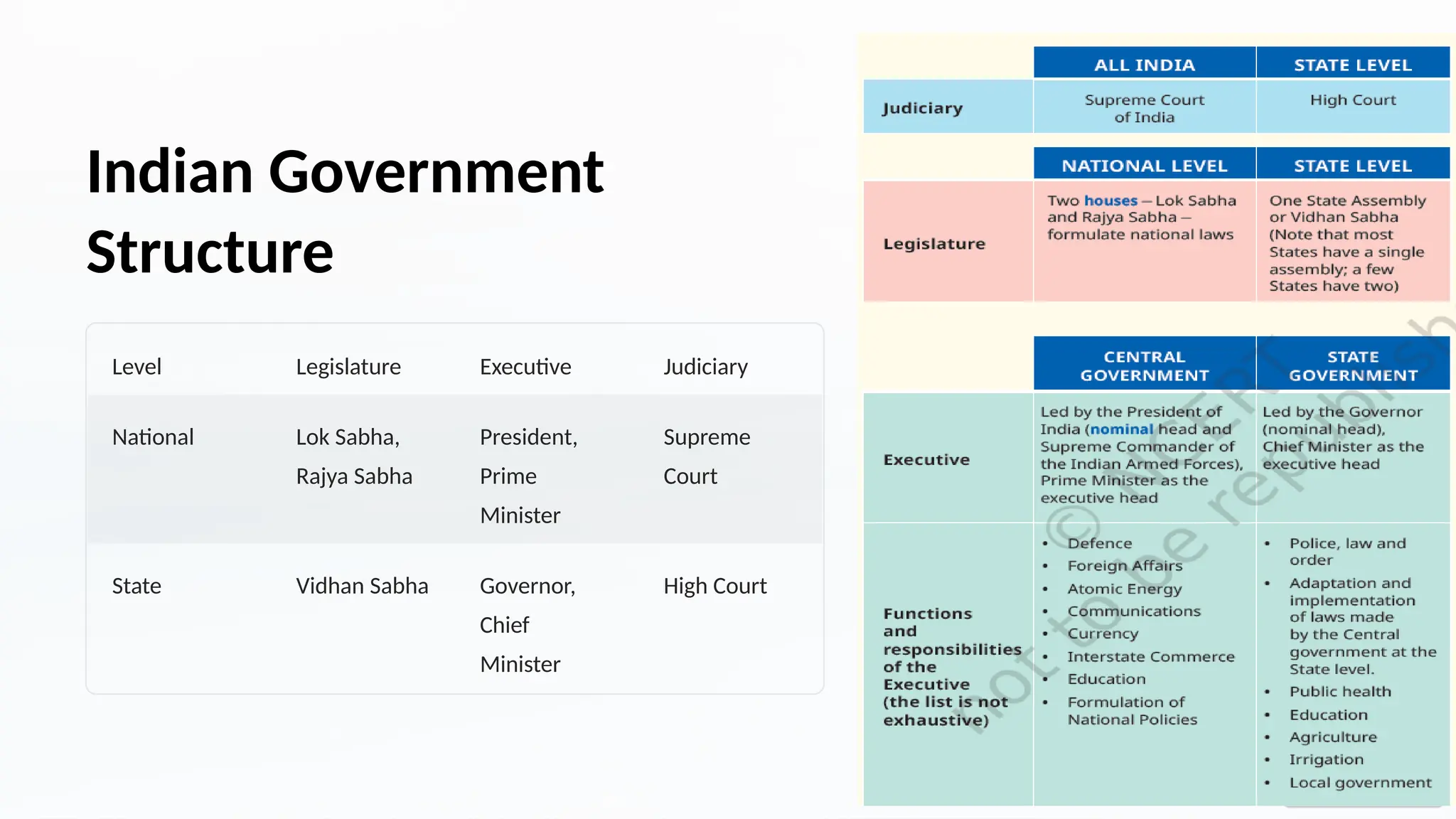
Indian Government
Structure
Level Legislature Executive Judiciary
National Lok Sabha,
Rajya Sabha
President,
Prime
Minister
Supreme
Court
State Vidhan Sabha Governor,
Chief
Minister
High Court
Democracy: Rule of the People
Definition
Democracy means 'rule of the
people', derived from Greek words
dēmos and kratos.
Representative Democracy
People elect representatives to make
decisions on their behalf.
Indian Democracy
World's largest democracy with 970
million voters in 2024.
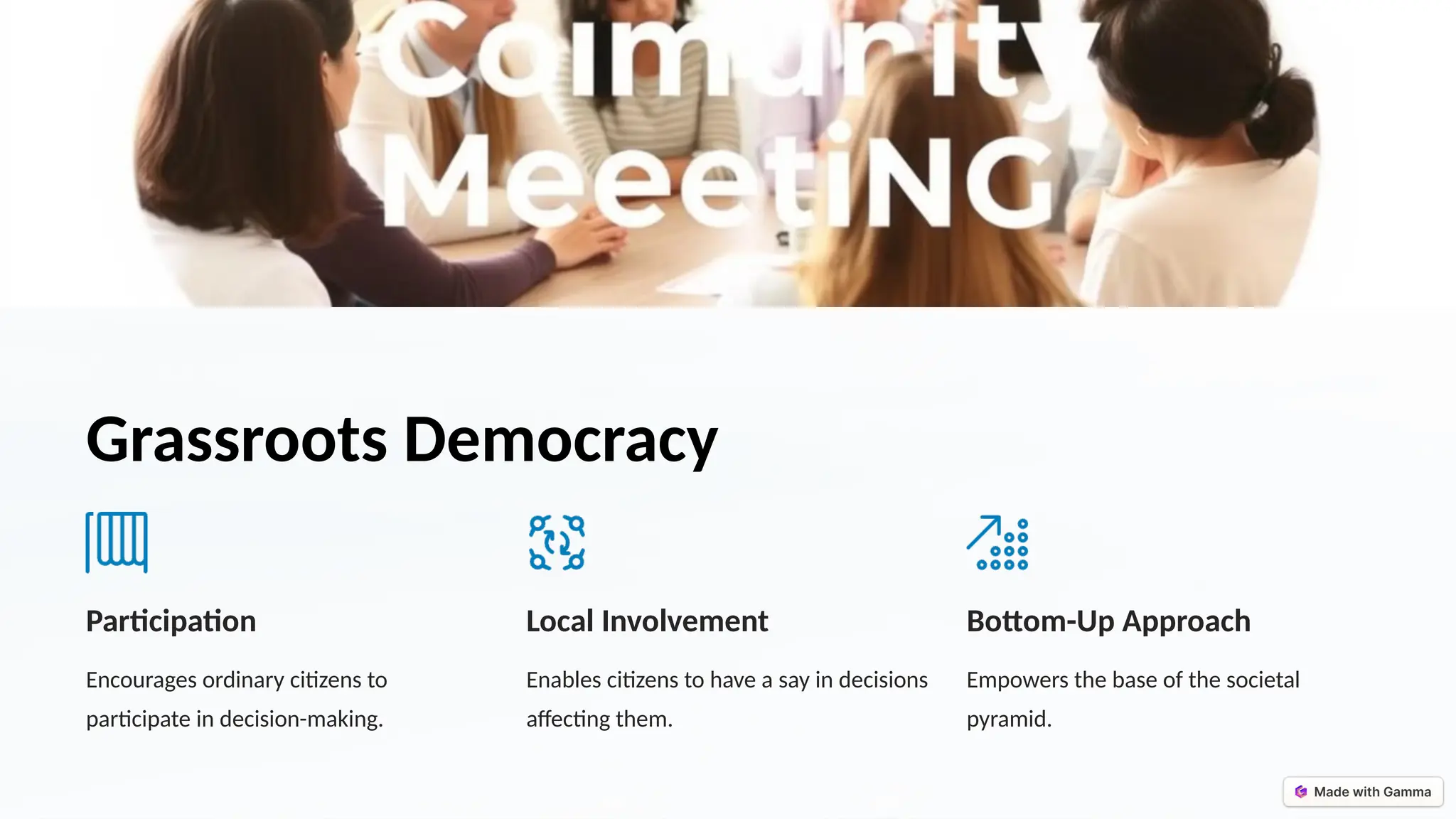
Grassroots Democracy
Participation
Encourages ordinary citizens to
participate in decision-making.
Local Involvement
Enables citizens to have a say in decisions
affecting them.
Bottom-Up Approach
Empowers the base of the societal
pyramid.
Inspiring Leadership: Dr. A.P.J. Abdul Kalam
1 Background
Renowned scientist and 11th
President of India (2002-2007).
2 Contributions
Crucial role in India's space,
missile, and nuclear programs.
3 Legacy
Inspired millions with his humility
and dedication to education and
innovation.

ppt-Grassroots-Democracy-Understanding-Governance.pptx

  • 1.
    Grassroots Democracy: Understanding Governance Governance isthe process of making decisions and organizing society. It involves creating rules and ensuring they're followed. This chapter explores how governance works and introduces the concept of democracy. by Nayab Singh
  • 2.
    The Need forRules 1 Community Living Rules maintain order and harmony in societies where many people live together. 2 Everyday Examples Rules exist at home, school, work, and on roads to ensure smooth functioning. 3 Importance Without rules, society would struggle to function effectively.
  • 3.
    Three Organs ofGovernment Legislature Makes and updates laws through an assembly of people's representatives. Executive Implements laws, including the head of state and law enforcement agencies. Judiciary System of courts that interprets laws and decides on legal cases.
  • 4.
    Separation of Powers Purpose Ensureschecks and balances between government organs. Function Each organ can check and balance the actions of others. Benefit Prevents any single organ from becoming too powerful.
  • 5.
    Three Levels of Government 1Local Deals with immediate community issues. 2 State/Regional Handles matters within a state or region. 3 National Addresses issues affecting the entire country.
  • 6.
    Indian Government Structure Level LegislatureExecutive Judiciary National Lok Sabha, Rajya Sabha President, Prime Minister Supreme Court State Vidhan Sabha Governor, Chief Minister High Court
  • 7.
    Democracy: Rule ofthe People Definition Democracy means 'rule of the people', derived from Greek words dēmos and kratos. Representative Democracy People elect representatives to make decisions on their behalf. Indian Democracy World's largest democracy with 970 million voters in 2024.
  • 8.
    Grassroots Democracy Participation Encourages ordinarycitizens to participate in decision-making. Local Involvement Enables citizens to have a say in decisions affecting them. Bottom-Up Approach Empowers the base of the societal pyramid.
  • 9.
    Inspiring Leadership: Dr.A.P.J. Abdul Kalam 1 Background Renowned scientist and 11th President of India (2002-2007). 2 Contributions Crucial role in India's space, missile, and nuclear programs. 3 Legacy Inspired millions with his humility and dedication to education and innovation.