IMRT in Cervix Cancer Tomas Kron, PhD Peter MacCallum Cancer Centre AUSTRALIA
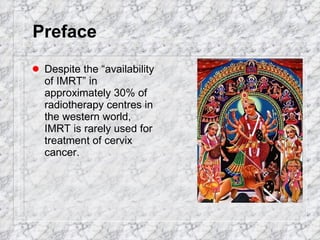
Preface Despite the “availability of IMRT” in approximately 30% of radiotherapy centres in the western world, IMRT is rarely used for treatment of cervix cancer.
Objectives of the lecture Discuss the need for imaging in the assessment of target volumes in external beam RT of cervix cancer  Introduce the concept of inverse treatment planning in IMRT Discuss pro- and cons of IMRT Compare IMRT and brachytherapy dose distributions for cervix radiotherapy
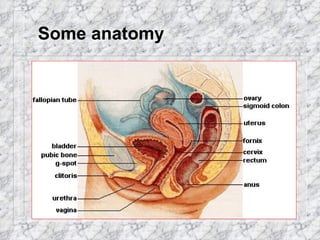
Some anatomy
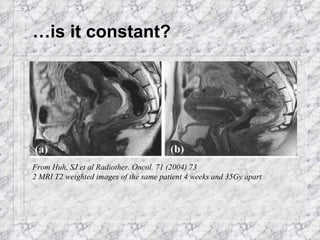
…is it constant? From Huh, SJ et al Radiother. Oncol. 71 (2004) 73 2 MRI T2 weighted images of the same patient 4 weeks and 35Gy apart
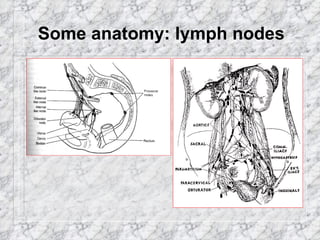
Some anatomy: lymph nodes
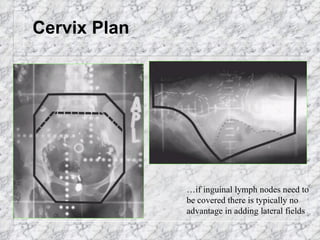
External beam radiotherapy for cervix cancer Typically 40 to 45Gy in fractions <2Gy (eg 25fx of 1.8Gy) Two field (AP/PA) or four field box technique Also two lateral arcs possible
Cervix Plan … if inguinal lymph nodes need to be covered there is typically no advantage in adding lateral fields
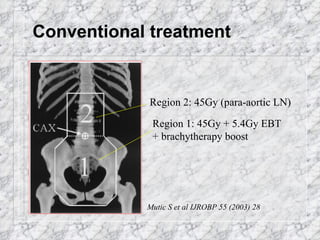
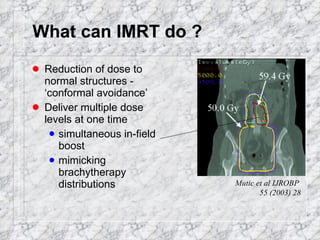
Conventional treatment Mutic S et al IJROBP 55 (2003) 28 Region 2: 45Gy (para-aortic LN) Region 1: 45Gy + 5.4Gy EBT + brachytherapy boost
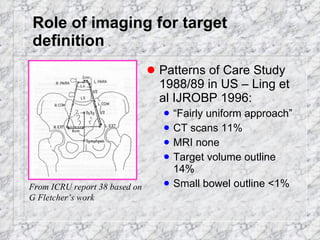
Role of imaging for target definition Patterns of Care Study 1988/89 in US – Ling et al IJROBP 1996: “ Fairly uniform approach” CT scans 11% MRI none Target volume outline 14% Small bowel outline <1% From ICRU report 38 based on G Fletcher’s work
The impact of patient positioning on the adequate coverage of the uterus in the primary irradiation of cervical carcinoma: a prospective analysis using magnetic resonance imaging.  Weiss E et al Radiother. Oncol. 63 (2002) 83 Results : Standard portals [ie 4 field box] did not completely cover the uterus in supine position in 7/21 (33%), in prone position with belly board in 7/21 (33%) and without belly board in 5/21 (24%). Insufficient uterine coverage was found only in the anteroposterior direction. The mean distance (± standard deviation) between the field borders of the lateral portals and the uterus was in supine position anteriorly 3.4 cm (±2.2 cm) and posteriorly 1.8 cm (±1.3 cm), in prone position with belly board anteriorly 2.2 cm (±2.7 cm) and posteriorly 2.6 cm (±1.6 cm), prone without belly board anteriorly 3.3 cm (±2.4 cm) and posteriorly 1.9 cm (±1.1 cm). The difference was statistically significant between supine and prone position with belly board and between prone position with and without belly board. Repeated MRI controls during therapy showed no significant changes compared to the MRIs at the beginning of therapy.  Conclusions :  The use of standard radiation fields results in a high percentage of geographical misfits. Three-dimensional treatment planning is a prerequisite for adequate uterus coverage.
…  what has changed in 10 years? Patterns of Care Study 1996-99 in US – Eifel et al IJROBP 2004: 1/3 stage IIIA - IVA CT most common 92.4% radical patients had brachytherapy 1999: 63% had concurrent chemotherapy  Small centres (less than about 4 cervix patients per year) tend to provide worse treatment (<80Gy pt A, >70d total treatment time)
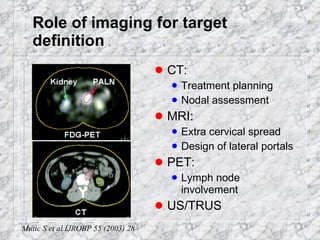
Role of imaging for target definition CT: Treatment planning Nodal assessment MRI: Extra cervical spread Design of lateral portals PET: Lymph node involvement US/TRUS Mutic S et al IJROBP 55 (2003) 28
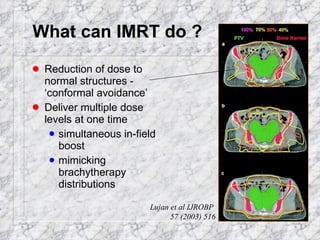
What can IMRT do ? Reduction of dose to normal structures - ‘conformal avoidance’ Deliver multiple dose levels at one time simultaneous in-field boost mimicking brachytherapy distributions
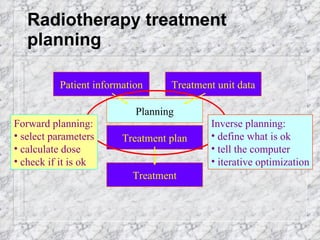
Radiotherapy treatment planning Patient information Planning Treatment unit data Treatment plan Treatment Inverse planning: define what is ok tell the computer iterative optimization Forward planning: select parameters calculate dose check if it is ok
Inverse planning process CT scan - 3D, large volume, small slices Outlining of ALL (!) relevant structures (targets and critical organs) DICOM transfer of CT data sets and structures to planning system Definition of dose constraints Computer optimization Verification
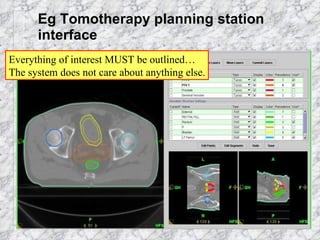
Eg Tomotherapy planning station interface Everything of interest MUST be outlined… The system does not care about anything else.
Need for customisation? Courtesy A Fyles
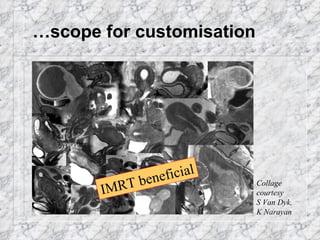
… scope for customisation Collage  courtesy S Van Dyk, K Narayan IMRT beneficial
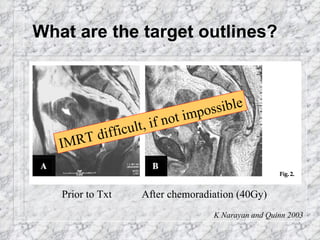
What are the target outlines? IMRT difficult, if not impossible Prior to Txt After chemoradiation (40Gy) K Narayan and Quinn 2003
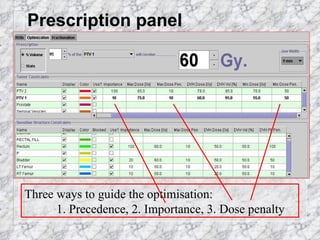
Prescription panel Three ways to guide the optimisation:  1. Precedence, 2. Importance, 3. Dose penalty
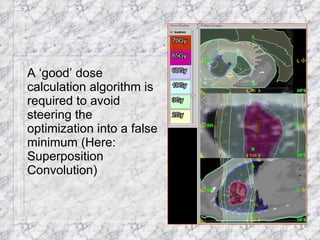
A ‘good’ dose calculation algorithm is required to avoid steering the optimization into a false minimum (Here: Superposition Convolution)
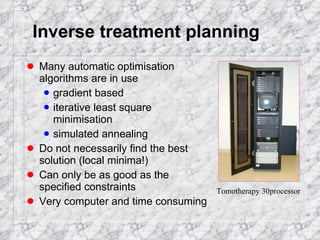
Inverse treatment planning Many automatic optimisation algorithms are in use gradient based iterative least square minimisation simulated annealing Do not necessarily find the best solution (local minima!) Can only be as good as the specified constraints Very computer and time consuming Tomotherapy 30processor
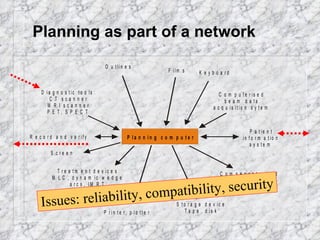
Planning as part of a network Issues: reliability, compatibility, security
What can IMRT do ? Reduction of dose to normal structures - ‘conformal avoidance’ Deliver multiple dose levels at one time simultaneous in-field boost mimicking brachytherapy distributions Lujan et al IJROBP  57 (2003) 516
What can IMRT do ? Reduction of dose to normal structures - ‘conformal avoidance’ Deliver multiple dose levels at one time simultaneous in-field boost mimicking brachytherapy distributions Mutic et al IJROBP  55 (2003) 28
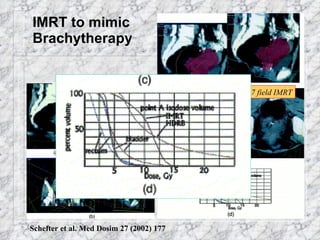
IMRT to mimic Brachytherapy HDR brachy 7 field IMRT HDR brachy 7 field IMRT Schefter et al. Med Dosim 27 (2002) 177
The first issue of a new journal (Elsevier): Brachytherapy 1 (2002) 191 Point/Counterpoint: Can IMRT replace brachytherapy in the management of cervical cancer? K Alektiar (New York): Brachy-therapy A Mundt, J Roeske (Chicago): IMRT
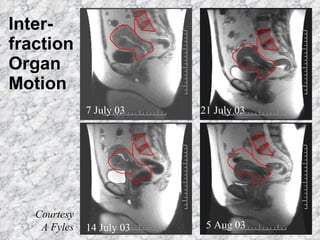
K Alektiar: Brachytherapy is more suitable: Can give 80-90Gy to point A safely (even higher to cervix point) Target volume difficult to define for EBRT (parametrium particularly) Organ motion likely to be larger than in prostate
Inter-fraction Organ Motion  7 July 03 21 July 03 14 July 03 5 Aug 03 Courtesy A Fyles
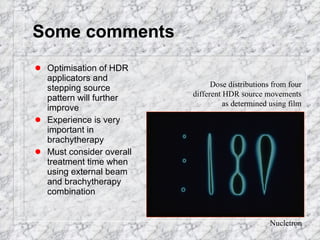
Some comments Optimisation of HDR applicators and stepping source pattern will further improve Experience is very important in brachytherapy Must consider overall treatment time when using external beam and brachytherapy combination Nucletron Dose distributions from four different HDR source movements as determined using film
A Mundt and J Roeske: “ IMRT is a revolution in the treatment of cancer”
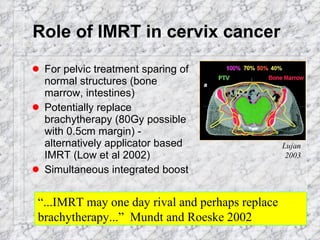
Role of IMRT in cervix cancer For pelvic treatment sparing of normal structures (bone marrow, intestines) Potentially replace brachytherapy (80Gy possible with 0.5cm margin) - alternatively applicator based IMRT (Low et al 2002)  Simultaneous integrated boost Lujan 2003 “ ...IMRT may one day rival and perhaps replace brachytherapy...”  Mundt and Roeske 2002
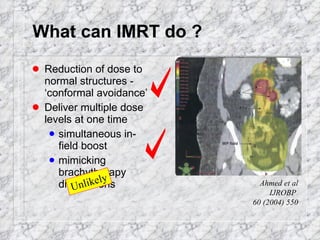
What can IMRT do ? Reduction of dose to normal structures - ‘conformal avoidance’ Deliver multiple dose levels at one time simultaneous in-field boost mimicking brachytherapy distributions Ahmed et al IJROBP  60 (2004) 550 Unlikely
Considering IMRT And also: Leakage  Integral dose, dose dumping  Treatment time Dose rate Resources required for set-up, maintenance and QA
Consequences for radiation safety More beam on time means more radiation leakage - assume up to 10 times more mu Secondary barriers may need to be increased If high energy photons are used, neutrons may be a problem
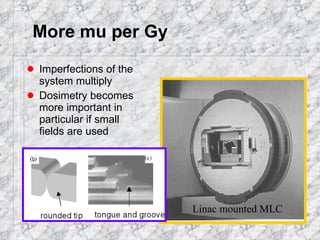
More mu per Gy Imperfections of the system multiply Dosimetry becomes more important in particular if small fields are used Linac mounted MLC
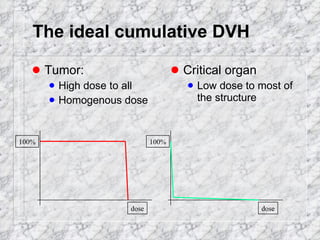
The ideal cumulative DVH Tumor: High dose to all  Homogenous dose Critical organ Low dose to most of the structure 100% dose 100% dose
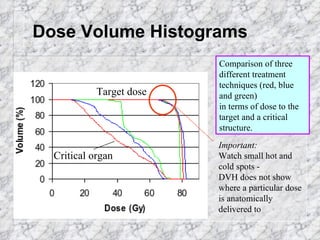
Dose Volume Histograms Comparison of three different treatment techniques (red, blue and green) in terms of dose to the target and a critical structure. Target dose Critical organ Important: Watch small hot and cold spots - DVH does not show where a particular dose is anatomically delivered to
Documentation of the treatment More is required than beam direction, beam energy and beam on time IMRT requires many MLC leaf configurations A tomotherapy treatment is characterized by some 60000 individual leaf opening times depending on gantry angle...
Green Journal 1992: > 50 occasions of data transfer from one point to another for each patient!
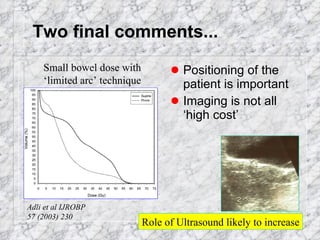
Two final comments... Positioning of the patient is important Imaging is not all ‘high cost’ Adli et al IJROBP  57 (2003) 230 Small bowel dose with ‘limited arc’ technique Role of Ultrasound likely to increase
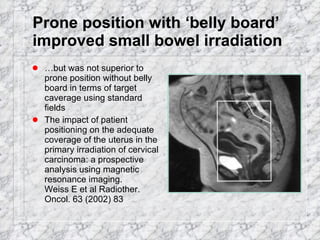
Prone position with ‘belly board’ improved small bowel irradiation … but was not superior to prone position without belly board in terms of target caverage using standard fields The impact of patient positioning on the adequate coverage of the uterus in the primary irradiation of cervical carcinoma: a prospective analysis using magnetic resonance imaging.  Weiss E et al Radiother. Oncol. 63 (2002) 83
Summary (personal opinion) Cervix cancer radiotherapy is likely to include brachytherapy in years to come Promising imaging techniques because of soft tissue contrast are MRI and US IMRT is likely to play a role in optimising ‘conventional part’ of external beam delivery allow for simultaneous boost of involved lymph nodes
Any questions?
Thank you Acknowledgements: A Fyles K Narayan S Van Dyk

Imrt In Cervix Cancer

  • 1.
    IMRT in CervixCancer Tomas Kron, PhD Peter MacCallum Cancer Centre AUSTRALIA
  • 2.
    Preface Despite the“availability of IMRT” in approximately 30% of radiotherapy centres in the western world, IMRT is rarely used for treatment of cervix cancer.
  • 3.
    Objectives of thelecture Discuss the need for imaging in the assessment of target volumes in external beam RT of cervix cancer Introduce the concept of inverse treatment planning in IMRT Discuss pro- and cons of IMRT Compare IMRT and brachytherapy dose distributions for cervix radiotherapy
  • 4.
  • 5.
    …is it constant?From Huh, SJ et al Radiother. Oncol. 71 (2004) 73 2 MRI T2 weighted images of the same patient 4 weeks and 35Gy apart
  • 6.
  • 7.
    External beam radiotherapyfor cervix cancer Typically 40 to 45Gy in fractions <2Gy (eg 25fx of 1.8Gy) Two field (AP/PA) or four field box technique Also two lateral arcs possible
  • 8.
    Cervix Plan …if inguinal lymph nodes need to be covered there is typically no advantage in adding lateral fields
  • 9.
    Conventional treatment MuticS et al IJROBP 55 (2003) 28 Region 2: 45Gy (para-aortic LN) Region 1: 45Gy + 5.4Gy EBT + brachytherapy boost
  • 10.
    Role of imagingfor target definition Patterns of Care Study 1988/89 in US – Ling et al IJROBP 1996: “ Fairly uniform approach” CT scans 11% MRI none Target volume outline 14% Small bowel outline <1% From ICRU report 38 based on G Fletcher’s work
  • 11.
    The impact ofpatient positioning on the adequate coverage of the uterus in the primary irradiation of cervical carcinoma: a prospective analysis using magnetic resonance imaging. Weiss E et al Radiother. Oncol. 63 (2002) 83 Results : Standard portals [ie 4 field box] did not completely cover the uterus in supine position in 7/21 (33%), in prone position with belly board in 7/21 (33%) and without belly board in 5/21 (24%). Insufficient uterine coverage was found only in the anteroposterior direction. The mean distance (± standard deviation) between the field borders of the lateral portals and the uterus was in supine position anteriorly 3.4 cm (±2.2 cm) and posteriorly 1.8 cm (±1.3 cm), in prone position with belly board anteriorly 2.2 cm (±2.7 cm) and posteriorly 2.6 cm (±1.6 cm), prone without belly board anteriorly 3.3 cm (±2.4 cm) and posteriorly 1.9 cm (±1.1 cm). The difference was statistically significant between supine and prone position with belly board and between prone position with and without belly board. Repeated MRI controls during therapy showed no significant changes compared to the MRIs at the beginning of therapy. Conclusions : The use of standard radiation fields results in a high percentage of geographical misfits. Three-dimensional treatment planning is a prerequisite for adequate uterus coverage.
  • 12.
    … whathas changed in 10 years? Patterns of Care Study 1996-99 in US – Eifel et al IJROBP 2004: 1/3 stage IIIA - IVA CT most common 92.4% radical patients had brachytherapy 1999: 63% had concurrent chemotherapy Small centres (less than about 4 cervix patients per year) tend to provide worse treatment (<80Gy pt A, >70d total treatment time)
  • 13.
    Role of imagingfor target definition CT: Treatment planning Nodal assessment MRI: Extra cervical spread Design of lateral portals PET: Lymph node involvement US/TRUS Mutic S et al IJROBP 55 (2003) 28
  • 14.
    What can IMRTdo ? Reduction of dose to normal structures - ‘conformal avoidance’ Deliver multiple dose levels at one time simultaneous in-field boost mimicking brachytherapy distributions
  • 15.
    Radiotherapy treatment planningPatient information Planning Treatment unit data Treatment plan Treatment Inverse planning: define what is ok tell the computer iterative optimization Forward planning: select parameters calculate dose check if it is ok
  • 16.
    Inverse planning processCT scan - 3D, large volume, small slices Outlining of ALL (!) relevant structures (targets and critical organs) DICOM transfer of CT data sets and structures to planning system Definition of dose constraints Computer optimization Verification
  • 17.
    Eg Tomotherapy planningstation interface Everything of interest MUST be outlined… The system does not care about anything else.
  • 18.
    Need for customisation?Courtesy A Fyles
  • 19.
    … scope forcustomisation Collage courtesy S Van Dyk, K Narayan IMRT beneficial
  • 20.
    What are thetarget outlines? IMRT difficult, if not impossible Prior to Txt After chemoradiation (40Gy) K Narayan and Quinn 2003
  • 21.
    Prescription panel Threeways to guide the optimisation: 1. Precedence, 2. Importance, 3. Dose penalty
  • 22.
    A ‘good’ dosecalculation algorithm is required to avoid steering the optimization into a false minimum (Here: Superposition Convolution)
  • 23.
    Inverse treatment planningMany automatic optimisation algorithms are in use gradient based iterative least square minimisation simulated annealing Do not necessarily find the best solution (local minima!) Can only be as good as the specified constraints Very computer and time consuming Tomotherapy 30processor
  • 24.
    Planning as partof a network Issues: reliability, compatibility, security
  • 25.
    What can IMRTdo ? Reduction of dose to normal structures - ‘conformal avoidance’ Deliver multiple dose levels at one time simultaneous in-field boost mimicking brachytherapy distributions Lujan et al IJROBP 57 (2003) 516
  • 26.
    What can IMRTdo ? Reduction of dose to normal structures - ‘conformal avoidance’ Deliver multiple dose levels at one time simultaneous in-field boost mimicking brachytherapy distributions Mutic et al IJROBP 55 (2003) 28
  • 27.
    IMRT to mimicBrachytherapy HDR brachy 7 field IMRT HDR brachy 7 field IMRT Schefter et al. Med Dosim 27 (2002) 177
  • 28.
    The first issueof a new journal (Elsevier): Brachytherapy 1 (2002) 191 Point/Counterpoint: Can IMRT replace brachytherapy in the management of cervical cancer? K Alektiar (New York): Brachy-therapy A Mundt, J Roeske (Chicago): IMRT
  • 29.
    K Alektiar: Brachytherapyis more suitable: Can give 80-90Gy to point A safely (even higher to cervix point) Target volume difficult to define for EBRT (parametrium particularly) Organ motion likely to be larger than in prostate
  • 30.
    Inter-fraction Organ Motion 7 July 03 21 July 03 14 July 03 5 Aug 03 Courtesy A Fyles
  • 31.
    Some comments Optimisationof HDR applicators and stepping source pattern will further improve Experience is very important in brachytherapy Must consider overall treatment time when using external beam and brachytherapy combination Nucletron Dose distributions from four different HDR source movements as determined using film
  • 32.
    A Mundt andJ Roeske: “ IMRT is a revolution in the treatment of cancer”
  • 33.
    Role of IMRTin cervix cancer For pelvic treatment sparing of normal structures (bone marrow, intestines) Potentially replace brachytherapy (80Gy possible with 0.5cm margin) - alternatively applicator based IMRT (Low et al 2002) Simultaneous integrated boost Lujan 2003 “ ...IMRT may one day rival and perhaps replace brachytherapy...” Mundt and Roeske 2002
  • 34.
    What can IMRTdo ? Reduction of dose to normal structures - ‘conformal avoidance’ Deliver multiple dose levels at one time simultaneous in-field boost mimicking brachytherapy distributions Ahmed et al IJROBP 60 (2004) 550 Unlikely
  • 35.
    Considering IMRT Andalso: Leakage Integral dose, dose dumping Treatment time Dose rate Resources required for set-up, maintenance and QA
  • 36.
    Consequences for radiationsafety More beam on time means more radiation leakage - assume up to 10 times more mu Secondary barriers may need to be increased If high energy photons are used, neutrons may be a problem
  • 37.
    More mu perGy Imperfections of the system multiply Dosimetry becomes more important in particular if small fields are used Linac mounted MLC
  • 38.
    The ideal cumulativeDVH Tumor: High dose to all Homogenous dose Critical organ Low dose to most of the structure 100% dose 100% dose
  • 39.
    Dose Volume HistogramsComparison of three different treatment techniques (red, blue and green) in terms of dose to the target and a critical structure. Target dose Critical organ Important: Watch small hot and cold spots - DVH does not show where a particular dose is anatomically delivered to
  • 40.
    Documentation of thetreatment More is required than beam direction, beam energy and beam on time IMRT requires many MLC leaf configurations A tomotherapy treatment is characterized by some 60000 individual leaf opening times depending on gantry angle...
  • 41.
    Green Journal 1992:> 50 occasions of data transfer from one point to another for each patient!
  • 42.
    Two final comments...Positioning of the patient is important Imaging is not all ‘high cost’ Adli et al IJROBP 57 (2003) 230 Small bowel dose with ‘limited arc’ technique Role of Ultrasound likely to increase
  • 43.
    Prone position with‘belly board’ improved small bowel irradiation … but was not superior to prone position without belly board in terms of target caverage using standard fields The impact of patient positioning on the adequate coverage of the uterus in the primary irradiation of cervical carcinoma: a prospective analysis using magnetic resonance imaging. Weiss E et al Radiother. Oncol. 63 (2002) 83
  • 44.
    Summary (personal opinion)Cervix cancer radiotherapy is likely to include brachytherapy in years to come Promising imaging techniques because of soft tissue contrast are MRI and US IMRT is likely to play a role in optimising ‘conventional part’ of external beam delivery allow for simultaneous boost of involved lymph nodes
  • 45.
  • 46.
    Thank you Acknowledgements:A Fyles K Narayan S Van Dyk