Implement a Shared Services Model
Look before you leap; know your own people, process, and technology capabilities before you make the move to implement a shared services model.
Your IT group has excess capacity, superior capabilities, and peers that require similar IT services.
As a result of this, your organization seeks to leverage this capacity and your superior capabilities, in order to reduce costs and improve overall performance
by implementing a shared services model.
Keep in mind that the implementation of a shared services model is difficult and is a lengthy process that requires a great deal of internal analysis, as well as
an assessment of customer needs.
Becoming a shared services provider is comparable to becoming a vendor and most IT groups don’t have the capabilities to easily make the transition.
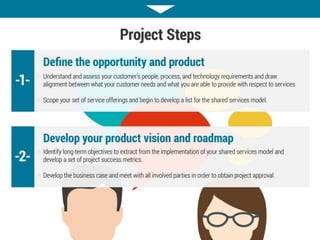
Before jumping into the project, assess your customer requirements and your current people, process, and technology capabilities to assess whether your
organization is ready to implement a shared services model and whether adequate alignment exists between you and your target customer.
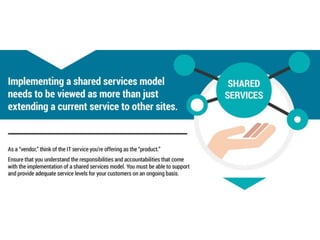
Implementing a shared services model needs to be viewed as more than just extending a current service to other sites. The organization providing
services essentially turns into a vendor. As a vendor, think of the IT service you’re offering as the “product.”
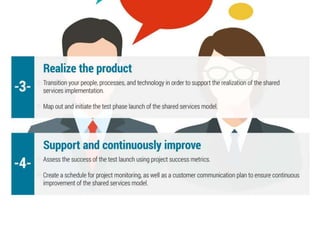
When your organization implements a shared services model, you become a service provider and as a result, your organization’s corresponding people,
processes, and technologies must reflect this change.
Ensure that you understand the responsibilities and accountabilities that come with the implementation of a shared services model and are able to support
and provide adequate service levels for your customers on an ongoing basis.
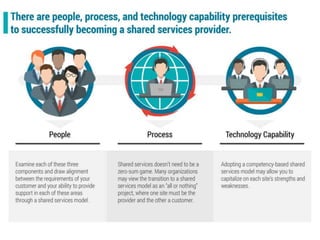
There are people, process, and technology capability prerequisites to successfully become a shared services provider.
It is integral that your organization examine each of these three components and draw alignment between the requirements of your customer and your
ability to provide support in each of these areas through a shared services model.
Shared services doesn’t need to be a zero-sum game. Many organizations may view the transition to a shared services model as an “all or nothing” project,
where one site must be the provider and the other a customer.
Adopting a competency-based shared services model is often a good idea that allows you to capitalize on each site’s strengths and weaknesses.
http://www.infotech.com/research/ss/implement-a-
shared-services-model

Implement a Shared Services Model

  • 1.
    Implement a SharedServices Model Look before you leap; know your own people, process, and technology capabilities before you make the move to implement a shared services model. Your IT group has excess capacity, superior capabilities, and peers that require similar IT services. As a result of this, your organization seeks to leverage this capacity and your superior capabilities, in order to reduce costs and improve overall performance by implementing a shared services model. Keep in mind that the implementation of a shared services model is difficult and is a lengthy process that requires a great deal of internal analysis, as well as an assessment of customer needs. Becoming a shared services provider is comparable to becoming a vendor and most IT groups don’t have the capabilities to easily make the transition. Before jumping into the project, assess your customer requirements and your current people, process, and technology capabilities to assess whether your organization is ready to implement a shared services model and whether adequate alignment exists between you and your target customer. Implementing a shared services model needs to be viewed as more than just extending a current service to other sites. The organization providing services essentially turns into a vendor. As a vendor, think of the IT service you’re offering as the “product.” When your organization implements a shared services model, you become a service provider and as a result, your organization’s corresponding people, processes, and technologies must reflect this change. Ensure that you understand the responsibilities and accountabilities that come with the implementation of a shared services model and are able to support and provide adequate service levels for your customers on an ongoing basis. There are people, process, and technology capability prerequisites to successfully become a shared services provider. It is integral that your organization examine each of these three components and draw alignment between the requirements of your customer and your ability to provide support in each of these areas through a shared services model. Shared services doesn’t need to be a zero-sum game. Many organizations may view the transition to a shared services model as an “all or nothing” project, where one site must be the provider and the other a customer. Adopting a competency-based shared services model is often a good idea that allows you to capitalize on each site’s strengths and weaknesses.
  • 7.