 Classical signs and symptoms ofClassical signs and symptoms of
inflammation are redness, heat, swelling,inflammation are redness, heat, swelling,
pain and reduced or loss of function.pain and reduced or loss of function.
 These are caused by vascular and cellularThese are caused by vascular and cellular
changes typical for inflammation andchanges typical for inflammation and
driven by cytokines and otherdriven by cytokines and other
inflammatory mediators produced byinflammatory mediators produced by
inflammatory and tissue cells or formedinflammatory and tissue cells or formed
from their extracellular precursors whenfrom their extracellular precursors when
activated by inflammation-associatedactivated by inflammation-associated
mechanisms.mechanisms.
 In the acute inflammation, localIn the acute inflammation, local
vasodilation increases blood flow in thevasodilation increases blood flow in the
inflamed tissue, and plasma proteins leakinflamed tissue, and plasma proteins leak
into the tissue due to increased vascularinto the tissue due to increased vascular
permeability.permeability.
 Granulocytes monocyte / macrophages areGranulocytes monocyte / macrophages are
important cells in the non-specific responsesimportant cells in the non-specific responses
in innate immunity against pathogens.in innate immunity against pathogens.
Lymphocyte-driven responses andLymphocyte-driven responses and
antibodies have a significant role in theantibodies have a significant role in the
specific adaptive immunity and in chronicspecific adaptive immunity and in chronic
inflammation [1,2].inflammation [1,2].
 There are several anti-inflammatory and antirheumaticThere are several anti-inflammatory and antirheumatic
drugs which target lymphocyte receptors or pathwaysdrugs which target lymphocyte receptors or pathways
and suppress aberrant lymphocyte activation. Also,and suppress aberrant lymphocyte activation. Also,
inflammatory cytokines and other inflammatoryinflammatory cytokines and other inflammatory
mediators have been successful antiinflammatorymediators have been successful antiinflammatory
targets, and there are several novel cytokine-targetedtargets, and there are several novel cytokine-targeted
therapies under development for rheumatoid arthritistherapies under development for rheumatoid arthritis
[3] and other inflammatory diseases.[3] and other inflammatory diseases.
 An interesting novel approach in the treatment ofAn interesting novel approach in the treatment of
arthritis is to target anti citrullinated protein antibodiesarthritis is to target anti citrullinated protein antibodies
(ACPAs) which are also known as biomarkers(ACPAs) which are also known as biomarkers
associated with worse prognosis and more erosiveassociated with worse prognosis and more erosive
disease [4, 5].disease [4, 5].
 Eosinophilic granulocytes are important cells in theEosinophilic granulocytes are important cells in the
pathogenesis of asthma and other allergic disorderspathogenesis of asthma and other allergic disorders
[6,7]. In patients with asthma, eosinophils accumulate[6,7]. In patients with asthma, eosinophils accumulate
into the bronchial mucosa and release factors whichinto the bronchial mucosa and release factors which
maintain and exacerbate the inflammatory response,maintain and exacerbate the inflammatory response,
cause tissue injury and augment bronchoconstriction.cause tissue injury and augment bronchoconstriction.
 Also, the lifespan and survival of eosinophils isAlso, the lifespan and survival of eosinophils is
prolonged in allergic states. Interestingly,prolonged in allergic states. Interestingly,
glucocorticoids induce apoptotic pathways inglucocorticoids induce apoptotic pathways in
eosinophils [8,9] resulting in accelerated clearance ofeosinophils [8,9] resulting in accelerated clearance of
eosinophils from the asthmatic lung.eosinophils from the asthmatic lung.
 Therefore, induction of eosinophil apoptosis as aTherefore, induction of eosinophil apoptosis as a
therapeutic target in allergic asthma has attractedtherapeutic target in allergic asthma has attracted
increased attention [10].increased attention [10].
 Platelets play a central role in hemostasis. InPlatelets play a central role in hemostasis. In
addition, they are involved also in inflammationaddition, they are involved also in inflammation
and cancer through their interaction with otherand cancer through their interaction with other
cell types including leucocytes and endothelialcell types including leucocytes and endothelial
cells.cells.
 Platelets are a rich source of various mediatorsPlatelets are a rich source of various mediators
including thromboxane A2 and other lipids, asincluding thromboxane A2 and other lipids, as
well as a wide number of angiogenic and growthwell as a wide number of angiogenic and growth
factors, and other proteins. The involvement offactors, and other proteins. The involvement of
platelets in inflammation and cancer, theplatelets in inflammation and cancer, the
detailed mechanisms and therapeutic strategiesdetailed mechanisms and therapeutic strategies
[11].[11].
 Disturbed interaction between the nervous andDisturbed interaction between the nervous and
immune systems has been implicated inimmune systems has been implicated in
various inflammatory diseases. The immunevarious inflammatory diseases. The immune
system can be considered as a ‘sixth sense’system can be considered as a ‘sixth sense’
which detects foreign agents such aswhich detects foreign agents such as
pathogens, allergens and tumour cells andpathogens, allergens and tumour cells and
interacts with the peripheral and centralinteracts with the peripheral and central
nervous system in many ways [12], & discussnervous system in many ways [12], & discuss
the role of the neuroimmune axis in thethe role of the neuroimmune axis in the
pathogenesis and future treatments of mentalpathogenesis and future treatments of mental
disorders [13].disorders [13].
References:References:
1 Turvey SE, Broide DH. Innate immunity. J Allergy Clin Immunol 2010;125:S24–32.1 Turvey SE, Broide DH. Innate immunity. J Allergy Clin Immunol 2010;125:S24–32.
2 Bonilla FA, Oettgen HC. Adaptive immunity. J Allergy Clin Immunol 2010;125:S33–40.2 Bonilla FA, Oettgen HC. Adaptive immunity. J Allergy Clin Immunol 2010;125:S33–40.
3 van Vollenhoven RF. Treatment of rheumatoid arthritis: state of the art 2009. Nat Rev Rheumatol3 van Vollenhoven RF. Treatment of rheumatoid arthritis: state of the art 2009. Nat Rev Rheumatol
2009;5:531–41.2009;5:531–41.
4 Willemze A, Trouw LA, Toes RE, Huizinga TW. The influence of ACPA status and characteristics on the4 Willemze A, Trouw LA, Toes RE, Huizinga TW. The influence of ACPA status and characteristics on the
course of RA. Nat Rev Rheumatol 2012;8:144–52.course of RA. Nat Rev Rheumatol 2012;8:144–52.
5 Cerqueira CF, Klareskog L, Jakobsson PJ. Neutralization of anticitrullinated protein antibodies in5 Cerqueira CF, Klareskog L, Jakobsson PJ. Neutralization of anticitrullinated protein antibodies in
rheumatoid arthritis - a way to go? Basic Clin Pharmacol Toxicol 2013;114:13–7.rheumatoid arthritis - a way to go? Basic Clin Pharmacol Toxicol 2013;114:13–7.
6 Kita H. Eosinophils: multifunctional and distinctive properties. Int Arch Allergy Immunol 2013;161(Suppl6 Kita H. Eosinophils: multifunctional and distinctive properties. Int Arch Allergy Immunol 2013;161(Suppl
2):3–9.2):3–9.
7 Hogan SP, Rosenberg HF, Moqbel R, Phipps S, Foster PS, Lacy P et al. Eosinophils: biological properties7 Hogan SP, Rosenberg HF, Moqbel R, Phipps S, Foster PS, Lacy P et al. Eosinophils: biological properties
and role in health and disease. Clin Exp Allergy 2008;38:709–50.and role in health and disease. Clin Exp Allergy 2008;38:709–50.
8 Wallen N, Kita H, Weiler D, Gleich GJ. Glucocorticoids inhibit cytokine-mediated eosinophil survival. J8 Wallen N, Kita H, Weiler D, Gleich GJ. Glucocorticoids inhibit cytokine-mediated eosinophil survival. J
Immunol 1991;147:3490–5.Immunol 1991;147:3490–5.
9 Zhang X, Moilanen E, Kankaanranta H. Enhancement of human eosinophil apoptosis by fluticasone9 Zhang X, Moilanen E, Kankaanranta H. Enhancement of human eosinophil apoptosis by fluticasone
propionate, budesonide, and beclomethasone. Eur J Pharmacol 2000;406:325–32.propionate, budesonide, and beclomethasone. Eur J Pharmacol 2000;406:325–32.
10 Ilmarinen P, Kankaanranta H. Eosinophil apoptosis as a therapeutic target in allergic asthma. Basic Clin10 Ilmarinen P, Kankaanranta H. Eosinophil apoptosis as a therapeutic target in allergic asthma. Basic Clin
Pharmacol Toxicol 2013;114:109–17.Pharmacol Toxicol 2013;114:109–17.
11 Dovizio M, Alberti S, Guillem-Llobat P, Patrignani P. Role of platelets in inflammation and cancer: novel11 Dovizio M, Alberti S, Guillem-Llobat P, Patrignani P. Role of platelets in inflammation and cancer: novel
therapeutic strategies. Basic Clin Pharmacol Toxicol 2013;114:118–27.therapeutic strategies. Basic Clin Pharmacol Toxicol 2013;114:118–27.
12 Blalock JE, Smith EM. Conceptual development of the immune system as a sixth sense. Brain Behav12 Blalock JE, Smith EM. Conceptual development of the immune system as a sixth sense. Brain Behav
Immun 2007;21:23–33.Immun 2007;21:23–33.
13 Kraneveld AD, de Theije CG, van Heesch F, Borre Y, de Kivit S, Olivier B et al. The neuro-immune axis:13 Kraneveld AD, de Theije CG, van Heesch F, Borre Y, de Kivit S, Olivier B et al. The neuro-immune axis:
prospect for novel treatments of mental disorders. Basic Clin Pharmacol Toxicol 2013; 114:128–36.prospect for novel treatments of mental disorders. Basic Clin Pharmacol Toxicol 2013; 114:128–36.
Immuno-pharmacologyImmuno-pharmacology
Immune SystemImmune System
 Is designed to protect the host from harmfulIs designed to protect the host from harmful
foreign molecules.foreign molecules.
 This system can result into serious problem.This system can result into serious problem.
 Allograft introduction can elicit a damagingAllograft introduction can elicit a damaging
immune response.immune response.
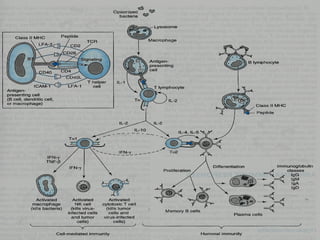
 Immune system include two main armsImmune system include two main arms
1) Cell –mediated immunity.1) Cell –mediated immunity.
2) Humoral (antibody–mediated immunity).2) Humoral (antibody–mediated immunity).
Elements of the Immune SystemElements of the Immune System
 Normal Immune ResponsesNormal Immune Responses

The innate immune systemThe innate immune system::
• The first line of defenseThe first line of defense
• IncludingIncluding physicalphysical (eg, skin),(eg, skin), biochemicalbiochemical (eg,(eg,
complement, lysozyme, andcomplement, lysozyme, and cellularcellular (macrophages,(macrophages,
neutrophils)neutrophils) componentscomponents

The adaptive immune systemThe adaptive immune system::
• Humoral immunityHumoral immunity – B lymphocytes: antibodies– B lymphocytes: antibodies
• Cell-mediated immunityCell-mediated immunity – T lymphocytes– T lymphocytes
 Abnormal Immune ResponsesAbnormal Immune Responses

Hypersensitivity:Hypersensitivity:
• Immediate hypersensitivityImmediate hypersensitivity: usually antibody-mediated.: usually antibody-mediated.

Type :ⅠType :Ⅰ cross-linking of membrane-bound IgE on bloodcross-linking of membrane-bound IgE on blood
basophils or tissue mast cells by antigen.basophils or tissue mast cells by antigen.

Type :ⅡType :Ⅱ the formation of antigen-antibody complexesthe formation of antigen-antibody complexes
between foreign antigen and IgM or IgG immunoglobulins.between foreign antigen and IgM or IgG immunoglobulins.
eg, blood transfusion reactions and hemolytic disease of theeg, blood transfusion reactions and hemolytic disease of the
newborn.newborn.

Type :ⅢType :Ⅲ the presence of elevated levels of antigen-antibodythe presence of elevated levels of antigen-antibody
complexes that cause tissue damage.complexes that cause tissue damage.
• Delayed hypersensitivityDelayed hypersensitivity: cell-mediated. Induces a local: cell-mediated. Induces a local
inflammatory response and causes extensive tissue damageinflammatory response and causes extensive tissue damage
characterized by the influx of antigen-nonspecific inflammatorycharacterized by the influx of antigen-nonspecific inflammatory
cells.cells.

Autoimmunity:Autoimmunity: an immune response against itself due to failure toan immune response against itself due to failure to
distinguish self tissues and cells from foreign (nonself) antigens.distinguish self tissues and cells from foreign (nonself) antigens.

Immunodeficiency diseases:Immunodeficiency diseases:
Immunosuppressive DrugsImmunosuppressive Drugs
 Common characteristic:Common characteristic:
a.a. Deficiency in specific or selectivityDeficiency in specific or selectivity::
b.b. More effective in the first immume responseMore effective in the first immume response
action than in that of the secondaction than in that of the second..
c.c. Action related to the time of administration ofAction related to the time of administration of
drugs, the interval of antigen stimulation anddrugs, the interval of antigen stimulation and
subsequencesubsequence..
d.d. Non-specific anti-inflammatory effectNon-specific anti-inflammatory effect..
Types of DrugsTypes of Drugs
 ImmunosuppressantsImmunosuppressants
 ImmunostimulantsImmunostimulants
 ImmunomodulatorsImmunomodulators

Induction of tolerance (tolerogens)Induction of tolerance (tolerogens)

CytokinesCytokines

Hematopoetic Growth FactorsHematopoetic Growth Factors

Antibodies targeting key cell receptors/ligandsAntibodies targeting key cell receptors/ligands

Antibody-mediated drug deliveryAntibody-mediated drug delivery
Major Classes ofMajor Classes of
Immunosuppressant DrugsImmunosuppressant Drugs
 GlucocorticoidsGlucocorticoids
 Calcineurin inhibitorsCalcineurin inhibitors
 Antiproliferative/Antimetabolic AgentsAntiproliferative/Antimetabolic Agents
 Biologics (Antibodies)Biologics (Antibodies)
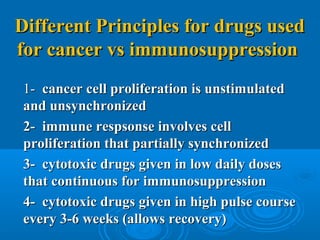
1-1- cancer cell proliferation is unstimulatedcancer cell proliferation is unstimulated
and unsynchronizedand unsynchronized
2- immune respsonse involves cell2- immune respsonse involves cell
proliferation that partially synchronizedproliferation that partially synchronized
3- cytotoxic drugs given in low daily doses3- cytotoxic drugs given in low daily doses
that continuous for immunosuppressionthat continuous for immunosuppression
4- cytotoxic drugs given in high pulse course4- cytotoxic drugs given in high pulse course
every 3-6 weeks (allows recovery)every 3-6 weeks (allows recovery)
Different Principles for drugs usedDifferent Principles for drugs used
for cancer vs immunosuppressionfor cancer vs immunosuppression
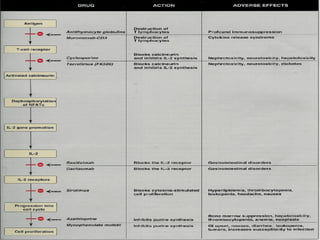
Major Steps in ImmuneMajor Steps in Immune
ResponsesResponses
1- Antigen recognition1- Antigen recognition
2- IL-1 production2- IL-1 production
3- IL-2 and other cytokine expression3- IL-2 and other cytokine expression
4- lymphocyte proliferation &4- lymphocyte proliferation &
differentiationdifferentiation
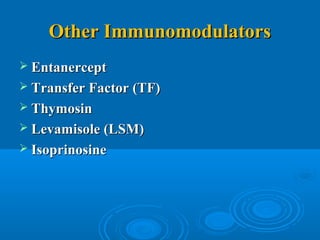
Other ImmunomodulatorsOther Immunomodulators
 EntanerceptEntanercept
 Transfer Factor (TF)Transfer Factor (TF)
 ThymosinThymosin
 Levamisole (LSM)Levamisole (LSM)
 IsoprinosineIsoprinosine
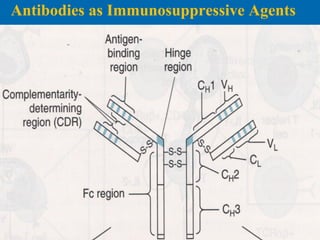
Antibodies as Immunosuppressive Agents
CyclosporinCyclosporin
 Fat-soluble peptide antibioticFat-soluble peptide antibiotic
 PharmacokineticsPharmacokinetics

Slowly and incompletely absorbed after oralSlowly and incompletely absorbed after oral
administration.administration.

Almost totally metabolized and excreted in the bile.Almost totally metabolized and excreted in the bile.
 Pharmacological EffectsPharmacological Effects::

Act at an early stage in the antigen receptor-inducedAct at an early stage in the antigen receptor-induced
differentiation of T cells and block their activation.differentiation of T cells and block their activation.

Inhibit the gene transcription of IL-2, IL-3, IFN-Inhibit the gene transcription of IL-2, IL-3, IFN-γγ, and, and
other factors produced by antigen-stimulated T cells, but itother factors produced by antigen-stimulated T cells, but it
does not block the effect of such factors on primed T cellsdoes not block the effect of such factors on primed T cells
nor does it block interaction with antigen.nor does it block interaction with antigen.
 MechanismsMechanisms

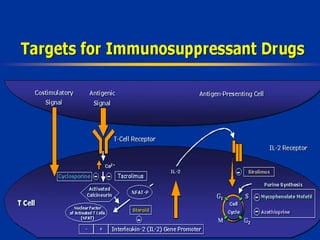
cyclosporin + cyclophilincyclosporin + cyclophilin →→ complexcomplex →→ calcineurin↓calcineurin↓→→
dephosphorylation of nuclear factors of activated T cells↓dephosphorylation of nuclear factors of activated T cells↓
→→ gene transcription↓gene transcription↓ →→ IL-2,3,4↓, TNF-IL-2,3,4↓, TNF-αα↓, IFN-↓, IFN-γγ↓↓

cyclosporin → TGF-cyclosporin → TGF-ββ↑ → proliferation of T cells induced↑ → proliferation of T cells induced
by IL-2 ↓, cytotoxic T cells↓by IL-2 ↓, cytotoxic T cells↓
 Clinical UsesClinical Uses

Organ transplantationOrgan transplantation

Autoimmune disordersAutoimmune disorders
 Adverse Effects and CautionsAdverse Effects and Cautions

Nephrotoxicity,Nephrotoxicity,

Transient liver dysfunctionTransient liver dysfunction

secondary infection: viral infectionsecondary infection: viral infection

Lymphoma and other cancers (Kaposi’s sarcoma, skinLymphoma and other cancers (Kaposi’s sarcoma, skin
cancer)cancer)
Tacrolimus (FK506)Tacrolimus (FK506)
 Macrolide antibiotic produced byMacrolide antibiotic produced by streptomycesstreptomyces
tsukubaensistsukubaensis..
 It is not chemically related to cyclosporine, but theirIt is not chemically related to cyclosporine, but their
machanisms of action are similar, both bind to cytoplasmicmachanisms of action are similar, both bind to cytoplasmic
peptidyl-prolyl isomerases.peptidyl-prolyl isomerases.
 For liver, kidney, heart, pancreas, and bone marrowFor liver, kidney, heart, pancreas, and bone marrow
transplant applications.transplant applications.
 Toxic effects: nephrotoxicity, neurotoxicity, hyperglycemiaToxic effects: nephrotoxicity, neurotoxicity, hyperglycemia
(requiring insulin therapy), gastrointestinal dysfunction.(requiring insulin therapy), gastrointestinal dysfunction.
 Some studies suggested the higher efficacy and the higherSome studies suggested the higher efficacy and the higher
incidence of serious toxicities of tacrolimus thanincidence of serious toxicities of tacrolimus than
cyclosporine in the management of of liver transplantcyclosporine in the management of of liver transplant
patients.patients.
Adrenocortical HormonesAdrenocortical Hormones
 Lympholytic propertiesLympholytic properties
 Interfere with the cell cycle of activated lymphoidInterfere with the cell cycle of activated lymphoid
cells.cells.
 Their immunologic effects are due to their ability toTheir immunologic effects are due to their ability to
modify cellular functions rather than to directmodify cellular functions rather than to direct
cytotoxicity.cytotoxicity.
 Immunosuppressive and anti- inflammatoryImmunosuppressive and anti- inflammatory
properties.properties.
 Indications include organ transplantation andIndications include organ transplantation and
autoimmune disorders.autoimmune disorders.
AntimetaboliteAntimetabolite
 IncludingIncluding AzaAza,, MTXMTX,, 6-MP6-MP
 Aza is an imidazolyl derivative of 6-MP.Aza is an imidazolyl derivative of 6-MP.
 Aza is the purine analog that interferes with nucleic acidAza is the purine analog that interferes with nucleic acid
metabolism at steps that are required for the wave ofmetabolism at steps that are required for the wave of
lymphoid cell proliferation which follows antigeniclymphoid cell proliferation which follows antigenic
stimulation.stimulation.
 T cells is more sensitive than B cellsT cells is more sensitive than B cells.
 Benefit in maintaining renal allograftBenefit in maintaining renal allograft
 Treatment of autoimmune disorders: rheumatoid arthritis,Treatment of autoimmune disorders: rheumatoid arthritis,
systemic lupus erythematosussystemic lupus erythematosus
 Adverse reactions: bone marrow suppression,Adverse reactions: bone marrow suppression,
gastrointestinal symptoms, hepatic dysfunction.gastrointestinal symptoms, hepatic dysfunction.
Alkylating agentAlkylating agent
 CyclophosphamideCyclophosphamide ((CTXCTX) destroys) destroys
proliferating lymphoid cells but also appears toproliferating lymphoid cells but also appears to
alkylate some resting cells.alkylate some resting cells.
 B cells is more sensitive than T cells.B cells is more sensitive than T cells.
 Organ transplants, autoimmune disorders.Organ transplants, autoimmune disorders.
 Adverse reactions: bone marrow suppression,Adverse reactions: bone marrow suppression,
gastrointestinal symptoms, hemorrhagicgastrointestinal symptoms, hemorrhagic
cystitis.cystitis.
Antilymphocyte Globulin (ALG)Antilymphocyte Globulin (ALG)
 Antiserum is usually obtained by immunization ofAntiserum is usually obtained by immunization of
large animals with human lymphoid cells or by thelarge animals with human lymphoid cells or by the
hybridoma technique for monoclonal antibodyhybridoma technique for monoclonal antibody
generation.generation.
 AntithymocyteAntithymocyte globulinglobulin (ATG).(ATG).
 Destruction or inactivation of the T cells.Destruction or inactivation of the T cells.
 primary immune response secondary immuneprimary immune response secondary immune
responseresponse
 Adverse reactions are mostly those associated withAdverse reactions are mostly those associated with
injection of a foreign protein obtained frominjection of a foreign protein obtained from
heterologous serum.heterologous serum.
Mycophenolate Mofetil (RS-61443)Mycophenolate Mofetil (RS-61443)
 A semisynthetic derivative of mycophenolic acidA semisynthetic derivative of mycophenolic acid
(MPA), isolated from the mold(MPA), isolated from the mold Penicillium glaucumPenicillium glaucum..
 MPA is the inhibitor of IMPDH. Inhibit the de novoMPA is the inhibitor of IMPDH. Inhibit the de novo
pathway of purine synthesis.pathway of purine synthesis.
 Inhibit a series of T and B lymphocyte responses.Inhibit a series of T and B lymphocyte responses.
 Kidney and liver transplant, et al.Kidney and liver transplant, et al.
 Adverse reactions are mainly gastrointestinal .Adverse reactions are mainly gastrointestinal .
LeflunomideLeflunomide
 A prodrug of an inhibitor of pyrimidineA prodrug of an inhibitor of pyrimidine
synthesis rather than purine synthesis.synthesis rather than purine synthesis.
 Inhibit DHODH through AInhibit DHODH through A771726771726..
 It is orally active, and the active metabolite hasIt is orally active, and the active metabolite has
a long half-life of several weeks.– should bea long half-life of several weeks.– should be
started with a loading dose.started with a loading dose.
 Mainly for rheumatoid arthritis.Mainly for rheumatoid arthritis.
 Toxicities: liver damage, renal impairment,Toxicities: liver damage, renal impairment,
teratogenic effects.teratogenic effects.
ImmunostimulantsImmunostimulants
 Increase the immune responsiveness ofIncrease the immune responsiveness of
patients who have either selective orpatients who have either selective or
generalized immunodeficiency.generalized immunodeficiency.
 Use for immunodeficiency disorders, chronicUse for immunodeficiency disorders, chronic
infectious diseases, and cancer.infectious diseases, and cancer.
Immune AdjuvantImmune Adjuvant
 Bacillus Calmette-Guerin-Vaccine (BCG) is aBacillus Calmette-Guerin-Vaccine (BCG) is a
viable strain ofviable strain of MycobacteriumMycobacterium bovisbovis that hasthat has
been used for immunization againstbeen used for immunization against
tuberculosis.tuberculosis.
 Also been employed as a nonspecific adjuvantAlso been employed as a nonspecific adjuvant
or immunostimulant in cancer therapy.or immunostimulant in cancer therapy.
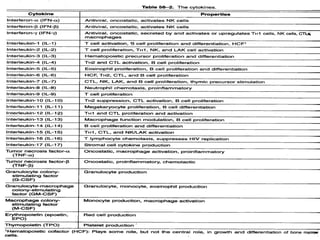
CytokinesCytokines
 Interferon (INF):Interferon (INF): INF-α,β,γINF-α,β,γ

Antiviral, anticancer, immunomodulating effects.Antiviral, anticancer, immunomodulating effects.

Antiviral effects : INF-α,βAntiviral effects : INF-α,β >> INF-γINF-γ

immunomodulating effects: INF-γimmunomodulating effects: INF-γ

Adverse Effects: flu-like symptoms, fatigue, malaiseAdverse Effects: flu-like symptoms, fatigue, malaise
 Interleukin-2 (IL-2)Interleukin-2 (IL-2)
 T cell proliferation, TT cell proliferation, THH, NK, LAK cell activation, NK, LAK cell activation

Treatment ofTreatment of malignant melanoma, renal cell carcinoma,
Hodgkin disease

Adverse Effects: fever, anorexiaAdverse Effects: fever, anorexia
AlemtuzumabAlemtuzumab
AntineoplasticAntineoplastic
Anti-CD52 antibodyAnti-CD52 antibody
AminoglutethimideAminoglutethimide
AntineoplasticAntineoplastic
ImmunosuppressiveImmunosuppressive
Glucocorticoid antagonistGlucocorticoid antagonist
Aromatase inhibitorAromatase inhibitor
(decreases steroid synthesis)(decreases steroid synthesis)
Anti-thymocyte globulinAnti-thymocyte globulin
ImmunosuppressiveImmunosuppressive
Anti-T cell antibodyAnti-T cell antibody
AzathioprineAzathioprine
ImmunosuppressiveImmunosuppressive
AntineoplasticAntineoplastic
AntimetaboliteAntimetabolite
(“pseudofeedback inhibition” of HGPRT(“pseudofeedback inhibition” of HGPRT
and PRP)and PRP)
BasiliximabBasiliximab
ImmunosuppressiveImmunosuppressive
Anti-CD25 (interleukin 2 receptor)Anti-CD25 (interleukin 2 receptor)
Organ transplant (antirejection)Organ transplant (antirejection)
CyclosporineCyclosporine
ImmunosuppressiveImmunosuppressive
AntineoplasticAntineoplastic
Binds cyclophilinBinds cyclophilin
Inhibits calcineurinInhibits calcineurin
DaclizumabDaclizumab
ImmunosuppressiveImmunosuppressive
Anti-CD25 (interleukin 2 receptor) antibodyAnti-CD25 (interleukin 2 receptor) antibody
Organ transplant (anti-rejection)Organ transplant (anti-rejection)
DexamethasoneDexamethasone
AdrenocorticosteroidAdrenocorticosteroid
GlucocorticoidGlucocorticoid
AntineoplasticAntineoplastic
Anti-inflammatory steroidAnti-inflammatory steroid
Not by inhalationNot by inhalation
IbritumomabIbritumomab
AntineoplasticAntineoplastic
Anti-CD20 antibodyAnti-CD20 antibody
Interferon alphaInterferon alpha
Antiviral for hepatitisAntiviral for hepatitis
AntineoplasticAntineoplastic
CytokineCytokine
Anti-angiogenesisAnti-angiogenesis
Interleukin 2Interleukin 2
CytokineCytokine
AntineoplasticAntineoplastic
Interleukin 11Interleukin 11
CytokineCytokine
Antineoplastic (supporting agent)Antineoplastic (supporting agent)
MethotrexateMethotrexate
ImmunosuppressiveImmunosuppressive
AntineoplasticAntineoplastic
Folic acid antagonistFolic acid antagonist
Dihydrofolate reductase inhibitorDihydrofolate reductase inhibitor
Muromonab-CD3Muromonab-CD3
ImmunosuppressiveImmunosuppressive
Mouse monoclonal anti-CD3 antibodyMouse monoclonal anti-CD3 antibody
Organ transplant (anti-rejection)Organ transplant (anti-rejection)
MycophenolateMycophenolate
ImmunosuppressiveImmunosuppressive
Inhibits inosine monophosphateInhibits inosine monophosphate
dehydrogenase activitydehydrogenase activity
PalivizumabPalivizumab
AntiviralAntiviral
Monoclonal antibody againstMonoclonal antibody against
the surface ofthe surface of
respiratory syncytial virusrespiratory syncytial virus
RituxumabRituxumab
AntineoplasticAntineoplastic
Anti-CD20 antibodyAnti-CD20 antibody
SirolimusSirolimus
ImmunosuppressiveImmunosuppressive
Binds FKBP, inhibits mTOR (mammalianBinds FKBP, inhibits mTOR (mammalian
kinase target of rapamycin) & cell cyclekinase target of rapamycin) & cell cycle
progressionprogression
Rapamycin
TacrolimusTacrolimus
ImmunosuppressiveImmunosuppressive
AntineoplasticAntineoplastic
Binds FKBP (FK506 binding protein)Binds FKBP (FK506 binding protein)
Inhibits calcineurinInhibits calcineurin
TrastuzumabTrastuzumab
AntineoplasticAntineoplastic
Anti-HER2 antibodyAnti-HER2 antibody
Tumor necrosis factorTumor necrosis factor αα
CytokineCytokine
AntineoplasticAntineoplastic

Immuno pharmacology

  • 1.
     Classical signsand symptoms ofClassical signs and symptoms of inflammation are redness, heat, swelling,inflammation are redness, heat, swelling, pain and reduced or loss of function.pain and reduced or loss of function.  These are caused by vascular and cellularThese are caused by vascular and cellular changes typical for inflammation andchanges typical for inflammation and driven by cytokines and otherdriven by cytokines and other inflammatory mediators produced byinflammatory mediators produced by inflammatory and tissue cells or formedinflammatory and tissue cells or formed from their extracellular precursors whenfrom their extracellular precursors when activated by inflammation-associatedactivated by inflammation-associated mechanisms.mechanisms.
  • 2.
     In theacute inflammation, localIn the acute inflammation, local vasodilation increases blood flow in thevasodilation increases blood flow in the inflamed tissue, and plasma proteins leakinflamed tissue, and plasma proteins leak into the tissue due to increased vascularinto the tissue due to increased vascular permeability.permeability.  Granulocytes monocyte / macrophages areGranulocytes monocyte / macrophages are important cells in the non-specific responsesimportant cells in the non-specific responses in innate immunity against pathogens.in innate immunity against pathogens. Lymphocyte-driven responses andLymphocyte-driven responses and antibodies have a significant role in theantibodies have a significant role in the specific adaptive immunity and in chronicspecific adaptive immunity and in chronic inflammation [1,2].inflammation [1,2].
  • 3.
     There areseveral anti-inflammatory and antirheumaticThere are several anti-inflammatory and antirheumatic drugs which target lymphocyte receptors or pathwaysdrugs which target lymphocyte receptors or pathways and suppress aberrant lymphocyte activation. Also,and suppress aberrant lymphocyte activation. Also, inflammatory cytokines and other inflammatoryinflammatory cytokines and other inflammatory mediators have been successful antiinflammatorymediators have been successful antiinflammatory targets, and there are several novel cytokine-targetedtargets, and there are several novel cytokine-targeted therapies under development for rheumatoid arthritistherapies under development for rheumatoid arthritis [3] and other inflammatory diseases.[3] and other inflammatory diseases.  An interesting novel approach in the treatment ofAn interesting novel approach in the treatment of arthritis is to target anti citrullinated protein antibodiesarthritis is to target anti citrullinated protein antibodies (ACPAs) which are also known as biomarkers(ACPAs) which are also known as biomarkers associated with worse prognosis and more erosiveassociated with worse prognosis and more erosive disease [4, 5].disease [4, 5].
  • 4.
     Eosinophilic granulocytesare important cells in theEosinophilic granulocytes are important cells in the pathogenesis of asthma and other allergic disorderspathogenesis of asthma and other allergic disorders [6,7]. In patients with asthma, eosinophils accumulate[6,7]. In patients with asthma, eosinophils accumulate into the bronchial mucosa and release factors whichinto the bronchial mucosa and release factors which maintain and exacerbate the inflammatory response,maintain and exacerbate the inflammatory response, cause tissue injury and augment bronchoconstriction.cause tissue injury and augment bronchoconstriction.  Also, the lifespan and survival of eosinophils isAlso, the lifespan and survival of eosinophils is prolonged in allergic states. Interestingly,prolonged in allergic states. Interestingly, glucocorticoids induce apoptotic pathways inglucocorticoids induce apoptotic pathways in eosinophils [8,9] resulting in accelerated clearance ofeosinophils [8,9] resulting in accelerated clearance of eosinophils from the asthmatic lung.eosinophils from the asthmatic lung.  Therefore, induction of eosinophil apoptosis as aTherefore, induction of eosinophil apoptosis as a therapeutic target in allergic asthma has attractedtherapeutic target in allergic asthma has attracted increased attention [10].increased attention [10].
  • 5.
     Platelets playa central role in hemostasis. InPlatelets play a central role in hemostasis. In addition, they are involved also in inflammationaddition, they are involved also in inflammation and cancer through their interaction with otherand cancer through their interaction with other cell types including leucocytes and endothelialcell types including leucocytes and endothelial cells.cells.  Platelets are a rich source of various mediatorsPlatelets are a rich source of various mediators including thromboxane A2 and other lipids, asincluding thromboxane A2 and other lipids, as well as a wide number of angiogenic and growthwell as a wide number of angiogenic and growth factors, and other proteins. The involvement offactors, and other proteins. The involvement of platelets in inflammation and cancer, theplatelets in inflammation and cancer, the detailed mechanisms and therapeutic strategiesdetailed mechanisms and therapeutic strategies [11].[11].
  • 6.
     Disturbed interactionbetween the nervous andDisturbed interaction between the nervous and immune systems has been implicated inimmune systems has been implicated in various inflammatory diseases. The immunevarious inflammatory diseases. The immune system can be considered as a ‘sixth sense’system can be considered as a ‘sixth sense’ which detects foreign agents such aswhich detects foreign agents such as pathogens, allergens and tumour cells andpathogens, allergens and tumour cells and interacts with the peripheral and centralinteracts with the peripheral and central nervous system in many ways [12], & discussnervous system in many ways [12], & discuss the role of the neuroimmune axis in thethe role of the neuroimmune axis in the pathogenesis and future treatments of mentalpathogenesis and future treatments of mental disorders [13].disorders [13].
  • 7.
    References:References: 1 Turvey SE,Broide DH. Innate immunity. J Allergy Clin Immunol 2010;125:S24–32.1 Turvey SE, Broide DH. Innate immunity. J Allergy Clin Immunol 2010;125:S24–32. 2 Bonilla FA, Oettgen HC. Adaptive immunity. J Allergy Clin Immunol 2010;125:S33–40.2 Bonilla FA, Oettgen HC. Adaptive immunity. J Allergy Clin Immunol 2010;125:S33–40. 3 van Vollenhoven RF. Treatment of rheumatoid arthritis: state of the art 2009. Nat Rev Rheumatol3 van Vollenhoven RF. Treatment of rheumatoid arthritis: state of the art 2009. Nat Rev Rheumatol 2009;5:531–41.2009;5:531–41. 4 Willemze A, Trouw LA, Toes RE, Huizinga TW. The influence of ACPA status and characteristics on the4 Willemze A, Trouw LA, Toes RE, Huizinga TW. The influence of ACPA status and characteristics on the course of RA. Nat Rev Rheumatol 2012;8:144–52.course of RA. Nat Rev Rheumatol 2012;8:144–52. 5 Cerqueira CF, Klareskog L, Jakobsson PJ. Neutralization of anticitrullinated protein antibodies in5 Cerqueira CF, Klareskog L, Jakobsson PJ. Neutralization of anticitrullinated protein antibodies in rheumatoid arthritis - a way to go? Basic Clin Pharmacol Toxicol 2013;114:13–7.rheumatoid arthritis - a way to go? Basic Clin Pharmacol Toxicol 2013;114:13–7. 6 Kita H. Eosinophils: multifunctional and distinctive properties. Int Arch Allergy Immunol 2013;161(Suppl6 Kita H. Eosinophils: multifunctional and distinctive properties. Int Arch Allergy Immunol 2013;161(Suppl 2):3–9.2):3–9. 7 Hogan SP, Rosenberg HF, Moqbel R, Phipps S, Foster PS, Lacy P et al. Eosinophils: biological properties7 Hogan SP, Rosenberg HF, Moqbel R, Phipps S, Foster PS, Lacy P et al. Eosinophils: biological properties and role in health and disease. Clin Exp Allergy 2008;38:709–50.and role in health and disease. Clin Exp Allergy 2008;38:709–50. 8 Wallen N, Kita H, Weiler D, Gleich GJ. Glucocorticoids inhibit cytokine-mediated eosinophil survival. J8 Wallen N, Kita H, Weiler D, Gleich GJ. Glucocorticoids inhibit cytokine-mediated eosinophil survival. J Immunol 1991;147:3490–5.Immunol 1991;147:3490–5. 9 Zhang X, Moilanen E, Kankaanranta H. Enhancement of human eosinophil apoptosis by fluticasone9 Zhang X, Moilanen E, Kankaanranta H. Enhancement of human eosinophil apoptosis by fluticasone propionate, budesonide, and beclomethasone. Eur J Pharmacol 2000;406:325–32.propionate, budesonide, and beclomethasone. Eur J Pharmacol 2000;406:325–32. 10 Ilmarinen P, Kankaanranta H. Eosinophil apoptosis as a therapeutic target in allergic asthma. Basic Clin10 Ilmarinen P, Kankaanranta H. Eosinophil apoptosis as a therapeutic target in allergic asthma. Basic Clin Pharmacol Toxicol 2013;114:109–17.Pharmacol Toxicol 2013;114:109–17. 11 Dovizio M, Alberti S, Guillem-Llobat P, Patrignani P. Role of platelets in inflammation and cancer: novel11 Dovizio M, Alberti S, Guillem-Llobat P, Patrignani P. Role of platelets in inflammation and cancer: novel therapeutic strategies. Basic Clin Pharmacol Toxicol 2013;114:118–27.therapeutic strategies. Basic Clin Pharmacol Toxicol 2013;114:118–27. 12 Blalock JE, Smith EM. Conceptual development of the immune system as a sixth sense. Brain Behav12 Blalock JE, Smith EM. Conceptual development of the immune system as a sixth sense. Brain Behav Immun 2007;21:23–33.Immun 2007;21:23–33. 13 Kraneveld AD, de Theije CG, van Heesch F, Borre Y, de Kivit S, Olivier B et al. The neuro-immune axis:13 Kraneveld AD, de Theije CG, van Heesch F, Borre Y, de Kivit S, Olivier B et al. The neuro-immune axis: prospect for novel treatments of mental disorders. Basic Clin Pharmacol Toxicol 2013; 114:128–36.prospect for novel treatments of mental disorders. Basic Clin Pharmacol Toxicol 2013; 114:128–36.
  • 8.
  • 9.
    Immune SystemImmune System Is designed to protect the host from harmfulIs designed to protect the host from harmful foreign molecules.foreign molecules.  This system can result into serious problem.This system can result into serious problem.  Allograft introduction can elicit a damagingAllograft introduction can elicit a damaging immune response.immune response.  Immune system include two main armsImmune system include two main arms 1) Cell –mediated immunity.1) Cell –mediated immunity. 2) Humoral (antibody–mediated immunity).2) Humoral (antibody–mediated immunity).
  • 11.
    Elements of theImmune SystemElements of the Immune System  Normal Immune ResponsesNormal Immune Responses  The innate immune systemThe innate immune system:: • The first line of defenseThe first line of defense • IncludingIncluding physicalphysical (eg, skin),(eg, skin), biochemicalbiochemical (eg,(eg, complement, lysozyme, andcomplement, lysozyme, and cellularcellular (macrophages,(macrophages, neutrophils)neutrophils) componentscomponents  The adaptive immune systemThe adaptive immune system:: • Humoral immunityHumoral immunity – B lymphocytes: antibodies– B lymphocytes: antibodies • Cell-mediated immunityCell-mediated immunity – T lymphocytes– T lymphocytes
  • 12.
     Abnormal ImmuneResponsesAbnormal Immune Responses  Hypersensitivity:Hypersensitivity: • Immediate hypersensitivityImmediate hypersensitivity: usually antibody-mediated.: usually antibody-mediated.  Type :ⅠType :Ⅰ cross-linking of membrane-bound IgE on bloodcross-linking of membrane-bound IgE on blood basophils or tissue mast cells by antigen.basophils or tissue mast cells by antigen.  Type :ⅡType :Ⅱ the formation of antigen-antibody complexesthe formation of antigen-antibody complexes between foreign antigen and IgM or IgG immunoglobulins.between foreign antigen and IgM or IgG immunoglobulins. eg, blood transfusion reactions and hemolytic disease of theeg, blood transfusion reactions and hemolytic disease of the newborn.newborn.  Type :ⅢType :Ⅲ the presence of elevated levels of antigen-antibodythe presence of elevated levels of antigen-antibody complexes that cause tissue damage.complexes that cause tissue damage. • Delayed hypersensitivityDelayed hypersensitivity: cell-mediated. Induces a local: cell-mediated. Induces a local inflammatory response and causes extensive tissue damageinflammatory response and causes extensive tissue damage characterized by the influx of antigen-nonspecific inflammatorycharacterized by the influx of antigen-nonspecific inflammatory cells.cells.  Autoimmunity:Autoimmunity: an immune response against itself due to failure toan immune response against itself due to failure to distinguish self tissues and cells from foreign (nonself) antigens.distinguish self tissues and cells from foreign (nonself) antigens.  Immunodeficiency diseases:Immunodeficiency diseases:
  • 13.
    Immunosuppressive DrugsImmunosuppressive Drugs Common characteristic:Common characteristic: a.a. Deficiency in specific or selectivityDeficiency in specific or selectivity:: b.b. More effective in the first immume responseMore effective in the first immume response action than in that of the secondaction than in that of the second.. c.c. Action related to the time of administration ofAction related to the time of administration of drugs, the interval of antigen stimulation anddrugs, the interval of antigen stimulation and subsequencesubsequence.. d.d. Non-specific anti-inflammatory effectNon-specific anti-inflammatory effect..
  • 15.
    Types of DrugsTypesof Drugs  ImmunosuppressantsImmunosuppressants  ImmunostimulantsImmunostimulants  ImmunomodulatorsImmunomodulators  Induction of tolerance (tolerogens)Induction of tolerance (tolerogens)  CytokinesCytokines  Hematopoetic Growth FactorsHematopoetic Growth Factors  Antibodies targeting key cell receptors/ligandsAntibodies targeting key cell receptors/ligands  Antibody-mediated drug deliveryAntibody-mediated drug delivery
  • 16.
    Major Classes ofMajorClasses of Immunosuppressant DrugsImmunosuppressant Drugs  GlucocorticoidsGlucocorticoids  Calcineurin inhibitorsCalcineurin inhibitors  Antiproliferative/Antimetabolic AgentsAntiproliferative/Antimetabolic Agents  Biologics (Antibodies)Biologics (Antibodies)
  • 17.
    1-1- cancer cellproliferation is unstimulatedcancer cell proliferation is unstimulated and unsynchronizedand unsynchronized 2- immune respsonse involves cell2- immune respsonse involves cell proliferation that partially synchronizedproliferation that partially synchronized 3- cytotoxic drugs given in low daily doses3- cytotoxic drugs given in low daily doses that continuous for immunosuppressionthat continuous for immunosuppression 4- cytotoxic drugs given in high pulse course4- cytotoxic drugs given in high pulse course every 3-6 weeks (allows recovery)every 3-6 weeks (allows recovery) Different Principles for drugs usedDifferent Principles for drugs used for cancer vs immunosuppressionfor cancer vs immunosuppression
  • 18.
    Major Steps inImmuneMajor Steps in Immune ResponsesResponses 1- Antigen recognition1- Antigen recognition 2- IL-1 production2- IL-1 production 3- IL-2 and other cytokine expression3- IL-2 and other cytokine expression 4- lymphocyte proliferation &4- lymphocyte proliferation & differentiationdifferentiation
  • 20.
    Other ImmunomodulatorsOther Immunomodulators EntanerceptEntanercept  Transfer Factor (TF)Transfer Factor (TF)  ThymosinThymosin  Levamisole (LSM)Levamisole (LSM)  IsoprinosineIsoprinosine
  • 21.
  • 23.
    CyclosporinCyclosporin  Fat-soluble peptideantibioticFat-soluble peptide antibiotic  PharmacokineticsPharmacokinetics  Slowly and incompletely absorbed after oralSlowly and incompletely absorbed after oral administration.administration.  Almost totally metabolized and excreted in the bile.Almost totally metabolized and excreted in the bile.  Pharmacological EffectsPharmacological Effects::  Act at an early stage in the antigen receptor-inducedAct at an early stage in the antigen receptor-induced differentiation of T cells and block their activation.differentiation of T cells and block their activation.  Inhibit the gene transcription of IL-2, IL-3, IFN-Inhibit the gene transcription of IL-2, IL-3, IFN-γγ, and, and other factors produced by antigen-stimulated T cells, but itother factors produced by antigen-stimulated T cells, but it does not block the effect of such factors on primed T cellsdoes not block the effect of such factors on primed T cells nor does it block interaction with antigen.nor does it block interaction with antigen.
  • 24.
     MechanismsMechanisms  cyclosporin +cyclophilincyclosporin + cyclophilin →→ complexcomplex →→ calcineurin↓calcineurin↓→→ dephosphorylation of nuclear factors of activated T cells↓dephosphorylation of nuclear factors of activated T cells↓ →→ gene transcription↓gene transcription↓ →→ IL-2,3,4↓, TNF-IL-2,3,4↓, TNF-αα↓, IFN-↓, IFN-γγ↓↓  cyclosporin → TGF-cyclosporin → TGF-ββ↑ → proliferation of T cells induced↑ → proliferation of T cells induced by IL-2 ↓, cytotoxic T cells↓by IL-2 ↓, cytotoxic T cells↓  Clinical UsesClinical Uses  Organ transplantationOrgan transplantation  Autoimmune disordersAutoimmune disorders  Adverse Effects and CautionsAdverse Effects and Cautions  Nephrotoxicity,Nephrotoxicity,  Transient liver dysfunctionTransient liver dysfunction  secondary infection: viral infectionsecondary infection: viral infection  Lymphoma and other cancers (Kaposi’s sarcoma, skinLymphoma and other cancers (Kaposi’s sarcoma, skin cancer)cancer)
  • 25.
    Tacrolimus (FK506)Tacrolimus (FK506) Macrolide antibiotic produced byMacrolide antibiotic produced by streptomycesstreptomyces tsukubaensistsukubaensis..  It is not chemically related to cyclosporine, but theirIt is not chemically related to cyclosporine, but their machanisms of action are similar, both bind to cytoplasmicmachanisms of action are similar, both bind to cytoplasmic peptidyl-prolyl isomerases.peptidyl-prolyl isomerases.  For liver, kidney, heart, pancreas, and bone marrowFor liver, kidney, heart, pancreas, and bone marrow transplant applications.transplant applications.  Toxic effects: nephrotoxicity, neurotoxicity, hyperglycemiaToxic effects: nephrotoxicity, neurotoxicity, hyperglycemia (requiring insulin therapy), gastrointestinal dysfunction.(requiring insulin therapy), gastrointestinal dysfunction.  Some studies suggested the higher efficacy and the higherSome studies suggested the higher efficacy and the higher incidence of serious toxicities of tacrolimus thanincidence of serious toxicities of tacrolimus than cyclosporine in the management of of liver transplantcyclosporine in the management of of liver transplant patients.patients.
  • 26.
    Adrenocortical HormonesAdrenocortical Hormones Lympholytic propertiesLympholytic properties  Interfere with the cell cycle of activated lymphoidInterfere with the cell cycle of activated lymphoid cells.cells.  Their immunologic effects are due to their ability toTheir immunologic effects are due to their ability to modify cellular functions rather than to directmodify cellular functions rather than to direct cytotoxicity.cytotoxicity.  Immunosuppressive and anti- inflammatoryImmunosuppressive and anti- inflammatory properties.properties.  Indications include organ transplantation andIndications include organ transplantation and autoimmune disorders.autoimmune disorders.
  • 27.
    AntimetaboliteAntimetabolite  IncludingIncluding AzaAza,,MTXMTX,, 6-MP6-MP  Aza is an imidazolyl derivative of 6-MP.Aza is an imidazolyl derivative of 6-MP.  Aza is the purine analog that interferes with nucleic acidAza is the purine analog that interferes with nucleic acid metabolism at steps that are required for the wave ofmetabolism at steps that are required for the wave of lymphoid cell proliferation which follows antigeniclymphoid cell proliferation which follows antigenic stimulation.stimulation.  T cells is more sensitive than B cellsT cells is more sensitive than B cells.  Benefit in maintaining renal allograftBenefit in maintaining renal allograft  Treatment of autoimmune disorders: rheumatoid arthritis,Treatment of autoimmune disorders: rheumatoid arthritis, systemic lupus erythematosussystemic lupus erythematosus  Adverse reactions: bone marrow suppression,Adverse reactions: bone marrow suppression, gastrointestinal symptoms, hepatic dysfunction.gastrointestinal symptoms, hepatic dysfunction.
  • 28.
    Alkylating agentAlkylating agent CyclophosphamideCyclophosphamide ((CTXCTX) destroys) destroys proliferating lymphoid cells but also appears toproliferating lymphoid cells but also appears to alkylate some resting cells.alkylate some resting cells.  B cells is more sensitive than T cells.B cells is more sensitive than T cells.  Organ transplants, autoimmune disorders.Organ transplants, autoimmune disorders.  Adverse reactions: bone marrow suppression,Adverse reactions: bone marrow suppression, gastrointestinal symptoms, hemorrhagicgastrointestinal symptoms, hemorrhagic cystitis.cystitis.
  • 29.
    Antilymphocyte Globulin (ALG)AntilymphocyteGlobulin (ALG)  Antiserum is usually obtained by immunization ofAntiserum is usually obtained by immunization of large animals with human lymphoid cells or by thelarge animals with human lymphoid cells or by the hybridoma technique for monoclonal antibodyhybridoma technique for monoclonal antibody generation.generation.  AntithymocyteAntithymocyte globulinglobulin (ATG).(ATG).  Destruction or inactivation of the T cells.Destruction or inactivation of the T cells.  primary immune response secondary immuneprimary immune response secondary immune responseresponse  Adverse reactions are mostly those associated withAdverse reactions are mostly those associated with injection of a foreign protein obtained frominjection of a foreign protein obtained from heterologous serum.heterologous serum.
  • 30.
    Mycophenolate Mofetil (RS-61443)MycophenolateMofetil (RS-61443)  A semisynthetic derivative of mycophenolic acidA semisynthetic derivative of mycophenolic acid (MPA), isolated from the mold(MPA), isolated from the mold Penicillium glaucumPenicillium glaucum..  MPA is the inhibitor of IMPDH. Inhibit the de novoMPA is the inhibitor of IMPDH. Inhibit the de novo pathway of purine synthesis.pathway of purine synthesis.  Inhibit a series of T and B lymphocyte responses.Inhibit a series of T and B lymphocyte responses.  Kidney and liver transplant, et al.Kidney and liver transplant, et al.  Adverse reactions are mainly gastrointestinal .Adverse reactions are mainly gastrointestinal .
  • 31.
    LeflunomideLeflunomide  A prodrugof an inhibitor of pyrimidineA prodrug of an inhibitor of pyrimidine synthesis rather than purine synthesis.synthesis rather than purine synthesis.  Inhibit DHODH through AInhibit DHODH through A771726771726..  It is orally active, and the active metabolite hasIt is orally active, and the active metabolite has a long half-life of several weeks.– should bea long half-life of several weeks.– should be started with a loading dose.started with a loading dose.  Mainly for rheumatoid arthritis.Mainly for rheumatoid arthritis.  Toxicities: liver damage, renal impairment,Toxicities: liver damage, renal impairment, teratogenic effects.teratogenic effects.
  • 32.
    ImmunostimulantsImmunostimulants  Increase theimmune responsiveness ofIncrease the immune responsiveness of patients who have either selective orpatients who have either selective or generalized immunodeficiency.generalized immunodeficiency.  Use for immunodeficiency disorders, chronicUse for immunodeficiency disorders, chronic infectious diseases, and cancer.infectious diseases, and cancer.
  • 33.
    Immune AdjuvantImmune Adjuvant Bacillus Calmette-Guerin-Vaccine (BCG) is aBacillus Calmette-Guerin-Vaccine (BCG) is a viable strain ofviable strain of MycobacteriumMycobacterium bovisbovis that hasthat has been used for immunization againstbeen used for immunization against tuberculosis.tuberculosis.  Also been employed as a nonspecific adjuvantAlso been employed as a nonspecific adjuvant or immunostimulant in cancer therapy.or immunostimulant in cancer therapy.
  • 34.
    CytokinesCytokines  Interferon (INF):Interferon(INF): INF-α,β,γINF-α,β,γ  Antiviral, anticancer, immunomodulating effects.Antiviral, anticancer, immunomodulating effects.  Antiviral effects : INF-α,βAntiviral effects : INF-α,β >> INF-γINF-γ  immunomodulating effects: INF-γimmunomodulating effects: INF-γ  Adverse Effects: flu-like symptoms, fatigue, malaiseAdverse Effects: flu-like symptoms, fatigue, malaise  Interleukin-2 (IL-2)Interleukin-2 (IL-2)  T cell proliferation, TT cell proliferation, THH, NK, LAK cell activation, NK, LAK cell activation  Treatment ofTreatment of malignant melanoma, renal cell carcinoma, Hodgkin disease  Adverse Effects: fever, anorexiaAdverse Effects: fever, anorexia
  • 35.
  • 36.
  • 37.
  • 38.
  • 39.
    BasiliximabBasiliximab ImmunosuppressiveImmunosuppressive Anti-CD25 (interleukin 2receptor)Anti-CD25 (interleukin 2 receptor) Organ transplant (antirejection)Organ transplant (antirejection)
  • 40.
  • 41.
    DaclizumabDaclizumab ImmunosuppressiveImmunosuppressive Anti-CD25 (interleukin 2receptor) antibodyAnti-CD25 (interleukin 2 receptor) antibody Organ transplant (anti-rejection)Organ transplant (anti-rejection)
  • 42.
  • 43.
  • 44.
    Interferon alphaInterferon alpha Antiviralfor hepatitisAntiviral for hepatitis AntineoplasticAntineoplastic CytokineCytokine Anti-angiogenesisAnti-angiogenesis
  • 45.
  • 46.
    Interleukin 11Interleukin 11 CytokineCytokine Antineoplastic(supporting agent)Antineoplastic (supporting agent)
  • 47.
    MethotrexateMethotrexate ImmunosuppressiveImmunosuppressive AntineoplasticAntineoplastic Folic acid antagonistFolicacid antagonist Dihydrofolate reductase inhibitorDihydrofolate reductase inhibitor
  • 48.
    Muromonab-CD3Muromonab-CD3 ImmunosuppressiveImmunosuppressive Mouse monoclonal anti-CD3antibodyMouse monoclonal anti-CD3 antibody Organ transplant (anti-rejection)Organ transplant (anti-rejection)
  • 49.
    MycophenolateMycophenolate ImmunosuppressiveImmunosuppressive Inhibits inosine monophosphateInhibitsinosine monophosphate dehydrogenase activitydehydrogenase activity
  • 50.
    PalivizumabPalivizumab AntiviralAntiviral Monoclonal antibody againstMonoclonalantibody against the surface ofthe surface of respiratory syncytial virusrespiratory syncytial virus
  • 51.
  • 52.
    SirolimusSirolimus ImmunosuppressiveImmunosuppressive Binds FKBP, inhibitsmTOR (mammalianBinds FKBP, inhibits mTOR (mammalian kinase target of rapamycin) & cell cyclekinase target of rapamycin) & cell cycle progressionprogression Rapamycin
  • 53.
    TacrolimusTacrolimus ImmunosuppressiveImmunosuppressive AntineoplasticAntineoplastic Binds FKBP (FK506binding protein)Binds FKBP (FK506 binding protein) Inhibits calcineurinInhibits calcineurin
  • 54.
  • 55.
    Tumor necrosis factorTumornecrosis factor αα CytokineCytokine AntineoplasticAntineoplastic