Download to read offline


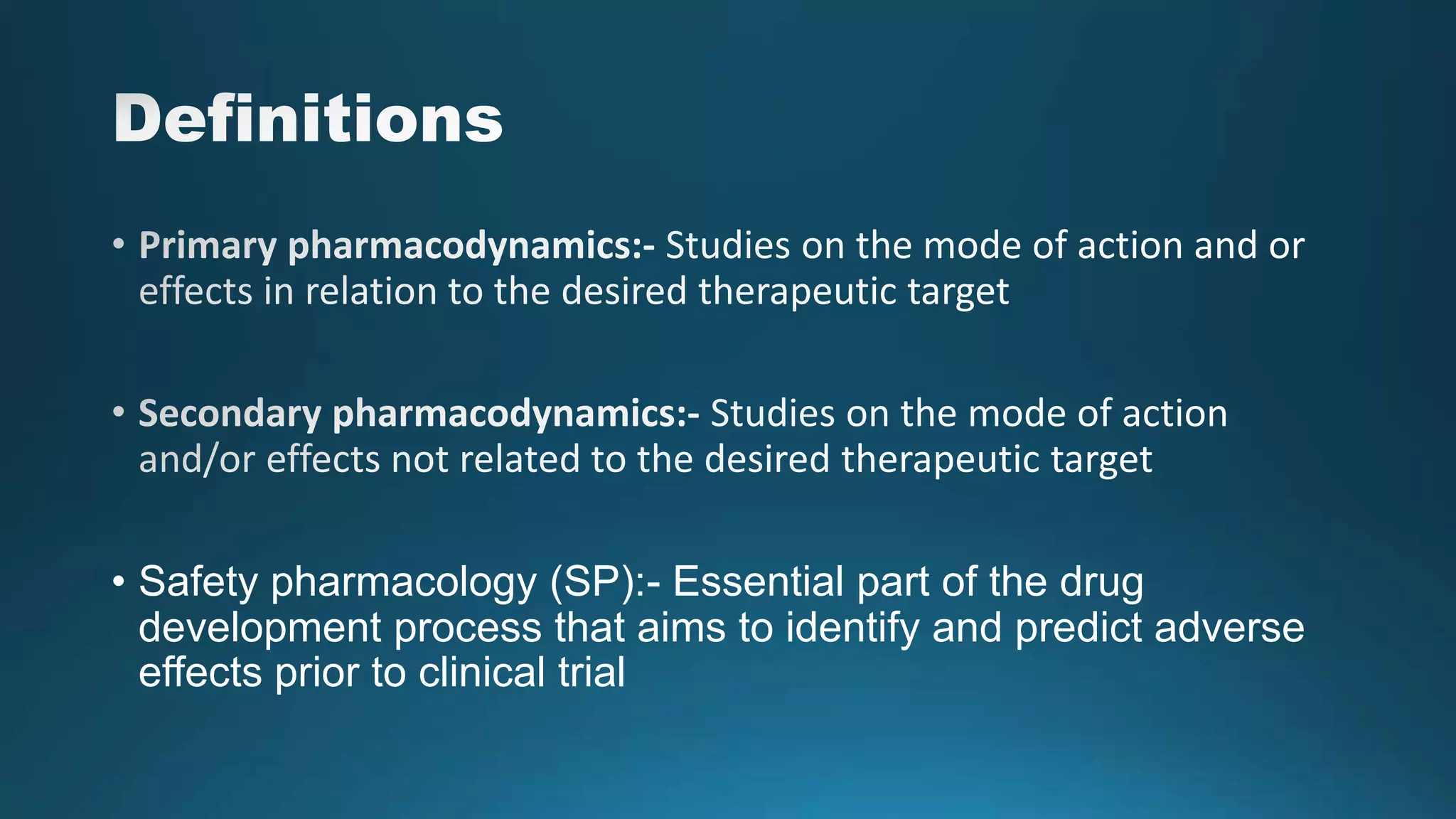


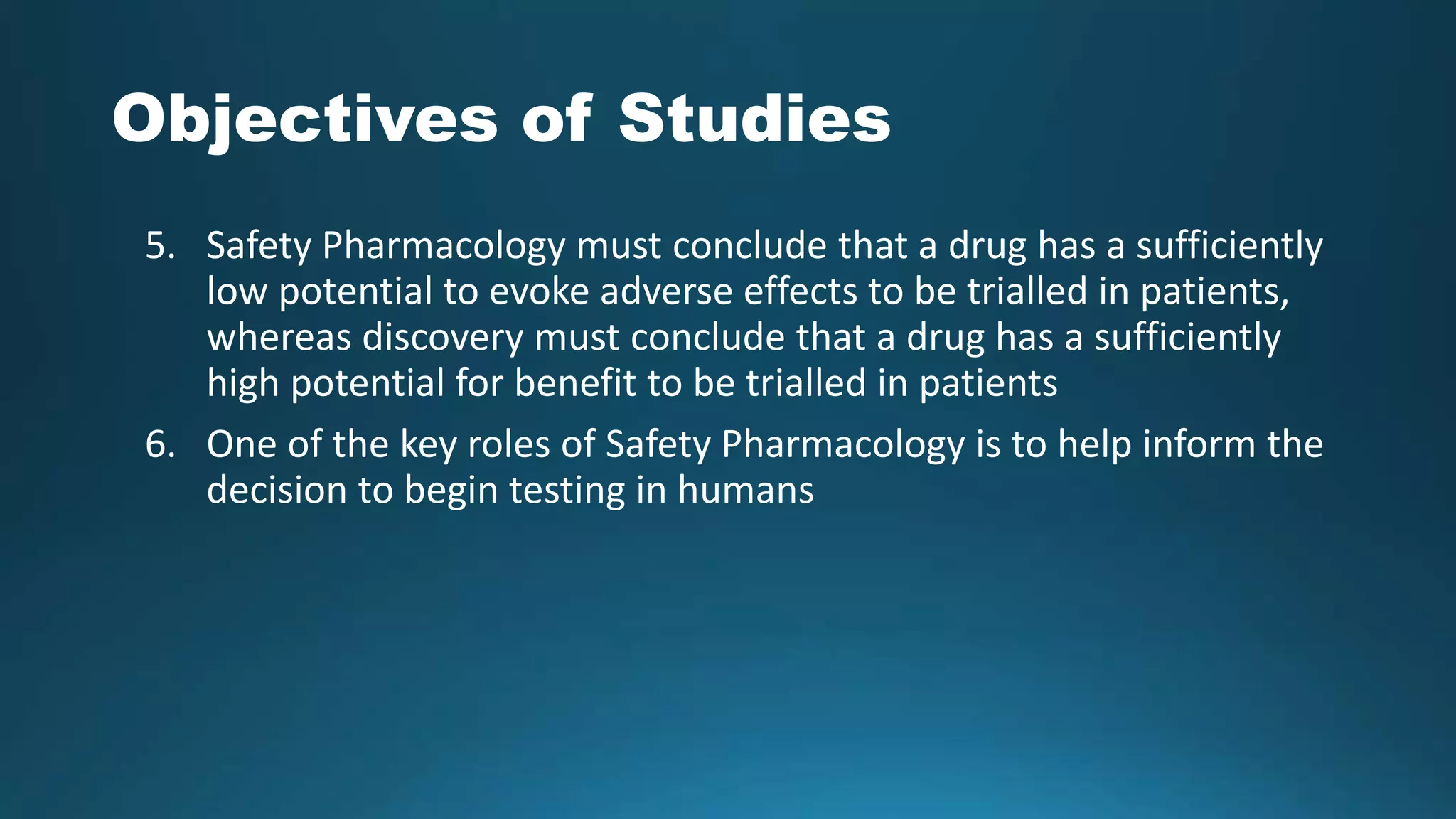


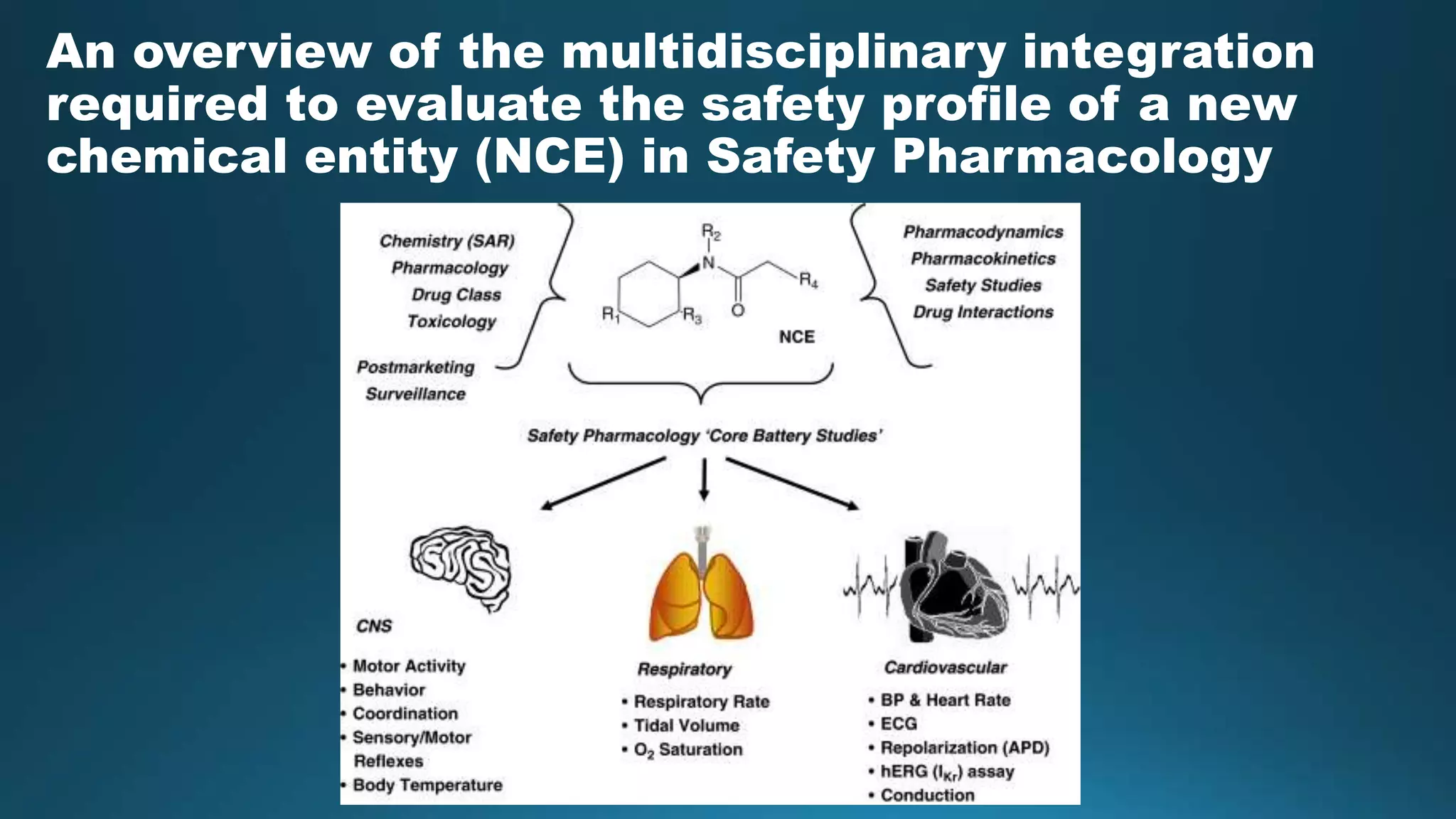


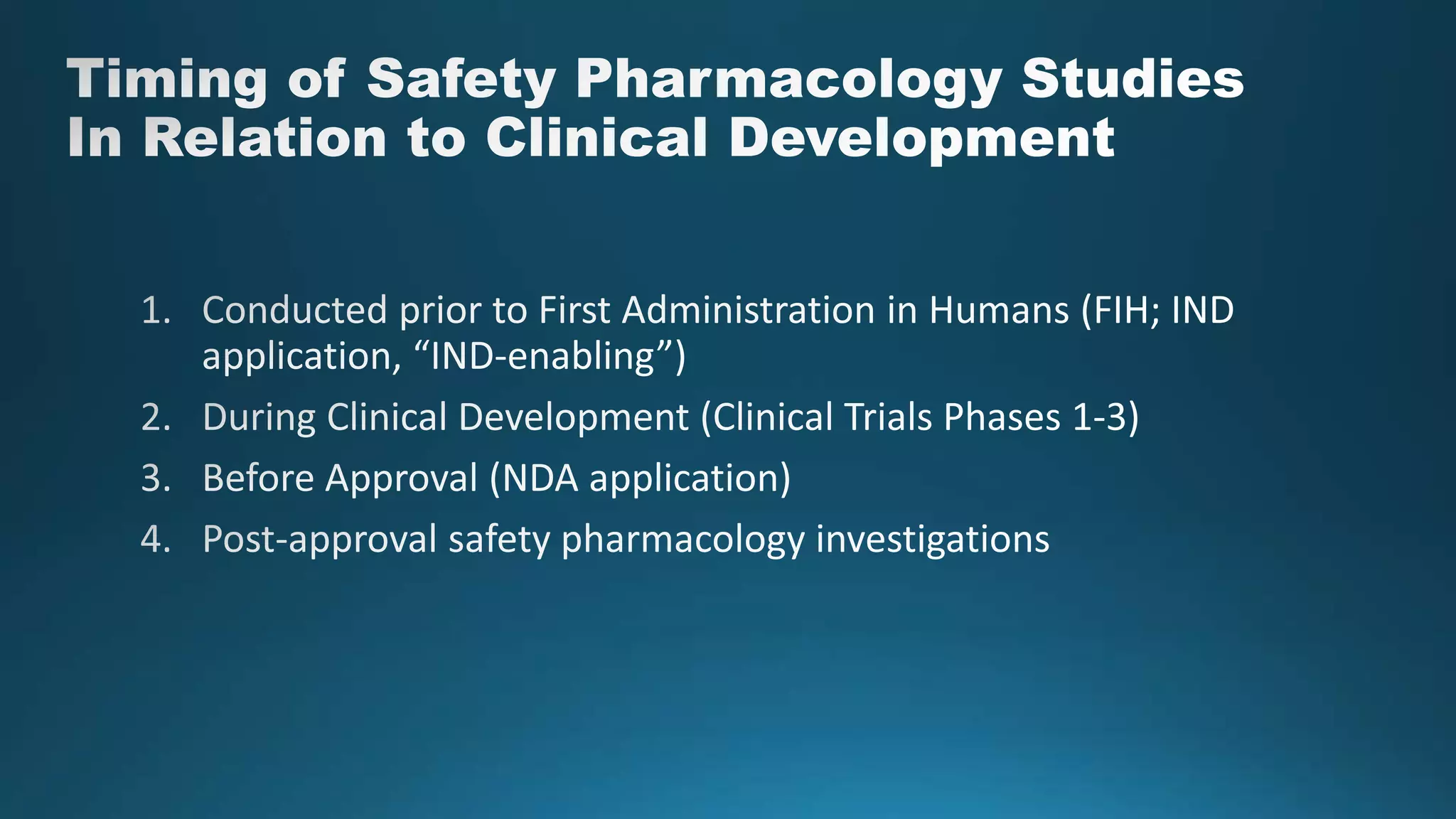


Safety pharmacology aims to identify adverse effects of drugs prior to clinical trials through guidelines established by the ICH. The antihistamine terfenadine was found to cause a rare but lethal cardiac effect and highlighted the need for improved preclinical safety testing. Safety pharmacology studies objectives are to detect undesirable pharmacodynamic properties and adverse effects observed in toxicology and help inform decisions about beginning human testing. A variety of in vitro and ex vivo methods are recommended including isolated tissue and cell-based assays, and zebrafish and stem cell models to comprehensively evaluate a new drug's safety profile.


