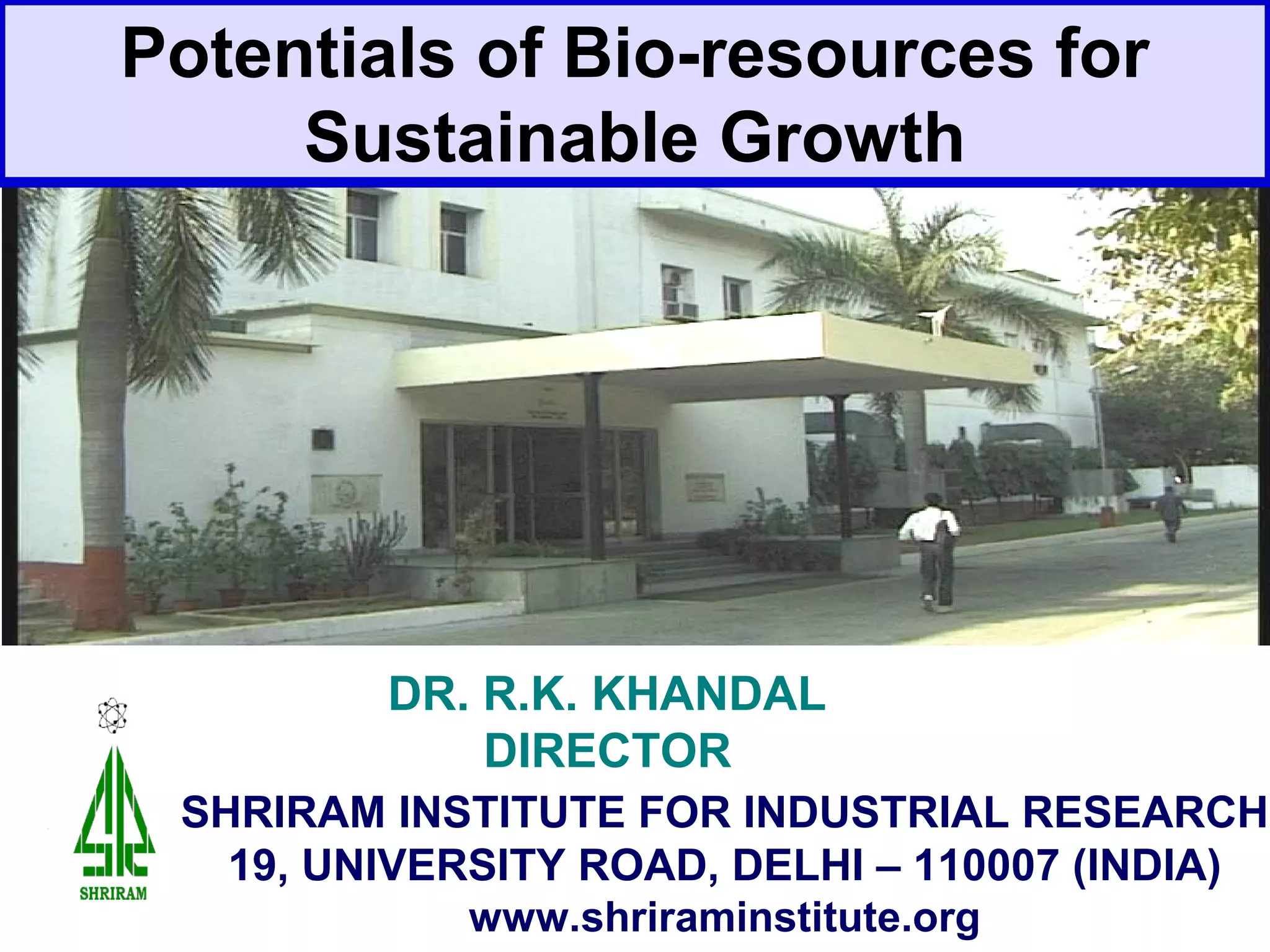
SHRIRAM INSTITUTE FOR INDUSTRIAL RESEARCH
19, UNIVERSITY ROAD, DELHI – 110007 (INDIA)
www.shriraminstitute.org
Potentials of Bio-resources for
Sustainable Growth
DR. R.K. KHANDAL
DIRECTOR
Contents
 Healthcare
 Materials
 Environment & Energy
• Challenges
• Pillars
• Definition
• Concerns
• Key Drivers
•Attributes
• Pool
• Interdependence
•Requirements, Opportunities & Challenges
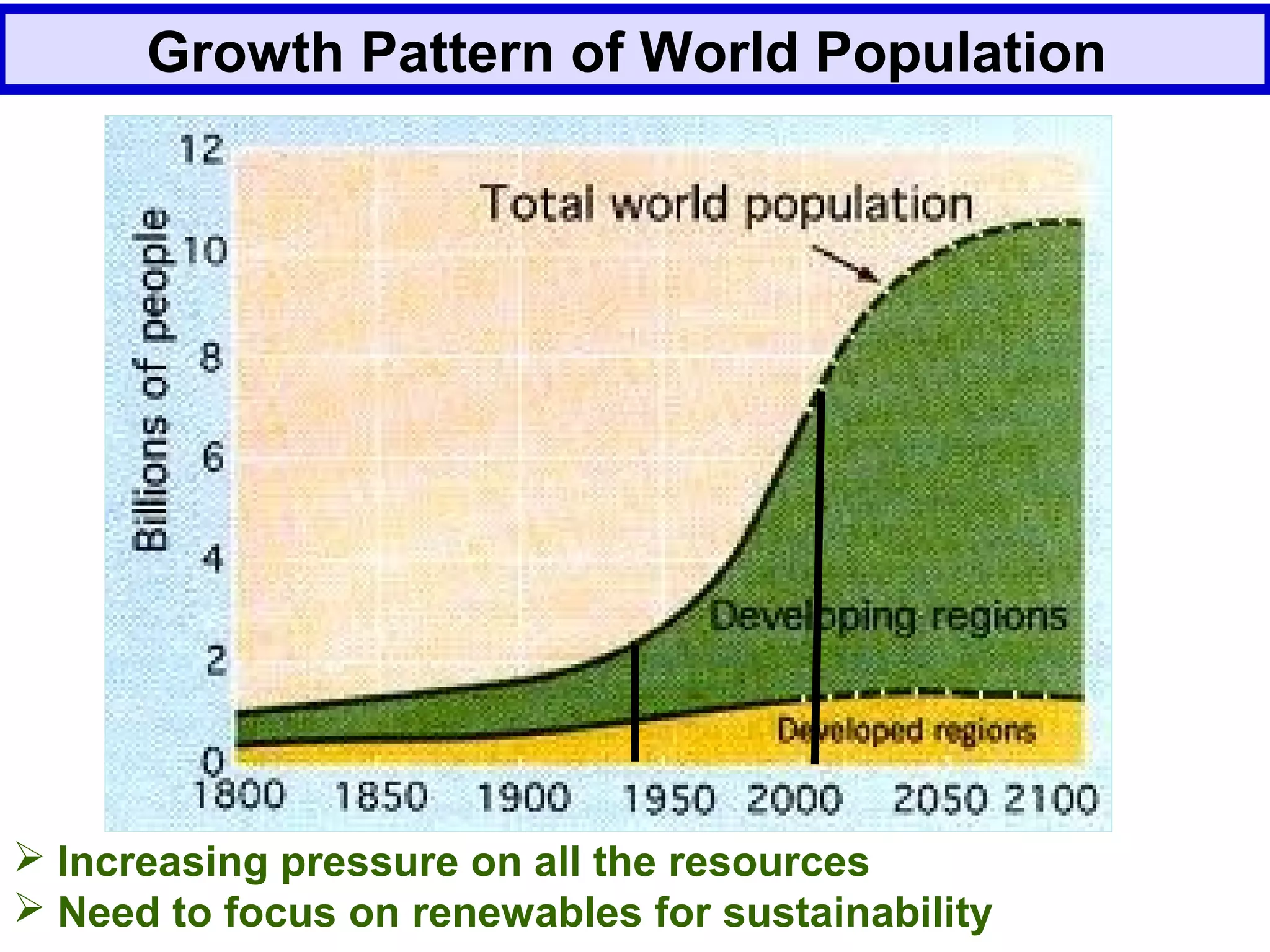
Growth Pattern of World Population
 Increasing pressure on all the resources
 Need to focus on renewables for sustainability
Sustainability : Concerns
 Concerns about social, environmental & economical
consequences of the above factors
 Unintended though to begin with, activities helping
above mentioned factors will have to be restricted
 Rapid population growth
 Economic growth
 Depletion of natural resources
 Increasing pollution levels
 Increasing greenhouse gases & carbon emissions
 Ecological imbalance
 Global warming and climate change
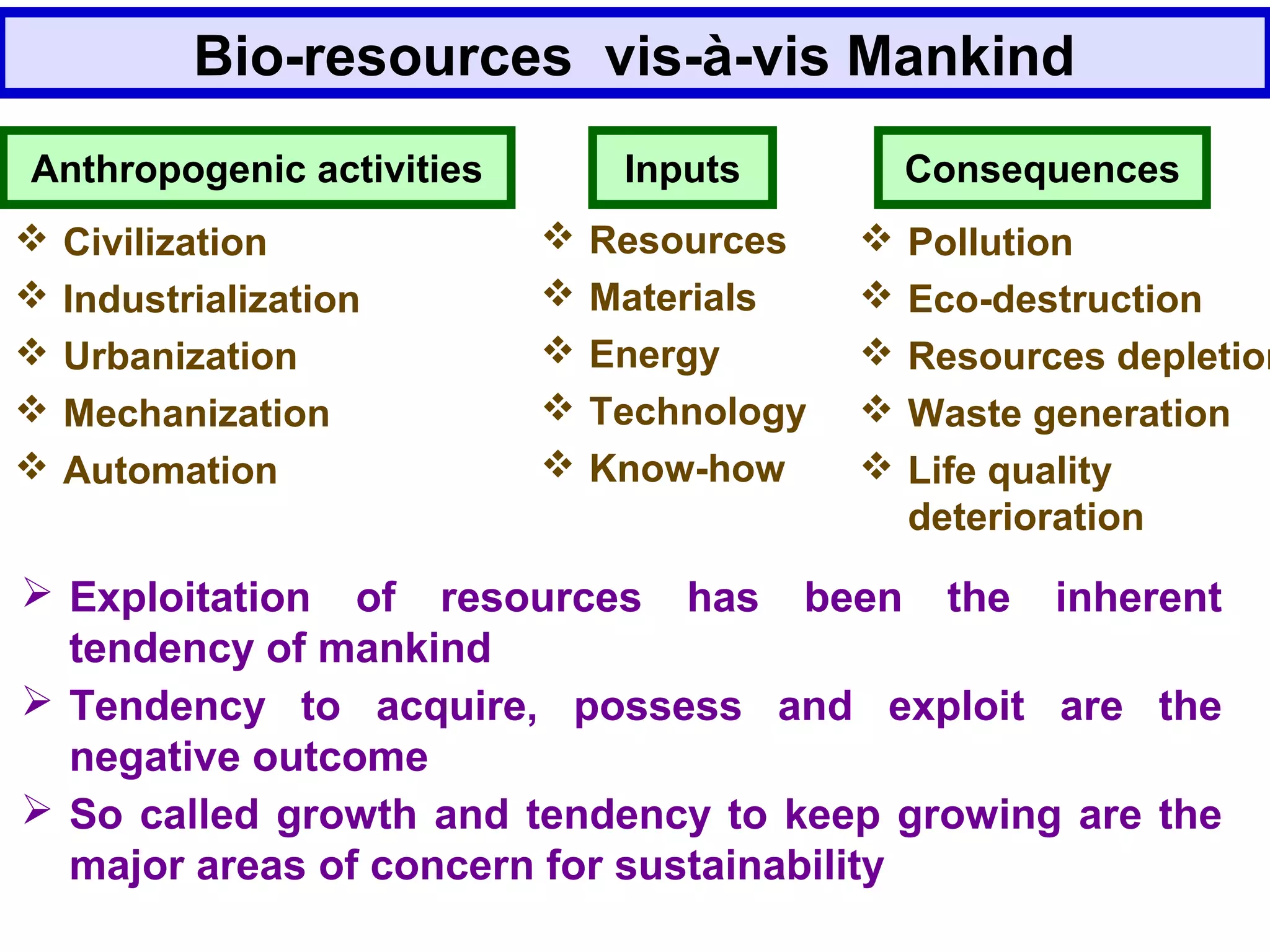
Bio-resources vis-à-vis Mankind
 Exploitation of resources has been the inherent
tendency of mankind
 Tendency to acquire, possess and exploit are the
negative outcome
 So called growth and tendency to keep growing are the
major areas of concern for sustainability
Anthropogenic activities Inputs Consequences
 Civilization
 Industrialization
 Urbanization
 Mechanization
 Automation
 Resources
 Materials
 Energy
 Technology
 Know-how
 Pollution
 Eco-destruction
 Resources depletion
 Waste generation
 Life quality
deterioration
Discoveries of Oil fields during the last Century
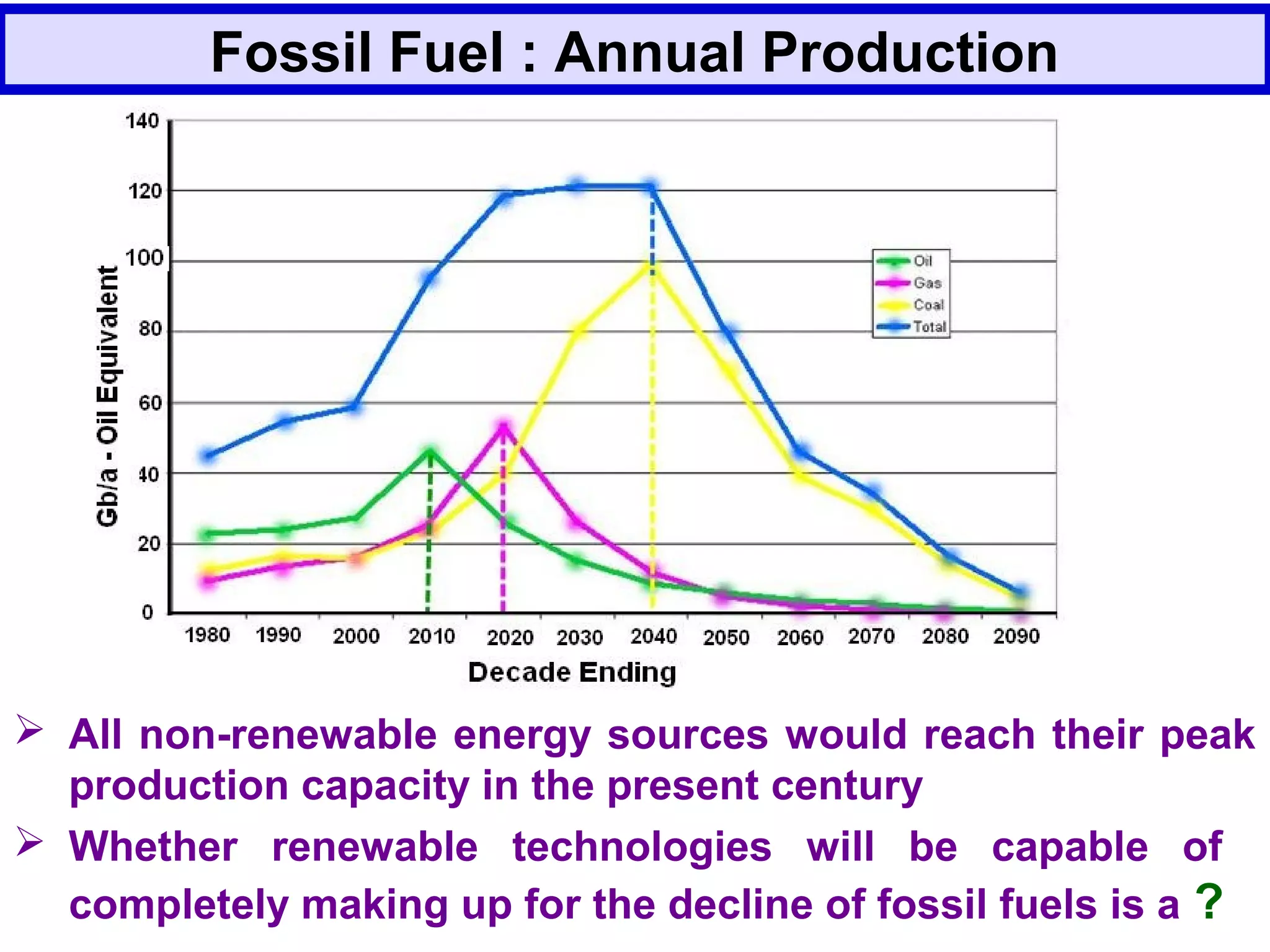
 All non-renewable energy sources would reach their peak
production capacity in the present century
 Whether renewable technologies will be capable of
completely making up for the decline of fossil fuels is a ?
Fossil Fuel : Annual Production
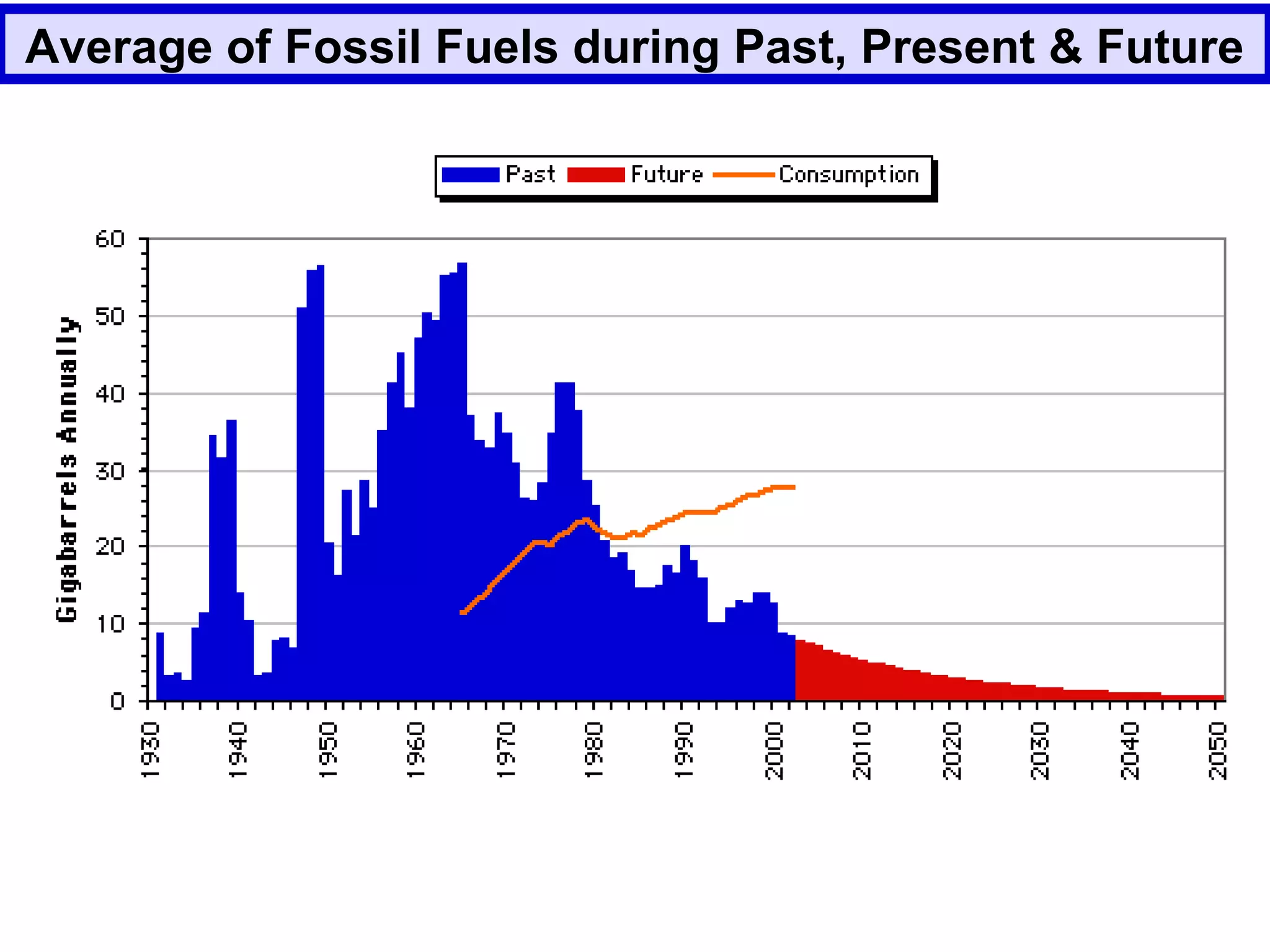
Average of Fossil Fuels during Past, Present & Future
What is Sustainability ?
Method, Systems and Materials to ensure:
No resource depletion
No harm to natural cycle
SUSTAINABILITY
Survival & Well Being
Present generation
Future generation
 Integration of human patterns with nature ensuring
continuity with unique & innovative approaches is the
key to sustainability
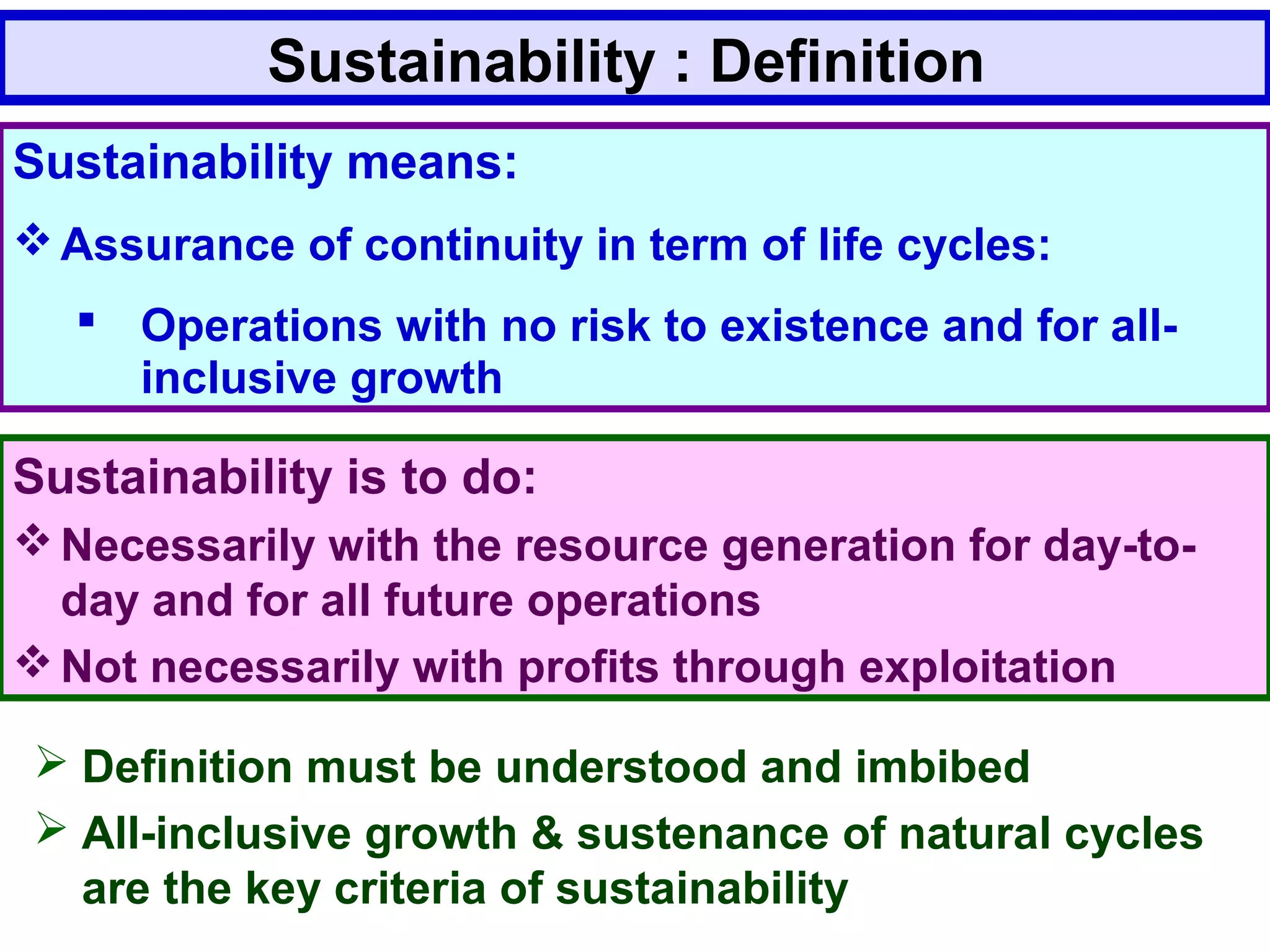
Sustainability : Definition
Sustainability means:
Assurance of continuity in term of life cycles:
 Operations with no risk to existence and for all-
inclusive growth
Sustainability is to do:
Necessarily with the resource generation for day-to-
day and for all future operations
Not necessarily with profits through exploitation
 Definition must be understood and imbibed
 All-inclusive growth & sustenance of natural cycles
are the key criteria of sustainability
Challenges for Sustainability:Simple to Define
Difficult to Achieve Challenges
Non-sustainable Sustainable Challenges
Synthetic Renewable Alternatives
Consumption Replenishment Sustainable resources
Chemical Route Bio-route Green Technologies
Waste Waste Utilization
Reject, Reduce,
Reuse, Recycle, Re-
form, Re-create
 Avoid short cuts
 Think Collective
 Take global view
 Share Experiences
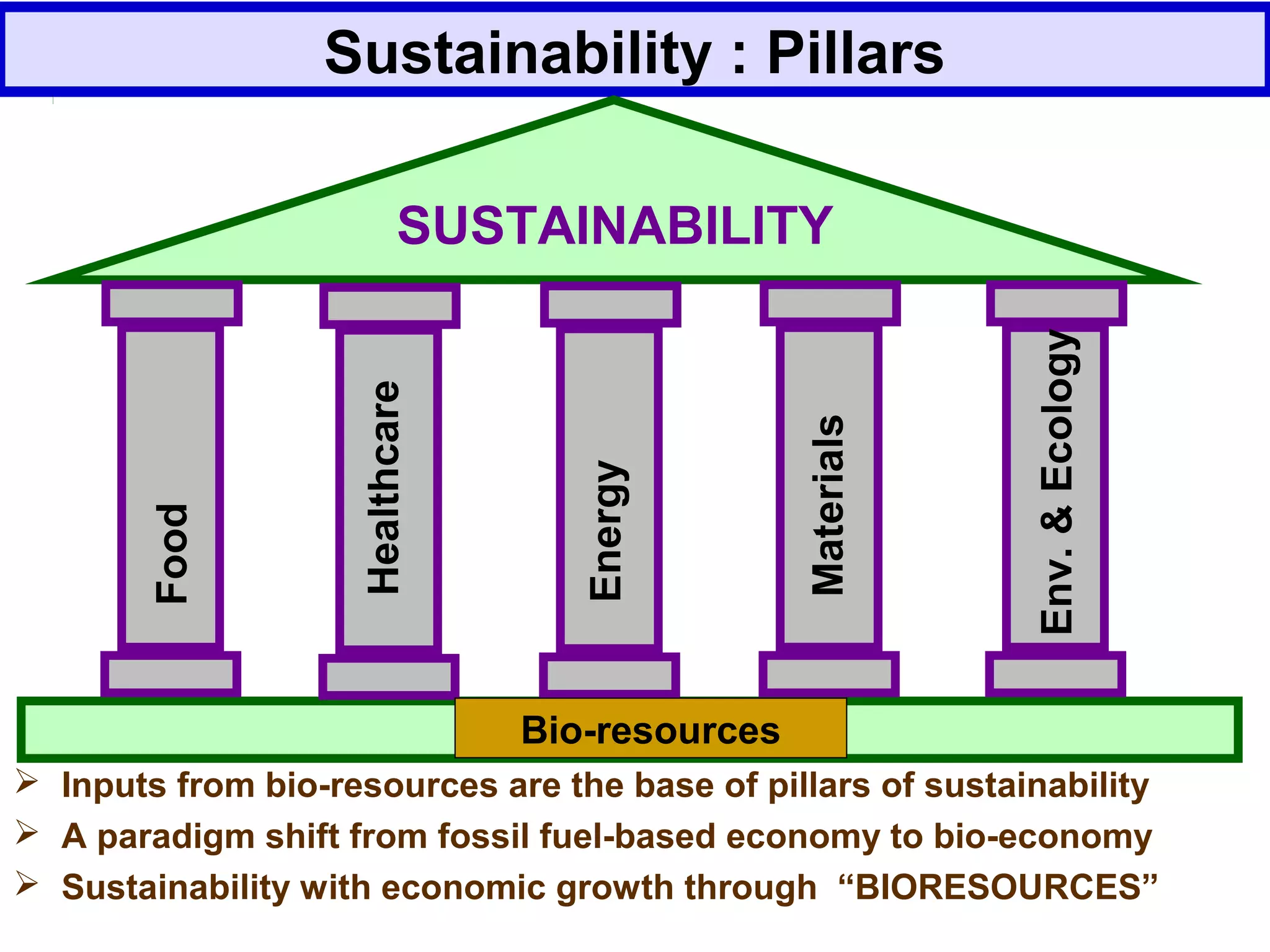
Sustainability : Pillars
 Inputs from bio-resources are the base of pillars of sustainability
 A paradigm shift from fossil fuel-based economy to bio-economy
 Sustainability with economic growth through “BIORESOURCES”
Energy
Food
Healthcare
Materials
Env.&Ecology
SUSTAINABILITY
Bio-resources
Bio-resources : Pool
 Non-living bio-resources are depletable
 Living bio-resources are renewable
 For sustainability
Bio-resources
Equilibrium between withdrawl & replenishment for non-living
Emphasis on renewable in case of living bio-resources
Living Non-living
Plants
Animals
Birds
Others Micro-organisms
Insects & pests
Aquatic & terrestrial
Agriculture
Forests
Landscape
 Solid
 Liquid
 Gas
Complex
Organic
Inorganic
Bio-resources : Interdependence
 Existence of one type of bio-resource is always
dependent upon the other at macro as well as micro level
 Existence of each one of them is essential for
sustenance of life on earth
Animal Kingdom
Plant Kingdom
Micro-organisms
Flora & Fauna
Bio-resources : Attributes
 Utilization of bio-resources Green technologies
 Reduce energy consumption  pollution
 Recycling & Reuse is possible
Renewable
Sustainable
In sync with the natural cycle
Energy balance (C footprint)
Unending Production cycle
(lifecycle)
Balances Climate
Integral part of system that
supports life
Carbon-sink
Preserves the ecology
Environment-friendly
Bio-resources : Key Drivers
 All natural processes are cyclic
 All cyclic processes are irreversible
 All irreversible processes are spontaneous
 All spontaneous processes are sustainable
 Preservation of natural cycles through complete
equilibrium as well as balance amongst the key
drivers is a must for sustainability
Solar System
Water System
Climate
Existence
Survival
Sustenance
Bio-resources: Requirements & Challenges
 Agro
 Green buildings
 Modifying materials
Energy efficient
Green substitutes
Wealth generation
Better functionality
Cost-effectiveness
Environment &
Ecology
Food
Energy
 Solar
 Hydro
 Global warming
 Bio-waste
Heat,light,electricity
Fuel
Fuel & Electricity
 Novel materials
Parameters Challenges
 Self- reliance Security & Safety
 Bio-resources would be the key !
Materials
Neutraceuticals
Functional foods
Healthcare  Preventive
 Curative
Energy : Potential of Bio-resources
Yesterday Today Tomorrow
 Water
 Wind
 Coal
 Oil
 Natural gas
 Electricity
 Sun
 Wind
 Bio-fuels
 Biomass
 Nuclear (Safety &
disposal concerns)
 70% of all work:
Manually
 Majority of 30%:
Domesticated animals
 Major energy sources:
Oil (35%), Coal (23%),
Natural gas (21%),
Biomass & waste
(10%) and Hydro &
geothermal (4%)
 Development of
technologies for
exploitation of all
kinds of fossil fuels
 Development of
technologies for
use of renewable
energy sources
Renewable
Non-renewable
Depletion of resources
Sustainability
without economic
growth
Sustainability
with economic
growth
Renewable
Bio-resources
 Manual power
 Animal muscle power
 Wood
 Sun
 Water
 Wind
Energy from Bio-resources
Solar Energy
Electrical
(Photovoltaics) Thermal
ElectricEnergy
ThermalEnergy
Thermo
Chemical
Process
ChemicalEnergy
MechanicalEnergy
Photon
Solar Thermal; Most exploited : Material & Design specific
Solar Chemical; Evolving : Material specific
Electrochemical
Need exists for development of materials capable of converting
solar energy to chemical energy i.e. photochemical conversion
For degradation
of undesired
molecules
Create new
species /
molecules
Solar Energy
Transform one
form to another
Bio or chemical
degradation
 Association
 Linkages
 Conversions
 Reversible
 Irreversible
Photochemical
Conversion
Development of materials active under solar energy;
various spectral regions & their intrinsic properties
 Photoactive materials would enable tapping solar energy
Solar Energy vis-a-vis Bio-resources
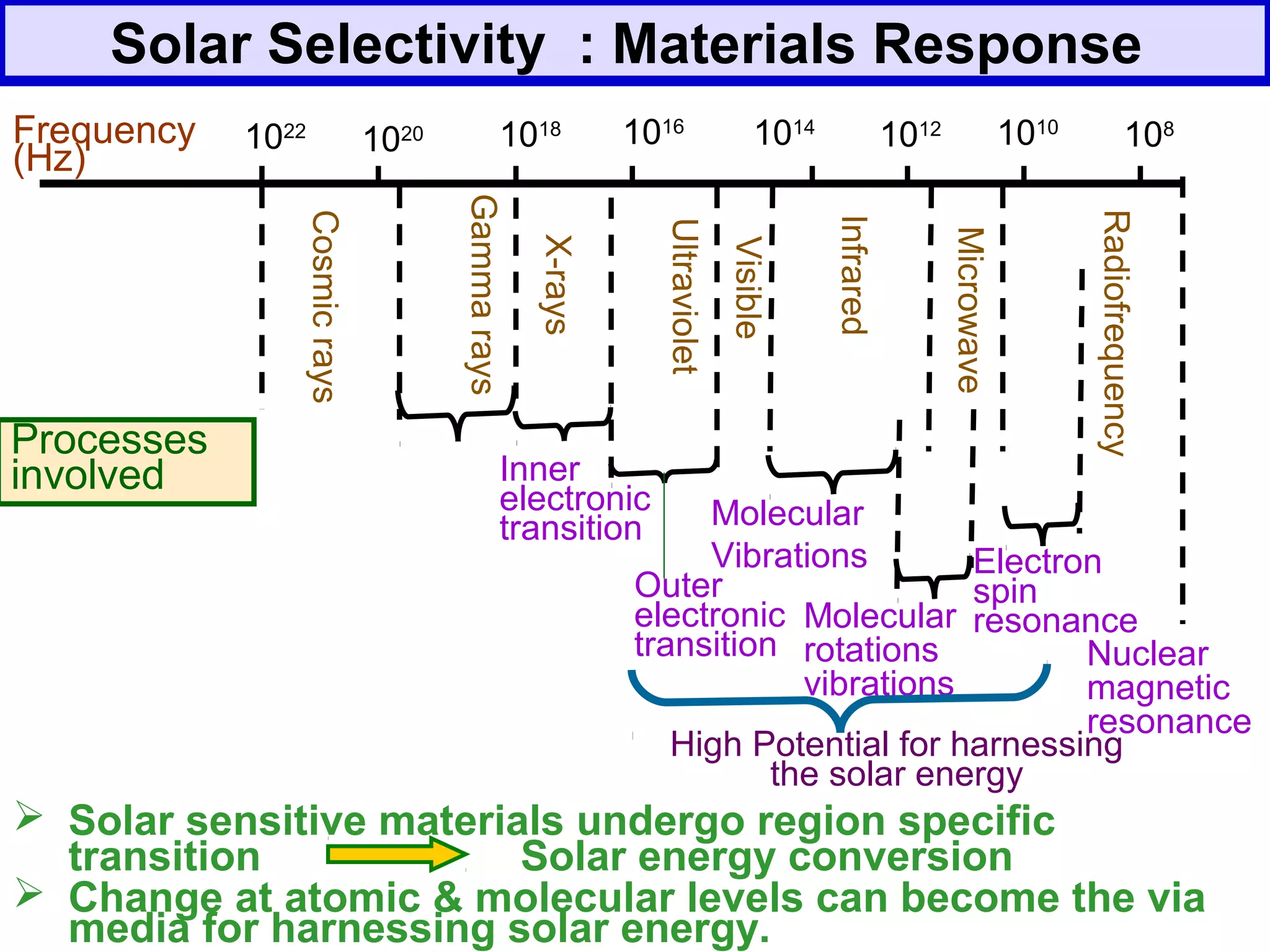
Solar Selectivity : Materials Response
Frequency
(Hz)
Visible
Infrared
Ultraviolet
X-rays
Cosmicrays
1081010
101210141016
1018
10201022
Radiofrequency
Gammarays
Microwave
High Potential for harnessing
the solar energy
Processes
involved Inner
electronic
transition
Outer
electronic
transition
Molecular
Vibrations
Molecular
rotations
vibrations
Electron
spin
resonance
Nuclear
magnetic
resonance
 Change at atomic & molecular levels can become the via
media for harnessing solar energy.
 Solar sensitive materials undergo region specific
transition Solar energy conversion
 Challenge is to maneuver band gap;sensitive to visible light
6.3 eV 3.15 eV 1.58 eV
U.V
200 nm 400 nm 800 nm
Visible
TiO2
ZnO
CdS
WO3
Band gap
Energy
EMS(λ)
TiO2 = 3.20 eV
ZnO = 3.35 eV
WO3 = 2.80 eV
CdS = 2.42 eV
 Semiconductors are the most ideal and preferred materials
Energy from Bio-resources
Light will be captured by the
Ruthenium, electrons will move
from the donor(D) to acceptor(A),
electrons will be taken from the
water by the donor, just as in nature
and will be used to make hydrogen
DONOR
Photon
ACCEPTOR
Coupled Supercomplexes for Water Splitting
Energy from Bio-resources
 This system is a analogue to Dye-
senstized solar cell
Sunlight
Origin of the Word ‘Green’
 Green is one which is sustainable, like plants!
Natural
resources
CO2
INPUT OUTPUT
Energy
Food
Biodiversity
Shelter
O2
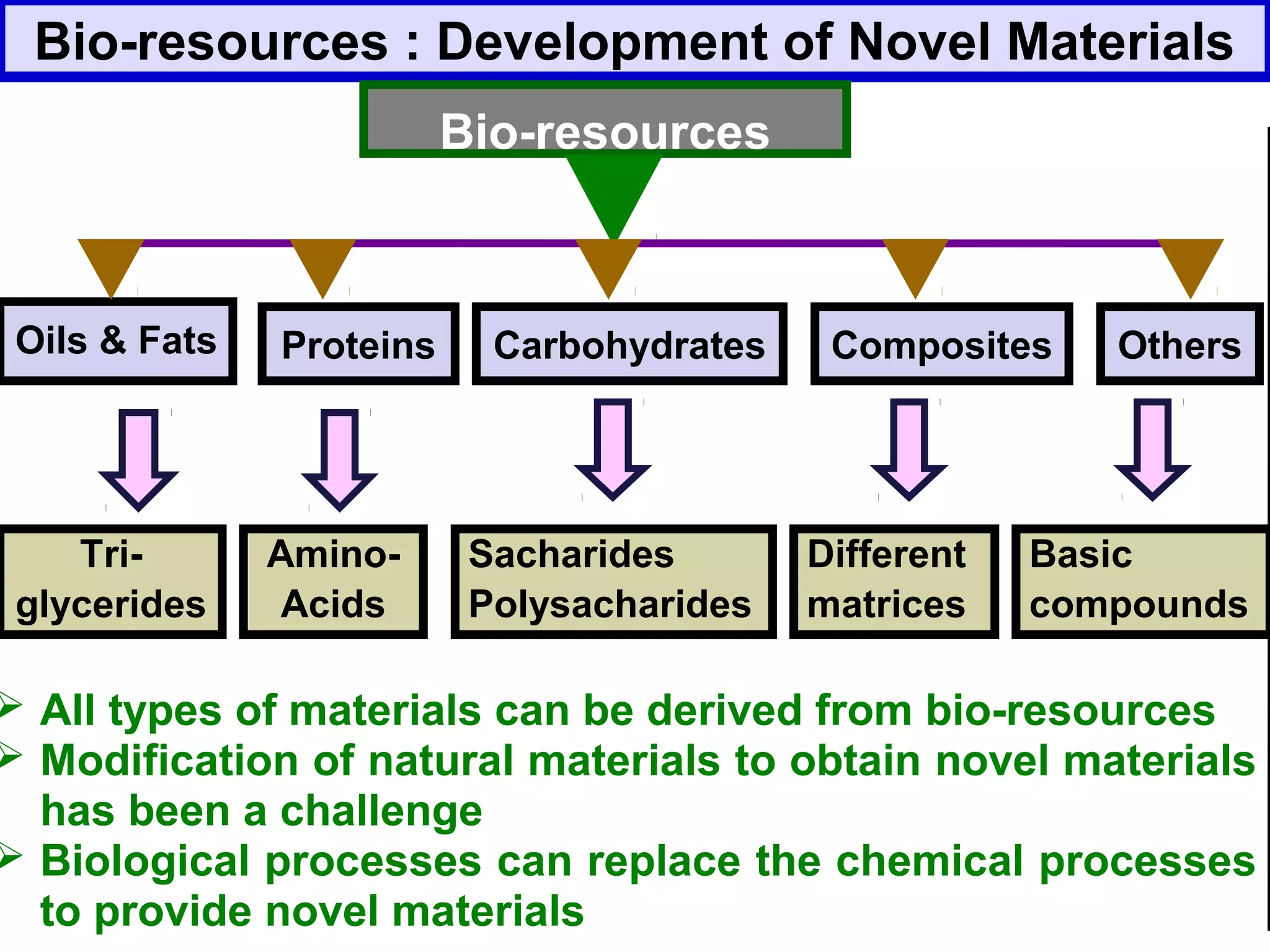
Bio-resources : Development of Novel Materials
 All types of materials can be derived from bio-resources
 Modification of natural materials to obtain novel materials
has been a challenge
 Biological processes can replace the chemical processes
to provide novel materials
Bio-resources
Oils & Fats CompositesProteins Carbohydrates Others
Amino-
Acids
Sacharides
Polysacharides
Different
matrices
Basic
compounds
Tri-
glycerides
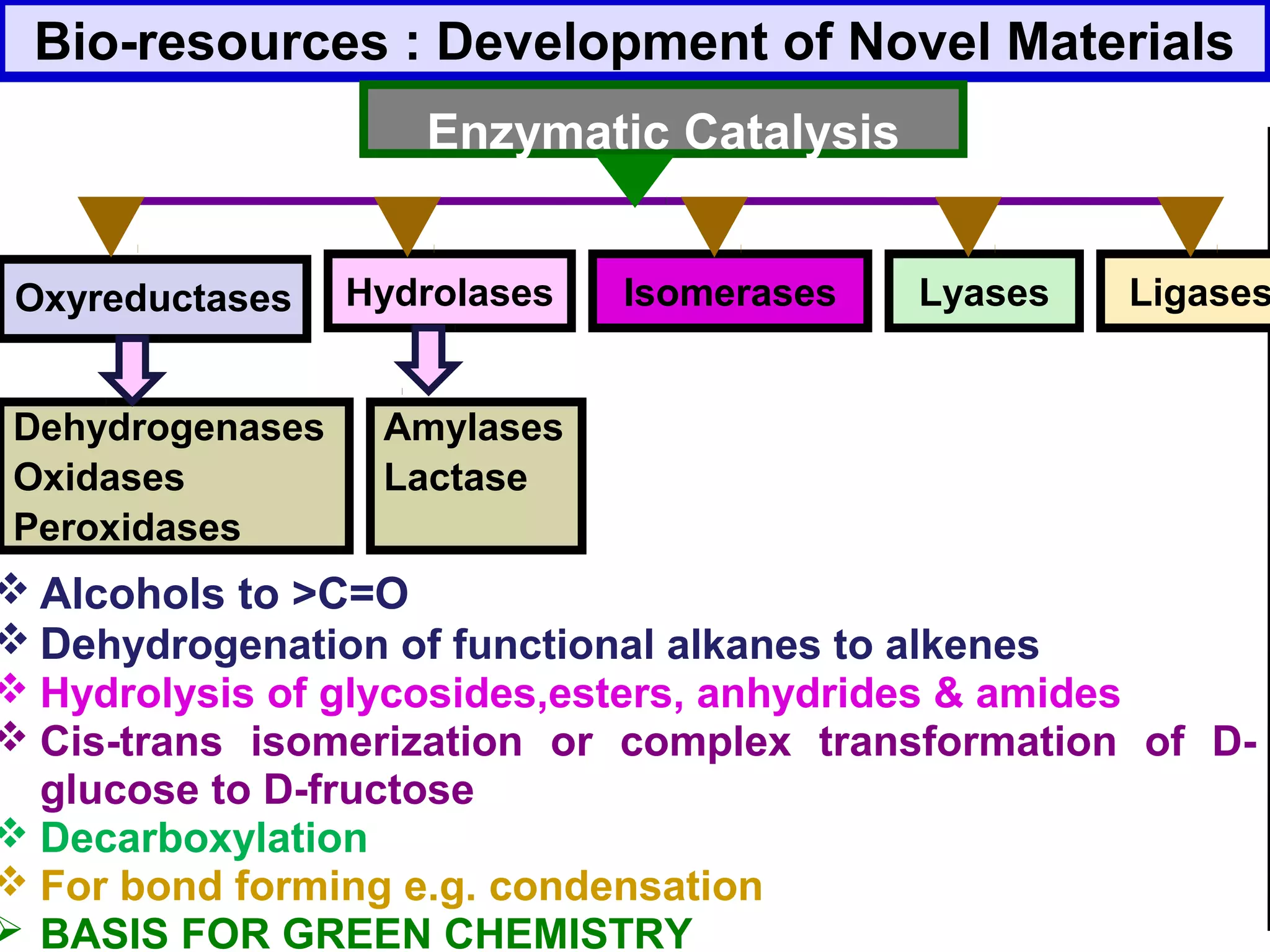
Bio-resources : Development of Novel Materials
 Alcohols to >C=O
 Dehydrogenation of functional alkanes to alkenes
 Hydrolysis of glycosides,esters, anhydrides & amides
 Cis-trans isomerization or complex transformation of D-
glucose to D-fructose
 Decarboxylation
 For bond forming e.g. condensation
 BASIS FOR GREEN CHEMISTRY
Enzymatic Catalysis
Oxyreductases LyasesHydrolases Isomerases Ligases
Dehydrogenases
Oxidases
Peroxidases
Amylases
Lactase
Materials
 Materials developed so far are derived mostly from the non-
renewable resources such as fossil fuels, minerals, ores, etc.
 Materials of future would have to be derived from bio-
resources in order to achieve sustainability
Polymer
comp-
ounds
Synthetic
Recyclable
Non-
recyclable
Thermo-
plastic
Short life
cycle
Polymer
compo-
sites
Depletable
Plants
Animals
Microbes
Natural
RenewableDegradable
Non-
degradable
Non-
renewable
Replenishable
Metal
Minerals
Biomass
Thermo-
set
Long life
cycle
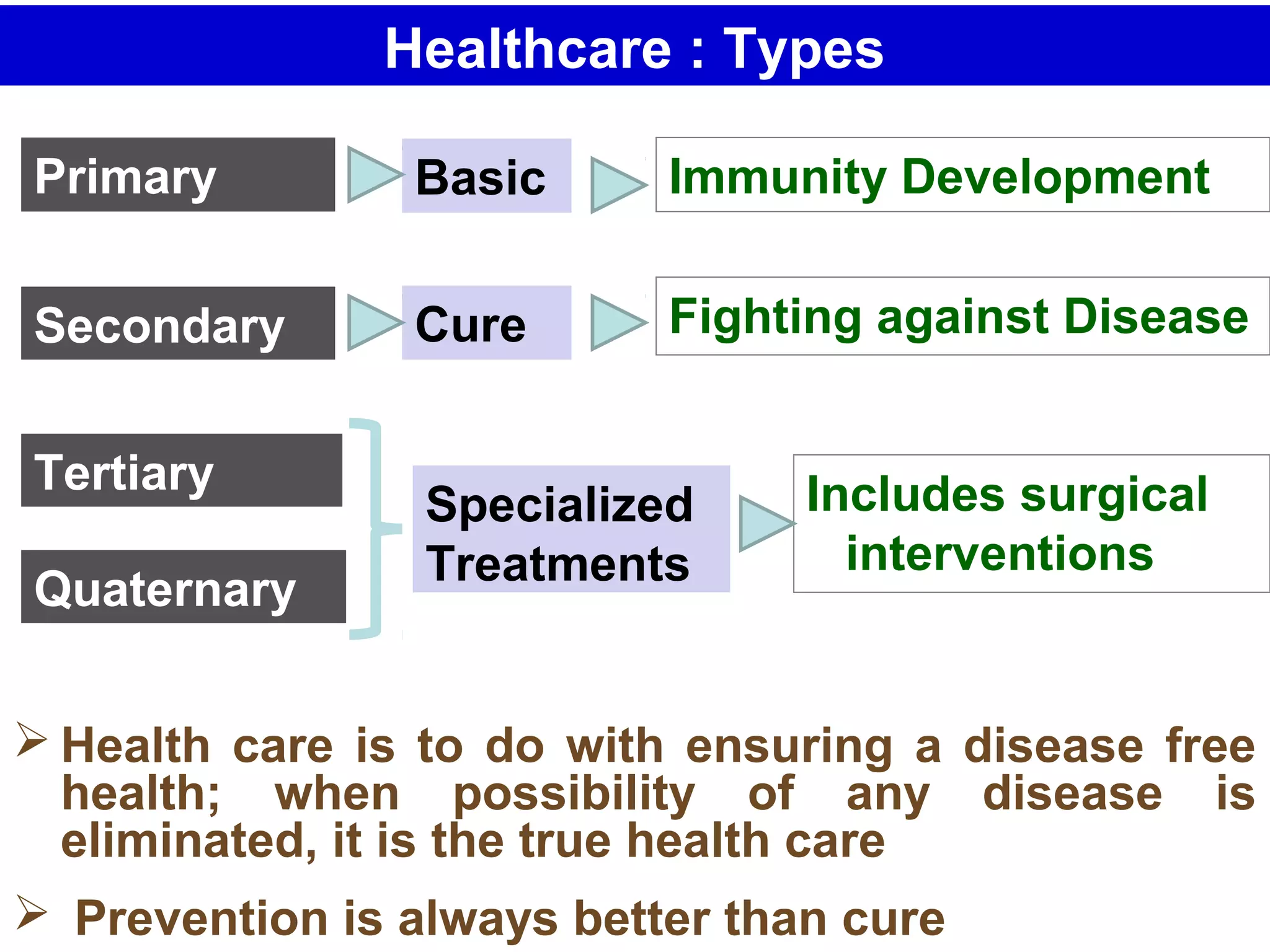
Healthcare : Types
Primary Immunity Development
Fighting against Disease
Tertiary Includes surgical
interventions
Basic
Cure
Quaternary
Secondary
Specialized
Treatments
 Health care is to do with ensuring a disease free
health; when possibility of any disease is
eliminated, it is the true health care
 Prevention is always better than cure
Healthcare : Methods or Systems
AYUSH Modern
Correlate the pathological data
with clinical symptoms and
treat to eliminate the cause of
disease
Based on the philosophy that the
human health is determined by
the balance of body fluids (3)
produced by fundamental
elements (5)
Design medicines with
immediate impact & relief
Focus to build internal capability
to fight disease
Based mostly on synthetic
compounds
Based on nutraceuticals &
medicinal plants
Always has certain side effectsNo or rare side effects
 How can the basic, preventive, long lasting & definite-
cure system be an alternative system!
 In fact the modern system should be the alternative
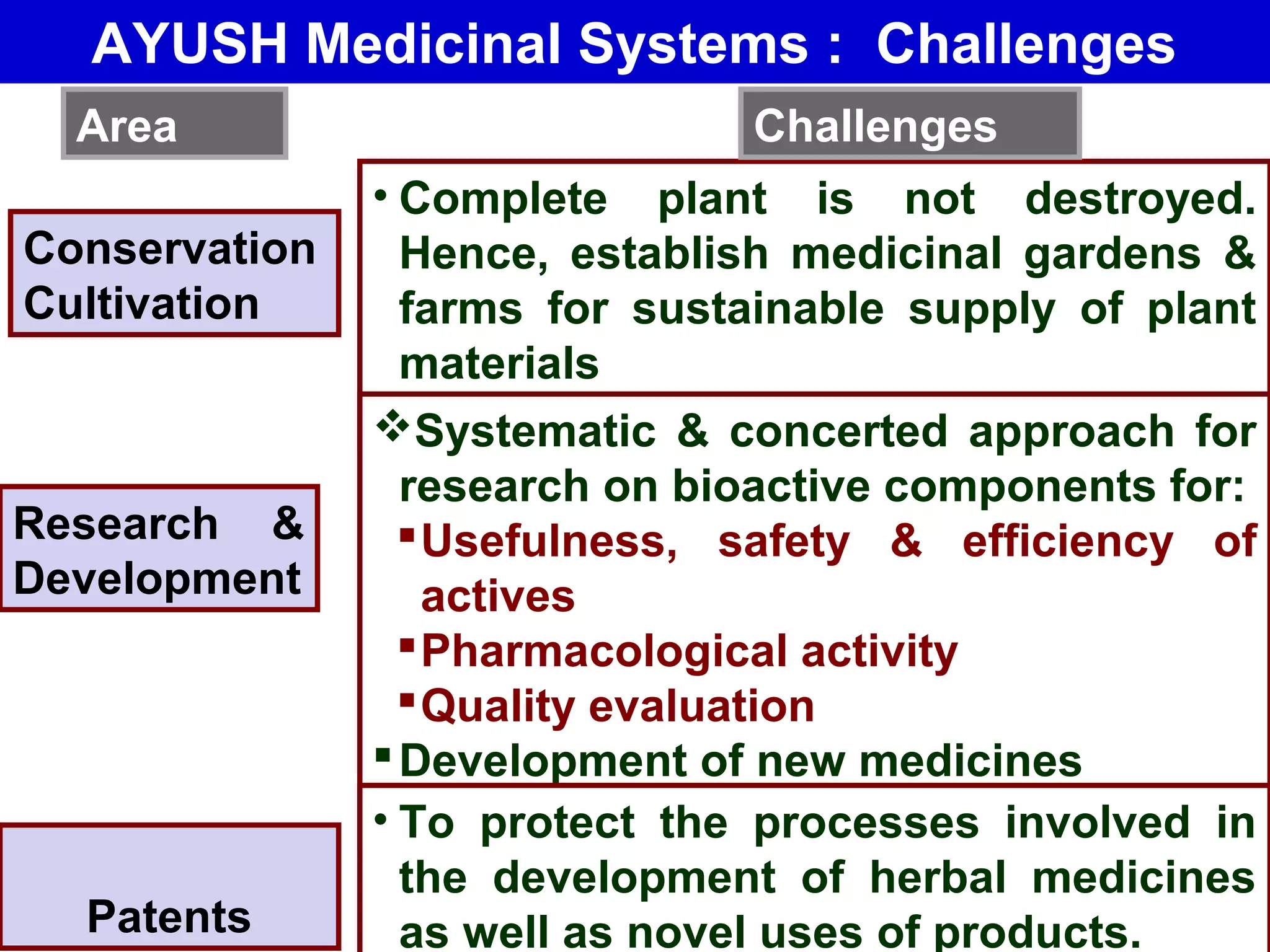
Conservation
Cultivation
Research &
Development
• Complete plant is not destroyed.
Hence, establish medicinal gardens &
farms for sustainable supply of plant
materials
• Availability of quality plant materialsSystematic & concerted approach for
research on bioactive components for:
Usefulness, safety & efficiency of
actives
Pharmacological activity
Quality evaluation
Development of new medicines
Use of alternate sources
Area Challenges
Patents
• To protect the processes involved in
the development of herbal medicines
as well as novel uses of products.
AYUSH Medicinal Systems : Challenges
Process
technology
Quality
Assurance
• For industrial production
• Selecting suitable technology for
more effective, stable,
reproducible, controlled dosage
forms• Quality control of raw materials,
finished products, processes for
actives & impurities
Human Resource
Dev. & Facilities
• Trained personnel and the state-
of-the-art equipment
Policies &
Legislation
• Devise set systems & regulatory
procedures similar to those for the
allopathic medicinal system
AYUSH Medicinal Systems : Challenges
Worldwide
Acceptance
Opportunities
It has been accepted that the herbal
preparation can cure even the
otherwise incurable diseases in a
sustainable manner
Plenty of it exists in country with a
back up of medical practitioners and
education base
Treatments being practiced for
various ailments & for all age- groups
Knowledge Base
Experience
Opportunities
Both in developing as well as developed
countries, there exists a ready market for
herbal medicines, may be, for different
reasons!
Keenness to opt herbal against synthetic
ones, given choice !
Market Potentials
Raw Materials
Availability
Efficiency Known for no side effects if used with
proper care.
There is no need to ban any of the herbal
medicines
Major herbal plants are grown in
different parts of the country.
Thank You

Ihbt 11052012

  • 1.
    SHRIRAM INSTITUTE FORINDUSTRIAL RESEARCH 19, UNIVERSITY ROAD, DELHI – 110007 (INDIA) www.shriraminstitute.org Potentials of Bio-resources for Sustainable Growth DR. R.K. KHANDAL DIRECTOR
  • 2.
    Contents  Healthcare  Materials Environment & Energy • Challenges • Pillars • Definition • Concerns • Key Drivers •Attributes • Pool • Interdependence •Requirements, Opportunities & Challenges
  • 3.
    Growth Pattern ofWorld Population  Increasing pressure on all the resources  Need to focus on renewables for sustainability
  • 4.
    Sustainability : Concerns Concerns about social, environmental & economical consequences of the above factors  Unintended though to begin with, activities helping above mentioned factors will have to be restricted  Rapid population growth  Economic growth  Depletion of natural resources  Increasing pollution levels  Increasing greenhouse gases & carbon emissions  Ecological imbalance  Global warming and climate change
  • 5.
    Bio-resources vis-à-vis Mankind Exploitation of resources has been the inherent tendency of mankind  Tendency to acquire, possess and exploit are the negative outcome  So called growth and tendency to keep growing are the major areas of concern for sustainability Anthropogenic activities Inputs Consequences  Civilization  Industrialization  Urbanization  Mechanization  Automation  Resources  Materials  Energy  Technology  Know-how  Pollution  Eco-destruction  Resources depletion  Waste generation  Life quality deterioration
  • 6.
    Discoveries of Oilfields during the last Century
  • 7.
     All non-renewableenergy sources would reach their peak production capacity in the present century  Whether renewable technologies will be capable of completely making up for the decline of fossil fuels is a ? Fossil Fuel : Annual Production
  • 8.
    Average of FossilFuels during Past, Present & Future
  • 9.
    What is Sustainability? Method, Systems and Materials to ensure: No resource depletion No harm to natural cycle SUSTAINABILITY Survival & Well Being Present generation Future generation  Integration of human patterns with nature ensuring continuity with unique & innovative approaches is the key to sustainability
  • 10.
    Sustainability : Definition Sustainabilitymeans: Assurance of continuity in term of life cycles:  Operations with no risk to existence and for all- inclusive growth Sustainability is to do: Necessarily with the resource generation for day-to- day and for all future operations Not necessarily with profits through exploitation  Definition must be understood and imbibed  All-inclusive growth & sustenance of natural cycles are the key criteria of sustainability
  • 11.
    Challenges for Sustainability:Simpleto Define Difficult to Achieve Challenges Non-sustainable Sustainable Challenges Synthetic Renewable Alternatives Consumption Replenishment Sustainable resources Chemical Route Bio-route Green Technologies Waste Waste Utilization Reject, Reduce, Reuse, Recycle, Re- form, Re-create  Avoid short cuts  Think Collective  Take global view  Share Experiences
  • 12.
    Sustainability : Pillars Inputs from bio-resources are the base of pillars of sustainability  A paradigm shift from fossil fuel-based economy to bio-economy  Sustainability with economic growth through “BIORESOURCES” Energy Food Healthcare Materials Env.&Ecology SUSTAINABILITY Bio-resources
  • 13.
    Bio-resources : Pool Non-living bio-resources are depletable  Living bio-resources are renewable  For sustainability Bio-resources Equilibrium between withdrawl & replenishment for non-living Emphasis on renewable in case of living bio-resources Living Non-living Plants Animals Birds Others Micro-organisms Insects & pests Aquatic & terrestrial Agriculture Forests Landscape  Solid  Liquid  Gas Complex Organic Inorganic
  • 14.
    Bio-resources : Interdependence Existence of one type of bio-resource is always dependent upon the other at macro as well as micro level  Existence of each one of them is essential for sustenance of life on earth Animal Kingdom Plant Kingdom Micro-organisms Flora & Fauna
  • 15.
    Bio-resources : Attributes Utilization of bio-resources Green technologies  Reduce energy consumption  pollution  Recycling & Reuse is possible Renewable Sustainable In sync with the natural cycle Energy balance (C footprint) Unending Production cycle (lifecycle) Balances Climate Integral part of system that supports life Carbon-sink Preserves the ecology Environment-friendly
  • 16.
    Bio-resources : KeyDrivers  All natural processes are cyclic  All cyclic processes are irreversible  All irreversible processes are spontaneous  All spontaneous processes are sustainable  Preservation of natural cycles through complete equilibrium as well as balance amongst the key drivers is a must for sustainability Solar System Water System Climate Existence Survival Sustenance
  • 17.
    Bio-resources: Requirements &Challenges  Agro  Green buildings  Modifying materials Energy efficient Green substitutes Wealth generation Better functionality Cost-effectiveness Environment & Ecology Food Energy  Solar  Hydro  Global warming  Bio-waste Heat,light,electricity Fuel Fuel & Electricity  Novel materials Parameters Challenges  Self- reliance Security & Safety  Bio-resources would be the key ! Materials Neutraceuticals Functional foods Healthcare  Preventive  Curative
  • 18.
    Energy : Potentialof Bio-resources Yesterday Today Tomorrow  Water  Wind  Coal  Oil  Natural gas  Electricity  Sun  Wind  Bio-fuels  Biomass  Nuclear (Safety & disposal concerns)  70% of all work: Manually  Majority of 30%: Domesticated animals  Major energy sources: Oil (35%), Coal (23%), Natural gas (21%), Biomass & waste (10%) and Hydro & geothermal (4%)  Development of technologies for exploitation of all kinds of fossil fuels  Development of technologies for use of renewable energy sources Renewable Non-renewable Depletion of resources Sustainability without economic growth Sustainability with economic growth Renewable Bio-resources  Manual power  Animal muscle power  Wood  Sun  Water  Wind
  • 19.
    Energy from Bio-resources SolarEnergy Electrical (Photovoltaics) Thermal ElectricEnergy ThermalEnergy Thermo Chemical Process ChemicalEnergy MechanicalEnergy Photon Solar Thermal; Most exploited : Material & Design specific Solar Chemical; Evolving : Material specific Electrochemical Need exists for development of materials capable of converting solar energy to chemical energy i.e. photochemical conversion
  • 20.
    For degradation of undesired molecules Createnew species / molecules Solar Energy Transform one form to another Bio or chemical degradation  Association  Linkages  Conversions  Reversible  Irreversible Photochemical Conversion Development of materials active under solar energy; various spectral regions & their intrinsic properties  Photoactive materials would enable tapping solar energy Solar Energy vis-a-vis Bio-resources
  • 21.
    Solar Selectivity :Materials Response Frequency (Hz) Visible Infrared Ultraviolet X-rays Cosmicrays 1081010 101210141016 1018 10201022 Radiofrequency Gammarays Microwave High Potential for harnessing the solar energy Processes involved Inner electronic transition Outer electronic transition Molecular Vibrations Molecular rotations vibrations Electron spin resonance Nuclear magnetic resonance  Change at atomic & molecular levels can become the via media for harnessing solar energy.  Solar sensitive materials undergo region specific transition Solar energy conversion
  • 22.
     Challenge isto maneuver band gap;sensitive to visible light 6.3 eV 3.15 eV 1.58 eV U.V 200 nm 400 nm 800 nm Visible TiO2 ZnO CdS WO3 Band gap Energy EMS(λ) TiO2 = 3.20 eV ZnO = 3.35 eV WO3 = 2.80 eV CdS = 2.42 eV  Semiconductors are the most ideal and preferred materials Energy from Bio-resources
  • 23.
    Light will becaptured by the Ruthenium, electrons will move from the donor(D) to acceptor(A), electrons will be taken from the water by the donor, just as in nature and will be used to make hydrogen DONOR Photon ACCEPTOR Coupled Supercomplexes for Water Splitting Energy from Bio-resources  This system is a analogue to Dye- senstized solar cell
  • 24.
    Sunlight Origin of theWord ‘Green’  Green is one which is sustainable, like plants! Natural resources CO2 INPUT OUTPUT Energy Food Biodiversity Shelter O2
  • 25.
    Bio-resources : Developmentof Novel Materials  All types of materials can be derived from bio-resources  Modification of natural materials to obtain novel materials has been a challenge  Biological processes can replace the chemical processes to provide novel materials Bio-resources Oils & Fats CompositesProteins Carbohydrates Others Amino- Acids Sacharides Polysacharides Different matrices Basic compounds Tri- glycerides
  • 26.
    Bio-resources : Developmentof Novel Materials  Alcohols to >C=O  Dehydrogenation of functional alkanes to alkenes  Hydrolysis of glycosides,esters, anhydrides & amides  Cis-trans isomerization or complex transformation of D- glucose to D-fructose  Decarboxylation  For bond forming e.g. condensation  BASIS FOR GREEN CHEMISTRY Enzymatic Catalysis Oxyreductases LyasesHydrolases Isomerases Ligases Dehydrogenases Oxidases Peroxidases Amylases Lactase
  • 27.
    Materials  Materials developedso far are derived mostly from the non- renewable resources such as fossil fuels, minerals, ores, etc.  Materials of future would have to be derived from bio- resources in order to achieve sustainability Polymer comp- ounds Synthetic Recyclable Non- recyclable Thermo- plastic Short life cycle Polymer compo- sites Depletable Plants Animals Microbes Natural RenewableDegradable Non- degradable Non- renewable Replenishable Metal Minerals Biomass Thermo- set Long life cycle
  • 28.
    Healthcare : Types PrimaryImmunity Development Fighting against Disease Tertiary Includes surgical interventions Basic Cure Quaternary Secondary Specialized Treatments  Health care is to do with ensuring a disease free health; when possibility of any disease is eliminated, it is the true health care  Prevention is always better than cure
  • 29.
    Healthcare : Methodsor Systems AYUSH Modern Correlate the pathological data with clinical symptoms and treat to eliminate the cause of disease Based on the philosophy that the human health is determined by the balance of body fluids (3) produced by fundamental elements (5) Design medicines with immediate impact & relief Focus to build internal capability to fight disease Based mostly on synthetic compounds Based on nutraceuticals & medicinal plants Always has certain side effectsNo or rare side effects  How can the basic, preventive, long lasting & definite- cure system be an alternative system!  In fact the modern system should be the alternative
  • 30.
    Conservation Cultivation Research & Development • Completeplant is not destroyed. Hence, establish medicinal gardens & farms for sustainable supply of plant materials • Availability of quality plant materialsSystematic & concerted approach for research on bioactive components for: Usefulness, safety & efficiency of actives Pharmacological activity Quality evaluation Development of new medicines Use of alternate sources Area Challenges Patents • To protect the processes involved in the development of herbal medicines as well as novel uses of products. AYUSH Medicinal Systems : Challenges
  • 31.
    Process technology Quality Assurance • For industrialproduction • Selecting suitable technology for more effective, stable, reproducible, controlled dosage forms• Quality control of raw materials, finished products, processes for actives & impurities Human Resource Dev. & Facilities • Trained personnel and the state- of-the-art equipment Policies & Legislation • Devise set systems & regulatory procedures similar to those for the allopathic medicinal system AYUSH Medicinal Systems : Challenges
  • 32.
    Worldwide Acceptance Opportunities It has beenaccepted that the herbal preparation can cure even the otherwise incurable diseases in a sustainable manner Plenty of it exists in country with a back up of medical practitioners and education base Treatments being practiced for various ailments & for all age- groups Knowledge Base Experience
  • 33.
    Opportunities Both in developingas well as developed countries, there exists a ready market for herbal medicines, may be, for different reasons! Keenness to opt herbal against synthetic ones, given choice ! Market Potentials Raw Materials Availability Efficiency Known for no side effects if used with proper care. There is no need to ban any of the herbal medicines Major herbal plants are grown in different parts of the country.
  • 34.