GEOGRAPHY, CH. 1
RESOURCES
CLASS 8TH
Made by: Virda Azmi
 All the things which fulfill our needs, whether it is
food, fresh air, clothes, books, computer, internet
connection, smartwatches etc. are called as
Resources. They all have some utility (use).
 So, Utility or usability makes an object or
substance a resource.
 Things become resources only when they have a
value.
 Its use or utility gives it a value. All resources have
some value.
 Value means worth.
 Some resources have economic value, some do not.
 For example, metals may have an economic value, a
beautiful landscape may not. But both are
important and satisfy human needs.
Made by: Virda Azmi
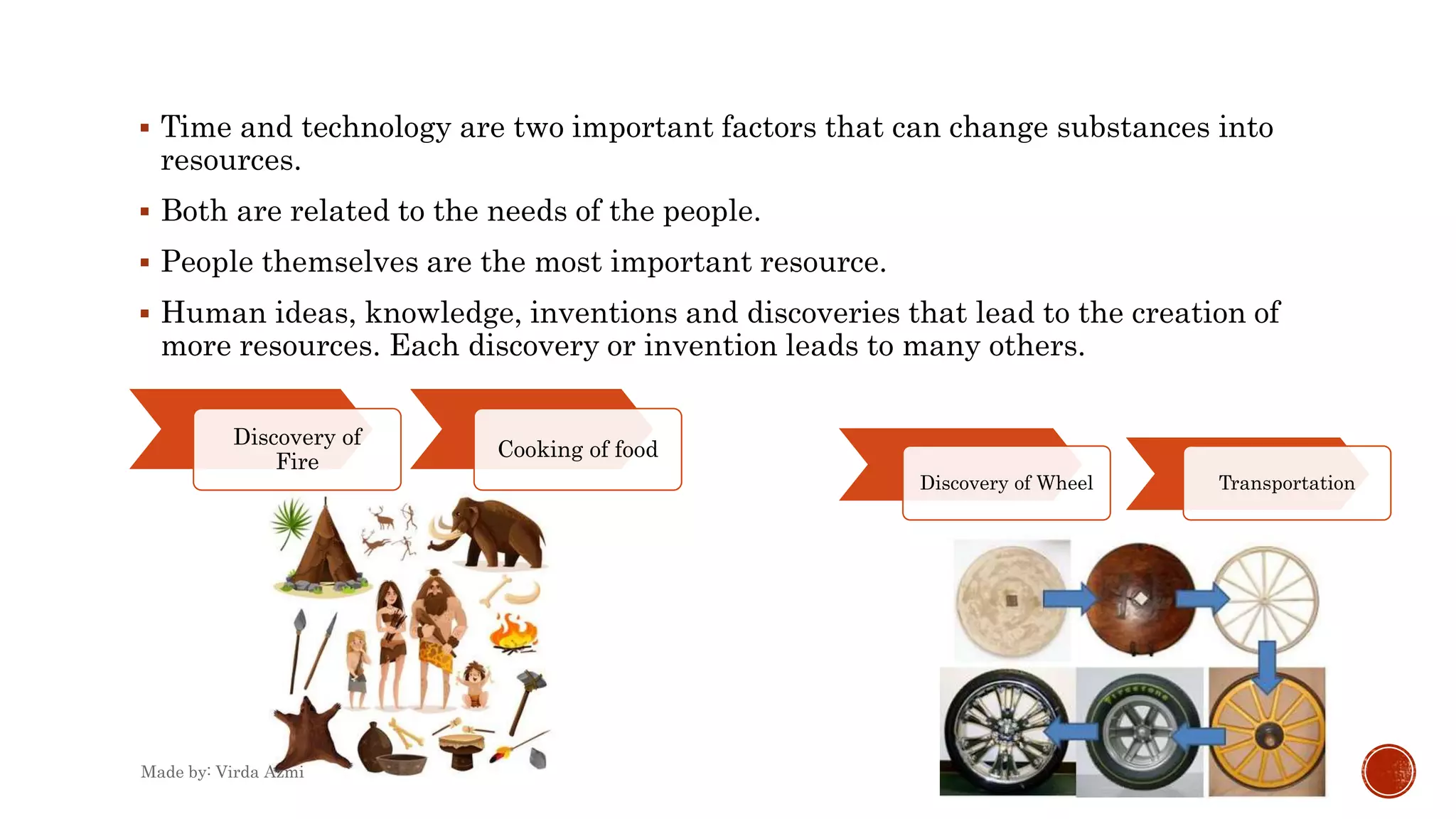
 Time and technology are two important factors that can change substances into
resources.
 Both are related to the needs of the people.
 People themselves are the most important resource.
 Human ideas, knowledge, inventions and discoveries that lead to the creation of
more resources. Each discovery or invention leads to many others.
Discovery of
Fire
Cooking of food
Discovery of Wheel Transportation
Made by: Virda Azmi
Human
Resources
Made by: Virda Azmi
Resources that are drawn from Nature and used without
much modification are called natural resources.
The air we breathe, the water in our rivers and lakes, the
soils, minerals are all natural resources.
Many of these resources are free gifts of nature and can
be used directly.
In some cases tools and technology may be needed to use
a natural resource in the best possible way.
Made by: Virda Azmi
Natural
Resorces
Acc. to
Origin
Biotic
Resources
Abiotic
Resources
Acc. to
Renewability
Renewable
Resources
Non-
Renewable
Resources
Acc. to
Distribution
Ubiquitous
Resources
Localised
Resources
Acc. to
Development
Potential
Resources
Actual
Resources
Made by: Virda Azmi
 Abiotic resources are non-living while biotic resources are living.
 Soils, rocks and minerals are abiotic but plants and animals are biotic resources.
Made by: Virda Azmi
 Renewable resources are those which get renewed or
replenished quickly. Some of these are unlimited and are
not affected by human activities, such as solar and wind
energy.
 Yet careless use of certain renewable resources like
water, soil and forest can affect their stock. Water seems
to be an unlimited renewable resource. But shortage and
drying up of natural water sources is a major problem in
many parts of the world today.
 Non-renewable resources are those which have a limited
stock. Once the stocks are exhausted it may take
thousands of years to be renewed or replenished. Since
this period is much more than human life spans, such
resources are considered non-renewable. Coal,
petroleum and natural gas are some examples.
Made by: Virda Azmi
 On the basis of their development and use resources can
be classified into two groups, actual resources and
potential resources.
 Actual resources are those resources whose quantity is
known.
 These resources are being used in the present. The rich
deposits of coal in Ruhr region of Germany and petroleum
in the West Asia, the dark soils of the Deccan plateau in
Maharashtra are all actual resources.
 Potential resources are those whose entire quantity may
not be known.
 These are not being used at present. These resources could
be used in the future.
 The level of technology we have at present may not be
advanced enough to easily utilise these resources.
Made by: Virda Azmi
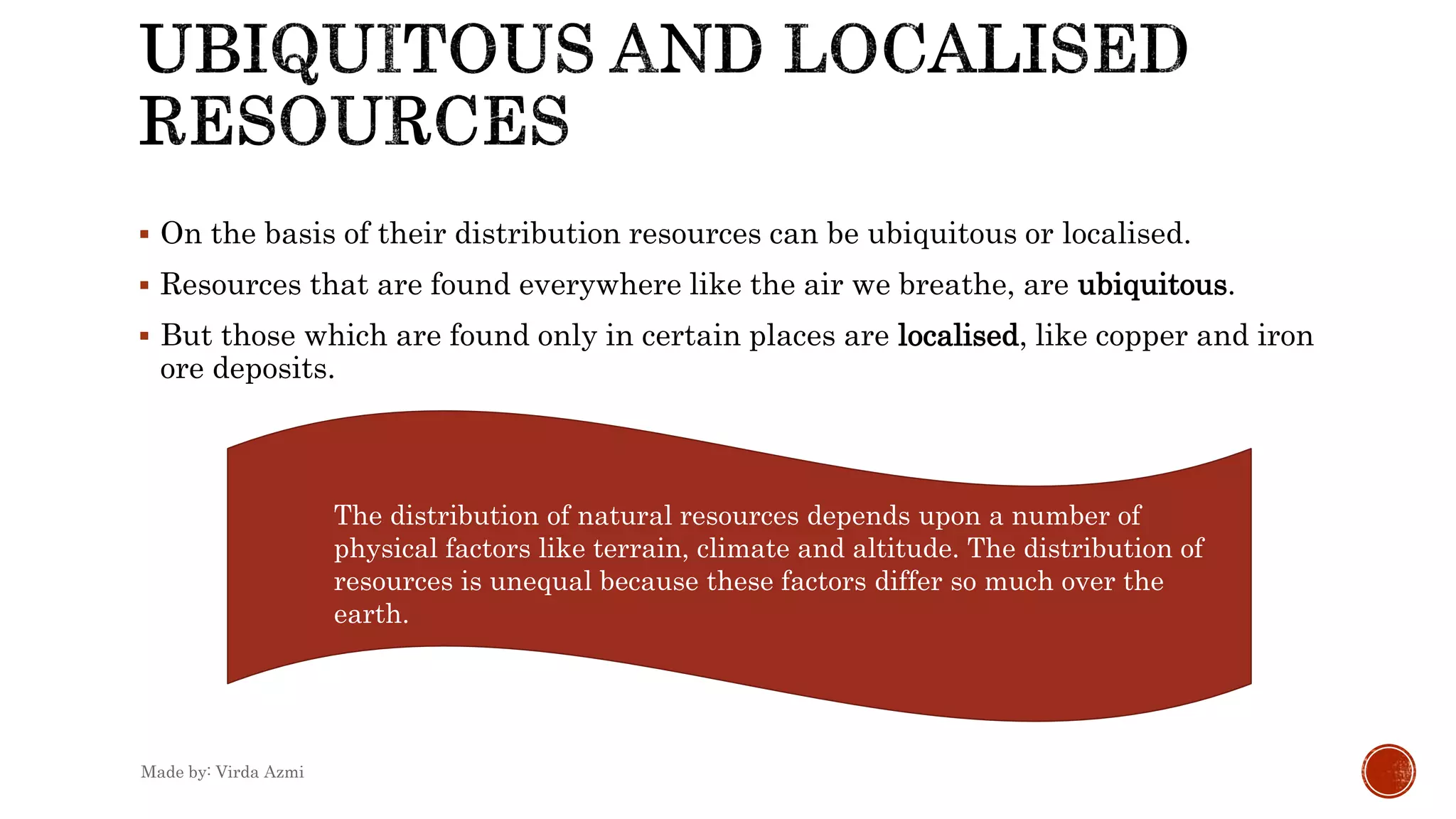
 On the basis of their distribution resources can be ubiquitous or localised.
 Resources that are found everywhere like the air we breathe, are ubiquitous.
 But those which are found only in certain places are localised, like copper and iron
ore deposits.
The distribution of natural resources depends upon a number of
physical factors like terrain, climate and altitude. The distribution of
resources is unequal because these factors differ so much over the
earth.
Made by: Virda Azmi
 People can make the best use of nature to create more resources when they have
the knowledge, skill and the technology to do so.
 This is why human beings are a special resource. People are human resources.
Education and health help in making people a valuable resource.
Improving the quality of people’s skills so that they are able to
create more resources is known as human resource development.
Made by: Virda Azmi
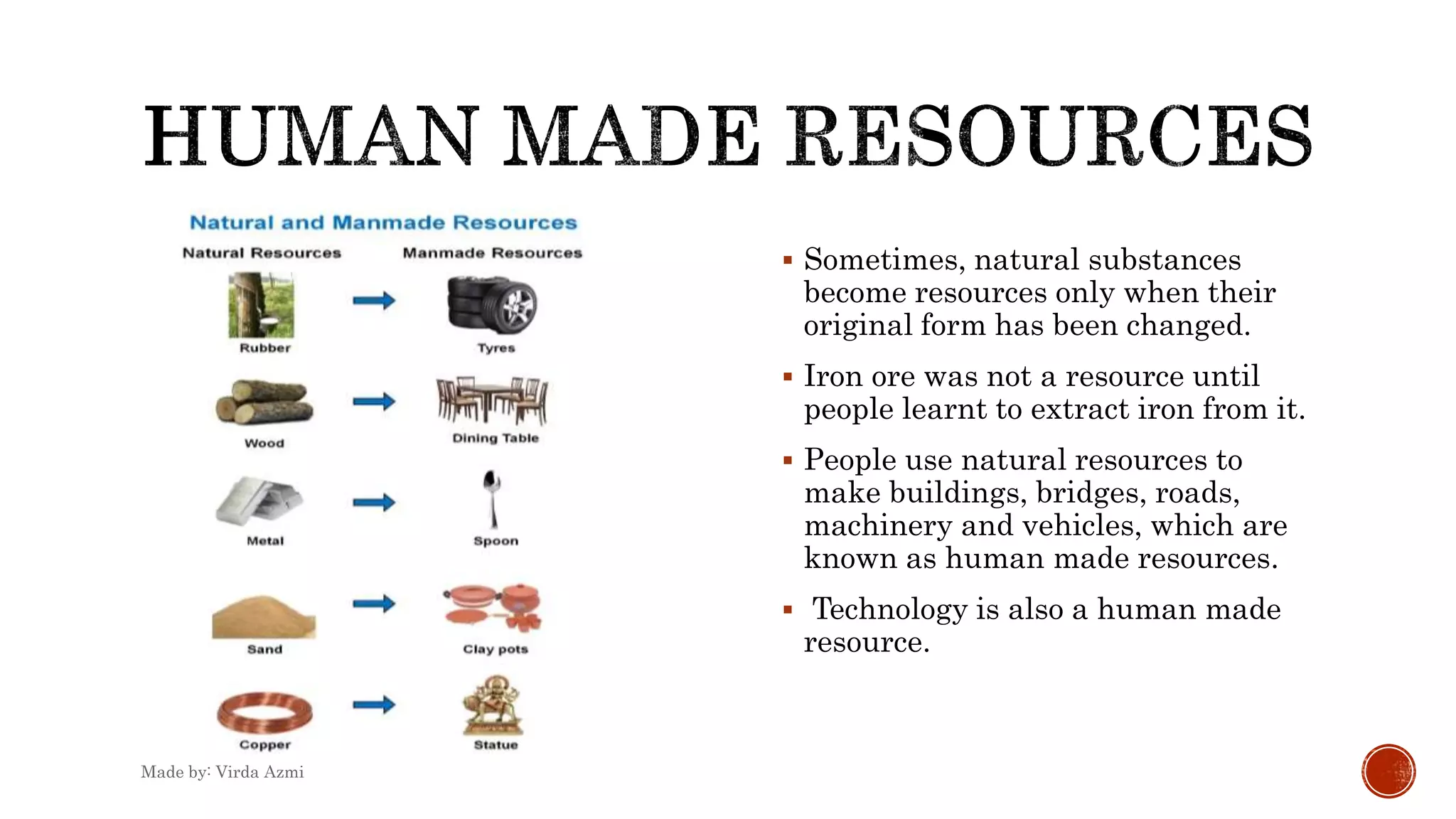
 Sometimes, natural substances
become resources only when their
original form has been changed.
 Iron ore was not a resource until
people learnt to extract iron from it.
 People use natural resources to
make buildings, bridges, roads,
machinery and vehicles, which are
known as human made resources.
 Technology is also a human made
resource.
Made by: Virda Azmi
 Using resources carefully and giving them time to get renewed is called resource
conservation.
 Balancing the need to use resources and also conserve them for the future is called
sustainable development.
 There are many ways of conserving resources. Each person can contribute by
reducing consumption, recycling and reusing thing. Ultimately it makes a
difference because all our lives are linked.
 The future of our planet and its people is linked with our ability to maintain and
preserve the life support system that nature provides. Therefore it is our duty to
ensure that:
 all uses of renewable resources are sustainable
 the diversity of life on the earth is conserved
 the damage to natural environmental system is minimised.
Made by: Virda Azmi
Made by: Virda Azmi
SUSTAINABLE
DEVELOPMENT
 Sustainable Development is carefully utilising resources so that besides meeting
the requirements of the present, we also takes care of needs of future
generations.
 To support and sustain our world we need to keep it as healthy as possible by
protecting and sustaining wildlife, plants, ecosystems and habitats because all
these things are connected and they each need each other for support. After all,
animals wouldn’t survive without the right habitat, and a habitat wouldn’t be
the same without the animals!
Made by: Virda Azmi
Made by: Virda Azmi
Some Principles of Sustainable Development:
•Respect and care for all forms of life
•Improve the quality of human life
•Conserve the earth’s vitality and diversity
•Minimize the depletion of natural resources
•Change personal attitude and practices toward the
environment
•Enable communities to care for their own
environment
Made by: Virda Azmi
THANKS FOR WATCHING!
Made by: Virda Azmi

Resources class8

  • 1.
    GEOGRAPHY, CH. 1 RESOURCES CLASS8TH Made by: Virda Azmi
  • 2.
     All thethings which fulfill our needs, whether it is food, fresh air, clothes, books, computer, internet connection, smartwatches etc. are called as Resources. They all have some utility (use).  So, Utility or usability makes an object or substance a resource.  Things become resources only when they have a value.  Its use or utility gives it a value. All resources have some value.  Value means worth.  Some resources have economic value, some do not.  For example, metals may have an economic value, a beautiful landscape may not. But both are important and satisfy human needs. Made by: Virda Azmi
  • 3.
     Time andtechnology are two important factors that can change substances into resources.  Both are related to the needs of the people.  People themselves are the most important resource.  Human ideas, knowledge, inventions and discoveries that lead to the creation of more resources. Each discovery or invention leads to many others. Discovery of Fire Cooking of food Discovery of Wheel Transportation Made by: Virda Azmi
  • 4.
  • 5.
    Resources that aredrawn from Nature and used without much modification are called natural resources. The air we breathe, the water in our rivers and lakes, the soils, minerals are all natural resources. Many of these resources are free gifts of nature and can be used directly. In some cases tools and technology may be needed to use a natural resource in the best possible way. Made by: Virda Azmi
  • 6.
    Natural Resorces Acc. to Origin Biotic Resources Abiotic Resources Acc. to Renewability Renewable Resources Non- Renewable Resources Acc.to Distribution Ubiquitous Resources Localised Resources Acc. to Development Potential Resources Actual Resources Made by: Virda Azmi
  • 7.
     Abiotic resourcesare non-living while biotic resources are living.  Soils, rocks and minerals are abiotic but plants and animals are biotic resources. Made by: Virda Azmi
  • 8.
     Renewable resourcesare those which get renewed or replenished quickly. Some of these are unlimited and are not affected by human activities, such as solar and wind energy.  Yet careless use of certain renewable resources like water, soil and forest can affect their stock. Water seems to be an unlimited renewable resource. But shortage and drying up of natural water sources is a major problem in many parts of the world today.  Non-renewable resources are those which have a limited stock. Once the stocks are exhausted it may take thousands of years to be renewed or replenished. Since this period is much more than human life spans, such resources are considered non-renewable. Coal, petroleum and natural gas are some examples. Made by: Virda Azmi
  • 9.
     On thebasis of their development and use resources can be classified into two groups, actual resources and potential resources.  Actual resources are those resources whose quantity is known.  These resources are being used in the present. The rich deposits of coal in Ruhr region of Germany and petroleum in the West Asia, the dark soils of the Deccan plateau in Maharashtra are all actual resources.  Potential resources are those whose entire quantity may not be known.  These are not being used at present. These resources could be used in the future.  The level of technology we have at present may not be advanced enough to easily utilise these resources. Made by: Virda Azmi
  • 10.
     On thebasis of their distribution resources can be ubiquitous or localised.  Resources that are found everywhere like the air we breathe, are ubiquitous.  But those which are found only in certain places are localised, like copper and iron ore deposits. The distribution of natural resources depends upon a number of physical factors like terrain, climate and altitude. The distribution of resources is unequal because these factors differ so much over the earth. Made by: Virda Azmi
  • 11.
     People canmake the best use of nature to create more resources when they have the knowledge, skill and the technology to do so.  This is why human beings are a special resource. People are human resources. Education and health help in making people a valuable resource. Improving the quality of people’s skills so that they are able to create more resources is known as human resource development. Made by: Virda Azmi
  • 12.
     Sometimes, naturalsubstances become resources only when their original form has been changed.  Iron ore was not a resource until people learnt to extract iron from it.  People use natural resources to make buildings, bridges, roads, machinery and vehicles, which are known as human made resources.  Technology is also a human made resource. Made by: Virda Azmi
  • 13.
     Using resourcescarefully and giving them time to get renewed is called resource conservation.  Balancing the need to use resources and also conserve them for the future is called sustainable development.  There are many ways of conserving resources. Each person can contribute by reducing consumption, recycling and reusing thing. Ultimately it makes a difference because all our lives are linked.  The future of our planet and its people is linked with our ability to maintain and preserve the life support system that nature provides. Therefore it is our duty to ensure that:  all uses of renewable resources are sustainable  the diversity of life on the earth is conserved  the damage to natural environmental system is minimised. Made by: Virda Azmi
  • 14.
  • 15.
    SUSTAINABLE DEVELOPMENT  Sustainable Developmentis carefully utilising resources so that besides meeting the requirements of the present, we also takes care of needs of future generations.  To support and sustain our world we need to keep it as healthy as possible by protecting and sustaining wildlife, plants, ecosystems and habitats because all these things are connected and they each need each other for support. After all, animals wouldn’t survive without the right habitat, and a habitat wouldn’t be the same without the animals! Made by: Virda Azmi
  • 16.
  • 17.
    Some Principles ofSustainable Development: •Respect and care for all forms of life •Improve the quality of human life •Conserve the earth’s vitality and diversity •Minimize the depletion of natural resources •Change personal attitude and practices toward the environment •Enable communities to care for their own environment Made by: Virda Azmi
  • 18.