Progestrogens and
Antiprogestrogens
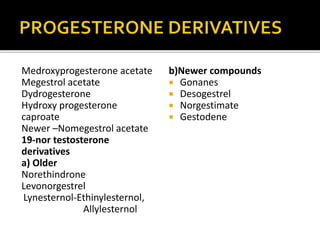
Medroxyprogesterone acetate
Megestrol acetate
Dydrogesterone
Hydroxy progesterone
caproate
Newer –Nomegestrol acetate
19-nor testosterone
derivatives
a) Older
Norethindrone
Levonorgestrel
Lynesternol-Ethinylesternol,
Allylesternol
b)Newer compounds
 Gonanes
 Desogestrel
 Norgestimate
 Gestodene
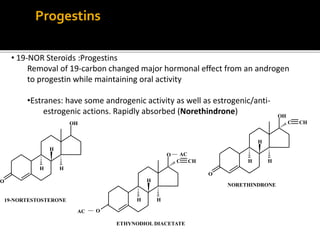
OH
O
HH
H
19-NORTESTOSTERONE
OH
C CH
O
HH
H
NORETHINDRONE
O
C CH
O
HH
H
ETHYNODIOL DIACETATE
AC
AC
Progestins
• 19-NOR Steroids :Progestins
Removal of 19-carbon changed major hormonal
effect from an androgen to progestin while
maintaining oral activity
•Estranes: have some androgenic activity as well as
estrogenic/anti- estrogenic actions. Rapidly
absorbed (Norethindrone)
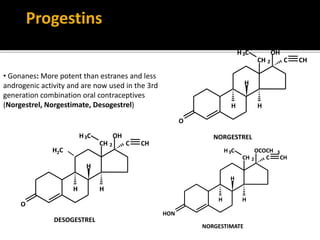
OH
CH 2 C CH
O
H3C
HH
H
DESOGESTREL
OCOCH3
CH2 C CH
HON
H3C
HH
H
NORGESTIMATE
OH
CH2 C CH
O
H3C
HH
H
NORGESTREL
H2C
• Gonanes: More potent than estranes and less androgenic
activity and are now used in the 3rd generation combination
oral contraceptives
(Norgestrel, Norgestimate, Desogestrel)
Progestins
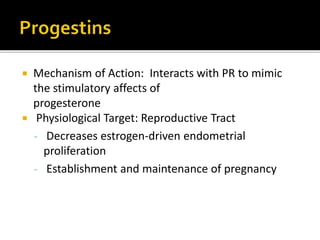
 Mechanism of Action: Interacts with PR to mimic
the stimulatory affects of progesterone
 Physiological Target: Reproductive Tract
- Decreases estrogen-driven endometrial
proliferation
- Establishment and maintenance of pregnancy
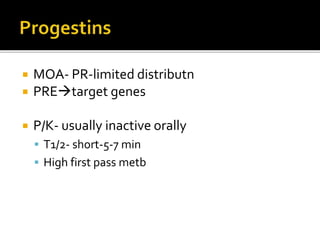
P/K- usually inactive orally
T1/2- short-5-7 min
High first pass metb
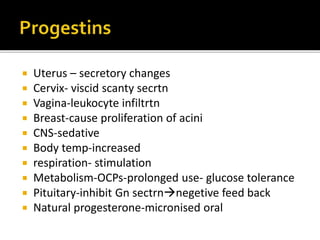
 Uterus – secretory changes
 Cervix- viscid scanty secrtn
 Vagina-leukocyte infiltrtn
 Breast-cause proliferation of acini
 CNS-sedative
 Body temp-increased
 respiration- stimulation
 Metabolism-OCPs-prolonged use- glucose tolerance
 Pituitary-inhibit Gn sectrn negetive feed back
 Natural progesterone-micronised oral
1. Oral contraceptives
2. HRT to limit estrogen’s effects on the endometrium
3. Uterine Bleeding disorders -DUB
4. Premature labor (decrease uterine contractions)
5. Stimulate Appetite in AIDS or cancer patients
6. Endometriosis-danazol(non-progestrogenic, non-
estrogenic, but exhibits hypoestrogenic,
hyperandrogenic, cause atropy of endometrium)
7. Premenstrual syndrome
8. Threatened abortion
9. Endometrial Carcinoma
 Mild-Nausea, mastalgia, breakthrough bleeding,
edema, headache
 Moderate-break through bleeding, weight gain, skin
pigmentation, hirsuitism, bacteruria, vaginal
infections and amenorrhoea
 Severe –venous thromboembolism, myocardial
infarction, cerebrovascular disease, GI disorders-
cholestatic jaundice, depression, cancer
Anti-Progesterones
Mifepristone (RU 486) PR agonist ,antagonist
Used in first trimester to terminate pregnancy (along
with prostaglandins to increase uterine contractions)
Post-coital contraceptive (prevent implantation)
Investigational: induction of labor after fetal death and
treatment of endometriosis.
Promotes shedding of endometrium, softening of the
cervix, and uterine contractions leading to spontaneous
abortion
Often used in conjunction with misoprostol
prostoglandin
12
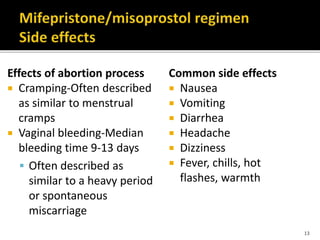
Effects of abortion process
 Cramping-Often described
as similar to menstrual
cramps
 Vaginal bleeding-Median
bleeding time 9-13 days
 Often described as
similar to a heavy period
or spontaneous
miscarriage
Common side effects
 Nausea
 Vomiting
 Diarrhea
 Headache
 Dizziness
 Fever, chills, hot
flashes, warmth
13
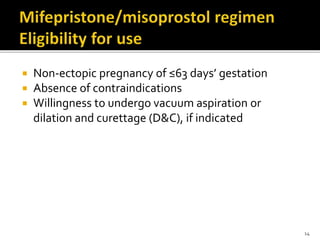
 Non-ectopic pregnancy of ≤63 days’ gestation
 Absence of contraindications
 Willingness to undergo vacuum aspiration or
dilation and curettage (D&C), if indicated
14
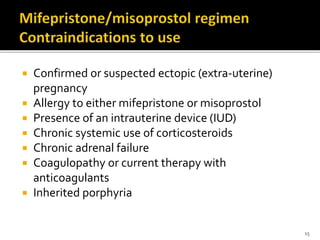
 Confirmed or suspected ectopic (extra-uterine)
pregnancy
 Allergy to either mifepristone or misoprostol
 Presence of an intrauterine device (IUD)
 Chronic systemic use of corticosteroids
 Chronic adrenal failure
 Coagulopathy or current therapy with
anticoagulants
 Inherited porphyria
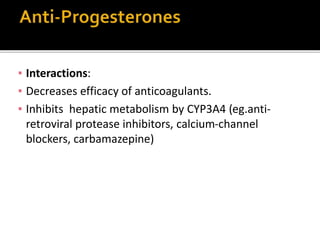
▪ Interactions:
▪ Decreases efficacy of anticoagulants.
▪ Inhibits hepatic metabolism by CYP3A4 (eg.anti-
retroviral protease inhibitors, calcium-channel
blockers, carbamazepine)
Class progestrogens and antiprogestrogens

Class progestrogens and antiprogestrogens

  • 1.
  • 3.
    Medroxyprogesterone acetate Megestrol acetate Dydrogesterone Hydroxyprogesterone caproate Newer –Nomegestrol acetate 19-nor testosterone derivatives a) Older Norethindrone Levonorgestrel Lynesternol-Ethinylesternol, Allylesternol b)Newer compounds  Gonanes  Desogestrel  Norgestimate  Gestodene
  • 4.
    OH O HH H 19-NORTESTOSTERONE OH C CH O HH H NORETHINDRONE O C CH O HH H ETHYNODIOLDIACETATE AC AC Progestins • 19-NOR Steroids :Progestins Removal of 19-carbon changed major hormonal effect from an androgen to progestin while maintaining oral activity •Estranes: have some androgenic activity as well as estrogenic/anti- estrogenic actions. Rapidly absorbed (Norethindrone)
  • 5.
    OH CH 2 CCH O H3C HH H DESOGESTREL OCOCH3 CH2 C CH HON H3C HH H NORGESTIMATE OH CH2 C CH O H3C HH H NORGESTREL H2C • Gonanes: More potent than estranes and less androgenic activity and are now used in the 3rd generation combination oral contraceptives (Norgestrel, Norgestimate, Desogestrel) Progestins
  • 6.
     Mechanism ofAction: Interacts with PR to mimic the stimulatory affects of progesterone  Physiological Target: Reproductive Tract - Decreases estrogen-driven endometrial proliferation - Establishment and maintenance of pregnancy P/K- usually inactive orally T1/2- short-5-7 min High first pass metb
  • 8.
     Uterus –secretory changes  Cervix- viscid scanty secrtn  Vagina-leukocyte infiltrtn  Breast-cause proliferation of acini  CNS-sedative  Body temp-increased  respiration- stimulation  Metabolism-OCPs-prolonged use- glucose tolerance  Pituitary-inhibit Gn sectrn negetive feed back  Natural progesterone-micronised oral
  • 9.
    1. Oral contraceptives 2.HRT to limit estrogen’s effects on the endometrium 3. Uterine Bleeding disorders -DUB 4. Premature labor (decrease uterine contractions) 5. Stimulate Appetite in AIDS or cancer patients 6. Endometriosis-danazol(non-progestrogenic, non- estrogenic, but exhibits hypoestrogenic, hyperandrogenic, cause atropy of endometrium) 7. Premenstrual syndrome 8. Threatened abortion 9. Endometrial Carcinoma
  • 10.
     Mild-Nausea, mastalgia,breakthrough bleeding, edema, headache  Moderate-break through bleeding, weight gain, skin pigmentation, hirsuitism, bacteruria, vaginal infections and amenorrhoea  Severe –venous thromboembolism, myocardial infarction, cerebrovascular disease, GI disorders- cholestatic jaundice, depression, cancer
  • 11.
    Anti-Progesterones Mifepristone (RU 486)PR agonist ,antagonist Used in first trimester to terminate pregnancy (along with prostaglandins to increase uterine contractions) Post-coital contraceptive (prevent implantation) Investigational: induction of labor after fetal death and treatment of endometriosis. Promotes shedding of endometrium, softening of the cervix, and uterine contractions leading to spontaneous abortion Often used in conjunction with misoprostol prostoglandin
  • 12.
    12 Effects of abortionprocess  Cramping-Often described as similar to menstrual cramps  Vaginal bleeding-Median bleeding time 9-13 days  Often described as similar to a heavy period or spontaneous miscarriage Common side effects  Nausea  Vomiting  Diarrhea  Headache  Dizziness  Fever, chills, hot flashes, warmth
  • 13.
    13  Non-ectopic pregnancyof ≤63 days’ gestation  Absence of contraindications  Willingness to undergo vacuum aspiration or dilation and curettage (D&C), if indicated
  • 14.
    14  Confirmed orsuspected ectopic (extra-uterine) pregnancy  Allergy to either mifepristone or misoprostol  Presence of an intrauterine device (IUD)  Chronic systemic use of corticosteroids  Chronic adrenal failure  Coagulopathy or current therapy with anticoagulants  Inherited porphyria
  • 15.
    ▪ Interactions: ▪ Decreasesefficacy of anticoagulants. ▪ Inhibits hepatic metabolism by CYP3A4 (eg.anti- retroviral protease inhibitors, calcium-channel blockers, carbamazepine)