Company
LOGO
Produced by:
Jess Dangatao Tamagos
Reporter
Kinds of hypothesis
.
.
Kinds of hypothesis
Kinds of hypothesis
Assumptions and conceptual models
Theories and theoretical framework
Applications on educational research
Null and alternative hypothesis
Kinds of hypothesis
Educated guess ( attributive, associative, causal)
Research hypothesis
Hypothesis, Questions, and Objective
Attributes of bivariate and univariate
Attributive, associative and causal
Kinds of hypothesis
.
Conceptual Models and theoretical framework
Theories in making a research hypothesis
Importance and application for 21st century learner’s
.
.
.
.
Company
LOGO
Kinds of Hypothesis
(Assumptions, Conceptual
models, theories and theoretical
framework)
JESS D. TAMAGOS
Reporter
Educ. 241 Methods for Educational Research
Kinds of hypothesis
OBJECTIVES:
1. Describe and define hypothesis
2. Justify the use of hypothesis
3. Classify hypothesis into various types
4. Explain relationships between variables
5. Differentiate assumptions from hypothesis
6. Make a Conceptual model
Hypothesis
Hypothesis - is considered intelligent
guess, or predictions that assist the
researcher in seeking the answer to the
research problem.
‘’What and Why’’
- It is a tentative explanation
- It suggest variable relationship
-derived from theory
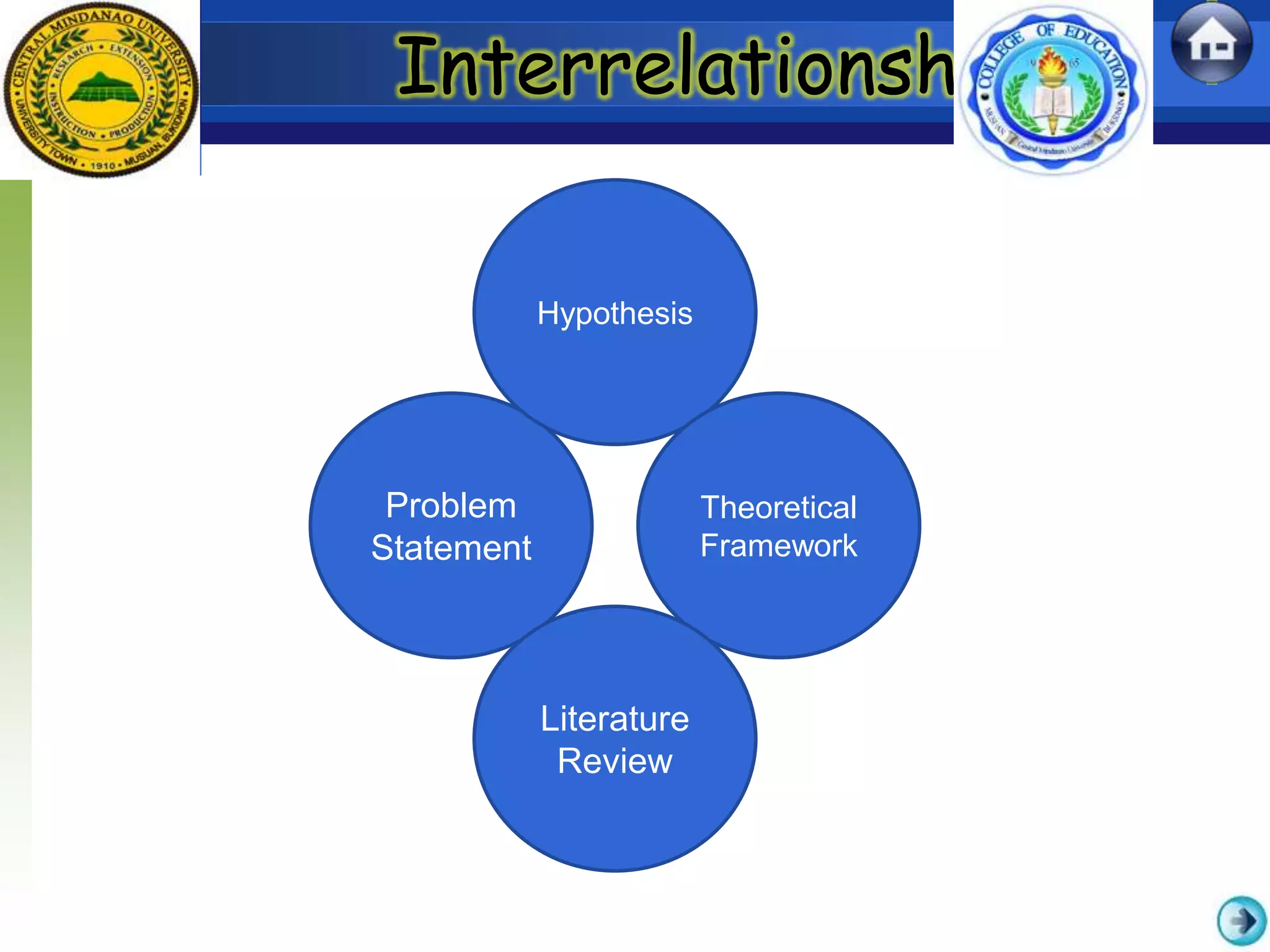
Interrelationship
Problem
Statement
Hypothesis
Theoretical
Framework
Literature
Review
Research hypothesis
Problem hypothesis
Empirical hypothesis
Substance hypothesis
Kinds of Hypothesis
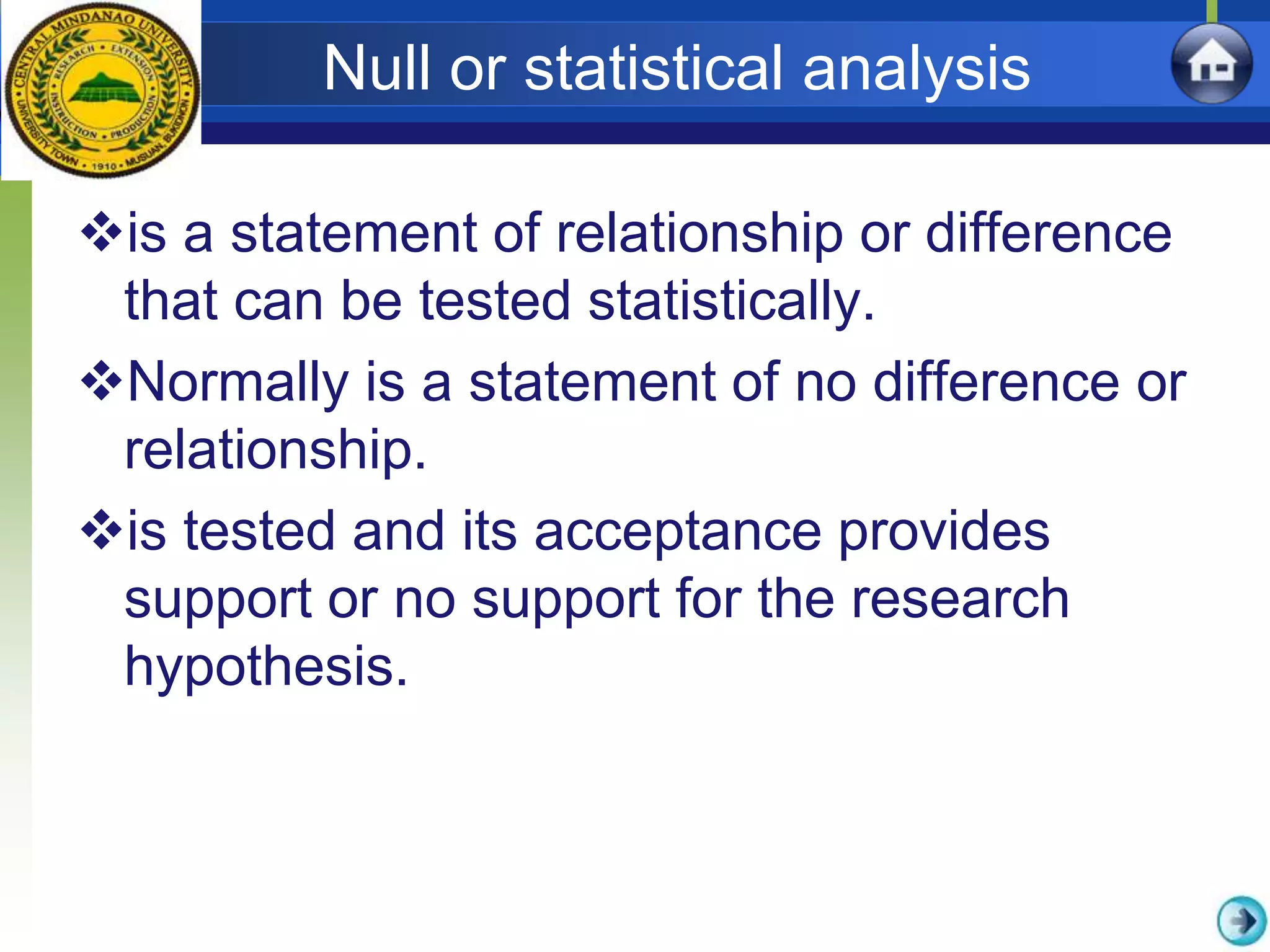
Null or statistical analysis
is a statement of relationship or difference
that can be tested statistically.
Normally is a statement of no difference or
relationship.
is tested and its acceptance provides
support or no support for the research
hypothesis.
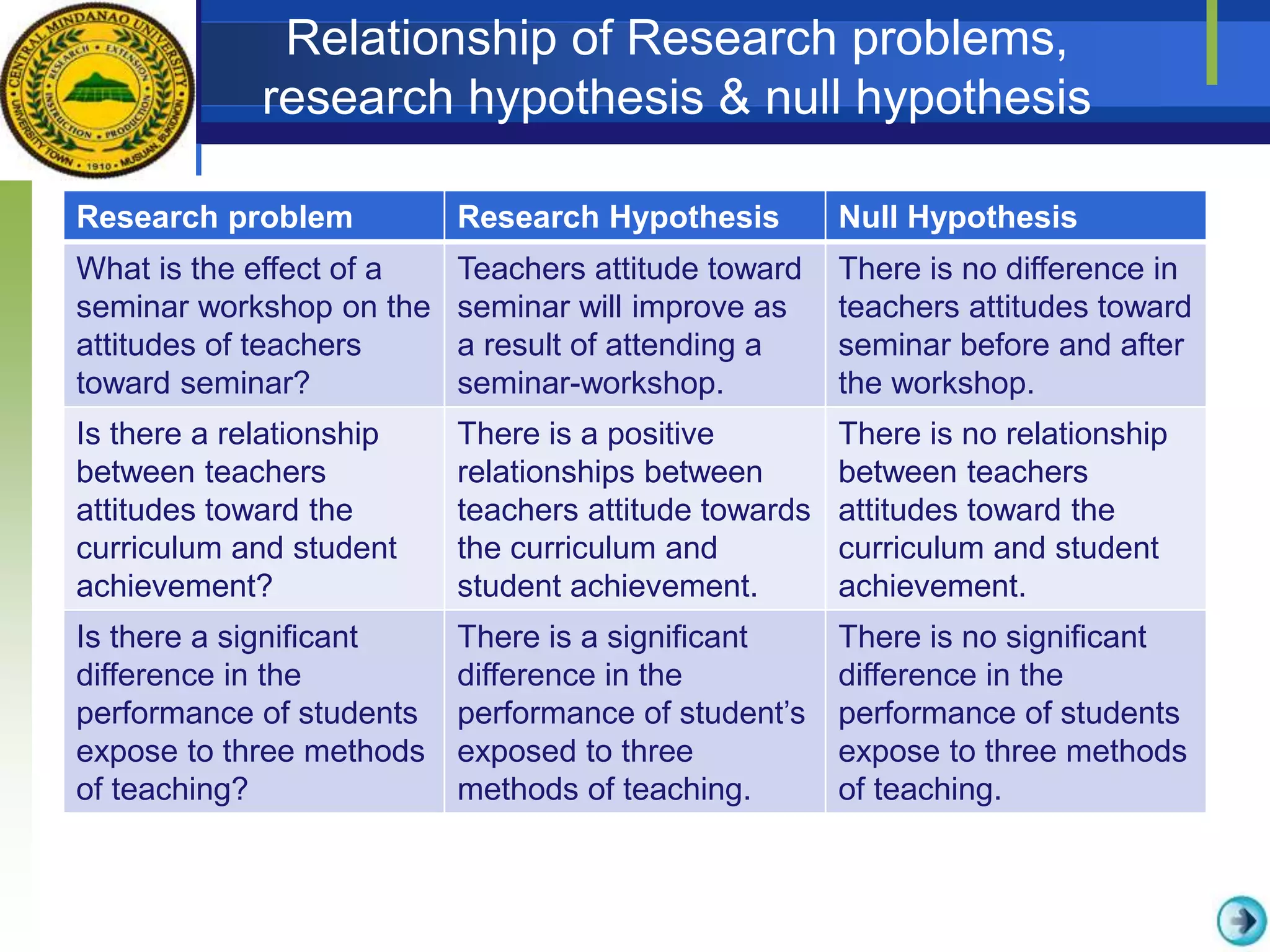
Relationship of Research problems,
research hypothesis & null hypothesis
Research problem Research Hypothesis Null Hypothesis
What is the effect of a
seminar workshop on the
attitudes of teachers
toward seminar?
Teachers attitude toward
seminar will improve as
a result of attending a
seminar-workshop.
There is no difference in
teachers attitudes toward
seminar before and after
the workshop.
Is there a relationship
between teachers
attitudes toward the
curriculum and student
achievement?
There is a positive
relationships between
teachers attitude towards
the curriculum and
student achievement.
There is no relationship
between teachers
attitudes toward the
curriculum and student
achievement.
Is there a significant
difference in the
performance of students
expose to three methods
of teaching?
There is a significant
difference in the
performance of student’s
exposed to three
methods of teaching.
There is no significant
difference in the
performance of students
expose to three methods
of teaching.
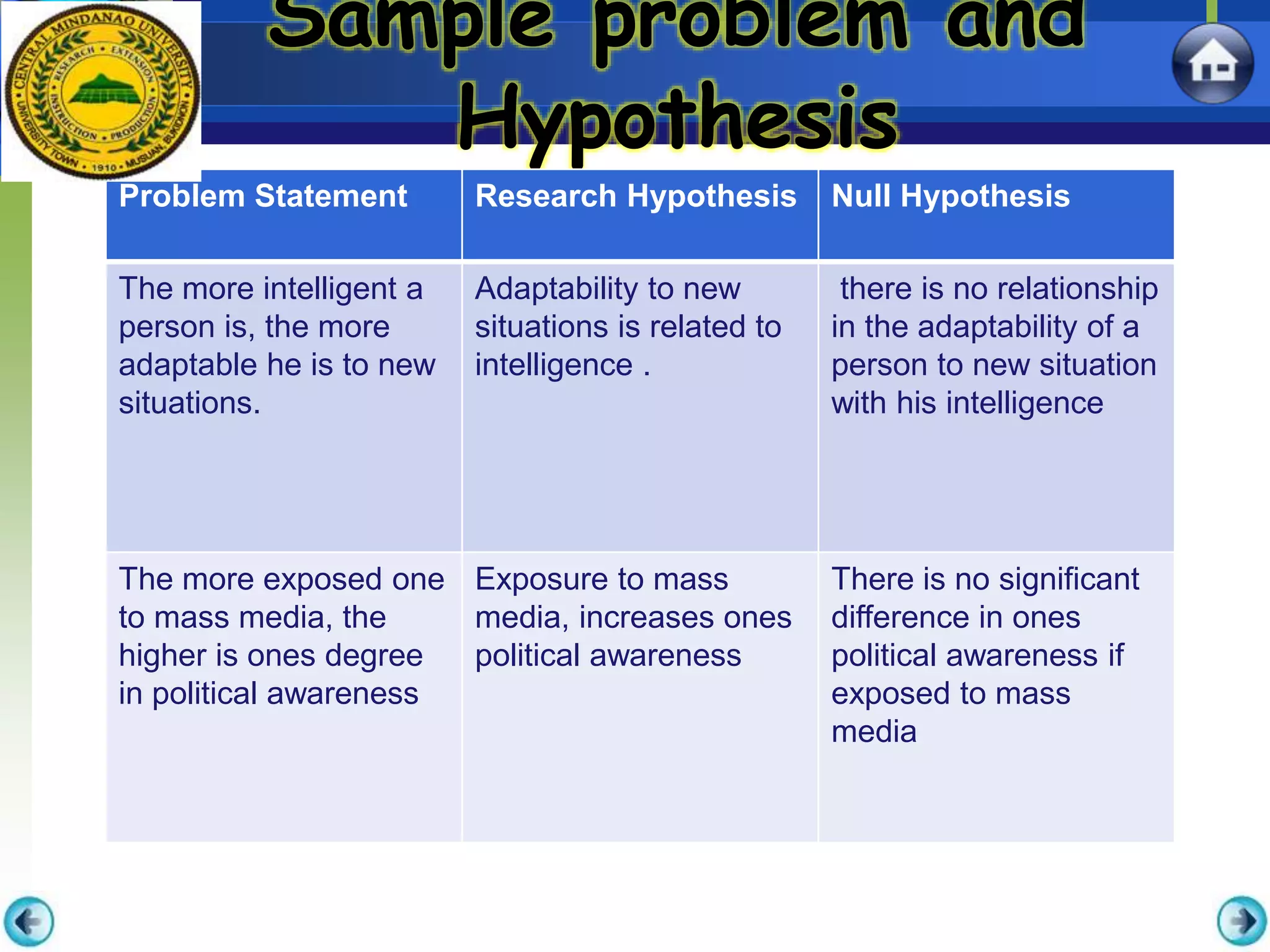
Sample problem and
Hypothesis
Problem Statement Research Hypothesis Null Hypothesis
The more intelligent a
person is, the more
adaptable he is to new
situations.
Adaptability to new
situations is related to
intelligence .
there is no relationship
in the adaptability of a
person to new situation
with his intelligence
The more exposed one
to mass media, the
higher is ones degree
in political awareness
Exposure to mass
media, increases ones
political awareness
There is no significant
difference in ones
political awareness if
exposed to mass
media
.
Assumptions
Are statements of what the researcher
believes to be facts but cannot verify.
Is an essential prerequisite to carrying out
some operation or a line of thinking.
It is an important “fact” presumed to be
true but not actually verified (Airasian & Gay,1996)
Assumptions are at the very base of
every research activity.
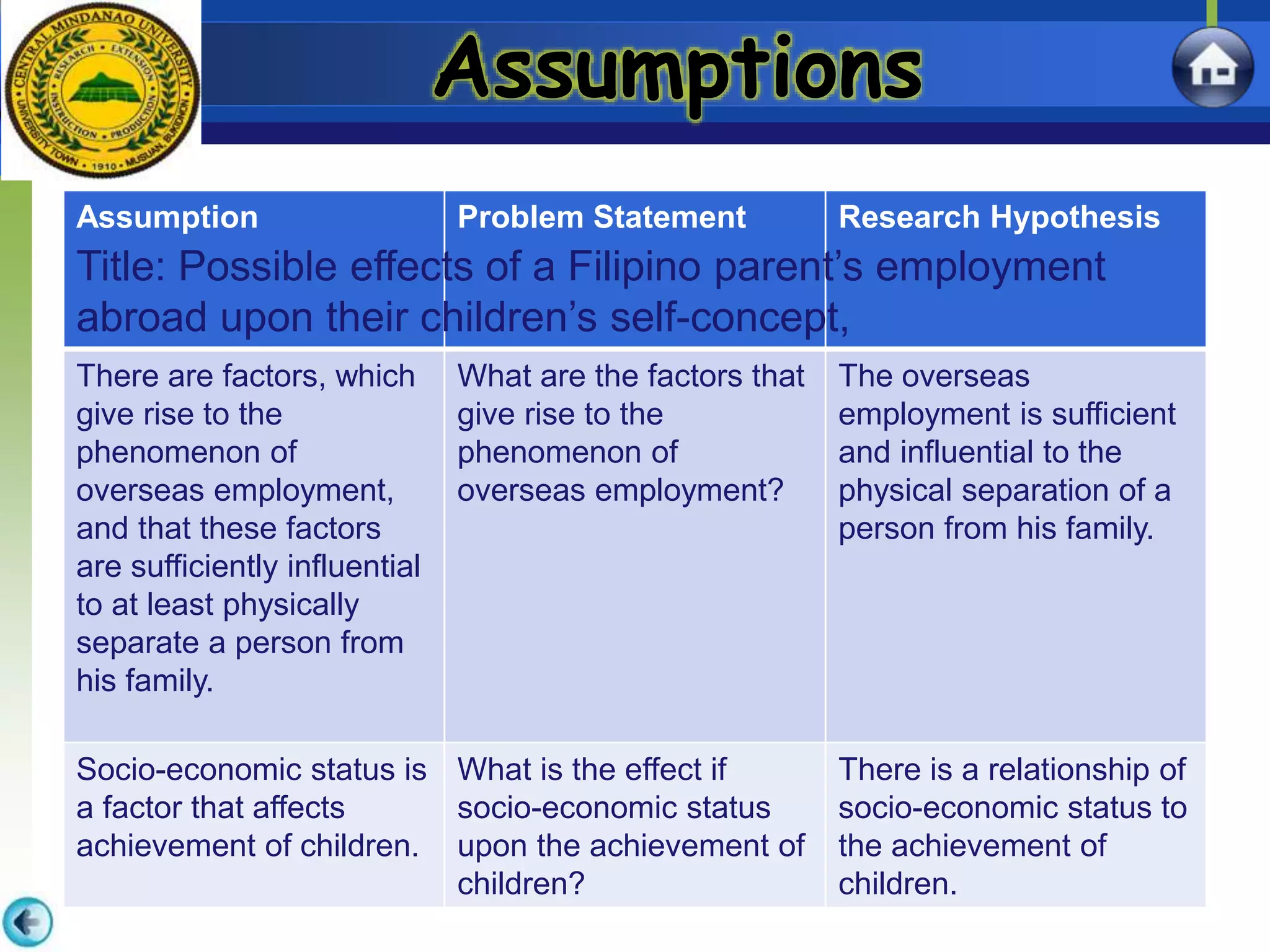
Assumptions
Assumption Problem Statement Research Hypothesis
There are factors, which
give rise to the
phenomenon of
overseas employment,
and that these factors
are sufficiently influential
to at least physically
separate a person from
his family.
What are the factors that
give rise to the
phenomenon of
overseas employment?
The overseas
employment is sufficient
and influential to the
physical separation of a
person from his family.
Socio-economic status is
a factor that affects
achievement of children.
What is the effect if
socio-economic status
upon the achievement of
children?
There is a relationship of
socio-economic status to
the achievement of
children.
Title: Possible effects of a Filipino parent’s employment
abroad upon their children’s self-concept,
Conceptual model,
Theories and
Framework-is a set of construct specified in such a way
that their formal co-sections are evident.
-Model is defined as a representation of a
system that is constructed to study some
aspects of that system or the whole system.
-However it is not limited to the physical
world.
Conceptual model,
- Also called Paradigms.
-are structures that help presents concepts
in such a way that researchers and other
people can gain useful insights into a
phenomenon.
- Explained by lines that link the boxes and
arrowheads.
Theoretical
Framework
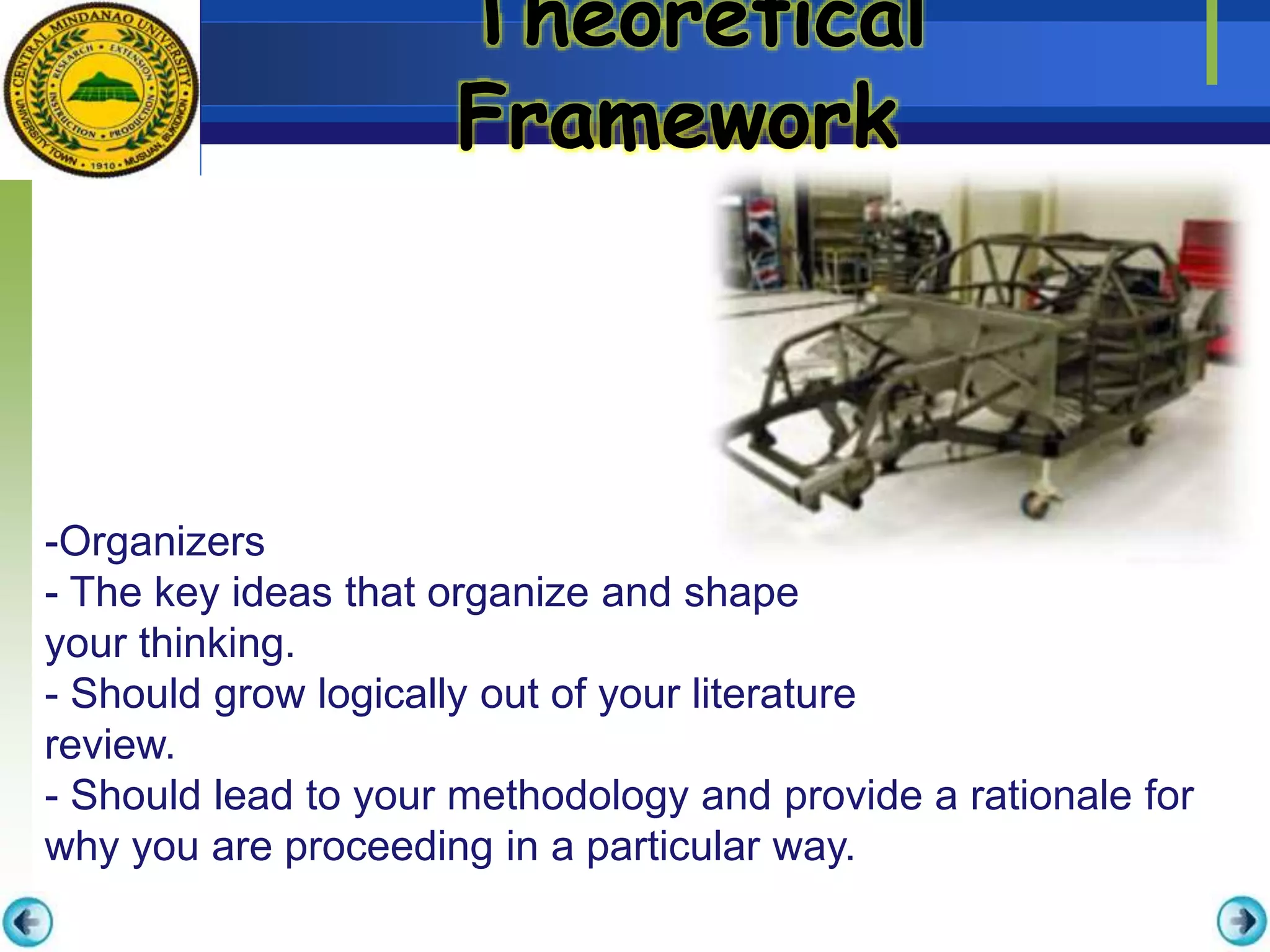
-Organizers
- The key ideas that organize and shape
your thinking.
- Should grow logically out of your literature
review.
- Should lead to your methodology and provide a rationale for
why you are proceeding in a particular way.
Theoretical
Framework
-Conceptual frameworks attempt to
connect to all aspects of inquiry. (e.g.,problem
definition, purpose, literature review, methodology, data
collection and analysis).
-Conceptual frameworks should act like
maps that give coherence to your inquiry.
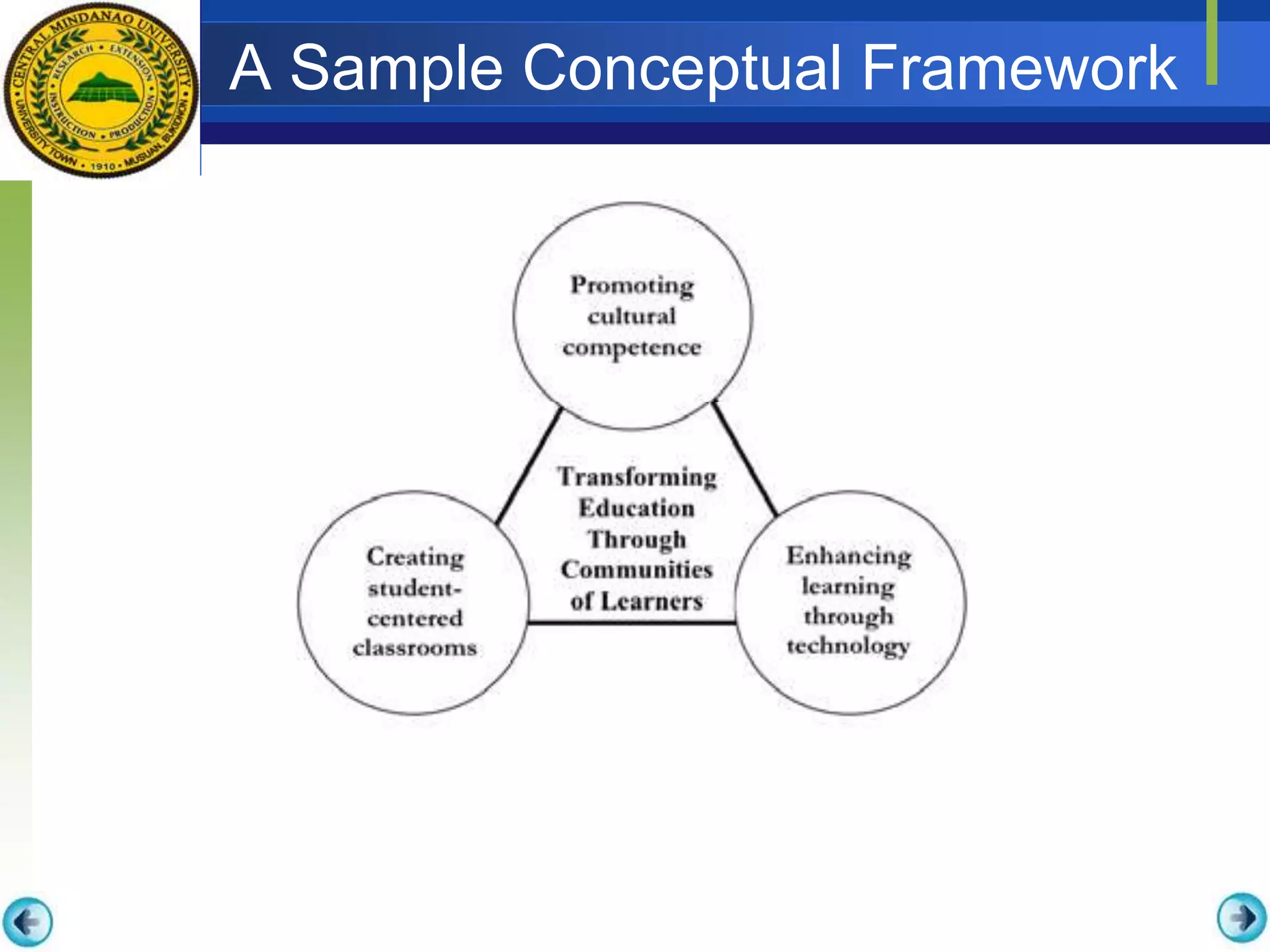
A Sample Conceptual Framework
.
THANK YOU
.
References
Prado, N.I. et al(2001).Research Methods
Prasad Shalini 1*, Ajith Rao2, and Eeshoo
Rehani3, Developing hypothesis and
research questions.(2001)
Sinclair, M. Editorial: A guide to
understanding theoretical and conceptual
frameworks. Evidence Based Midwifery
(2007)

Hypotheis, Conceptual Model and Theoretical framework. ppt

  • 1.
  • 2.
  • 4.
    . Kinds of hypothesis Kindsof hypothesis Assumptions and conceptual models Theories and theoretical framework Applications on educational research Null and alternative hypothesis Kinds of hypothesis Educated guess ( attributive, associative, causal) Research hypothesis Hypothesis, Questions, and Objective Attributes of bivariate and univariate Attributive, associative and causal Kinds of hypothesis . Conceptual Models and theoretical framework Theories in making a research hypothesis Importance and application for 21st century learner’s . . . .
  • 7.
    Company LOGO Kinds of Hypothesis (Assumptions,Conceptual models, theories and theoretical framework) JESS D. TAMAGOS Reporter Educ. 241 Methods for Educational Research
  • 8.
  • 9.
    OBJECTIVES: 1. Describe anddefine hypothesis 2. Justify the use of hypothesis 3. Classify hypothesis into various types 4. Explain relationships between variables 5. Differentiate assumptions from hypothesis 6. Make a Conceptual model
  • 10.
    Hypothesis Hypothesis - isconsidered intelligent guess, or predictions that assist the researcher in seeking the answer to the research problem. ‘’What and Why’’ - It is a tentative explanation - It suggest variable relationship -derived from theory
  • 11.
  • 12.
    Research hypothesis Problem hypothesis Empiricalhypothesis Substance hypothesis Kinds of Hypothesis
  • 13.
    Null or statisticalanalysis is a statement of relationship or difference that can be tested statistically. Normally is a statement of no difference or relationship. is tested and its acceptance provides support or no support for the research hypothesis.
  • 14.
    Relationship of Researchproblems, research hypothesis & null hypothesis Research problem Research Hypothesis Null Hypothesis What is the effect of a seminar workshop on the attitudes of teachers toward seminar? Teachers attitude toward seminar will improve as a result of attending a seminar-workshop. There is no difference in teachers attitudes toward seminar before and after the workshop. Is there a relationship between teachers attitudes toward the curriculum and student achievement? There is a positive relationships between teachers attitude towards the curriculum and student achievement. There is no relationship between teachers attitudes toward the curriculum and student achievement. Is there a significant difference in the performance of students expose to three methods of teaching? There is a significant difference in the performance of student’s exposed to three methods of teaching. There is no significant difference in the performance of students expose to three methods of teaching.
  • 15.
    Sample problem and Hypothesis ProblemStatement Research Hypothesis Null Hypothesis The more intelligent a person is, the more adaptable he is to new situations. Adaptability to new situations is related to intelligence . there is no relationship in the adaptability of a person to new situation with his intelligence The more exposed one to mass media, the higher is ones degree in political awareness Exposure to mass media, increases ones political awareness There is no significant difference in ones political awareness if exposed to mass media
  • 16.
    . Assumptions Are statements ofwhat the researcher believes to be facts but cannot verify. Is an essential prerequisite to carrying out some operation or a line of thinking. It is an important “fact” presumed to be true but not actually verified (Airasian & Gay,1996) Assumptions are at the very base of every research activity.
  • 17.
    Assumptions Assumption Problem StatementResearch Hypothesis There are factors, which give rise to the phenomenon of overseas employment, and that these factors are sufficiently influential to at least physically separate a person from his family. What are the factors that give rise to the phenomenon of overseas employment? The overseas employment is sufficient and influential to the physical separation of a person from his family. Socio-economic status is a factor that affects achievement of children. What is the effect if socio-economic status upon the achievement of children? There is a relationship of socio-economic status to the achievement of children. Title: Possible effects of a Filipino parent’s employment abroad upon their children’s self-concept,
  • 18.
    Conceptual model, Theories and Framework-isa set of construct specified in such a way that their formal co-sections are evident. -Model is defined as a representation of a system that is constructed to study some aspects of that system or the whole system. -However it is not limited to the physical world.
  • 19.
    Conceptual model, - Alsocalled Paradigms. -are structures that help presents concepts in such a way that researchers and other people can gain useful insights into a phenomenon. - Explained by lines that link the boxes and arrowheads.
  • 20.
    Theoretical Framework -Organizers - The keyideas that organize and shape your thinking. - Should grow logically out of your literature review. - Should lead to your methodology and provide a rationale for why you are proceeding in a particular way.
  • 21.
    Theoretical Framework -Conceptual frameworks attemptto connect to all aspects of inquiry. (e.g.,problem definition, purpose, literature review, methodology, data collection and analysis). -Conceptual frameworks should act like maps that give coherence to your inquiry.
  • 22.
  • 23.
  • 24.
    . References Prado, N.I. etal(2001).Research Methods Prasad Shalini 1*, Ajith Rao2, and Eeshoo Rehani3, Developing hypothesis and research questions.(2001) Sinclair, M. Editorial: A guide to understanding theoretical and conceptual frameworks. Evidence Based Midwifery (2007)