Dr Fahad Riaz
Lecturer CMS
FVS (UAF)
 Remarkable increase in body temperature
 Due to
 Excessive heat production / misbalancing of body
thermostat
 Absorption of environmental heat
 Deficient of heat loss
 Synonym : Heat Stroke
 Condition of tropic and sub-tropic areas
 Is purely environmental
 Metabolic condition
 Due to
 High temp and humidity
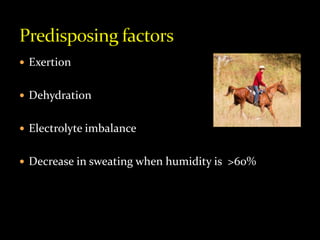
 Exertion
 Dehydration
 Electrolyte imbalance
 Decrease in sweating when humidity is >60%
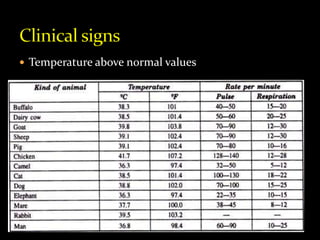
 Temperature above normal values
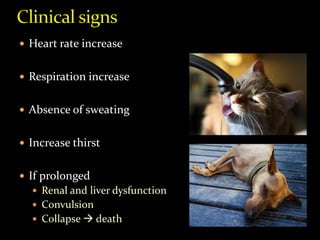
 Heart rate increase
 Respiration increase
 Absence of sweating
 Increase thirst
 If prolonged
 Renal and liver dysfunction
 Convulsion
 Collapse  death
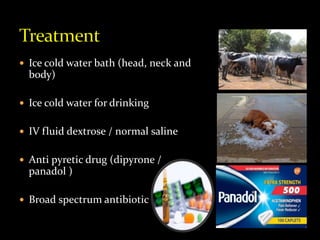
 Ice cold water bath (head, neck and
body)
 Ice cold water for drinking
 IV fluid dextrose / normal saline
 Anti pyretic drug (dipyrone /
panadol )
 Broad spectrum antibiotic
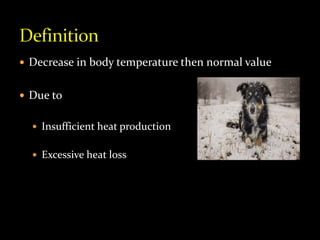
 Decrease in body temperature then normal value
 Due to
 Insufficient heat production
 Excessive heat loss
 Metabolic condition  decrease muscular activity
 Damage to thermoregulatory center
 Diarrhea
 Over sedation / anesthesia
 Sub-normal body temperature
 Cold skin and extremities
 Weak pulse / decrease heart rate
 Shallow breathing
 Lethargy
 terminal stage :- low cardiac output, decrease reflexes
, coma  death
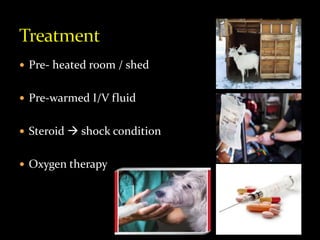
 Pre- heated room / shed
 Pre-warmed I/V fluid
 Steroid  shock condition
 Oxygen therapy
 Reduce effects of disease
 Taking medicine
 To kill the microbes
 Antibiotic / antiviral / antiprotozoal / antifungal
 To promote health
 To preserve health
 To restore health when its impaired
 To minimize suffering and distress
ANY QUESTION
?

Hyperthermia

  • 1.
  • 3.
     Remarkable increasein body temperature  Due to  Excessive heat production / misbalancing of body thermostat  Absorption of environmental heat  Deficient of heat loss  Synonym : Heat Stroke  Condition of tropic and sub-tropic areas
  • 4.
     Is purelyenvironmental  Metabolic condition  Due to  High temp and humidity
  • 5.
     Exertion  Dehydration Electrolyte imbalance  Decrease in sweating when humidity is >60%
  • 6.
     Temperature abovenormal values
  • 7.
     Heart rateincrease  Respiration increase  Absence of sweating  Increase thirst  If prolonged  Renal and liver dysfunction  Convulsion  Collapse  death
  • 8.
     Ice coldwater bath (head, neck and body)  Ice cold water for drinking  IV fluid dextrose / normal saline  Anti pyretic drug (dipyrone / panadol )  Broad spectrum antibiotic
  • 10.
     Decrease inbody temperature then normal value  Due to  Insufficient heat production  Excessive heat loss
  • 11.
     Metabolic condition decrease muscular activity  Damage to thermoregulatory center  Diarrhea  Over sedation / anesthesia
  • 12.
     Sub-normal bodytemperature  Cold skin and extremities  Weak pulse / decrease heart rate  Shallow breathing  Lethargy  terminal stage :- low cardiac output, decrease reflexes , coma  death
  • 13.
     Pre- heatedroom / shed  Pre-warmed I/V fluid  Steroid  shock condition  Oxygen therapy
  • 15.
     Reduce effectsof disease  Taking medicine  To kill the microbes  Antibiotic / antiviral / antiprotozoal / antifungal
  • 16.
     To promotehealth  To preserve health  To restore health when its impaired  To minimize suffering and distress
  • 17.