FEVER AND HYPERTHERMIA
Dr.G.VENKATA RAMANA
MBBS DNB FAMILY MEDICINE
DEFINITIONS
• FEVER
• Elevation in core body temperature that exceeds the normal daily
variation and occurs in conjunction with an increase in the hypothalamic
set point
• CHILL
• Sensation of cold
• RIGOR
• Profound chill with piloerection (goose flesh) associated with teeth
chattering and severe shivering
• Normal core body temperature in the range of 36.5–37.5°C (97.7–99.5°F)
• An a.m. oral temperature of >37.2°C (>98.9°F) or a p.m. temperature of
>37.7°C (>99.9°F) defines a fever
• However,in practice,a general threshold of Temp >37.8°C (100 °F) or
38°C(100.4 °F) is often used
• Normal daily temperature variation is typically 0.5°C (0.9°F)
• The normal body temperature is more towards the evening because of
increased BMR and increased skeletal muscle activity
• HYPERPYREXIA
• Fever >41.5°C (>106.7°F)
• Causes:
• Severe infections
• CNS hemorrhages
• HYPOTHALAMIC FEVER
• Elevated temperature caused by abnormal hypothalamic
function
• However, the majority of patients with hypothalamic damage
have hypothermia not hyperthermia
• HYPERTHERMIA
• Uncontrolled increase in body temperature that exceeds the
body's ability to lose heat
• The setting of the hypothalamic thermoregulatory center is
unchanged
• Newborns, elderly patients, patients with chronic liver or
kidney failure, and patients taking glucocorticoids, fever may
not be present despite infection.
• DRUG FEVER
• Fever that coincides with administration of a drug and disappears after
the discontinuation of the drug, when no other cause for the fever is
evident after a careful history, physical examination, and laboratory
investigation
• FACTITIOUS FEVER
• Usually encountered in hospitalised patients attempting to malinger
• The situation is usually suspected when:
• A series of high temperatures is recorded to form an atypical pattern of fl
uctuationthere is excessively high temperature (41.1°C) and above
• A recorded high temperature is unaccompanied by warm skin,
tachycardia and other signs of fever such as a fl ushed face and
sweating
• There is an absence of diurnal variation
• The patient may have surreptitiously dipped the thermometer in warm
water, placed it in contact with a heat source or heated the bulb by
friction with bedclothes or even mucous membranes of the mouth
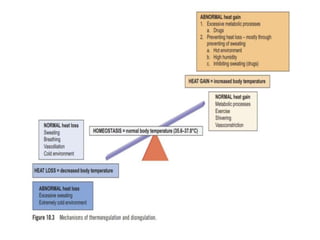
• Body temperature is controlled by the
hypothalamus
• Neurons in both the preoptic anterior
hypothalamus and the posterior hypothalamus
receive two kinds of signals: one from peripheral
nerves that transmit information from warmth/cold
receptors in the skin and the other from the
temperature of the blood bathing the region
• These two types of signals are integrated by the
thermoregulatory center of the hypothalamus to
maintain normal temperature
• Once the hypothalamic set point is raised, neurons in the
vasomotor center are activated and vasoconstriction
Commences in the hands and feet
• Shunting of blood away from the periphery to the internal
organs essentially decreases heat loss from the skin, and the
person feels cold (Heat conservation)
• For most this is sufficient to raise body temperature by 1–2°C
• Shivering, which increases heat production from the muscles,
may begin at this time; however, shivering is not required if
mechanisms of heat conservation raise blood temperature
sufficiently (Heat production)
• Nonshivering heat production from the liver also contributes to
increasing core temperature (Heat production)
• Behavioral adjustments (e.g., putting on more clothing or
bedding) help raise body temperature by decreasing heat loss
• The processes of heat conservation (vasoconstriction) and heat
production (shivering and increased nonshivering thermogenesis)
continue until the temperature of the blood bathing the hypothalamic
neurons matches the new “thermostat setting”
• Once that point is reached, the hypothalamus maintains the temperature
at the febrile level by the same mechanisms of heat balance that
function in the afebrile state
• When the hypothalamic set point is again reset downward (in response
to either a reduction in the concentration of pyrogens or the use of
antipyretics), the processes of heat loss through vasodilation and
sweating are initiated
• Loss of heat by sweating and vasodilation continues until the blood
temperature at the hypothalamic level matches the lower setting
• Behavioral changes (e.g., removal of clothing) facilitate heat loss
• FEVER WITH RELATIVE BRADYCARDIA
• Typhoid fever
• Meningitis
• Viral fever (Influenza)
• Brucellosis
• Leptospirosis
• Drug induced fever
• Factitious fever
• FEVER WITH EXANTHEMS
• Rash appearing on first day of fever—Chicken pox
• Rash appearing on fourth day of fever—Measles
• Rash appearing on seventh day of fever—Typhoid
• FEBRILE CONVULSIONS
• It occurs in infants and children less than 5 years old
• Convulsions are common at temperatures more than 40°C
• It may not be a sign of cerebral disease
• FEVER WITH RIGORS: This occurs in:
• Malaria
• Kala azar
• Filariasis
• Urinary tract infection, pyelonephritis
• Cholangitis
• Septicemia
• Infective endocarditis
• Abscesses,any site
• Lobar pneumonia
• FEVER WITH JAUNDICE
• Malaria
• Hepatitis
• Leptospirosis
• Viral fevers
• Hepatoma
• FEVER AND GENERALISED LYMPHADENOPATHY
• Leukemia
• Lymphoma
• HIV infection
• Disseminated tuberculosis
• Brucellosis
• Toxoplasmosis
• FEVER AND EPITROCHLEAR LYMPHNODES
• Milary TB
• Lymphoma
• HIV infection
• Syphilis
• Local infections
• FEVER WITH HEPATOSPLENOMEGALY
• Malaria
• Typhoid
• Lymphoma
• Leukemia
• Brucellosis
• Disseminated TB
• Infective endocarditis
• Kala azar
• FEVER WITH ALTERED SENSORIUM
• Meningitis
• Encephalitis
• Meningism-Typhoid
• HIV
• Brain abscess
• Brucellosis
• Sepsis
• CNS neoplasms
• FEVER AND NIGHT SWEATS
• TB
• Lymphoma
• Brucellosis
• Abscess
• Infective endocarditis
• Alcohol withdrawl syndrome
• FEVER WITH HIGH ESR
• TB
• Temporal arteritis
• Carcinoma
• Lymphomas
• Abscess
• Myeloproliferative disorder
TEMPERATURE MEASUREMENT
RECTAL TEMPERATURE
TYMPANIC TEMPERATURE
TYPES OF THERMOMETER
• Rectal temperatures are generally 0.4°C
(0.7°F) higher than oral readings
• In women who menstruate, the a.m.
temperature is generally lower during the 2
weeks before ovulation; it then rises by
~0.6°C (1°F) with ovulation and stays at
that level until menses occur
• During the luteal phase, the amplitude of
the circadian rhythm remains the same
• Body temperature can be elevated in the
postprandial state
HISTORY
• Onset
• Duration
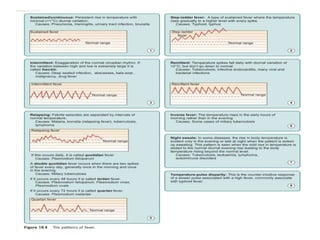
• Continuous/remittent/intermittent
• Any evening rise in temperature
• Associated with rash
• Chills/rigors
• Subsides on medication
• Associated symptoms
• cold/cough/headache/bodypains/sweating/
throat pain/vomiting/pain abdomen/
loose stools/ burning micturition
LABORATORY TESTS
• CBC/Peripheral smear
• MP
• Urine routine
• Dengue NS1 antigen
• Dengue IGM/IGG antibody
• LFT
• Lactate
• Blood culture
• Urine culture
• Weil felix
• Scrub typhus IGM/IGG antibody
• Brucella agglutination
• Leptospira IGM/IGG antibody
• HIV
• Sputum CBNAAT/Culture
MANAGEMENT OF FEVER
• Treatment of the cause
• Tepid sponging
• Anti pyretic agents
• Oral aspirin and NSAIDs effectively reduce fever but can
adversely affect platelets and the gastrointestinal tract.
Therefore, acetaminophen is preferred as an antipyretic.
• In children, acetaminophen or oral ibuprofen must be
used because aspirin increases the risk of Reye’s
syndrome.
• If the patient cannot take oral antipyretics, parenteral
preparations of NSAIDs and rectal suppositories of
various antipyretics can be used
• In hyperpyrexia, the use of cooling blankets facilitates the
reduction of temperature
• Mechanism of antipyretic agents
• Inhibitors of cyclooxygenase
• The synthesis of PGE2 depends on the constitutively
expressed enzyme cyclooxygenase
• The substrate for cyclooxygenase is arachidonic acid
released from the cell membrane
• Glucocorticoids act at two levels
• First, similar to the cyclooxygenase inhibitors,
glucocorticoids reduce PGE2 synthesis by inhibiting the
activity of phospholipase A2, which is needed to release
arachidonic acid from the cell membrane
• Second, glucocorticoids block the transcription of the
mRNA for the pyrogenic cytokines
Causes of Hyperthermia Syndromes
• Heat Stroke Exertional: Exercise in higher than normal heat and/or humidity
• Nonexertional: Anticholinergics, including antihistamines; antiparkinsonian
drugs; diuretics; phenothiazines
• Drug-Induced Hyperthermia Amphetamines, cocaine, phencyclidine (PCP),
methylenedioxymethamphetamine (MDMA; "ecstasy"), lysergic acid
diethylamide (LSD), salicylates, lithium, anticholinergics, sympathomimetics
• Neuroleptic Malignant Syndrome
• Phenothiazines; butyrophenones, including haloperidol and bromperidol;
fluoxetine; loxapine; tricyclic dibenzodiazepines; metoclopramide;
domperidone; thiothixene; molindone; withdrawal of dopaminergic agents
• Serotonin Syndrome
• Selective serotonin reuptake inhibitors (SSRIs), monoamine oxidase inhibitors
(MAOIs), tricyclic antidepressants
• Malignant Hyperthermia
• Inhalational anesthetics, succinylcholine
• Endocrinopathy
• Thyrotoxicosis, pheochromocytoma
• Central Nervous System Damage
• Cerebral hemorrhage, status epilepticus, hypothalamic injury
• Heat stroke
• Exertional heat stroke
• Typically occurs in individuals exercising at elevated
ambient temperatures and/or humidity.
• In a dry environment and at maximal efficiency, sweating
can dissipate 600 kcal/h, requiring the production of >1 L of
sweat.
• Even in healthy individuals, dehydration or the use of
common medications (e.g., over-the-counter
antihistamines with anticholinergic side effects) may
precipitate exertional heat stroke
• Nonexertional heat stroke
• Typically occurs in either very young or elderly individuals,
particularly during heat waves
• The elderly, the bedridden, persons taking anticholinergic
or antiparkinsonian drugs or diuretics, and individuals
confined to poorly ventilated and non-air-conditioned
environments are most susceptible
• The serotonin syndrome
• Seen with selective serotonin uptake inhibitors (SSRIs), MAOIs, and
other serotonergic medications, has many features that overlap
with those of the neuroleptic malignant syndrome (including
hyperthermia) but may be distinguished by the presence of
diarrhea, tremor, and myoclonus rather than lead-pipe rigidity
• Malignant hyperthermia
• Occurs in individuals with an inherited abnormality of skeletal-
muscle sarcoplasmic reticulum that causes a rapid increase in
intracellular calcium levels in response to halothane and other
inhalational anesthetics or to succinylcholine
• Elevated temperature, increased muscle metabolism, muscle
rigidity, rhabdomyolysis, acidosis, and cardiovascular instability
develop within minutes This rare condition is often fatal
• The neuroleptic malignant syndrome
• Occurs in the setting of the use of neuroleptic agents
(antipsychotic phenothiazines, haloperidol, prochlorperazine,
metoclopramide) or the withdrawal of dopaminergic drugs and is
characterized by "lead-pipe" muscle rigidity, extrapyramidal side
effects, autonomic dysregulation, and hyperthermia
• This disorder appears to be caused by the inhibition of central
dopamine receptors in the hypothalamus, which results in
increased heat generation and decreased heat dissipation
Treatment of hyperthermia
• Physical cooling
• with sponging, fans, cooling blankets, and even ice baths
should be initiated immediately in conjunction with the
administration of IV fluids and appropriate pharmacologic
agents
• If sufficient cooling is not achieved by external means,
internal cooling can be achieved by gastric or peritoneal lavage
with iced saline
• In extreme circumstances, hemodialysis or even
cardiopulmonary bypass with cooling of blood may be
performed
• Malignant hyperthermia should be treated immediately with
cessation of anesthesia and IV administration of dantrolene
sodium
• Dose 1–2.5 mg/kg given intravenously every 6 h for at least
24–48 h until oral dantrolene can be administered, if needed
• Dantrolene at similar doses is indicated in the neuroleptic
malignant syndrome and in drug-induced hyperthermia and may
even be useful in the hyperthermia of the serotonin syndrome
and thyrotoxicosis.
• The neuroleptic malignant syndrome also may be treated with
bromocriptine, levodopa, amantadine, or nifedipine or by
induction of muscle paralysis with curare and pancuronium.
• Tricyclic antidepressant overdose may be treated with
physostigmine

fever ppt.pptx

  • 1.
    FEVER AND HYPERTHERMIA Dr.G.VENKATARAMANA MBBS DNB FAMILY MEDICINE
  • 2.
    DEFINITIONS • FEVER • Elevationin core body temperature that exceeds the normal daily variation and occurs in conjunction with an increase in the hypothalamic set point • CHILL • Sensation of cold • RIGOR • Profound chill with piloerection (goose flesh) associated with teeth chattering and severe shivering • Normal core body temperature in the range of 36.5–37.5°C (97.7–99.5°F) • An a.m. oral temperature of >37.2°C (>98.9°F) or a p.m. temperature of >37.7°C (>99.9°F) defines a fever • However,in practice,a general threshold of Temp >37.8°C (100 °F) or 38°C(100.4 °F) is often used • Normal daily temperature variation is typically 0.5°C (0.9°F) • The normal body temperature is more towards the evening because of increased BMR and increased skeletal muscle activity
  • 3.
    • HYPERPYREXIA • Fever>41.5°C (>106.7°F) • Causes: • Severe infections • CNS hemorrhages • HYPOTHALAMIC FEVER • Elevated temperature caused by abnormal hypothalamic function • However, the majority of patients with hypothalamic damage have hypothermia not hyperthermia • HYPERTHERMIA • Uncontrolled increase in body temperature that exceeds the body's ability to lose heat • The setting of the hypothalamic thermoregulatory center is unchanged • Newborns, elderly patients, patients with chronic liver or kidney failure, and patients taking glucocorticoids, fever may not be present despite infection.
  • 4.
    • DRUG FEVER •Fever that coincides with administration of a drug and disappears after the discontinuation of the drug, when no other cause for the fever is evident after a careful history, physical examination, and laboratory investigation • FACTITIOUS FEVER • Usually encountered in hospitalised patients attempting to malinger • The situation is usually suspected when: • A series of high temperatures is recorded to form an atypical pattern of fl uctuationthere is excessively high temperature (41.1°C) and above • A recorded high temperature is unaccompanied by warm skin, tachycardia and other signs of fever such as a fl ushed face and sweating • There is an absence of diurnal variation • The patient may have surreptitiously dipped the thermometer in warm water, placed it in contact with a heat source or heated the bulb by friction with bedclothes or even mucous membranes of the mouth
  • 7.
    • Body temperatureis controlled by the hypothalamus • Neurons in both the preoptic anterior hypothalamus and the posterior hypothalamus receive two kinds of signals: one from peripheral nerves that transmit information from warmth/cold receptors in the skin and the other from the temperature of the blood bathing the region • These two types of signals are integrated by the thermoregulatory center of the hypothalamus to maintain normal temperature
  • 8.
    • Once thehypothalamic set point is raised, neurons in the vasomotor center are activated and vasoconstriction Commences in the hands and feet • Shunting of blood away from the periphery to the internal organs essentially decreases heat loss from the skin, and the person feels cold (Heat conservation) • For most this is sufficient to raise body temperature by 1–2°C • Shivering, which increases heat production from the muscles, may begin at this time; however, shivering is not required if mechanisms of heat conservation raise blood temperature sufficiently (Heat production) • Nonshivering heat production from the liver also contributes to increasing core temperature (Heat production) • Behavioral adjustments (e.g., putting on more clothing or bedding) help raise body temperature by decreasing heat loss
  • 9.
    • The processesof heat conservation (vasoconstriction) and heat production (shivering and increased nonshivering thermogenesis) continue until the temperature of the blood bathing the hypothalamic neurons matches the new “thermostat setting” • Once that point is reached, the hypothalamus maintains the temperature at the febrile level by the same mechanisms of heat balance that function in the afebrile state • When the hypothalamic set point is again reset downward (in response to either a reduction in the concentration of pyrogens or the use of antipyretics), the processes of heat loss through vasodilation and sweating are initiated • Loss of heat by sweating and vasodilation continues until the blood temperature at the hypothalamic level matches the lower setting • Behavioral changes (e.g., removal of clothing) facilitate heat loss
  • 14.
    • FEVER WITHRELATIVE BRADYCARDIA • Typhoid fever • Meningitis • Viral fever (Influenza) • Brucellosis • Leptospirosis • Drug induced fever • Factitious fever • FEVER WITH EXANTHEMS • Rash appearing on first day of fever—Chicken pox • Rash appearing on fourth day of fever—Measles • Rash appearing on seventh day of fever—Typhoid • FEBRILE CONVULSIONS • It occurs in infants and children less than 5 years old • Convulsions are common at temperatures more than 40°C • It may not be a sign of cerebral disease
  • 15.
    • FEVER WITHRIGORS: This occurs in: • Malaria • Kala azar • Filariasis • Urinary tract infection, pyelonephritis • Cholangitis • Septicemia • Infective endocarditis • Abscesses,any site • Lobar pneumonia
  • 16.
    • FEVER WITHJAUNDICE • Malaria • Hepatitis • Leptospirosis • Viral fevers • Hepatoma • FEVER AND GENERALISED LYMPHADENOPATHY • Leukemia • Lymphoma • HIV infection • Disseminated tuberculosis • Brucellosis • Toxoplasmosis • FEVER AND EPITROCHLEAR LYMPHNODES • Milary TB • Lymphoma • HIV infection • Syphilis • Local infections
  • 17.
    • FEVER WITHHEPATOSPLENOMEGALY • Malaria • Typhoid • Lymphoma • Leukemia • Brucellosis • Disseminated TB • Infective endocarditis • Kala azar • FEVER WITH ALTERED SENSORIUM • Meningitis • Encephalitis • Meningism-Typhoid • HIV • Brain abscess • Brucellosis • Sepsis • CNS neoplasms
  • 18.
    • FEVER ANDNIGHT SWEATS • TB • Lymphoma • Brucellosis • Abscess • Infective endocarditis • Alcohol withdrawl syndrome • FEVER WITH HIGH ESR • TB • Temporal arteritis • Carcinoma • Lymphomas • Abscess • Myeloproliferative disorder
  • 19.
  • 20.
  • 21.
  • 22.
    • Rectal temperaturesare generally 0.4°C (0.7°F) higher than oral readings • In women who menstruate, the a.m. temperature is generally lower during the 2 weeks before ovulation; it then rises by ~0.6°C (1°F) with ovulation and stays at that level until menses occur • During the luteal phase, the amplitude of the circadian rhythm remains the same • Body temperature can be elevated in the postprandial state
  • 23.
    HISTORY • Onset • Duration •Continuous/remittent/intermittent • Any evening rise in temperature • Associated with rash • Chills/rigors • Subsides on medication • Associated symptoms • cold/cough/headache/bodypains/sweating/ throat pain/vomiting/pain abdomen/ loose stools/ burning micturition
  • 25.
    LABORATORY TESTS • CBC/Peripheralsmear • MP • Urine routine • Dengue NS1 antigen • Dengue IGM/IGG antibody • LFT • Lactate • Blood culture • Urine culture • Weil felix • Scrub typhus IGM/IGG antibody • Brucella agglutination • Leptospira IGM/IGG antibody • HIV • Sputum CBNAAT/Culture
  • 28.
    MANAGEMENT OF FEVER •Treatment of the cause • Tepid sponging • Anti pyretic agents • Oral aspirin and NSAIDs effectively reduce fever but can adversely affect platelets and the gastrointestinal tract. Therefore, acetaminophen is preferred as an antipyretic. • In children, acetaminophen or oral ibuprofen must be used because aspirin increases the risk of Reye’s syndrome. • If the patient cannot take oral antipyretics, parenteral preparations of NSAIDs and rectal suppositories of various antipyretics can be used • In hyperpyrexia, the use of cooling blankets facilitates the reduction of temperature
  • 29.
    • Mechanism ofantipyretic agents • Inhibitors of cyclooxygenase • The synthesis of PGE2 depends on the constitutively expressed enzyme cyclooxygenase • The substrate for cyclooxygenase is arachidonic acid released from the cell membrane • Glucocorticoids act at two levels • First, similar to the cyclooxygenase inhibitors, glucocorticoids reduce PGE2 synthesis by inhibiting the activity of phospholipase A2, which is needed to release arachidonic acid from the cell membrane • Second, glucocorticoids block the transcription of the mRNA for the pyrogenic cytokines
  • 31.
    Causes of HyperthermiaSyndromes • Heat Stroke Exertional: Exercise in higher than normal heat and/or humidity • Nonexertional: Anticholinergics, including antihistamines; antiparkinsonian drugs; diuretics; phenothiazines • Drug-Induced Hyperthermia Amphetamines, cocaine, phencyclidine (PCP), methylenedioxymethamphetamine (MDMA; "ecstasy"), lysergic acid diethylamide (LSD), salicylates, lithium, anticholinergics, sympathomimetics • Neuroleptic Malignant Syndrome • Phenothiazines; butyrophenones, including haloperidol and bromperidol; fluoxetine; loxapine; tricyclic dibenzodiazepines; metoclopramide; domperidone; thiothixene; molindone; withdrawal of dopaminergic agents • Serotonin Syndrome • Selective serotonin reuptake inhibitors (SSRIs), monoamine oxidase inhibitors (MAOIs), tricyclic antidepressants • Malignant Hyperthermia • Inhalational anesthetics, succinylcholine • Endocrinopathy • Thyrotoxicosis, pheochromocytoma • Central Nervous System Damage • Cerebral hemorrhage, status epilepticus, hypothalamic injury
  • 32.
    • Heat stroke •Exertional heat stroke • Typically occurs in individuals exercising at elevated ambient temperatures and/or humidity. • In a dry environment and at maximal efficiency, sweating can dissipate 600 kcal/h, requiring the production of >1 L of sweat. • Even in healthy individuals, dehydration or the use of common medications (e.g., over-the-counter antihistamines with anticholinergic side effects) may precipitate exertional heat stroke • Nonexertional heat stroke • Typically occurs in either very young or elderly individuals, particularly during heat waves • The elderly, the bedridden, persons taking anticholinergic or antiparkinsonian drugs or diuretics, and individuals confined to poorly ventilated and non-air-conditioned environments are most susceptible
  • 33.
    • The serotoninsyndrome • Seen with selective serotonin uptake inhibitors (SSRIs), MAOIs, and other serotonergic medications, has many features that overlap with those of the neuroleptic malignant syndrome (including hyperthermia) but may be distinguished by the presence of diarrhea, tremor, and myoclonus rather than lead-pipe rigidity • Malignant hyperthermia • Occurs in individuals with an inherited abnormality of skeletal- muscle sarcoplasmic reticulum that causes a rapid increase in intracellular calcium levels in response to halothane and other inhalational anesthetics or to succinylcholine • Elevated temperature, increased muscle metabolism, muscle rigidity, rhabdomyolysis, acidosis, and cardiovascular instability develop within minutes This rare condition is often fatal
  • 34.
    • The neurolepticmalignant syndrome • Occurs in the setting of the use of neuroleptic agents (antipsychotic phenothiazines, haloperidol, prochlorperazine, metoclopramide) or the withdrawal of dopaminergic drugs and is characterized by "lead-pipe" muscle rigidity, extrapyramidal side effects, autonomic dysregulation, and hyperthermia • This disorder appears to be caused by the inhibition of central dopamine receptors in the hypothalamus, which results in increased heat generation and decreased heat dissipation
  • 35.
    Treatment of hyperthermia •Physical cooling • with sponging, fans, cooling blankets, and even ice baths should be initiated immediately in conjunction with the administration of IV fluids and appropriate pharmacologic agents • If sufficient cooling is not achieved by external means, internal cooling can be achieved by gastric or peritoneal lavage with iced saline • In extreme circumstances, hemodialysis or even cardiopulmonary bypass with cooling of blood may be performed • Malignant hyperthermia should be treated immediately with cessation of anesthesia and IV administration of dantrolene sodium • Dose 1–2.5 mg/kg given intravenously every 6 h for at least 24–48 h until oral dantrolene can be administered, if needed
  • 36.
    • Dantrolene atsimilar doses is indicated in the neuroleptic malignant syndrome and in drug-induced hyperthermia and may even be useful in the hyperthermia of the serotonin syndrome and thyrotoxicosis. • The neuroleptic malignant syndrome also may be treated with bromocriptine, levodopa, amantadine, or nifedipine or by induction of muscle paralysis with curare and pancuronium. • Tricyclic antidepressant overdose may be treated with physostigmine