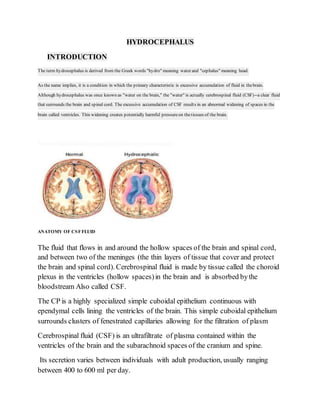
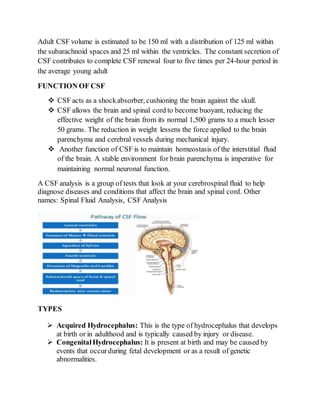
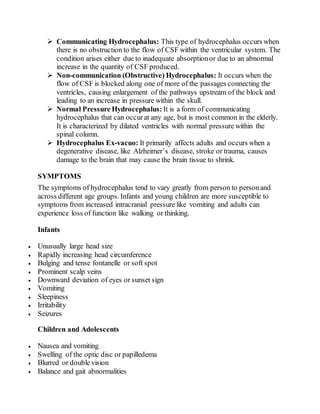
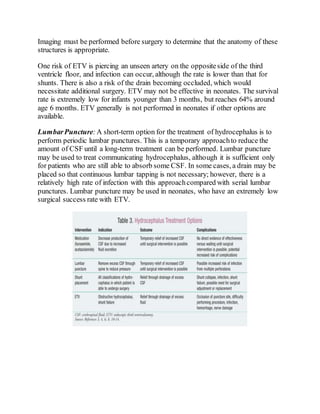
Hydrocephalus is a condition where excess cerebrospinal fluid accumulates in the brain, causing increased intracranial pressure. It results from an imbalance between the production and absorption of cerebrospinal fluid, which normally circulates around the brain and spinal cord. The main symptoms of hydrocephalus vary depending on age, but include headache, nausea, gait issues, and cognitive decline. It is typically diagnosed through brain imaging scans and spinal taps. The standard treatment is surgically placing a shunt to drain fluid from the brain to other parts of the body, though endoscopic procedures to create openings in the brain ventricles are also used. Complications can include shunt malfunctions requiring additional surgeries