METAL MATRIX COMPOSITES (MMC)
Presented By:-
Nikhil Dixit (16MMF0010)
CONTENTS
 INTRODUCTION
 METAL MATRIX COMPOSITES (MMCs)
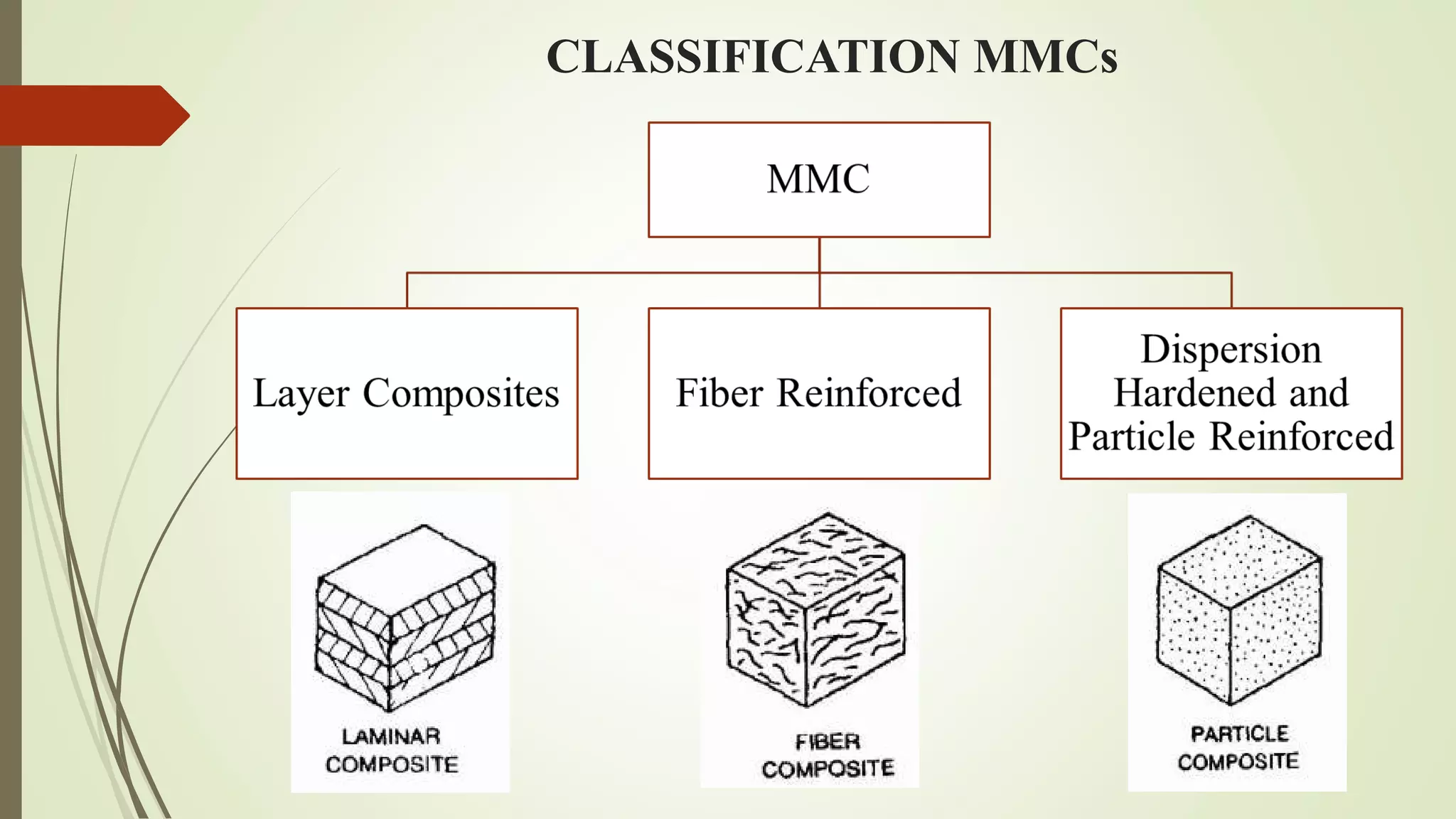
 CLASSIFICATION OF METAL MATRIX COMPOSITE
 COMPOSITION AND REINFORCEMENT
 PRODUCTION AND PROCESSING OF METAL MATRIX COMPOSITES
 GENERAL APPLICATIONS OF METAL MATRIX COMPOSITES
 CASE STUDY- AMMC
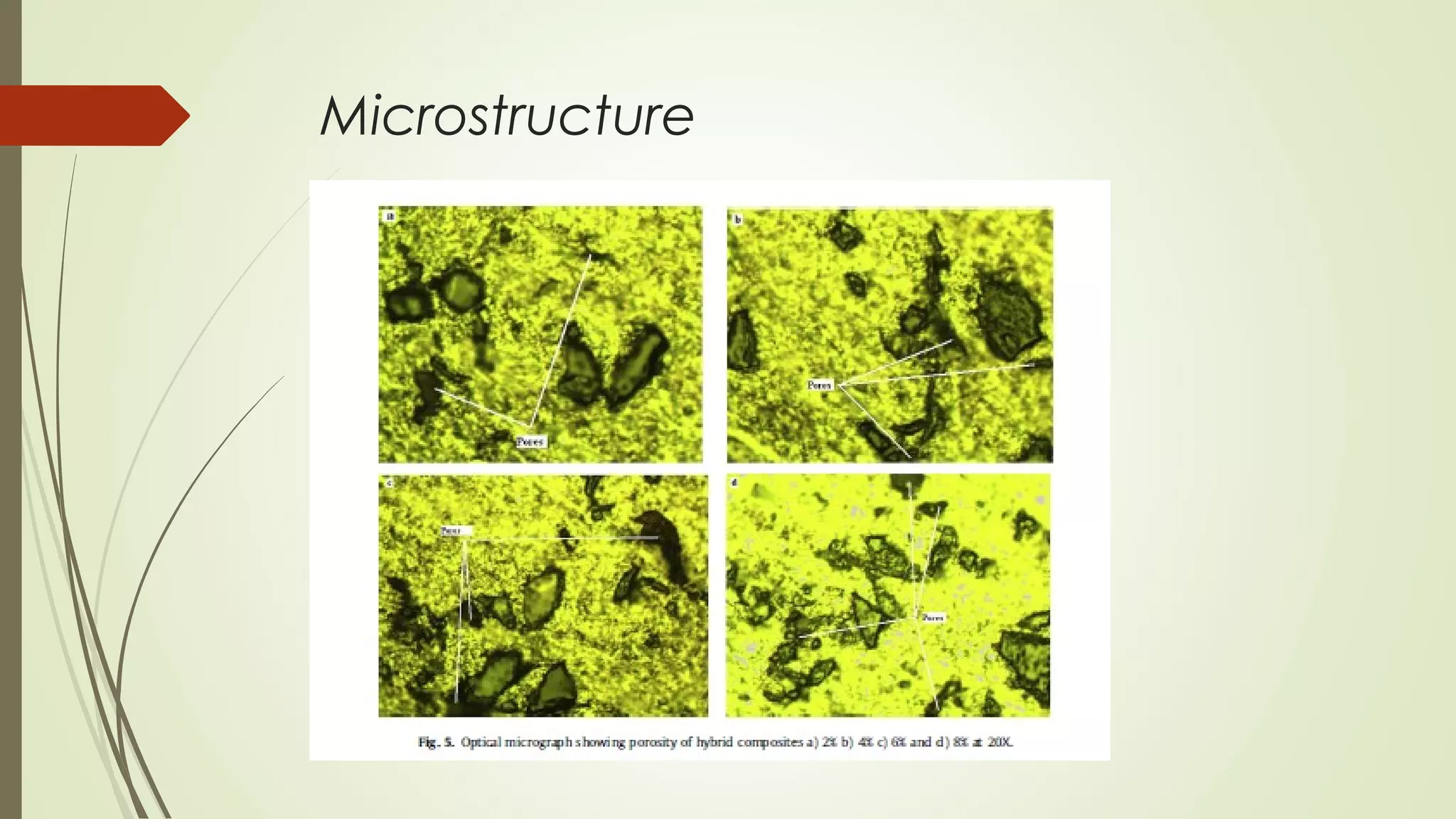
 MICROSTRUCTURE
 MECHANICAL PROPERTIES
 APPLICATIONS
 ADVANTAGES OF MMCs
 DISADVANTAGES OF MMCs
 FUTURE SCOPE
INTRODUCTION
• Conventional monolithic materials have limitations in achieving
good combination of strength, stiffness, toughness and density.
• Metal matrix composites (MMCs) possess significantly improved
properties including high specific strength; specific modulus,
damping capacity and good wear resistance compared to
unreinforced alloys.
METAL MATRIX COMPOSITES (MMCs)
• A metal matrix composite (MMC) is composite material with at least
two constituent parts, one being a metal.
• The other material may be a different metal or another material, such as
a ceramic or organic compound.
• Example
• When at least three materials are present, it is called a hybrid
composite. (Better substitutes for single reinforce composites)
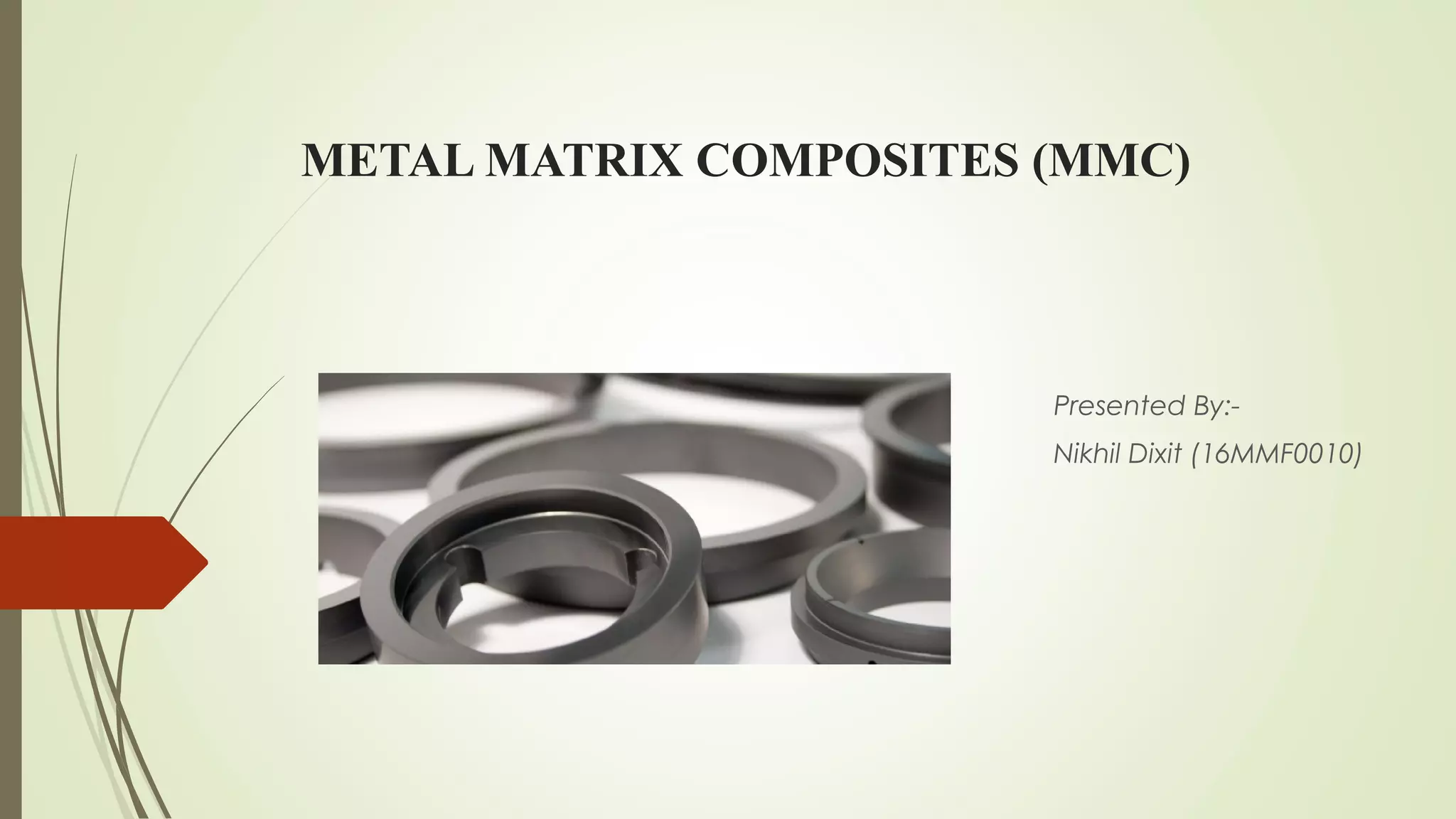
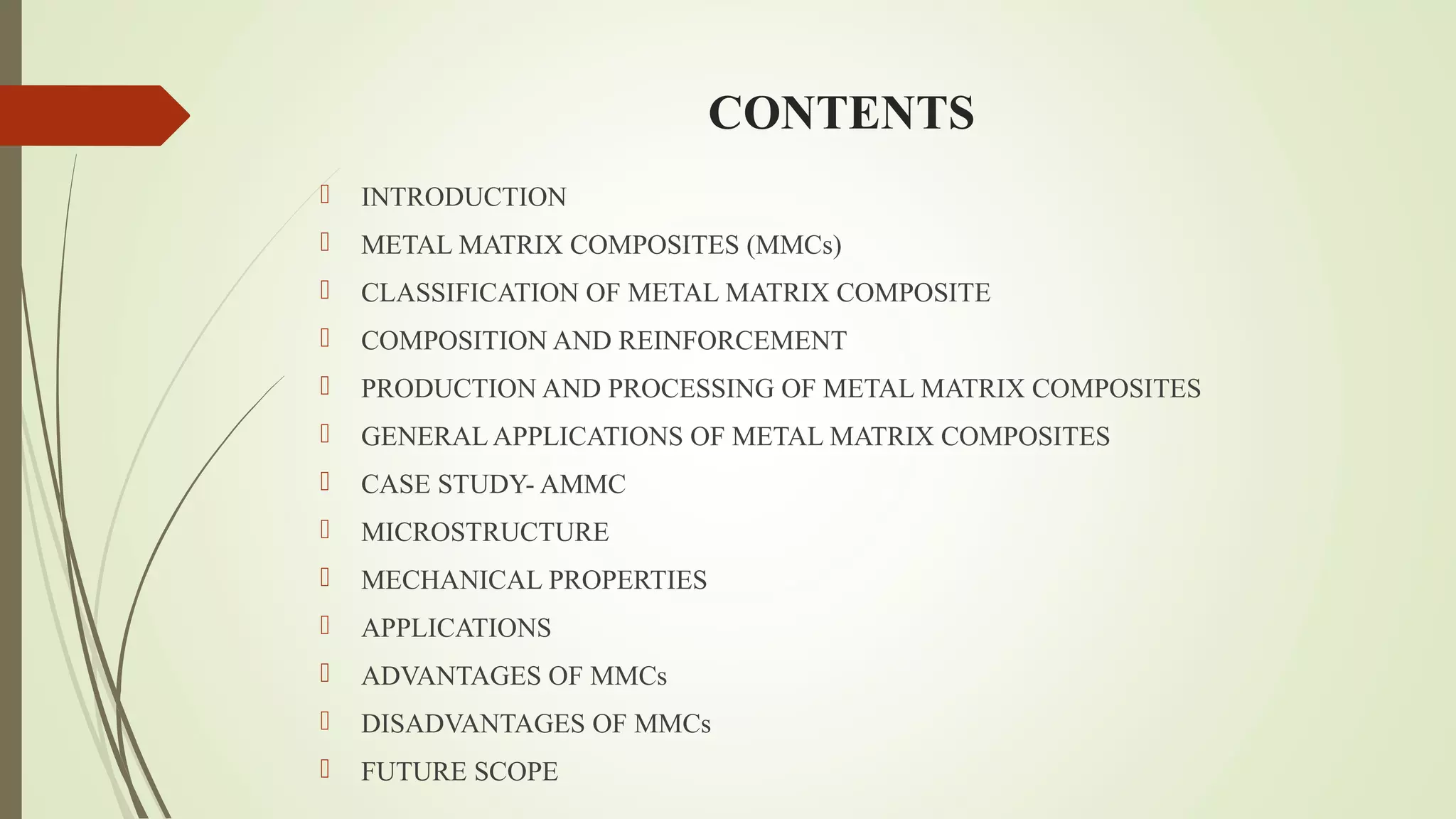
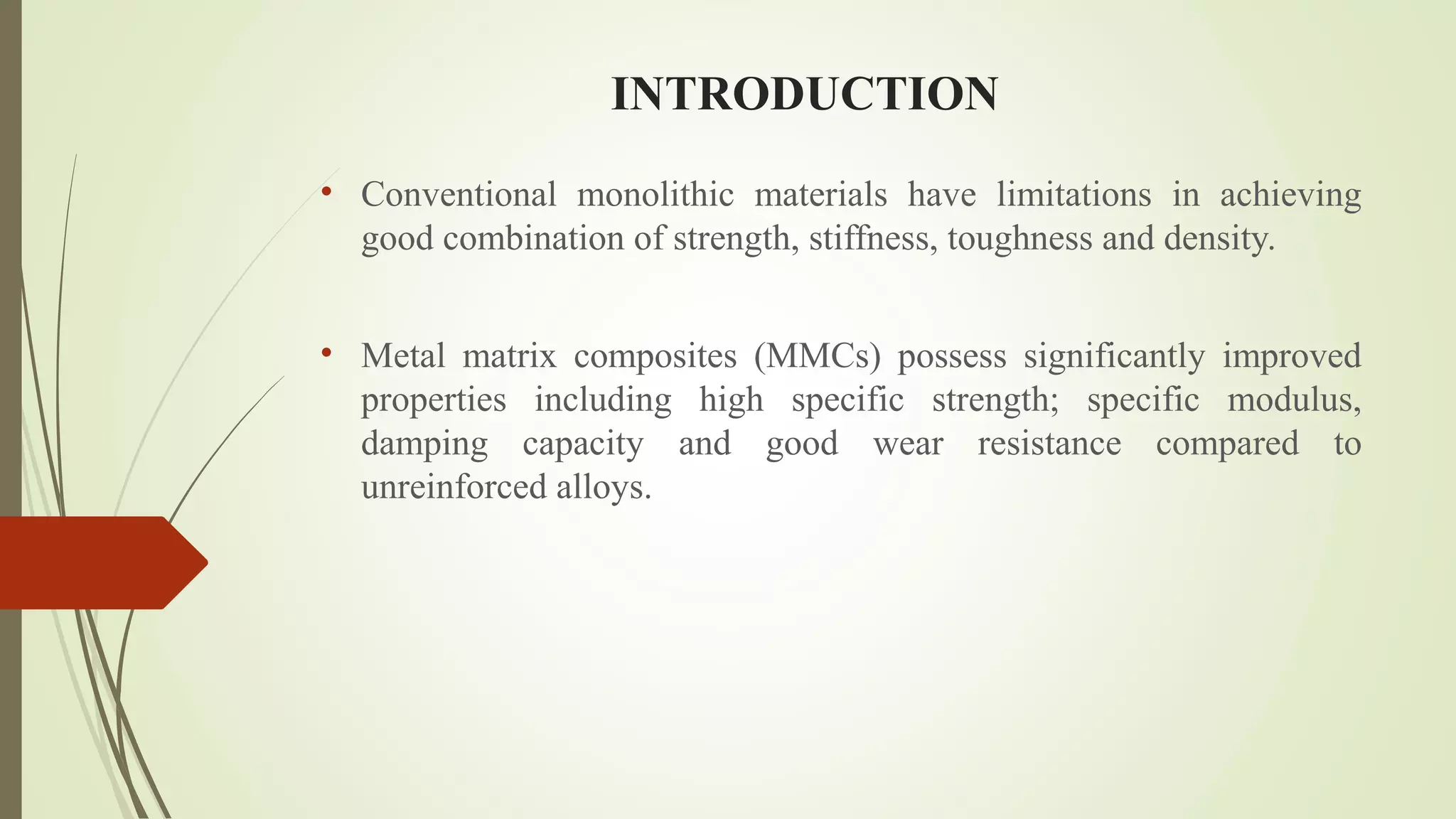
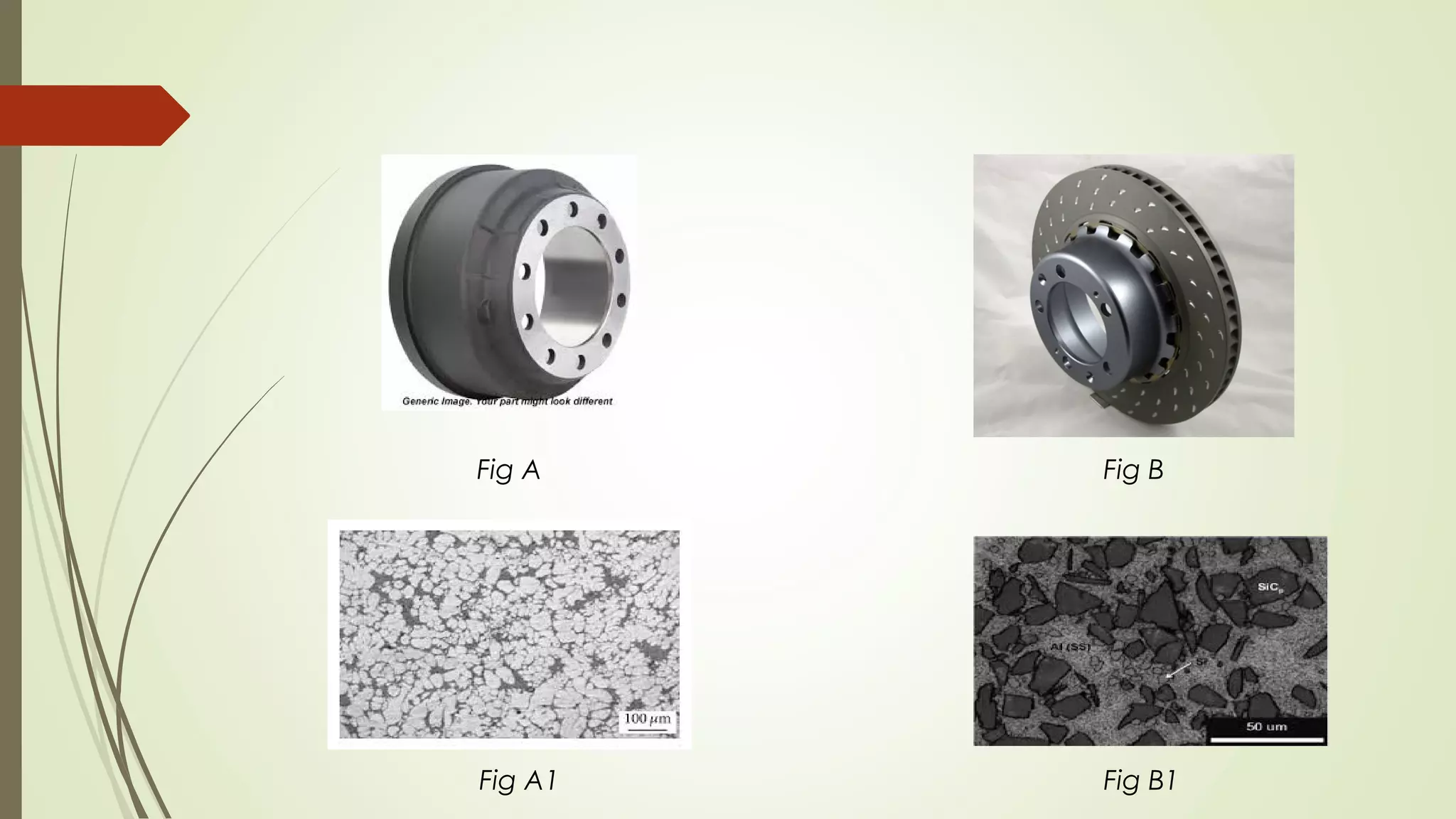
Fig A Fig B
Fig A1 Fig B1
CLASSIFICATION MMCs
COMPOSITION AND REINFORCEMENT
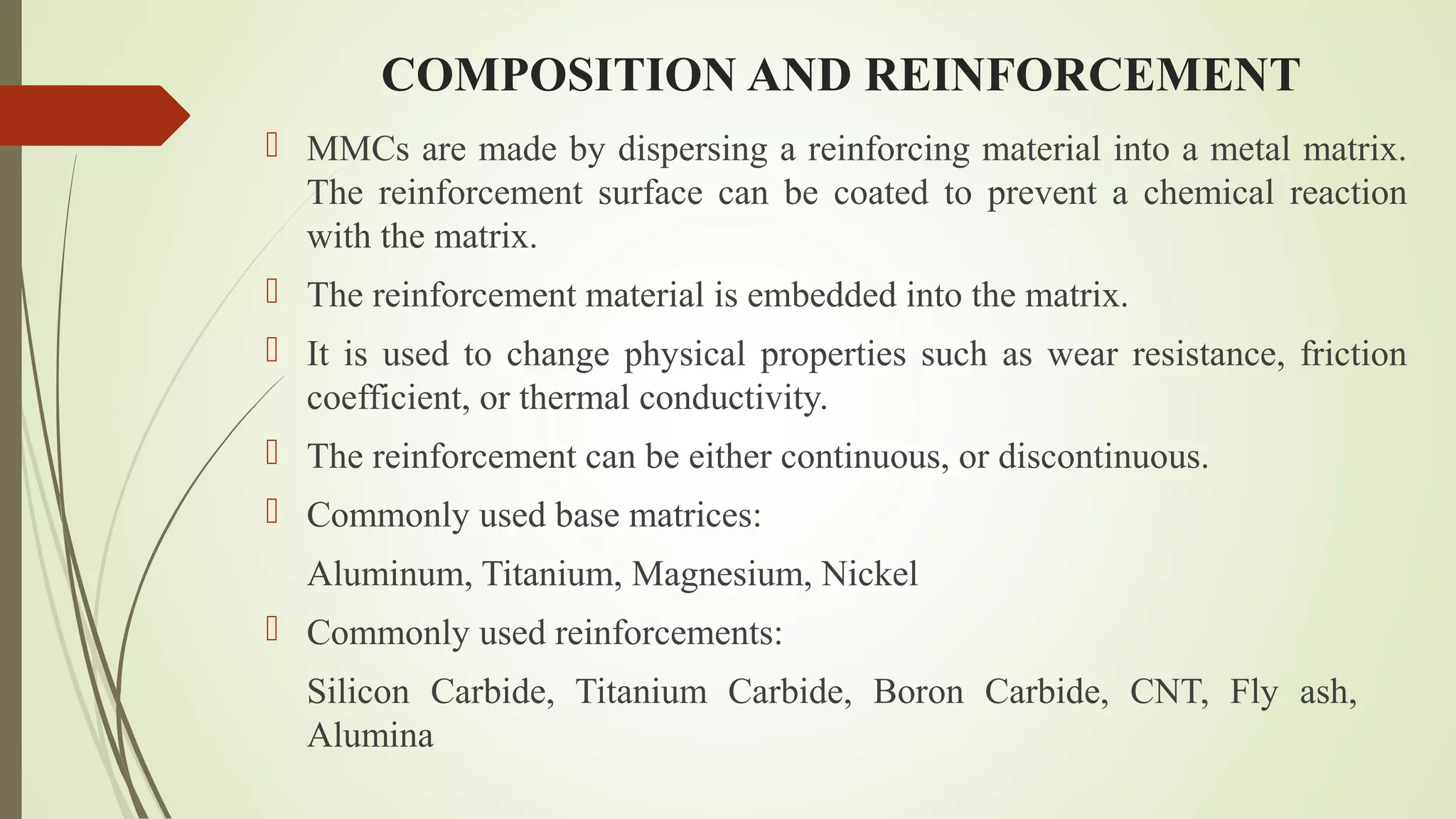
 MMCs are made by dispersing a reinforcing material into a metal matrix.
The reinforcement surface can be coated to prevent a chemical reaction
with the matrix.
 The reinforcement material is embedded into the matrix.
 It is used to change physical properties such as wear resistance, friction
coefficient, or thermal conductivity.
 The reinforcement can be either continuous, or discontinuous.
 Commonly used base matrices:
Aluminum, Titanium, Magnesium, Nickel
 Commonly used reinforcements:
Silicon Carbide, Titanium Carbide, Boron Carbide, CNT, Fly ash,
Alumina
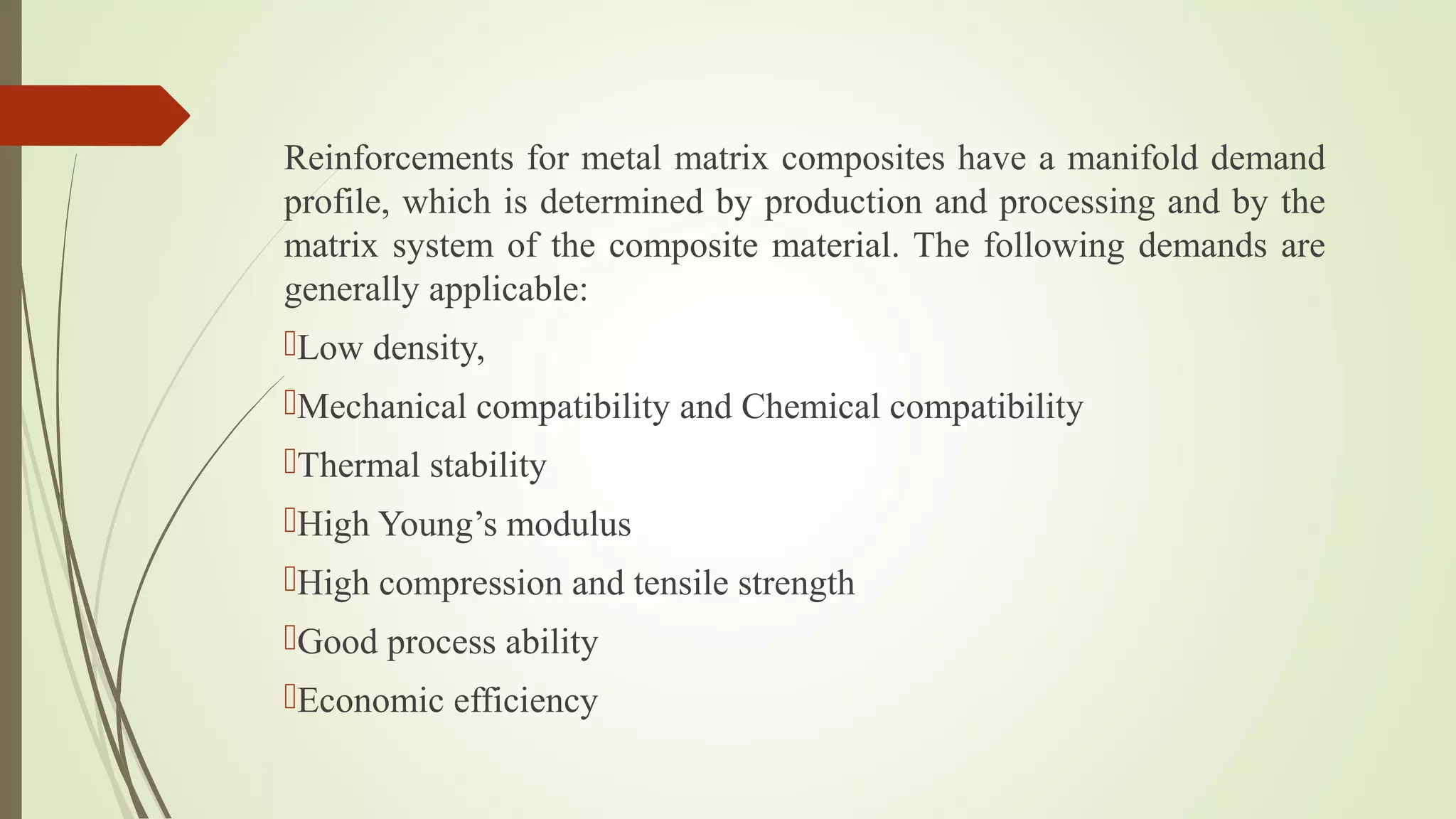
Reinforcements for metal matrix composites have a manifold demand
profile, which is determined by production and processing and by the
matrix system of the composite material. The following demands are
generally applicable:
Low density,
Mechanical compatibility and Chemical compatibility
Thermal stability
High Young’s modulus
High compression and tensile strength
Good process ability
Economic efficiency
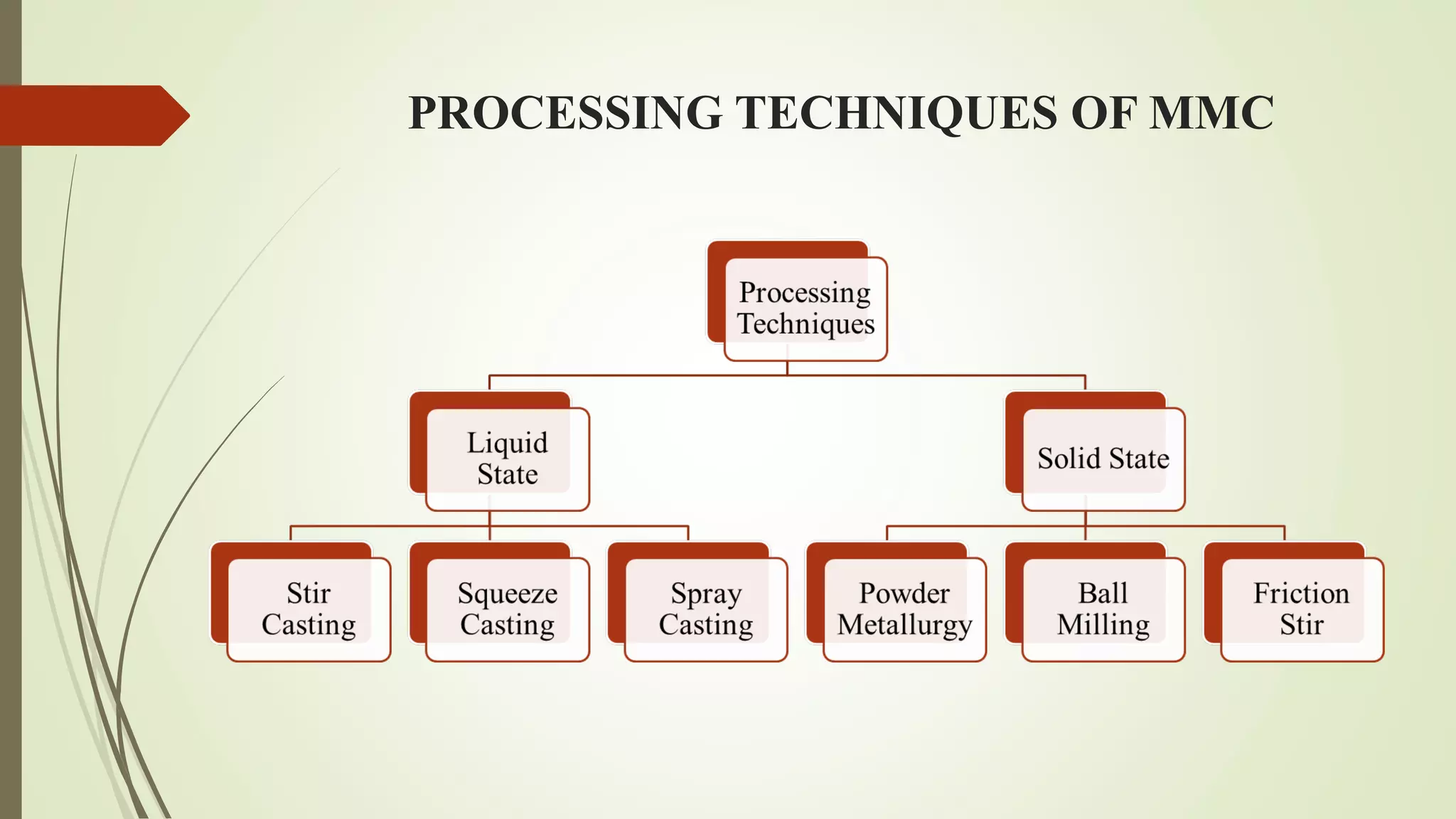
PROCESSING TECHNIQUES OF MMC
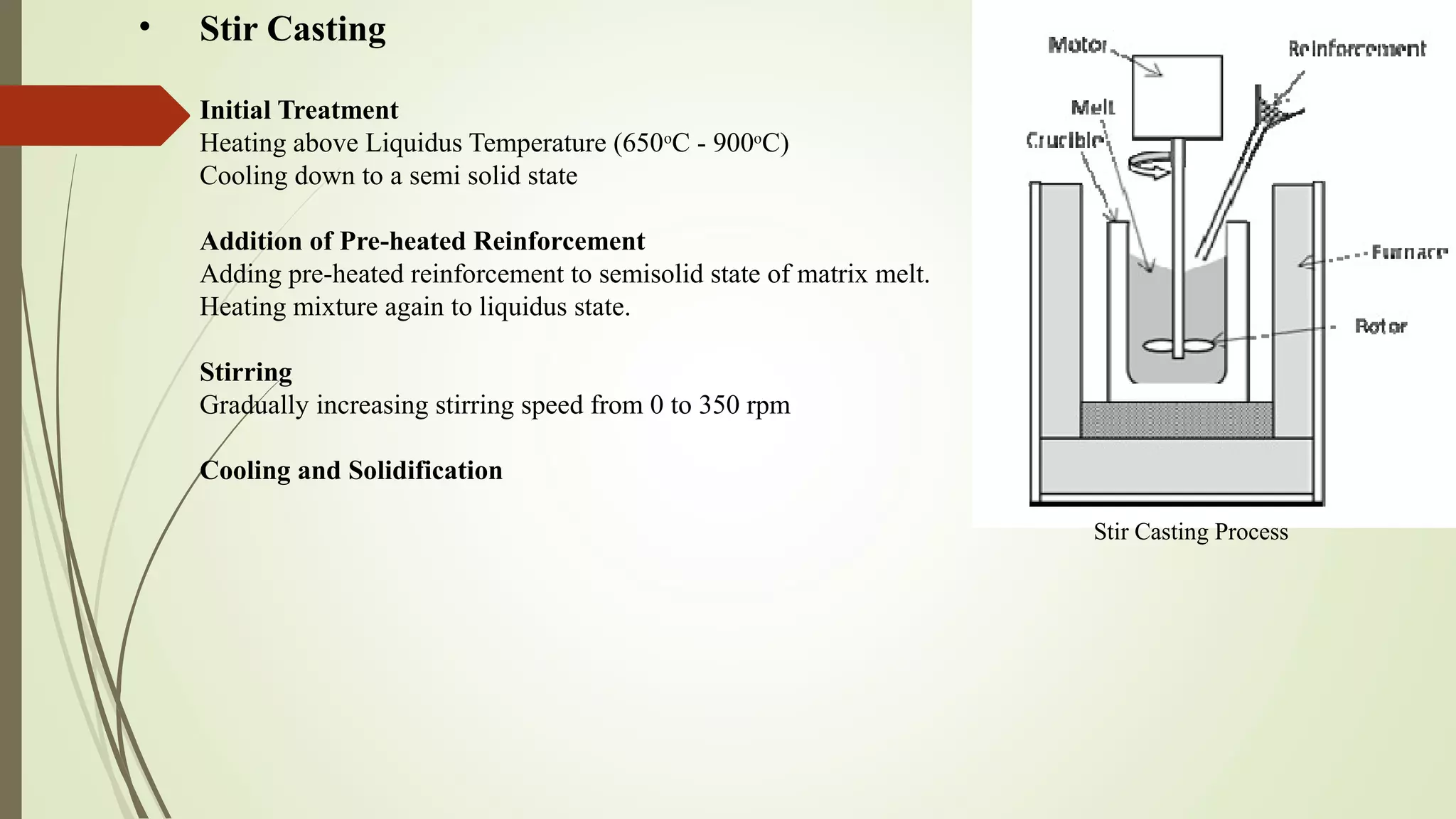
• Stir Casting
Initial Treatment
Heating above Liquidus Temperature (650o
C - 900o
C)
Cooling down to a semi solid state
Addition of Pre-heated Reinforcement
Adding pre-heated reinforcement to semisolid state of matrix melt.
Heating mixture again to liquidus state.
Stirring
Gradually increasing stirring speed from 0 to 350 rpm
Cooling and Solidification
Stir Casting Process
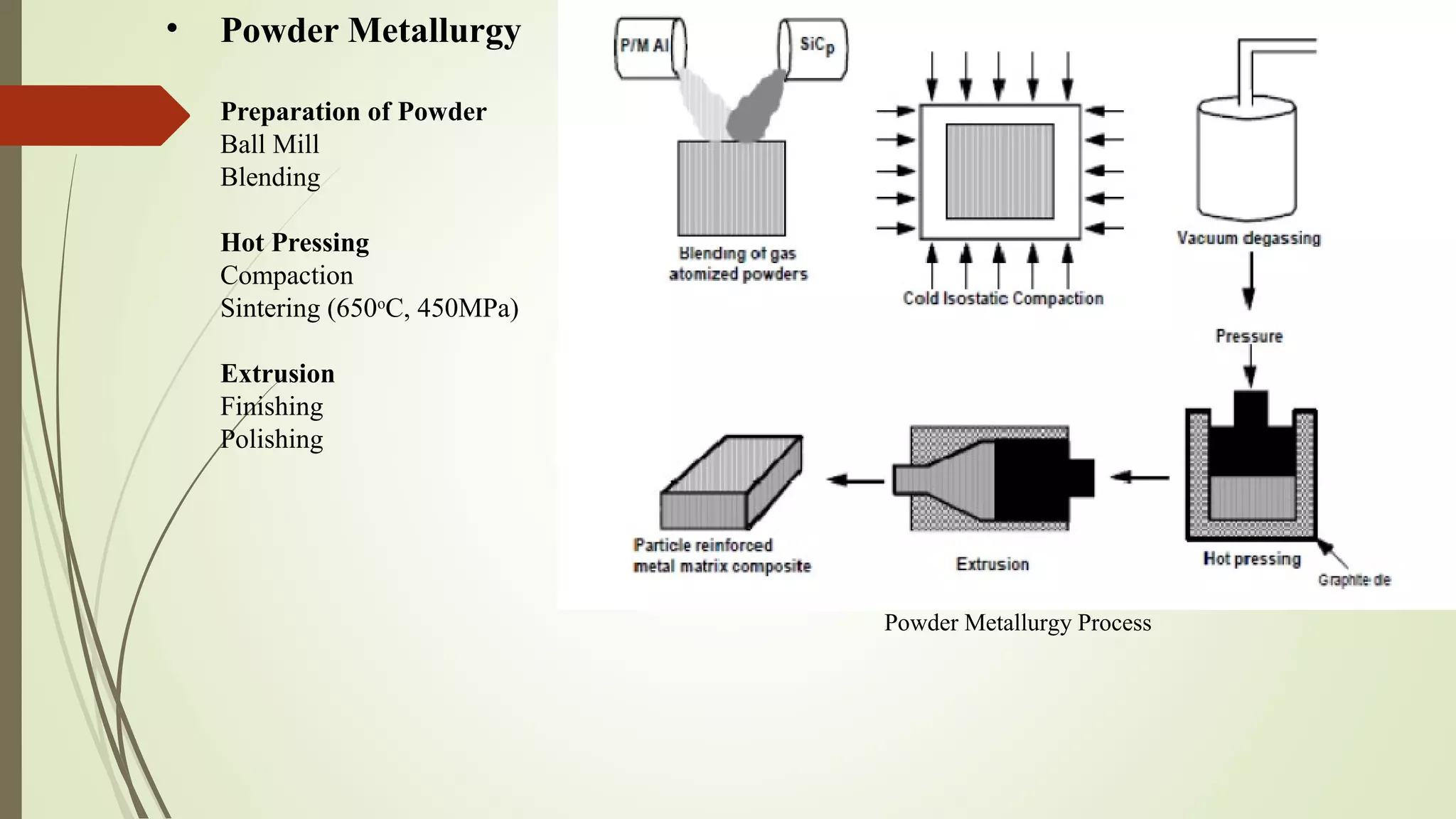
• Powder Metallurgy
Preparation of Powder
Ball Mill
Blending
Hot Pressing
Compaction
Sintering (650o
C, 450MPa)
Extrusion
Finishing
Polishing
Powder Metallurgy Process
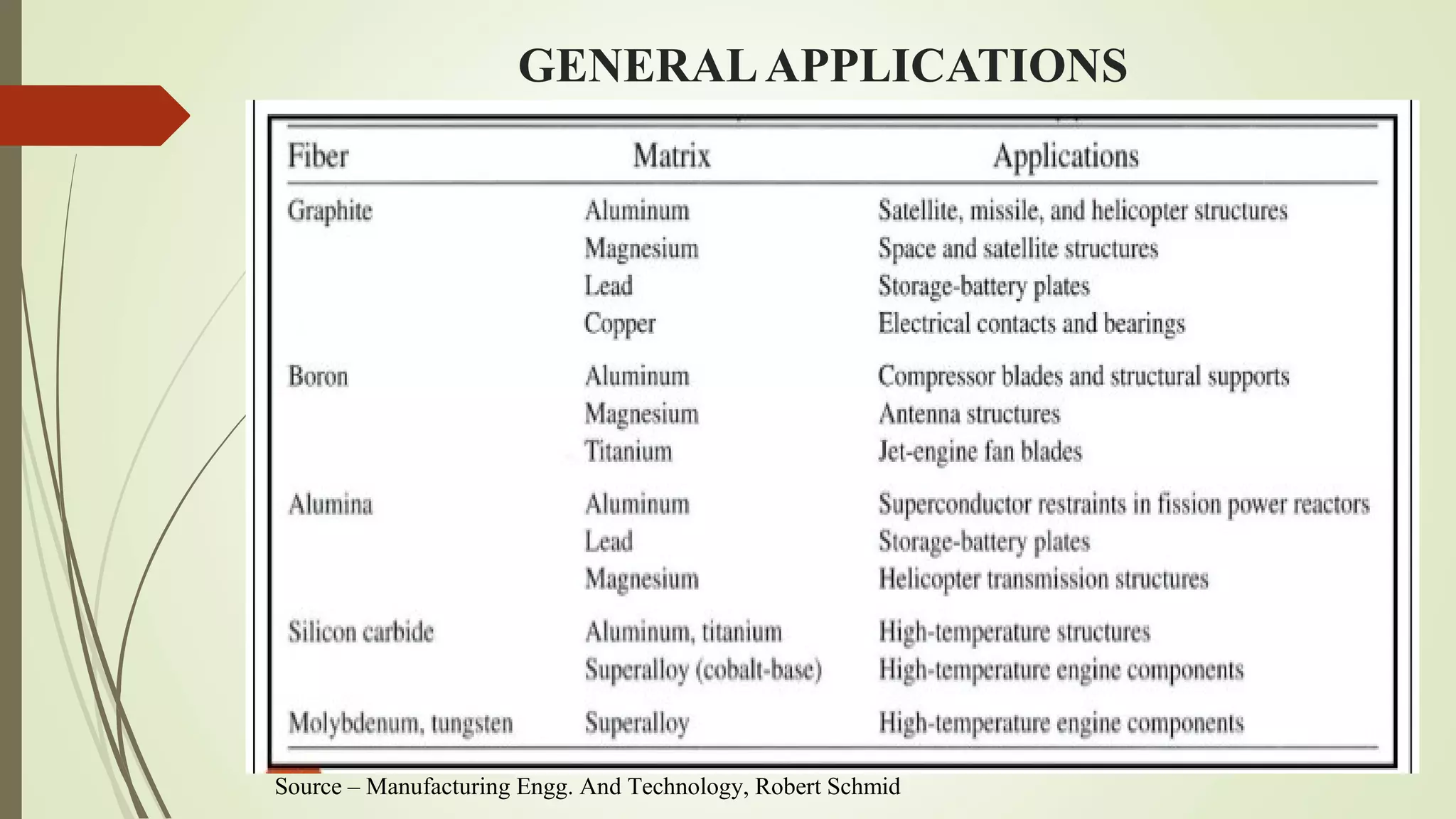
GENERALAPPLICATIONS
Source – Manufacturing Engg. And Technology, Robert Schmid
CASE STUDY- AMMC
 Aluminum Metal + Other Metal+ Reinforcement = AMMC
Ex. Al + Mg + SiC
 Properties
1. High Strength to Weight ratio.
2. High Stiffness.
3. Good Wear and Corrosion Resistance
 Applications
Aerospace, Automobile, etc.
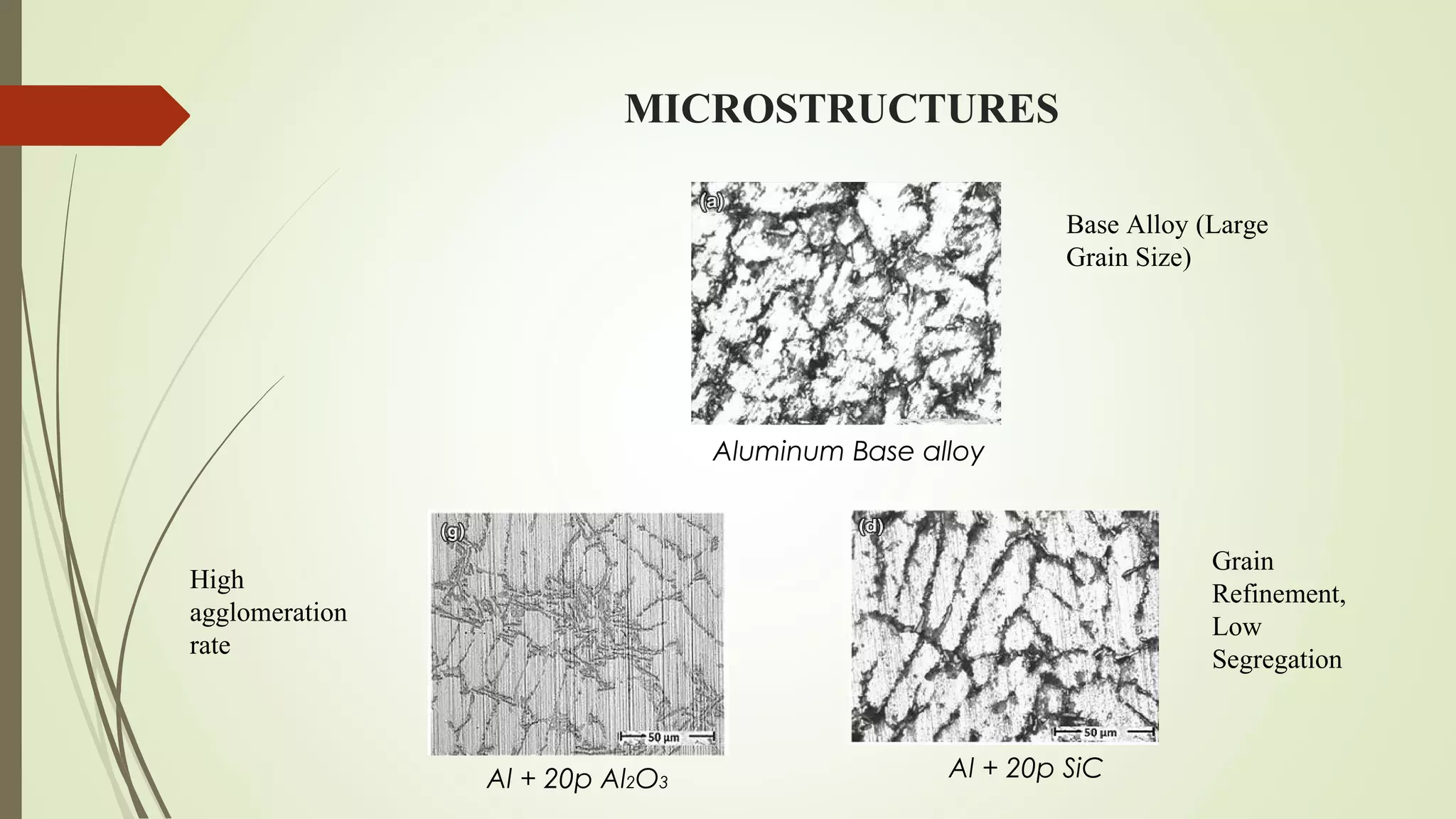
MICROSTRUCTURES
Aluminum Base alloy
Al + 20p SiCAl + 20p Al2O3
Base Alloy (Large
Grain Size)
Grain
Refinement,
Low
Segregation
High
agglomeration
rate
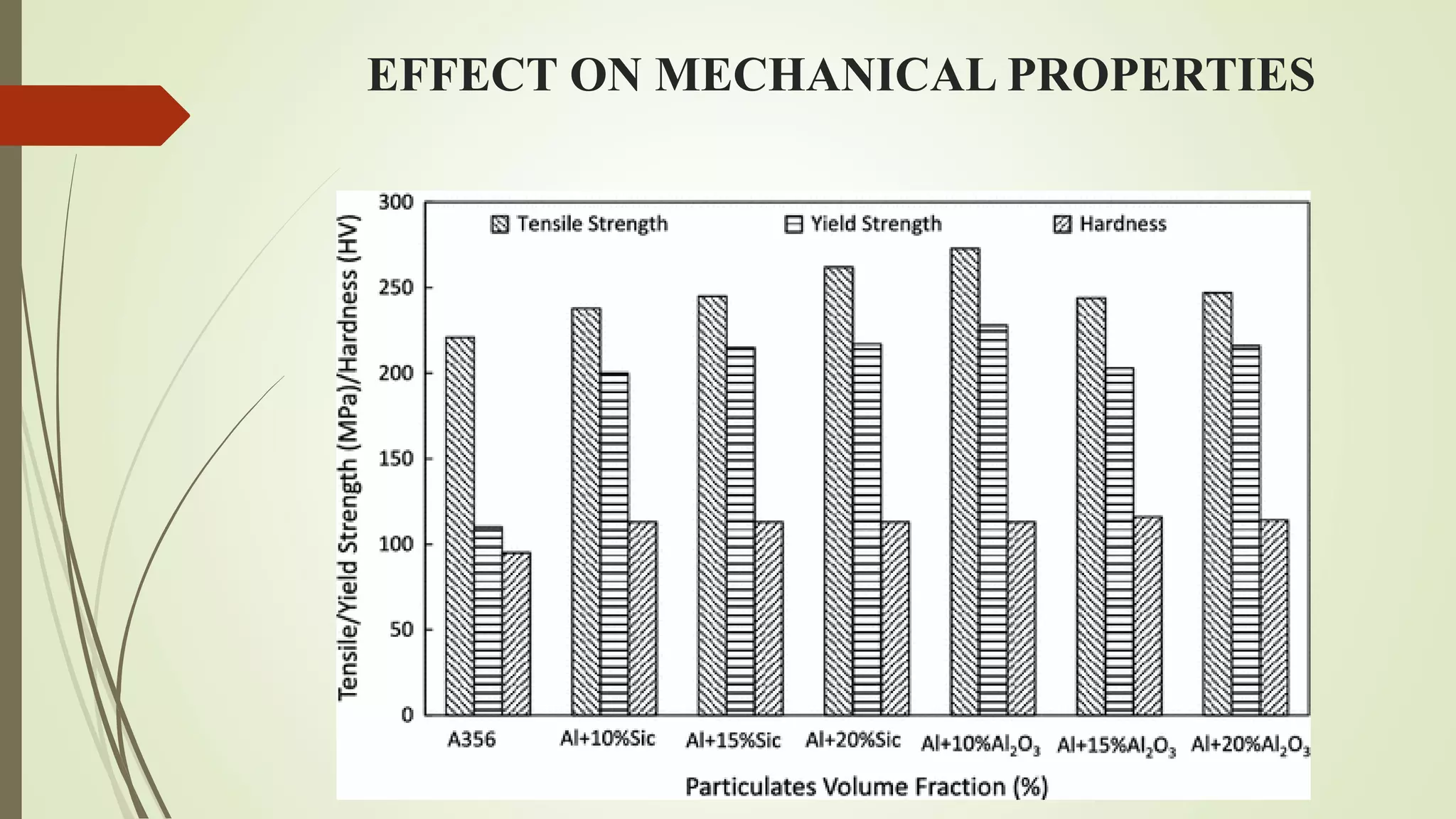
EFFECT ON MECHANICAL PROPERTIES
Research Analysis
 We conducted a brief research analysis to observe how various researchers
experimented with various aspects of AMMC.
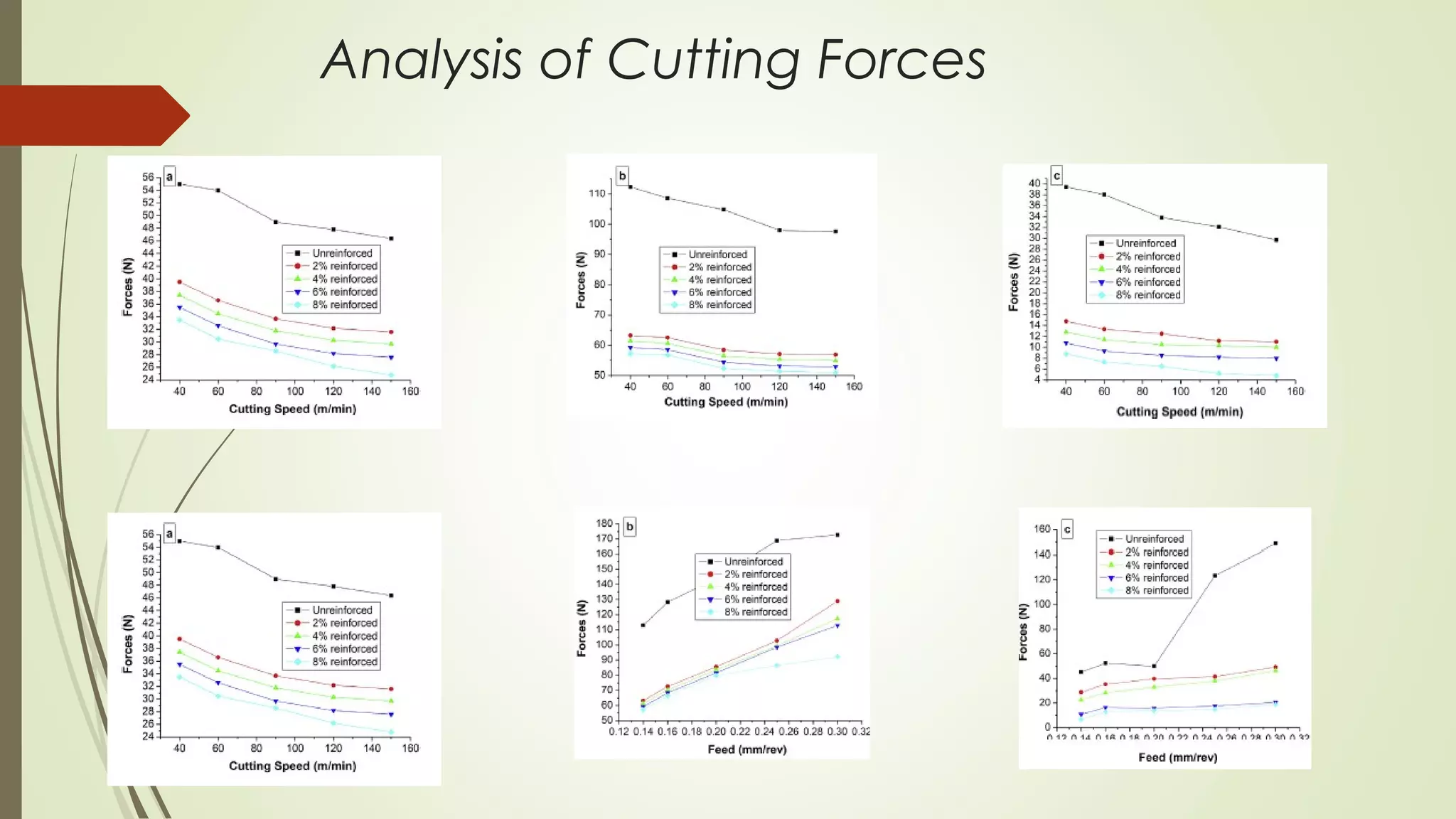
 In one of the papers written by Nageshwara et.al. the base metal was
taken as Al A356 and the reinforcement used was 0-8% SiC and RHA and
observed the cutting forces with respect to the amount of reinforcement
used and the various cutting parameters.
 Amit et.al. performed a microstructure study AMMC reinforced with ball
milled nano particles. They studied various production techniques and used
XRD and SEM to study the microstructures.
Analysis of Cutting Forces
Microstructure
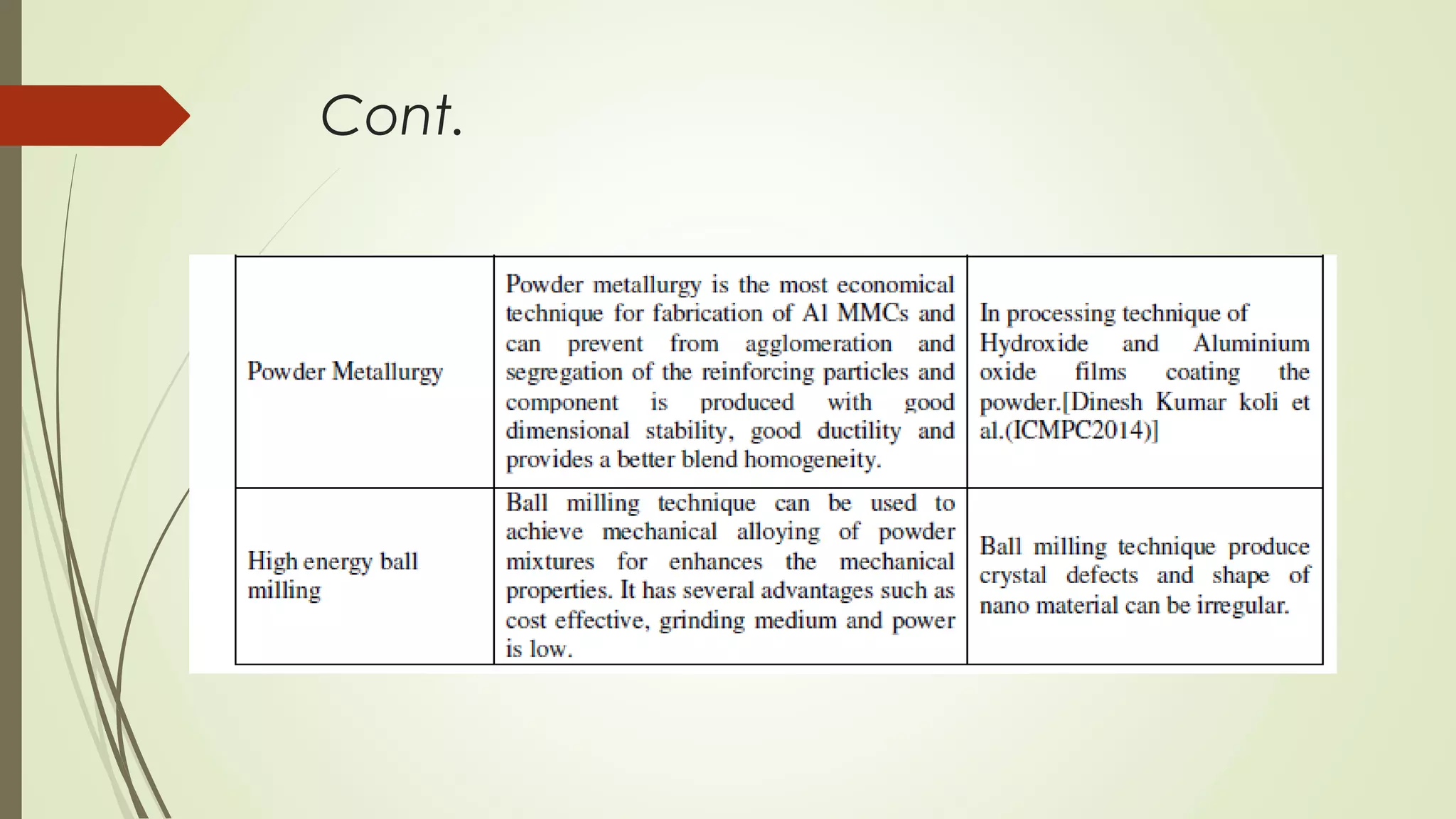
Comparison of Various Production
Process (Observed by Amit et.al.)
Cont.
APPLICATIONS
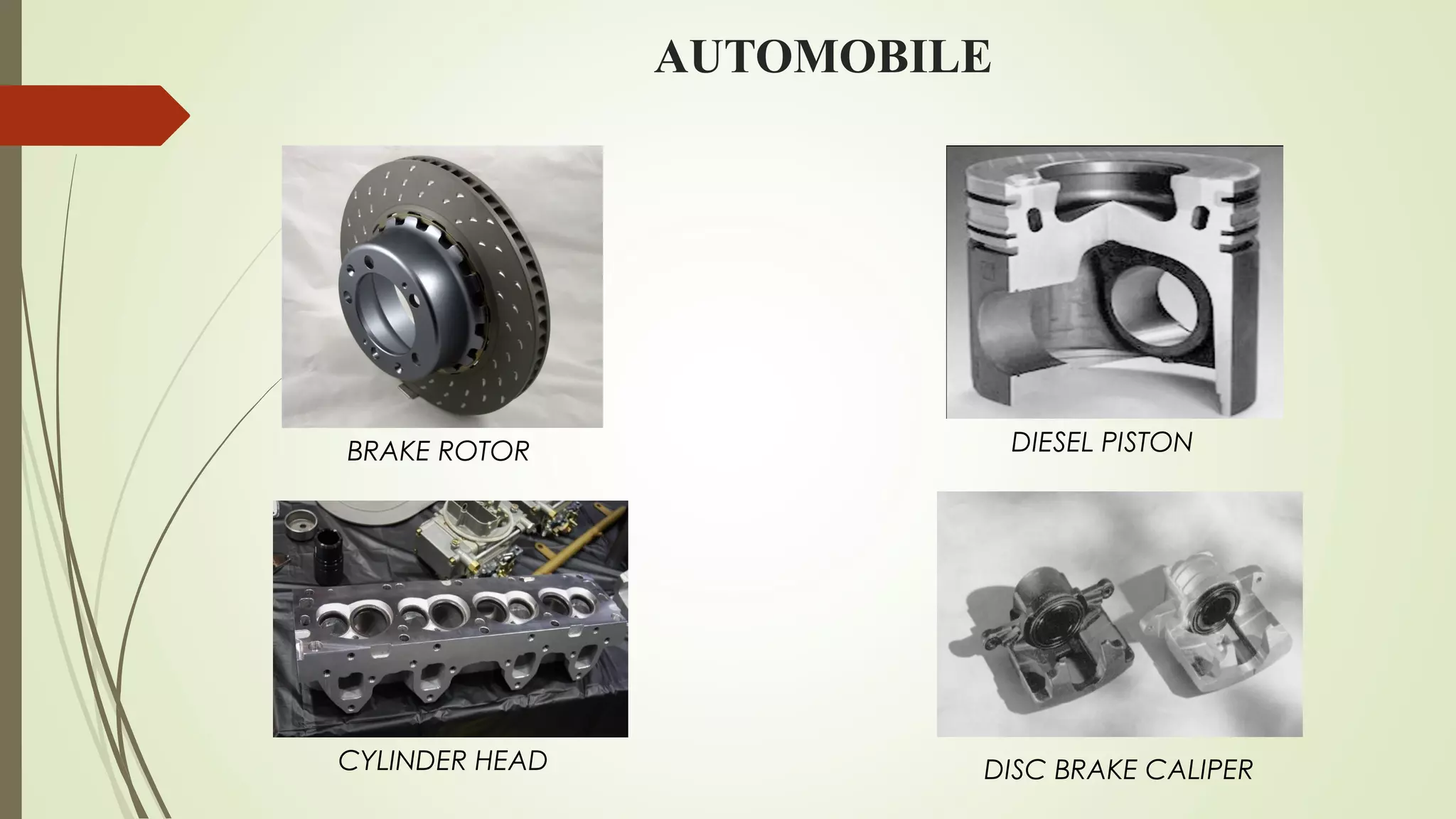
AUTOMOBILE
BRAKE ROTOR
CYLINDER HEAD
DIESEL PISTON
DISC BRAKE CALIPER
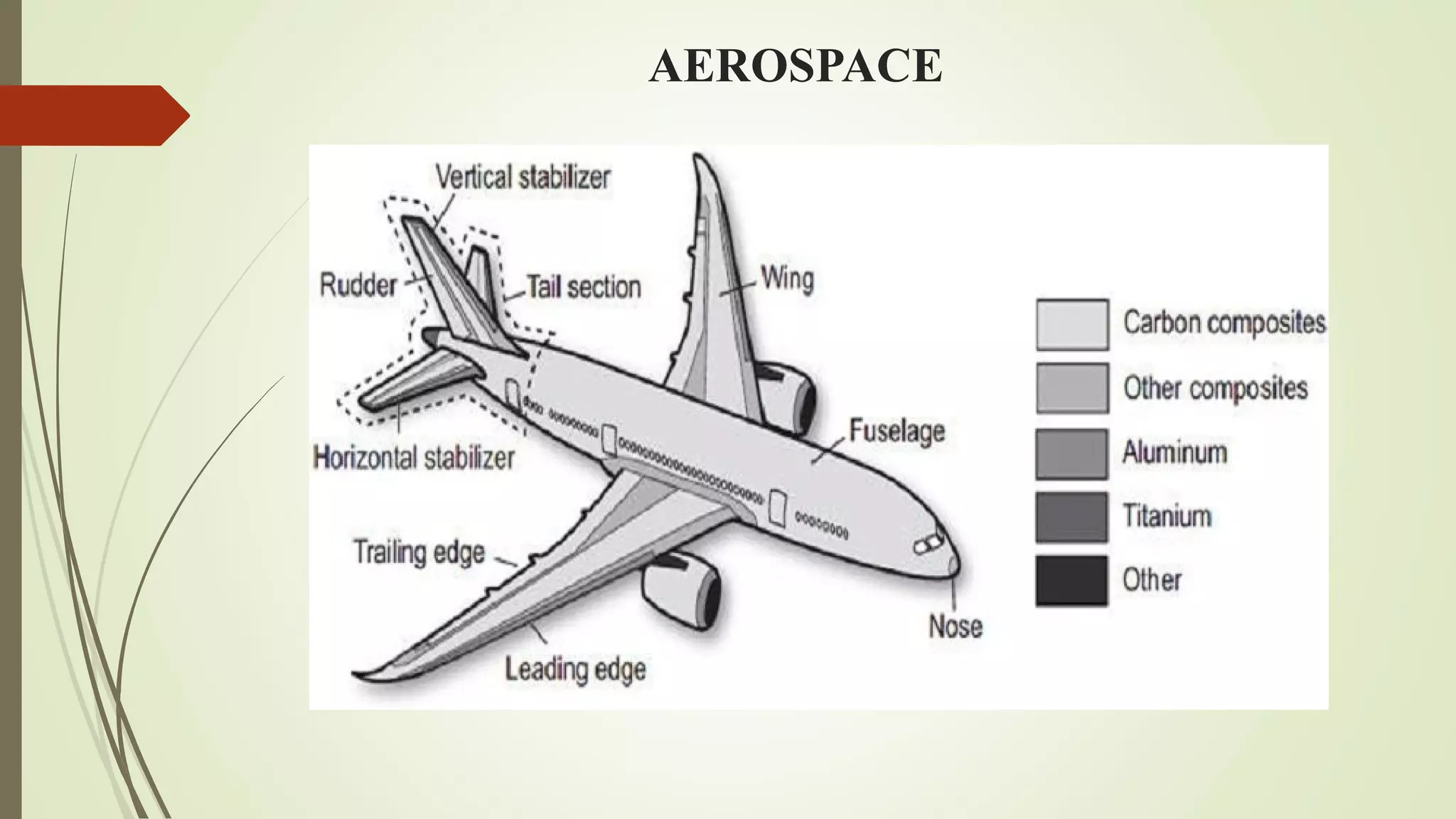
AEROSPACE
ADVANTAGES
 Higher temperature capability
 Fire resistance
 Higher transverse stiffness and strength
 No moisture absorption
 Higher electrical and thermal conductivities
 Better radiation resistance
 Fabric ability of whisker and particulate-reinforced MMCs with
conventional metalworking equipment.
DISADVANTAGES
 Higher cost of materials
 Complex fabrication methods for fiber-reinforced systems (except
for casting)
THANK YOU

Metal matrix composites (mmc)

  • 1.
    METAL MATRIX COMPOSITES(MMC) Presented By:- Nikhil Dixit (16MMF0010)
  • 2.
    CONTENTS  INTRODUCTION  METALMATRIX COMPOSITES (MMCs)  CLASSIFICATION OF METAL MATRIX COMPOSITE  COMPOSITION AND REINFORCEMENT  PRODUCTION AND PROCESSING OF METAL MATRIX COMPOSITES  GENERAL APPLICATIONS OF METAL MATRIX COMPOSITES  CASE STUDY- AMMC  MICROSTRUCTURE  MECHANICAL PROPERTIES  APPLICATIONS  ADVANTAGES OF MMCs  DISADVANTAGES OF MMCs  FUTURE SCOPE
  • 3.
    INTRODUCTION • Conventional monolithicmaterials have limitations in achieving good combination of strength, stiffness, toughness and density. • Metal matrix composites (MMCs) possess significantly improved properties including high specific strength; specific modulus, damping capacity and good wear resistance compared to unreinforced alloys.
  • 4.
    METAL MATRIX COMPOSITES(MMCs) • A metal matrix composite (MMC) is composite material with at least two constituent parts, one being a metal. • The other material may be a different metal or another material, such as a ceramic or organic compound. • Example • When at least three materials are present, it is called a hybrid composite. (Better substitutes for single reinforce composites)
  • 5.
    Fig A FigB Fig A1 Fig B1
  • 6.
  • 7.
    COMPOSITION AND REINFORCEMENT MMCs are made by dispersing a reinforcing material into a metal matrix. The reinforcement surface can be coated to prevent a chemical reaction with the matrix.  The reinforcement material is embedded into the matrix.  It is used to change physical properties such as wear resistance, friction coefficient, or thermal conductivity.  The reinforcement can be either continuous, or discontinuous.  Commonly used base matrices: Aluminum, Titanium, Magnesium, Nickel  Commonly used reinforcements: Silicon Carbide, Titanium Carbide, Boron Carbide, CNT, Fly ash, Alumina
  • 8.
    Reinforcements for metalmatrix composites have a manifold demand profile, which is determined by production and processing and by the matrix system of the composite material. The following demands are generally applicable: Low density, Mechanical compatibility and Chemical compatibility Thermal stability High Young’s modulus High compression and tensile strength Good process ability Economic efficiency
  • 9.
  • 10.
    • Stir Casting InitialTreatment Heating above Liquidus Temperature (650o C - 900o C) Cooling down to a semi solid state Addition of Pre-heated Reinforcement Adding pre-heated reinforcement to semisolid state of matrix melt. Heating mixture again to liquidus state. Stirring Gradually increasing stirring speed from 0 to 350 rpm Cooling and Solidification Stir Casting Process
  • 11.
    • Powder Metallurgy Preparationof Powder Ball Mill Blending Hot Pressing Compaction Sintering (650o C, 450MPa) Extrusion Finishing Polishing Powder Metallurgy Process
  • 12.
    GENERALAPPLICATIONS Source – ManufacturingEngg. And Technology, Robert Schmid
  • 13.
    CASE STUDY- AMMC Aluminum Metal + Other Metal+ Reinforcement = AMMC Ex. Al + Mg + SiC  Properties 1. High Strength to Weight ratio. 2. High Stiffness. 3. Good Wear and Corrosion Resistance  Applications Aerospace, Automobile, etc.
  • 14.
    MICROSTRUCTURES Aluminum Base alloy Al+ 20p SiCAl + 20p Al2O3 Base Alloy (Large Grain Size) Grain Refinement, Low Segregation High agglomeration rate
  • 15.
  • 16.
    Research Analysis  Weconducted a brief research analysis to observe how various researchers experimented with various aspects of AMMC.  In one of the papers written by Nageshwara et.al. the base metal was taken as Al A356 and the reinforcement used was 0-8% SiC and RHA and observed the cutting forces with respect to the amount of reinforcement used and the various cutting parameters.  Amit et.al. performed a microstructure study AMMC reinforced with ball milled nano particles. They studied various production techniques and used XRD and SEM to study the microstructures.
  • 17.
  • 18.
  • 19.
    Comparison of VariousProduction Process (Observed by Amit et.al.)
  • 20.
  • 21.
  • 22.
  • 24.
  • 25.
    ADVANTAGES  Higher temperaturecapability  Fire resistance  Higher transverse stiffness and strength  No moisture absorption  Higher electrical and thermal conductivities  Better radiation resistance  Fabric ability of whisker and particulate-reinforced MMCs with conventional metalworking equipment.
  • 26.
    DISADVANTAGES  Higher costof materials  Complex fabrication methods for fiber-reinforced systems (except for casting)
  • 27.