HVAC OPERATION 
AND MAINTENANCE 
(HVAC O&M)
HVAC 
 It is abbreviated as Heating, Ventilation, 
and Air Conditioning System. 
 Being interconnected and grouped 
together, this mechanical system 
provides thermal comfort and air quality 
in an indoor space. 
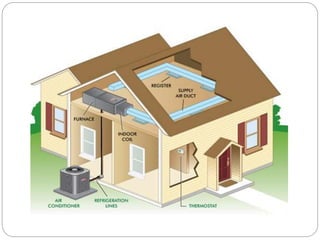
 The System includes Boilers, Heat 
Pumps, Chillers and Air Conditioners 
and Packaged System.
HVAC O&M 
 HVAC operations and maintenance 
("O&M"). 
 These are the practices, which keeps 
the mechanical systems to work at a 
high performance during the life time of 
the building. 
 A perfect designer can make the 
process easy the maintain the 
comfortable thermal system. 
 HVAC O&M is measured in terms of 
System performance.
Performance Measure 
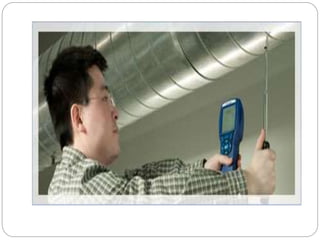
 The HVAC system must offer thermal comfort 
continuously, at the energy use specified in 
the design for the building. 
 Continuous commissioning is the best 
operation that improves the energy 
performance by 20%. 
 It also improves the comfort at the equivalent 
time. 
 But, the main thing is design of the HVAC 
system. The perfect design will make the 
system to execute properly. 
 As the technology improves, performance can
Operations Manuals 
 High quality operations are ensured by good 
design process and regular maintenance. 
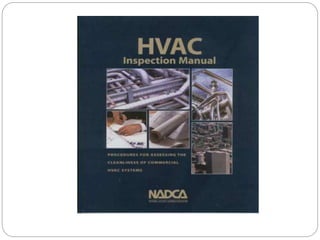
 The designer first of all have to create a 
manual for the operating staffs which specifies 
the intent clear design, maintenance list, 
replacement palms and all other necessary 
things. 
 The manual should clearly explain the 
parameters that are conducted during 
commissioning. 
 Without manual, the work is never effective as 
it may cause many troubleshoot to the
Maintenance Schedules 
 Maintenance plays the important role in O&M 
manual. 
 Schedules for duct filer and all other 
component cleaning, replacing must be 
specified and followed to have ensure better 
energy use and comfort as well. 
 Performance of the system have to be 
measured monthly or quarterly, which helps 
the operators to collect information for the 
further use. 
 Some buildings are built up with the 
automation systems, which records status of
Flexibility and Occupant 
Behavior 
 It is important to cope with the 
requirements of the users by ensuring 
the safety and efficiency. 
 Arrival heater and desk fans to the 
customer’s place is an indication of the 
failure of the HVAC system, which fails 
to satisfy the customer’s need. 
 This denotes the faults or changes in the 
original HVAC design and finally results 
in the product change for the occupant’s 
personal use.
Filter Cleaning & 
Replacement 
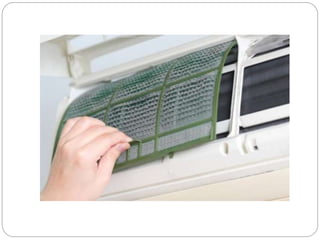
 Filters plays the important role in the Air 
conditioning system. 
 They must be cleaned periodically to keep the 
energy and indoor air quality in a high range. 
 Some filters can be cleaned in simple ways 
like spraying water or vacuuming. 
 Rest of them, needs replacement. Like filters 
in the ducts, filters of the furnace, heating 
pumps and other parts must be checked. 
 Filters requires regular cleaning in the HVAC 
system, for a long time efficient performance.
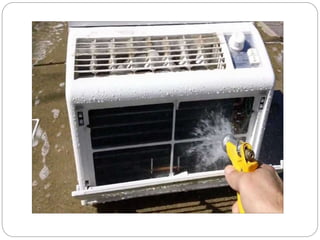
Cleaning Components 
 Like filters, other components in the system 
needs regular cleaning as well. 
 Ducts must be inspected regularly for the 
accumulation of the mold, dust and other 
contaminants. 
 For best indoor air quality, they must cleaned 
and inspected for the leakage, as it may 
cause energy loss. 
 Coils with dust particles restricts the air flow 
which in turn reduces the convective cooling 
of the system. 
 Drains of the dehumidifying parts must be 
checked, as it may cause the condensed 
water to pool up and leaks in the building. 
mold and mildew.
Operation of Control Systems 
 Programmable Thermostat schedule the 
heating and the cooling of the HVAC System. 
 Those Schedules must match the occupancy 
and the activity of the system and must be 
changed in accordance to the age of the 
building. 
 Temperature, Occupancy, Humidity calculating 
sensors should be checked regularly for the 
proper operation. 
 Improper working Sensors may be 
inconvenience to the users. 
 Improperly tuned control system are manually 
disable by the HVAC system, as the energy
Diagrams 
 Diagram for Duct routing and control should 
be created and kept for the assurance of 
understanding. 
 It also helps in resolving troubleshoot 
problems and improving the system 
performance by regular upgrades. 
 HVAC units, sensors, ducts, air handling 
components, controllers, and their 
interconnection are specified in the system. 
 For better readability, sensors and control 
diagrams are separated often.
Thank you…!! 
 Thanks for reading the 
presentation. 
To avail best Air conditioning 
service, please visit AC Repair 
Local, Houston. 
 http://www.ac-repair-local.com/

HVAC operation and Maintenance

  • 1.
    HVAC OPERATION ANDMAINTENANCE (HVAC O&M)
  • 2.
    HVAC  Itis abbreviated as Heating, Ventilation, and Air Conditioning System.  Being interconnected and grouped together, this mechanical system provides thermal comfort and air quality in an indoor space.  The System includes Boilers, Heat Pumps, Chillers and Air Conditioners and Packaged System.
  • 4.
    HVAC O&M HVAC operations and maintenance ("O&M").  These are the practices, which keeps the mechanical systems to work at a high performance during the life time of the building.  A perfect designer can make the process easy the maintain the comfortable thermal system.  HVAC O&M is measured in terms of System performance.
  • 6.
    Performance Measure The HVAC system must offer thermal comfort continuously, at the energy use specified in the design for the building.  Continuous commissioning is the best operation that improves the energy performance by 20%.  It also improves the comfort at the equivalent time.  But, the main thing is design of the HVAC system. The perfect design will make the system to execute properly.  As the technology improves, performance can
  • 8.
    Operations Manuals High quality operations are ensured by good design process and regular maintenance.  The designer first of all have to create a manual for the operating staffs which specifies the intent clear design, maintenance list, replacement palms and all other necessary things.  The manual should clearly explain the parameters that are conducted during commissioning.  Without manual, the work is never effective as it may cause many troubleshoot to the
  • 10.
    Maintenance Schedules Maintenance plays the important role in O&M manual.  Schedules for duct filer and all other component cleaning, replacing must be specified and followed to have ensure better energy use and comfort as well.  Performance of the system have to be measured monthly or quarterly, which helps the operators to collect information for the further use.  Some buildings are built up with the automation systems, which records status of
  • 11.
    Flexibility and Occupant Behavior  It is important to cope with the requirements of the users by ensuring the safety and efficiency.  Arrival heater and desk fans to the customer’s place is an indication of the failure of the HVAC system, which fails to satisfy the customer’s need.  This denotes the faults or changes in the original HVAC design and finally results in the product change for the occupant’s personal use.
  • 12.
    Filter Cleaning & Replacement  Filters plays the important role in the Air conditioning system.  They must be cleaned periodically to keep the energy and indoor air quality in a high range.  Some filters can be cleaned in simple ways like spraying water or vacuuming.  Rest of them, needs replacement. Like filters in the ducts, filters of the furnace, heating pumps and other parts must be checked.  Filters requires regular cleaning in the HVAC system, for a long time efficient performance.
  • 14.
    Cleaning Components Like filters, other components in the system needs regular cleaning as well.  Ducts must be inspected regularly for the accumulation of the mold, dust and other contaminants.  For best indoor air quality, they must cleaned and inspected for the leakage, as it may cause energy loss.  Coils with dust particles restricts the air flow which in turn reduces the convective cooling of the system.  Drains of the dehumidifying parts must be checked, as it may cause the condensed water to pool up and leaks in the building. mold and mildew.
  • 16.
    Operation of ControlSystems  Programmable Thermostat schedule the heating and the cooling of the HVAC System.  Those Schedules must match the occupancy and the activity of the system and must be changed in accordance to the age of the building.  Temperature, Occupancy, Humidity calculating sensors should be checked regularly for the proper operation.  Improper working Sensors may be inconvenience to the users.  Improperly tuned control system are manually disable by the HVAC system, as the energy
  • 17.
    Diagrams  Diagramfor Duct routing and control should be created and kept for the assurance of understanding.  It also helps in resolving troubleshoot problems and improving the system performance by regular upgrades.  HVAC units, sensors, ducts, air handling components, controllers, and their interconnection are specified in the system.  For better readability, sensors and control diagrams are separated often.
  • 19.
    Thank you…!! Thanks for reading the presentation. To avail best Air conditioning service, please visit AC Repair Local, Houston.  http://www.ac-repair-local.com/