
This presentation covers:
– Basic operation and service of air-conditioning
system
• Emphasis on learning system operation and
performing minor service and diagnostic
procedures
 The first modern air conditioning system was
developed in 1902 by a young electrical engineer
named Willis Haviland Carrier.
 It was designed to solve a humidity problem at the
Publishing Company in Brooklyn, New York. Paper
stock at the plant would sometimes absorb moisture
from the warm summer air, making it difficult to
apply the layered inking techniques of the time
 Air conditioners and refrigerators work the
same way. Instead of cooling just the small,
insulated space inside of a refrigerator, an air
conditioner cools a room, a whole house, or
an entire business.
 Air conditioners use chemicals that easily
convert from a gas to a liquid and back again.
This chemical is used to transfer heat from
the air inside of a home to the outside air.
 What is the difference between the working operation
of Air conditioner and Refrigerators
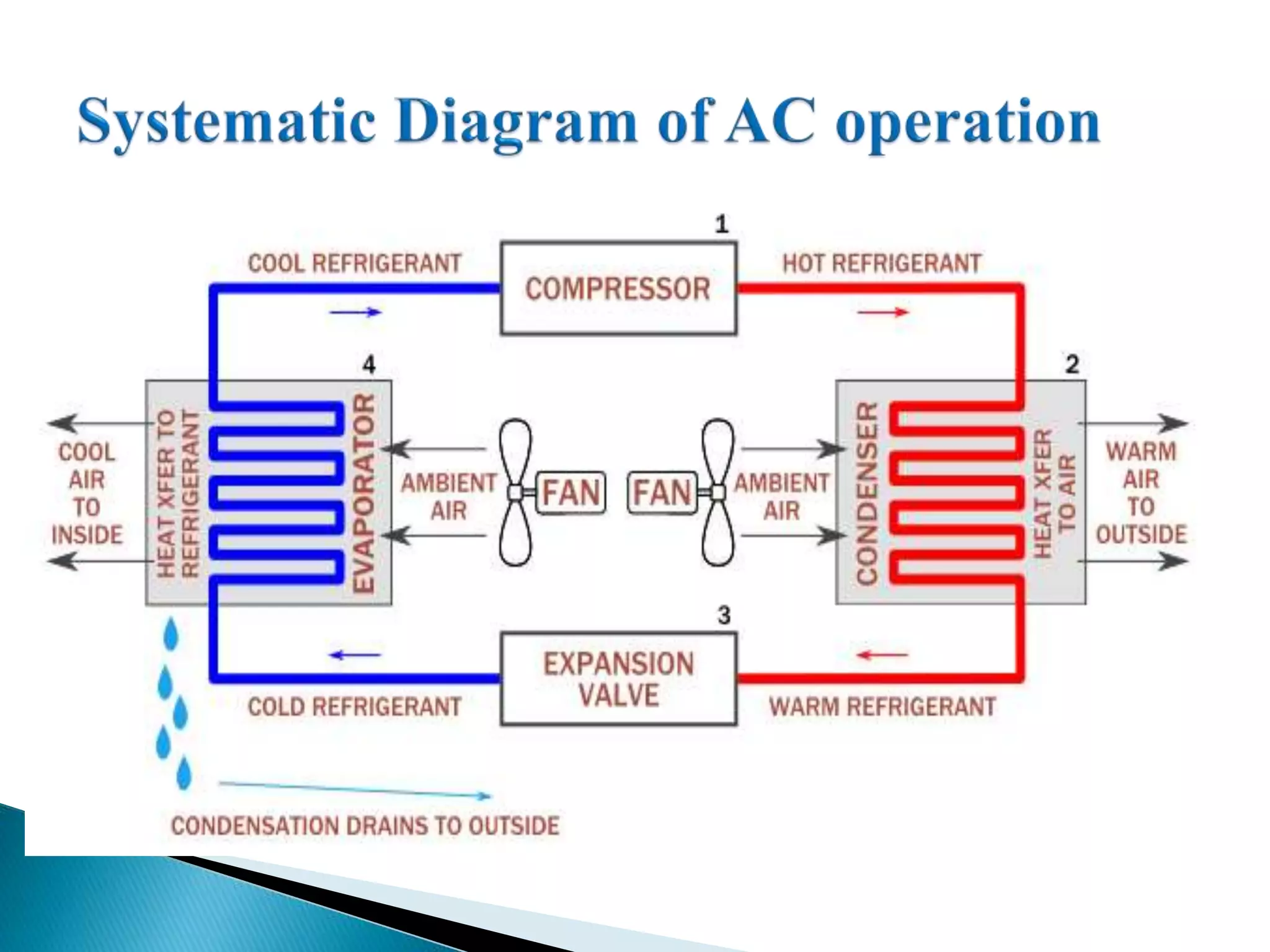
 Compressor: Is a pump that moves refrigerant between
the evaporator and condenser to chill the ambient air.
 Condenser: Is a coil that releases the collected heat to
outside air.
 Evaporator: is a coil that remove heat and humidity from
surrounding air.
 Blower: or indoor fan circulate air over the evaporator
and dispensing chilled air
 Outdoor Fan: Is a fan that blow air over hot condenser
coil to dissipate air outside
 Filter: is located inside the evaporator to remove
particles from the air that comes into evaporator
 Thermostat: is a control that regulate the amount of
cool air the evaporator is circulating
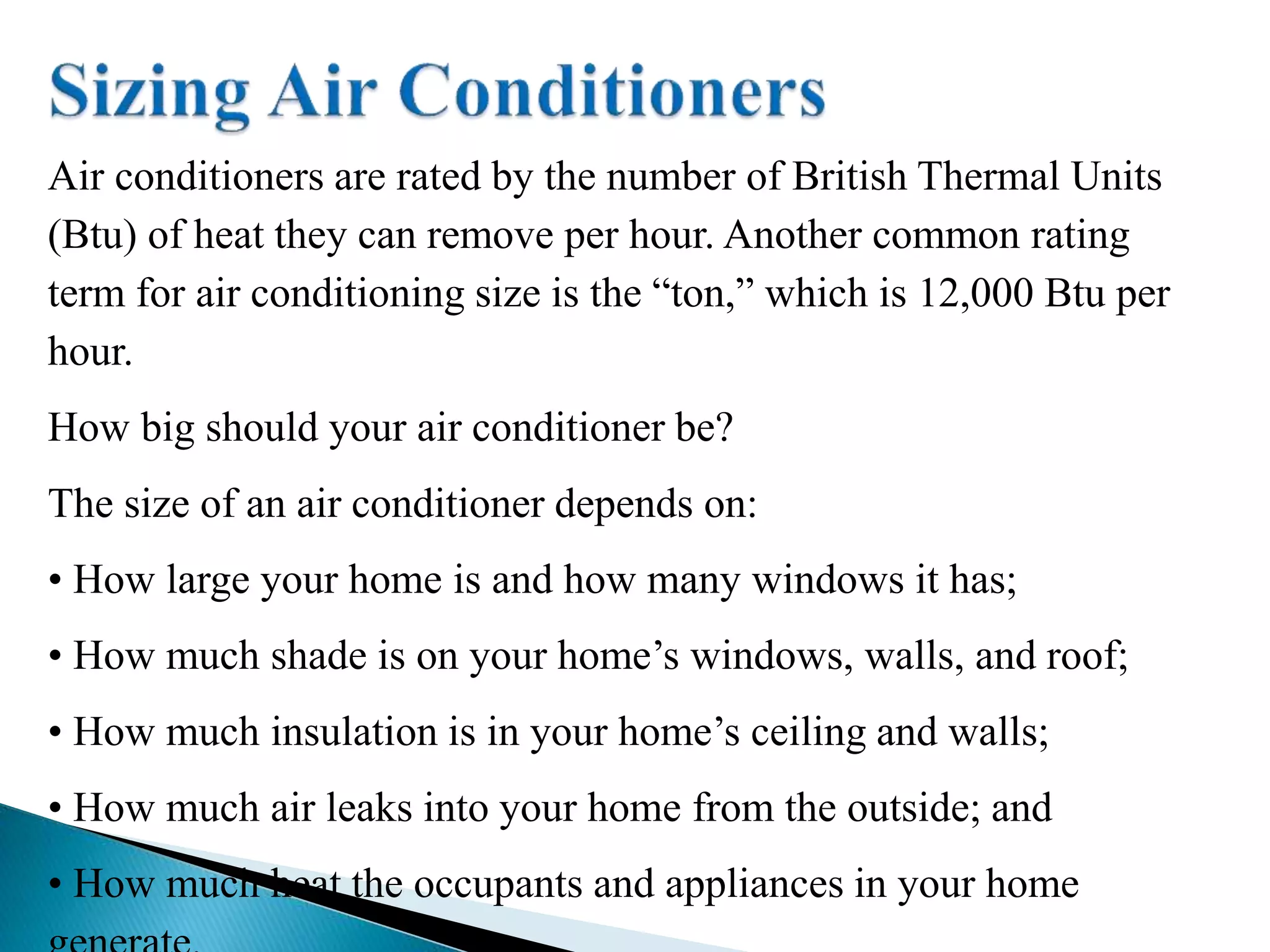
Air conditioners are rated by the number of British Thermal Units
(Btu) of heat they can remove per hour. Another common rating
term for air conditioning size is the “ton,” which is 12,000 Btu per
hour.
How big should your air conditioner be?
The size of an air conditioner depends on:
• How large your home is and how many windows it has;
• How much shade is on your home’s windows, walls, and roof;
• How much insulation is in your home’s ceiling and walls;
• How much air leaks into your home from the outside; and
• How much heat the occupants and appliances in your home
 Mention 3 Factors that determine the sizing of Air
conditioner
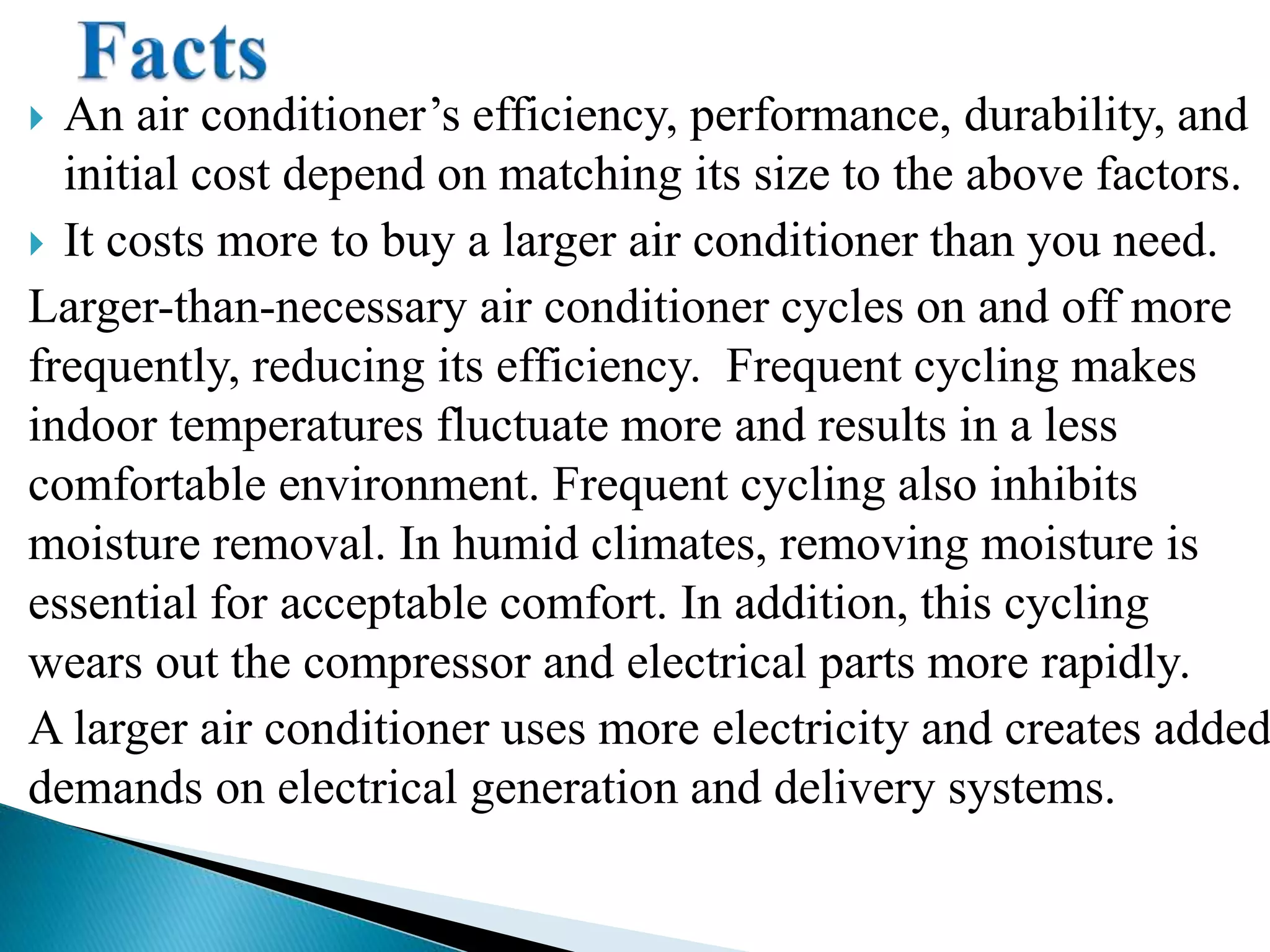
 An air conditioner’s efficiency, performance, durability, and
initial cost depend on matching its size to the above factors.
 It costs more to buy a larger air conditioner than you need.
Larger-than-necessary air conditioner cycles on and off more
frequently, reducing its efficiency. Frequent cycling makes
indoor temperatures fluctuate more and results in a less
comfortable environment. Frequent cycling also inhibits
moisture removal. In humid climates, removing moisture is
essential for acceptable comfort. In addition, this cycling
wears out the compressor and electrical parts more rapidly.
A larger air conditioner uses more electricity and creates added
demands on electrical generation and delivery systems.
 What is the function of evaporator
 What is the function of a compressor
The following air-conditioning scheduled maintenance must
be done during each maintenance cycle, unless otherwise
stated:
 Clean and wash all filters.
 Replace broken grill and damaged filters.
 Test air-conditioner in position and record the following
after 5 minutes running time
 Measure both evaporator and condenser on-coil and off-
coil air temperatures to determine coil efficiencies and
indicate system performance. These temperature
differences must be within manufacturer specifications.
 Measure AC power supply current reading with compressor
running under full cooling load. These values must be within
manufacturer’s specifications.
 Measure AC power supply Voltage reading with compressors
running under full cooling load. These values must be within
manufacturer’s specification.
 Observe for any abnormal noise or vibration and rectify.
 Ensure the drain is free from clogging
 Test air-conditioner for auto re-start
 Inspect if Anti Freeze thermostat is installed. Report if not
fitted.
 Set discharge louvers to point to equipment and not towards
movement alarm
 Inspect air-conditioner casings, repair broken casings and
treat rusted areas
 Observe any abnormal noise and vibration and rectify.
 Set air conditioners to 21 and 22 degrees Celsius respectively.
 Test air-conditioners changeover cycling and rectify if not
functional.
 Replace thermostat if not functional.
 Inspect fan blades for any cracks or damage and repair.
 Inspect all refrigerant lines for vibration damage and rectify.
 Inspect all contacts and rectify loose connections.
 Inspect for burnt wiring (discolouring of insulation
material) and rectify
 Comb distorted condenser and evaporator fins.
 Improperly sized system
 Incorrect AC positioning
 Running AC 24/7
 Refrigerant Leaks
 Inadequate Maintenance
 Drainage Problems
 Sensor Problems
 Letting outside air in
 Not changing air filters
 Not fixing emergency issues
 What are the four process involve in a complete AC
system
THANK YOU

AC basic training

  • 2.
    This presentation covers: –Basic operation and service of air-conditioning system • Emphasis on learning system operation and performing minor service and diagnostic procedures
  • 3.
     The firstmodern air conditioning system was developed in 1902 by a young electrical engineer named Willis Haviland Carrier.  It was designed to solve a humidity problem at the Publishing Company in Brooklyn, New York. Paper stock at the plant would sometimes absorb moisture from the warm summer air, making it difficult to apply the layered inking techniques of the time
  • 4.
     Air conditionersand refrigerators work the same way. Instead of cooling just the small, insulated space inside of a refrigerator, an air conditioner cools a room, a whole house, or an entire business.  Air conditioners use chemicals that easily convert from a gas to a liquid and back again. This chemical is used to transfer heat from the air inside of a home to the outside air.
  • 5.
     What isthe difference between the working operation of Air conditioner and Refrigerators
  • 7.
     Compressor: Isa pump that moves refrigerant between the evaporator and condenser to chill the ambient air.  Condenser: Is a coil that releases the collected heat to outside air.  Evaporator: is a coil that remove heat and humidity from surrounding air.  Blower: or indoor fan circulate air over the evaporator and dispensing chilled air  Outdoor Fan: Is a fan that blow air over hot condenser coil to dissipate air outside
  • 8.
     Filter: islocated inside the evaporator to remove particles from the air that comes into evaporator  Thermostat: is a control that regulate the amount of cool air the evaporator is circulating
  • 9.
    Air conditioners arerated by the number of British Thermal Units (Btu) of heat they can remove per hour. Another common rating term for air conditioning size is the “ton,” which is 12,000 Btu per hour. How big should your air conditioner be? The size of an air conditioner depends on: • How large your home is and how many windows it has; • How much shade is on your home’s windows, walls, and roof; • How much insulation is in your home’s ceiling and walls; • How much air leaks into your home from the outside; and • How much heat the occupants and appliances in your home
  • 10.
     Mention 3Factors that determine the sizing of Air conditioner
  • 11.
     An airconditioner’s efficiency, performance, durability, and initial cost depend on matching its size to the above factors.  It costs more to buy a larger air conditioner than you need. Larger-than-necessary air conditioner cycles on and off more frequently, reducing its efficiency. Frequent cycling makes indoor temperatures fluctuate more and results in a less comfortable environment. Frequent cycling also inhibits moisture removal. In humid climates, removing moisture is essential for acceptable comfort. In addition, this cycling wears out the compressor and electrical parts more rapidly. A larger air conditioner uses more electricity and creates added demands on electrical generation and delivery systems.
  • 12.
     What isthe function of evaporator  What is the function of a compressor
  • 13.
    The following air-conditioningscheduled maintenance must be done during each maintenance cycle, unless otherwise stated:  Clean and wash all filters.  Replace broken grill and damaged filters.  Test air-conditioner in position and record the following after 5 minutes running time  Measure both evaporator and condenser on-coil and off- coil air temperatures to determine coil efficiencies and indicate system performance. These temperature differences must be within manufacturer specifications.
  • 14.
     Measure ACpower supply current reading with compressor running under full cooling load. These values must be within manufacturer’s specifications.  Measure AC power supply Voltage reading with compressors running under full cooling load. These values must be within manufacturer’s specification.  Observe for any abnormal noise or vibration and rectify.  Ensure the drain is free from clogging  Test air-conditioner for auto re-start  Inspect if Anti Freeze thermostat is installed. Report if not fitted.
  • 15.
     Set dischargelouvers to point to equipment and not towards movement alarm  Inspect air-conditioner casings, repair broken casings and treat rusted areas  Observe any abnormal noise and vibration and rectify.  Set air conditioners to 21 and 22 degrees Celsius respectively.  Test air-conditioners changeover cycling and rectify if not functional.  Replace thermostat if not functional.  Inspect fan blades for any cracks or damage and repair.  Inspect all refrigerant lines for vibration damage and rectify.
  • 16.
     Inspect allcontacts and rectify loose connections.  Inspect for burnt wiring (discolouring of insulation material) and rectify  Comb distorted condenser and evaporator fins.
  • 17.
     Improperly sizedsystem  Incorrect AC positioning  Running AC 24/7  Refrigerant Leaks  Inadequate Maintenance  Drainage Problems  Sensor Problems  Letting outside air in  Not changing air filters  Not fixing emergency issues
  • 18.
     What arethe four process involve in a complete AC system
  • 19.