Human microbiome project
INTRODUCTION
● The Human Microbiome Project (HMP) is a research initiative started by the National
Institute of Health (NIH) in 2007 to understand the microbial flora of the human
body.
● What is microbiome? A microbiome can be defined as the totality of microbes, their
genomes and their interactions in a particular environment.
● The human microbiome is the aggregate of all microbiota that reside on or within
human tissues and biofluids along with the corresponding anatomical sites in which
they reside, including the skin, mammary glands, seminal fluid, uterus, ovarian
follicles, lung, saliva, oral mucosa, conjunctiva, biliary tract, and gastrointestinal
tract.
● Types of human microbiota include bacteria, archaea, fungi, protists and viruses.
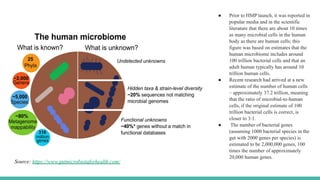
● Prior to HMP launch, it was reported in
popular media and in the scientific
literature that there are about 10 times
as many microbial cells in the human
body as there are human cells; this
figure was based on estimates that the
human microbiome includes around
100 trillion bacterial cells and that an
adult human typically has around 10
trillion human cells.
● Recent research had arrived at a new
estimate of the number of human cells
– approximately 37.2 trillion, meaning
that the ratio of microbial-to-human
cells, if the original estimate of 100
trillion bacterial cells is correct, is
closer to 3:1.
● The number of bacterial genes
(assuming 1000 bacterial species in the
gut with 2000 genes per species) is
estimated to be 2,000,000 genes, 100
times the number of approximately
20,000 human genes.
Source: https://www.gutmicrobiotaforhealth.com/
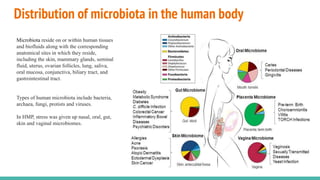
Distribution of microbiota in the human body
Microbiota reside on or within human tissues
and biofluids along with the corresponding
anatomical sites in which they reside,
including the skin, mammary glands, seminal
fluid, uterus, ovarian follicles, lung, saliva,
oral mucosa, conjunctiva, biliary tract, and
gastrointestinal tract.
Types of human microbiota include bacteria,
archaea, fungi, protists and viruses.
In HMP, stress was given up nasal, oral, gut,
skin and vaginal microbiomes.
● The microbiome is essential for human development, immunity
and nutrition. The bacteria living in and on us are not invaders
but beneficial colonizers.
● A person’s microbiome may influence their susceptibility to
infectious diseases and contribute to chronic illnesses of the
gastrointestinal system like Crohn’s disease and irritable bowel
syndrome.
● Some collections of microbes determine how a person responds
to a drug treatment.
● The microbiome of the mother may affect the health of her
children.
● Researchers mapping the human microbiome are discovering
previously uncharted species and genes.
● Genetic studies that measure the relative abundance of different
species in the human microbiome have linked various
combinations of microbe species to certain human health
conditions.
● A more complete understanding of the diversity of microbes in
the human microbiome could lead to new therapies, perhaps
treating a bacterial infection caused by a “bad” bacteria by
growing more “good” bacteria.
● The HMP serves as a roadmap for discovering the role of the
microbiome in health, nutrition, immunity, and disease
HMP
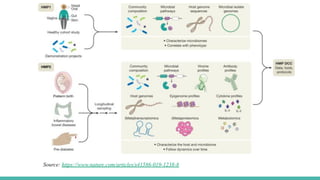
The Human Microbiome Project (HMP) was a United States National Institutes of Health (NIH) research initiative to improve
understanding of the microbial flora involved in human health and disease.
Launched in 2007, the first phase (HMP1) focused on identifying and characterizing human microbial flora.
The second phase, known as the Integrative Human Microbiome Project (iHMP) launched in 2014 with the aim of generating
resources to characterize the microbiome and elucidating the roles of microbes in health and disease states.
The program received $170 million in funding by the NIH Common Fund from 2007 to 2016.
Important components of the HMP were culture-independent methods of microbial community characterization, such as
metagenomics (which provides a broad genetic perspective on a single microbial community), as well as extensive whole
genome sequencing (which provides a "deep" genetic perspective on certain aspects of a given microbial community, i.e. of
individual bacterial species).
The latter served as reference genomic sequences — 3000 such sequences of individual bacterial isolates are currently planned
— for comparison purposes during subsequent metagenomic analysis. The project also financed deep sequencing of bacterial
16S rRNA sequences amplified by polymerase chain reaction from human subjects
Despite the staggering number of microbes in and on the human body, little was known about their roles in human
health and disease. Many of the organisms that make up the microbiome have not been successfully cultured,
identified, or otherwise characterized. Organisms thought to be found in the human microbiome, however, may
generally be categorized as bacteria, members of domain Archaea, yeasts, and single-celled eukaryotes as well as
various helminth parasites and viruses, the latter including viruses that infect the cellular microbiome organisms
(e.g., bacteriophages). The HMP set out to discover and characterize the human microbiome, emphasizing oral, skin,
vaginal, gastrointestinal, and respiratory site.
The HMP has been described as "a logical conceptual and experimental extension of the Human Genome Project. In
2007 the HMP was listed on the NIH Roadmap for Medical Research as one of the New Pathways to Discovery.
Organized characterization of the human microbiome is also being done internationally under the auspices of the
International Human Microbiome Consortium. The Canadian Institutes of Health Research, through the CIHR
Institute of Infection and Immunity, is leading the Canadian Microbiome Initiative to develop a coordinated and
focused research effort to analyze and characterize the microbes that colonize the human body and their potential
alteration during chronic disease states
PHASE ONE (2007-2014)
The HMP1 included research efforts from many institutions. The HMP1 set the following goals:
● Develop a reference set of microbial genome sequences and to perform preliminary characterization of the
human microbiome
● Explore the relationship between disease and changes in the human microbiome
● Develop new technologies and tools for computational analysis
● Establish a resource repository
● Study the ethical, legal, and social implications of human microbiome research
PHASE TWO (2014-2016)
In 2014, the NIH launched the second phase of the project, known as the Integrative Human Microbiome Project
(iHMP). The goal of the iHMP was to produce resources to create a complete characterization of the human
microbiome, with a focus on understanding the presence of microbiota in health and disease states. The project
mission, as stated by the NIH, was as follows:
The iHMP will create integrated longitudinal datasets of biological properties from both the microbiome and
host from three different cohort studies of microbiome-associated conditions using multiple "omics"
technologies.
The project encompassed three sub-projects carried out at multiple institutions. Study methods included 16S rRNA
gene profiling, whole metagenome shotgun sequencing, whole genome sequencing, metatranscriptomics,
metabolomics/lipidomics, and immunoproteomics. The key findings of the iHMP were published in 2019.
Source: https://www.nature.com/articles/s41586-019-1238-8
Major components of iHMP
Diabetes: Led by Dr. Michael Snyder at Stanford University, the largest study in iHMP tracked 106 participants for 4 years, extensively sampling
their blood and faeces every 3 months, and profiled changes in their gut and nose microbiomes.They found several personalized “molecular
signatures,” including microbiome patterns, that marked people who eventually became diabetic.The results were also meaningful for managing
heart and blood vessel diseases, blood disorders, and even cancer.
Inflammatory Bowel Disease (IBD): IBD affects millions of people worldwide, and the numbers are increasing. The disease is also one of the first
linked to microbiome changes.The study found a variety of differences in the microbiome and the host’s immune response as the disease
progressed—much larger than previous thought. The IBD microbiome reverts back to normal configurations when the disease isn’t active, but
dramatically changes in its microbug species composition when IBD flares back up. By simultaneously profiling the host’s biomolecules, it was
found that a handful of immune-related chemicals that shape the microbug community in IBD patients, which could become biomarkers for the
disease.
Preterm birth: The third branch of iHMP, led by Dr. Gregory Buck at Virginia Commonwealth University, mainly focused on women’s health,
examining characteristics of the vaginal microbiome that potentially increase the risk of preterm birth.It was found that the vaginal microbiota
dramatically changes in composition and function mainly during the first trimester of pregnancy. One type, Lactobacillus, becomes particularly
dominant by the second trimester at the expense of other microbug types, and the change is especially noticeable in women of African or Hispanic
ancestry.Notably, the vaginal microbiota between preterm and full-term moms differ even early in pregnancy. Low levels of Lactobacillus and a
boost in several other strains correlated with premature birth, giving physicians a powerful preliminary model to predict risk and intervene
accordingly.
Applications of HMP
Data from individuals without overt signs of disease serve as an excellent reference for disease-associated microbiome studies, while
also providing a comprehensive baseline for comparison of Western populations with disparate geographic, ethnic, and genetic cohorts.
The adoption of uniform sampling, nucleic acid extraction, sequencing, and analysis protocols allowed us to better understand several
aspects of autoimmune disease. The inflammatory bowel diseases have long been linked to the human gut microbiome, with integration
of host genotype, gene expression, and microbial activity suggests mediation of specific host-microbial interactions by human gene
products as well as by host environment.
Bacteria are of course not the only mediators of dysbiotic disease, and metagenomic approaches can also be used to identify potential
viral etiologies. Likewise the “healthy" microbiome provides a baseline not only for integration with disease-related studies, but for
broader populations such as a recent comparison using HMP protocols among a cohort of pregnant women.
The normal variation of the microbiome within healthy states and its potential misregulation in disease is thus being pursued in earnest,
as related laboratory and computational methods continue to be adapted to better characterize the impact of bacteria, archaea, viruses,
and fungi throughout human body habitats.
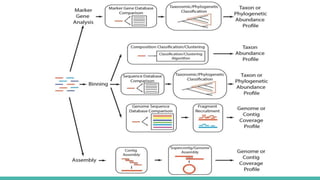
Techniques used in HMP:
Shotgun sequencing:
● Collection of samples and DNA extraction
● Preparation of the library and sequencing
● Metagenome assembly
● Contig binning
● Analysis after the processing
Marker gene analysis:
It is a technique that exploits primers to target a specific genetic region and enables to determine the microbial phylogenies
Phylogenetic Analysis:
PCS is based on the principle that the closely the microorganisms are related, the higher number of traits they share.
Conclusion
The HMP has provided an extensive resource of datasets, computational tools, clinical methods, and scientific approaches to the study of
the human microbiome.
The Human Microbiome Project not only served as a catalyst for microbiome research across the National Institutes of Health (NIH), it
stimulated interest in the larger growing field of microbial ecology.
In an analysis by Office Technology and Policy (OSTP) in 2015, it showed that microbiome research received a high level of support
($922M) in fiscal years 2012 -2014 across multiple federal agencies, with NIH-supporting the bulk of the research at 59%. The majority
of the research was in human subjects (37%) or animal models (29%) and focused on the gut microbiome.
A analysis of healthy microbiomes has found that each person’s microbiome is unique. This analysis will help pave the way for future
studies that can begin to use microbial communities as a basis for personalizing therapies and possibly to assess the risk for certain
diseases.
References
● https://www.nature.com/articles/nature06244
● https://en.wikipedia.org/wiki/Human_Microbiome_Project
● https://commonfund.nih.gov/hmp
● https://microbiomejournal.biomedcentral.com/articles/10.1186/s40168-019-0620-y
● https://hmpdacc.org/hmp/
● https://www.bcm.edu/departments/molecular-virology-and-microbiology/research/human-micro
biome-project
● https://hmpdacc.org/ihmp/
● https://www.nature.com/articles/s41586-019-1238-8
● https://www.gutmicrobiotaforhealth.com/the-knowns-and-unknowns-of-the-human-microbiome/
● Proctor, Lita M. “The Human Microbiome Project in 2011 and beyond.” Cell host & microbe
vol. 10,4 (2011): 287-91. doi:10.1016/j.chom.2011.10.001
●

Human Microbiome Project (HMP)

  • 1.
  • 2.
    INTRODUCTION ● The HumanMicrobiome Project (HMP) is a research initiative started by the National Institute of Health (NIH) in 2007 to understand the microbial flora of the human body. ● What is microbiome? A microbiome can be defined as the totality of microbes, their genomes and their interactions in a particular environment. ● The human microbiome is the aggregate of all microbiota that reside on or within human tissues and biofluids along with the corresponding anatomical sites in which they reside, including the skin, mammary glands, seminal fluid, uterus, ovarian follicles, lung, saliva, oral mucosa, conjunctiva, biliary tract, and gastrointestinal tract. ● Types of human microbiota include bacteria, archaea, fungi, protists and viruses.
  • 3.
    ● Prior toHMP launch, it was reported in popular media and in the scientific literature that there are about 10 times as many microbial cells in the human body as there are human cells; this figure was based on estimates that the human microbiome includes around 100 trillion bacterial cells and that an adult human typically has around 10 trillion human cells. ● Recent research had arrived at a new estimate of the number of human cells – approximately 37.2 trillion, meaning that the ratio of microbial-to-human cells, if the original estimate of 100 trillion bacterial cells is correct, is closer to 3:1. ● The number of bacterial genes (assuming 1000 bacterial species in the gut with 2000 genes per species) is estimated to be 2,000,000 genes, 100 times the number of approximately 20,000 human genes. Source: https://www.gutmicrobiotaforhealth.com/
  • 4.
    Distribution of microbiotain the human body Microbiota reside on or within human tissues and biofluids along with the corresponding anatomical sites in which they reside, including the skin, mammary glands, seminal fluid, uterus, ovarian follicles, lung, saliva, oral mucosa, conjunctiva, biliary tract, and gastrointestinal tract. Types of human microbiota include bacteria, archaea, fungi, protists and viruses. In HMP, stress was given up nasal, oral, gut, skin and vaginal microbiomes.
  • 5.
    ● The microbiomeis essential for human development, immunity and nutrition. The bacteria living in and on us are not invaders but beneficial colonizers. ● A person’s microbiome may influence their susceptibility to infectious diseases and contribute to chronic illnesses of the gastrointestinal system like Crohn’s disease and irritable bowel syndrome. ● Some collections of microbes determine how a person responds to a drug treatment. ● The microbiome of the mother may affect the health of her children. ● Researchers mapping the human microbiome are discovering previously uncharted species and genes. ● Genetic studies that measure the relative abundance of different species in the human microbiome have linked various combinations of microbe species to certain human health conditions. ● A more complete understanding of the diversity of microbes in the human microbiome could lead to new therapies, perhaps treating a bacterial infection caused by a “bad” bacteria by growing more “good” bacteria. ● The HMP serves as a roadmap for discovering the role of the microbiome in health, nutrition, immunity, and disease
  • 6.
    HMP The Human MicrobiomeProject (HMP) was a United States National Institutes of Health (NIH) research initiative to improve understanding of the microbial flora involved in human health and disease. Launched in 2007, the first phase (HMP1) focused on identifying and characterizing human microbial flora. The second phase, known as the Integrative Human Microbiome Project (iHMP) launched in 2014 with the aim of generating resources to characterize the microbiome and elucidating the roles of microbes in health and disease states. The program received $170 million in funding by the NIH Common Fund from 2007 to 2016. Important components of the HMP were culture-independent methods of microbial community characterization, such as metagenomics (which provides a broad genetic perspective on a single microbial community), as well as extensive whole genome sequencing (which provides a "deep" genetic perspective on certain aspects of a given microbial community, i.e. of individual bacterial species). The latter served as reference genomic sequences — 3000 such sequences of individual bacterial isolates are currently planned — for comparison purposes during subsequent metagenomic analysis. The project also financed deep sequencing of bacterial 16S rRNA sequences amplified by polymerase chain reaction from human subjects
  • 7.
    Despite the staggeringnumber of microbes in and on the human body, little was known about their roles in human health and disease. Many of the organisms that make up the microbiome have not been successfully cultured, identified, or otherwise characterized. Organisms thought to be found in the human microbiome, however, may generally be categorized as bacteria, members of domain Archaea, yeasts, and single-celled eukaryotes as well as various helminth parasites and viruses, the latter including viruses that infect the cellular microbiome organisms (e.g., bacteriophages). The HMP set out to discover and characterize the human microbiome, emphasizing oral, skin, vaginal, gastrointestinal, and respiratory site. The HMP has been described as "a logical conceptual and experimental extension of the Human Genome Project. In 2007 the HMP was listed on the NIH Roadmap for Medical Research as one of the New Pathways to Discovery. Organized characterization of the human microbiome is also being done internationally under the auspices of the International Human Microbiome Consortium. The Canadian Institutes of Health Research, through the CIHR Institute of Infection and Immunity, is leading the Canadian Microbiome Initiative to develop a coordinated and focused research effort to analyze and characterize the microbes that colonize the human body and their potential alteration during chronic disease states
  • 8.
    PHASE ONE (2007-2014) TheHMP1 included research efforts from many institutions. The HMP1 set the following goals: ● Develop a reference set of microbial genome sequences and to perform preliminary characterization of the human microbiome ● Explore the relationship between disease and changes in the human microbiome ● Develop new technologies and tools for computational analysis ● Establish a resource repository ● Study the ethical, legal, and social implications of human microbiome research
  • 9.
    PHASE TWO (2014-2016) In2014, the NIH launched the second phase of the project, known as the Integrative Human Microbiome Project (iHMP). The goal of the iHMP was to produce resources to create a complete characterization of the human microbiome, with a focus on understanding the presence of microbiota in health and disease states. The project mission, as stated by the NIH, was as follows: The iHMP will create integrated longitudinal datasets of biological properties from both the microbiome and host from three different cohort studies of microbiome-associated conditions using multiple "omics" technologies. The project encompassed three sub-projects carried out at multiple institutions. Study methods included 16S rRNA gene profiling, whole metagenome shotgun sequencing, whole genome sequencing, metatranscriptomics, metabolomics/lipidomics, and immunoproteomics. The key findings of the iHMP were published in 2019.
  • 10.
  • 11.
    Major components ofiHMP Diabetes: Led by Dr. Michael Snyder at Stanford University, the largest study in iHMP tracked 106 participants for 4 years, extensively sampling their blood and faeces every 3 months, and profiled changes in their gut and nose microbiomes.They found several personalized “molecular signatures,” including microbiome patterns, that marked people who eventually became diabetic.The results were also meaningful for managing heart and blood vessel diseases, blood disorders, and even cancer. Inflammatory Bowel Disease (IBD): IBD affects millions of people worldwide, and the numbers are increasing. The disease is also one of the first linked to microbiome changes.The study found a variety of differences in the microbiome and the host’s immune response as the disease progressed—much larger than previous thought. The IBD microbiome reverts back to normal configurations when the disease isn’t active, but dramatically changes in its microbug species composition when IBD flares back up. By simultaneously profiling the host’s biomolecules, it was found that a handful of immune-related chemicals that shape the microbug community in IBD patients, which could become biomarkers for the disease. Preterm birth: The third branch of iHMP, led by Dr. Gregory Buck at Virginia Commonwealth University, mainly focused on women’s health, examining characteristics of the vaginal microbiome that potentially increase the risk of preterm birth.It was found that the vaginal microbiota dramatically changes in composition and function mainly during the first trimester of pregnancy. One type, Lactobacillus, becomes particularly dominant by the second trimester at the expense of other microbug types, and the change is especially noticeable in women of African or Hispanic ancestry.Notably, the vaginal microbiota between preterm and full-term moms differ even early in pregnancy. Low levels of Lactobacillus and a boost in several other strains correlated with premature birth, giving physicians a powerful preliminary model to predict risk and intervene accordingly.
  • 12.
    Applications of HMP Datafrom individuals without overt signs of disease serve as an excellent reference for disease-associated microbiome studies, while also providing a comprehensive baseline for comparison of Western populations with disparate geographic, ethnic, and genetic cohorts. The adoption of uniform sampling, nucleic acid extraction, sequencing, and analysis protocols allowed us to better understand several aspects of autoimmune disease. The inflammatory bowel diseases have long been linked to the human gut microbiome, with integration of host genotype, gene expression, and microbial activity suggests mediation of specific host-microbial interactions by human gene products as well as by host environment. Bacteria are of course not the only mediators of dysbiotic disease, and metagenomic approaches can also be used to identify potential viral etiologies. Likewise the “healthy" microbiome provides a baseline not only for integration with disease-related studies, but for broader populations such as a recent comparison using HMP protocols among a cohort of pregnant women. The normal variation of the microbiome within healthy states and its potential misregulation in disease is thus being pursued in earnest, as related laboratory and computational methods continue to be adapted to better characterize the impact of bacteria, archaea, viruses, and fungi throughout human body habitats.
  • 13.
    Techniques used inHMP: Shotgun sequencing: ● Collection of samples and DNA extraction ● Preparation of the library and sequencing ● Metagenome assembly ● Contig binning ● Analysis after the processing Marker gene analysis: It is a technique that exploits primers to target a specific genetic region and enables to determine the microbial phylogenies Phylogenetic Analysis: PCS is based on the principle that the closely the microorganisms are related, the higher number of traits they share.
  • 15.
    Conclusion The HMP hasprovided an extensive resource of datasets, computational tools, clinical methods, and scientific approaches to the study of the human microbiome. The Human Microbiome Project not only served as a catalyst for microbiome research across the National Institutes of Health (NIH), it stimulated interest in the larger growing field of microbial ecology. In an analysis by Office Technology and Policy (OSTP) in 2015, it showed that microbiome research received a high level of support ($922M) in fiscal years 2012 -2014 across multiple federal agencies, with NIH-supporting the bulk of the research at 59%. The majority of the research was in human subjects (37%) or animal models (29%) and focused on the gut microbiome. A analysis of healthy microbiomes has found that each person’s microbiome is unique. This analysis will help pave the way for future studies that can begin to use microbial communities as a basis for personalizing therapies and possibly to assess the risk for certain diseases.
  • 16.
    References ● https://www.nature.com/articles/nature06244 ● https://en.wikipedia.org/wiki/Human_Microbiome_Project ●https://commonfund.nih.gov/hmp ● https://microbiomejournal.biomedcentral.com/articles/10.1186/s40168-019-0620-y ● https://hmpdacc.org/hmp/ ● https://www.bcm.edu/departments/molecular-virology-and-microbiology/research/human-micro biome-project ● https://hmpdacc.org/ihmp/ ● https://www.nature.com/articles/s41586-019-1238-8 ● https://www.gutmicrobiotaforhealth.com/the-knowns-and-unknowns-of-the-human-microbiome/ ● Proctor, Lita M. “The Human Microbiome Project in 2011 and beyond.” Cell host & microbe vol. 10,4 (2011): 287-91. doi:10.1016/j.chom.2011.10.001 ●