




Welcome
Dr. Hamima Hasnat
M.B.B.S , M. Phil (Microbiology)
Assistant Professor
Eastern medical college, Cumilla
BACTERIABacteria
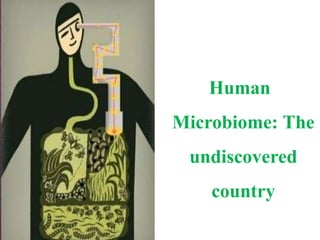
Human
Microbiome: The
undiscovered
country
Human microbiome
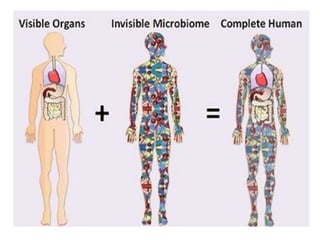
• The human microbiome is the distinct microbial communities
that inhabit different host environment on the body’s skin and
mucosal surface. The term microbiome encompasses all of the
genetic material associated with these organisms.
• In short, human microbiome means the entire inhabitant
microorganisms, their genomes, their capabilities and the
surrounding environment.
• These microbes are often referred to as commensals, which are
organisms that derive benefit from another host but do not
damage that host.
• Human microbiomes are the permanent residents of the body
in all humans.
• Some people can be transiently colonized, either for short or
long periods, with certain organisms, but those are not
considered members of the human microbiome.
• Carrier state:
The term carrier implies that an individual harbors a potential
pathogen and therefore can be a source of infection of others.
It is most frequently used in reference to a person with an
- asymptomatic infection or
- someone who has recovered from a disease but continues to
carry the organism and may shed it for a long period.
• Colonization:
Colonization is the presence of bacteria on a body surface (like
on the skin, mouth, intestines or airway) without causing
disease in the person.
• Infection:
Growth and multiplication of a microbe in or on the body of
the host with or without the production of disease.
• When we get colonized with human microbiome?
Immediately after birth.
Human microbiomes are either,
• Bacteria
• Yeasts,
• Protozoa.
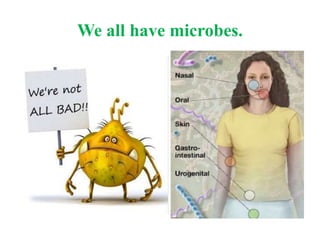
We all have microbes.
What part of the human body is sterile?
•The internal organs usually are sterile such as the central
nervous system, blood, lower bronchi and alveoli, liver, spleen,
kidneys, and bladder.
• But the occasional transient microbial intrution occurs after
modest trauma (after flossing of teeth) or abration on the skin.
• Variation in the abundance and complexity of the microbiome
constituents is observed within any individual over time and
certainly between individuals.
• However within the first few years of life our microbial
communities mature and become relatively stable unless
perturbed, such as by antibiotic treatment.
Contribution of microbiome to health and
disease
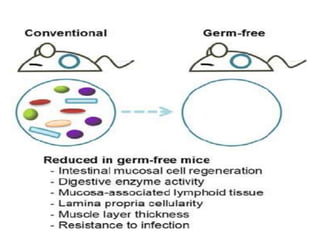
1. A healthy microbiome helps to develop immune system. Like
the gut microbiota influences the maturation and function of
the immune response.
2. The nonpathogenic resident bacteria occupy attachment sites
on the skin and mucosa that can interfere with colonization by
pathogenic bacteria (Colonization resistance).
• For example, antibiotics can reduce the normal colonic flora
that allows Clostridium difficile, which is resistant to the
antibiotics, to overgrow and cause pseudomembranous colitis.
3. Play an important role in several body functions and diseases,
such as weight control (obesity), inflammatory bowel disease.
4. They harbors a diverse reservoir of antibiotic resistance genes
and this gene can be exchanged between bacteria through
horizontal gene transfer. So they can share drug resistence with
pathogenic bacteria.
5. They can cause disease, especially in immunocompromised
and debilitated individuals. Although these organisms are
nonpathogens in their usual anatomic location, they can be
pathogens in other parts of the body.
.
6. The intestinal bacteria produce several B vitamins and vitamin
K and have a major impact on the absorption of key minerals,
such as iron.
• Gut bacteria aid digestion by breaking down otherwise
indigestable plant fibers into short chain fatty acids that
intestinal cells can access.
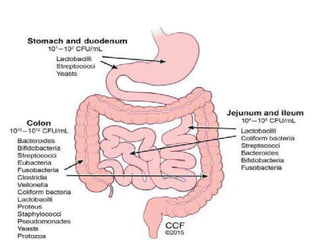
Microbiome of the intestinal tract
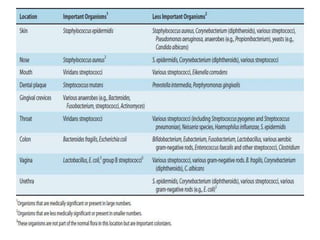
• Stomach:
In normal fasting people the stomach contains few organisms,
primarily because of its low PH.
• The small intestine:
Streptococci,
lactobacilli, and
yeasts, particularly C.albicans.
(Larger numbers of these organisms are found in the
terminal ileum)
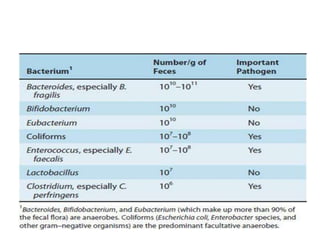
• Colon:
Colon is the major location of bacteria in the body. Roughly
20% of the feces consists of bacteria.
Microbiome of the skin
• Most of them are located superficially in the stratum corneum,
but some are found in the hair follicles and act as a reservoir to
replenish the superficial flora after hand washing.
1. Staphylococcus epidermidis; most predominant organism
(nonpathogen on the skin but can cause disease when it
reaches certain sites, such as artificial heart valves and
prosthetic joints).
2. Staphylococcus aureus.
3. Anaerobic organisms, such as Propionibacterium and
Peptococcus, are situated in the deeper follicles in the
dermis.
(Propionibacterium acnes is a common skin anaerobe that
is causes acne)
4. Candida albicans
( It can enter a person’s bloodstream when needles pierce
the skin, e.g., in patients with intravenous catheters or in
those who use intravenous drugs and may cause systemic
infections in patients with reduced cell-mediated
immunity)
Microbiome of the respiratory tract
• Nose:
S. aureus
S. epidermidis,
Corynebacterium (diphtheroids),
various Streptococci
• Throat:
Viridans streptococci,
Neisseria species,
S. epidermidis.
Various streptococci
Haemophilus influenzae
• Mouth:
- Streptococcus viridans make up about half of the bacteria.
1. Streptococcus mutans, found in large numbers in dental
plaque, the precursor of caries.
2. S. sanguinis, causes subacute bacterial (infective) endocarditis,
enter into the bloodstream at the time of dental surgery and
attach to damaged heart valves.
- Eikenella corrodens
- Anaerobic bacteria, such as species of Bacteroides,
Prevotella, Fusobacterium, Clostridium, and
Peptostreptococcus, are found in the gingival crevices.(If
aspirated, these organisms can cause lung abscesses, especially
in debilitated patients with poor dental hygiene).
• In addition, the gingival crevices are the natural habitat of
Actinomyces israelii, an anaerobic actinomycete that can
cause abscesses of the jaw, lungs, or abdomen.
Microbiome of the genitourinary tract
• Vaginal:
-Lactobacillus
Lactobacilli are responsible for producing the acid that keeps
the pH of the adult woman’s vagina low. Before puberty and
after menopause, when estrogen levels are low, lactobacilli are
rare and the vaginal pH is high.
• Lactobacilli appear to prevent the growth of potential
pathogens, since their suppression by antibiotics can lead to
overgrowth by C. albicans, which can result in Candida
vaginitis.
• The vagina is located close to the anus and can be colonized
by members of the fecal flora. For example, women with
recurrent urinary tract infections harbor organisms such as E.
coli and Enterobacter in the introitus
• About 15% to 20% of women of childbearing age carry Group
B streptococci in the vagina. This organism is an important
cause of sepsis and meningitis in the newborn and is acquired
during passage through the birth canal.
• The vagina is colonized by S. aureus in approximately 5% of
women, which predisposes them to toxic shock syndrome.
• Various streptococci,
• Various gram-negative rods.
• B. fragilis,
• Corynebacterium (diphtheroids),
• C. albicans
• Urethra:
S. epidermidis,
coliforms,
diphtheroids, and
nonhemolytic streptococci.
hamimahasnat@yahoo.com
Human microbiome
Human microbiome

Human microbiome

  • 1.
  • 2.
    Dr. Hamima Hasnat M.B.B.S, M. Phil (Microbiology) Assistant Professor Eastern medical college, Cumilla BACTERIABacteria
  • 3.
  • 5.
    Human microbiome • Thehuman microbiome is the distinct microbial communities that inhabit different host environment on the body’s skin and mucosal surface. The term microbiome encompasses all of the genetic material associated with these organisms.
  • 6.
    • In short,human microbiome means the entire inhabitant microorganisms, their genomes, their capabilities and the surrounding environment.
  • 7.
    • These microbesare often referred to as commensals, which are organisms that derive benefit from another host but do not damage that host.
  • 8.
    • Human microbiomesare the permanent residents of the body in all humans. • Some people can be transiently colonized, either for short or long periods, with certain organisms, but those are not considered members of the human microbiome.
  • 9.
    • Carrier state: Theterm carrier implies that an individual harbors a potential pathogen and therefore can be a source of infection of others. It is most frequently used in reference to a person with an - asymptomatic infection or - someone who has recovered from a disease but continues to carry the organism and may shed it for a long period.
  • 10.
    • Colonization: Colonization isthe presence of bacteria on a body surface (like on the skin, mouth, intestines or airway) without causing disease in the person. • Infection: Growth and multiplication of a microbe in or on the body of the host with or without the production of disease.
  • 11.
    • When weget colonized with human microbiome? Immediately after birth.
  • 12.
    Human microbiomes areeither, • Bacteria • Yeasts, • Protozoa.
  • 13.
    We all havemicrobes.
  • 14.
    What part ofthe human body is sterile? •The internal organs usually are sterile such as the central nervous system, blood, lower bronchi and alveoli, liver, spleen, kidneys, and bladder. • But the occasional transient microbial intrution occurs after modest trauma (after flossing of teeth) or abration on the skin.
  • 15.
    • Variation inthe abundance and complexity of the microbiome constituents is observed within any individual over time and certainly between individuals. • However within the first few years of life our microbial communities mature and become relatively stable unless perturbed, such as by antibiotic treatment.
  • 16.
    Contribution of microbiometo health and disease
  • 17.
    1. A healthymicrobiome helps to develop immune system. Like the gut microbiota influences the maturation and function of the immune response.
  • 19.
    2. The nonpathogenicresident bacteria occupy attachment sites on the skin and mucosa that can interfere with colonization by pathogenic bacteria (Colonization resistance). • For example, antibiotics can reduce the normal colonic flora that allows Clostridium difficile, which is resistant to the antibiotics, to overgrow and cause pseudomembranous colitis.
  • 20.
    3. Play animportant role in several body functions and diseases, such as weight control (obesity), inflammatory bowel disease.
  • 21.
    4. They harborsa diverse reservoir of antibiotic resistance genes and this gene can be exchanged between bacteria through horizontal gene transfer. So they can share drug resistence with pathogenic bacteria.
  • 22.
    5. They cancause disease, especially in immunocompromised and debilitated individuals. Although these organisms are nonpathogens in their usual anatomic location, they can be pathogens in other parts of the body. .
  • 23.
    6. The intestinalbacteria produce several B vitamins and vitamin K and have a major impact on the absorption of key minerals, such as iron. • Gut bacteria aid digestion by breaking down otherwise indigestable plant fibers into short chain fatty acids that intestinal cells can access.
  • 24.
    Microbiome of theintestinal tract
  • 26.
    • Stomach: In normalfasting people the stomach contains few organisms, primarily because of its low PH.
  • 27.
    • The smallintestine: Streptococci, lactobacilli, and yeasts, particularly C.albicans. (Larger numbers of these organisms are found in the terminal ileum)
  • 28.
    • Colon: Colon isthe major location of bacteria in the body. Roughly 20% of the feces consists of bacteria.
  • 30.
  • 31.
    • Most ofthem are located superficially in the stratum corneum, but some are found in the hair follicles and act as a reservoir to replenish the superficial flora after hand washing.
  • 32.
    1. Staphylococcus epidermidis;most predominant organism (nonpathogen on the skin but can cause disease when it reaches certain sites, such as artificial heart valves and prosthetic joints). 2. Staphylococcus aureus.
  • 33.
    3. Anaerobic organisms,such as Propionibacterium and Peptococcus, are situated in the deeper follicles in the dermis. (Propionibacterium acnes is a common skin anaerobe that is causes acne)
  • 34.
    4. Candida albicans (It can enter a person’s bloodstream when needles pierce the skin, e.g., in patients with intravenous catheters or in those who use intravenous drugs and may cause systemic infections in patients with reduced cell-mediated immunity)
  • 35.
    Microbiome of therespiratory tract
  • 36.
    • Nose: S. aureus S.epidermidis, Corynebacterium (diphtheroids), various Streptococci
  • 37.
    • Throat: Viridans streptococci, Neisseriaspecies, S. epidermidis. Various streptococci Haemophilus influenzae
  • 38.
    • Mouth: - Streptococcusviridans make up about half of the bacteria. 1. Streptococcus mutans, found in large numbers in dental plaque, the precursor of caries. 2. S. sanguinis, causes subacute bacterial (infective) endocarditis, enter into the bloodstream at the time of dental surgery and attach to damaged heart valves.
  • 39.
    - Eikenella corrodens -Anaerobic bacteria, such as species of Bacteroides, Prevotella, Fusobacterium, Clostridium, and Peptostreptococcus, are found in the gingival crevices.(If aspirated, these organisms can cause lung abscesses, especially in debilitated patients with poor dental hygiene).
  • 40.
    • In addition,the gingival crevices are the natural habitat of Actinomyces israelii, an anaerobic actinomycete that can cause abscesses of the jaw, lungs, or abdomen.
  • 41.
    Microbiome of thegenitourinary tract
  • 42.
    • Vaginal: -Lactobacillus Lactobacilli areresponsible for producing the acid that keeps the pH of the adult woman’s vagina low. Before puberty and after menopause, when estrogen levels are low, lactobacilli are rare and the vaginal pH is high.
  • 43.
    • Lactobacilli appearto prevent the growth of potential pathogens, since their suppression by antibiotics can lead to overgrowth by C. albicans, which can result in Candida vaginitis. • The vagina is located close to the anus and can be colonized by members of the fecal flora. For example, women with recurrent urinary tract infections harbor organisms such as E. coli and Enterobacter in the introitus
  • 44.
    • About 15%to 20% of women of childbearing age carry Group B streptococci in the vagina. This organism is an important cause of sepsis and meningitis in the newborn and is acquired during passage through the birth canal. • The vagina is colonized by S. aureus in approximately 5% of women, which predisposes them to toxic shock syndrome.
  • 45.
    • Various streptococci, •Various gram-negative rods. • B. fragilis, • Corynebacterium (diphtheroids), • C. albicans
  • 46.
  • 48.