Human Error
      — Theory and Prevention


                   Dr. Toru Nakata
    National Institute of Advanced Science and
                Technology, Japan.
                    Nov. 20, 2011
1
Part I


    Theory of Human Error Prevention


2
1-1


    How we make mistakes


3
Why do we err?

     Unknown
       Even masters of chess sometime commit easy mistakes.
       A lot of typical pattern of “misconception” are found.
         Four-card problem
         Monty Hall problem
         Horse Trading problem
         …
       But there is no universal tendency among them
     Change the question more productive.
     “Why can we usually avoid errors?”
       Because we can notice and fix errors before they break
       out.
4
Horse Trading Problem

     Frank sells Sue a horse for $60.
     Then he decides he wants it back, but Sue makes him
      pay $70 for it.
     Then Sue changes her mind and buys it back from
      Frank, but for $80 (Frank is no dummy).
     Finally, Frank buys it back from Sue for—you guessed
      it—$90 (Sue is no dummy, either).
     At this point, who comes out ahead?
       http://ohiorc.org/for/math/stella/library/problem.aspx?i
        d=128

5
1-2

    Typical Example of Human Error
    Accidents


6
Case 1: Confusing patients
                  (1999, Japan)
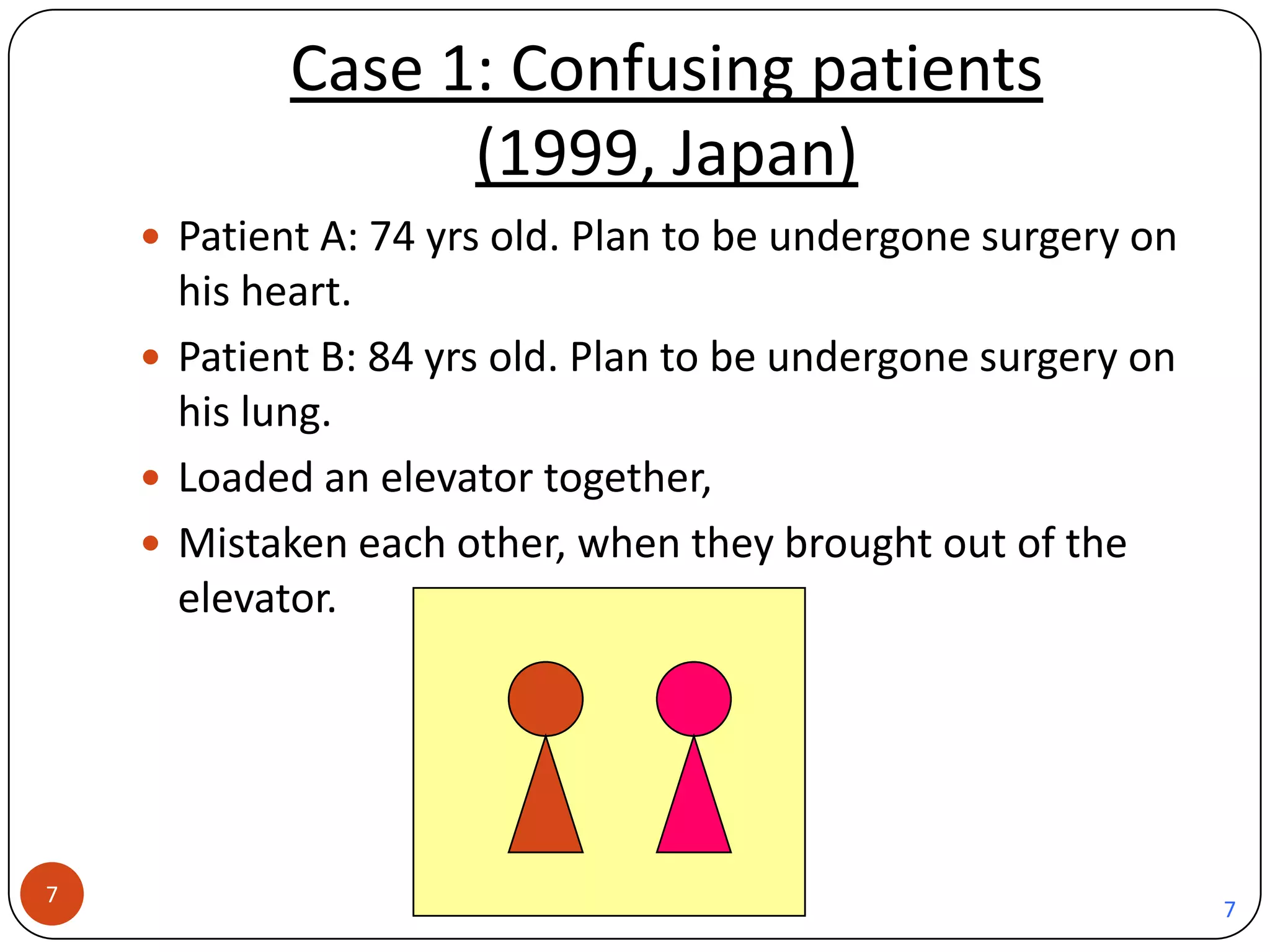
     Patient A: 74 yrs old. Plan to be undergone surgery on
      his heart.
     Patient B: 84 yrs old. Plan to be undergone surgery on
      his lung.
     Loaded an elevator together,
     Mistaken each other, when they brought out of the
      elevator.


7
                                                               7
But, it was doubtful…
     Some staffs in the operatin room said, “Is he patient A?”
       Different face, vital signs, etc
     Reconfirm by telephone to the patient room
       “Have Patient A been moved to the operation floor?”
       The answer was “yes”


     Yoshida Kenko, a famous author, said in his book “Tsure-
      zure-gusa”,
       The top secret skill of horse riding is “do not ride the
        horse, when you cannot convince the situation is perfect.”


8
Case 2: Bhopal accident (1984, India)

 Safeguards are not safe.
   Because, the management for safety becomes reluctant.
     Multiple Safeguards seem highly enough.
     In actual, all safeguard did not work enough.
     Not maintenance for them.


                                                        9
1-3

     What is real meaning of Human
     Error?


10
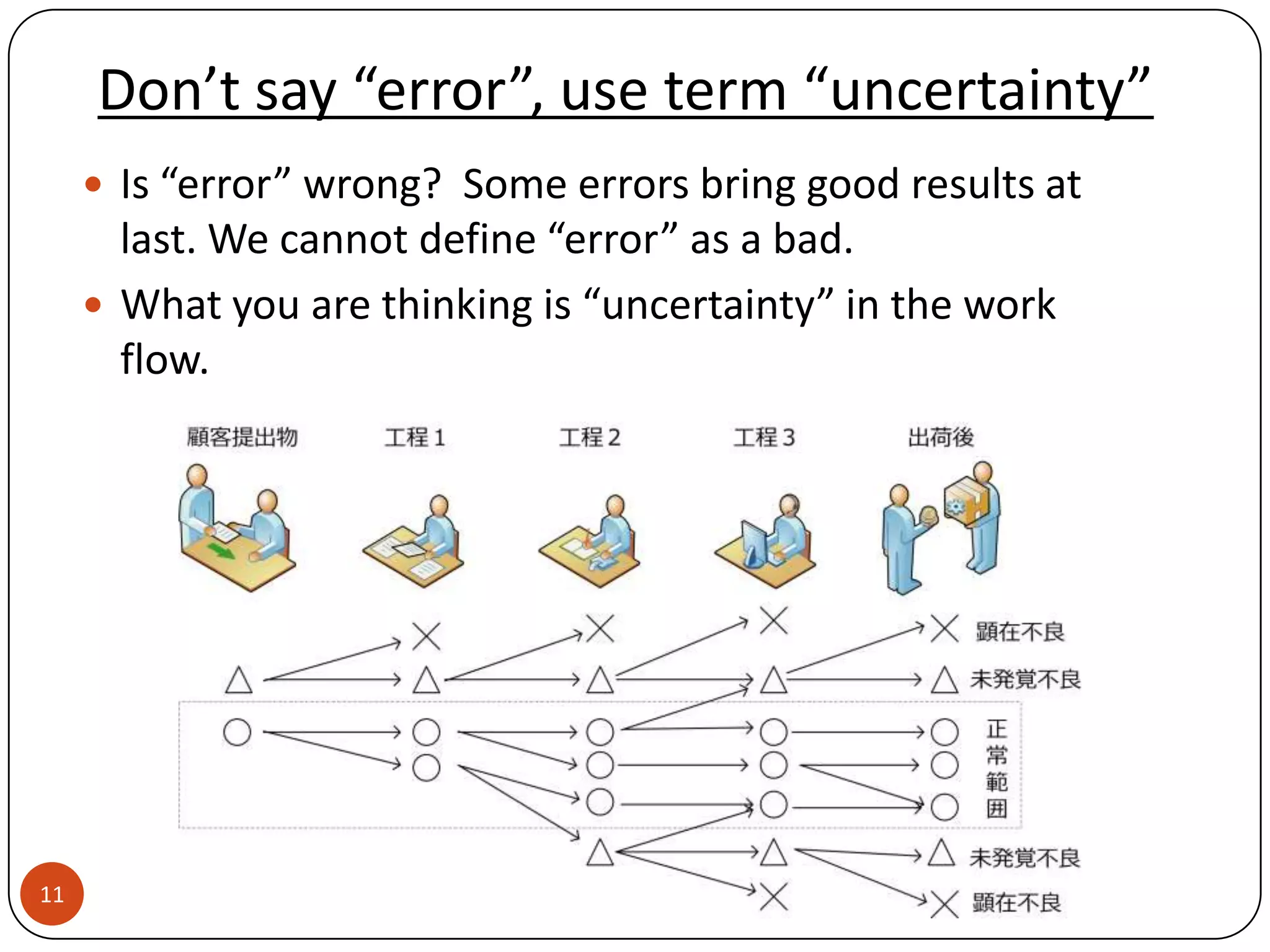
Don’t say “error”, use term “uncertainty”
      Is “error” wrong? Some errors bring good results at
       last. We cannot define “error” as a bad.
      What you are thinking is “uncertainty” in the work
       flow.


11
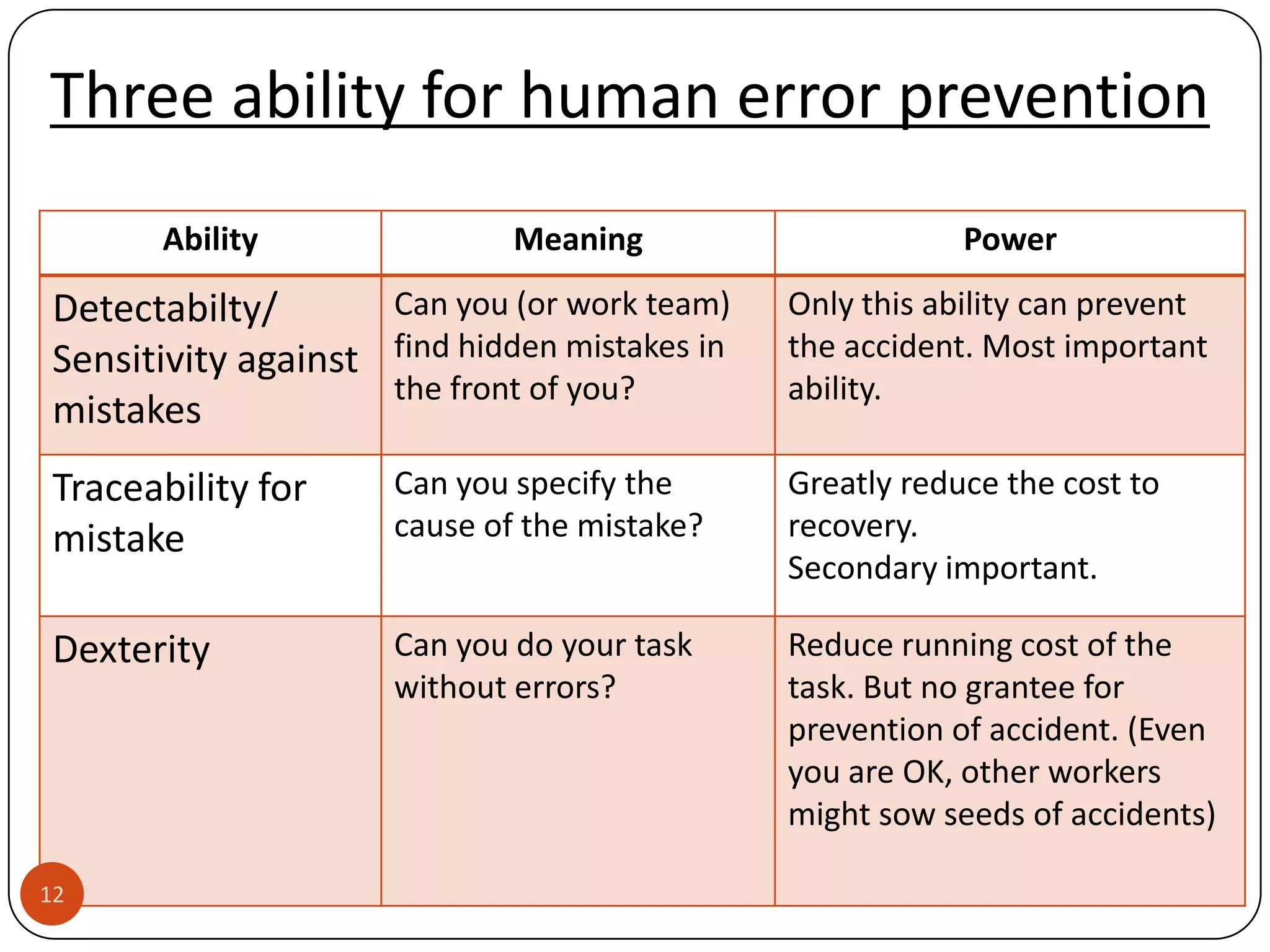
Three ability for human error prevention
       Ability                Meaning                      Power

 Detectabilty/       Can you (or work team)    Only this ability can prevent
 Sensitivity against find hidden mistakes in   the accident. Most important
                     the front of you?         ability.
 mistakes
 Traceability for     Can you specify the      Greatly reduce the cost to
 mistake              cause of the mistake?    recovery.
                                               Secondary important.

 Dexterity            Can you do your task     Reduce running cost of the
                      without errors?          task. But no grantee for
                                               prevention of accident. (Even
                                               you are OK, other workers
                                               might sow seeds of accidents)

12
Part 2


     Solutions for Human Error Prevention


13
2-1


     Techniques to ensure human ability


14
Wake!
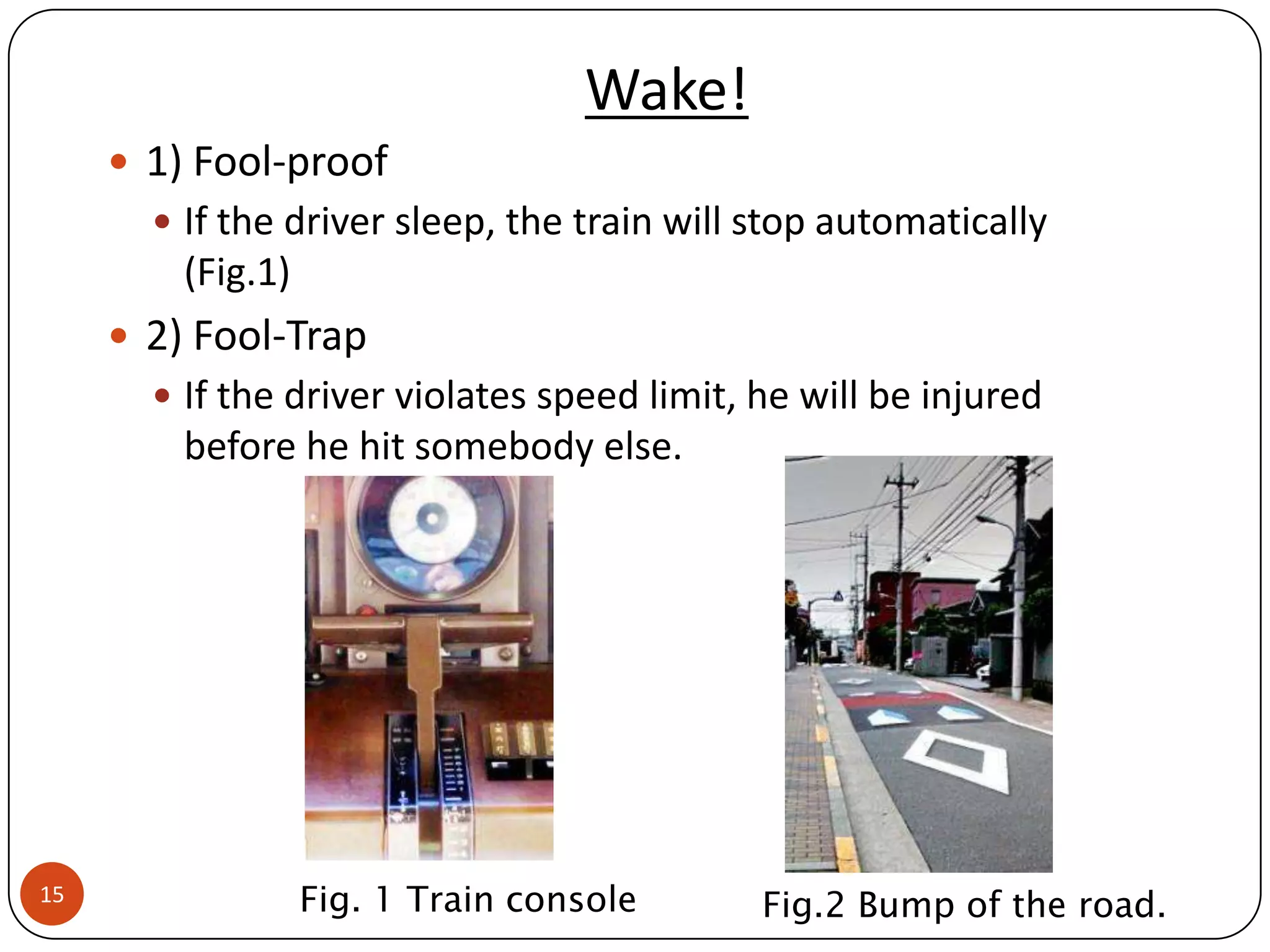
      1) Fool-proof
        If the driver sleep, the train will stop automatically
         (Fig.1)
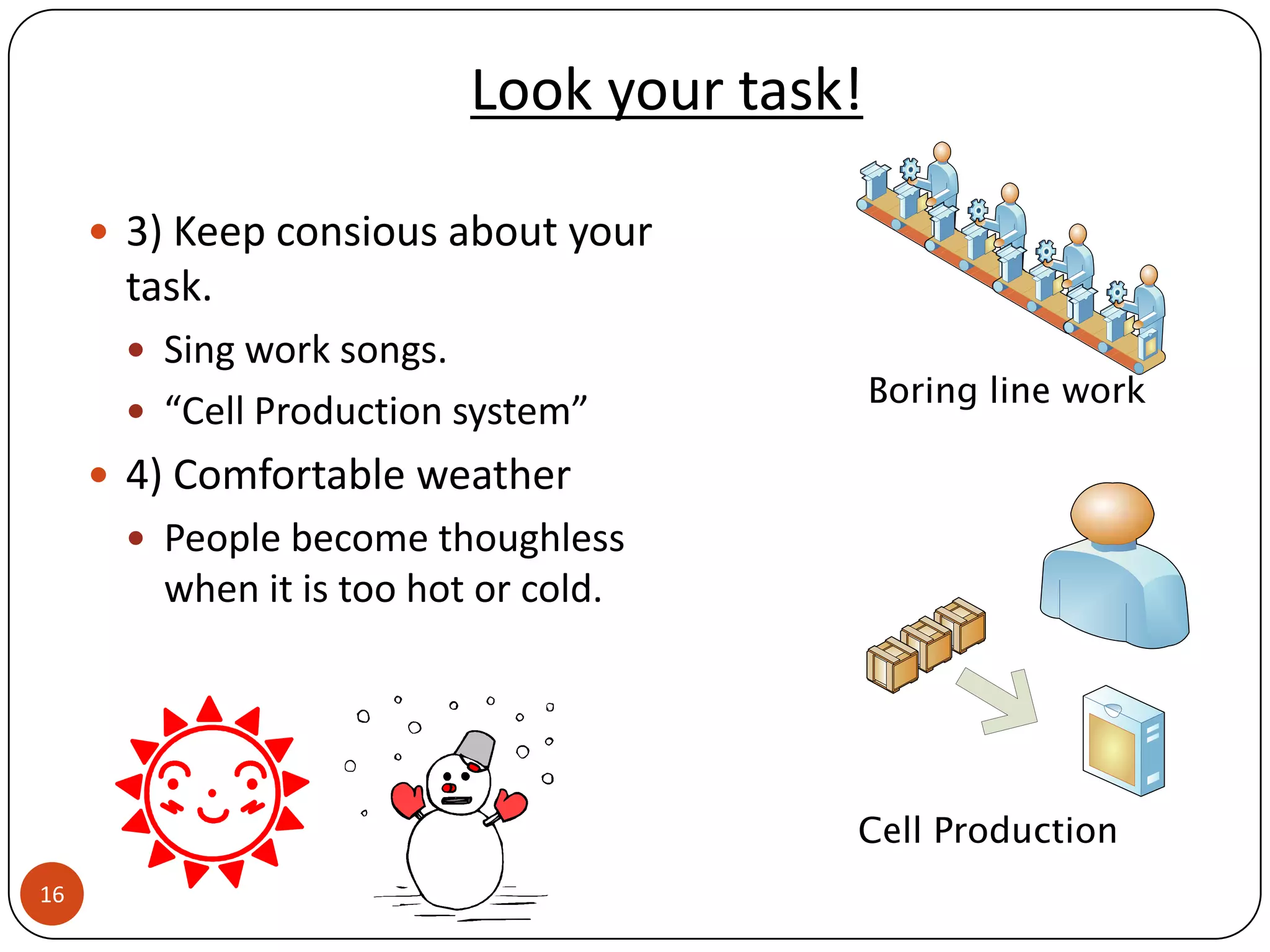
      2) Fool-Trap
        If the driver violates speed limit, he will be injured
         before he hit somebody else.


15                 Fig. 1 Train console      Fig.2 Bump of the road.
Look your task!

      3) Keep consious about your
      task.
       Sing work songs.
                                             Boring line work
       “Cell Production system”
      4) Comfortable weather
       People become thoughless
        when it is too hot or cold.


                                         Cell Production
16
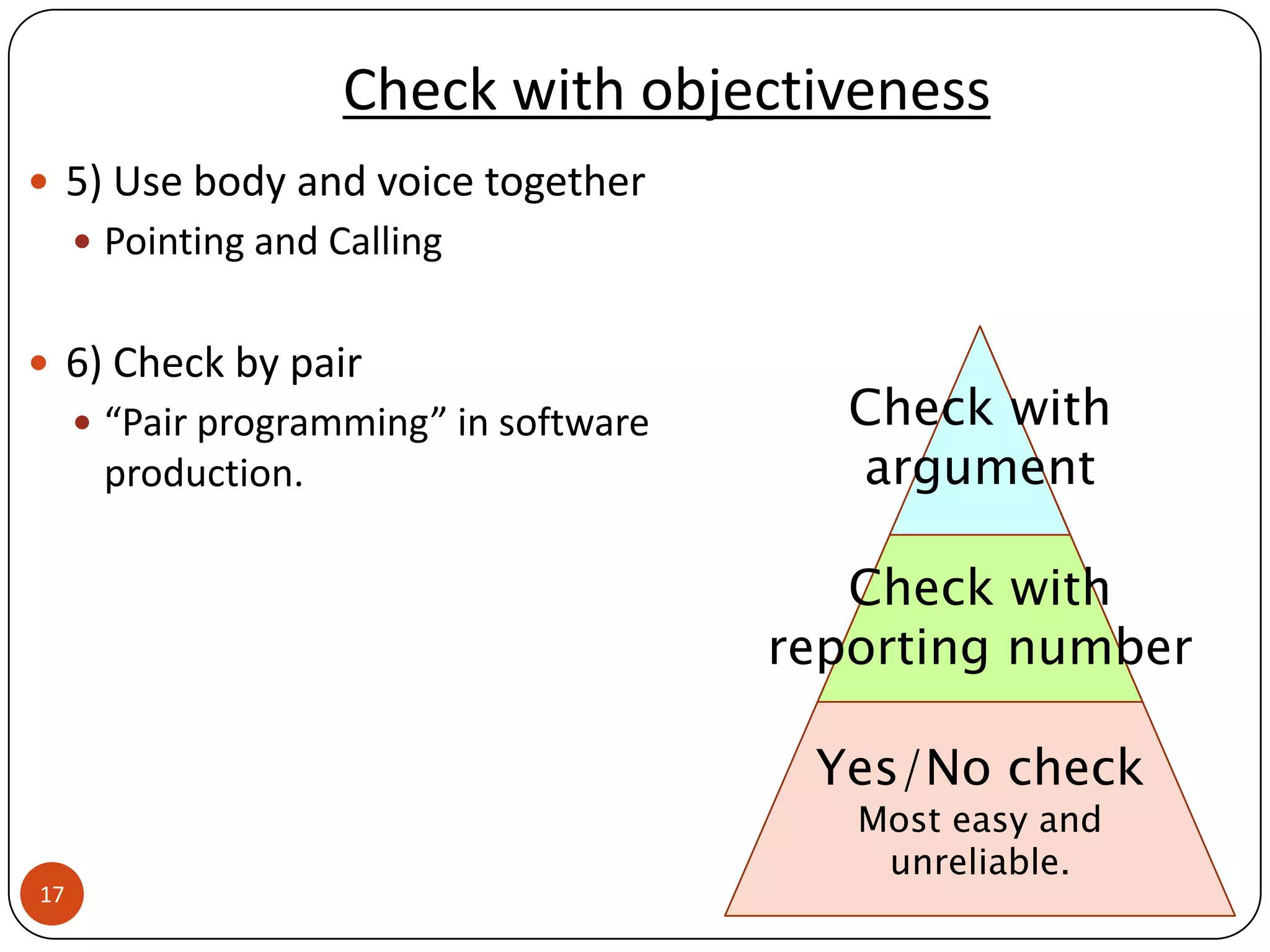
Check with objectiveness
 5) Use body and voice together
      Pointing and Calling


 6) Check by pair
      “Pair programming” in software      Check with
      production.                          argument

                                           Check with
                                        reporting number

                                         Yes/No check
                                           Most easy and
                                            unreliable.
17
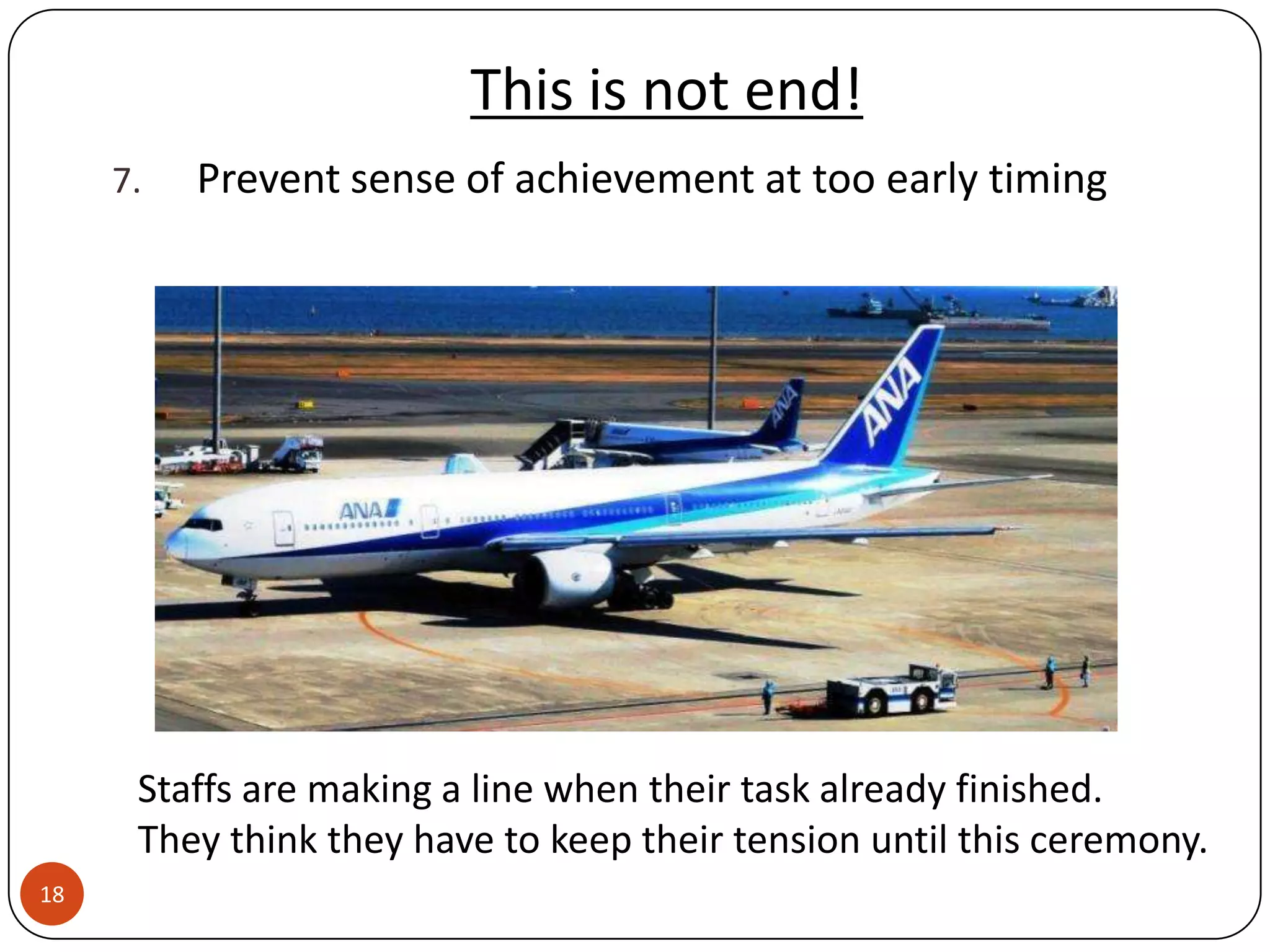
This is not end!
     7.   Prevent sense of achievement at too early timing


      Staffs are making a line when their task already finished.
      They think they have to keep their tension until this ceremony.
18
2-2

     Tool and System to prevent human
     errors


19
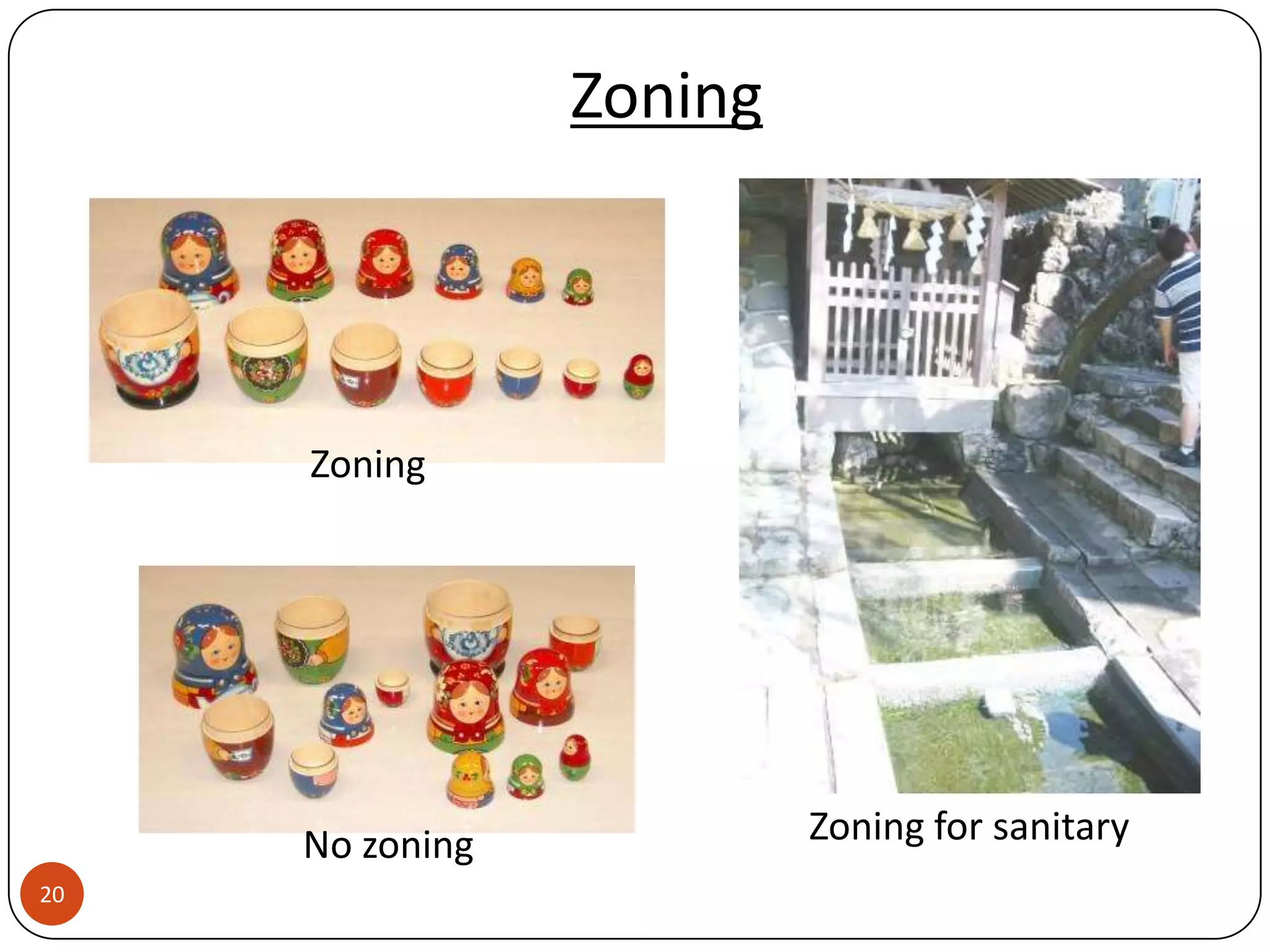
Zoning


     Zoning


     No zoning            Zoning for sanitary
20
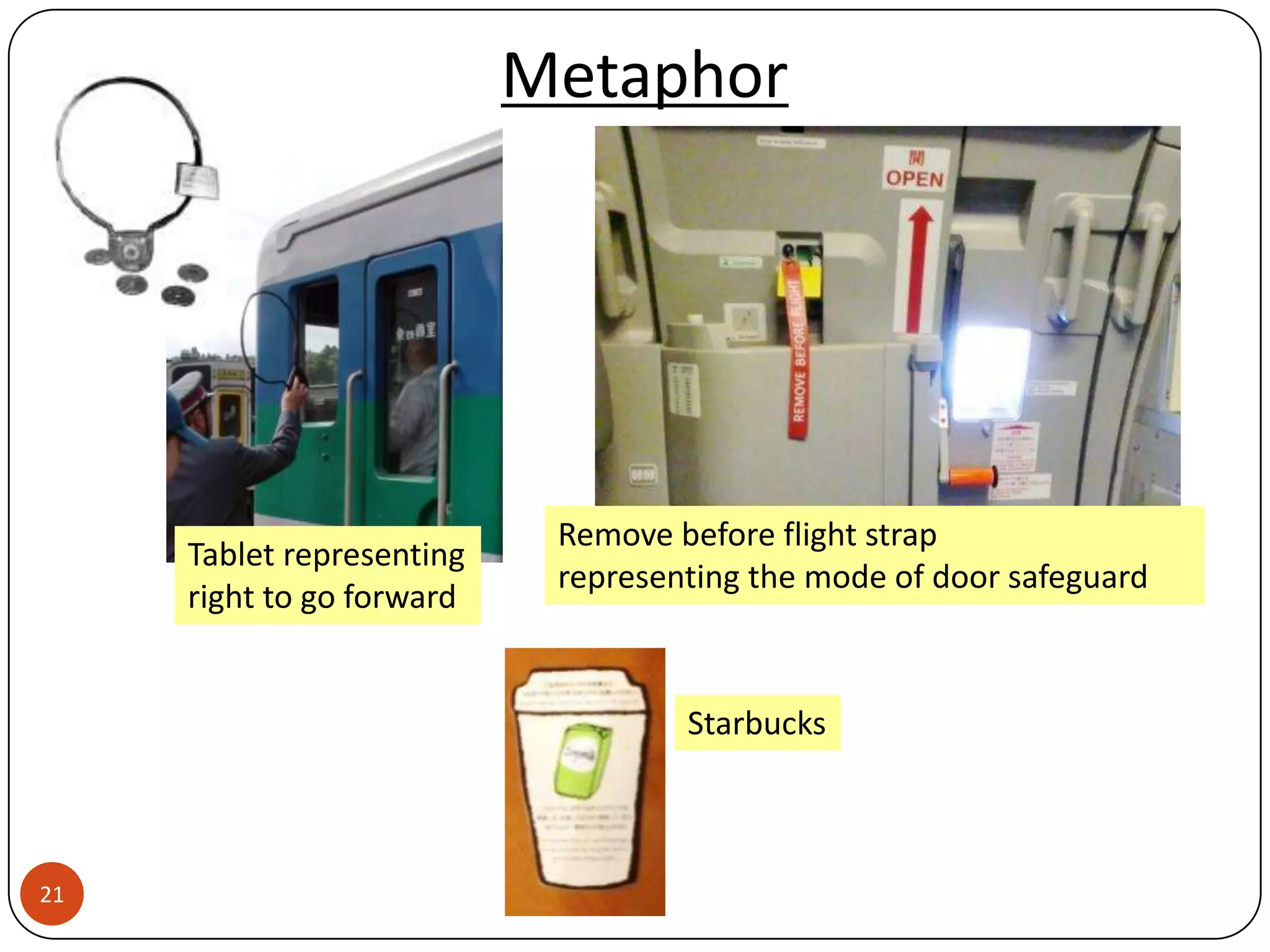
Metaphor


                            Remove before flight strap
     Tablet representing
                            representing the mode of door safeguard
     right to go forward


                                    Starbucks


21
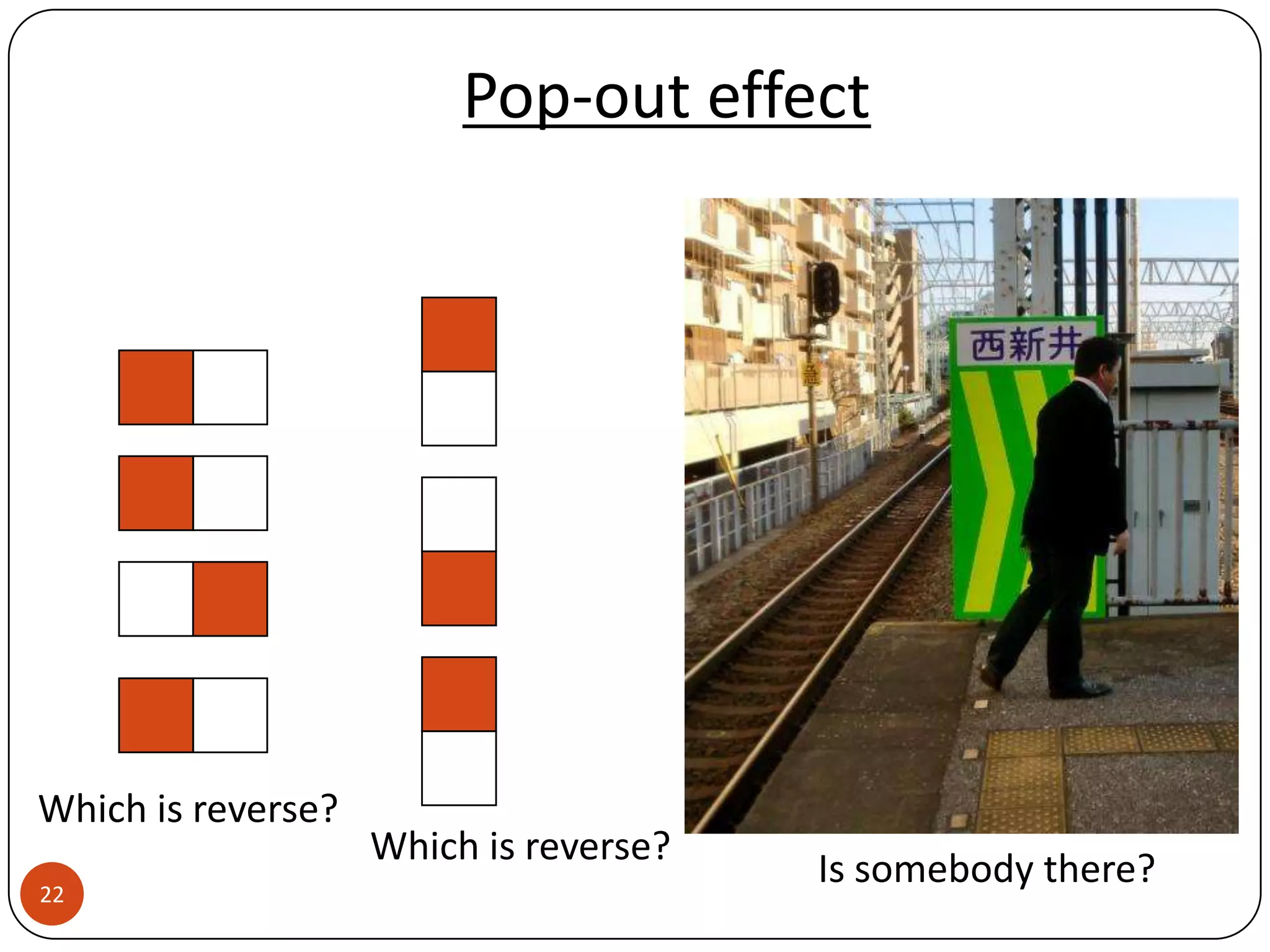
Pop-out effect


Which is reverse?
                    Which is reverse?
22
                                        Is somebody there?
2-3


     Planning the strategy


23
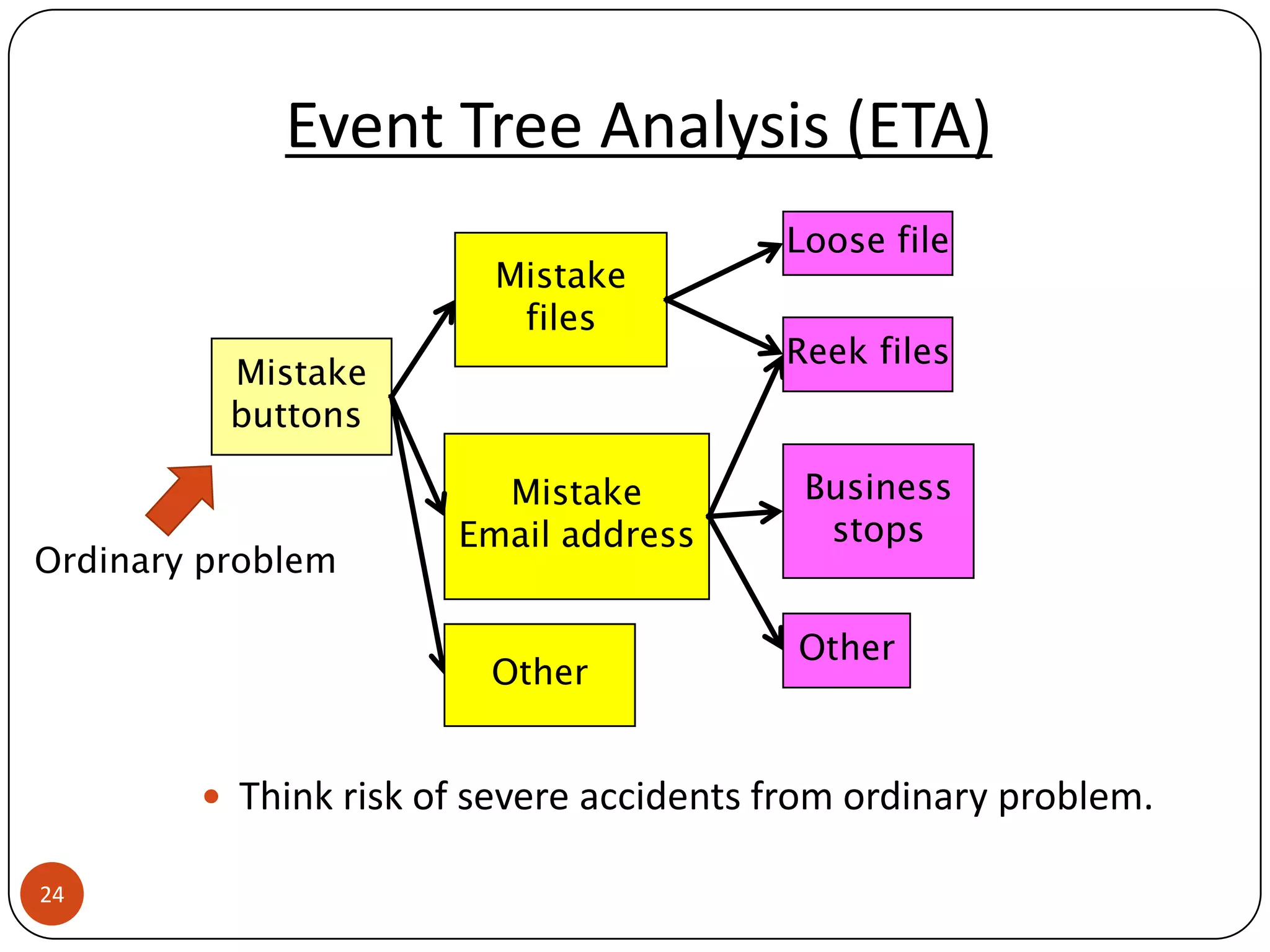
Event Tree Analysis (ETA)
                                         Loose file
                        Mistake
                         files
                                         Reek files
          Mistake
          buttons

                        Mistake           Business
                      Email address        stops
Ordinary problem

                                          Other
                        Other


         Think risk of severe accidents from ordinary problem.

24
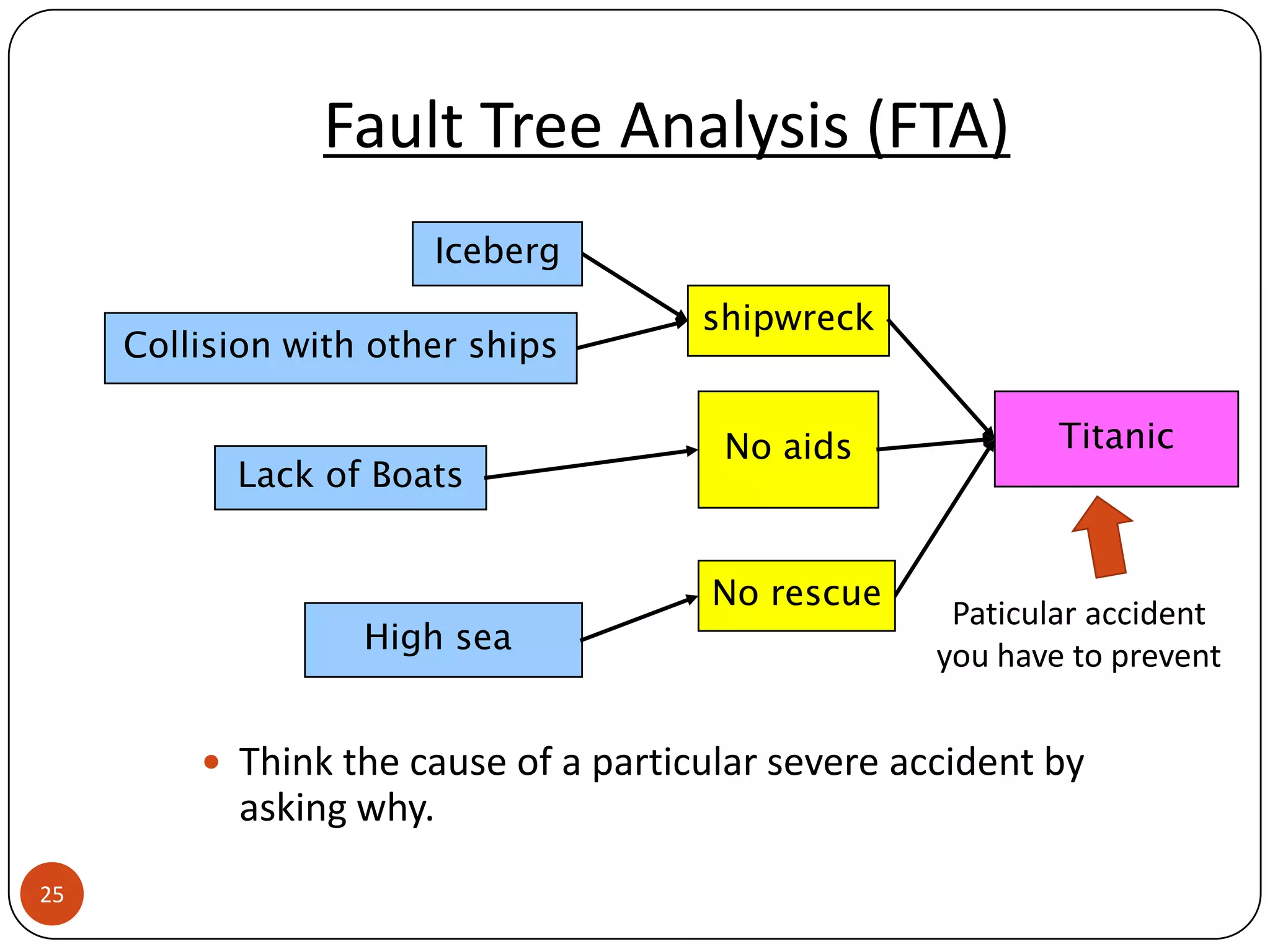
Fault Tree Analysis (FTA)
                       Iceberg
                                      shipwreck
     Collision with other ships

                                       No aids              Titanic
           Lack of Boats


                                       No rescue
                                                     Paticular accident
                   High sea                         you have to prevent


          Think the cause of a particular severe accident by
           asking why.
25
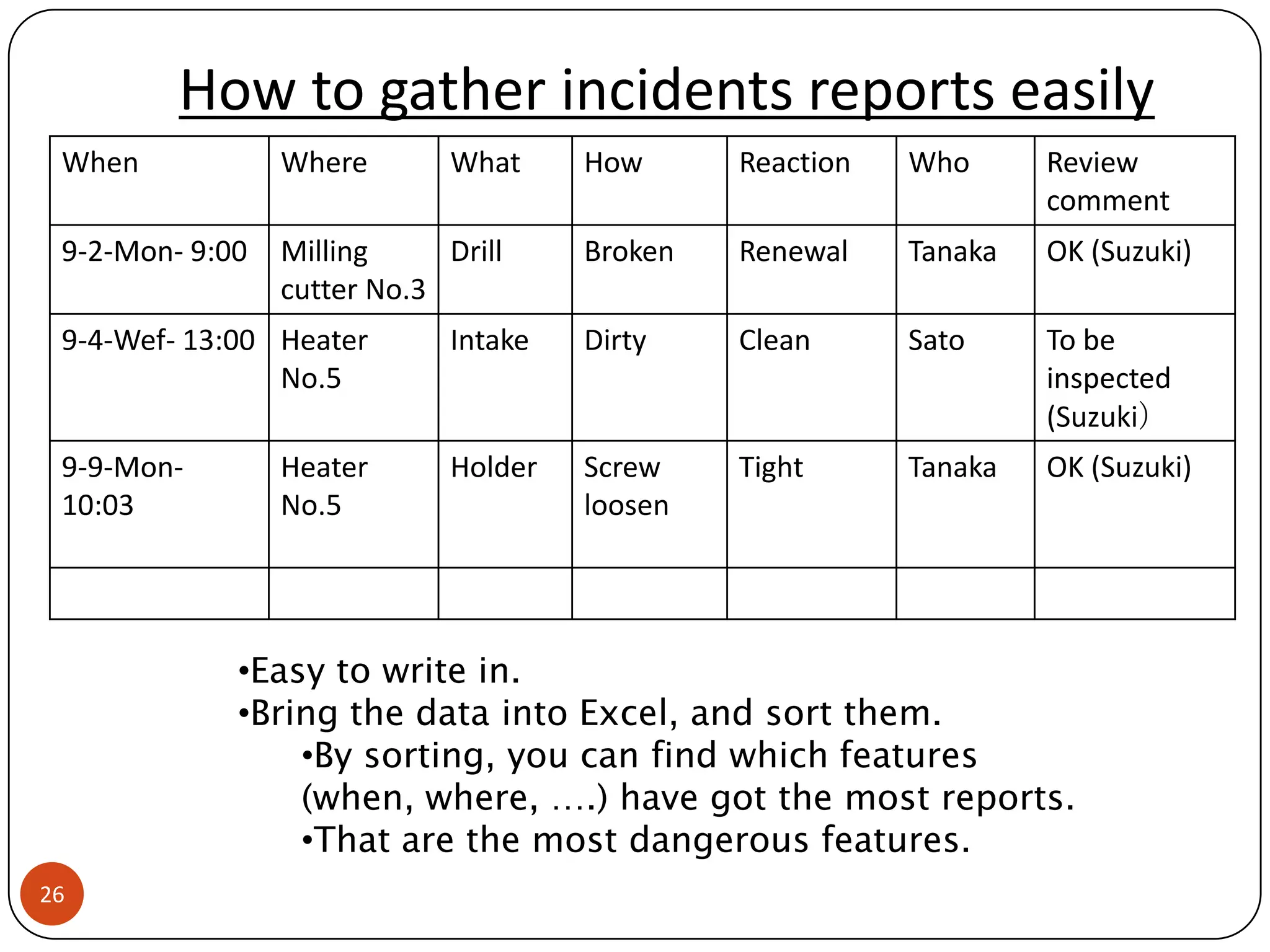
How to gather incidents reports easily
 When            Where       What     How      Reaction   Who      Review
                                                                   comment
 9-2-Mon- 9:00   Milling     Drill    Broken   Renewal    Tanaka   OK (Suzuki)
                 cutter No.3
 9-4-Wef- 13:00 Heater       Intake   Dirty    Clean      Sato     To be
                No.5                                               inspected
                                                                   (Suzuki)
 9-9-Mon-        Heater      Holder   Screw    Tight      Tanaka   OK (Suzuki)
 10:03           No.5                 loosen


             •Easy to write in.
             •Bring the data into Excel, and sort them.
                 •By sorting, you can find which features
                 (when, where, ….) have got the most reports.
                 •That are the most dangerous features.
26
Slogan: “Safety by walking around”
 Hawthorne effect:
      Under the situation that somebody may
       watch your working scene, you tend to
       perform better, quicker, and safer.
      The watcher is NOT his boss.
      Without duty, people naturally try to
       show themselves as good workers.
      Walking around. Meet various staffs
       who are not bosses nor subordinates in
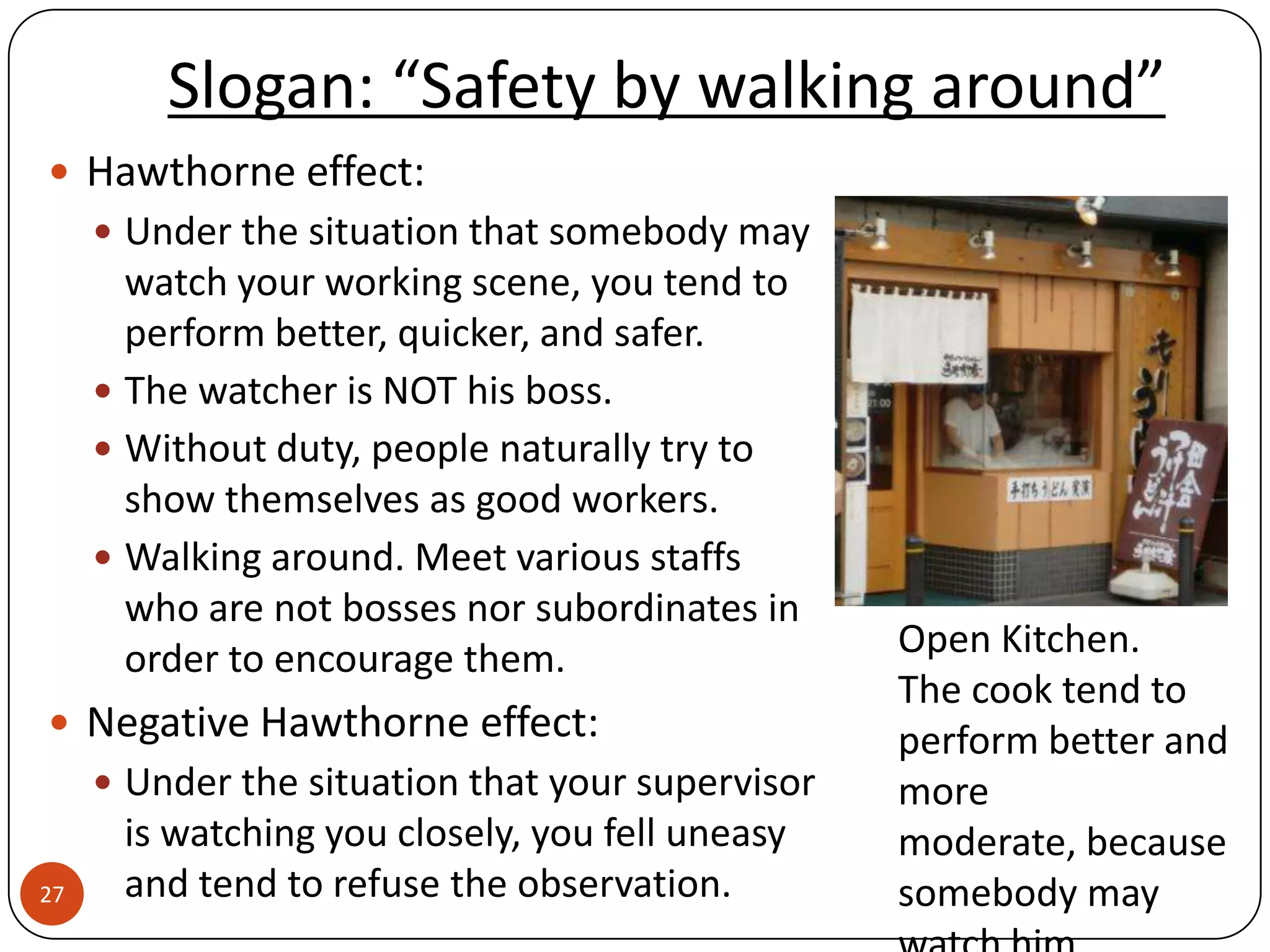
       order to encourage them.                   Open Kitchen.
                                                  The cook tend to
 Negative Hawthorne effect:                      perform better and
      Under the situation that your supervisor   more
      is watching you closely, you fell uneasy    moderate, because
27    and tend to refuse the observation.         somebody may

Human Error Prevention

  • 1.
    Human Error — Theory and Prevention Dr. Toru Nakata National Institute of Advanced Science and Technology, Japan. Nov. 20, 2011 1
  • 2.
    Part I Theory of Human Error Prevention 2
  • 3.
    1-1 How we make mistakes 3
  • 4.
    Why do weerr?  Unknown  Even masters of chess sometime commit easy mistakes.  A lot of typical pattern of “misconception” are found.  Four-card problem  Monty Hall problem  Horse Trading problem  …  But there is no universal tendency among them  Change the question more productive.  “Why can we usually avoid errors?”  Because we can notice and fix errors before they break out. 4
  • 5.
    Horse Trading Problem  Frank sells Sue a horse for $60.  Then he decides he wants it back, but Sue makes him pay $70 for it.  Then Sue changes her mind and buys it back from Frank, but for $80 (Frank is no dummy).  Finally, Frank buys it back from Sue for—you guessed it—$90 (Sue is no dummy, either).  At this point, who comes out ahead?  http://ohiorc.org/for/math/stella/library/problem.aspx?i d=128 5
  • 6.
    1-2 Typical Example of Human Error Accidents 6
  • 7.
    Case 1: Confusingpatients (1999, Japan)  Patient A: 74 yrs old. Plan to be undergone surgery on his heart.  Patient B: 84 yrs old. Plan to be undergone surgery on his lung.  Loaded an elevator together,  Mistaken each other, when they brought out of the elevator. 7 7
  • 8.
    But, it wasdoubtful…  Some staffs in the operatin room said, “Is he patient A?”  Different face, vital signs, etc  Reconfirm by telephone to the patient room  “Have Patient A been moved to the operation floor?”  The answer was “yes”  Yoshida Kenko, a famous author, said in his book “Tsure- zure-gusa”,  The top secret skill of horse riding is “do not ride the horse, when you cannot convince the situation is perfect.” 8
  • 9.
    Case 2: Bhopalaccident (1984, India)  Safeguards are not safe.  Because, the management for safety becomes reluctant.  Multiple Safeguards seem highly enough.  In actual, all safeguard did not work enough.  Not maintenance for them. 9
  • 10.
    1-3 What is real meaning of Human Error? 10
  • 11.
    Don’t say “error”,use term “uncertainty”  Is “error” wrong? Some errors bring good results at last. We cannot define “error” as a bad.  What you are thinking is “uncertainty” in the work flow. 11
  • 12.
    Three ability forhuman error prevention Ability Meaning Power Detectabilty/ Can you (or work team) Only this ability can prevent Sensitivity against find hidden mistakes in the accident. Most important the front of you? ability. mistakes Traceability for Can you specify the Greatly reduce the cost to mistake cause of the mistake? recovery. Secondary important. Dexterity Can you do your task Reduce running cost of the without errors? task. But no grantee for prevention of accident. (Even you are OK, other workers might sow seeds of accidents) 12
  • 13.
    Part 2 Solutions for Human Error Prevention 13
  • 14.
    2-1 Techniques to ensure human ability 14
  • 15.
    Wake!  1) Fool-proof  If the driver sleep, the train will stop automatically (Fig.1)  2) Fool-Trap  If the driver violates speed limit, he will be injured before he hit somebody else. 15 Fig. 1 Train console Fig.2 Bump of the road.
  • 16.
    Look your task!  3) Keep consious about your task.  Sing work songs. Boring line work  “Cell Production system”  4) Comfortable weather  People become thoughless when it is too hot or cold. Cell Production 16
  • 17.
    Check with objectiveness 5) Use body and voice together  Pointing and Calling  6) Check by pair  “Pair programming” in software Check with production. argument Check with reporting number Yes/No check Most easy and unreliable. 17
  • 18.
    This is notend! 7. Prevent sense of achievement at too early timing Staffs are making a line when their task already finished. They think they have to keep their tension until this ceremony. 18
  • 19.
    2-2 Tool and System to prevent human errors 19
  • 20.
    Zoning Zoning No zoning Zoning for sanitary 20
  • 21.
    Metaphor Remove before flight strap Tablet representing representing the mode of door safeguard right to go forward Starbucks 21
  • 22.
    Pop-out effect Which isreverse? Which is reverse? 22 Is somebody there?
  • 23.
    2-3 Planning the strategy 23
  • 24.
    Event Tree Analysis(ETA) Loose file Mistake files Reek files Mistake buttons Mistake Business Email address stops Ordinary problem Other Other  Think risk of severe accidents from ordinary problem. 24
  • 25.
    Fault Tree Analysis(FTA) Iceberg shipwreck Collision with other ships No aids Titanic Lack of Boats No rescue Paticular accident High sea you have to prevent  Think the cause of a particular severe accident by asking why. 25
  • 26.
    How to gatherincidents reports easily When Where What How Reaction Who Review comment 9-2-Mon- 9:00 Milling Drill Broken Renewal Tanaka OK (Suzuki) cutter No.3 9-4-Wef- 13:00 Heater Intake Dirty Clean Sato To be No.5 inspected (Suzuki) 9-9-Mon- Heater Holder Screw Tight Tanaka OK (Suzuki) 10:03 No.5 loosen •Easy to write in. •Bring the data into Excel, and sort them. •By sorting, you can find which features (when, where, ….) have got the most reports. •That are the most dangerous features. 26
  • 27.
    Slogan: “Safety bywalking around”  Hawthorne effect:  Under the situation that somebody may watch your working scene, you tend to perform better, quicker, and safer.  The watcher is NOT his boss.  Without duty, people naturally try to show themselves as good workers.  Walking around. Meet various staffs who are not bosses nor subordinates in order to encourage them. Open Kitchen. The cook tend to  Negative Hawthorne effect: perform better and  Under the situation that your supervisor more is watching you closely, you fell uneasy moderate, because 27 and tend to refuse the observation. somebody may