Human Errors
How to Identify and reduce them
Human Factors & Errors
 Key objectives of HF is to design systems
that
◦ people can use
◦ increase efficiency and performance
◦ minimize the risks of errors
 Will define and consider the nature of error
 Consider the implications for systems
design
Definition of Human Error
 …is an inappropriate or undesirable human
decision or behavior that reduces or has the
potential for reducing the
◦ effectiveness
◦ safety
◦ system performance
Human error
 1st blame only the individual
 2nd identify other factors. E.g.:-
◦ badly designed or faulty equipment
◦ poor management practices
◦ inaccurate or incomplete procedures
◦ inadequate or inappropriate training
Error Classification
 Skill based
◦ controlled by sub-conscious behavior and stored
patterns of behavior
◦ errors usually errors of execution
 Rule based
◦ applies to familiar situations - stored rules are applied
◦ errors involve recognizing the salient features of the
situation
 Knowledge based - occur in unique & unfamiliar situations
◦ errors result from inadequate analysis or decision
making
Conclusions of Human Errors
 Factors are broad & encompass most
factors found in other models
 Their model includes and emphasizes
◦ management social and psychological
factors
 Human factors variables are recognized in
the categories
◦ physical environment
◦ equipment design
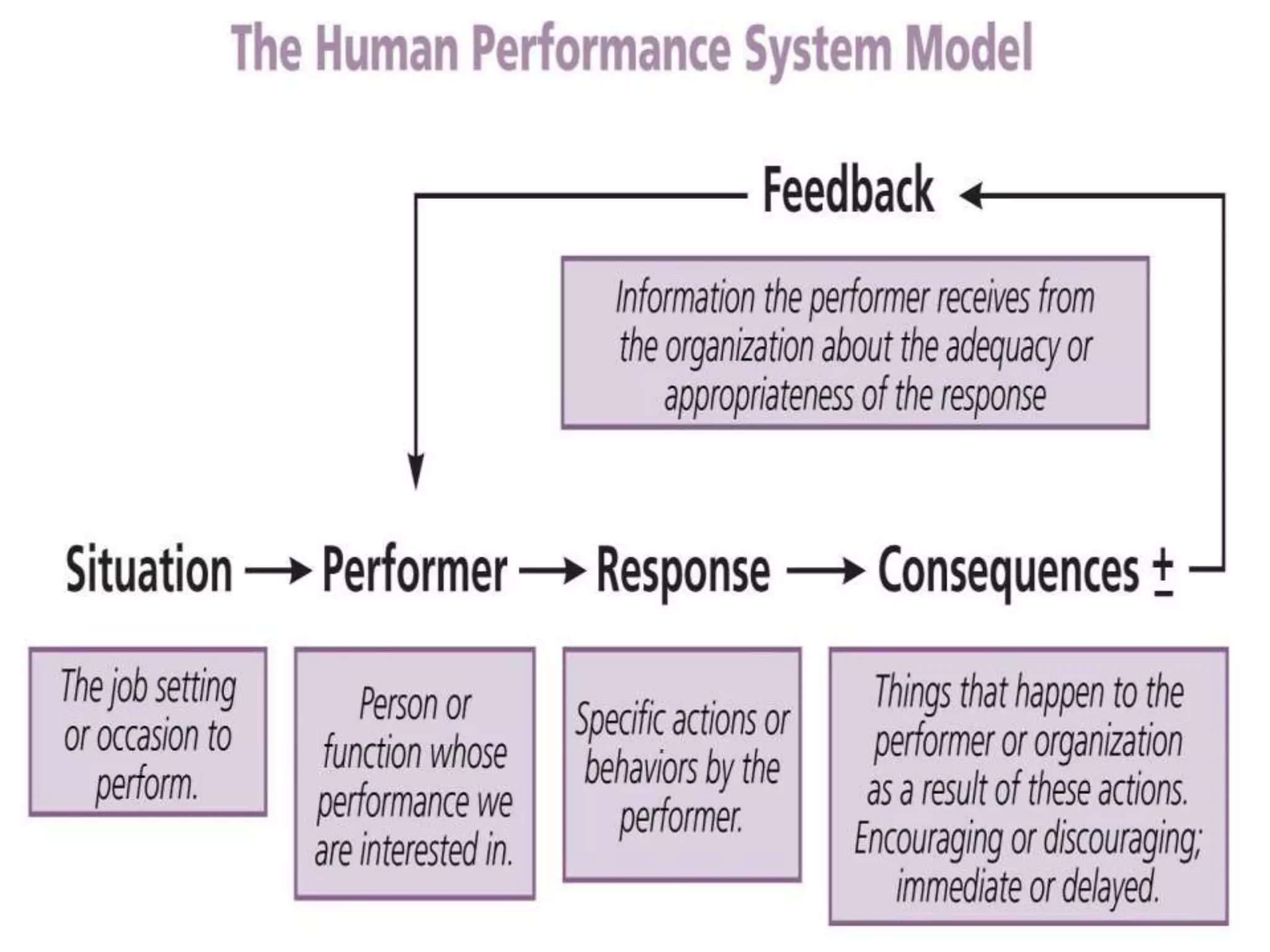
◦ work itself (refer to model diagram in
exercise book)
How to Reduce Human
Errors?
 Human error is inevitable
 Consequences and likelihood can be
reduced by:-
◦ better recruitment & selection
◦ training
◦ better design of equipment procedures &
work environment
Reducing Accidents
 Apply HF principles to the processes
 Provide procedural checklists
 Provide training
 Provide appropriate & meaningful
feedback
 Establish effective employees
feedback system
 Eliminate/reduce risk through design
New Employees Hiring &
Training
 Ensure the hiring policy is attracting
the employees with relevant
experience and skills to perform the
tasks
◦ Provide the new hire with training and
resources to enable employees to
perform the required tasks effectively and
efficiently
◦ Qualify the newly hired employees
training to ensure that employees can
assume and execute their new job
Improve the Performance
 Provide effective On the Job Training
 Establish robust Standard Operating
Procedures to eliminate or reduce the
following errors
◦ Errors of omission - forget to do something
◦ Errors of commission - doing the task
incorrectly
◦ Sequence errors - out of order
◦ Timing errors - too slow - too fast - too late
How to Establish a Robust
SOP
 Review that the current processes to ensure
◦ Adequate Procedures are available for all Major
and minor manufacturing and testing processes
◦ Procedure has clearly stated the process
requirements and the personnel responsibilities
to complete the tasks
◦ Clear instruction on how to complete the required
process tasks
 Accurately
 Sequentially
 Timely
◦ If the timing is critical, establish a realistic
timeline requirements and provide adequate
resources to execute the tasks on time
Monitor the Performance
 Classify the source of occurrence as
follows:
◦ Required action is NOT performed or is
performed incorrectly.
◦ Undesired action is exercised.
◦ Information essential for performing the
action is misinterpreted.
◦ Mistake occurs due to complexity.
Fix the Problem
 Evaluate the errors according to the
following criteria
◦ Frequency
◦ Safety
◦ Criticality and consequences
 Select the most effective solution(s)
 Implement the Corrective Actions to
reduce the error sources
 Monitor the effectiveness of the solutions

Human errors

  • 1.
    Human Errors How toIdentify and reduce them
  • 3.
    Human Factors &Errors  Key objectives of HF is to design systems that ◦ people can use ◦ increase efficiency and performance ◦ minimize the risks of errors  Will define and consider the nature of error  Consider the implications for systems design
  • 4.
    Definition of HumanError  …is an inappropriate or undesirable human decision or behavior that reduces or has the potential for reducing the ◦ effectiveness ◦ safety ◦ system performance
  • 5.
    Human error  1stblame only the individual  2nd identify other factors. E.g.:- ◦ badly designed or faulty equipment ◦ poor management practices ◦ inaccurate or incomplete procedures ◦ inadequate or inappropriate training
  • 6.
    Error Classification  Skillbased ◦ controlled by sub-conscious behavior and stored patterns of behavior ◦ errors usually errors of execution  Rule based ◦ applies to familiar situations - stored rules are applied ◦ errors involve recognizing the salient features of the situation  Knowledge based - occur in unique & unfamiliar situations ◦ errors result from inadequate analysis or decision making
  • 7.
    Conclusions of HumanErrors  Factors are broad & encompass most factors found in other models  Their model includes and emphasizes ◦ management social and psychological factors  Human factors variables are recognized in the categories ◦ physical environment ◦ equipment design ◦ work itself (refer to model diagram in exercise book)
  • 8.
    How to ReduceHuman Errors?  Human error is inevitable  Consequences and likelihood can be reduced by:- ◦ better recruitment & selection ◦ training ◦ better design of equipment procedures & work environment
  • 9.
    Reducing Accidents  ApplyHF principles to the processes  Provide procedural checklists  Provide training  Provide appropriate & meaningful feedback  Establish effective employees feedback system  Eliminate/reduce risk through design
  • 10.
    New Employees Hiring& Training  Ensure the hiring policy is attracting the employees with relevant experience and skills to perform the tasks ◦ Provide the new hire with training and resources to enable employees to perform the required tasks effectively and efficiently ◦ Qualify the newly hired employees training to ensure that employees can assume and execute their new job
  • 11.
    Improve the Performance Provide effective On the Job Training  Establish robust Standard Operating Procedures to eliminate or reduce the following errors ◦ Errors of omission - forget to do something ◦ Errors of commission - doing the task incorrectly ◦ Sequence errors - out of order ◦ Timing errors - too slow - too fast - too late
  • 12.
    How to Establisha Robust SOP  Review that the current processes to ensure ◦ Adequate Procedures are available for all Major and minor manufacturing and testing processes ◦ Procedure has clearly stated the process requirements and the personnel responsibilities to complete the tasks ◦ Clear instruction on how to complete the required process tasks  Accurately  Sequentially  Timely ◦ If the timing is critical, establish a realistic timeline requirements and provide adequate resources to execute the tasks on time
  • 13.
    Monitor the Performance Classify the source of occurrence as follows: ◦ Required action is NOT performed or is performed incorrectly. ◦ Undesired action is exercised. ◦ Information essential for performing the action is misinterpreted. ◦ Mistake occurs due to complexity.
  • 14.
    Fix the Problem Evaluate the errors according to the following criteria ◦ Frequency ◦ Safety ◦ Criticality and consequences  Select the most effective solution(s)  Implement the Corrective Actions to reduce the error sources  Monitor the effectiveness of the solutions