Hazard Identification, Risk Assessment &
Determining Control (HIRAC)
BS OHSAS 18001:2007
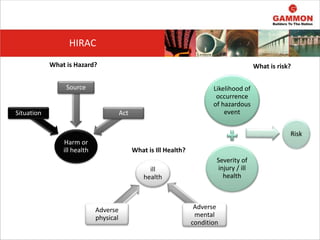
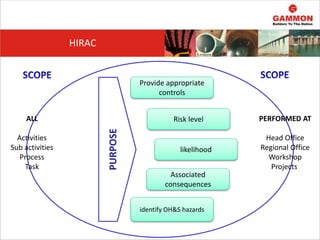
HIRAC
What is risk?
What is Hazard?
What is Ill Health?
Harm or
ill health
Situation
Source
Act
Likelihood of
occurrence
of hazardous
event
Severity of
injury / ill
health
Risk
ill
health
Adverse
physical
Adverse
mental
condition
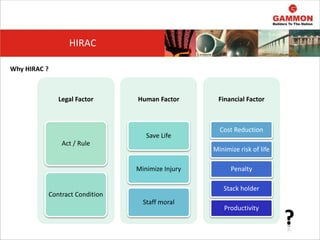
HIRAC
Why HIRAC ?
Legal Factor
Act / Rule
Contract Condition
Human Factor
Save Life
Minimize Injury
Staff moral
Financial Factor
Cost Reduction
Minimize risk of life
Penalty
Stack holder
Productivity
HIRAC
likelihood
Provide appropriate
controls
Risk level
Associated
consequences
identify OH&S hazards
PURPOSE PERFORMED AT
Head Office
Regional Office
Workshop
Projects
ALL
Activities
Sub activities
Process
Task
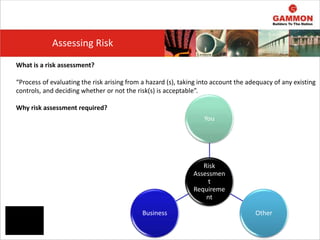
What is a risk assessment?
“Process of evaluating the risk arising from a hazard (s), taking into account the adequacy of any existing
controls, and deciding whether or not the risk(s) is acceptable”.
Why risk assessment required?
Assessing Risk
Risk
Assessmen
t
Requireme
nt
You
Other
Business
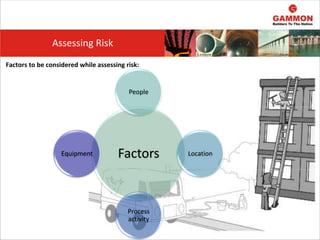
Factors to be considered while assessing risk:
Assessing Risk
Factors
People
Location
Process
activity
Equipment
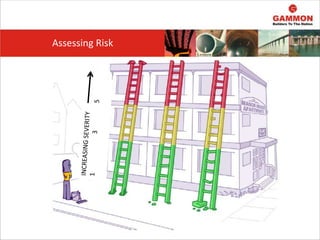
Assessing Risk
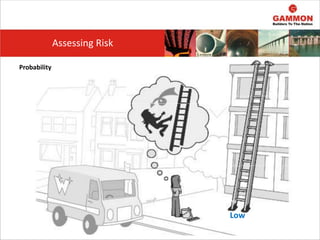
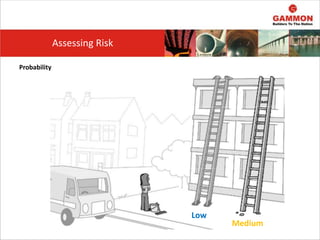
Probability
Low
Low
Assessing Risk
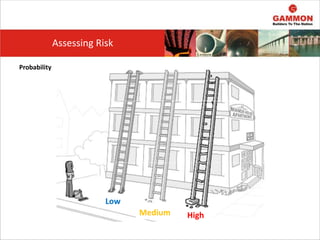
Probability
Low
Medium
High
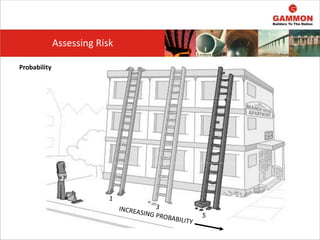
Assessing Risk
Probability
Medium
Low
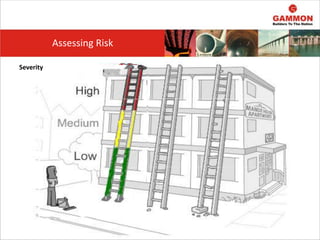
Assessing Risk
Probability
Low
Medium
High
Severity
Assessing Risk
Assessing Risk
15
5 25
Assessing Risk
RISK
Assessing Risk
5 5 15 25
3 3 9 15
1 1 3 5
1 3 5
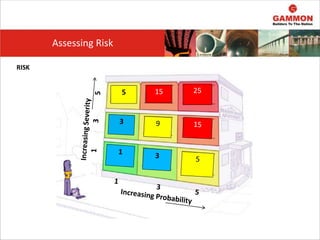
Evaluate the Risk / Risk assessment Matrix
Increasing Severity
Severity:
5 – Catastrophic
3 – Major
1 – Minor
Increasing
Probability
Probability:
5 – Certain
3 – Likely
1 – Unlikely
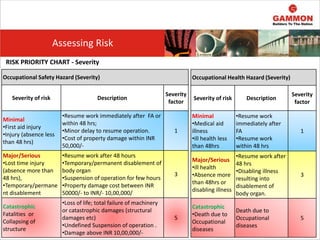
RISK PRIORITY CHART - Severity
Occupational Safety Hazard (Severity)
Severity of risk Description
Severity
factor
Minimal
•First aid injury
•Injury (absence less
than 48 hrs)
•Resume work immediately after FA or
within 48 hrs;
•Minor delay to resume operation.
•Cost of property damage within INR
50,000/-
1
Major/Serious
•Lost time injury
(absence more than
48 hrs),
•Temporary/permane
nt disablement
•Resume work after 48 hours
•Temporary/permanent disablement of
body organ
•Suspension of operation for few hours
•Property damage cost between INR
50000/- to INR/- 10,00,000/
3
Catastrophic
Fatalities or
Collapsing of
structure
•Loss of life; total failure of machinery
or catastrophic damages (structural
damages etc)
•Undefined Suspension of operation .
•Damage above INR 10,00,000/-
5
Occupational Health Hazard (Severity)
Severity of risk Description
Severity
factor
Minimal
•Medical aid
illness
•ill health less
than 48hrs
•Resume work
immediately after
FA
•Resume work
within 48 hrs
1
Major/Serious
•ill health
•Absence more
than 48hrs or
disabling illness
•Resume work after
48 hrs
•Disabling illness
resulting into
disablement of
body organ.
3
Catastrophic
•Death due to
Occupational
diseases
Death due to
Occupational
diseases
5
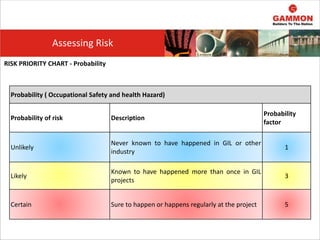
Assessing Risk
Probability ( Occupational Safety and health Hazard)
Probability of risk Description
Probability
factor
Unlikely
Never known to have happened in GIL or other
industry
1
Likely
Known to have happened more than once in GIL
projects
3
Certain Sure to happen or happens regularly at the project 5
RISK PRIORITY CHART - Probability
Assessing Risk
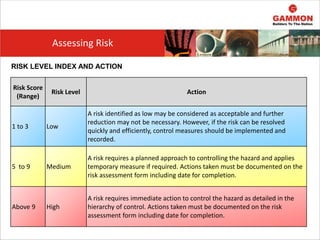
Risk Score
(Range)
Risk Level Action
1 to 3 Low
A risk identified as low may be considered as acceptable and further
reduction may not be necessary. However, if the risk can be resolved
quickly and efficiently, control measures should be implemented and
recorded.
5 to 9 Medium
A risk requires a planned approach to controlling the hazard and applies
temporary measure if required. Actions taken must be documented on the
risk assessment form including date for completion.
Above 9 High
A risk requires immediate action to control the hazard as detailed in the
hierarchy of control. Actions taken must be documented on the risk
assessment form including date for completion.
RISK LEVEL INDEX AND ACTION
Assessing Risk
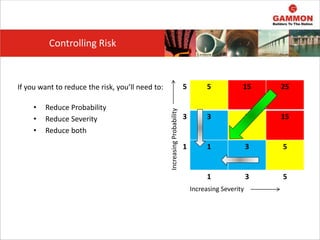
How do you reduce risk?
5 5 15 25
3 3 9 15
1 1 3 5
1 3 5
Increasing
Probability
Increasing Severity
If you want to reduce the risk, you’ll need to:
• Reduce Probability
• Reduce Severity
• Reduce both
Controlling Risk
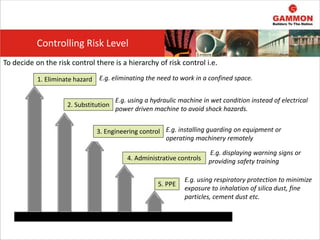
To decide on the risk control there is a hierarchy of risk control i.e.
1. Eliminate hazard
2. Substitution
3. Engineering control
4. Administrative controls
5. PPE
Controlling Risk Level
E.g. eliminating the need to work in a confined space.
E.g. using a hydraulic machine in wet condition instead of electrical
power driven machine to avoid shock hazards.
E.g. installing guarding on equipment or
operating machinery remotely
E.g. displaying warning signs or
providing safety training
E.g. using respiratory protection to minimize
exposure to inhalation of silica dust, fine
particles, cement dust etc.
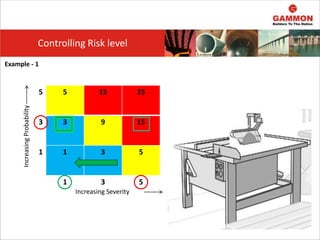
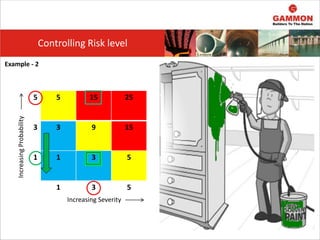
5 5 15 25
3 3 9 15
1 1 3 5
1 3 5
Increasing
Probability
Increasing Severity
Controlling Risk level
Example - 1
Controlling Risk level
5 5 15 25
3 3 9 15
1 1 3 5
1 3 5
Increasing
Probability
Increasing Severity
Example - 2
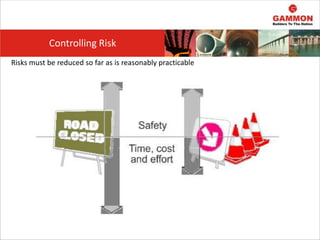
Risks must be reduced so far as is reasonably practicable
Controlling Risk
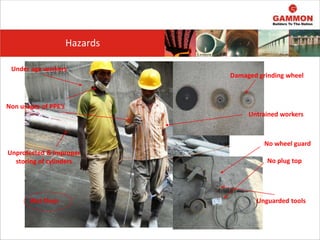
Hazards
No plug top
No wheel guard
Damaged grinding wheel
Under age workers
Untrained workers
Unguarded tools
Wet Floor
Unprotected & improper
storing of cylinders
Non usages of PPE’s
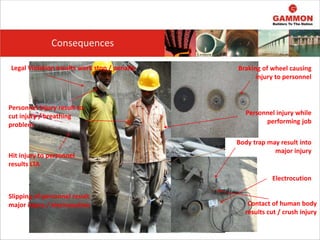
Consequences
Electrocution
Body trap may result into
major injury
Braking of wheel causing
injury to personnel
Legal Violation results work stop / penalty
Personnel injury while
performing job
Contact of human body
results cut / crush injury
Slipping of personnel result
major injury / electrocution
Hit injury to personnel
results LTA
Personnel Injury result to
cut injury / breathing
problem
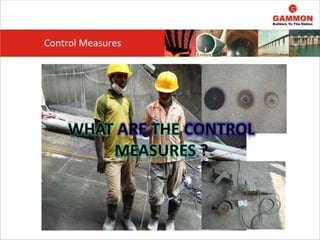
Control Measures
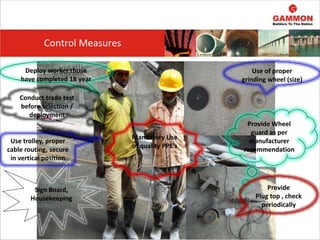
Control Measures
Deploy worker those
have completed 18 year
Conduct trade test
before selection /
deployment
Use of proper
grinding wheel (size)
Provide Wheel
guard as per
manufacturer
recommendation
Provide
Plug top , check
periodically
Sign Board,
Housekeeping
Use trolley, proper
cable routing, secure
in vertical position
Mandatory Use
of quality PPE’s
•Amendment of any legislation
•At least once in six months.
•New type of job
•Changing in existing process/activity
•Modification in site layout
•Current SOP / Method statement Changed
•New safety equipment / equipment deputed
•After any incident / accident investigation
•As a result of safety audit, safety inspection etc
Review of Risk Assessment
DETAIL PROCESS
• Procedure of HIRAC - GIL-ORGN-MGM-D-022
• Format of HIRAC - GIL-ORGN-MGM-F-022
• Sample HIRAC register – Batching Plant
HIRAC Documents
Hira

Hira

  • 1.
    Hazard Identification, RiskAssessment & Determining Control (HIRAC) BS OHSAS 18001:2007
  • 2.
    HIRAC What is risk? Whatis Hazard? What is Ill Health? Harm or ill health Situation Source Act Likelihood of occurrence of hazardous event Severity of injury / ill health Risk ill health Adverse physical Adverse mental condition
  • 3.
    HIRAC Why HIRAC ? LegalFactor Act / Rule Contract Condition Human Factor Save Life Minimize Injury Staff moral Financial Factor Cost Reduction Minimize risk of life Penalty Stack holder Productivity
  • 4.
    HIRAC likelihood Provide appropriate controls Risk level Associated consequences identifyOH&S hazards PURPOSE PERFORMED AT Head Office Regional Office Workshop Projects ALL Activities Sub activities Process Task
  • 5.
    What is arisk assessment? “Process of evaluating the risk arising from a hazard (s), taking into account the adequacy of any existing controls, and deciding whether or not the risk(s) is acceptable”. Why risk assessment required? Assessing Risk Risk Assessmen t Requireme nt You Other Business
  • 6.
    Factors to beconsidered while assessing risk: Assessing Risk Factors People Location Process activity Equipment
  • 7.
  • 8.
  • 9.
  • 10.
  • 11.
  • 12.
  • 13.
  • 14.
    Assessing Risk 5 515 25 3 3 9 15 1 1 3 5 1 3 5 Evaluate the Risk / Risk assessment Matrix Increasing Severity Severity: 5 – Catastrophic 3 – Major 1 – Minor Increasing Probability Probability: 5 – Certain 3 – Likely 1 – Unlikely
  • 15.
    RISK PRIORITY CHART- Severity Occupational Safety Hazard (Severity) Severity of risk Description Severity factor Minimal •First aid injury •Injury (absence less than 48 hrs) •Resume work immediately after FA or within 48 hrs; •Minor delay to resume operation. •Cost of property damage within INR 50,000/- 1 Major/Serious •Lost time injury (absence more than 48 hrs), •Temporary/permane nt disablement •Resume work after 48 hours •Temporary/permanent disablement of body organ •Suspension of operation for few hours •Property damage cost between INR 50000/- to INR/- 10,00,000/ 3 Catastrophic Fatalities or Collapsing of structure •Loss of life; total failure of machinery or catastrophic damages (structural damages etc) •Undefined Suspension of operation . •Damage above INR 10,00,000/- 5 Occupational Health Hazard (Severity) Severity of risk Description Severity factor Minimal •Medical aid illness •ill health less than 48hrs •Resume work immediately after FA •Resume work within 48 hrs 1 Major/Serious •ill health •Absence more than 48hrs or disabling illness •Resume work after 48 hrs •Disabling illness resulting into disablement of body organ. 3 Catastrophic •Death due to Occupational diseases Death due to Occupational diseases 5 Assessing Risk
  • 16.
    Probability ( OccupationalSafety and health Hazard) Probability of risk Description Probability factor Unlikely Never known to have happened in GIL or other industry 1 Likely Known to have happened more than once in GIL projects 3 Certain Sure to happen or happens regularly at the project 5 RISK PRIORITY CHART - Probability Assessing Risk
  • 17.
    Risk Score (Range) Risk LevelAction 1 to 3 Low A risk identified as low may be considered as acceptable and further reduction may not be necessary. However, if the risk can be resolved quickly and efficiently, control measures should be implemented and recorded. 5 to 9 Medium A risk requires a planned approach to controlling the hazard and applies temporary measure if required. Actions taken must be documented on the risk assessment form including date for completion. Above 9 High A risk requires immediate action to control the hazard as detailed in the hierarchy of control. Actions taken must be documented on the risk assessment form including date for completion. RISK LEVEL INDEX AND ACTION Assessing Risk
  • 18.
    How do youreduce risk? 5 5 15 25 3 3 9 15 1 1 3 5 1 3 5 Increasing Probability Increasing Severity If you want to reduce the risk, you’ll need to: • Reduce Probability • Reduce Severity • Reduce both Controlling Risk
  • 19.
    To decide onthe risk control there is a hierarchy of risk control i.e. 1. Eliminate hazard 2. Substitution 3. Engineering control 4. Administrative controls 5. PPE Controlling Risk Level E.g. eliminating the need to work in a confined space. E.g. using a hydraulic machine in wet condition instead of electrical power driven machine to avoid shock hazards. E.g. installing guarding on equipment or operating machinery remotely E.g. displaying warning signs or providing safety training E.g. using respiratory protection to minimize exposure to inhalation of silica dust, fine particles, cement dust etc.
  • 20.
    5 5 1525 3 3 9 15 1 1 3 5 1 3 5 Increasing Probability Increasing Severity Controlling Risk level Example - 1
  • 21.
    Controlling Risk level 55 15 25 3 3 9 15 1 1 3 5 1 3 5 Increasing Probability Increasing Severity Example - 2
  • 22.
    Risks must bereduced so far as is reasonably practicable Controlling Risk
  • 23.
    Hazards No plug top Nowheel guard Damaged grinding wheel Under age workers Untrained workers Unguarded tools Wet Floor Unprotected & improper storing of cylinders Non usages of PPE’s
  • 24.
    Consequences Electrocution Body trap mayresult into major injury Braking of wheel causing injury to personnel Legal Violation results work stop / penalty Personnel injury while performing job Contact of human body results cut / crush injury Slipping of personnel result major injury / electrocution Hit injury to personnel results LTA Personnel Injury result to cut injury / breathing problem
  • 25.
  • 26.
    Control Measures Deploy workerthose have completed 18 year Conduct trade test before selection / deployment Use of proper grinding wheel (size) Provide Wheel guard as per manufacturer recommendation Provide Plug top , check periodically Sign Board, Housekeeping Use trolley, proper cable routing, secure in vertical position Mandatory Use of quality PPE’s
  • 27.
    •Amendment of anylegislation •At least once in six months. •New type of job •Changing in existing process/activity •Modification in site layout •Current SOP / Method statement Changed •New safety equipment / equipment deputed •After any incident / accident investigation •As a result of safety audit, safety inspection etc Review of Risk Assessment
  • 28.
    DETAIL PROCESS • Procedureof HIRAC - GIL-ORGN-MGM-D-022 • Format of HIRAC - GIL-ORGN-MGM-F-022 • Sample HIRAC register – Batching Plant HIRAC Documents