Dr. Robert Leneway and Dr. Sharon Peterson
Educational Technology Program
Western Michigan University
Hudsonville PS
Tech Initiative Evaluation
A national survey of 1,000 one to one computing schools to
analyze what’s working in technology-transformed schools.
These schools were surveyed for what factors contributed to
the success or failure of their program.
The project looked for proof of cost savings due to the
implementation of technology in any k-12 environment.
Using a regressive model of statistical analysis, they
correlated 11 measures of success (such as dropout rates,
discipline rates, and student achievement scores) with more
than 100 independent variables across 22 categories to
determine which factors had the biggest impact on success.
What Research Tells Us
Schools with one-to-one computing programs have
fewer discipline problems, lower dropout
rates, and higher rates of college attendance
than schools with a higher ratio of students to
computers,
From the almost 1,000 school district studied, 69% of the
schools in the study reported that their
students’ achievement scores on high-stakes tests were on
the rise.
However, for schools that employed regular formative
assessment and teacher learning communities 85% are
reporting rising students’ achievement scores.
Which Factors Proved to be the Most
Important?
Leadership and Vision “when principals receive specializing
training and technology [is] properly implemented, the
benefits increase even more.” A strong principal and strong
district leadership are among the most important variables
when it comes to implementing education technology and
transforming schools.
Daily technology use in core subject area classes, and
frequent tech usage use in intervention courses plays a
critical role in reduced student dropouts.
Biggest change found in with special education and Title I
students when individualize instruction is provided.
Assumptions
One to one computing will improve student
achievement.
Technology initiative will only be as effective as the
teachers who apply them.
Changing teaching practices to incorporate 21st
century skills with technology is an evolution, and it
takes time for teacher practices to evolve.
Systemic research and evaluation are powerful tools
for improving policy and practice.
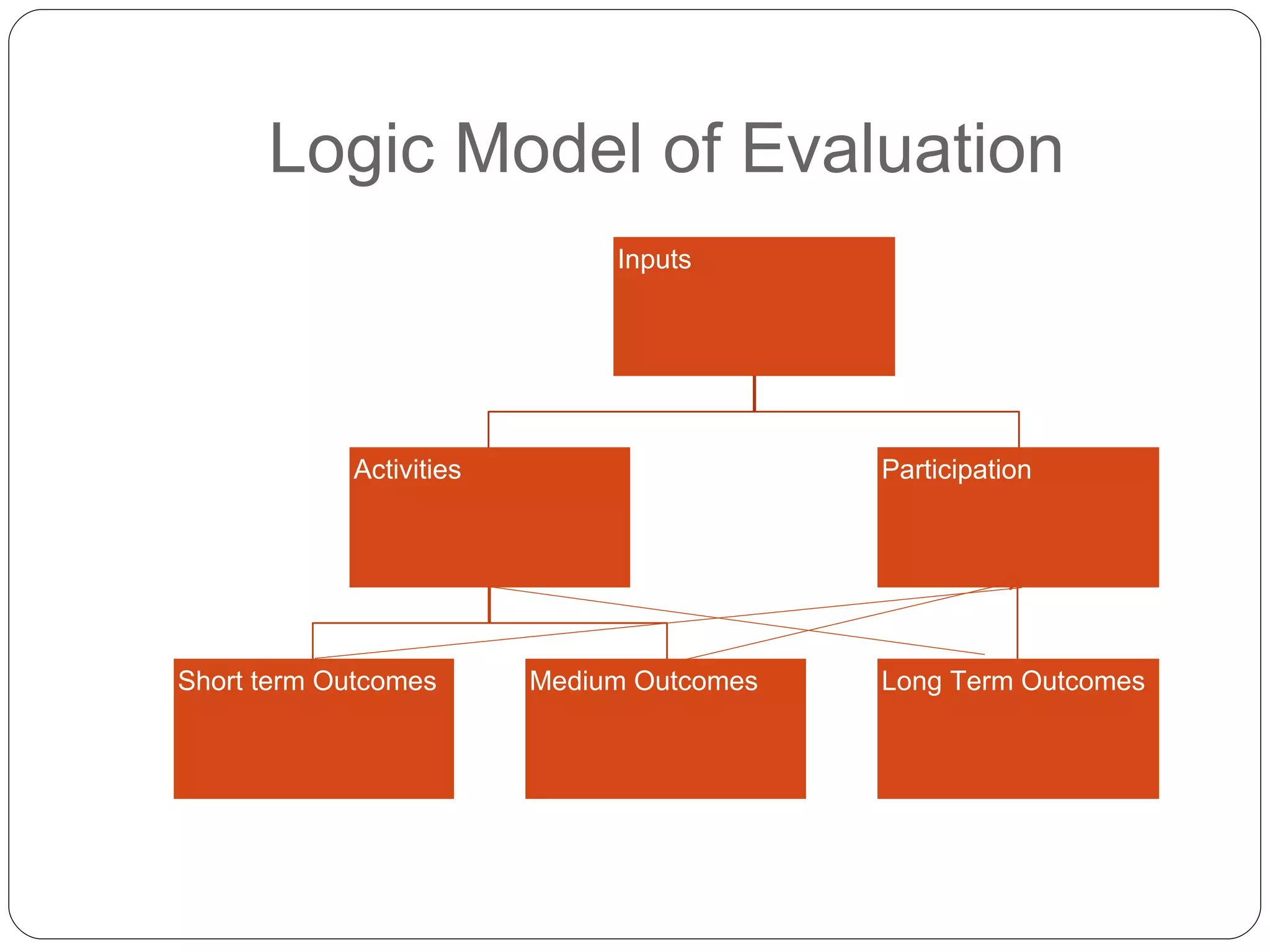
Logic Model of Evaluation
Inputs
Activities
Short term Outcomes Medium Outcomes
Participation
Long Term Outcomes
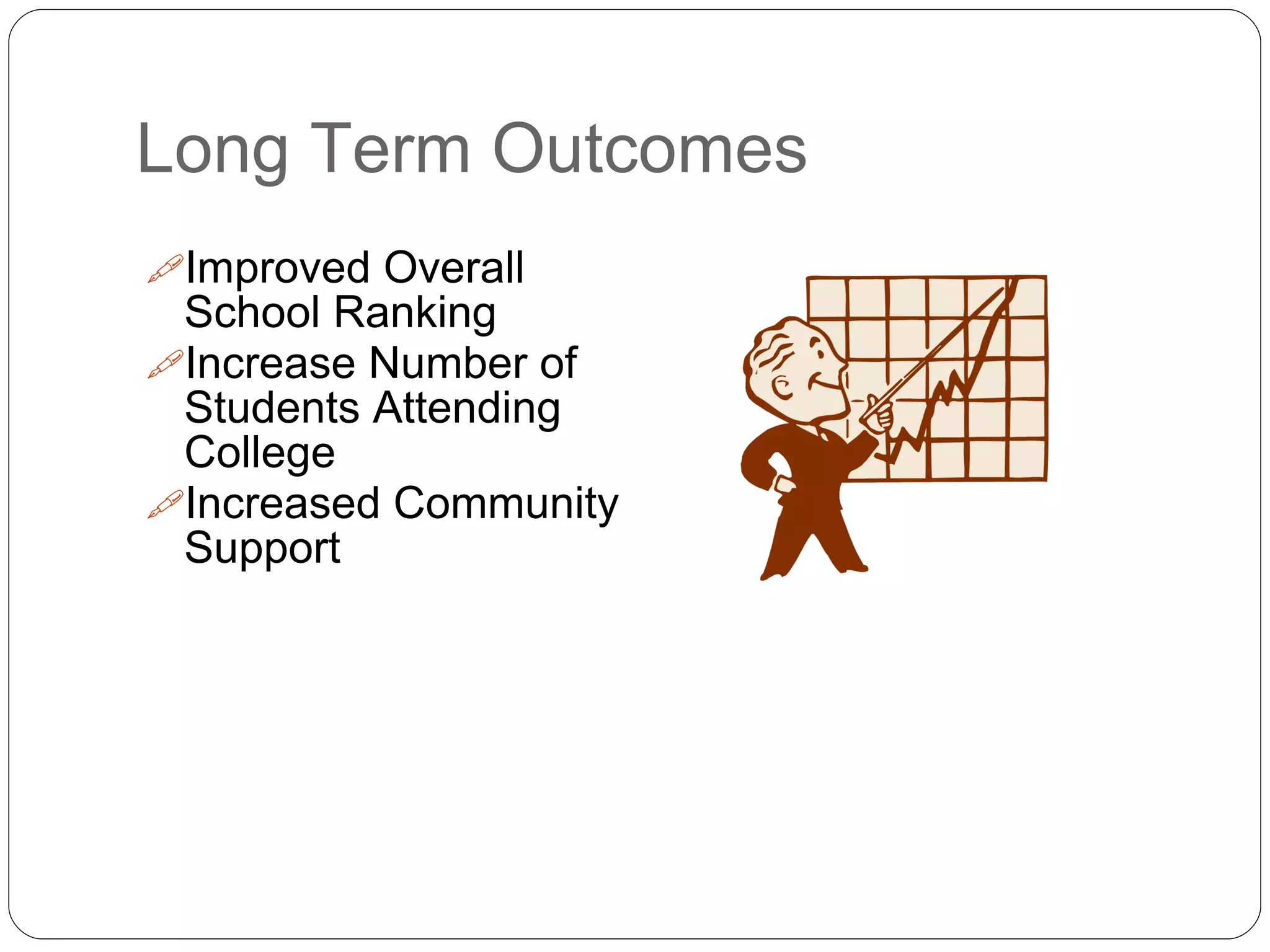
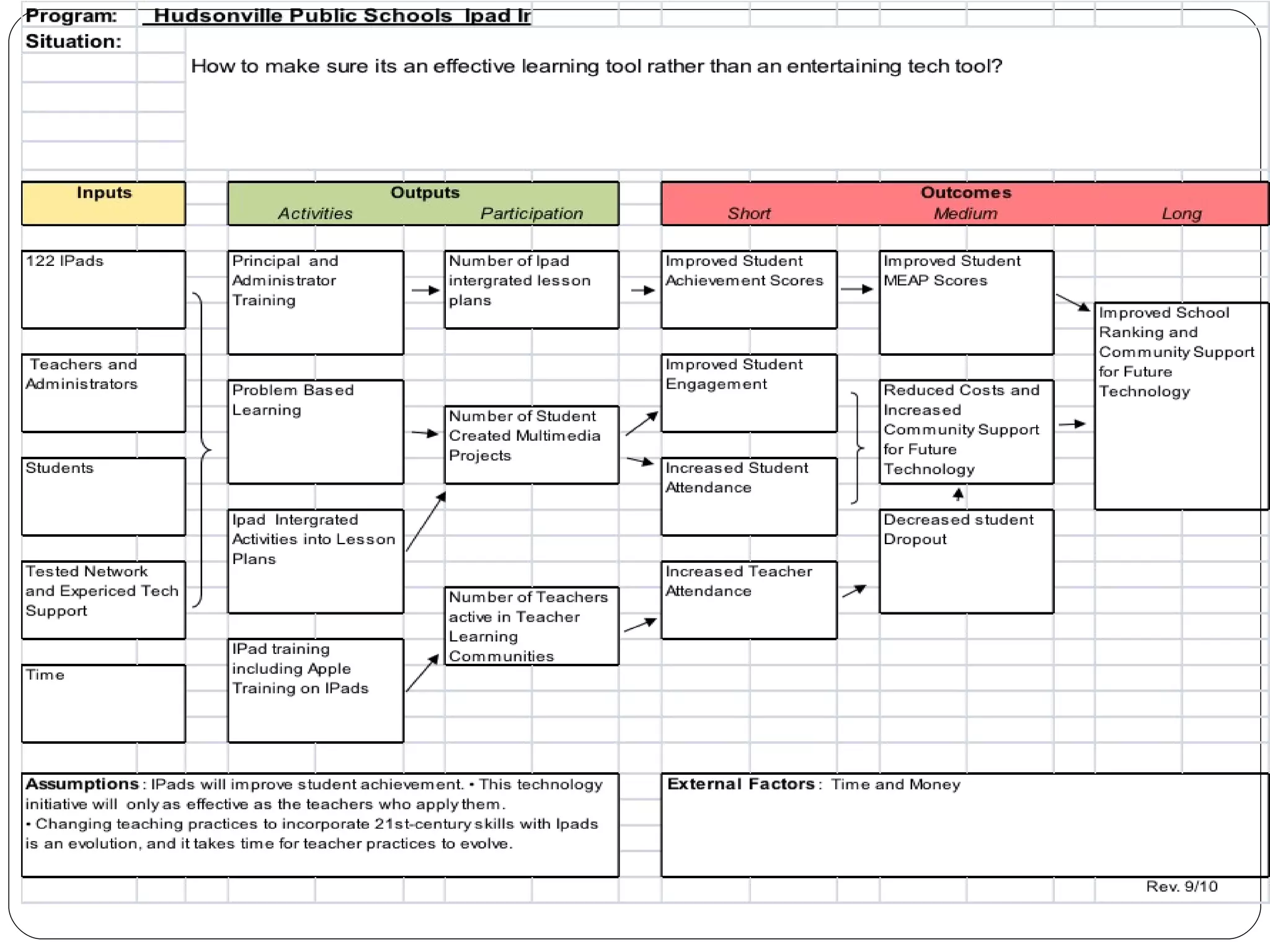
Long Term Outcomes
Improved Overall
School Ranking
Increase Number of
Students Attending
College
Increased Community
Support
Short Term Outcomes
Improved Student Achievement
Improved Student Engagement
 Increased Student Attendance
Reduced Student Discipline Problems
Increased Teacher Attendance
Other
Medium Term Outcomes
Improved MEAP scores
Reduced Costs
Increase Community
Interest and Support
Increase Student
Retention
Other
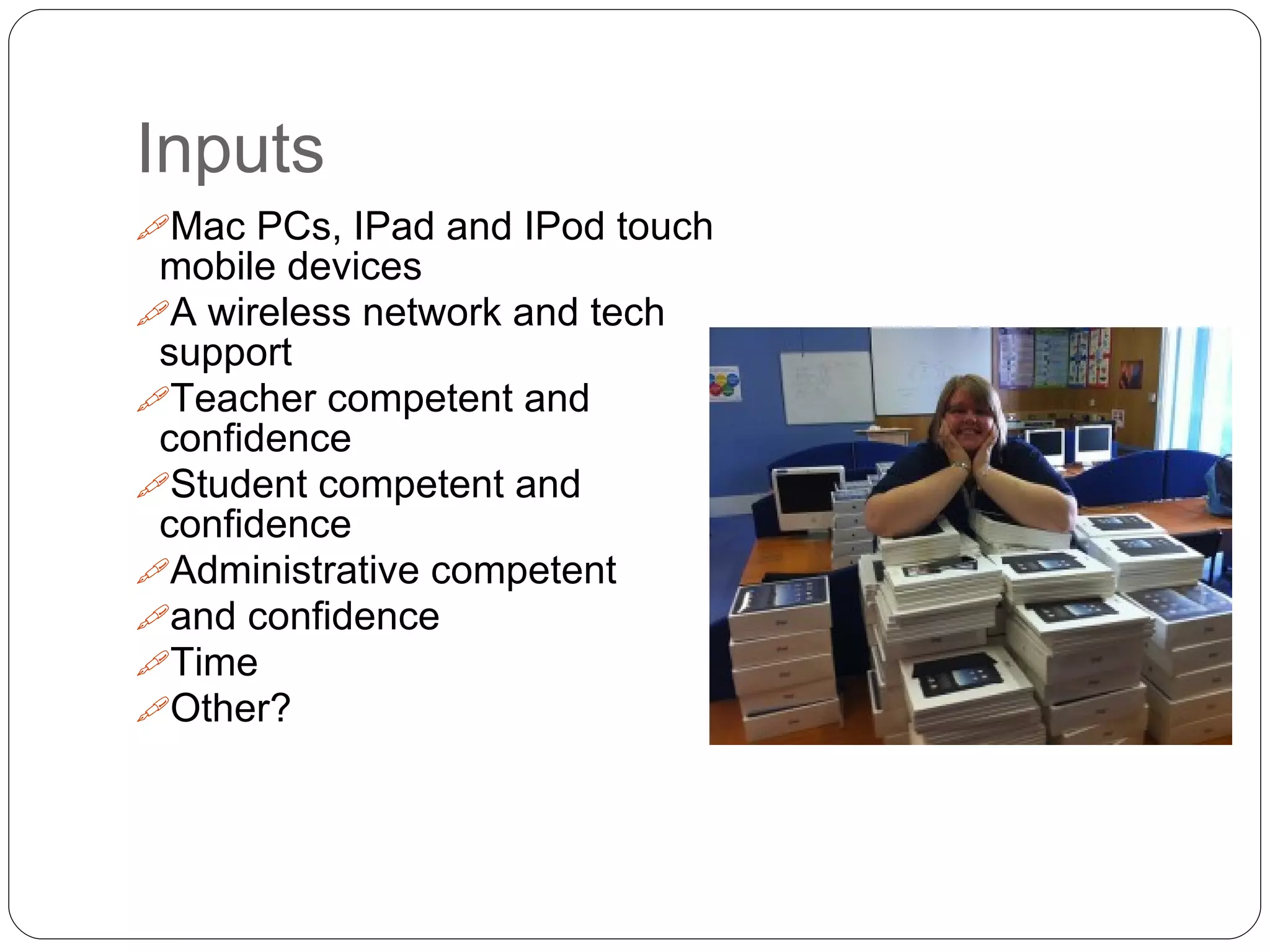
Inputs
Mac PCs, IPad and IPod touch
mobile devices
A wireless network and tech
support
Teacher competent and
confidence
Student competent and
confidence
Administrative competent
and confidence
Time
Other?
Outputs - Activities
Ipad/Ipod touch teacher
training
Ipad/Ipod touch integration
into the lesson plans
Administrative Training and
Support
Problem Based Learning
Training
Other needed activity?
Outputs - Participation
Numbers of Ipad and Ipod touch activities
integrated lessons
Number of student created multimedia projects
Provide an exercise to reinforce learning
Amount of participation in teacher learning
communities
Other needed forms of participation
Indicators of Success
 From prior research, it is predicted that indicators of
success in this program will appear in classrooms that
are “differentiated in genuine ways for all students,
Indicators of success will appear with student and
teachers who gather and mine just-in-time data.
Further, teachers, students, and parents will use
[technology] every day to collaborate about what to do
next in their collective pursuit of learning.
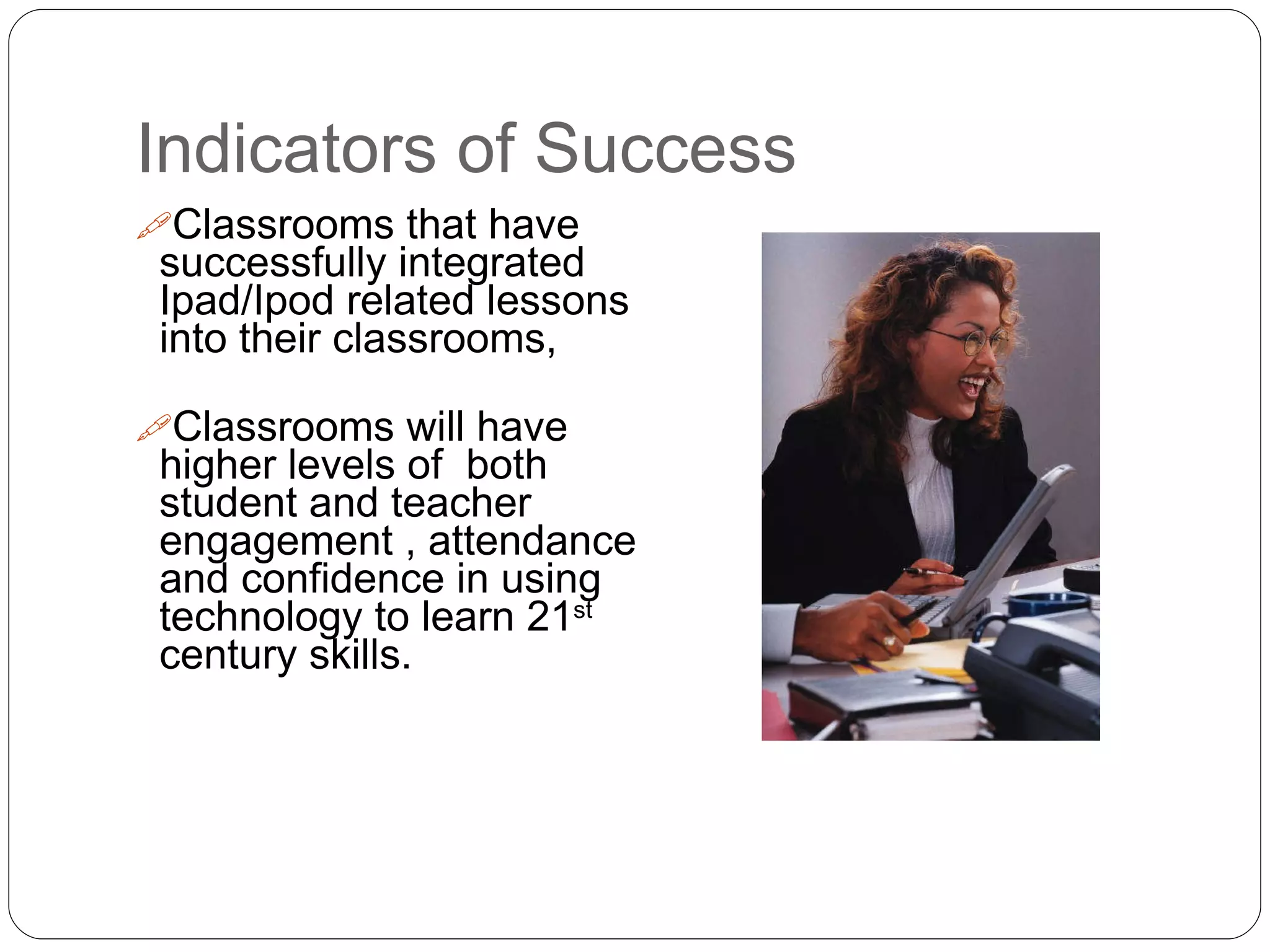
Indicators of Success
Classrooms that have
successfully integrated
Ipad/Ipod related lessons
into their classrooms,
Classrooms will have
higher levels of both
student and teacher
engagement , attendance
and confidence in using
technology to learn 21st
century skills.
More Information:
Project Red: from eSchool News Vol. 13, No. 18, Aug 2010;
http://projectred.org/uploads/eSchoolNews_ProjectRed.pdf
Project-Based Learning: Your Field Guild to Real-World
Projects in the Digital Age by Suzie Boss and Jane Krauss
http://www.wmich.edu/coe/elrt/edtech
http://eddigitaltribe.blogspot.com/
http://www.wmich.edu/pt3
Bob.leneway@wmich.edu

Hudsonville Evaulation Logic Design

  • 1.
    Dr. Robert Lenewayand Dr. Sharon Peterson Educational Technology Program Western Michigan University Hudsonville PS Tech Initiative Evaluation
  • 2.
    A national surveyof 1,000 one to one computing schools to analyze what’s working in technology-transformed schools. These schools were surveyed for what factors contributed to the success or failure of their program. The project looked for proof of cost savings due to the implementation of technology in any k-12 environment. Using a regressive model of statistical analysis, they correlated 11 measures of success (such as dropout rates, discipline rates, and student achievement scores) with more than 100 independent variables across 22 categories to determine which factors had the biggest impact on success.
  • 3.
    What Research TellsUs Schools with one-to-one computing programs have fewer discipline problems, lower dropout rates, and higher rates of college attendance than schools with a higher ratio of students to computers, From the almost 1,000 school district studied, 69% of the schools in the study reported that their students’ achievement scores on high-stakes tests were on the rise. However, for schools that employed regular formative assessment and teacher learning communities 85% are reporting rising students’ achievement scores.
  • 4.
    Which Factors Provedto be the Most Important? Leadership and Vision “when principals receive specializing training and technology [is] properly implemented, the benefits increase even more.” A strong principal and strong district leadership are among the most important variables when it comes to implementing education technology and transforming schools. Daily technology use in core subject area classes, and frequent tech usage use in intervention courses plays a critical role in reduced student dropouts. Biggest change found in with special education and Title I students when individualize instruction is provided.
  • 5.
    Assumptions One to onecomputing will improve student achievement. Technology initiative will only be as effective as the teachers who apply them. Changing teaching practices to incorporate 21st century skills with technology is an evolution, and it takes time for teacher practices to evolve. Systemic research and evaluation are powerful tools for improving policy and practice.
  • 6.
    Logic Model ofEvaluation Inputs Activities Short term Outcomes Medium Outcomes Participation Long Term Outcomes
  • 7.
    Long Term Outcomes ImprovedOverall School Ranking Increase Number of Students Attending College Increased Community Support
  • 9.
    Short Term Outcomes ImprovedStudent Achievement Improved Student Engagement  Increased Student Attendance Reduced Student Discipline Problems Increased Teacher Attendance Other
  • 10.
    Medium Term Outcomes ImprovedMEAP scores Reduced Costs Increase Community Interest and Support Increase Student Retention Other
  • 11.
    Inputs Mac PCs, IPadand IPod touch mobile devices A wireless network and tech support Teacher competent and confidence Student competent and confidence Administrative competent and confidence Time Other?
  • 12.
    Outputs - Activities Ipad/Ipodtouch teacher training Ipad/Ipod touch integration into the lesson plans Administrative Training and Support Problem Based Learning Training Other needed activity?
  • 13.
    Outputs - Participation Numbersof Ipad and Ipod touch activities integrated lessons Number of student created multimedia projects Provide an exercise to reinforce learning Amount of participation in teacher learning communities Other needed forms of participation
  • 14.
    Indicators of Success From prior research, it is predicted that indicators of success in this program will appear in classrooms that are “differentiated in genuine ways for all students, Indicators of success will appear with student and teachers who gather and mine just-in-time data. Further, teachers, students, and parents will use [technology] every day to collaborate about what to do next in their collective pursuit of learning.
  • 15.
    Indicators of Success Classroomsthat have successfully integrated Ipad/Ipod related lessons into their classrooms, Classrooms will have higher levels of both student and teacher engagement , attendance and confidence in using technology to learn 21st century skills.
  • 16.
    More Information: Project Red:from eSchool News Vol. 13, No. 18, Aug 2010; http://projectred.org/uploads/eSchoolNews_ProjectRed.pdf Project-Based Learning: Your Field Guild to Real-World Projects in the Digital Age by Suzie Boss and Jane Krauss http://www.wmich.edu/coe/elrt/edtech http://eddigitaltribe.blogspot.com/ http://www.wmich.edu/pt3 Bob.leneway@wmich.edu