PREPARING TEACHER TO USE TECHNOLOGY
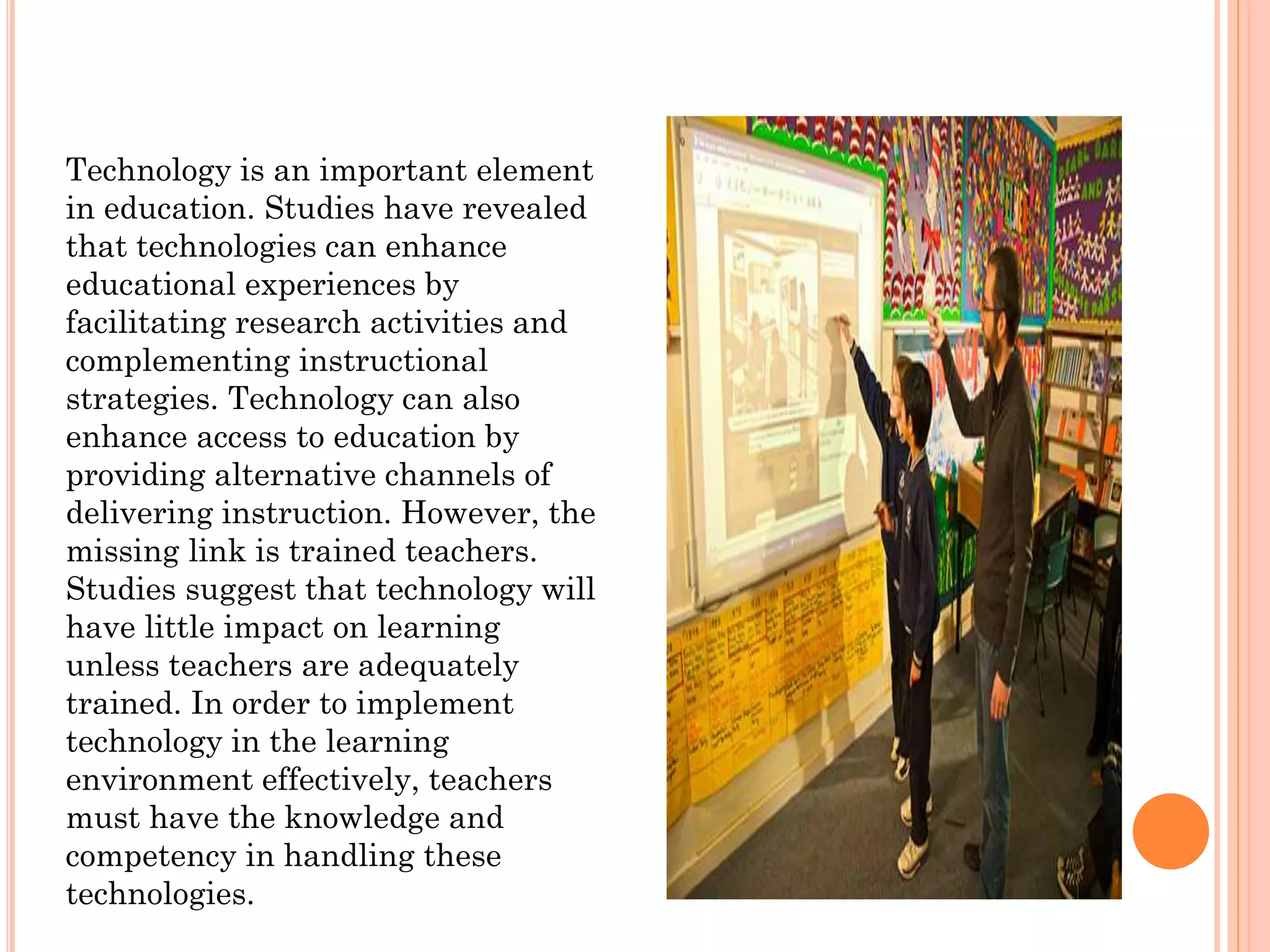
Technology is an important element
in education. Studies have revealed
that technologies can enhance
educational experiences by
facilitating research activities and
complementing instructional
strategies. Technology can also
enhance access to education by
providing alternative channels of
delivering instruction. However, the
missing link is trained teachers.
Studies suggest that technology will
have little impact on learning
unless teachers are adequately
trained. In order to implement
technology in the learning
environment effectively, teachers
must have the knowledge and
competency in handling these
technologies.
There is a little question that technology plays an
important role in our school.
 It is considered to be the wave of the future so,
naturally teachers are encouraged to embrace it.
 They are encouraged to integrate technology in
their lessons plans.
 Most teachers believe that technology improved
student learning.

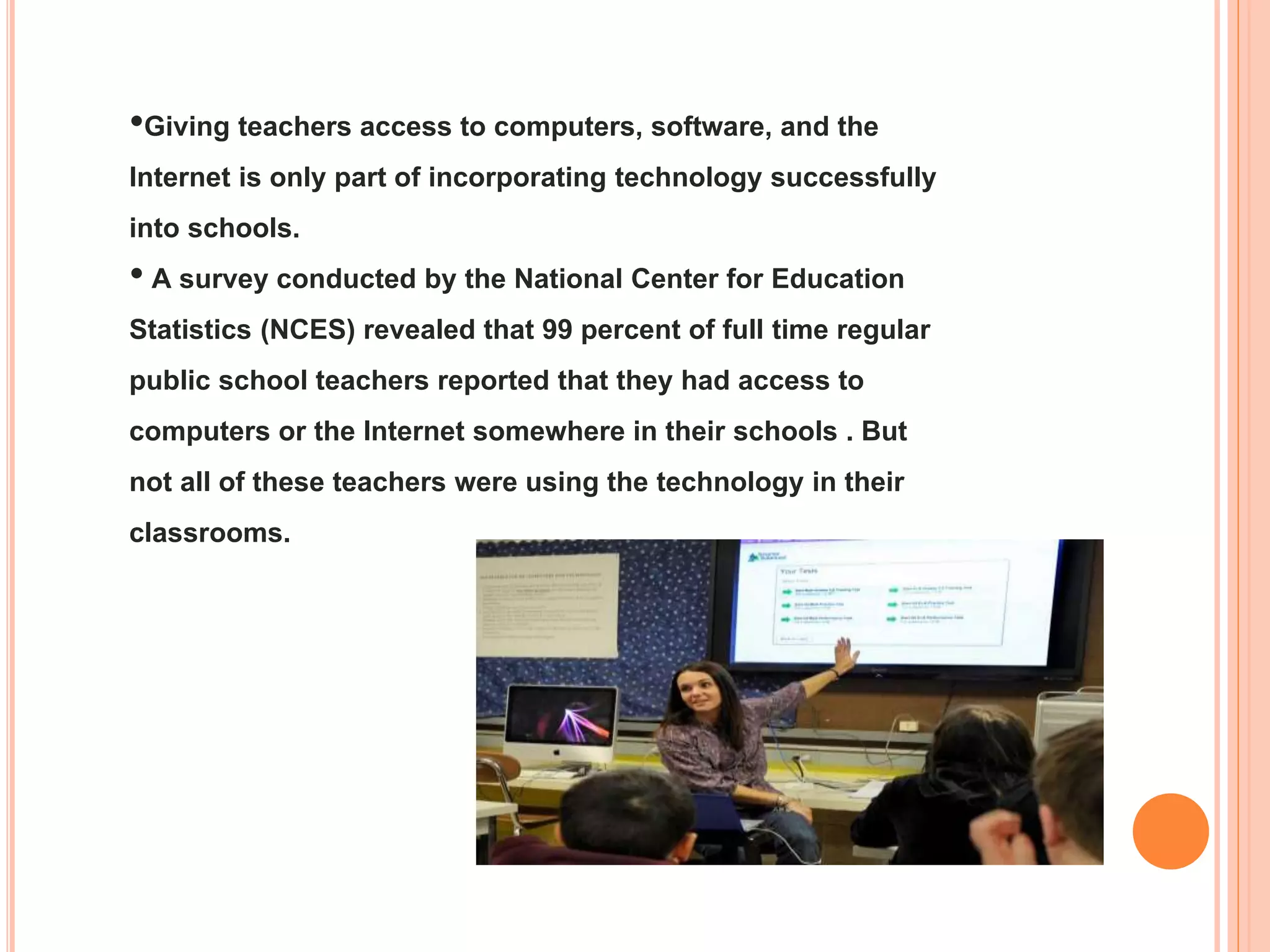
•Giving teachers access to computers, software, and the
Internet is only part of incorporating technology successfully
into schools.
• A survey conducted by the National Center for Education
Statistics (NCES) revealed that 99 percent of full time regular
public school teachers reported that they had access to
computers or the Internet somewhere in their schools . But
not all of these teachers were using the technology in their
classrooms.
Teacher Readiness

Only one-third of teachers responding to the NCES survey
reported feeling well prepared or very well prepared to use
computers and the Internet in classroom instruction. Less
experienced teachers indicated that they felt better prepared
to use technology than their experienced colleagues. Other
key findings include:
• Among teachers with computers available at home teachers with the
fewest years of experience were more likely than teachers with the most
years of experience to use Computers.
•Teachers cited independent learning most frequently as preparing them
for technology use (93 percent), followed by professional development
activities (88 percent) and their colleagues (87 percent).
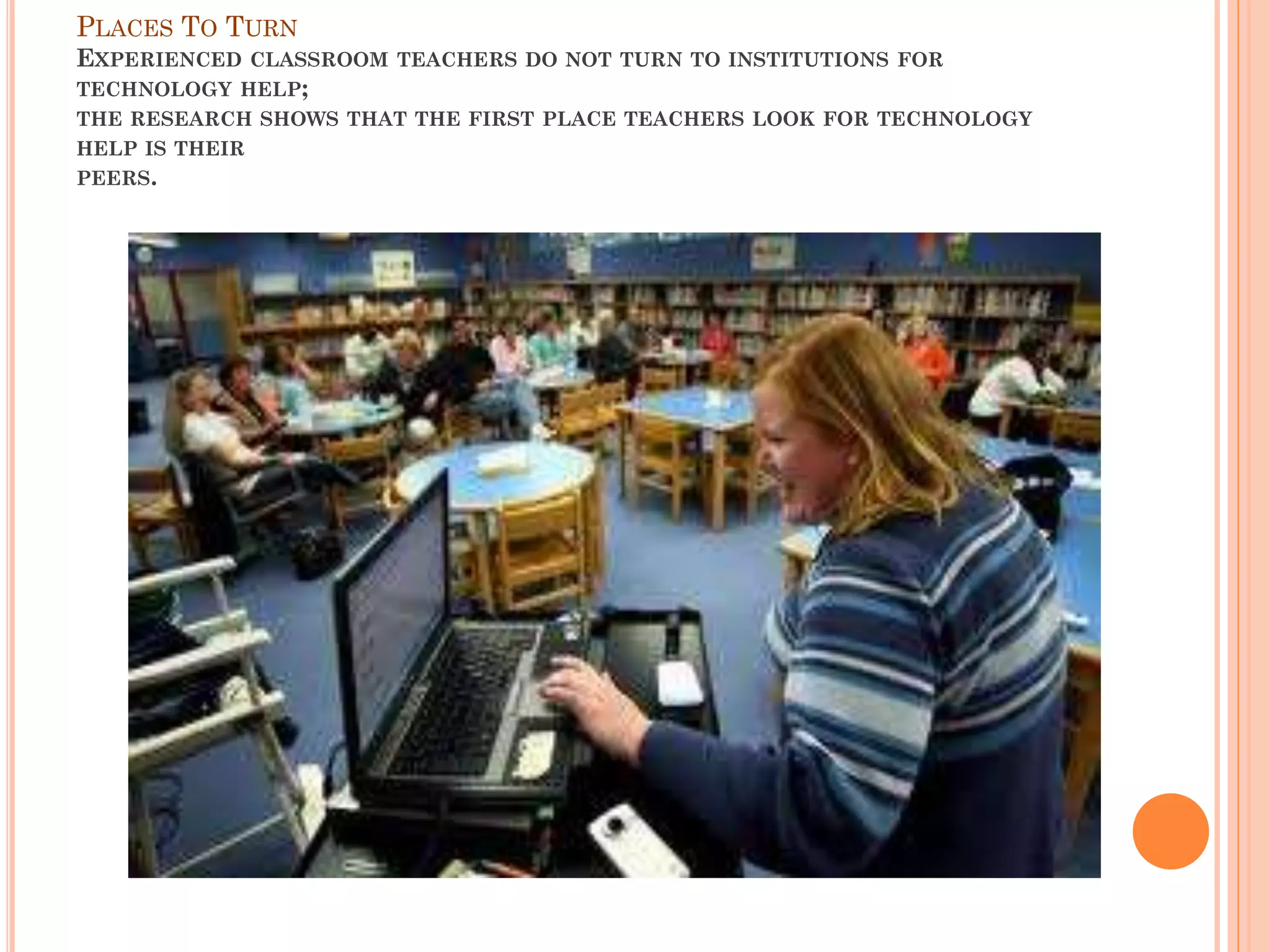
PLACES TO TURN
EXPERIENCED

CLASSROOM TEACHERS DO NOT TURN TO INSTITUTIONS FOR

TECHNOLOGY HELP;
THE RESEARCH SHOWS THAT THE FIRST PLACE TEACHERS LOOK FOR TECHNOLOGY
HELP IS THEIR
PEERS.
A STRONG SUPPORT SYSTEM


Higher program standards, more funding, and
online support systems are improving teacher
readiness to use technology y, but many believe
that much more is needed to improve teacher
readiness—ensuring that all students have
access to technology in school.
Support Systems in Place
Administrators are key to the successful implementation of technology in the
classroom and the adoption of technology innovations in schools(Coley, Cradler,
and Engle1997). Principal Diane Payne makes technology a priority in
Needham Broughton High School in Raleigh, N.C.She believes that technology
training and access for teacher is vital. Fortunately, parents and her school
system
agree. Payne’s school has received technology support from the PTA and the
county which, she says, understand that technology in education is the wave of
the
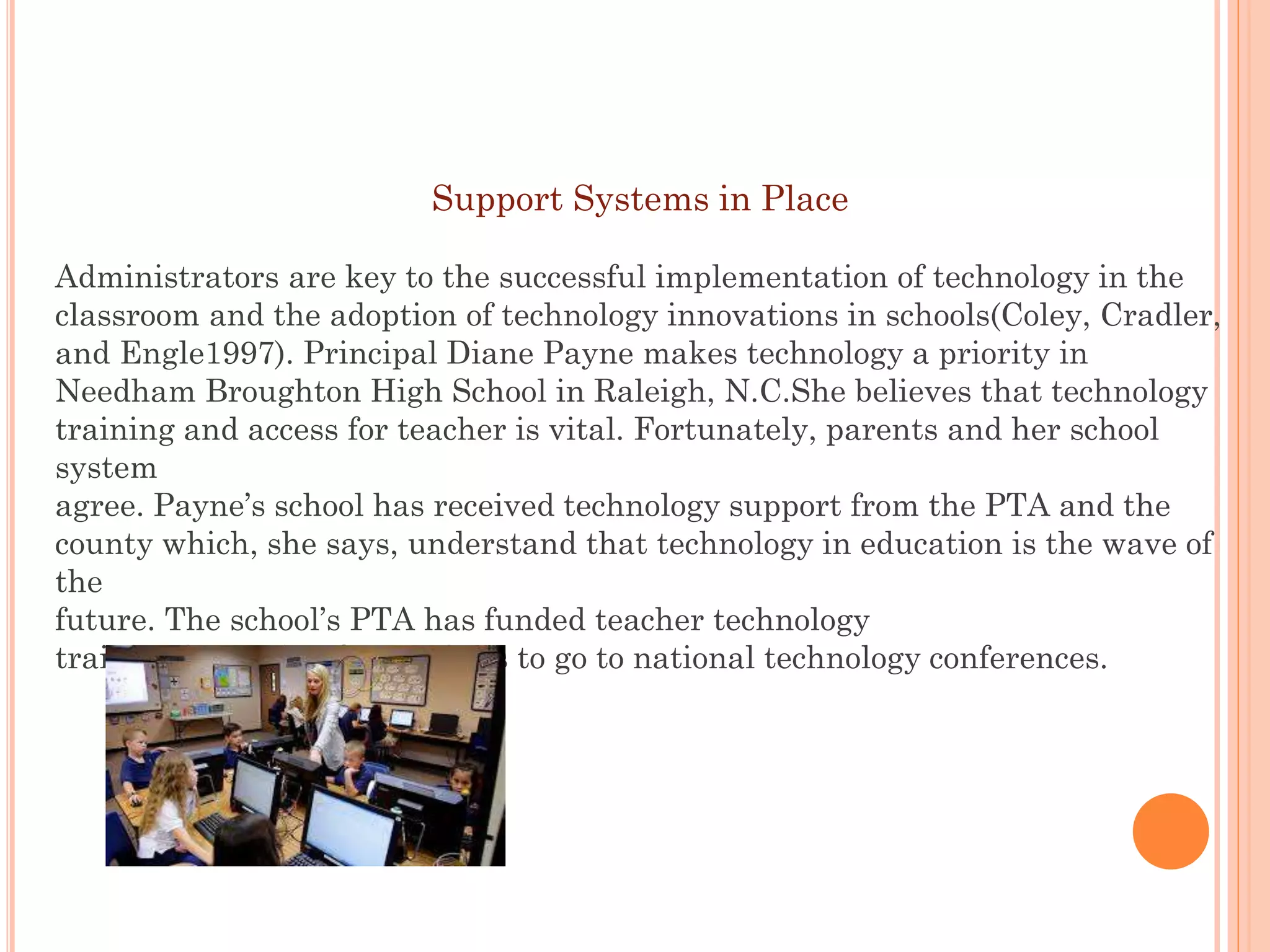
future. The school’s PTA has funded teacher technology
training by paying for teachers to go to national technology conferences.

Preparing teacher to use technology

  • 1.
    PREPARING TEACHER TOUSE TECHNOLOGY
  • 2.
    Technology is animportant element in education. Studies have revealed that technologies can enhance educational experiences by facilitating research activities and complementing instructional strategies. Technology can also enhance access to education by providing alternative channels of delivering instruction. However, the missing link is trained teachers. Studies suggest that technology will have little impact on learning unless teachers are adequately trained. In order to implement technology in the learning environment effectively, teachers must have the knowledge and competency in handling these technologies.
  • 3.
    There is alittle question that technology plays an important role in our school.  It is considered to be the wave of the future so, naturally teachers are encouraged to embrace it.  They are encouraged to integrate technology in their lessons plans.  Most teachers believe that technology improved student learning. 
  • 4.
    •Giving teachers accessto computers, software, and the Internet is only part of incorporating technology successfully into schools. • A survey conducted by the National Center for Education Statistics (NCES) revealed that 99 percent of full time regular public school teachers reported that they had access to computers or the Internet somewhere in their schools . But not all of these teachers were using the technology in their classrooms.
  • 5.
    Teacher Readiness Only one-thirdof teachers responding to the NCES survey reported feeling well prepared or very well prepared to use computers and the Internet in classroom instruction. Less experienced teachers indicated that they felt better prepared to use technology than their experienced colleagues. Other key findings include: • Among teachers with computers available at home teachers with the fewest years of experience were more likely than teachers with the most years of experience to use Computers. •Teachers cited independent learning most frequently as preparing them for technology use (93 percent), followed by professional development activities (88 percent) and their colleagues (87 percent).
  • 6.
    PLACES TO TURN EXPERIENCED CLASSROOMTEACHERS DO NOT TURN TO INSTITUTIONS FOR TECHNOLOGY HELP; THE RESEARCH SHOWS THAT THE FIRST PLACE TEACHERS LOOK FOR TECHNOLOGY HELP IS THEIR PEERS.
  • 7.
    A STRONG SUPPORTSYSTEM  Higher program standards, more funding, and online support systems are improving teacher readiness to use technology y, but many believe that much more is needed to improve teacher readiness—ensuring that all students have access to technology in school.
  • 8.
    Support Systems inPlace Administrators are key to the successful implementation of technology in the classroom and the adoption of technology innovations in schools(Coley, Cradler, and Engle1997). Principal Diane Payne makes technology a priority in Needham Broughton High School in Raleigh, N.C.She believes that technology training and access for teacher is vital. Fortunately, parents and her school system agree. Payne’s school has received technology support from the PTA and the county which, she says, understand that technology in education is the wave of the future. The school’s PTA has funded teacher technology training by paying for teachers to go to national technology conferences.