RESEARCH is purposely and 
methodically search for new 
knowledge and practical 
solutions in the form of answers to 
questions.
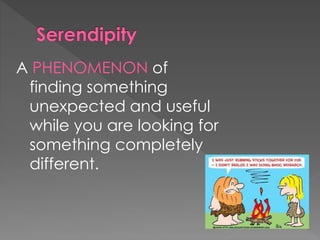
A PHENOMENON of 
finding something 
unexpected and useful 
while you are looking for 
something completely 
different.
There are two main 
types of research 
studies: 
 Experimental studies 
 Observational 
studies
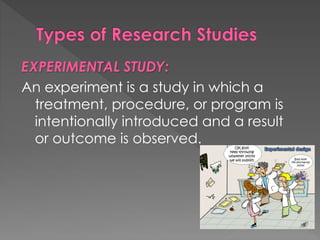
EXPERIMENTAL STUDY: 
An experiment is a study in which a 
treatment, procedure, or program is 
intentionally introduced and a result 
or outcome is observed.
OBSERVATIONAL STUDY: 
An observational study is a study in which a 
researcher simply observes behavior in a 
systematic manner without influencing or 
interfering with the behavior.
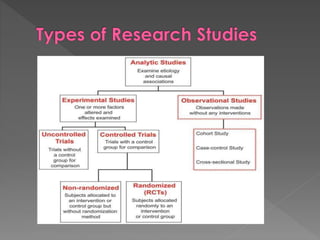
 Uncontrolled trials: 
A clinical study that lacks a comparison 
(i.e., a control) group. 
 Controlled trials: 
A clinical study that have a control group 
for comparison
 Randomized controlled trials 
These studies are called randomized 
controlled trials because people are 
randomly assigned to a certain behavior 
or treatment. 
 Non randomized 
A clinical trial in which the participants are 
not assigned by chance to different 
treatment groups.
 Cohort study: 
Comparison between the exposed and the non 
exposed groups for a particular factor. 
 Prospective cohort studies 
A prospective cohort study follows a large group of 
people forward in time. It basically collects 
information(exposure) from the beginning of the 
study. 
 Retrospective cohort studies 
Researchers go back in time (retrospectively) and 
collects information of an exposed disease.
 Case-control studies 
Patients who already have a certain 
condition are compared with people 
who do not. 
 Cross sectional studies 
A cross sectional study, also referred to as 
a cross sectional analysis, is a research 
study in which a disease and factors 
causing it are examined at the same 
time by a group of individuals.
 A scientific paper is a written and 
published report describing original 
research results. 
 A scientific experiment is not complete 
until the results have been published and 
understood.
 The purpose of scientific writing is to 
communicate new scientific findings 
 Thus it has to be clear, simple and well 
ordered communication to transmit new 
scientific findings 
 A good research paper is the one that 
easily conveyed your idea to the reader
Knowledge is lost without written 
records 
Knowledge could not be widely 
circulated with no effective 
duplication
 Scientific papers generally follow a 
conventional format that includes a 
title, an abstract, a reference (or 
Literature cited) section and the 
components of the IMRAD structure.
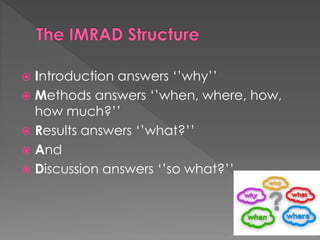
 Introduction answers ‘’why’’ 
 Methods answers ‘’when, where, how, 
how much?’’ 
 Results answers ‘’what?’’ 
 And 
 Discussion answers ‘’so what?’’
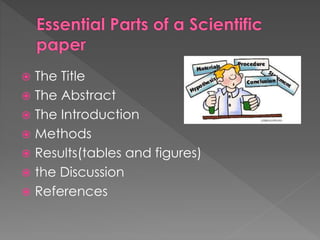
 The Title 
 The Abstract 
 The Introduction 
 Methods 
 Results(tables and figures) 
 the Discussion 
 References
 A good title is defined as the fewest 
possible words that describe the 
contents of the paper. 
 An improperly titled paper will get lost 
and will never be read. 
 Informative and specific 
 Concise 
 Understandable
 Make a list of the most 
important keywords 
 Think of a title that contains 
these words 
 The title could state the 
conclusion of the paper
 It should be written in clear and simple 
words, as it is the first and sometimes the 
only part of the manuscript read. 
 It should provide a complete and 
selective summary of the most significant 
ideas and information 
 Describe the methods used 
 Summarize the results, and 
 State the principal conclusions
 It should not exceed 250 words 
 It should be written in one paragraph. 
 Long words should be followed by its 
abbreviation which would be used 
through out the abstract and paper. 
 It should never give any information or 
conclusion that is not stated in the paper
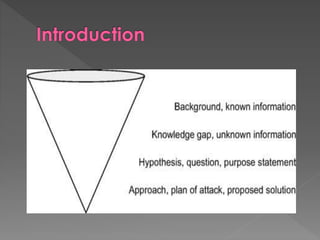
 The introduction should answer the 
following questions: 
 What was I studying? 
 Why was this an important question? 
 What did I know about this topic before I 
did this study? 
 What model was I testing? and 
 What approach did I take in this study?
 Be precise, complete and concise. 
 Include only relevant information-no unnecessary 
details, anecdotes, excuses or confessions. 
 Detailed experimental procedures 
 Questions such as “how” or “how much” must be 
answered and not left to be puzzled over 
 Explains analytical techniques used
 It is the core or heart of the paper 
 It needs to be clearly and simply stated since it 
constitutes the new knowledge contributed to the 
world 
 Summarize and illustrate the findings in an orderly 
and logical sequence, without interpretation 
 Should guide the reader through the findings, 
stressing the major points
 Tables and Figures are the foundation of 
your story 
 Figures and tables should stand alone 
and tell a complete story 
 The reader should not need to refer back 
to the main text
 Use the fewest figures and tables 
needed to tell the story. 
 Do not present the same data in both a 
figure and a table
 It is the hardest section to write. 
 Its primary purpose is to show the 
relationships among observed facts 
 It should end with a short summary or 
conclusion regarding the significance of 
the work. 
 State your conclusions as clearly as 
possible 
 Summarize your evidence for each 
conclusion
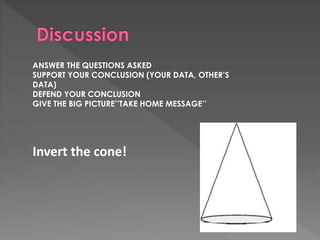
ANSWER THE QUESTIONS ASKED 
SUPPORT YOUR CONCLUSION (YOUR DATA, OTHER’S 
DATA) 
DEFEND YOUR CONCLUSION 
GIVE THE BIG PICTURE’’TAKE HOME MESSAGE’’ 
Invert the cone!
What is referencing? 
 Referencing is a standardized way of 
acknowledging the sources of 
information and ideas that you have 
used in your document. 
 A list of ALL the references used in the 
text must be written.
 Any papers not cited in the text should 
not be included. 
 Reference lists allow readers to 
investigate the subject in greater depth. 
 A reference list contains only the books, 
articles, and web pages etc that are 
cited in the text of the document.
 for gathering information so that existing 
problems can be solved 
 doing research we are able to make 
smart decisions 
 Understand, well, exactly what we are 
researching 
 improve knowledge about the subject.
 Researchers publish and disseminate 
their work in many different ways 
 through formal publication in books and 
in learned and professional journals; 
through conferences and their 
proceedings; and through a variety of 
less formal means, now including web-based 
tools for social networking.
How to write a scientific research paper

How to write a scientific research paper

  • 2.
    RESEARCH is purposelyand methodically search for new knowledge and practical solutions in the form of answers to questions.
  • 3.
    A PHENOMENON of finding something unexpected and useful while you are looking for something completely different.
  • 4.
    There are twomain types of research studies:  Experimental studies  Observational studies
  • 5.
    EXPERIMENTAL STUDY: Anexperiment is a study in which a treatment, procedure, or program is intentionally introduced and a result or outcome is observed.
  • 6.
    OBSERVATIONAL STUDY: Anobservational study is a study in which a researcher simply observes behavior in a systematic manner without influencing or interfering with the behavior.
  • 8.
     Uncontrolled trials: A clinical study that lacks a comparison (i.e., a control) group.  Controlled trials: A clinical study that have a control group for comparison
  • 9.
     Randomized controlledtrials These studies are called randomized controlled trials because people are randomly assigned to a certain behavior or treatment.  Non randomized A clinical trial in which the participants are not assigned by chance to different treatment groups.
  • 10.
     Cohort study: Comparison between the exposed and the non exposed groups for a particular factor.  Prospective cohort studies A prospective cohort study follows a large group of people forward in time. It basically collects information(exposure) from the beginning of the study.  Retrospective cohort studies Researchers go back in time (retrospectively) and collects information of an exposed disease.
  • 11.
     Case-control studies Patients who already have a certain condition are compared with people who do not.  Cross sectional studies A cross sectional study, also referred to as a cross sectional analysis, is a research study in which a disease and factors causing it are examined at the same time by a group of individuals.
  • 13.
     A scientificpaper is a written and published report describing original research results.  A scientific experiment is not complete until the results have been published and understood.
  • 14.
     The purposeof scientific writing is to communicate new scientific findings  Thus it has to be clear, simple and well ordered communication to transmit new scientific findings  A good research paper is the one that easily conveyed your idea to the reader
  • 15.
    Knowledge is lostwithout written records Knowledge could not be widely circulated with no effective duplication
  • 16.
     Scientific papersgenerally follow a conventional format that includes a title, an abstract, a reference (or Literature cited) section and the components of the IMRAD structure.
  • 17.
     Introduction answers‘’why’’  Methods answers ‘’when, where, how, how much?’’  Results answers ‘’what?’’  And  Discussion answers ‘’so what?’’
  • 18.
     The Title  The Abstract  The Introduction  Methods  Results(tables and figures)  the Discussion  References
  • 19.
     A goodtitle is defined as the fewest possible words that describe the contents of the paper.  An improperly titled paper will get lost and will never be read.  Informative and specific  Concise  Understandable
  • 20.
     Make alist of the most important keywords  Think of a title that contains these words  The title could state the conclusion of the paper
  • 21.
     It shouldbe written in clear and simple words, as it is the first and sometimes the only part of the manuscript read.  It should provide a complete and selective summary of the most significant ideas and information  Describe the methods used  Summarize the results, and  State the principal conclusions

  • 22.
     It shouldnot exceed 250 words  It should be written in one paragraph.  Long words should be followed by its abbreviation which would be used through out the abstract and paper.  It should never give any information or conclusion that is not stated in the paper
  • 23.
     The introductionshould answer the following questions:  What was I studying?  Why was this an important question?  What did I know about this topic before I did this study?  What model was I testing? and  What approach did I take in this study?
  • 25.
     Be precise,complete and concise.  Include only relevant information-no unnecessary details, anecdotes, excuses or confessions.  Detailed experimental procedures  Questions such as “how” or “how much” must be answered and not left to be puzzled over  Explains analytical techniques used
  • 26.
     It isthe core or heart of the paper  It needs to be clearly and simply stated since it constitutes the new knowledge contributed to the world  Summarize and illustrate the findings in an orderly and logical sequence, without interpretation  Should guide the reader through the findings, stressing the major points
  • 27.
     Tables andFigures are the foundation of your story  Figures and tables should stand alone and tell a complete story  The reader should not need to refer back to the main text
  • 28.
     Use thefewest figures and tables needed to tell the story.  Do not present the same data in both a figure and a table
  • 29.
     It isthe hardest section to write.  Its primary purpose is to show the relationships among observed facts  It should end with a short summary or conclusion regarding the significance of the work.  State your conclusions as clearly as possible  Summarize your evidence for each conclusion
  • 30.
    ANSWER THE QUESTIONSASKED SUPPORT YOUR CONCLUSION (YOUR DATA, OTHER’S DATA) DEFEND YOUR CONCLUSION GIVE THE BIG PICTURE’’TAKE HOME MESSAGE’’ Invert the cone!
  • 31.
    What is referencing?  Referencing is a standardized way of acknowledging the sources of information and ideas that you have used in your document.  A list of ALL the references used in the text must be written.
  • 32.
     Any papersnot cited in the text should not be included.  Reference lists allow readers to investigate the subject in greater depth.  A reference list contains only the books, articles, and web pages etc that are cited in the text of the document.
  • 33.
     for gatheringinformation so that existing problems can be solved  doing research we are able to make smart decisions  Understand, well, exactly what we are researching  improve knowledge about the subject.
  • 34.
     Researchers publishand disseminate their work in many different ways  through formal publication in books and in learned and professional journals; through conferences and their proceedings; and through a variety of less formal means, now including web-based tools for social networking.