Mariami Kochiashvili
Frog Internal
Anatomy
(female)
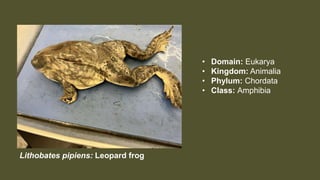
Lithobates pipiens: Leopard frog
• Domain: Eukarya
• Kingdom: Animalia
• Phylum: Chordata
• Class: Amphibia
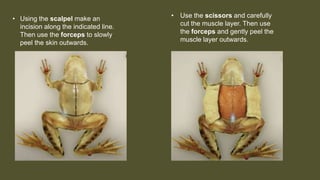
• Using the scalpel make an
incision along the indicated line.
Then use the forceps to slowly
peel the skin outwards.
• Use the scissors and carefully
cut the muscle layer. Then use
the forceps and gently peel the
muscle layer outwards.
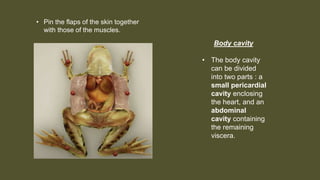
• Pin the flaps of the skin together
with those of the muscles.
Body cavity
• The body cavity
can be divided
into two parts : a
small pericardial
cavity enclosing
the heart, and an
abdominal
cavity containing
the remaining
viscera.
Eggs
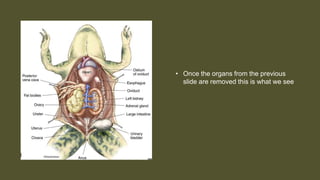
• Once the organs from the previous
slide are removed this is what we see
Fat bodies
Median lobe of liver
Large intestine
Small intestine
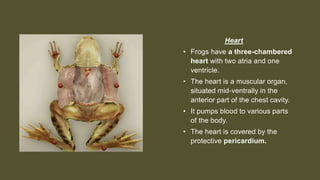
Heart
• Frogs have a three-chambered
heart with two atria and one
ventricle.
• The heart is a muscular organ,
situated mid-ventrally in the
anterior part of the chest cavity.
• It pumps blood to various parts
of the body.
• The heart is covered by the
protective pericardium.
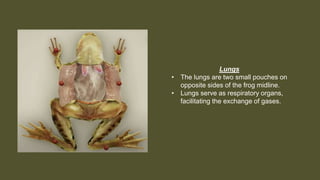
Lungs
• The lungs are two small pouches on
opposite sides of the frog midline.
• Lungs serve as respiratory organs,
facilitating the exchange of gases.
Liver
• The most prominent organ is the
liver which is a reddish-brown
large-lobed gland that detoxifies
harmful substances.
• It takes up most of the abdominal
cavity.
• Liver secretes bile and regulates the
amount of sugar in the blood.
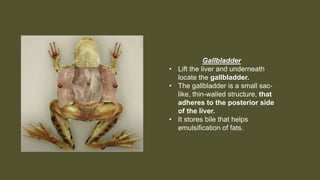
Gallbladder
• Lift the liver and underneath
locate the gallbladder.
• The gallbladder is a small sac-
like, thin-walled structure, that
adheres to the posterior side
of the liver.
• It stores bile that helps
emulsification of fats.
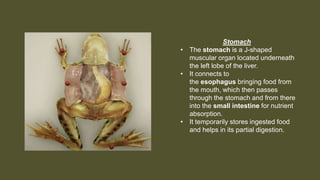
Stomach
• The stomach is a J-shaped
muscular organ located underneath
the left lobe of the liver.
• It connects to
the esophagus bringing food from
the mouth, which then passes
through the stomach and from there
into the small intestine for nutrient
absorption.
• It temporarily stores ingested food
and helps in its partial digestion.
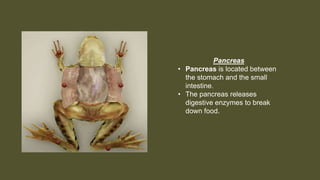
Pancreas
• Pancreas is located between
the stomach and the small
intestine.
• The pancreas releases
digestive enzymes to break
down food.
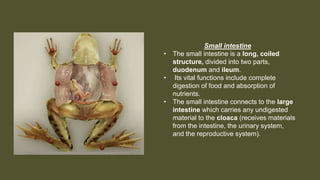
Small intestine
• The small intestine is a long, coiled
structure, divided into two parts,
duodenum and ileum.
• Its vital functions include complete
digestion of food and absorption of
nutrients.
• The small intestine connects to the large
intestine which carries any undigested
material to the cloaca (receives materials
from the intestine, the urinary system,
and the reproductive system).
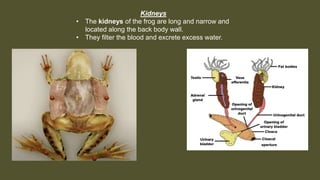
Kidneys
• The kidneys of the frog are long and narrow and
located along the back body wall.
• They filter the blood and excrete excess water.
Female Frog
Male Frog
Reproductive System
References
Byju’s. (2022b, July 4). Select the correct route for the passage of sperms in male frogs-
. https://byjus.com/question-answer/select-the-correct-route-for-the-passage-of-sperms-in-male-
frogs-testes-rightarrow-vasa/.
Froggipedia Review for Teachers | Common Sense Education. (2020, April 22). Common Sense
Education. https://www.commonsense.org/education/reviews/froggipedia .
Frog - Male urogenital Organs | Image license. (n.d.). Carlson Stock
Art. https://www.carlsonstockart.com/product/prints/180/ .
Frog - female urogenital organs | Image license. (n.d.). Carlson Stock
Art. https://www.carlsonstockart.com/product/prints/179/.
Lab/Week 9: Chordates. (n.d.). Google
Docs. https://docs.google.com/document/d/1KURKHOQBJmmyhBtuqlnmu15zCvGQGkbhoRObRd
WFPE0/edit.
This work is licensed under CC BY-NC 4.0

Frog Dissection Guide for General Biology

  • 1.
  • 2.
    Lithobates pipiens: Leopardfrog • Domain: Eukarya • Kingdom: Animalia • Phylum: Chordata • Class: Amphibia
  • 3.
    • Using thescalpel make an incision along the indicated line. Then use the forceps to slowly peel the skin outwards. • Use the scissors and carefully cut the muscle layer. Then use the forceps and gently peel the muscle layer outwards.
  • 4.
    • Pin theflaps of the skin together with those of the muscles. Body cavity • The body cavity can be divided into two parts : a small pericardial cavity enclosing the heart, and an abdominal cavity containing the remaining viscera.
  • 5.
  • 6.
    • Once theorgans from the previous slide are removed this is what we see
  • 7.
    Fat bodies Median lobeof liver Large intestine Small intestine
  • 8.
    Heart • Frogs havea three-chambered heart with two atria and one ventricle. • The heart is a muscular organ, situated mid-ventrally in the anterior part of the chest cavity. • It pumps blood to various parts of the body. • The heart is covered by the protective pericardium.
  • 9.
    Lungs • The lungsare two small pouches on opposite sides of the frog midline. • Lungs serve as respiratory organs, facilitating the exchange of gases.
  • 10.
    Liver • The mostprominent organ is the liver which is a reddish-brown large-lobed gland that detoxifies harmful substances. • It takes up most of the abdominal cavity. • Liver secretes bile and regulates the amount of sugar in the blood.
  • 11.
    Gallbladder • Lift theliver and underneath locate the gallbladder. • The gallbladder is a small sac- like, thin-walled structure, that adheres to the posterior side of the liver. • It stores bile that helps emulsification of fats.
  • 12.
    Stomach • The stomachis a J-shaped muscular organ located underneath the left lobe of the liver. • It connects to the esophagus bringing food from the mouth, which then passes through the stomach and from there into the small intestine for nutrient absorption. • It temporarily stores ingested food and helps in its partial digestion.
  • 13.
    Pancreas • Pancreas islocated between the stomach and the small intestine. • The pancreas releases digestive enzymes to break down food.
  • 14.
    Small intestine • Thesmall intestine is a long, coiled structure, divided into two parts, duodenum and ileum. • Its vital functions include complete digestion of food and absorption of nutrients. • The small intestine connects to the large intestine which carries any undigested material to the cloaca (receives materials from the intestine, the urinary system, and the reproductive system).
  • 15.
    Kidneys • The kidneysof the frog are long and narrow and located along the back body wall. • They filter the blood and excrete excess water.
  • 16.
  • 17.
    References Byju’s. (2022b, July4). Select the correct route for the passage of sperms in male frogs- . https://byjus.com/question-answer/select-the-correct-route-for-the-passage-of-sperms-in-male- frogs-testes-rightarrow-vasa/. Froggipedia Review for Teachers | Common Sense Education. (2020, April 22). Common Sense Education. https://www.commonsense.org/education/reviews/froggipedia . Frog - Male urogenital Organs | Image license. (n.d.). Carlson Stock Art. https://www.carlsonstockart.com/product/prints/180/ . Frog - female urogenital organs | Image license. (n.d.). Carlson Stock Art. https://www.carlsonstockart.com/product/prints/179/. Lab/Week 9: Chordates. (n.d.). Google Docs. https://docs.google.com/document/d/1KURKHOQBJmmyhBtuqlnmu15zCvGQGkbhoRObRd WFPE0/edit. This work is licensed under CC BY-NC 4.0