 How Many Inquiry You have?
 Which Sales Man is performing best?
 In next one month, one year, How much
business is assured?
 Which Campaign is Working best for you?
 How Many inquiry are converting in to order?
 How many order you have?
Marketing/ Sales
• How Many quotation is lost?
• How much potential business is there?
• How many business you lost because of price,
Delivery?
• Which product is highly demanded?
• Which product is not demanding?
• In which region you have better market?
 What is Your net Profit?
 What is your Gross profit?
 What is your inventory turn over ration
 How many product is with you for more than 30
days, 90 days, 120 days?
 How much payment is payable, Receivable?
 Since how many days bills are not paid?
 Does your costing (planned) meet actual costing?
Account
Production / Maintenance
• What is a plant capacity
• What is a product Throughput time?
• What is Plant / product Performance Rate
• What is Plant Quality Rate?
• What is COPQ?
• What is overall maintenance cost Rate?
• How much is a labour productivity ?
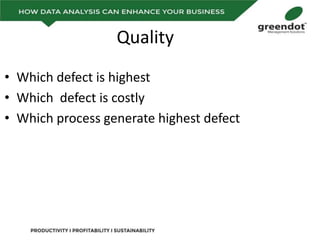
Quality
• Which defect is highest
• Which defect is costly
• Which process generate highest defect
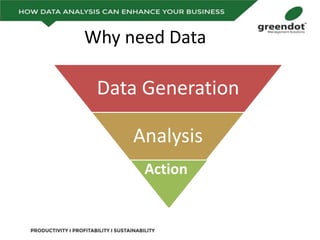
Why need Data
Data Generation
Analysis
Action
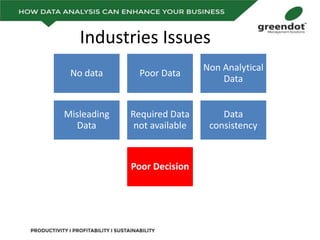
Industries Issues
No data Poor Data
Non Analytical
Data
Misleading
Data
Required Data
not available
Data
consistency
Poor Decision
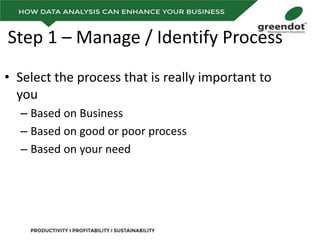
Step 1 – Manage / Identify Process
• Select the process that is really important to
you
– Based on Business
– Based on good or poor process
– Based on your need
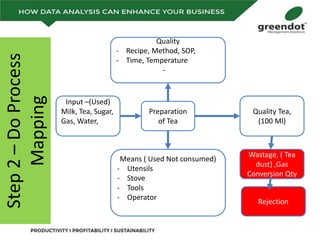
Step2–DoProcess
Mapping
Preparation
of Tea
Means ( Used Not consumed)
- Utensils
- Stove
- Tools
- Operator
Quality
- Recipe, Method, SOP,
- Time, Temperature
-
Input –(Used)
Milk, Tea, Sugar,
Gas, Water,
Quality Tea,
(100 Ml)
Wastage, ( Tea
dust) ,Gas
Conversion Qty
Rejection
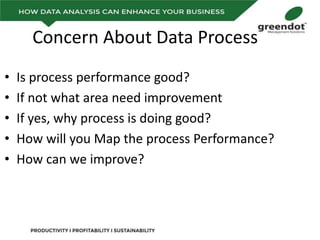
Concern About Data Process
• Is process performance good?
• If not what area need improvement
• If yes, why process is doing good?
• How will you Map the process Performance?
• How can we improve?
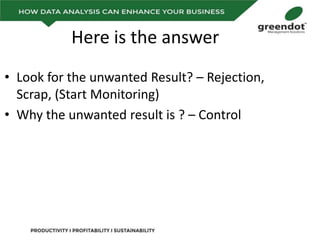
Here is the answer
• Look for the unwanted Result? – Rejection,
Scrap, (Start Monitoring)
• Why the unwanted result is ? – Control
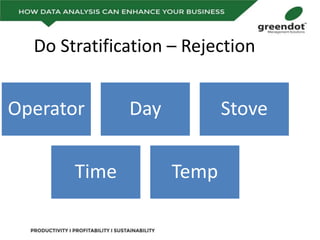
Do Stratification – Rejection
Operator Day Stove
Time Temp
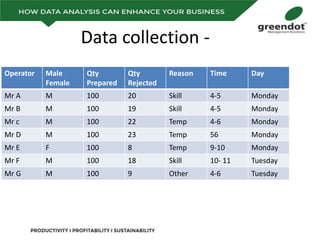
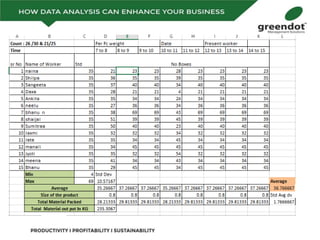
Data collection -
Operator Male
Female
Qty
Prepared
Qty
Rejected
Reason Time Day
Mr A M 100 20 Skill 4-5 Monday
Mr B M 100 19 Skill 4-5 Monday
Mr c M 100 22 Temp 4-6 Monday
Mr D M 100 23 Temp 56 Monday
Mr E F 100 8 Temp 9-10 Monday
Mr F M 100 18 Skill 10- 11 Tuesday
Mr G M 100 9 Other 4-6 Tuesday
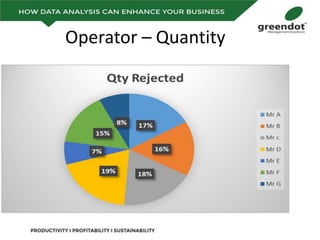
Operator – Quantity
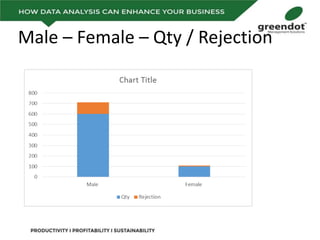
Male – Female – Qty / Rejection
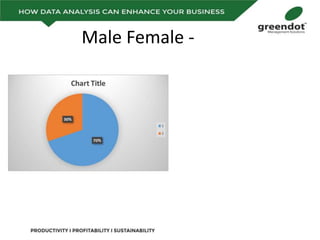
Male Female -
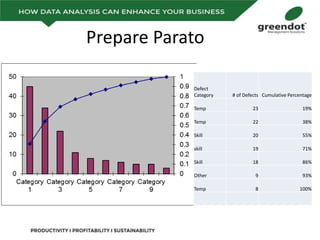
Prepare Parato
Defect
Category # of Defects Cumulative Percentage
Temp 23 19%
Temp 22 38%
Skill 20 55%
skill 19 71%
Skill 18 86%
Other 9 93%
Temp 8 100%
Conclusion
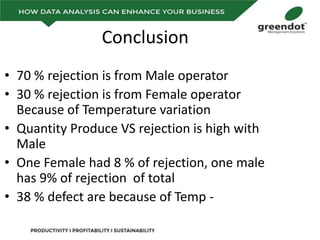
• 70 % rejection is from Male operator
• 30 % rejection is from Female operator
Because of Temperature variation
• Quantity Produce VS rejection is high with
Male
• One Female had 8 % of rejection, one male
has 9% of rejection of total
• 38 % defect are because of Temp -
Action
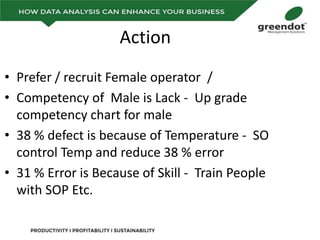
• Prefer / recruit Female operator /
• Competency of Male is Lack - Up grade
competency chart for male
• 38 % defect is because of Temperature - SO
control Temp and reduce 38 % error
• 31 % Error is Because of Skill - Train People
with SOP Etc.
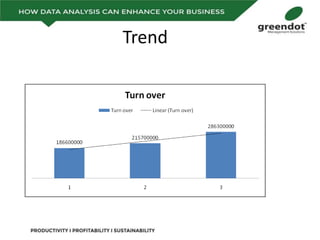
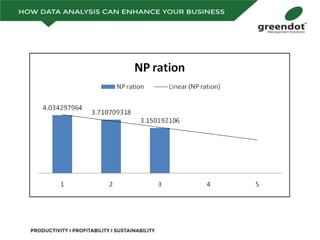
Trend
GUIDELINES FOR
DATA COLLECTION
Data collection is nothing but collection of the
required ‘information’ in figures for statistical
analysis of a problem. This provides a sound
basis for decision making and corrective
action.
USEFUL POINTS FOR DATA
COLLECTION
• Be clear in mind about the objective.
• Prepare the questions which will make it clear
and precise.
• Collect data relevant to that.
• Use data sheet, check sheet and/or check list
as per the requirement.
• Keep them simple and easy.
• Reduce opportunities for error.
• Capture data for analysis, references and
traceability.
• Form should be self explanatory.
• Analyse the collected data for its credibility
and relevance (for whom, when or who
collected the data are important).
• Present data in a way that clearly answers the
question.
GUIDELINES FOR
STRATIFICATIONS
Stratification is the process of separation of
data into categories. It is normally done for
identifying the categories contributing to the
problem tackled.
• Try to have the clarity of the problem. This will
normally help to identify the Stratification
variables to be selected.
• If we have ready information and if they are
reliable they can be straightway used, otherwise,
start collecting data needed.
• Make sure that all Stratification variables are
identified for data collection.
• Data collected may be enormous, which will call
for establishing categories for each stratification
variable.
• The categories may be discrete values or range
of values.
• Sort out the data into the categories of
Stratification variables.
• Now summarize the number in each category.
• If they are simple numbers then total them.
• If it is a range of values and needs further
classification provide it.
• Present the result in graphic form to enable
effective communication.
• Study the display.
• If you feel that Stratification has to be done in a
different way, go ahead and do it on the same
lines as stated above.
• Sometimes stratified information may need to be
further stratified.
• Once you are satisfied with the stratification,
collect additional information, if needed to
ensure that the interpretation is right.
• Always present the total information of the work
done in an orderly manner to satisfy the
concerned that all aspects connected to the
problem are covered.

How Data Analysis can enhance your Business

  • 2.
     How ManyInquiry You have?  Which Sales Man is performing best?  In next one month, one year, How much business is assured?  Which Campaign is Working best for you?  How Many inquiry are converting in to order?  How many order you have? Marketing/ Sales
  • 3.
    • How Manyquotation is lost? • How much potential business is there? • How many business you lost because of price, Delivery? • Which product is highly demanded? • Which product is not demanding? • In which region you have better market?
  • 4.
     What isYour net Profit?  What is your Gross profit?  What is your inventory turn over ration  How many product is with you for more than 30 days, 90 days, 120 days?  How much payment is payable, Receivable?  Since how many days bills are not paid?  Does your costing (planned) meet actual costing? Account
  • 5.
    Production / Maintenance •What is a plant capacity • What is a product Throughput time? • What is Plant / product Performance Rate • What is Plant Quality Rate? • What is COPQ? • What is overall maintenance cost Rate? • How much is a labour productivity ?
  • 6.
    Quality • Which defectis highest • Which defect is costly • Which process generate highest defect
  • 7.
    Why need Data DataGeneration Analysis Action
  • 8.
    Industries Issues No dataPoor Data Non Analytical Data Misleading Data Required Data not available Data consistency Poor Decision
  • 9.
    Step 1 –Manage / Identify Process • Select the process that is really important to you – Based on Business – Based on good or poor process – Based on your need
  • 10.
    Step2–DoProcess Mapping Preparation of Tea Means (Used Not consumed) - Utensils - Stove - Tools - Operator Quality - Recipe, Method, SOP, - Time, Temperature - Input –(Used) Milk, Tea, Sugar, Gas, Water, Quality Tea, (100 Ml) Wastage, ( Tea dust) ,Gas Conversion Qty Rejection
  • 11.
    Concern About DataProcess • Is process performance good? • If not what area need improvement • If yes, why process is doing good? • How will you Map the process Performance? • How can we improve?
  • 12.
    Here is theanswer • Look for the unwanted Result? – Rejection, Scrap, (Start Monitoring) • Why the unwanted result is ? – Control
  • 13.
    Do Stratification –Rejection Operator Day Stove Time Temp
  • 14.
    Data collection - OperatorMale Female Qty Prepared Qty Rejected Reason Time Day Mr A M 100 20 Skill 4-5 Monday Mr B M 100 19 Skill 4-5 Monday Mr c M 100 22 Temp 4-6 Monday Mr D M 100 23 Temp 56 Monday Mr E F 100 8 Temp 9-10 Monday Mr F M 100 18 Skill 10- 11 Tuesday Mr G M 100 9 Other 4-6 Tuesday
  • 15.
  • 16.
    Male – Female– Qty / Rejection
  • 17.
  • 18.
    Prepare Parato Defect Category #of Defects Cumulative Percentage Temp 23 19% Temp 22 38% Skill 20 55% skill 19 71% Skill 18 86% Other 9 93% Temp 8 100%
  • 19.
    Conclusion • 70 %rejection is from Male operator • 30 % rejection is from Female operator Because of Temperature variation • Quantity Produce VS rejection is high with Male • One Female had 8 % of rejection, one male has 9% of rejection of total • 38 % defect are because of Temp -
  • 20.
    Action • Prefer /recruit Female operator / • Competency of Male is Lack - Up grade competency chart for male • 38 % defect is because of Temperature - SO control Temp and reduce 38 % error • 31 % Error is Because of Skill - Train People with SOP Etc.
  • 21.
  • 24.
  • 25.
    Data collection isnothing but collection of the required ‘information’ in figures for statistical analysis of a problem. This provides a sound basis for decision making and corrective action.
  • 26.
    USEFUL POINTS FORDATA COLLECTION • Be clear in mind about the objective. • Prepare the questions which will make it clear and precise. • Collect data relevant to that. • Use data sheet, check sheet and/or check list as per the requirement.
  • 27.
    • Keep themsimple and easy. • Reduce opportunities for error. • Capture data for analysis, references and traceability. • Form should be self explanatory. • Analyse the collected data for its credibility and relevance (for whom, when or who collected the data are important). • Present data in a way that clearly answers the question.
  • 28.
  • 29.
    Stratification is theprocess of separation of data into categories. It is normally done for identifying the categories contributing to the problem tackled.
  • 30.
    • Try tohave the clarity of the problem. This will normally help to identify the Stratification variables to be selected. • If we have ready information and if they are reliable they can be straightway used, otherwise, start collecting data needed. • Make sure that all Stratification variables are identified for data collection. • Data collected may be enormous, which will call for establishing categories for each stratification variable.
  • 31.
    • The categoriesmay be discrete values or range of values. • Sort out the data into the categories of Stratification variables. • Now summarize the number in each category. • If they are simple numbers then total them. • If it is a range of values and needs further classification provide it. • Present the result in graphic form to enable effective communication.
  • 32.
    • Study thedisplay. • If you feel that Stratification has to be done in a different way, go ahead and do it on the same lines as stated above. • Sometimes stratified information may need to be further stratified. • Once you are satisfied with the stratification, collect additional information, if needed to ensure that the interpretation is right. • Always present the total information of the work done in an orderly manner to satisfy the concerned that all aspects connected to the problem are covered.