MISTAKE-PROOFING
(POKA-YOKE)
BY
CH JAYATEJA
DEPARTMENT OF MECHANICAL ENGINEERING
GUDLAVALLERU ENGINEERING COLLEGE
GUDLAVALLERU - 521356
Mistake/error-proofing
Avoiding simple human errors that occur in
manufacturing process by taking preventive action
early in the product design process.
The process of Zero Defects is also known as
“Mistake Proofing”.
Importance of poka-yoke
‘Poka’ means ‘Mistakes’ & ‘Yoke’ means ‘Avoid’. It’s objective is to
achieve Zero Defects.
Poka-Yoke was developed by Shigeo Shingo from Toyota Motor in
1961 as a tool to achieve Zero Defects.
Discipline should be concerned with anticipating human error.
 By taking over repetitive tasks or actions that depend on vigilance or
memory, Poka-Yoke can free workers time and mind to pursue more
value added activities.
Lean practice does not allow extra inventory to compensate for
scrap.
 Lean ideology focuses on speed ...
... speed cannot exist when defects and rework prevail.
 Cost pressures don’t tolerate continued mistakes: scrap, rework,
lateness.
Common mistakes in manufacturing are:
o Mistakes in work pieces and tools in machines or in fixtures
o Incorrect or missing parts in assemblies
o Processing the wrong work piece
o Improper operations or adjustment of machines
Inspection to find mistake
• Judgment Inspection: Separating good from bad after
processing.
• Informative Inspection: Inspect then take action to eliminate
future occurrence.
• 100% or Sampling inspection based on SPC (Statistical
process Control) methodologies.
• Inspection:
• assumes defects are inevitable.
• believes the process of inspection will reduce defects.
• can reinforce ‘quality’ is responsibility of the quality
department.
• is not 100% effective.
• “Self-Check” Inspection
A self-check occurs when the person performing the work
checks the work before the work moves to the next process
step.
• Successive-Check” Inspection
A successive-check occurs when the previous work is
completed and that work is checked by the next person in
the process.
Attributes of Zero Defect quality system
• source inspection - Checks conditions at the source
• 100% Inspection - Simple Poka-Yoke devices in place to
check every time the process occurs
• immediate Action - Operations stop and corrective action
is taken when a defect occurs
• teams brainstorm and implement new devices wherever
there is an opportunity for error
oThree basic poka-yoke functions to use
against defects:
1. shut down a machine or operation
2. control a process or operation
3. warn that a defect has occurred
oA defect exists in one of two states:
1. it is about to occur
2. it has already occurred
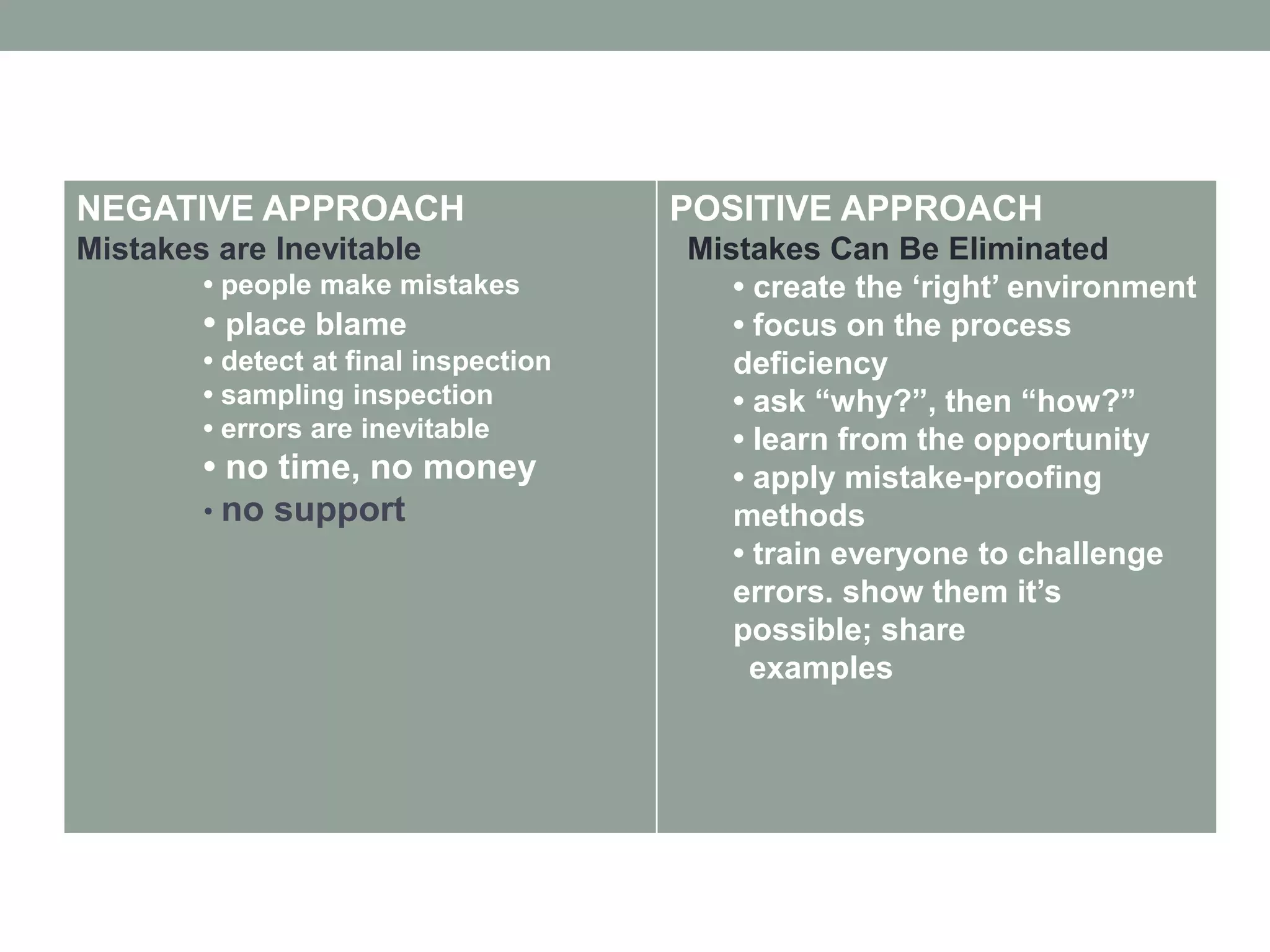
NEGATIVE APPROACH
Mistakes are Inevitable
• people make mistakes
• place blame
• detect at final inspection
• sampling inspection
• errors are inevitable
• no time, no money
• no support
POSITIVE APPROACH
Mistakes Can Be Eliminated
• create the ‘right’ environment
• focus on the process
deficiency
• ask “why?”, then “how?”
• learn from the opportunity
• apply mistake-proofing
methods
• train everyone to challenge
errors. show them it’s
possible; share
examples
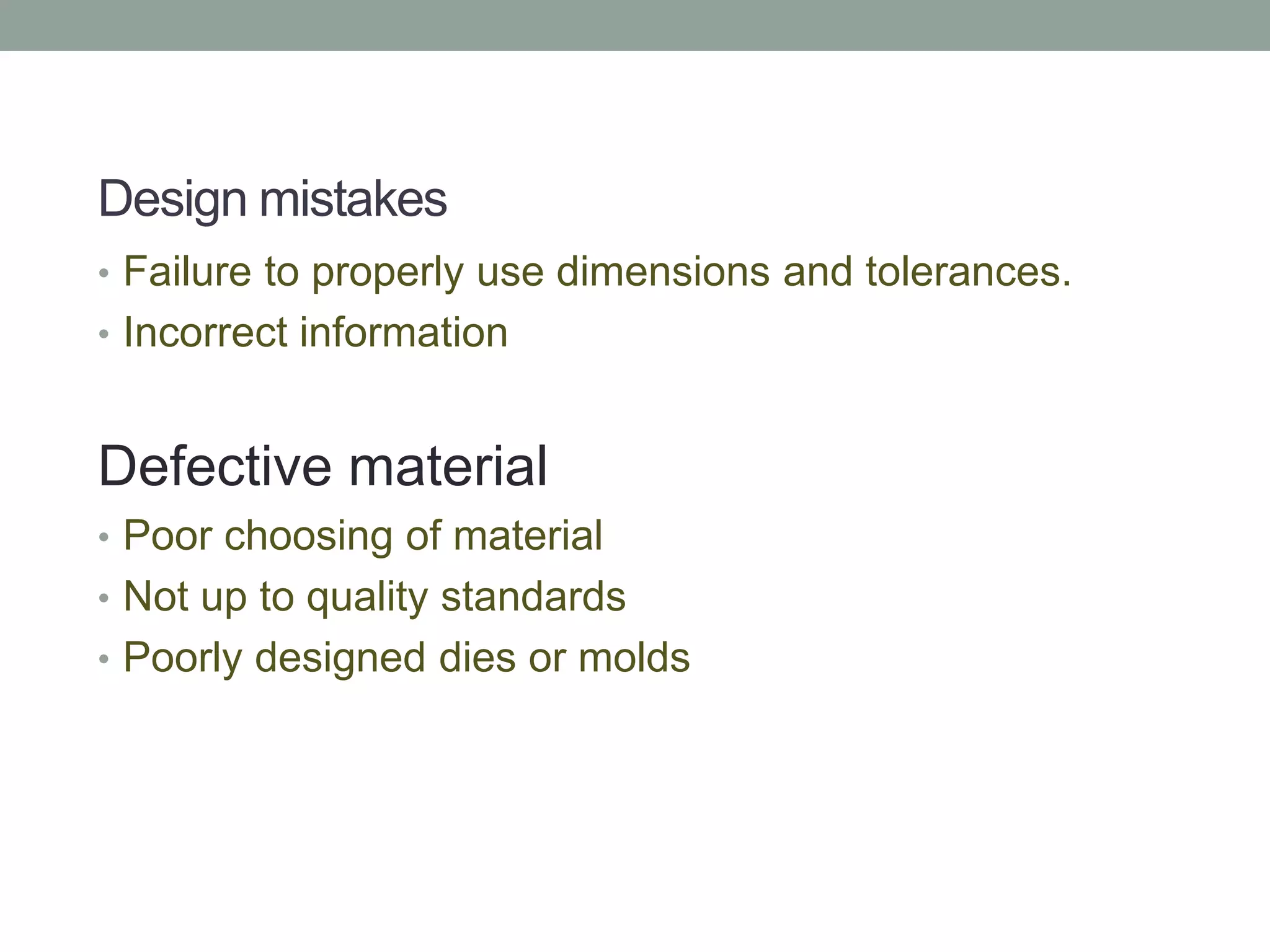
Design mistakes
• Failure to properly use dimensions and tolerances.
• Incorrect information
Defective material
• Poor choosing of material
• Not up to quality standards
• Poorly designed dies or molds
Manufacturing mistakes
• Omitted operations, parts
• Wrong orientation of part
• Misaligned part
• Wrong location of part
• Selection of wrong parts
• Misadjustments
• Commit a prohibited action
• added material or parts
• Misread, mismeasure, or misinterpret
Human Mistakes Safeguard
• Inattentiveness Discipline; work standardization; work
instructions
• Forgetfulness Checking at regular intervals
Inexperience Skill enhancement; work
standardization
• Misunderstanding Training; checking in advance;
standard work practices
• Poor identification Training; attentiveness; vigilance
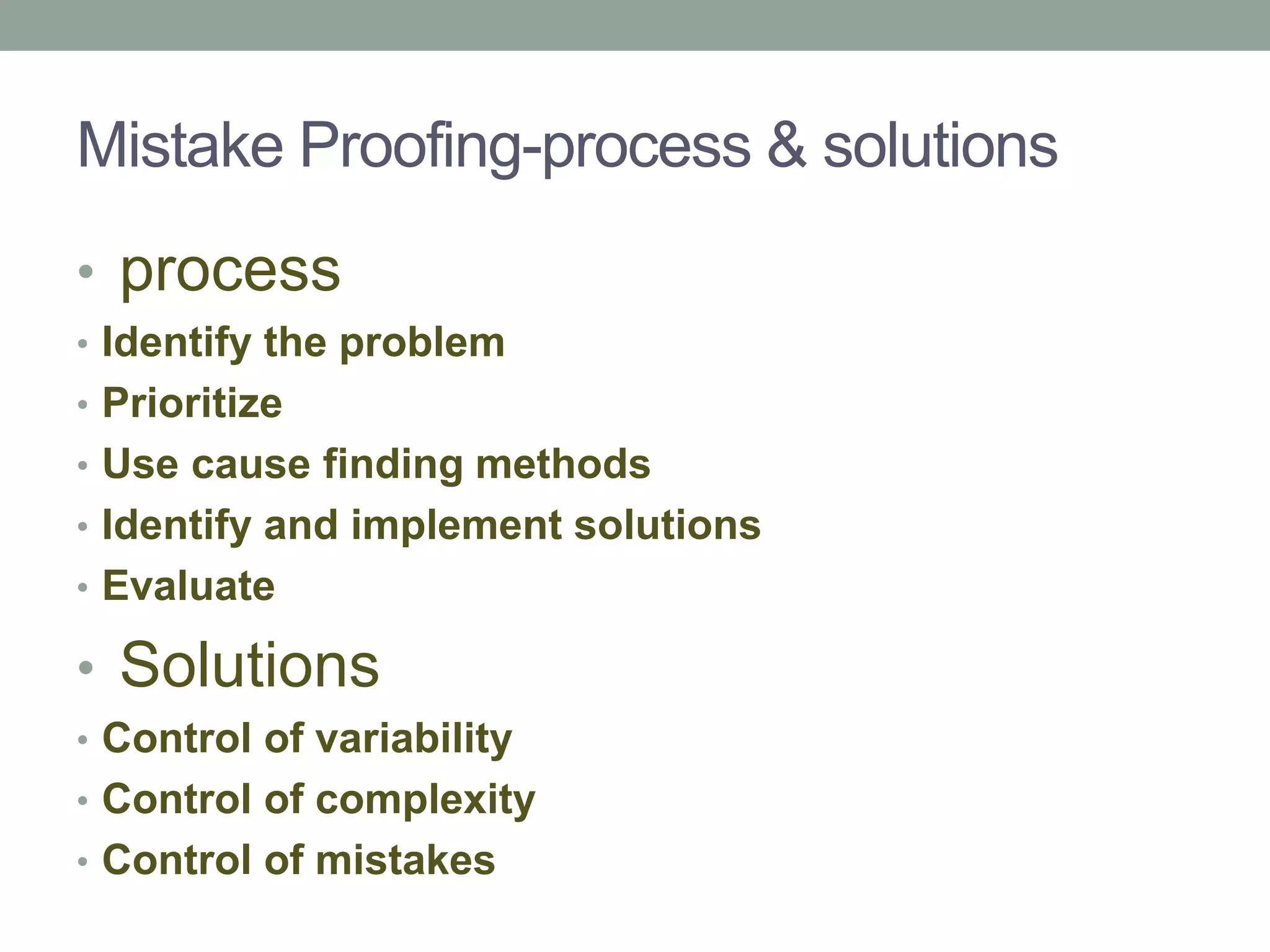
Mistake Proofing-process & solutions
• process
• Identify the problem
• Prioritize
• Use cause finding methods
• Identify and implement solutions
• Evaluate
• Solutions
• Control of variability
• Control of complexity
• Control of mistakes
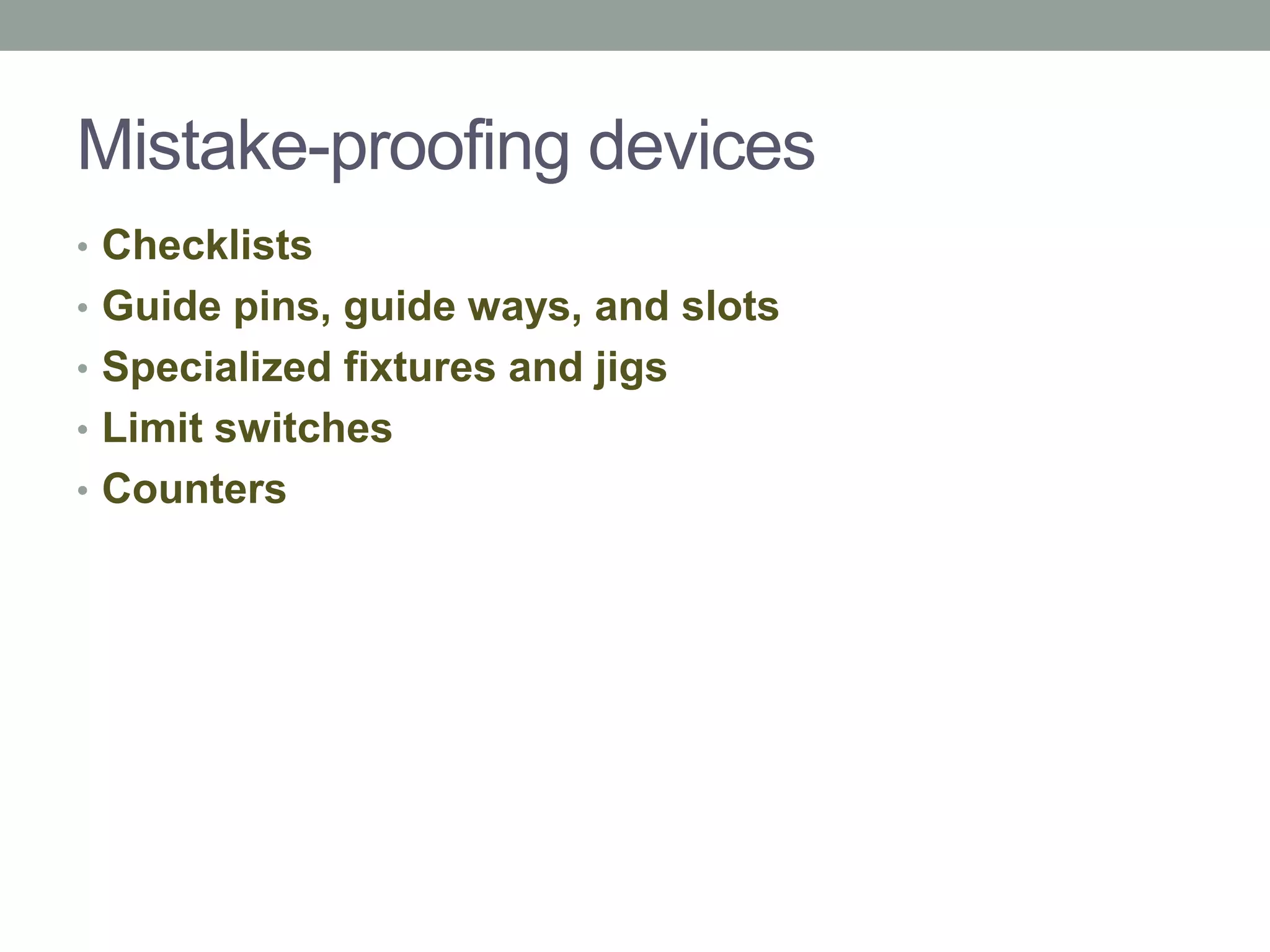
Mistake-proofing devices
• Checklists
• Guide pins, guide ways, and slots
• Specialized fixtures and jigs
• Limit switches
• Counters
Methods for Using Poka-yoke
Poka-yoke systems consist of three primary methods:
• 1. Contact
• 2. Counting
PHYSICAL CONTACT DEVICES
Limit Switches Toggle Switches
Energy Contact Devices
Photoelectric switches
can be used with
objects that are
translucent or
transparent depending
upon the need
An example of a contact device using a limit
switch. In this case the switch makes contact
with a metal barb sensing it’s presence. If no
contact is made the process will shut down
Warning Sensors
• Warning sensors
signal the operator
that there is a
problem. These
sensors use colors,
alarms, lights to get
the workers attention
!
• These sensors may
be used in
conjunction with a
contact or energy
sensor to get the
operators attention
Examples of poka-yoke
Thank you

mistake proofing

  • 1.
    MISTAKE-PROOFING (POKA-YOKE) BY CH JAYATEJA DEPARTMENT OFMECHANICAL ENGINEERING GUDLAVALLERU ENGINEERING COLLEGE GUDLAVALLERU - 521356
  • 2.
    Mistake/error-proofing Avoiding simple humanerrors that occur in manufacturing process by taking preventive action early in the product design process. The process of Zero Defects is also known as “Mistake Proofing”.
  • 3.
    Importance of poka-yoke ‘Poka’means ‘Mistakes’ & ‘Yoke’ means ‘Avoid’. It’s objective is to achieve Zero Defects. Poka-Yoke was developed by Shigeo Shingo from Toyota Motor in 1961 as a tool to achieve Zero Defects. Discipline should be concerned with anticipating human error.  By taking over repetitive tasks or actions that depend on vigilance or memory, Poka-Yoke can free workers time and mind to pursue more value added activities. Lean practice does not allow extra inventory to compensate for scrap.  Lean ideology focuses on speed ... ... speed cannot exist when defects and rework prevail.  Cost pressures don’t tolerate continued mistakes: scrap, rework, lateness.
  • 4.
    Common mistakes inmanufacturing are: o Mistakes in work pieces and tools in machines or in fixtures o Incorrect or missing parts in assemblies o Processing the wrong work piece o Improper operations or adjustment of machines
  • 5.
    Inspection to findmistake • Judgment Inspection: Separating good from bad after processing. • Informative Inspection: Inspect then take action to eliminate future occurrence. • 100% or Sampling inspection based on SPC (Statistical process Control) methodologies. • Inspection: • assumes defects are inevitable. • believes the process of inspection will reduce defects. • can reinforce ‘quality’ is responsibility of the quality department. • is not 100% effective.
  • 6.
    • “Self-Check” Inspection Aself-check occurs when the person performing the work checks the work before the work moves to the next process step. • Successive-Check” Inspection A successive-check occurs when the previous work is completed and that work is checked by the next person in the process.
  • 7.
    Attributes of ZeroDefect quality system • source inspection - Checks conditions at the source • 100% Inspection - Simple Poka-Yoke devices in place to check every time the process occurs • immediate Action - Operations stop and corrective action is taken when a defect occurs • teams brainstorm and implement new devices wherever there is an opportunity for error
  • 8.
    oThree basic poka-yokefunctions to use against defects: 1. shut down a machine or operation 2. control a process or operation 3. warn that a defect has occurred oA defect exists in one of two states: 1. it is about to occur 2. it has already occurred
  • 9.
    NEGATIVE APPROACH Mistakes areInevitable • people make mistakes • place blame • detect at final inspection • sampling inspection • errors are inevitable • no time, no money • no support POSITIVE APPROACH Mistakes Can Be Eliminated • create the ‘right’ environment • focus on the process deficiency • ask “why?”, then “how?” • learn from the opportunity • apply mistake-proofing methods • train everyone to challenge errors. show them it’s possible; share examples
  • 10.
    Design mistakes • Failureto properly use dimensions and tolerances. • Incorrect information Defective material • Poor choosing of material • Not up to quality standards • Poorly designed dies or molds
  • 11.
    Manufacturing mistakes • Omittedoperations, parts • Wrong orientation of part • Misaligned part • Wrong location of part • Selection of wrong parts • Misadjustments • Commit a prohibited action • added material or parts • Misread, mismeasure, or misinterpret
  • 12.
    Human Mistakes Safeguard •Inattentiveness Discipline; work standardization; work instructions • Forgetfulness Checking at regular intervals Inexperience Skill enhancement; work standardization • Misunderstanding Training; checking in advance; standard work practices • Poor identification Training; attentiveness; vigilance
  • 13.
    Mistake Proofing-process &solutions • process • Identify the problem • Prioritize • Use cause finding methods • Identify and implement solutions • Evaluate • Solutions • Control of variability • Control of complexity • Control of mistakes
  • 14.
    Mistake-proofing devices • Checklists •Guide pins, guide ways, and slots • Specialized fixtures and jigs • Limit switches • Counters
  • 15.
    Methods for UsingPoka-yoke Poka-yoke systems consist of three primary methods: • 1. Contact • 2. Counting
  • 16.
    PHYSICAL CONTACT DEVICES LimitSwitches Toggle Switches
  • 17.
    Energy Contact Devices Photoelectricswitches can be used with objects that are translucent or transparent depending upon the need An example of a contact device using a limit switch. In this case the switch makes contact with a metal barb sensing it’s presence. If no contact is made the process will shut down
  • 18.
    Warning Sensors • Warningsensors signal the operator that there is a problem. These sensors use colors, alarms, lights to get the workers attention ! • These sensors may be used in conjunction with a contact or energy sensor to get the operators attention
  • 19.
  • 20.