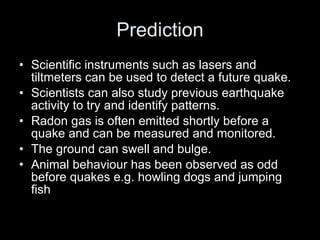
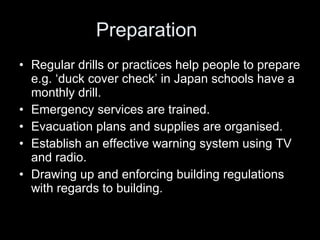
Scientists can try to predict earthquakes by monitoring instruments that detect ground movement, studying past quake patterns, and measuring radon gas levels. To prepare, regular earthquake drills help people practice safe responses, emergency services train, and evacuation plans and supplies are organized. Buildings can be modified with steel frames, solid foundations, shock absorbers, fire-resistant materials, and automatic shutters to minimize risks of collapse during quakes. Developed countries like Japan have made great advances in preparation, leading to minimal deaths and injuries following quakes compared to less developed nations.


![Montserrat[1][1]](https://cdn.slidesharecdn.com/ss_thumbnails/montserrat11-091220042014-phpapp01-thumbnail.jpg?width=640&height=640&fit=bounds)


![Course Work Skills[1].Annotated Photos](https://cdn.slidesharecdn.com/ss_thumbnails/courseworkskills1-annotatedphotos-090430055838-phpapp02-thumbnail.jpg?width=640&height=640&fit=bounds)


