Machine Guards
Presented by Balakhan
Machine guarding protects you and other employees
from injuries such as:
– Crushed hands and arms
– Severed fingers
– Amputated limbs
– Fatal accidents
Machine Guarding
Requirements for Safeguards
-Prevent contact
-Be secure
-Protect from falling objects
-Create no new hazards for the operator
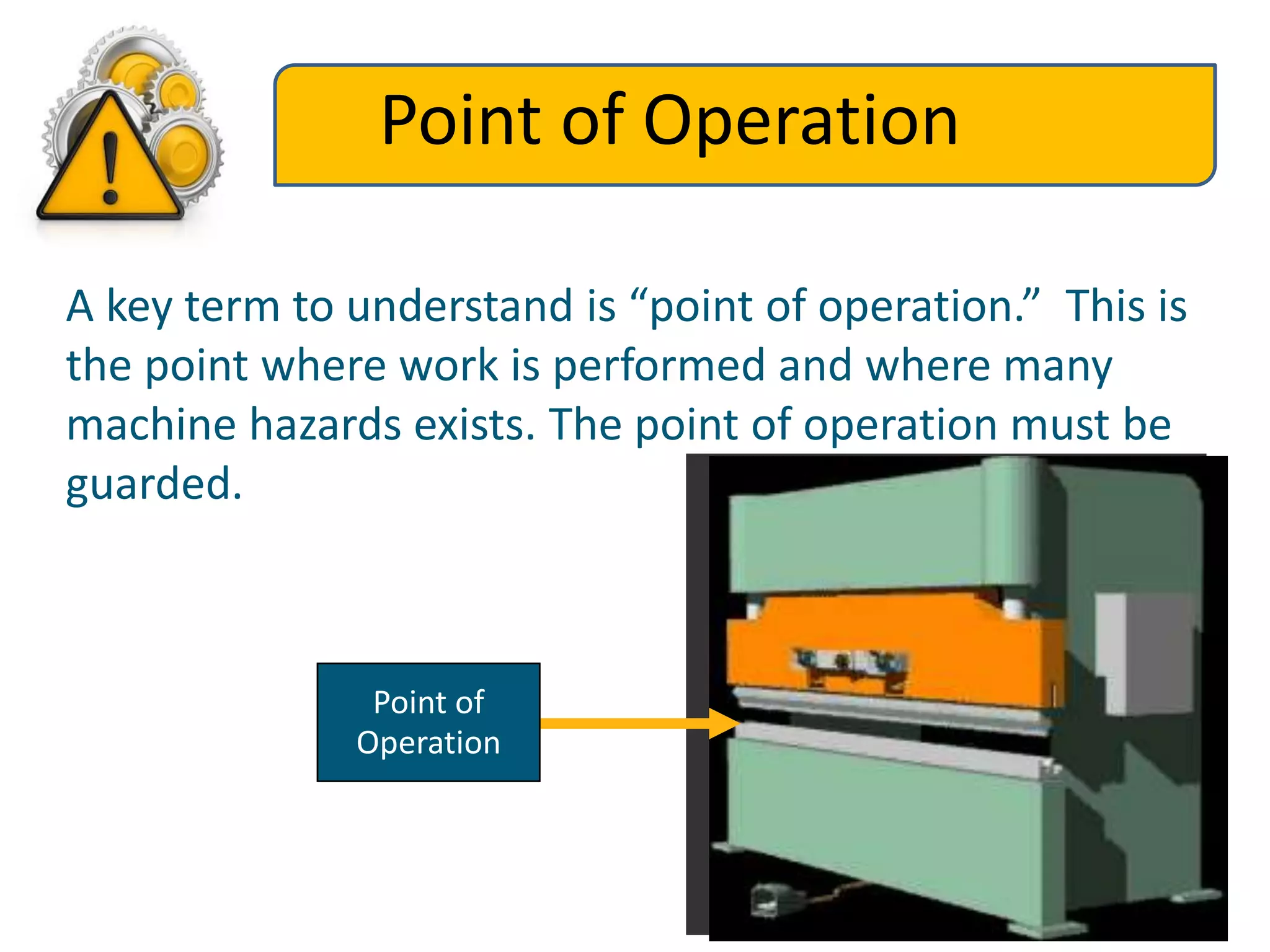
Point of Operation
A key term to understand is “point of operation.” This is
the point where work is performed and where many
machine hazards exists. The point of operation must be
guarded.
Point of
Operation
Hazardous Mechanical Motions
• The basic types of hazardous mechanical
motions are:
• Rotating
• In-running nip points
• Reciprocating
• Transversing
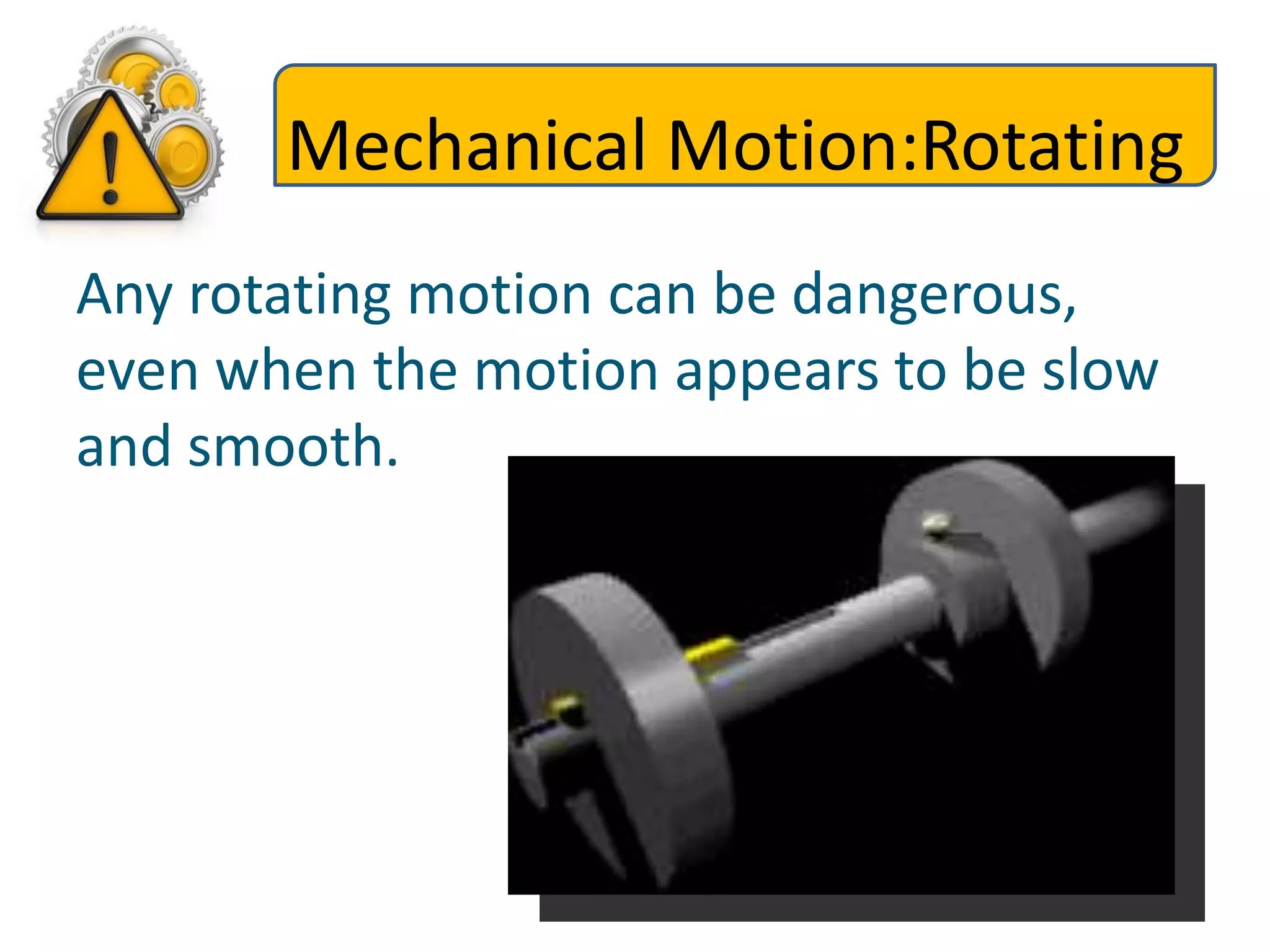
Mechanical Motion:Rotating
Any rotating motion can be dangerous,
even when the motion appears to be slow
and smooth.
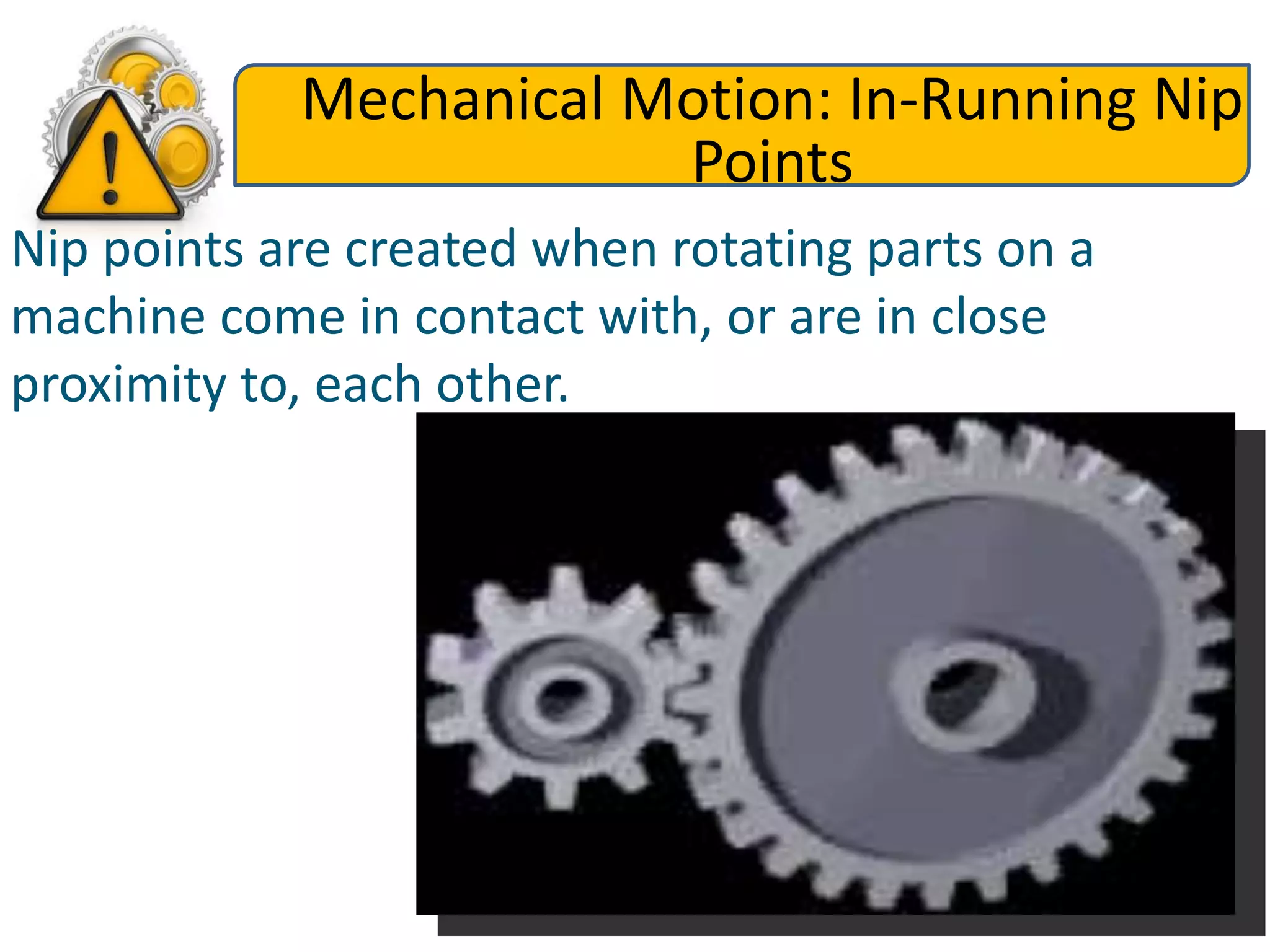
Mechanical Motion: In-Running Nip
Points
Nip points are created when rotating parts on a
machine come in contact with, or are in close
proximity to, each other.
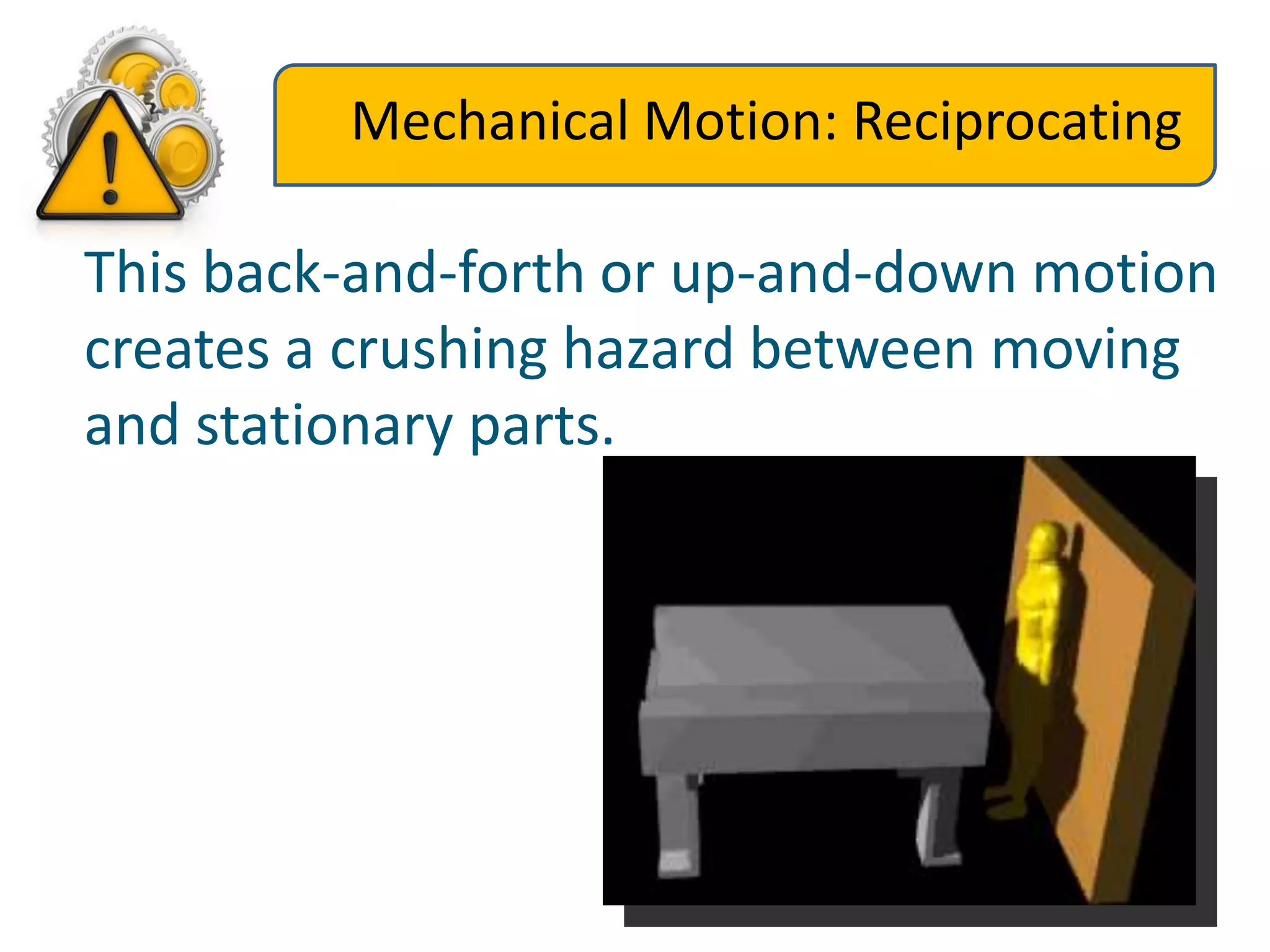
Mechanical Motion: Reciprocating
This back-and-forth or up-and-down motion
creates a crushing hazard between moving
and stationary parts.
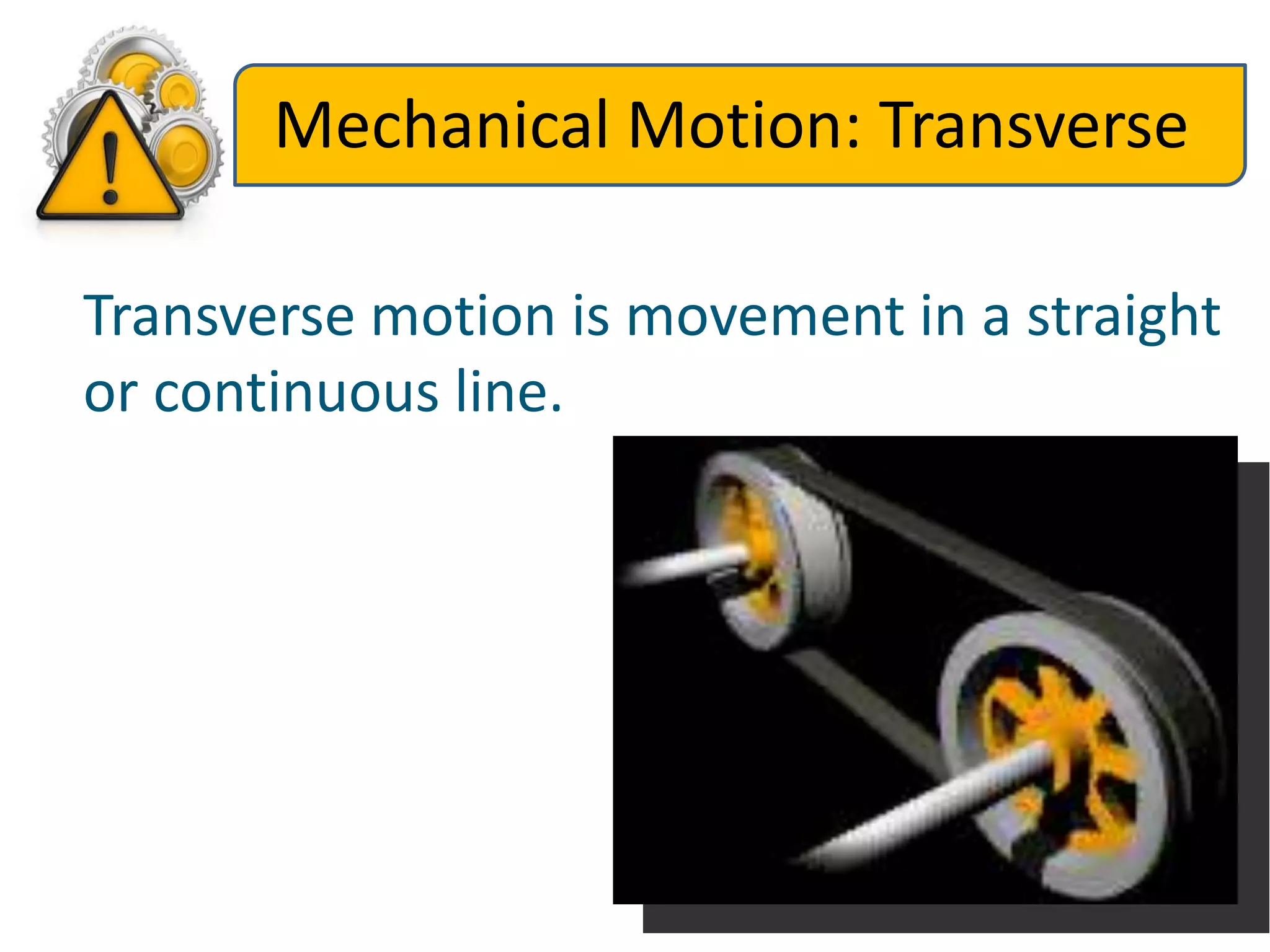
Mechanical Motion: Transverse
Transverse motion is movement in a straight
or continuous line.
The basic types of hazardous mechanical actions
are:
• Cutting
• Punching
• Shearing
• Bending
Hazardous Mechanical Actions
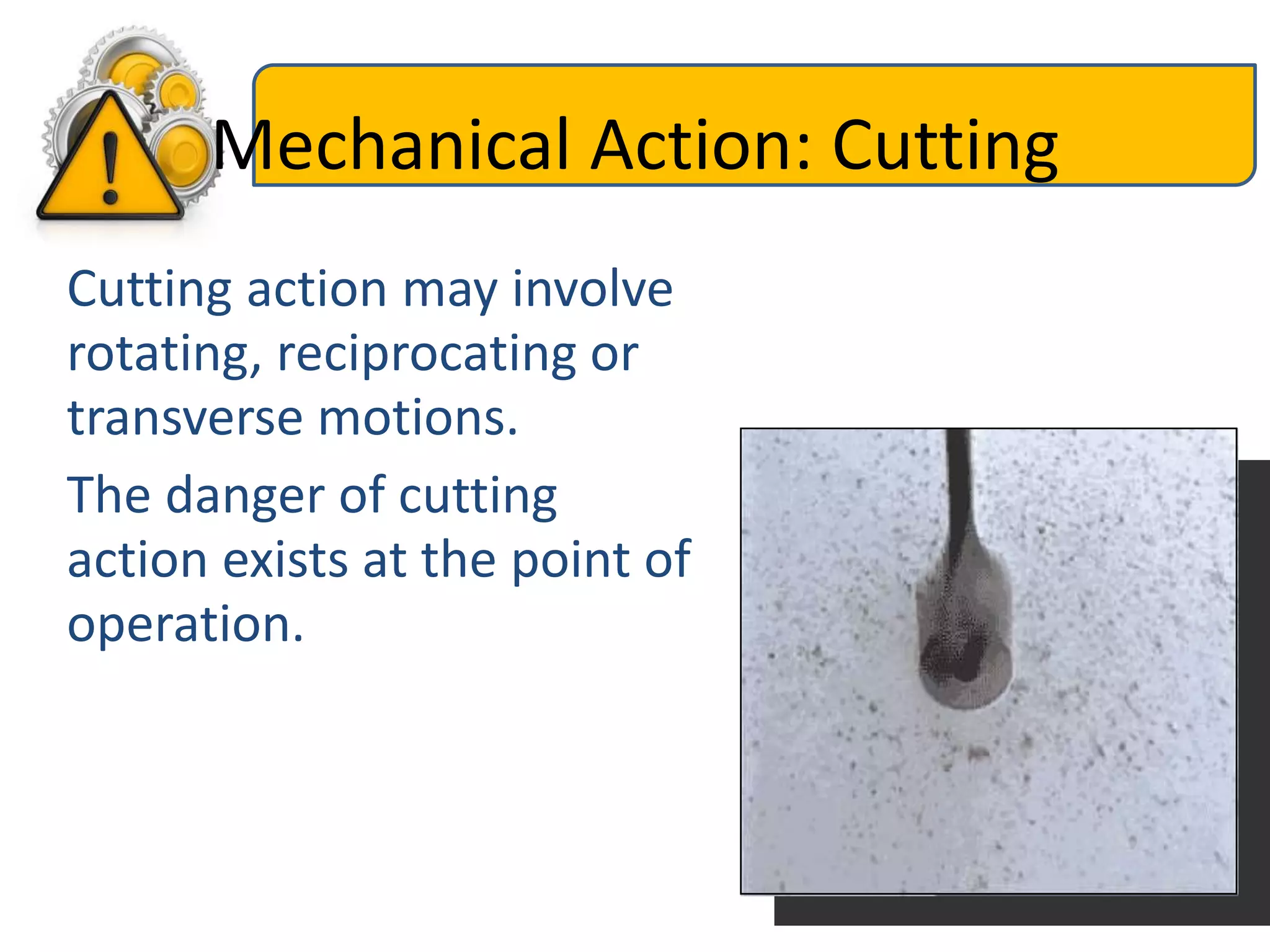
Mechanical Action: Cutting
Cutting action may involve
rotating, reciprocating or
transverse motions.
The danger of cutting
action exists at the point of
operation.
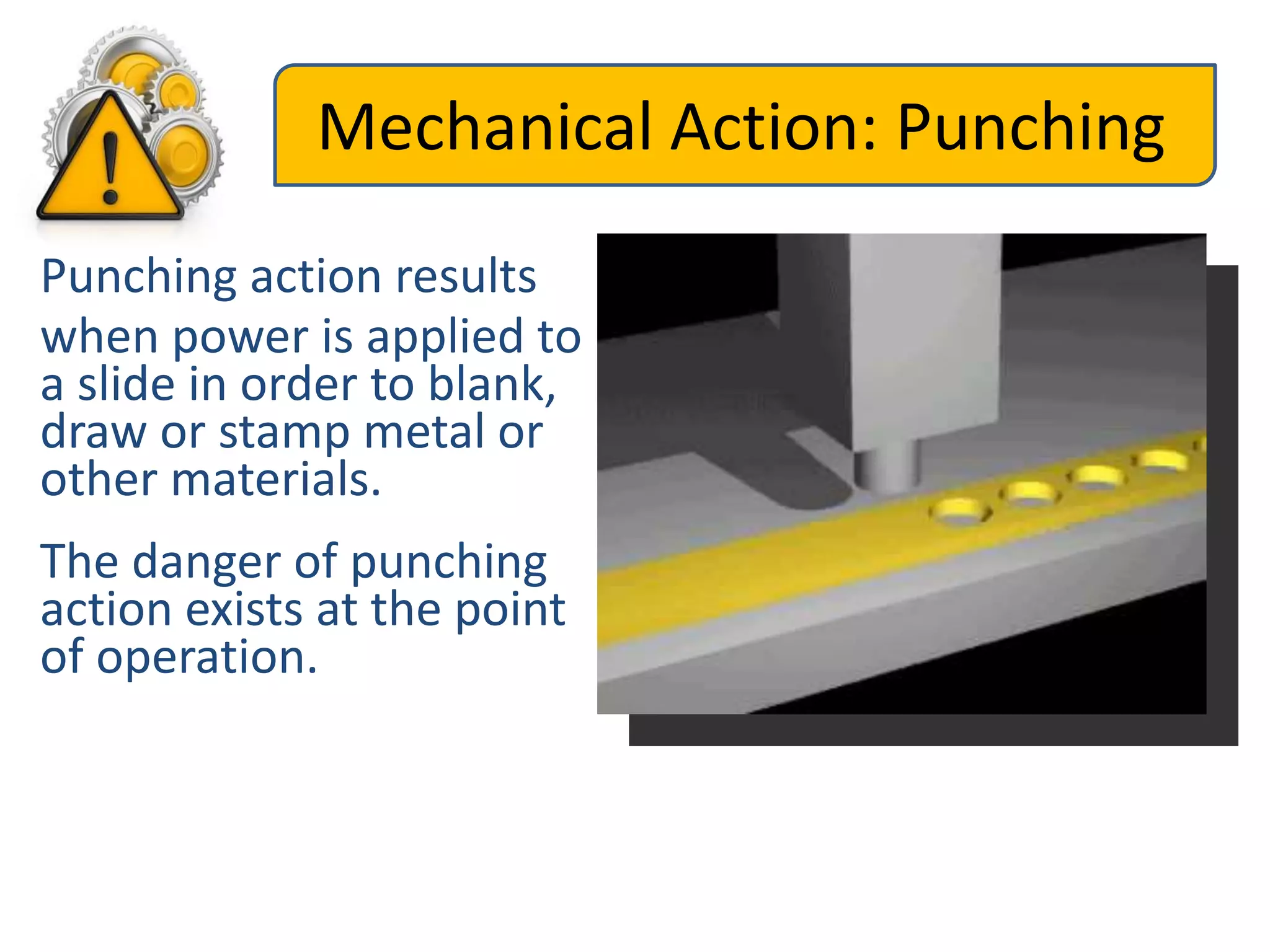
Mechanical Action: Punching
Punching action results
when power is applied to
a slide in order to blank,
draw or stamp metal or
other materials.
The danger of punching
action exists at the point
of operation.
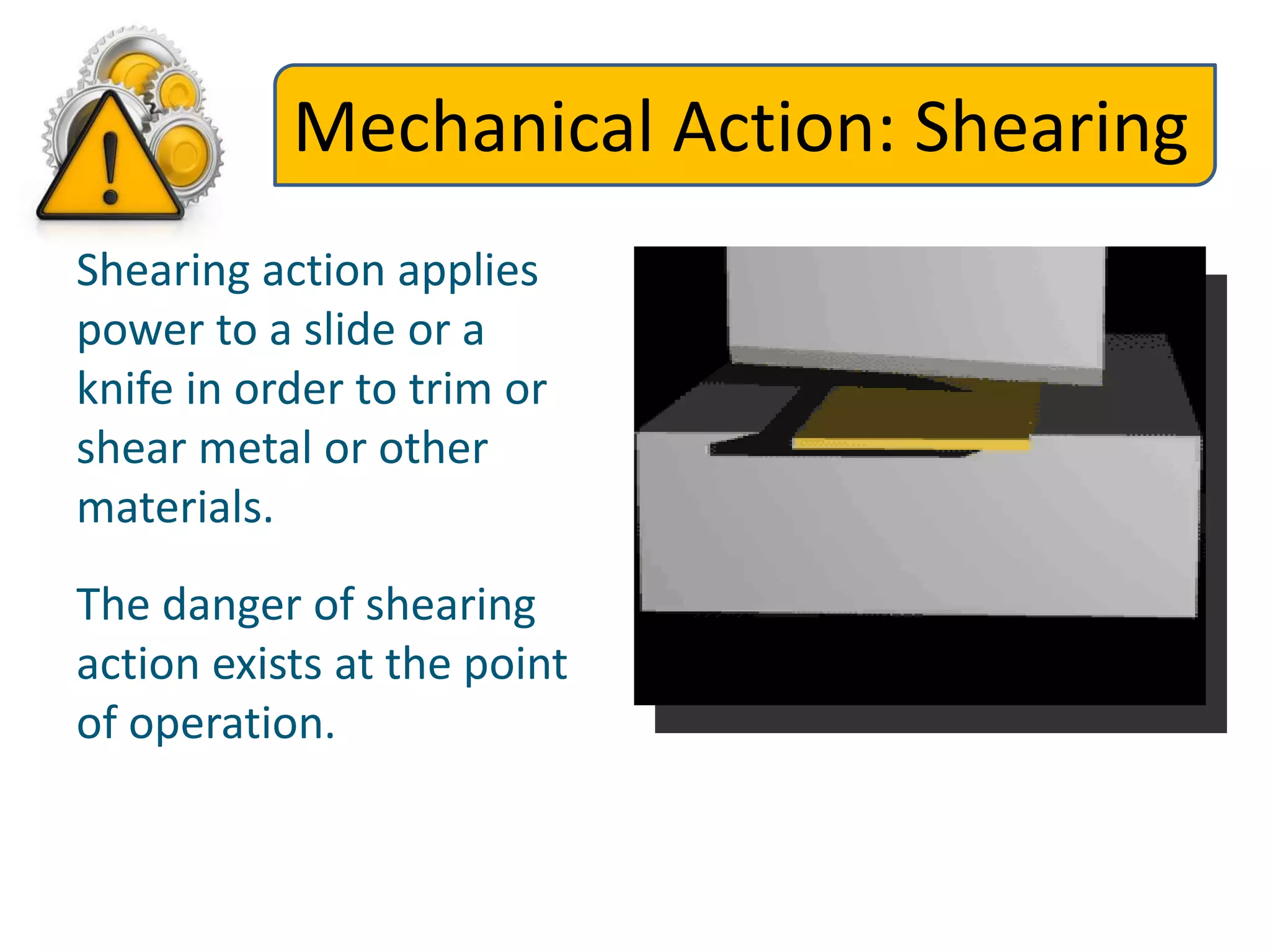
Mechanical Action: Shearing
Shearing action applies
power to a slide or a
knife in order to trim or
shear metal or other
materials.
The danger of shearing
action exists at the point
of operation.
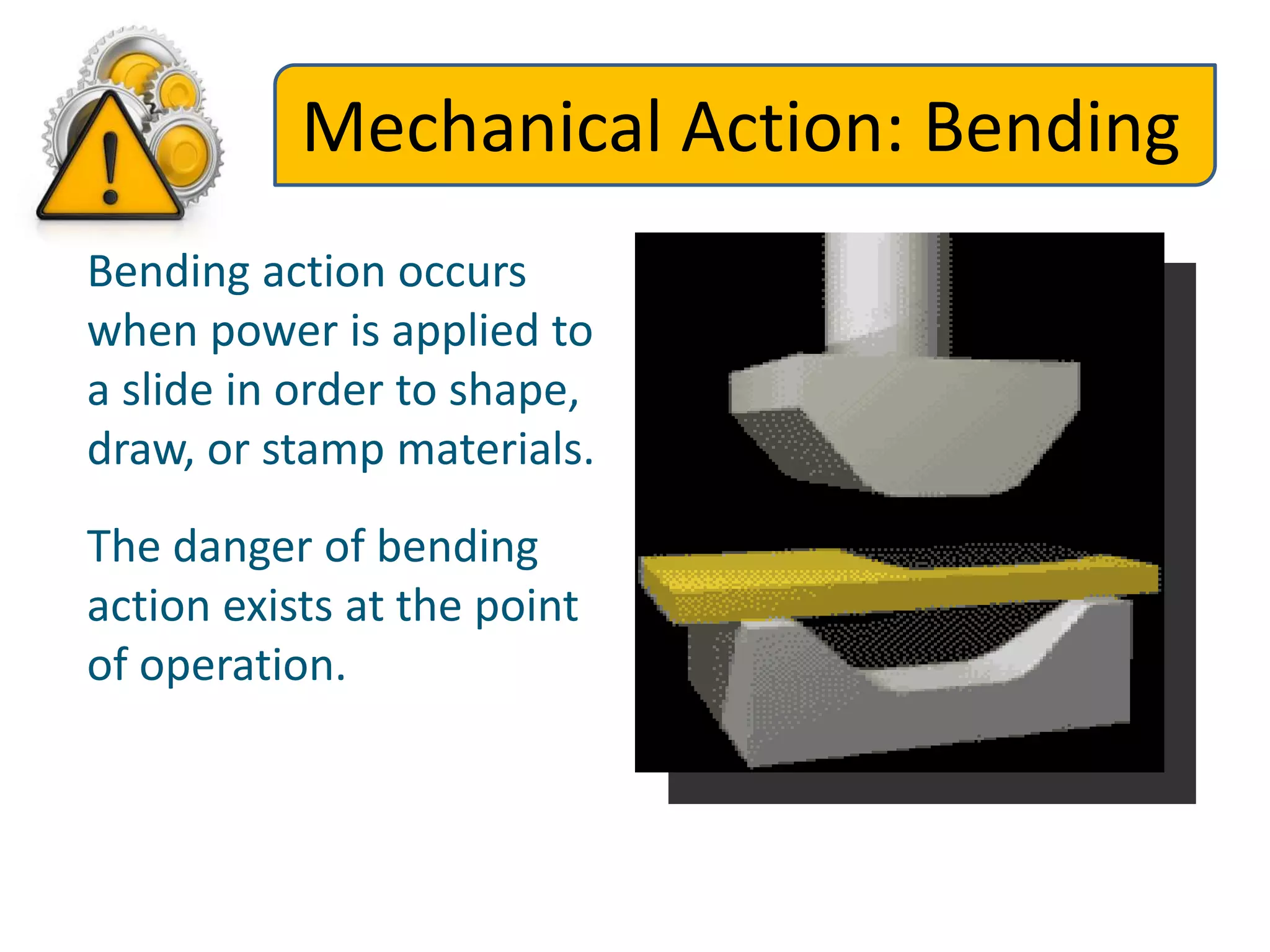
Mechanical Action: Bending
Bending action occurs
when power is applied to
a slide in order to shape,
draw, or stamp materials.
The danger of bending
action exists at the point
of operation.
Machine Guarding Methods
Common methods of machine guarding include
the use of:
• Guards
• Devices
• Location or
distance
• Safety aids
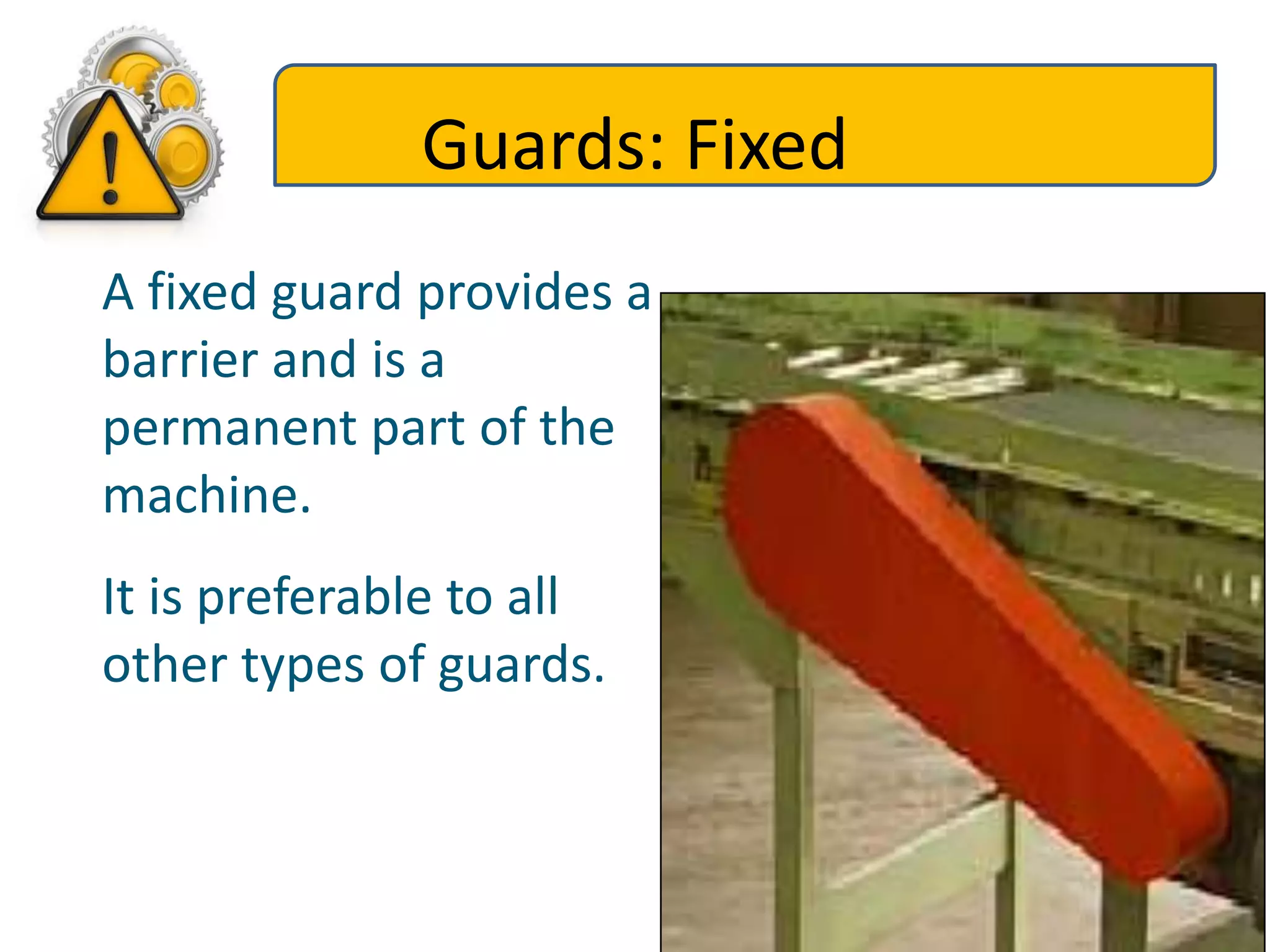
Guards: Fixed
A fixed guard provides a
barrier and is a
permanent part of the
machine.
It is preferable to all
other types of guards.
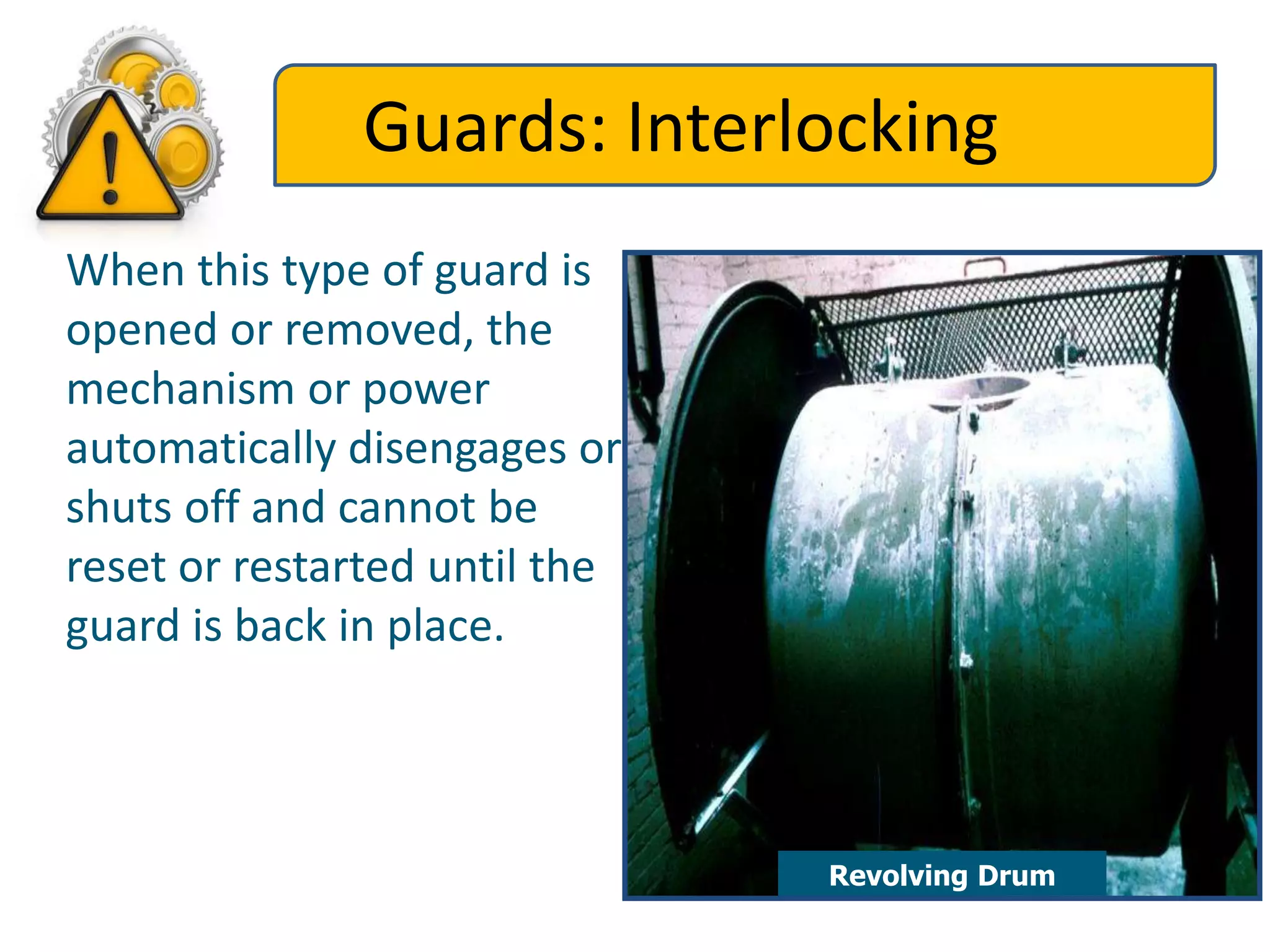
Guards: Interlocking
Revolving Drum
When this type of guard is
opened or removed, the
mechanism or power
automatically disengages or
shuts off and cannot be
reset or restarted until the
guard is back in place.
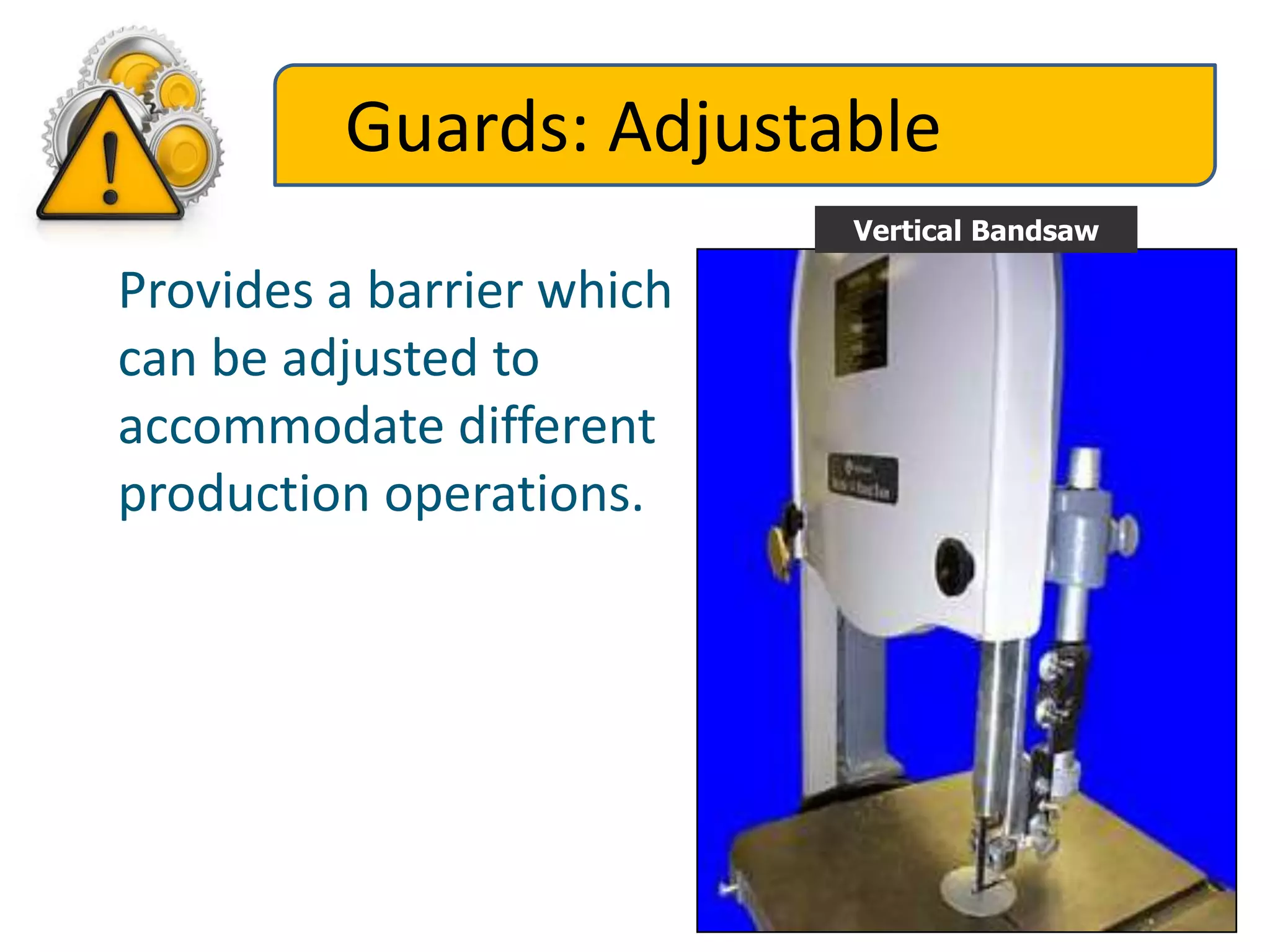
Guards: Adjustable
Vertical Bandsaw
Provides a barrier which
can be adjusted to
accommodate different
production operations.
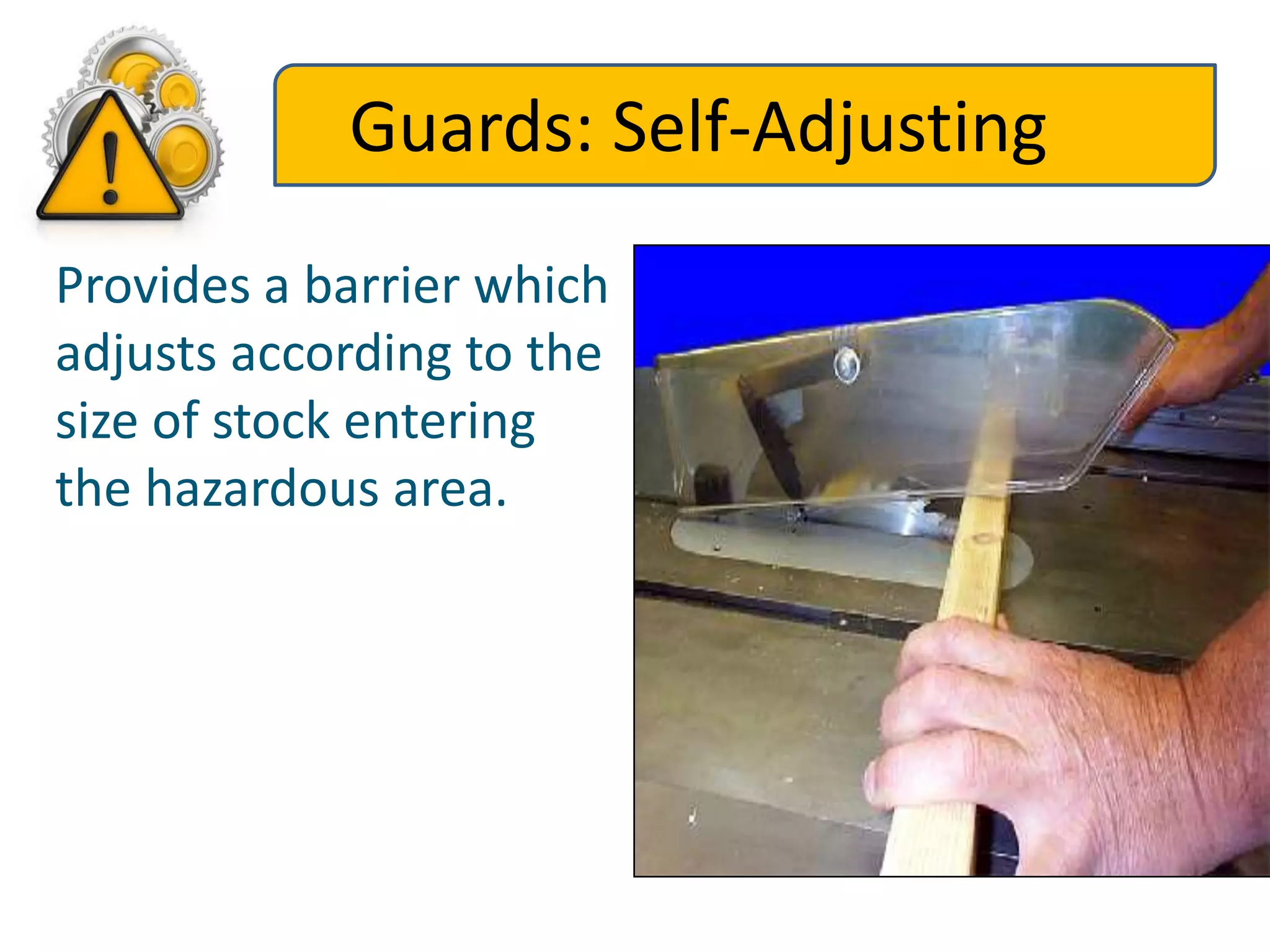
Guards: Self-Adjusting
Provides a barrier which
adjusts according to the
size of stock entering
the hazardous area.
Devices
The common types of devices used on machinery
include:
• Presence-sensing device
• Restraints
• Pullback cords
• Two-hand control or trip
• Safety gates
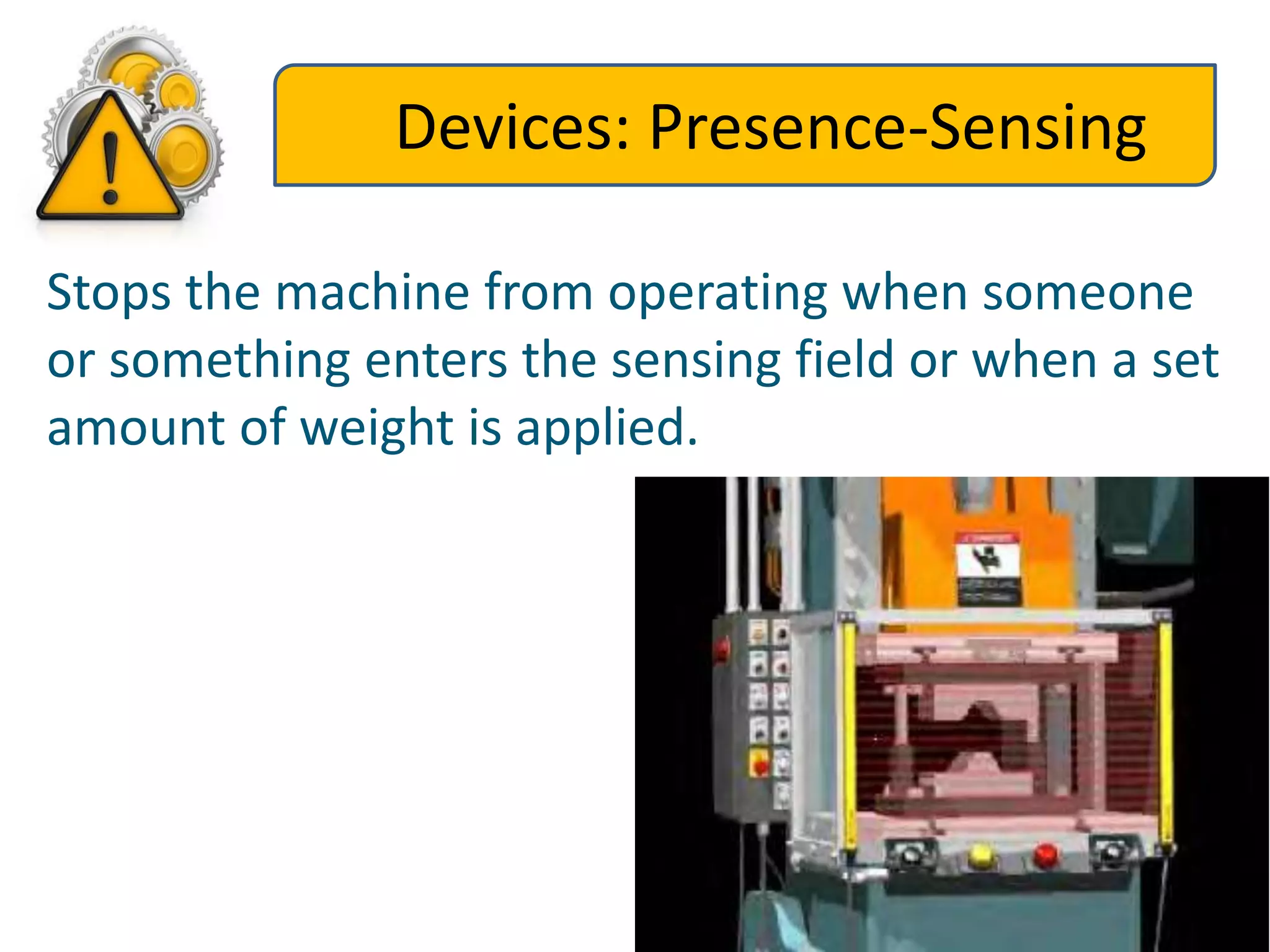
Devices: Presence-Sensing
Stops the machine from operating when someone
or something enters the sensing field or when a set
amount of weight is applied.
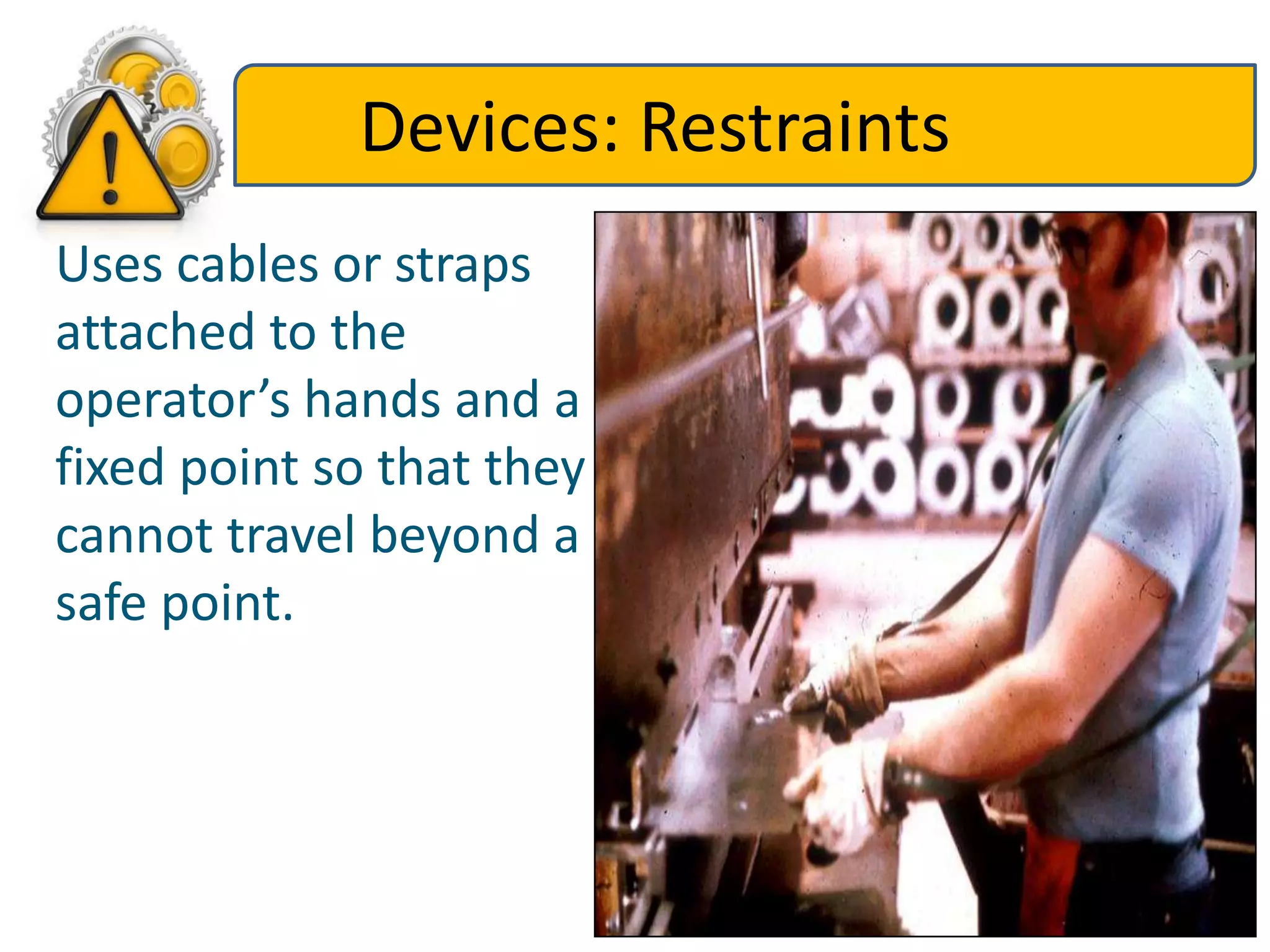
Devices: Restraints
Uses cables or straps
attached to the
operator’s hands and a
fixed point so that they
cannot travel beyond a
safe point.
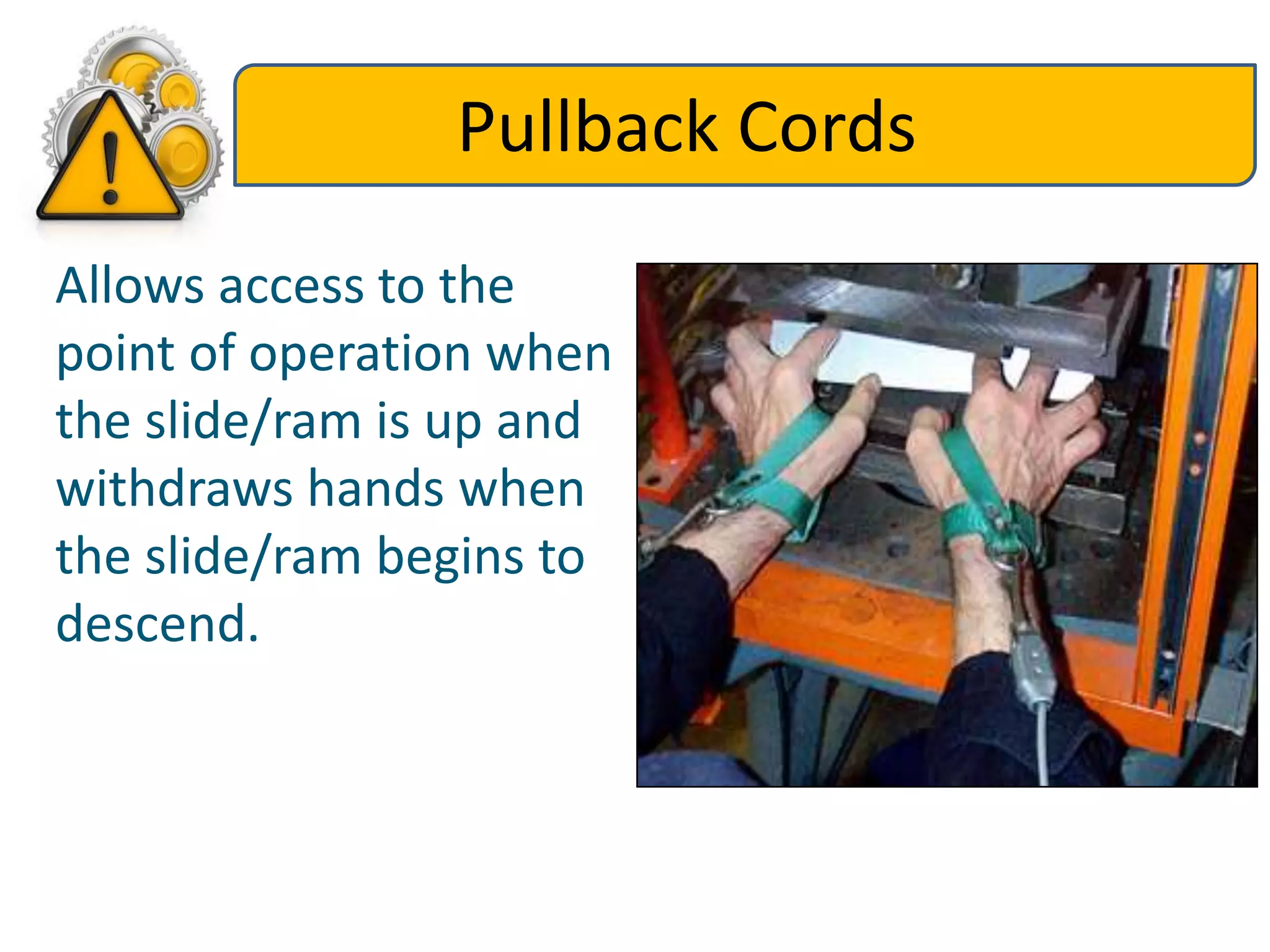
Pullback Cords
Allows access to the
point of operation when
the slide/ram is up and
withdraws hands when
the slide/ram begins to
descend.
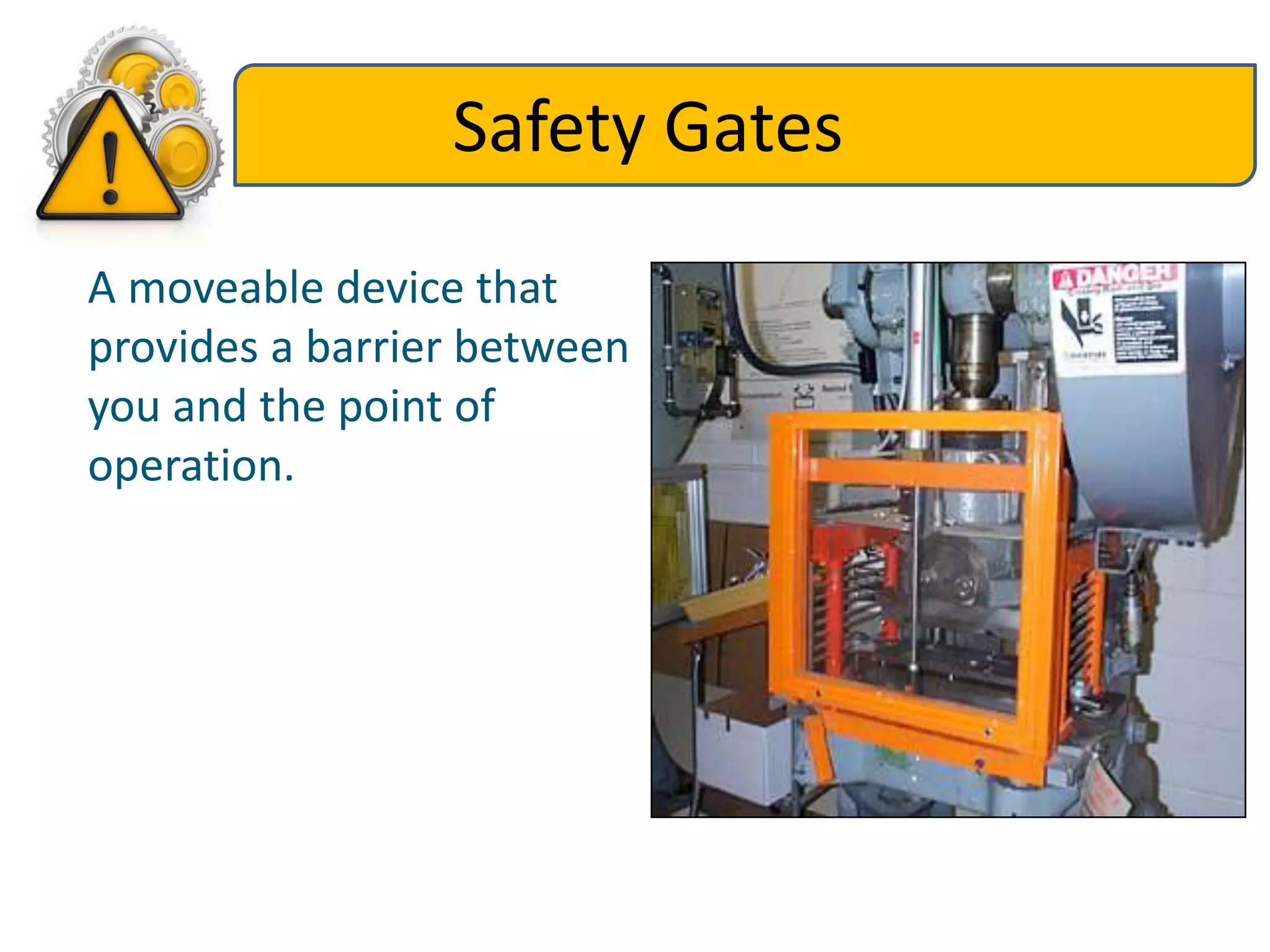
Safety Gates
A moveable device that
provides a barrier between
you and the point of
operation.
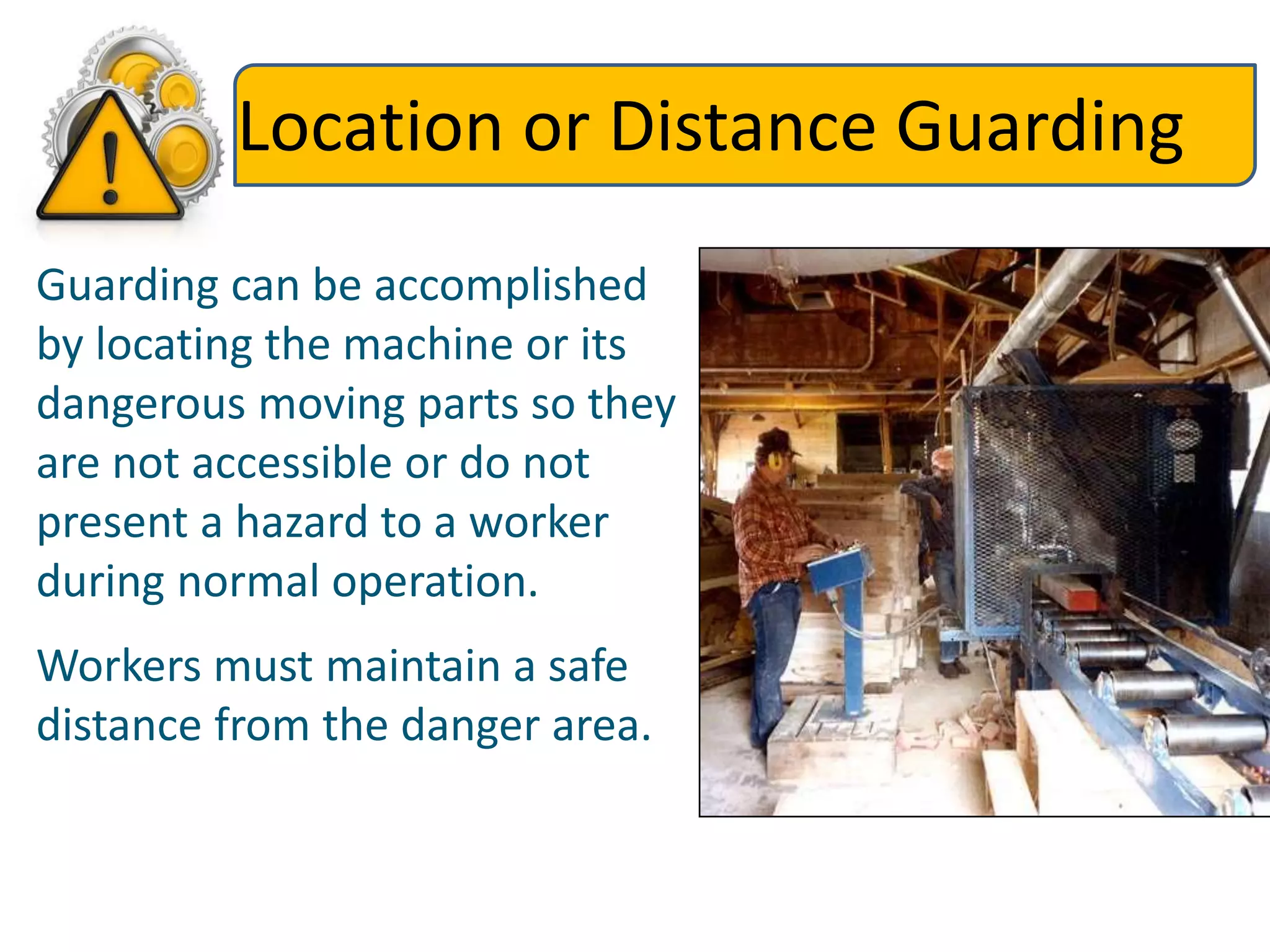
Location or Distance Guarding
Guarding can be accomplished
by locating the machine or its
dangerous moving parts so they
are not accessible or do not
present a hazard to a worker
during normal operation.
Workers must maintain a safe
distance from the danger area.
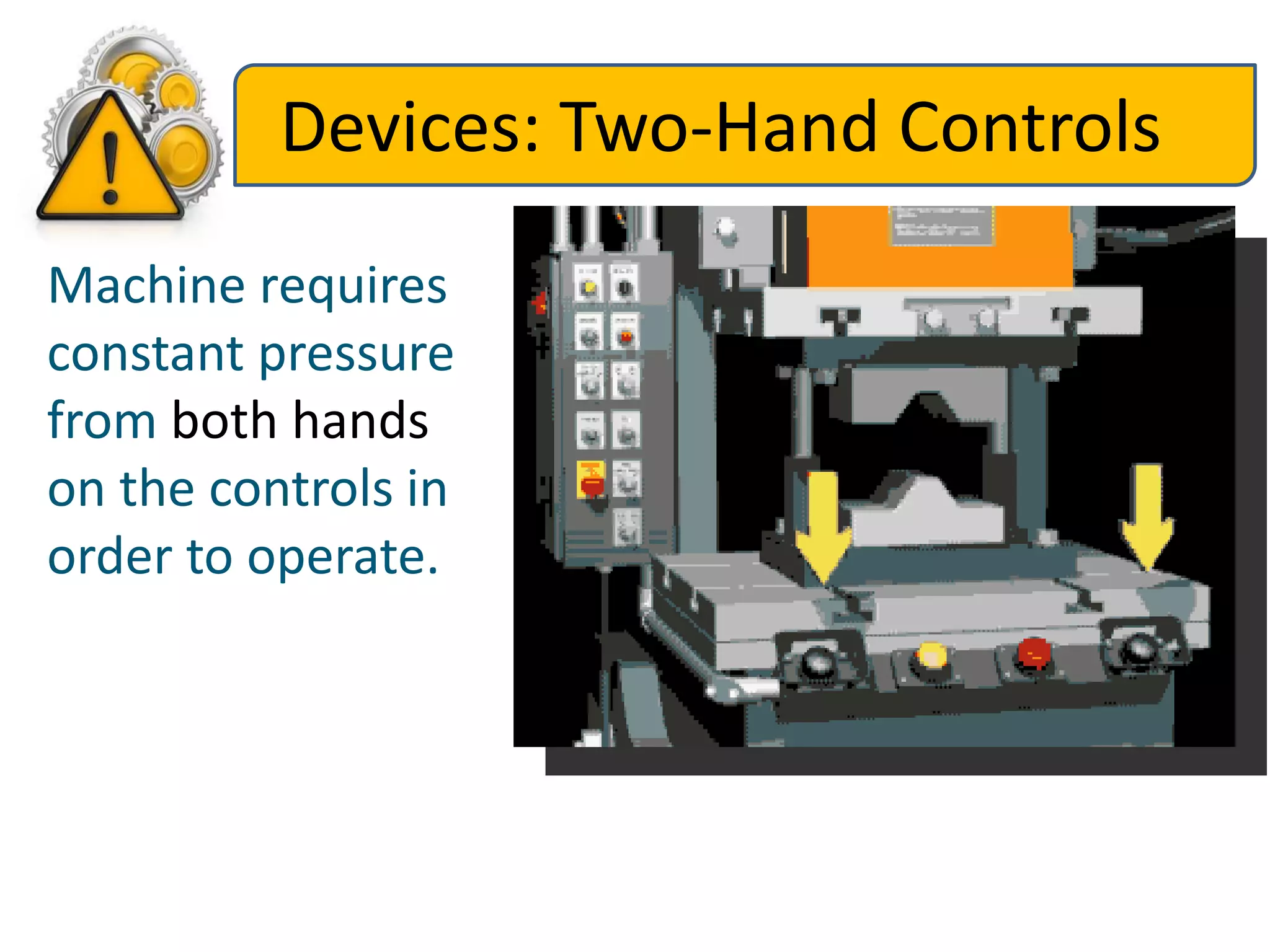
Devices: Two-Hand Controls
Machine requires
constant pressure
from both hands
on the controls in
order to operate.
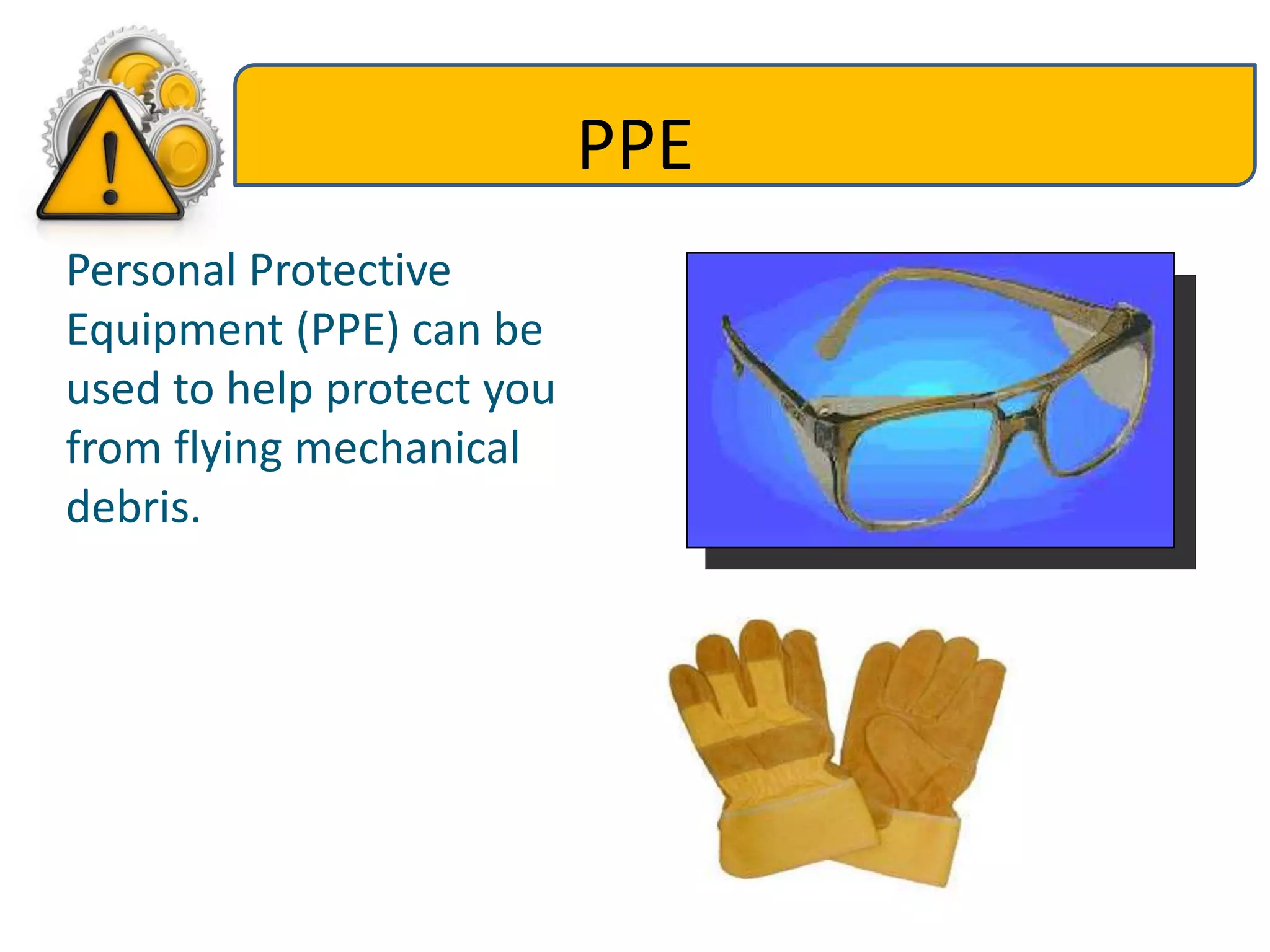
PPE
Personal Protective
Equipment (PPE) can be
used to help protect you
from flying mechanical
debris.
Training
Training on machine guarding offered by employers
should include the following:
• Information about all potential hazards in your work area.
• The correct use of workplace machines and their safeguards.
• Safe operating procedures and work practices.
• Personal protective equipment that may be required.
• Methods for reporting unsafe conditions.
Summary
To StartSafe and StaySafe when working around
machines, you should:
• Be sure you are trained on all machinery you will be using for
your job.
• Keep the work area free of fall hazards.
• Don’t wear loose clothing or jewelry around machinery.
• Always use the right tools, machines, and materials for the job.
• Use safety aids when possible.
• Wear the proper personal protective equipment.
Be
Be Safe!
Thankfor your attention!

Machine guards

  • 1.
  • 2.
    Machine guarding protectsyou and other employees from injuries such as: – Crushed hands and arms – Severed fingers – Amputated limbs – Fatal accidents Machine Guarding
  • 3.
    Requirements for Safeguards -Preventcontact -Be secure -Protect from falling objects -Create no new hazards for the operator
  • 4.
    Point of Operation Akey term to understand is “point of operation.” This is the point where work is performed and where many machine hazards exists. The point of operation must be guarded. Point of Operation
  • 5.
    Hazardous Mechanical Motions •The basic types of hazardous mechanical motions are: • Rotating • In-running nip points • Reciprocating • Transversing
  • 6.
    Mechanical Motion:Rotating Any rotatingmotion can be dangerous, even when the motion appears to be slow and smooth.
  • 7.
    Mechanical Motion: In-RunningNip Points Nip points are created when rotating parts on a machine come in contact with, or are in close proximity to, each other.
  • 8.
    Mechanical Motion: Reciprocating Thisback-and-forth or up-and-down motion creates a crushing hazard between moving and stationary parts.
  • 9.
    Mechanical Motion: Transverse Transversemotion is movement in a straight or continuous line.
  • 10.
    The basic typesof hazardous mechanical actions are: • Cutting • Punching • Shearing • Bending Hazardous Mechanical Actions
  • 11.
    Mechanical Action: Cutting Cuttingaction may involve rotating, reciprocating or transverse motions. The danger of cutting action exists at the point of operation.
  • 12.
    Mechanical Action: Punching Punchingaction results when power is applied to a slide in order to blank, draw or stamp metal or other materials. The danger of punching action exists at the point of operation.
  • 13.
    Mechanical Action: Shearing Shearingaction applies power to a slide or a knife in order to trim or shear metal or other materials. The danger of shearing action exists at the point of operation.
  • 14.
    Mechanical Action: Bending Bendingaction occurs when power is applied to a slide in order to shape, draw, or stamp materials. The danger of bending action exists at the point of operation.
  • 15.
    Machine Guarding Methods Commonmethods of machine guarding include the use of: • Guards • Devices • Location or distance • Safety aids
  • 16.
    Guards: Fixed A fixedguard provides a barrier and is a permanent part of the machine. It is preferable to all other types of guards.
  • 17.
    Guards: Interlocking Revolving Drum Whenthis type of guard is opened or removed, the mechanism or power automatically disengages or shuts off and cannot be reset or restarted until the guard is back in place.
  • 18.
    Guards: Adjustable Vertical Bandsaw Providesa barrier which can be adjusted to accommodate different production operations.
  • 19.
    Guards: Self-Adjusting Provides abarrier which adjusts according to the size of stock entering the hazardous area.
  • 20.
    Devices The common typesof devices used on machinery include: • Presence-sensing device • Restraints • Pullback cords • Two-hand control or trip • Safety gates
  • 21.
    Devices: Presence-Sensing Stops themachine from operating when someone or something enters the sensing field or when a set amount of weight is applied.
  • 22.
    Devices: Restraints Uses cablesor straps attached to the operator’s hands and a fixed point so that they cannot travel beyond a safe point.
  • 23.
    Pullback Cords Allows accessto the point of operation when the slide/ram is up and withdraws hands when the slide/ram begins to descend.
  • 24.
    Safety Gates A moveabledevice that provides a barrier between you and the point of operation.
  • 25.
    Location or DistanceGuarding Guarding can be accomplished by locating the machine or its dangerous moving parts so they are not accessible or do not present a hazard to a worker during normal operation. Workers must maintain a safe distance from the danger area.
  • 26.
    Devices: Two-Hand Controls Machinerequires constant pressure from both hands on the controls in order to operate.
  • 27.
    PPE Personal Protective Equipment (PPE)can be used to help protect you from flying mechanical debris.
  • 28.
    Training Training on machineguarding offered by employers should include the following: • Information about all potential hazards in your work area. • The correct use of workplace machines and their safeguards. • Safe operating procedures and work practices. • Personal protective equipment that may be required. • Methods for reporting unsafe conditions.
  • 29.
    Summary To StartSafe andStaySafe when working around machines, you should: • Be sure you are trained on all machinery you will be using for your job. • Keep the work area free of fall hazards. • Don’t wear loose clothing or jewelry around machinery. • Always use the right tools, machines, and materials for the job. • Use safety aids when possible. • Wear the proper personal protective equipment.
  • 30.