HOSPITAL MANAGEMENT SYSTEM
SUBMITTED TO : MR. ABHAY BINDAL
SUBMITTED BY: DIKSHITA (1819091)
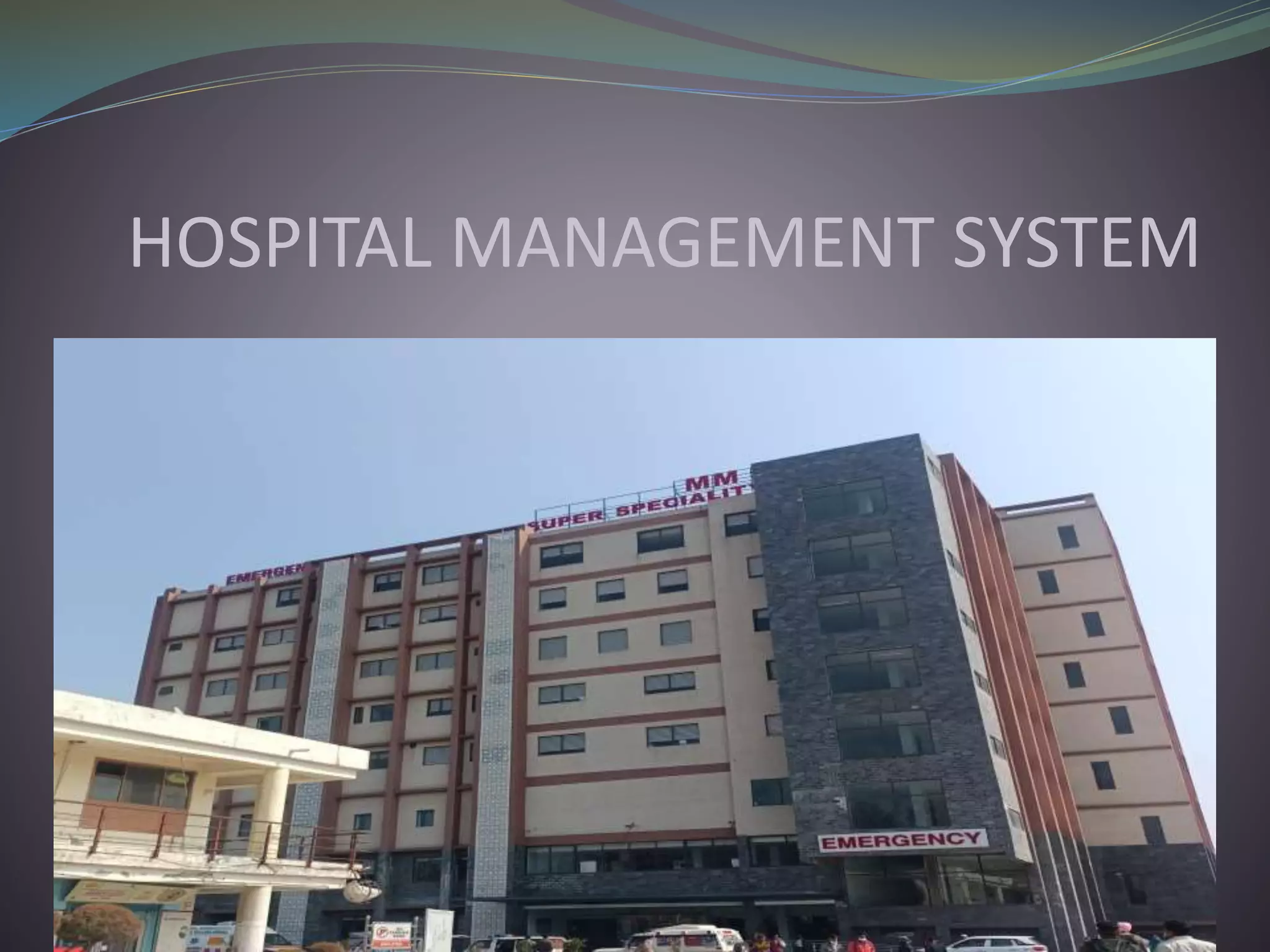
HOSPITAL MANAGEMENT SYSTEM
INTRODUCTION
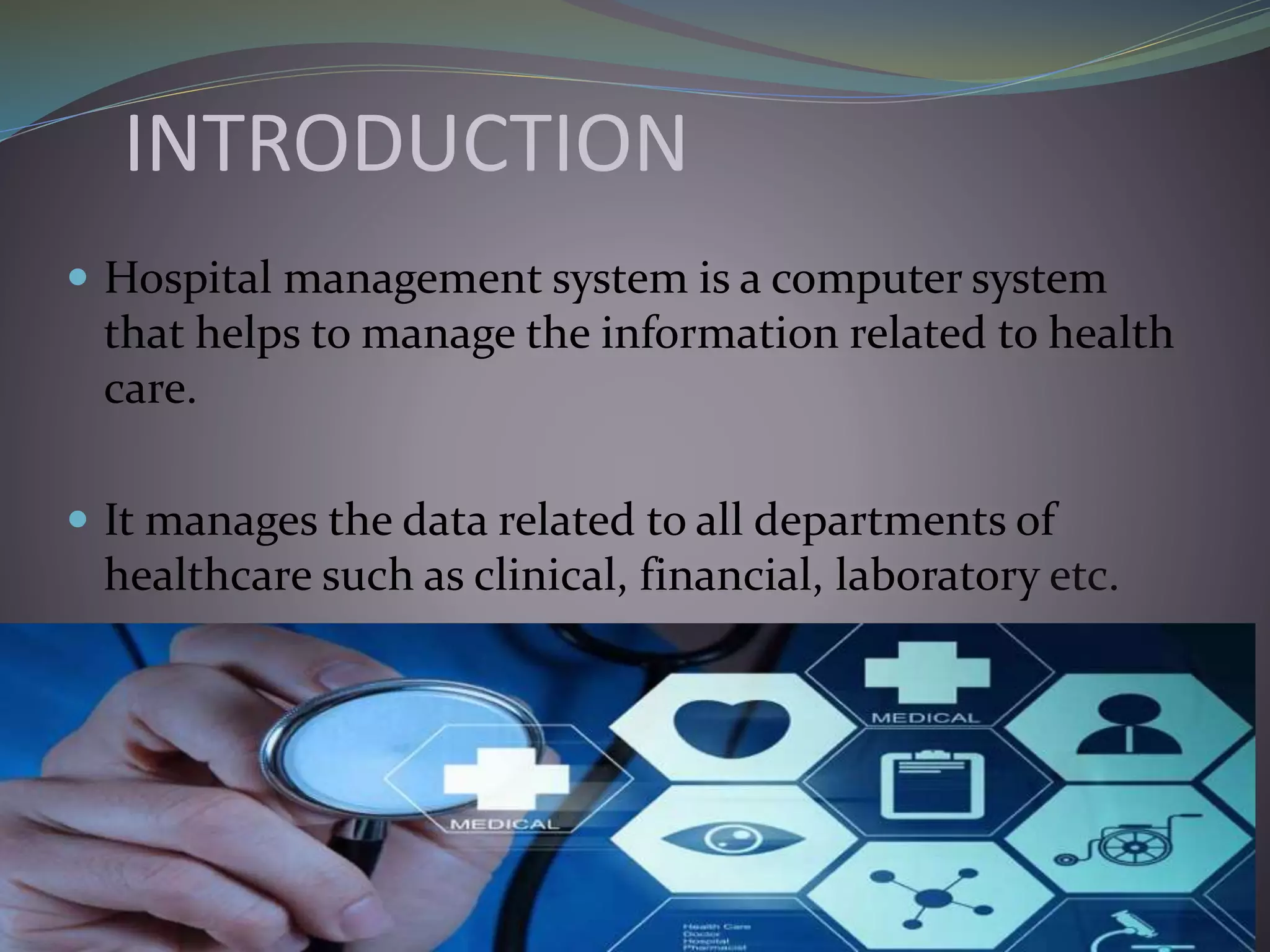
 Hospital management system is a computer system
that helps to manage the information related to health
care.
 It manages the data related to all departments of
healthcare such as clinical, financial, laboratory etc.
 The HMS simplifies the work of healthcare
professional and their interaction with their patients.
 Moreover all the activities in the hospital can be
recorded systematically in the digital form.
 The hms sysyem automates the management and
reduces the paper work.
Importance of HMS
1. Maintain the medical record of the patient
2. Maintain the contact details of the patient
3. It is a time saving technology
4. Reduce scope for error
5. Reduce the work of documentation
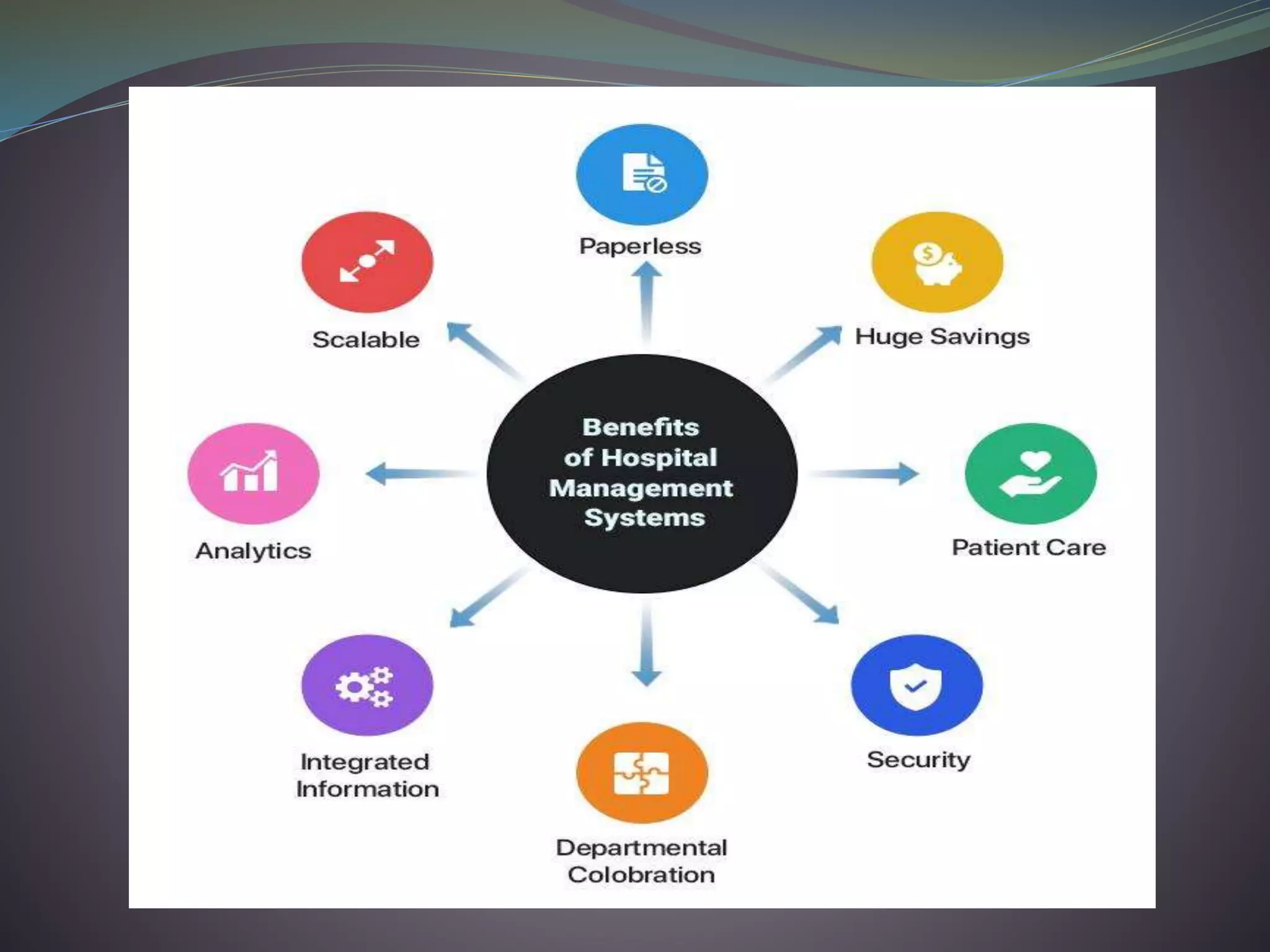
ADVANTAGES OF HMS
1. Time saving technology
2. Improved efficiency by avoiding human errors
3. Data security
4. Improved patient care made possible
5. Easy monitoring of supplies in inventory
6. Reduces the work of documentation
7. Digital medical records
8. Facility management
MODULES OF HMS
 It manages online appointment bookings and assign
them to recipient consulting doctors.
 Enables easy scheduling for patients with the hospital
website.
 Send alerts and reminders of appointments to
patients.
 Make a note of commonly used medicines.
 Manage commonly and recently used drugs.
 SMS prescription to patients.
 The in patient management feature helps to manage
requirements related to surgeon, bed availability,
consultant and prescription.
 It also manage the patient details related to their
medical information, lab reports, radiology and
patient assesment.
Medicine ward
 The out patient management module helps in
reducing patient wait time and makes the billing
process hassle free.
 Also, pharmacy prescriptions can be easily created for
outpatients.
 All patient related details can be entered into system
to maintain a paperless procedure.
 Laboratory module is aimed at viewing the prescribed
tests to the patient by the doctor and to insert the
details of the test reports.
 It helps user to place requests into system for and
collective analysis of patient’s specimens.
 It automates the investigation request and the process
involved in delivering the results to the concerned
department/ doctor.
FEATURES OF LABORATORY MODULE
1. Diagnosis and investigation for lab request is carried
out by both inpatient and outpatient and external
lab requests.
2. Investigation and result history.
3. Automatic validation for test results.
 The pharmacy management module deals with the
administrative processes of pharmacy along with
comprehensive method of managing the inventory
and dispatching of drugs.
 Complete database of pharmacy inventory is done
according to the generic molecules.
 All generics and their respective brands, batch
numbers, and expiry dates are maintained in a
database.
 It also includes pharmacy billing and sales
management .
 The system is also designed to track medication stock
efficiently, with a provision to store patient’s
prescription, thus helping pharmacist by providing
reminders for drug refill.
E-Prescription Management
 It enables that prescription transfers from doctor or
other healthcare provider’s computer to the pharmacy
computer electronically through a private, secured and
a closed network.
 This transmission helps pharmacist avoid
misinterpretation of prescription and reduce the
overall time taken for the transaction.
Drug Expiry Alert
 Pop up alerts are generated to notify the pharmacist
about expiry of medications.
 The system automatically tracks the expiring drugs of
pharmacy and sub stores in wards and are displayed in
a single screen.
Features
 Comprehensive drug search based on generics.
 Setting up drug schedule.
 Defined standards for direction, dosage and frequency.
 Drug movement history and transactional details.
 Real time synchronisation between stores.
 Taxes and discount management.
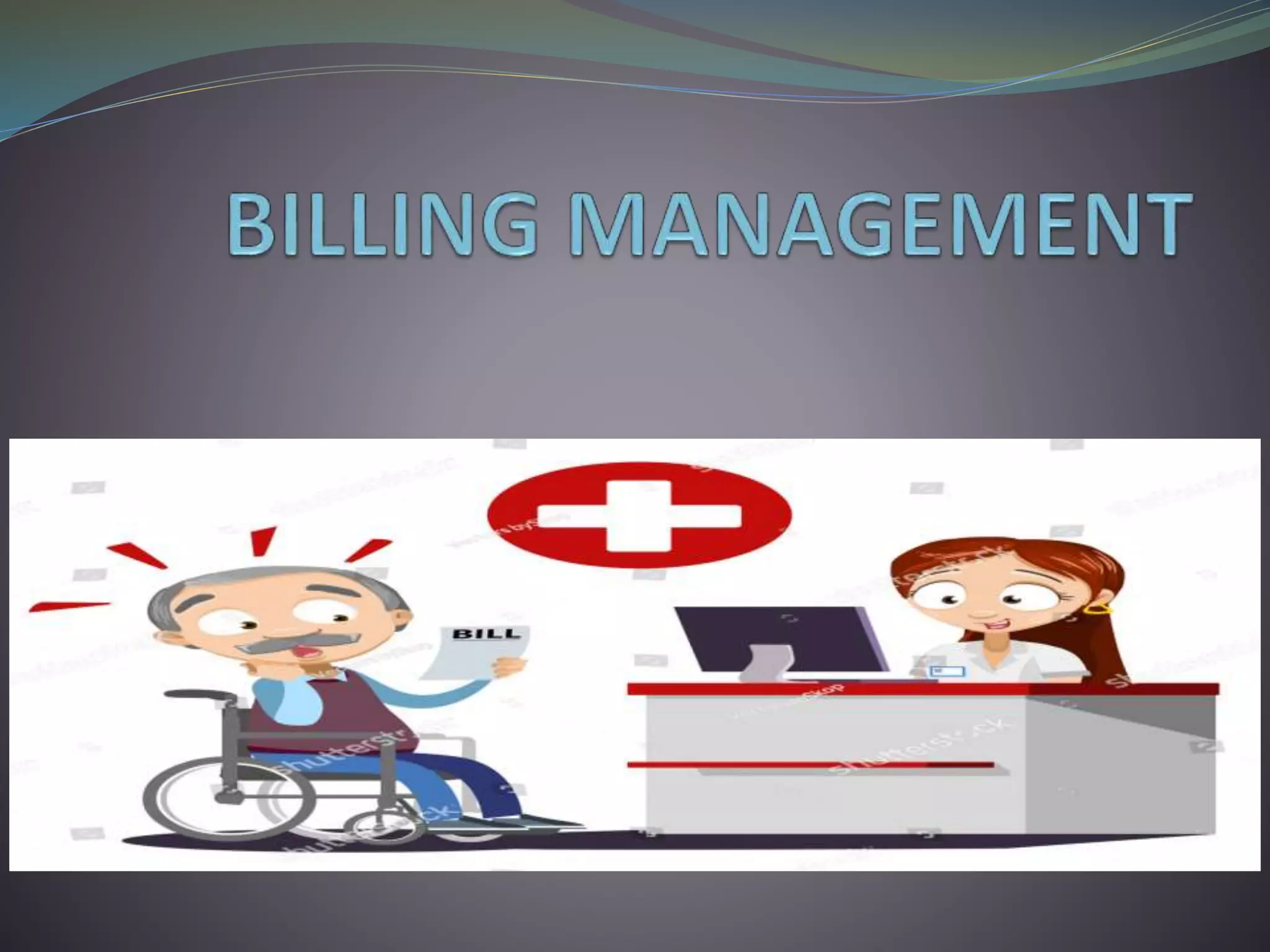
 It is the most essential module
in hms.
 It helps to manage both
insurance needs as well as
patient payment reliably
which is not included in other
software.
Types of billing
1. Registration and
consulting bill.
2. Pharmacy billing
3. Laboratory billing
4. In patient billing
NURSE MODULE
 A person who cares for
the sick or in firm
specifically : a licensed
healthcare professional
who practices
independently or is
supervised by a physcian,
surgeon etc.
Nurse Management
 Prepare ward request for patinet care
 Medicine request to the pharmacy
 Lab request to laboratory
 Reduce paper wrok and paper consumption
 Keep a record for doctors notes.
HELP DESK MODULE
 The help desk can assess trends like call volume, call
length, ticket times, and ticket close time to pinpoint
whwer deeper one on one ehr and user education is
needed.
OPERATION THEATRE MODULE
 Electronic medical record is a digital version of patient
medical condition that is traditionally kept on a paper.
 It is an electronic version of patient healthcare record.
 Emr includes the information regarding the patient’s
medical history like treatment as discrete medical
practices posses them.
Purpose of EMR
 Medical record contains sensitive personal data and
keeping them secure is a legal and professional
responsibility.
 Electronic medical record provides an overall
assesment of various health parameters and helps to
track personal record of a patient.
Uses of EMR
1. Searchable database
2. Documentation of patient’s information
3. Store patients data
4. Improve quality patient care
hospital management system ppt

hospital management system ppt

  • 1.
    HOSPITAL MANAGEMENT SYSTEM SUBMITTEDTO : MR. ABHAY BINDAL SUBMITTED BY: DIKSHITA (1819091)
  • 2.
  • 3.
    INTRODUCTION  Hospital managementsystem is a computer system that helps to manage the information related to health care.  It manages the data related to all departments of healthcare such as clinical, financial, laboratory etc.
  • 4.
     The HMSsimplifies the work of healthcare professional and their interaction with their patients.  Moreover all the activities in the hospital can be recorded systematically in the digital form.  The hms sysyem automates the management and reduces the paper work.
  • 6.
    Importance of HMS 1.Maintain the medical record of the patient 2. Maintain the contact details of the patient 3. It is a time saving technology 4. Reduce scope for error 5. Reduce the work of documentation
  • 8.
    ADVANTAGES OF HMS 1.Time saving technology 2. Improved efficiency by avoiding human errors 3. Data security 4. Improved patient care made possible 5. Easy monitoring of supplies in inventory 6. Reduces the work of documentation 7. Digital medical records 8. Facility management
  • 11.
  • 13.
     It managesonline appointment bookings and assign them to recipient consulting doctors.  Enables easy scheduling for patients with the hospital website.  Send alerts and reminders of appointments to patients.
  • 15.
     Make anote of commonly used medicines.  Manage commonly and recently used drugs.  SMS prescription to patients.
  • 17.
     The inpatient management feature helps to manage requirements related to surgeon, bed availability, consultant and prescription.  It also manage the patient details related to their medical information, lab reports, radiology and patient assesment.
  • 18.
  • 20.
     The outpatient management module helps in reducing patient wait time and makes the billing process hassle free.  Also, pharmacy prescriptions can be easily created for outpatients.  All patient related details can be entered into system to maintain a paperless procedure.
  • 22.
     Laboratory moduleis aimed at viewing the prescribed tests to the patient by the doctor and to insert the details of the test reports.  It helps user to place requests into system for and collective analysis of patient’s specimens.  It automates the investigation request and the process involved in delivering the results to the concerned department/ doctor.
  • 24.
    FEATURES OF LABORATORYMODULE 1. Diagnosis and investigation for lab request is carried out by both inpatient and outpatient and external lab requests. 2. Investigation and result history. 3. Automatic validation for test results.
  • 26.
     The pharmacymanagement module deals with the administrative processes of pharmacy along with comprehensive method of managing the inventory and dispatching of drugs.  Complete database of pharmacy inventory is done according to the generic molecules.  All generics and their respective brands, batch numbers, and expiry dates are maintained in a database.
  • 27.
     It alsoincludes pharmacy billing and sales management .  The system is also designed to track medication stock efficiently, with a provision to store patient’s prescription, thus helping pharmacist by providing reminders for drug refill.
  • 29.
    E-Prescription Management  Itenables that prescription transfers from doctor or other healthcare provider’s computer to the pharmacy computer electronically through a private, secured and a closed network.  This transmission helps pharmacist avoid misinterpretation of prescription and reduce the overall time taken for the transaction.
  • 30.
    Drug Expiry Alert Pop up alerts are generated to notify the pharmacist about expiry of medications.  The system automatically tracks the expiring drugs of pharmacy and sub stores in wards and are displayed in a single screen.
  • 32.
    Features  Comprehensive drugsearch based on generics.  Setting up drug schedule.  Defined standards for direction, dosage and frequency.  Drug movement history and transactional details.  Real time synchronisation between stores.  Taxes and discount management.
  • 34.
     It isthe most essential module in hms.  It helps to manage both insurance needs as well as patient payment reliably which is not included in other software.
  • 35.
    Types of billing 1.Registration and consulting bill. 2. Pharmacy billing 3. Laboratory billing 4. In patient billing
  • 36.
  • 37.
     A personwho cares for the sick or in firm specifically : a licensed healthcare professional who practices independently or is supervised by a physcian, surgeon etc.
  • 38.
    Nurse Management  Prepareward request for patinet care  Medicine request to the pharmacy  Lab request to laboratory  Reduce paper wrok and paper consumption  Keep a record for doctors notes.
  • 39.
  • 40.
     The helpdesk can assess trends like call volume, call length, ticket times, and ticket close time to pinpoint whwer deeper one on one ehr and user education is needed.
  • 42.
  • 45.
     Electronic medicalrecord is a digital version of patient medical condition that is traditionally kept on a paper.  It is an electronic version of patient healthcare record.  Emr includes the information regarding the patient’s medical history like treatment as discrete medical practices posses them.
  • 46.
    Purpose of EMR Medical record contains sensitive personal data and keeping them secure is a legal and professional responsibility.  Electronic medical record provides an overall assesment of various health parameters and helps to track personal record of a patient.
  • 47.
    Uses of EMR 1.Searchable database 2. Documentation of patient’s information 3. Store patients data 4. Improve quality patient care