Horizontal Shaping Machine 
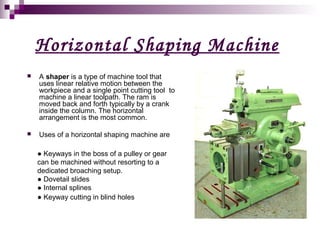
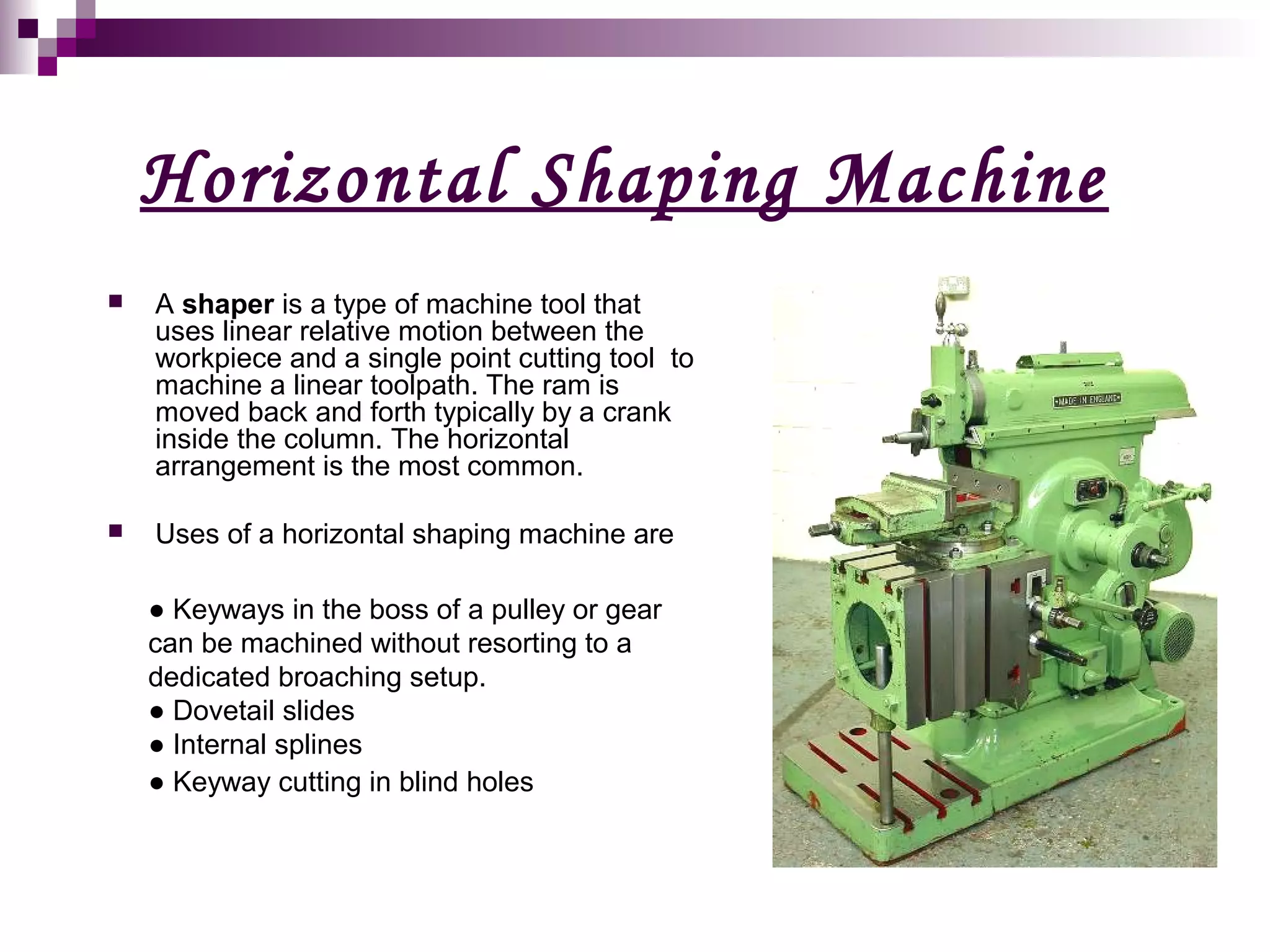
 A shaper is a type of machine tool that 
uses linear relative motion between the 
workpiece and a single point cutting tool to 
machine a linear toolpath. The ram is 
moved back and forth typically by a crank 
inside the column. The horizontal 
arrangement is the most common. 
 Uses of a horizontal shaping machine are 
● Keyways in the boss of a pulley or gear 
can be machined without resorting to a 
dedicated broaching setup. 
● Dovetail slides 
● Internal splines 
● Keyway cutting in blind holes
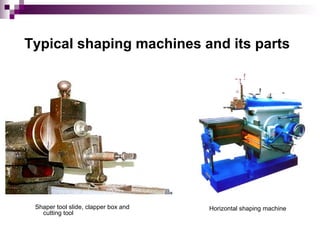
Typical shaping machines and its parts 
Shaper tool slide, clapper box and 
cutting tool 
Horizontal shaping machine
Operation 
 A shaper operates by moving a hardened cutting tool 
backwards and forwards across the workpiece. On the 
return stroke of the ram the tool is lifted clear of the 
workpiece, reducing the cutting action to one direction 
only. 
 The ram is adjustable for stroke and, due to the 
geometry of the linkage, it moves faster on the return 
stroke than on the forward, cutting stroke. 
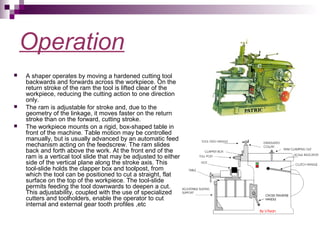
 The workpiece mounts on a rigid, box-shaped table in 
front of the machine. Table motion may be controlled 
manually, but is usually advanced by an automatic feed 
mechanism acting on the feedscrew. The ram slides 
back and forth above the work. At the front end of the 
ram is a vertical tool slide that may be adjusted to either 
side of the vertical plane along the stroke axis. This 
tool-slide holds the clapper box and toolpost, from 
which the tool can be positioned to cut a straight, flat 
surface on the top of the workpiece. The tool-slide 
permits feeding the tool downwards to deepen a cut. 
This adjustability, coupled with the use of specialized 
cutters and toolholders, enable the operator to cut 
internal and external gear tooth profiles ,etc

Horizontal shaping machine

  • 1.
    Horizontal Shaping Machine  A shaper is a type of machine tool that uses linear relative motion between the workpiece and a single point cutting tool to machine a linear toolpath. The ram is moved back and forth typically by a crank inside the column. The horizontal arrangement is the most common.  Uses of a horizontal shaping machine are ● Keyways in the boss of a pulley or gear can be machined without resorting to a dedicated broaching setup. ● Dovetail slides ● Internal splines ● Keyway cutting in blind holes
  • 2.
    Typical shaping machinesand its parts Shaper tool slide, clapper box and cutting tool Horizontal shaping machine
  • 3.
    Operation  Ashaper operates by moving a hardened cutting tool backwards and forwards across the workpiece. On the return stroke of the ram the tool is lifted clear of the workpiece, reducing the cutting action to one direction only.  The ram is adjustable for stroke and, due to the geometry of the linkage, it moves faster on the return stroke than on the forward, cutting stroke.  The workpiece mounts on a rigid, box-shaped table in front of the machine. Table motion may be controlled manually, but is usually advanced by an automatic feed mechanism acting on the feedscrew. The ram slides back and forth above the work. At the front end of the ram is a vertical tool slide that may be adjusted to either side of the vertical plane along the stroke axis. This tool-slide holds the clapper box and toolpost, from which the tool can be positioned to cut a straight, flat surface on the top of the workpiece. The tool-slide permits feeding the tool downwards to deepen a cut. This adjustability, coupled with the use of specialized cutters and toolholders, enable the operator to cut internal and external gear tooth profiles ,etc