Group 1
ME Vth B
Topic – Different operations
performed on lathe
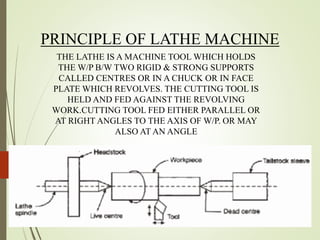
PRINCIPLE OF LATHE MACHINE
THE LATHE IS A MACHINE TOOL WHICH HOLDS
THE W/P B/W TWO RIGID & STRONG SUPPORTS
CALLED CENTRES OR IN A CHUCK OR IN FACE
PLATE WHICH REVOLVES. THE CUTTING TOOL IS
HELD AND FED AGAINST THE REVOLVING
WORK.CUTTING TOOL FED EITHER PARALLEL OR
AT RIGHT ANGLES TO THE AXIS OF W/P. OR MAY
ALSO AT AN ANGLE
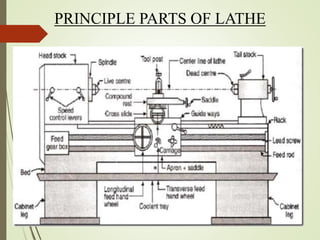
PRINCIPLE PARTS OF LATHE
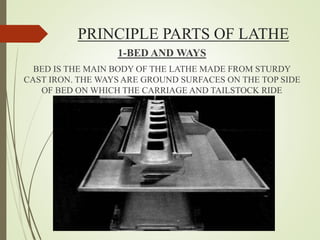
1-BED AND WAYS
BED IS THE MAIN BODY OF THE LATHE MADE FROM STURDY
CAST IRON. THE WAYS ARE GROUND SURFACES ON THE TOP SIDE
OF BED ON WHICH THE CARRIAGE AND TAILSTOCK RIDE
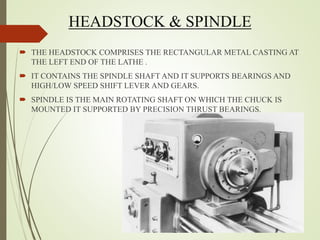
HEADSTOCK & SPINDLE
 THE HEADSTOCK COMPRISES THE RECTANGULAR METAL CASTING AT
THE LEFT END OF THE LATHE .
 IT CONTAINS THE SPINDLE SHAFT AND IT SUPPORTS BEARINGS AND
HIGH/LOW SPEED SHIFT LEVER AND GEARS.
 SPINDLE IS THE MAIN ROTATING SHAFT ON WHICH THE CHUCK IS
MOUNTED IT SUPPORTED BY PRECISION THRUST BEARINGS.
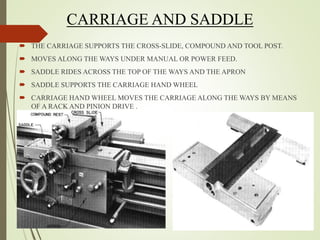
CARRIAGE AND SADDLE
 THE CARRIAGE SUPPORTS THE CROSS-SLIDE, COMPOUND AND TOOL POST.
 MOVES ALONG THE WAYS UNDER MANUAL OR POWER FEED.
 SADDLE RIDES ACROSS THE TOP OF THE WAYS AND THE APRON
 SADDLE SUPPORTS THE CARRIAGE HAND WHEEL
 CARRIAGE HAND WHEEL MOVES THE CARRIAGE ALONG THE WAYS BY MEANS
OF A RACK AND PINION DRIVE .
CROSS-SLIDE AND COMPOUND
 THE CROSS SLIDE IS A DOVETAILED SLIDE THAT MOVES AT A RIGHT ANGLE TO
THE WAYS.
 THE COMPOUND SITS ON THE TOP OF THE CROSS SLIDE AND CAN BE ROTATED
TO SET THE TOOL TO ADVANCE AT AN ANGLE TO THE W/P.
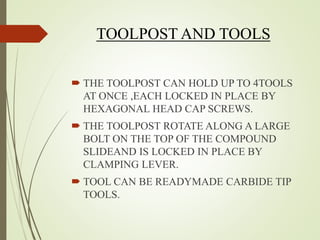
TOOLPOST AND TOOLS
 THE TOOLPOST CAN HOLD UP TO 4TOOLS
AT ONCE ,EACH LOCKED IN PLACE BY
HEXAGONAL HEAD CAP SCREWS.
 THE TOOLPOST ROTATE ALONG A LARGE
BOLT ON THE TOP OF THE COMPOUND
SLIDEAND IS LOCKED IN PLACE BY
CLAMPING LEVER.
 TOOL CAN BE READYMADE CARBIDE TIP
TOOLS.
TYPES OF LATHE
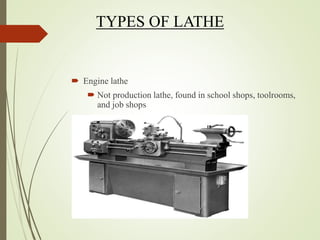
 Engine lathe
 Not production lathe, found in school shops, toolrooms,
and job shops
 Primarily for single piece or short runs
 Manually operated
Special Types of Lathes
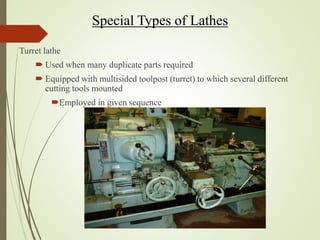
Turret lathe
 Used when many duplicate parts required
 Equipped with multisided toolpost (turret) to which several different
cutting tools mounted
Employed in given sequence
Special Types of Lathes
 Single- and multiple-spindle automatic lathes
 Six or eight different operations may be performed on
many parts at the same time
 Will produce parts for as long as required
 Tracer lathes
 Used where a few duplicate parts required
 Hydraulically operated cross-slide controlled by stylus
bearing against round or flat template
Special Types of Lathes
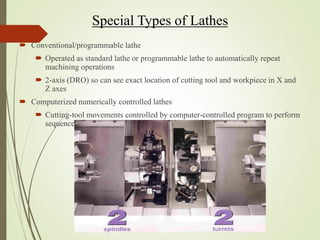
 Conventional/programmable lathe
 Operated as standard lathe or programmable lathe to automatically repeat
machining operations
 2-axis (DRO) so can see exact location of cutting tool and workpiece in X and
Z axes
 Computerized numerically controlled lathes
 Cutting-tool movements controlled by computer-controlled program to perform
sequence of operations automatically
Work Holding Devices
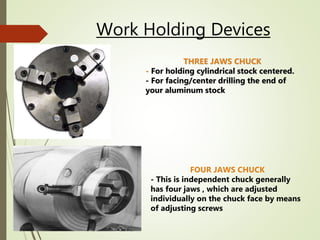
THREE JAWS CHUCK
- For holding cylindrical stock centered.
- For facing/center drilling the end of
your aluminum stock
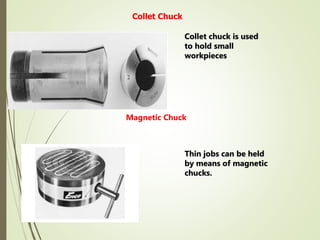
FOUR JAWS CHUCK
- This is independent chuck generally
has four jaws , which are adjusted
individually on the chuck face by means
of adjusting screws
 Thin jobs can be held by means of
magnetic chucks.
Collet Chuck
Magnetic Chuck
Collet chuck is used
to hold small
workpieces
Thin jobs can be held
by means of magnetic
chucks.
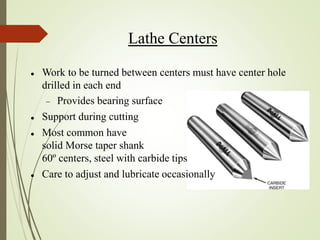
Lathe Centers
 Work to be turned between centers must have center hole
drilled in each end
 Provides bearing surface
 Support during cutting
 Most common have
solid Morse taper shank
60º centers, steel with carbide tips
 Care to adjust and lubricate occasionally
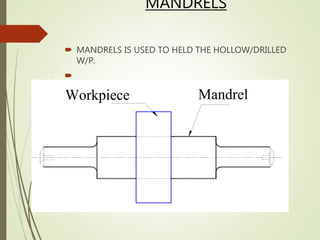
MANDRELS
 MANDRELS IS USED TO HELD THE HOLLOW/DRILLED
W/P.

Workpiece Mandrel
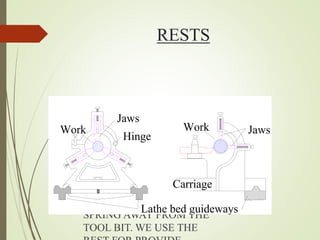
RESTS
 LONG W/P NEED EXTRA
SUPPORT THAT TEND TO
SPRING AWAY FROM THE
TOOL BIT. WE USE THE
Jaws
Hinge
Work Work Jaws
Lathe bed guideways
Carriage
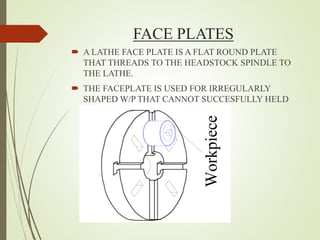
FACE PLATES
 A LATHE FACE PLATE IS A FLAT ROUND PLATE
THAT THREADS TO THE HEADSTOCK SPINDLE TO
THE LATHE.
 THE FACEPLATE IS USED FOR IRREGULARLY
SHAPED W/P THAT CANNOT SUCCESFULLY HELD
BY CHUCKS.
Workpiece
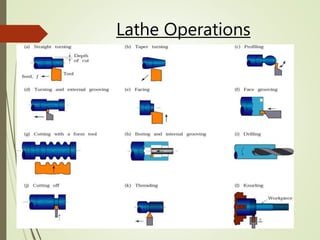
Lathe Operations
 Turning: produce straight, conical, curved, or grooved workpieces
 Facing: to produce a flat surface at the end of the part or for making face
grooves.

 Boring: to enlarge a hole or cylindrical cavity made by a previous process or
to produce circular internal grooves.

 Drilling: to produce a hole by fixing a drill in the tailstock

 Threading: to produce external or internal threads

 Knurling: to produce a regularly shaped roughness on cylindrical surfaces
Lathe Operations
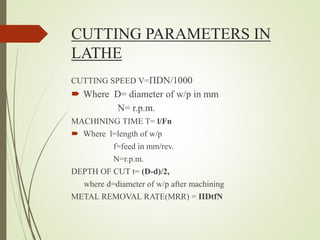
CUTTING PARAMETERS IN
LATHE
CUTTING SPEED V=ΠDN/1000
 Where D= diameter of w/p in mm
N= r.p.m.
MACHINING TIME T= l/Fn
 Where l=length of w/p
f=feed in mm/rev.
N=r.p.m.
DEPTH OF CUT t= (D-d)/2,
where d=diameter of w/p after machining
METAL REMOVAL RATE(MRR) = ΠDtfN

PRINCIPLE OF LATHE MACHINE

  • 1.
    Group 1 ME VthB Topic – Different operations performed on lathe
  • 2.
    PRINCIPLE OF LATHEMACHINE THE LATHE IS A MACHINE TOOL WHICH HOLDS THE W/P B/W TWO RIGID & STRONG SUPPORTS CALLED CENTRES OR IN A CHUCK OR IN FACE PLATE WHICH REVOLVES. THE CUTTING TOOL IS HELD AND FED AGAINST THE REVOLVING WORK.CUTTING TOOL FED EITHER PARALLEL OR AT RIGHT ANGLES TO THE AXIS OF W/P. OR MAY ALSO AT AN ANGLE
  • 3.
  • 4.
    PRINCIPLE PARTS OFLATHE 1-BED AND WAYS BED IS THE MAIN BODY OF THE LATHE MADE FROM STURDY CAST IRON. THE WAYS ARE GROUND SURFACES ON THE TOP SIDE OF BED ON WHICH THE CARRIAGE AND TAILSTOCK RIDE
  • 5.
    HEADSTOCK & SPINDLE THE HEADSTOCK COMPRISES THE RECTANGULAR METAL CASTING AT THE LEFT END OF THE LATHE .  IT CONTAINS THE SPINDLE SHAFT AND IT SUPPORTS BEARINGS AND HIGH/LOW SPEED SHIFT LEVER AND GEARS.  SPINDLE IS THE MAIN ROTATING SHAFT ON WHICH THE CHUCK IS MOUNTED IT SUPPORTED BY PRECISION THRUST BEARINGS.
  • 6.
    CARRIAGE AND SADDLE THE CARRIAGE SUPPORTS THE CROSS-SLIDE, COMPOUND AND TOOL POST.  MOVES ALONG THE WAYS UNDER MANUAL OR POWER FEED.  SADDLE RIDES ACROSS THE TOP OF THE WAYS AND THE APRON  SADDLE SUPPORTS THE CARRIAGE HAND WHEEL  CARRIAGE HAND WHEEL MOVES THE CARRIAGE ALONG THE WAYS BY MEANS OF A RACK AND PINION DRIVE .
  • 7.
    CROSS-SLIDE AND COMPOUND THE CROSS SLIDE IS A DOVETAILED SLIDE THAT MOVES AT A RIGHT ANGLE TO THE WAYS.  THE COMPOUND SITS ON THE TOP OF THE CROSS SLIDE AND CAN BE ROTATED TO SET THE TOOL TO ADVANCE AT AN ANGLE TO THE W/P.
  • 8.
    TOOLPOST AND TOOLS THE TOOLPOST CAN HOLD UP TO 4TOOLS AT ONCE ,EACH LOCKED IN PLACE BY HEXAGONAL HEAD CAP SCREWS.  THE TOOLPOST ROTATE ALONG A LARGE BOLT ON THE TOP OF THE COMPOUND SLIDEAND IS LOCKED IN PLACE BY CLAMPING LEVER.  TOOL CAN BE READYMADE CARBIDE TIP TOOLS.
  • 9.
    TYPES OF LATHE Engine lathe  Not production lathe, found in school shops, toolrooms, and job shops  Primarily for single piece or short runs  Manually operated
  • 10.
    Special Types ofLathes Turret lathe  Used when many duplicate parts required  Equipped with multisided toolpost (turret) to which several different cutting tools mounted Employed in given sequence
  • 11.
    Special Types ofLathes  Single- and multiple-spindle automatic lathes  Six or eight different operations may be performed on many parts at the same time  Will produce parts for as long as required  Tracer lathes  Used where a few duplicate parts required  Hydraulically operated cross-slide controlled by stylus bearing against round or flat template
  • 12.
    Special Types ofLathes  Conventional/programmable lathe  Operated as standard lathe or programmable lathe to automatically repeat machining operations  2-axis (DRO) so can see exact location of cutting tool and workpiece in X and Z axes  Computerized numerically controlled lathes  Cutting-tool movements controlled by computer-controlled program to perform sequence of operations automatically
  • 13.
    Work Holding Devices THREEJAWS CHUCK - For holding cylindrical stock centered. - For facing/center drilling the end of your aluminum stock FOUR JAWS CHUCK - This is independent chuck generally has four jaws , which are adjusted individually on the chuck face by means of adjusting screws
  • 14.
     Thin jobscan be held by means of magnetic chucks. Collet Chuck Magnetic Chuck Collet chuck is used to hold small workpieces Thin jobs can be held by means of magnetic chucks.
  • 15.
    Lathe Centers  Workto be turned between centers must have center hole drilled in each end  Provides bearing surface  Support during cutting  Most common have solid Morse taper shank 60º centers, steel with carbide tips  Care to adjust and lubricate occasionally
  • 16.
    MANDRELS  MANDRELS ISUSED TO HELD THE HOLLOW/DRILLED W/P.  Workpiece Mandrel
  • 17.
    RESTS  LONG W/PNEED EXTRA SUPPORT THAT TEND TO SPRING AWAY FROM THE TOOL BIT. WE USE THE Jaws Hinge Work Work Jaws Lathe bed guideways Carriage
  • 18.
    FACE PLATES  ALATHE FACE PLATE IS A FLAT ROUND PLATE THAT THREADS TO THE HEADSTOCK SPINDLE TO THE LATHE.  THE FACEPLATE IS USED FOR IRREGULARLY SHAPED W/P THAT CANNOT SUCCESFULLY HELD BY CHUCKS. Workpiece
  • 19.
    Lathe Operations  Turning:produce straight, conical, curved, or grooved workpieces  Facing: to produce a flat surface at the end of the part or for making face grooves.   Boring: to enlarge a hole or cylindrical cavity made by a previous process or to produce circular internal grooves.   Drilling: to produce a hole by fixing a drill in the tailstock   Threading: to produce external or internal threads   Knurling: to produce a regularly shaped roughness on cylindrical surfaces
  • 20.
  • 21.
    CUTTING PARAMETERS IN LATHE CUTTINGSPEED V=ΠDN/1000  Where D= diameter of w/p in mm N= r.p.m. MACHINING TIME T= l/Fn  Where l=length of w/p f=feed in mm/rev. N=r.p.m. DEPTH OF CUT t= (D-d)/2, where d=diameter of w/p after machining METAL REMOVAL RATE(MRR) = ΠDtfN

Editor's Notes