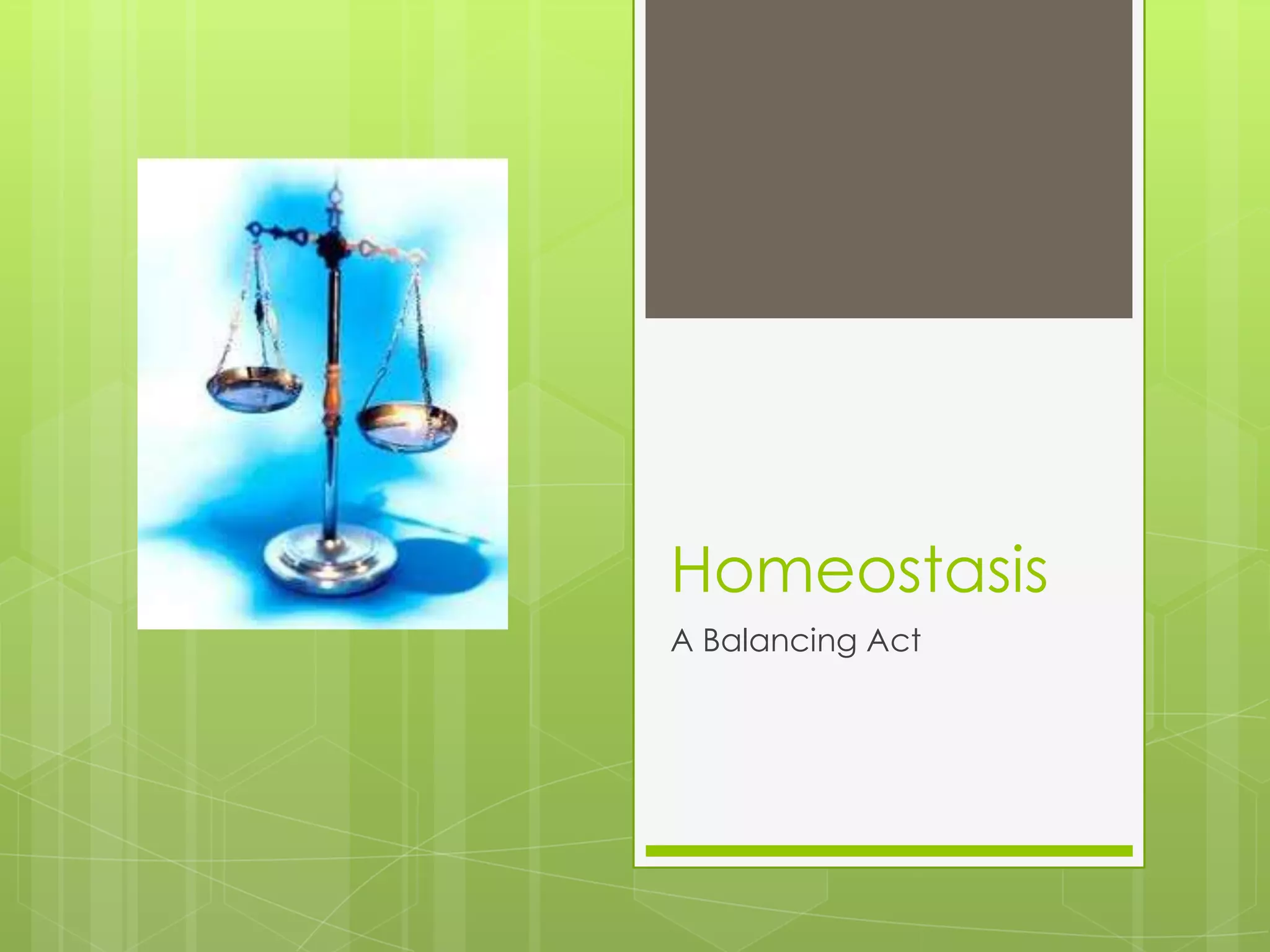
Homeostasis
A Balancing Act
Purpose
 To observe the body trying to maintain
homeostasis.
Research
 Homeostasis (Greek for “staying the same”) is a process by
which the body maintains a stable internal environment. The
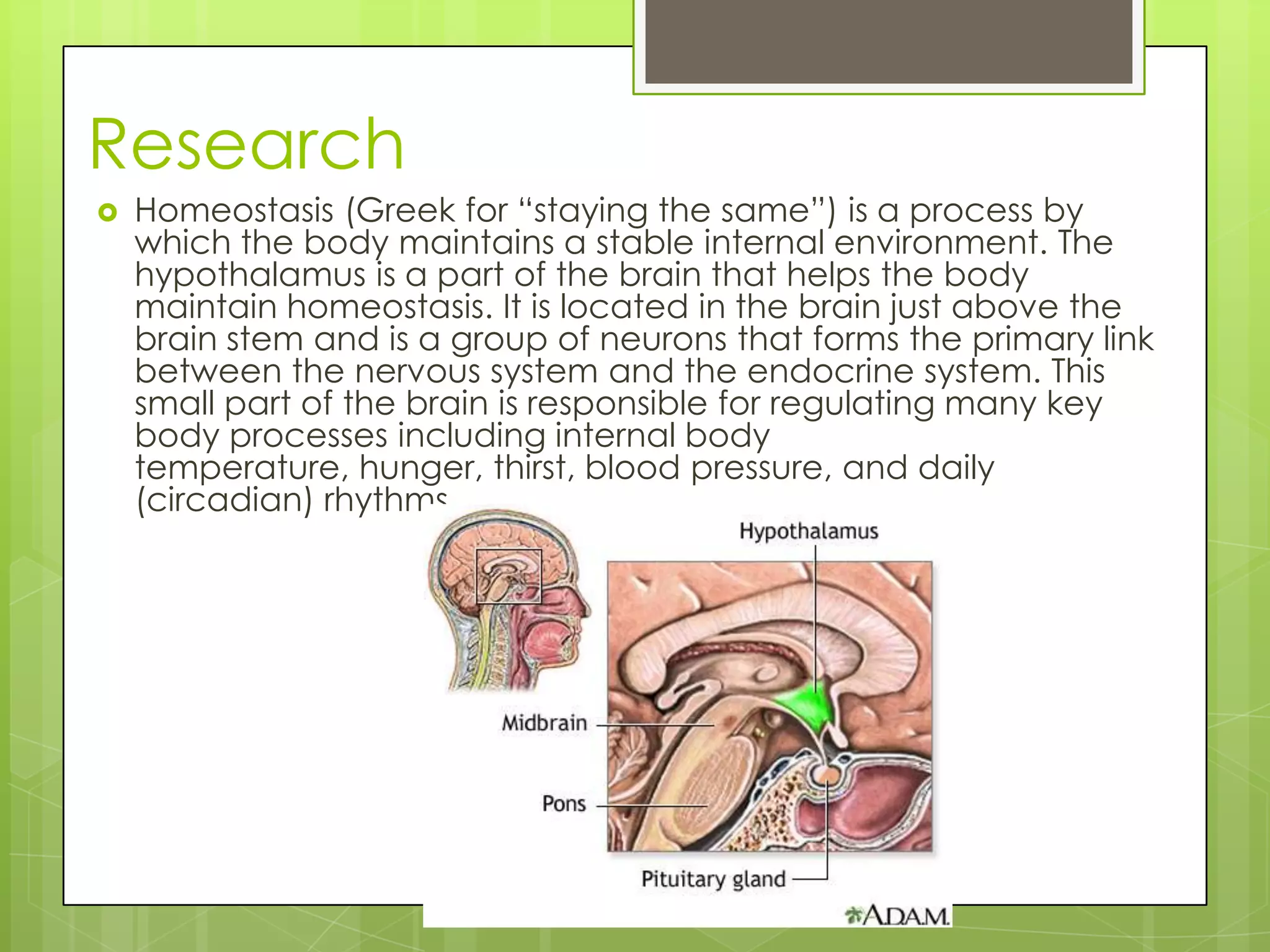
hypothalamus is a part of the brain that helps the body
maintain homeostasis. It is located in the brain just above the
brain stem and is a group of neurons that forms the primary link
between the nervous system and the endocrine system. This
small part of the brain is responsible for regulating many key
body processes including internal body
temperature, hunger, thirst, blood pressure, and daily
(circadian) rhythms
Research
 Most body systems maintain homeostasis by the nervous &
endocrine systems working together. When the brain
receives messages from the body about an internal change
in one of its systems, it works to restore the system to its
normal state. For example, the normal internal temperature
for the human body is approximately 98.6˚F. If the body
temperature rises because of exercise, the body will start to
try and cool itself off. This happens through coordination
between the hypothalamus and the various body systems
that are affected. Signals are sent that allow blood vessels
to return to the normal state, sweat to be produced, pores
to be dilated, and heart and breathing rate to normalize.
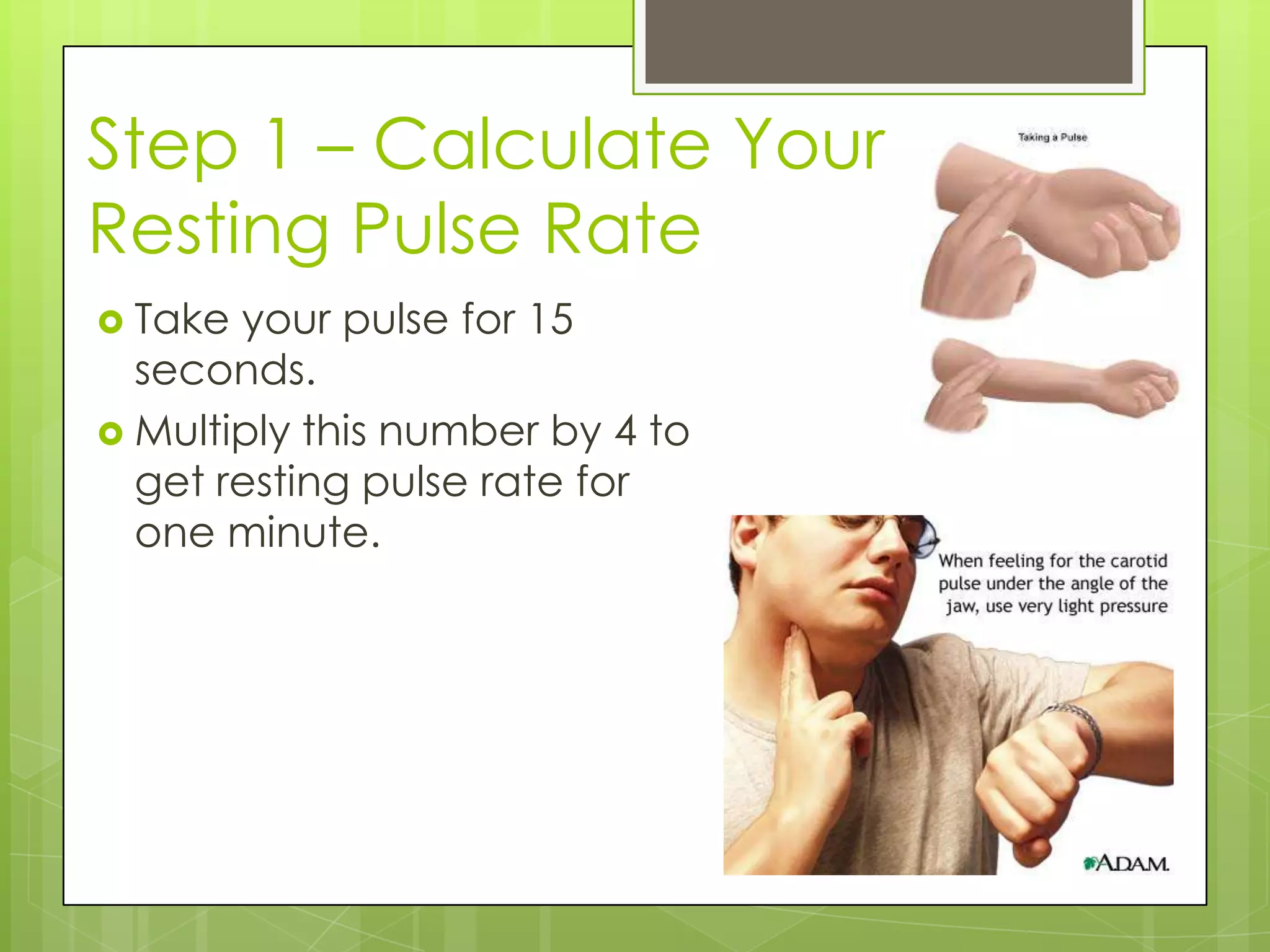
Step 1 – Calculate Your
Resting Pulse Rate
 Take your pulse for 15
seconds.
 Multiply this number by 4 to
get resting pulse rate for
one minute.
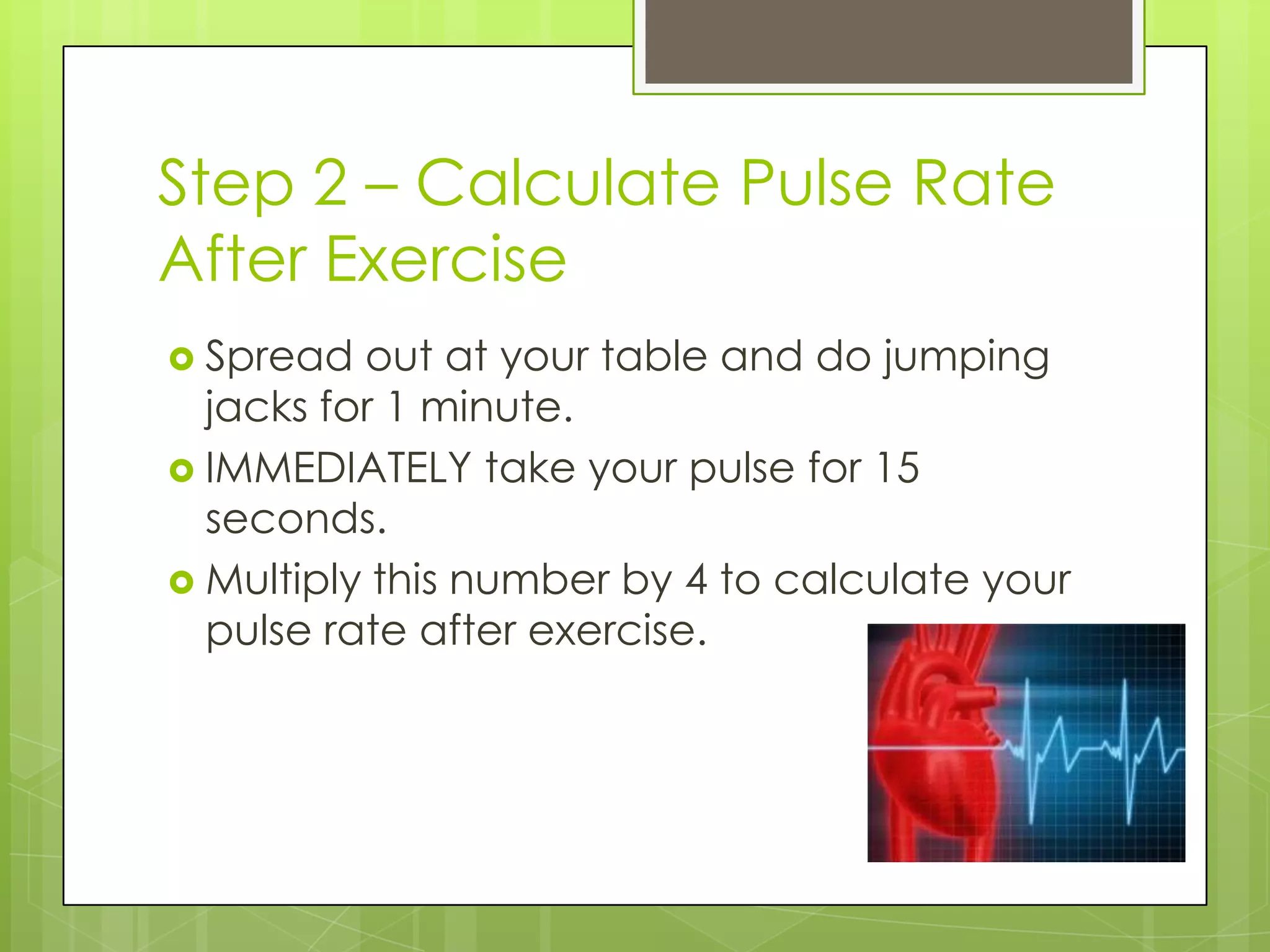
Step 2 – Calculate Pulse Rate
After Exercise
 Spread out at your table and do jumping
jacks for 1 minute.
 IMMEDIATELY take your pulse for 15
seconds.
 Multiply this number by 4 to calculate your
pulse rate after exercise.
Step 3 – Lab SheetQuestion
 Answer the question about heart rate on
your lab sheet.
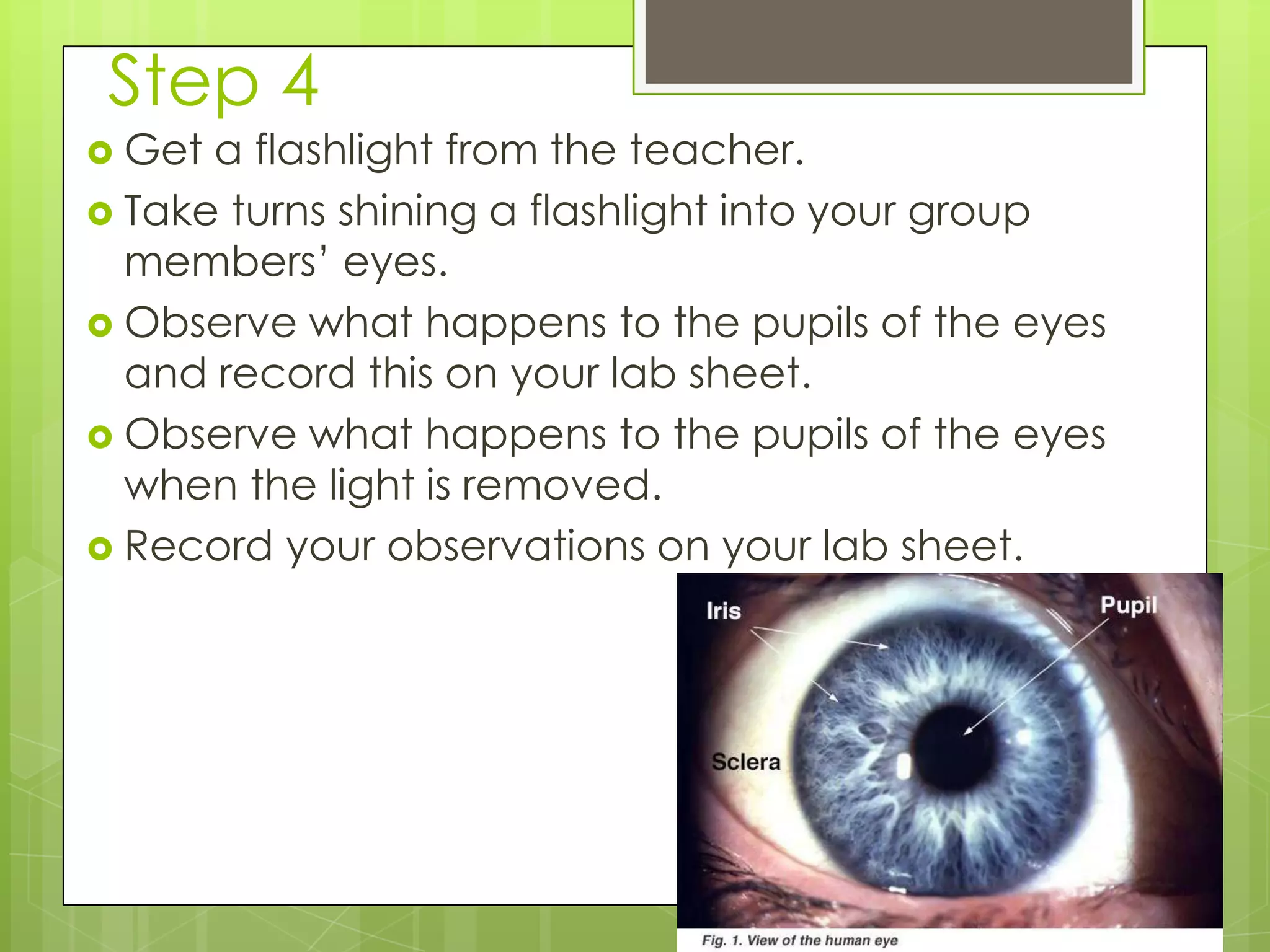
Step 4
 Get a flashlight from the teacher.
 Take turns shining a flashlight into your group
members’ eyes.
 Observe what happens to the pupils of the eyes
and record this on your lab sheet.
 Observe what happens to the pupils of the eyes
when the light is removed.
 Record your observations on your lab sheet.
Step 5
 Answer the question about your pupils on
your lab sheet.
 Turn in your work!
 Return flashlight!

Homeostasis: A Balancing Act

  • 1.
  • 2.
    Purpose  To observethe body trying to maintain homeostasis.
  • 3.
    Research  Homeostasis (Greekfor “staying the same”) is a process by which the body maintains a stable internal environment. The hypothalamus is a part of the brain that helps the body maintain homeostasis. It is located in the brain just above the brain stem and is a group of neurons that forms the primary link between the nervous system and the endocrine system. This small part of the brain is responsible for regulating many key body processes including internal body temperature, hunger, thirst, blood pressure, and daily (circadian) rhythms
  • 4.
    Research  Most bodysystems maintain homeostasis by the nervous & endocrine systems working together. When the brain receives messages from the body about an internal change in one of its systems, it works to restore the system to its normal state. For example, the normal internal temperature for the human body is approximately 98.6˚F. If the body temperature rises because of exercise, the body will start to try and cool itself off. This happens through coordination between the hypothalamus and the various body systems that are affected. Signals are sent that allow blood vessels to return to the normal state, sweat to be produced, pores to be dilated, and heart and breathing rate to normalize.
  • 5.
    Step 1 –Calculate Your Resting Pulse Rate  Take your pulse for 15 seconds.  Multiply this number by 4 to get resting pulse rate for one minute.
  • 6.
    Step 2 –Calculate Pulse Rate After Exercise  Spread out at your table and do jumping jacks for 1 minute.  IMMEDIATELY take your pulse for 15 seconds.  Multiply this number by 4 to calculate your pulse rate after exercise.
  • 7.
    Step 3 –Lab SheetQuestion  Answer the question about heart rate on your lab sheet.
  • 8.
    Step 4  Geta flashlight from the teacher.  Take turns shining a flashlight into your group members’ eyes.  Observe what happens to the pupils of the eyes and record this on your lab sheet.  Observe what happens to the pupils of the eyes when the light is removed.  Record your observations on your lab sheet.
  • 9.
    Step 5  Answerthe question about your pupils on your lab sheet.  Turn in your work!  Return flashlight!