Community Dentistry Presentation
by

Sarang Suresh
HIV AIDS
Sarang Suresh Hotchandani
HIV/AIDS at a Glance
• Identified in 1983.
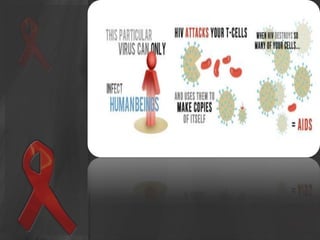
• HIV is
the infection that
causes AIDS.

• HIV has few or no
symptoms for up to 10
years or more before
symptoms of AIDS
develop.
• 1 Dec: World’s AIDS
Day

• HIV can be spread
during sex play.
• Latex and female
condoms offer very
good protection
against HIV.

• There is no cure for
HIV/AIDS, but
treatment is available.
Origin of HIV
• Scientists identified a type of chimpanzee in West Africa
as the source of HIV infection in humans.
• The virus most likely jumped to humans when humans
hunted these chimpanzees for meat and came into
contact with their infected blood.
• Over several years, the virus slowly spread across Africa
and later into other parts of the world
What Is HIV?
To understand what HIV is, let’s break it down:

• H – Human
• I – Immunodeficiency
• V – Virus
What Is AIDS?
To understand what AIDS is, let’s break it down:

• A – Acquired
• AIDS is not something you inherit from your parents.
You acquire AIDS after birth.
• I – Immuno

• D – Deficiency
• S – Syndrome
All people with HIV don’t have AIDS?
• HIV causes people to become sick with infections that
normally wouldn't affect them.

• AIDS is short for acquired immune deficiency syndrome.
It is the most advanced stage of HIV disease.
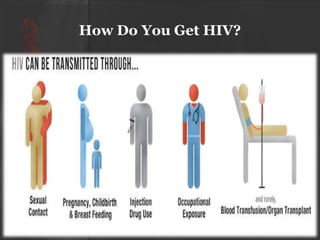
How Do You Get HIV?
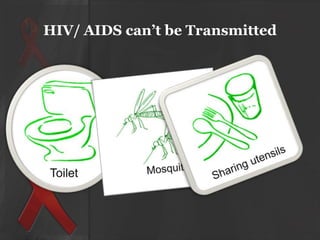
HIV/ AIDS can’t be Transmitted
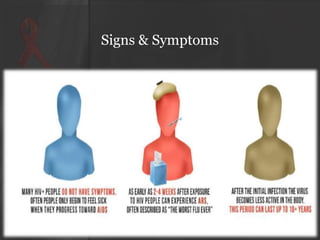
Signs & Symptoms
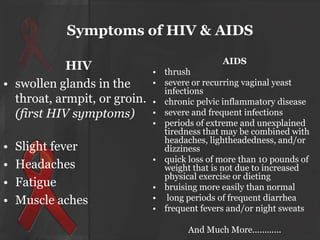
Symptoms of HIV & AIDS
HIV
• swollen glands in the
throat, armpit, or groin.
(first HIV symptoms)
•
•
•
•

Slight fever
Headaches
Fatigue
Muscle aches

AIDS
• thrush
• severe or recurring vaginal yeast
infections
• chronic pelvic inflammatory disease
• severe and frequent infections
• periods of extreme and unexplained
tiredness that may be combined with
headaches, lightheadedness, and/or
dizziness
• quick loss of more than 10 pounds of
weight that is not due to increased
physical exercise or dieting
• bruising more easily than normal
• long periods of frequent diarrhea
• frequent fevers and/or night sweats
And Much More............
Oral Manifestation of HIV Infection
• Oropharyngeal Candidiasis
• Oral Hairy Leukoplakia
• Chronic Herpes Simplex
• Kaposi’s Sarcome
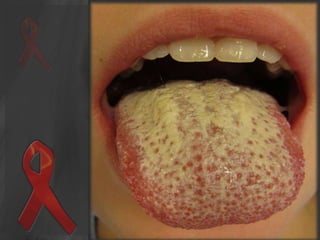
Oropharyngeal Candidiasis
• Oral Thrush
• Fungal Infection
• Presents as Semi-Adherent white plaque on the palate.
• Very Common in HIV +ve
• Glossitis and angular Stomatitis, not uncommon.
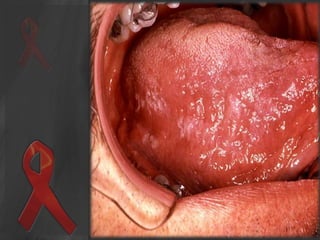
Oral Hairy Leukoplakia
• Lesion most commomly appear on lateral surface of
tongue.
• This condition is Highly Predictive of
Future Development of AIDS.
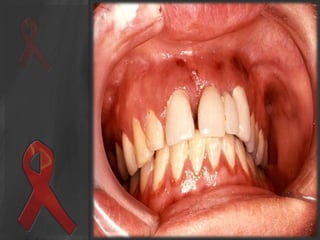
Kaposi’s Sarcoma
• Diagnostic for AIDS
• Oral Cavity may be first / only site of Lesion
• Common site Palate
• Pathogenesis still well understood, nor its interaction
with HIV
HIV and AIDS Estimates (2012)
PAKISTAN
• Number of people living
with HIV87,000
[50,000 - 160,000]
• Adults aged 15 to 49
prevalence rate <0.1%
[<0.1% - 0.2%]
• Adults aged 15 and up
living with HIV85,000
[48,000 - 160,000]
• Women aged 15 and up
living with HIV24,000
[14,000 - 44,000]

• Children aged 0 to 14
living with HIV -- N/A
• Deaths due to AIDS3,500
[2,100 - 6,600]
• Orphans due to AIDS
aged 0 to 17 N/A
Reduce Your Risk
•
•
•
•
•
•
•
•

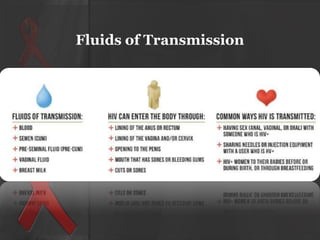
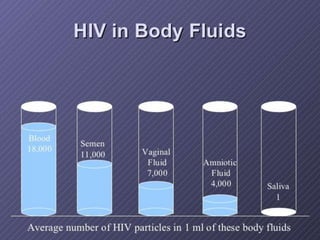
Fluid of Transmission
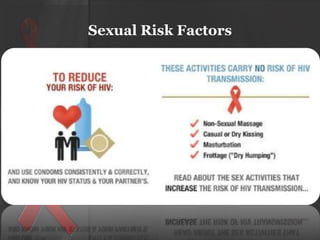
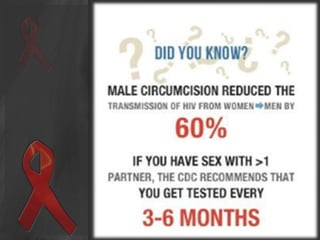
Sexual Risk Factors
When One Partner Is HIV+
Substance Abuse/Use
Pregnancy & Childbirth
Pre-exposure Prophylaxis (PreP)
Post-exposure Prophylaxis (PEP)
Blood Transfusions & Organ/Tissue Transplants
Fluids of Transmission
Sexual Risk Factors
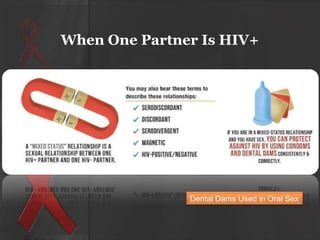
When One Partner Is HIV+

Dental Dams Used in Oral Sex
Substance Abuse/Use

• Injection drug use

• Drinking alcohol or taking other drug
Pregnancy & Childbirth
• HIV-positive mothers can transmit HIV to their babies.
• During pregnancy
• During vaginal childbirth
• Through breastfeeding

But with proper treatment and coordination with healthcare
providers, HIV-positive mothers can significantly reduce the risk
of transmitting HIV to their babies.
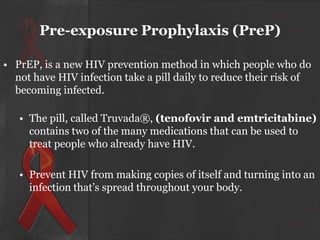
Pre-exposure Prophylaxis (PreP)
• PrEP, is a new HIV prevention method in which people who do
not have HIV infection take a pill daily to reduce their risk of
becoming infected.
• The pill, called Truvada®, (tenofovir and emtricitabine)
contains two of the many medications that can be used to
treat people who already have HIV.
• Prevent HIV from making copies of itself and turning into an
infection that’s spread throughout your body.
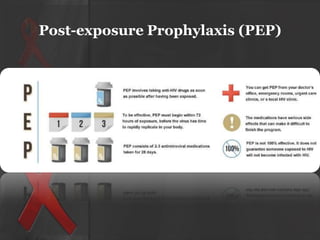
Post-exposure Prophylaxis (PEP)
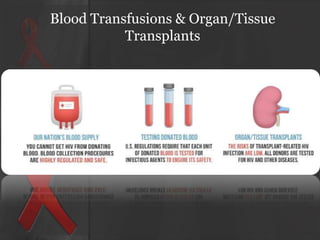
Blood Transfusions & Organ/Tissue
Transplants
HIV Tests
• Antibody Test:- The most common HIV test.
• Enzyme immunoassay (EIA)
• Rapid HIV antibody tests
• Antigen Test
• PCR Test
Treatment
• HIV Antiretroviral
• Emergency HIV Pills
• Atiretroviral Drugs
Staying Healthy with HIV
Myths & Facts
•
•
•
•

•
•
•
•
•

Having HIV Means You Have AIDS
(Myth)
It's Difficult to Get HIV From Casual Contact
(Fact)
You Have Just a Few Years to Live
(Myth)
You'll Know You Have HIV Because of Your Symptoms
(Myth)
HIV Can Be Cured
(Myth for now)
Anyone Can Get HIV
(Fact)
Sex Is Safe When Both Partners Have HIV
(Myth)
You Can Have a Baby if You Are HIV-Positive
(Fact)
You Can’t Avoid Other HIV-Related Infections
(Myth)
HIV Issue in Dental Practice
• Dentists have to Treat HIV +ve Patient. He can not deny
that patient.
• The risk of Transmission from Patient to Dentist is Low.

• Many Dentists have HIV infected persons without
knowing it.
HIV AIDS

HIV AIDS

  • 1.
  • 2.
  • 3.
    HIV/AIDS at aGlance • Identified in 1983. • HIV is the infection that causes AIDS. • HIV has few or no symptoms for up to 10 years or more before symptoms of AIDS develop. • 1 Dec: World’s AIDS Day • HIV can be spread during sex play. • Latex and female condoms offer very good protection against HIV. • There is no cure for HIV/AIDS, but treatment is available.
  • 4.
    Origin of HIV •Scientists identified a type of chimpanzee in West Africa as the source of HIV infection in humans. • The virus most likely jumped to humans when humans hunted these chimpanzees for meat and came into contact with their infected blood. • Over several years, the virus slowly spread across Africa and later into other parts of the world
  • 5.
    What Is HIV? Tounderstand what HIV is, let’s break it down: • H – Human • I – Immunodeficiency • V – Virus
  • 8.
    What Is AIDS? Tounderstand what AIDS is, let’s break it down: • A – Acquired • AIDS is not something you inherit from your parents. You acquire AIDS after birth. • I – Immuno • D – Deficiency • S – Syndrome
  • 10.
    All people withHIV don’t have AIDS? • HIV causes people to become sick with infections that normally wouldn't affect them. • AIDS is short for acquired immune deficiency syndrome. It is the most advanced stage of HIV disease.
  • 11.
    How Do YouGet HIV?
  • 14.
    HIV/ AIDS can’tbe Transmitted
  • 15.
  • 16.
    Symptoms of HIV& AIDS HIV • swollen glands in the throat, armpit, or groin. (first HIV symptoms) • • • • Slight fever Headaches Fatigue Muscle aches AIDS • thrush • severe or recurring vaginal yeast infections • chronic pelvic inflammatory disease • severe and frequent infections • periods of extreme and unexplained tiredness that may be combined with headaches, lightheadedness, and/or dizziness • quick loss of more than 10 pounds of weight that is not due to increased physical exercise or dieting • bruising more easily than normal • long periods of frequent diarrhea • frequent fevers and/or night sweats And Much More............
  • 17.
    Oral Manifestation ofHIV Infection • Oropharyngeal Candidiasis • Oral Hairy Leukoplakia • Chronic Herpes Simplex • Kaposi’s Sarcome
  • 18.
    Oropharyngeal Candidiasis • OralThrush • Fungal Infection • Presents as Semi-Adherent white plaque on the palate. • Very Common in HIV +ve • Glossitis and angular Stomatitis, not uncommon.
  • 20.
    Oral Hairy Leukoplakia •Lesion most commomly appear on lateral surface of tongue. • This condition is Highly Predictive of Future Development of AIDS.
  • 22.
    Kaposi’s Sarcoma • Diagnosticfor AIDS • Oral Cavity may be first / only site of Lesion • Common site Palate • Pathogenesis still well understood, nor its interaction with HIV
  • 25.
    HIV and AIDSEstimates (2012) PAKISTAN • Number of people living with HIV87,000 [50,000 - 160,000] • Adults aged 15 to 49 prevalence rate <0.1% [<0.1% - 0.2%] • Adults aged 15 and up living with HIV85,000 [48,000 - 160,000] • Women aged 15 and up living with HIV24,000 [14,000 - 44,000] • Children aged 0 to 14 living with HIV -- N/A • Deaths due to AIDS3,500 [2,100 - 6,600] • Orphans due to AIDS aged 0 to 17 N/A
  • 26.
    Reduce Your Risk • • • • • • • • Fluidof Transmission Sexual Risk Factors When One Partner Is HIV+ Substance Abuse/Use Pregnancy & Childbirth Pre-exposure Prophylaxis (PreP) Post-exposure Prophylaxis (PEP) Blood Transfusions & Organ/Tissue Transplants
  • 27.
  • 28.
  • 31.
    When One PartnerIs HIV+ Dental Dams Used in Oral Sex
  • 32.
    Substance Abuse/Use • Injectiondrug use • Drinking alcohol or taking other drug
  • 33.
    Pregnancy & Childbirth •HIV-positive mothers can transmit HIV to their babies. • During pregnancy • During vaginal childbirth • Through breastfeeding But with proper treatment and coordination with healthcare providers, HIV-positive mothers can significantly reduce the risk of transmitting HIV to their babies.
  • 34.
    Pre-exposure Prophylaxis (PreP) •PrEP, is a new HIV prevention method in which people who do not have HIV infection take a pill daily to reduce their risk of becoming infected. • The pill, called Truvada®, (tenofovir and emtricitabine) contains two of the many medications that can be used to treat people who already have HIV. • Prevent HIV from making copies of itself and turning into an infection that’s spread throughout your body.
  • 35.
  • 36.
    Blood Transfusions &Organ/Tissue Transplants
  • 37.
    HIV Tests • AntibodyTest:- The most common HIV test. • Enzyme immunoassay (EIA) • Rapid HIV antibody tests • Antigen Test • PCR Test
  • 38.
    Treatment • HIV Antiretroviral •Emergency HIV Pills • Atiretroviral Drugs
  • 39.
    Staying Healthy withHIV Myths & Facts • • • • • • • • • Having HIV Means You Have AIDS (Myth) It's Difficult to Get HIV From Casual Contact (Fact) You Have Just a Few Years to Live (Myth) You'll Know You Have HIV Because of Your Symptoms (Myth) HIV Can Be Cured (Myth for now) Anyone Can Get HIV (Fact) Sex Is Safe When Both Partners Have HIV (Myth) You Can Have a Baby if You Are HIV-Positive (Fact) You Can’t Avoid Other HIV-Related Infections (Myth)
  • 40.
    HIV Issue inDental Practice • Dentists have to Treat HIV +ve Patient. He can not deny that patient. • The risk of Transmission from Patient to Dentist is Low. • Many Dentists have HIV infected persons without knowing it.